In which Annie (high school teacher, mother of two young girls and a younger boy) and her aunt Deborah (children's bookseller, mother of two young women in their 20s) discuss children's books and come up with annotated lists.

Showing posts with label princess. Show all posts

Wednesday, August 31, 2016

Graphic novel roundup

Dear Aunt Debbie,

As summer rolls to an end, we continue to be happily distracted by a plethora of great graphic novels. I realized recently, when recommending books to friends, that I have sadly neglected to blog about some of our favorites. Here's a roundup of our latest obsessions:
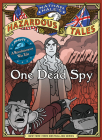
Nathan Hale's Hazardous Tales
We tend toward the fantastic and fictional in this house, but this historical graphic novel series has obsessed Eleanor and Isabel all summer. There are two Nathan Hales: There's the author and illustrator Nathan Hale, born in 1976, who we first encountered as illustrator of Rapunzel's Revenge and Calamity Jack, and who created this series. Then there's the historical Nathan Hale, the Revolutionary War spy hanged in 1776, who serves as the narrator of the series.

The first book, One Dead Spy, tells the story of the historical Nathan Hale, and provides the frame story for every other book in the series. Hale is on the gallows in New York, about to be hanged by a cheerful, none-too-smart Hangman and a pompous British soldier. He says his famous last words ("I regret that I have but one life to give for my country"), and a giant eagle swoops down, picks him up, and drops him into an enormous magical history book. On emerging, Hale can see the future -- he now knows all of American history. He becomes a sort of Scheherazade, putting off his own death by telling the Hangman and the British soldier one story from American history in each volume of the series, as they comment throughout. There are six books so far, ranging from Revolutionary history to the Civil War (Big Bad Ironclad!), from heroes like Harriet Tubman (The Underground Abductor) to some of the least appealing episodes in American history (Donner Dinner Party). Both of my girls are retaining a huge amount of historical fact from the books; we've had the whole series out from the library all summer.


Avatar: The Last Airbender

For a totally immersive world filled with compelling teen characters of both genders, many of whom happen to have powers that allow them control of the elements, check out the Avatar series. We stumbled on them at the library, not knowing anything about the animated Nickelodeon series that preceded them (and which is also really, really good). I read the first out loud to Isabel and Will expecting it to be mediocre, as TV spinoffs so often are, and was happily surprised to find excellence instead. Looking at the title page, I was less surprised: the graphic novels are scripted by Gene Luen Yang, recently named National Ambassador for Young People's Literature, author of American Born Chinese, now also writing a teenage Chinese Superman for DC Comics -- is there anything he can't do?

The Avatar: The Last Airbender graphic novels follow the adventures of Avatar Aang (a teenage boy who is also the connection between the human and spirit worlds, and can "bend" air, water, earth, and fire), and his friends Katara (a water-bender), her brother Sokka (no powers, but funny), Toph (an earth-bender), and Zuko (a fire-bender, and ruler of the Fire Nation). The characters are complex--even the villains, like Zuko's evil sister Azula, have depth--and the plots are immersive. There are three 3-part series out right now: The Promise, The Search, and The Rift. The first volume of North and South is due out later this year. It's looking like we'll all be dressing up as Avatar characters for Halloween.
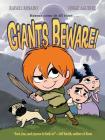

Giants Beware! and its sequel, Dragons Beware!
These excellent books came as gifts from you. They are the creation of Jorge Aguirre and Rafael Rosado, and join the list of spunky, awesome heroines on our Graphic Novels list page. The sword-wielding redhead on the cover is Claudette, daughter of blacksmith and warrior Augustine, who lost both legs and a hand to a dragon years ago. Behind her are her brother Gaston, who would rather whip up gourmet French food than fight; their friend Marie, daughter of the Marquis, aspiring princess and diplomat; and Claudette's dog Valiant. The two books (so far--it's clear that more are coming) include adventure with a touch of danger, but not so much that they become scary. Encounters with giants, dragons, and evil magic-wielding adults end well for all involved, and include a lot of humor. We're looking forward to more.
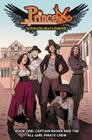

Raven the Pirate Princess
I wrote back in January about our love of Jeremy Whitley's graphic novel series Princeless, which combines a feminist sensibility with a racially diverse cast of characters, headed by Princess Adrienne, a fearless black princess who breaks herself out of the tower where she's been imprisoned by her father, makes friends with the dragon who's been sent to guard her, and sets off to rescue her similarly imprisoned sisters. In Book 3 of Princeless, Adrienne meets Raven Xingtao, the Pirate Princess, and now Raven has her own spin-off series. If anything, Whitley takes his characters even further into fabulous feminist territory as Raven assembles an all-female crew for her pirate ship and readies herself to go get her birthright back from her brothers, who usurped her place.

This series feels like it's aimed at a slightly older audience than Princeless -- middle grade and YA, I'd say. There's a little more violence, a little more sexual innuendo (between Raven and her the half-elf, Sunshine, and with her old best friend, Ximena; it's pretty clear that this comic is headed towards a lesbian relationship), and a lot of jokes about stereotypes and cultural appropriation that are very funny to a college-age sensibility. Here's Raven interviewing a bunch of male pirates before deciding she needs to stick to a female crew:


So brilliant. So much love.

There are more, of course (Ms. Marvel! Squirrel Girl! Raina Telgemeier's Baby-Sitters Club!), but I'll save them for another day.

I look forward to hearing about how it feels to be retired from bookselling!

Love, Annie

Tuesday, January 12, 2016

New year, new spunky feminist princess

Dear Aunt Debbie,

Happy New Year!

It's been an intense and happy holiday season, filled on our end with lots and lots of good reading. As it's been a while, here's a quick snapshot of the reader profiles at my house these days:

Eleanor, in 3rd grade, tries very hard to read at every waking moment: at the breakfast table, brushing teeth, on the street walking home from the library. We've outlawed reading at dinner, but allow it during dessert; consequently, it can now take up to 25 minutes for her to eat a single cookie.

Her tastes run to big novels about mythology and magic: she's read and reread all of Rick Riordan, from Percy Jackson through his Egyptian series and the new foray into Norse mythology. For lighter fare, there are the Dork Diaries books (not my favorites, as you know), and lots and lots of Geronimo and Thea Stilton, the strange, translated-from-the-Italian series about talking mice with long hair and clothes.

Isabel, in 1st grade, has become a full-fledged independent reader in the last several months. She went from early reader books leapfrogging up to the Critter Club series (early chapter books focusing on girls who love animals -- a clear fit), and just this past month I looked over and she was reading Ruth Chew -- real, full-on chapter books, with hardly any pictures -- and telling us all about the stories. I remember loving Ruth Chew as a kid. The Matter-of-Fact Magic books are set in 1970s Brooklyn, actually not far from where we live now; in each, children encounter small, imaginative bits of magic that change their lives a little bit, but aren't scary or terribly permanent. The fate of the world is never at stake, and practical details pop up regularly: what do you do when you use a wizard's magic umbrella to transform your clothes into bathing suits, then lose the power to change them back, and no longer have the front-door key to your house? (The Trouble With Magic.)


Will, closing in on age 3, picks up books almost as often as his sisters. He's currently obsessed with superheroes and Yoda, so we're reading aloud a lot of I Can Read! books from the library with titles like Batman: Winter Wasteland. He is building up a baseline of specific character knowledge that I'm sure will come in handy later. Meanwhile, we all know much more about the specific powers of a wide variety of superheroes, in both the DC and Marvel universes.

Despite their different interests and ages, graphic novels remain a major go-to for all three kids, a kind of common denominator. When one picks out a new graphic novel of any kind, from Avatar: the Last Airbender to My Little Pony, they all vie for a turn to read it.

We stumbled across our newest favorite graphic novel series at the library, and the girls kept the first three books in such solid rotation that it was clear we needed to own them.

Princeless is centered around the adventures of Princess Adrienne Ashe, who begins the series at age 16 having been trapped in a tower -- like her 5 older sisters before her -- by her parents, in the hope that a dashing prince will come to save her. Unlike her sisters, Adrienne makes friends with the dragon guarding her, puts on the armor of one of the hapless princes who's been eaten by that dragon, and busts out of her own tower. Her goal? To save herself, and then to head out and save her sisters.

There is so much to like here. First, Adrienne and the entire royal family (King Ashe, Queen Ashe, 7 princesses and one prince) are black. This is obvious from the illustrations, of course, but it's also front and center in the text: the first three pages of the first issue show Queen Ashe reading Adrienne a prince-saves-the-blonde-princess-in-a-tower story, and Adrienne angrily critiquing it while her mother struggles to comb her hair.

Adrienne is confident, strong, and smart, not to mention physically capable -- she teaches herself swordfighting, and almost immediately does pretty decently in combat with her father's soldiers (they think she's a knight who has killed the Princess Adrienne). She's not invincible -- there's a good amount of slapstick with Adrienne falling from balconies and being tangled in her ill-fitting armor -- but she's resilient.

Almost all of the supporting characters in the series are female. In book 1 (Save Yourself), Adrienne meets and befriends Bedelia, the teenage daughter of a dwarf blacksmith who, it turns out, has been doing all the smithing for years while her father goes to the bar. Book 2 (Get Over Yourself) brings in Adrienne's sister Angelica, the most beautiful of the princesses, who has positioned herself as the muse for a town full of artists. In Book 3 (The Pirate Princess), Adrienne and Bedelia rescue, fight, and team up with Raven Xingtao, the daughter of a pirate king. (Raven is getting her own spin-off series this month.) Book 4 (Be Yourself) focuses on the quest to save Adrienne's sister Angoisse, who is shut up in a dark swamp castle with a gorgeous but creepy vampire boyfriend. There are also Kira, a werewolf being groomed to take over her father's position of wolf pack leader; Delores Grunkmore, a dauntless goblin guide; Queen Ashe, who disappears mysteriously partway through the series (Eleanor and Isabel and I have a theory about that); and of course Sparky, Adrienne's dragon.

Contrast this with the lineup in the (otherwise wonderful) Zita the Spacegirl, in which the rag-tag bunch of creatures and robots Zita gathers on her journey are entirely male, in classic Wizard of Oz fashion.

Characters throughout the series are diverse, both racially (so nice to see such a variety of skin colors in a comic book) and in ways that play with stereotypes. I say "play with" rather than "defy" because author Jeremy Whitley's tone is often knowing -- he's consciously poking fun at and retooling narratives we've seen before, sometimes in ways that feel a little heavy-handed to me, if not to my kids. I think of Adrienne's twin brother, Devin: a sensitive guy, an artist and designer, written in direct opposition to the hyper-masculine King Ashe, who so far has no redeeming qualities.

But I felt that way about the stereotypical aspects of both Princess Angelica (the beautiful one) and Princess Angoisse (the goth one) too, and Whitley managed to find endings which allowed each princess to find her own way of being empowered. I'm willing to reserve judgment as the series goes on.

And some of the wink-wink-nudge-nudge moments are Whitley's funniest. When Adrienne first meets Bedelia in Book 1 and expresses an interest in getting some armor that fits her, Bedelia ushers her into the "Women Warriors Collection":


That would be, from left to right, the costumes worn by Wonder Woman, Red Sonja, and Xena, Warrior Princess. Adrienne and Bedelia's commentary:


[Side note: I mentioned Will's current superhero obsession, which, among other things, is bringing home to us just how sexy and sexist the depiction of female superheroes is. Here's what happens when your son asks you to google pictures of Poison Ivy -- and this is with Safe Search on! We have a lot of conversations about how Wonder Woman must be really cold.]

After walking us through the implications:


Adrienne requests that Bedelia make her some real armor. Which she does:


In my googling, I found a nice interview with Whitley about his inspirations for the Princeless series. He's white, but his wife and daughter are black, and he saw a huge gap in the kinds of comic books he'd be comfortable giving her to read:

"Good heroines are few and far between. When you look for ones that are leading books, it narrows the scope more. When you look for one that is appropriate for kids, it gets much narrower. When you talk about one with a lead female of color, the number drops to nearly zero (they exist, they are just very difficult to find). My daughter is black and while I encourage her to look for role models of all colors, girls need to be able to see girls that are like themselves in media. They need it even more when it comes to seeing them portrayed with strength."

Here's hoping these books keep selling like hotcakes. We'll certainly be buying them.

Love, Annie

P.S. What did you think of yesterday's Newbery and Caldecott winners? I was thrilled to see Roller Girl named a Newbery Honor Book!


Monday, May 12, 2014

Let it Go

Dear Aunt Debbie,

Well, it's happened. After holding the line for years against letting badly-written Disney princess books into my house, unless they come from the library and go right back there, I have finally succumbed. I blame Frozen.

I'm sure that in your work at the bookstore-inside-a-toystore, you're aware of the Frozen-mania that has gripped children ages 4-10 in recent months. Eleanor and Isabel went to see the movie last fall, soon after it came out, and retained an enormous number of lyrics from that single viewing. Then "Let it Go" became inescapable (have you seen it sung in 25 languages?), and Isabel became obsessed with Elsa, the powerful but emotionally-stunted snow queen who can shoot ice from her hands. She got Frozen dolls for Christmas, and is planning a full-family Frozen costume for Halloween. For several periods this winter, we had to address her as "Queen Elsa," or she wouldn't answer.

And then there are the books.

At Barnes & Noble right now, there's an entire Frozen section: Little Golden books, sticker books, junior novelizations, early readers -- the Random House/Disney site has two pages of them. Several of Isabel's friends have the early readers, and these thin little books with their flat writing have become the latest object of desire. Last week, I watched seven 4-year-olds abandon their picnicking and tree-climbing in the park to press around a mom reading a Frozen book. It's just as alluring as the ice cream truck: literary kid-crack.


So when Eleanor's school held a book fair, I went ahead and got Isabel the book she wanted: A Tale of Two Sisters . A little literary reference there in the title, eh? Don't get excited -- that's as good as it gets.

Here's where I'm torn: I love books. I love watching my children grow to love books. I want books to be objects of desire for them, want them to be excited about sharing books with their friends. I want Isabel to want to learn to read, and this reader is the first book that's made her willing to try to identify the words she's looking at. Sitting with Jeff a couple of nights ago, she read aloud every instance of the names "Anna" and "Elsa," and was able to read a few smaller sight words as well.

But oh, it is so badly written. There's no author listed -- in every way, it feels like a commercial product rather than a book. Each sentence goes out of its way to drain any sense of drama or life from the story:


It's as if the publishing house believes that simple must equal boring, that there is no art to paring down a story and writing it in easy-to-read sentences. (I wonder as well whether some of these sentences are actually easy to read: the vocabulary in the book feels like it's hitting a variety of levels, including words like "kingdom," "search," and "listen.")

Would it really be so hard to do it better? Read a little Dr. Seuss, some classic Else Holmelund Minarik Little Bear, any of the amazing books we've touched on in our many posts on learning to read. I suppose that if the books are selling like crazy, there's no incentive for improvement, but I wish there were.

In the meantime, I'll focus on the positive message promoted at the end of A Tale of Two Sisters:


I'll take what I can get.

Love, Annie

Friday, May 17, 2013

The benefits of children reading to each other

Dear Aunt Debbie,

As Eleanor's independent reading is progressing (and she's going like a house afire!), we're starting to enjoy some of the benefits of our kids reading to us, and to each other.

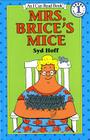
Benefit #1: Eleanor finds new authors and series she's really into.  In her classroom, Eleanor "shops for books" once a week, choosing five independent reading books at her level and bringing them back and forth to school every day.  Lately, she's been choosing multiple books by the same author, really paying attention to who's writing what she likes to read. This is how we've gotten a lot of Syd Hoff books into the house: Sammy the Seal, Danny and the Dinosaur, Mrs. Brice's Mice. She loves the cartoony drawings, and the general sense of play throughout Hoff's stories. They're a little meandering, and fun.  Henry and Mudge, who you blogged about a while back, have also become huge favorites here -- the third series by Cynthia Rylant that we've fallen in love with, after Poppleton and The High Rise Private Eyes.  Watching her gain a conscious appreciation for the work of a particular author is a joy.

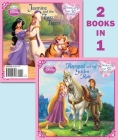
Benefit #2: Eleanor reads Isabel the crappy books I don't want to read to either of them.  As I'm home with Will full time right now, and Isabel is home with us three days a week, we're going to the library a lot. Isabel's library book picking habits are fairly indiscriminate: she stops in front of a shelf and just pulls out whatever's there, barely looking at it until we sit down to read it there or later.  What she gets most excited about are books she knows, or books with pop culture characters she recognizes.  Each visit, she picks up at least one badly-written series book: a Star Wars industry story, or a godawful Disney princess book, something either cloying or nonsensical in its narrative, and sometimes both.  Then, of course, this is the book she wants me to read to her sixteen times in the next two days.  Imagine my joy when I peeked around the corner of the kitchen into the living room a few days ago and saw Eleanor reading Isabel Rapunzel and the Golden Rule/Jasmine and the Two Tigers!  They were both totally into it, and I didn't have to be involved.

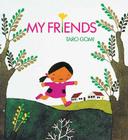
Benefit # 3: Both girls have started reading board books to Will. At three months old, Will is starting to be entertainable at times, and he's really paying attention to his two older sisters.   Among other games (painting his hands and feet with dry paintbrushes, dancing around him, putting hats on his head), they're showing him books. Eleanor caught his attention first with Pat the Bunny, that wonderful old standby with things to touch on every page. It's such an odd, pleasing, dated little book.  The next day, there was Isabel showing him My Friends, by Taro Gomi, a gentle recitation of all the things a little girl learns from the animal kingdom:

I learned to climb from my friend the monkey.

I learned to run from my friend the horse.

I learned to march from my friend the rooster.

I learned to nap from my friend the crocodile.

While all this kid reading has been going on, I've managed to find time to read Fire, Kristin Cashore's second book.  I'm in total agreement with you -- it's not nearly as good as Graceling.  Turns out that skipping it and going straight to Bitterblue was a good idea.

Love, Annie

Sunday, November 25, 2012

Goblins! And, you know, princesses too.

Dear Aunt Debbie,

It was so lovely to see you, Bob, and Lizzie this week!  Much joy of Thanksgiving pies and reading of books.

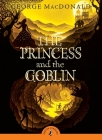
Your mention in your last post of a YA book involving goblins made me think of one of my childhood favorites, which I remember my father reading to me: George Macdonald's 1872 fantasy The Princess and the Goblin.  We have a bit of a goblin mythology going in our house, sparked by Jeff's habit of telling the girls that the metal doors in the sidewalk (going down into store basements) or in the walls of the Brooklyn-Battery Tunnel are "goblin doors."  Many a morning walk to school has involved Jeff's elaborate goblin stories, with Eleanor's eager participation.

Because of this, and because of my fond memories of the book, I picked up The Princess and the Goblin with Eleanor maybe a year ago, only to run into the Stuart Little Problem.  Perhaps it's time to try again.

It's a bit of a dark tale, centering on eight-year-old Princess Irene, who lives a cloistered life in her father's castle, unaware of the goblins who live in the hills just below.  One evening, she and her nursemaid Lootie stay out too late, and are almost captured by goblins, but are saved by a miner boy named Curdie, who sings to drive them away (in this world, goblins hate singing).  Irene becomes aware after this incident of the danger and darkness just outside her walls and beneath her feet.  Through Curdie's underground spying, she later learns of a plot the goblins have to make war on the humans, who exiled them belowground years before.  My memory is that there's some sympathy for the goblins' predicament, but that they're largely described as unpleasant and ill-formed -- a tribe of Calibans.

On the upper floors of the castle, Irene discovers her great-great grandmother, who lives up in a high attic raising white pigeons, and offers Irene advice.  I can't remember if the great-great grandmother is supposed to be some kind of spirit or is definitely corporeal -- it's that kind of book.  Over the course of the story, Irene develops a friendship with Curdie, who gets a chance to rescue her from the goblins later, and there's a sequel about the two of them: The Princess and Curdie.

In the last few weeks, Isabel has caught the Princess bug, and there's been a lot of Cinderella role-playing going on (though she likes to be one of the stepsisters more often than not, because she can pretend to be really mean).  I have a feeling we'll be reading princess books for quite some time yet.

Love, Annie

Monday, August 1, 2011

Fancy Nancy and the teaching of vocabulary

Dear Aunt Debbie,

You ask about our experiences with Fancy Nancy.  Up till now, I have gently steered away from her -- we don't own any Fancy Nancy books, though we do have a Colorform set which came as a birthday present, and when Eleanor has picked out Fancy Nancy books at the library, I've read them to her once or twice and quietly moved them up onto the library shelf.  Today was the first time I ever sought them out, to respond to your post.

So how do we feel about them?  Eleanor is attracted by the glossy sparkly princessy covers, and Nancy's general fancy-ness: dresses and hair doo-dads and purses and bows.  There are a lot of pretty girls in Robin Preiss Glasser's drawings, and Eleanor likes that.  She wants to read the books when we get them, but doesn't request them over and over.  Then again, my own lukewarmness may affect my reading aloud.

I have mixed feelings.  I could do without the girly stuff, which we don't really need reinforced around here.  So much emphasis on primping!  However, I like the fact that there are alternate female characters depicted: Nancy's best friend, Bree, is black (though similarly fancy in dress); Nancy's mom sports glasses, a ponytail, and decidedly non-fancy tops and pants; and Nancy's adored teacher, Ms. Glass, is fancy in a different way: patterns, an artist's smock in the trip to the museum book, glasses, a pink streak in her black bangs.  (I admit it.  I am swayed by the depiction of the awesome cool teacher.)

Honestly, what annoys me the most about Fancy Nancy is the way the books try to teach vocabulary.  As a reader and as a teacher, I have always been of the Vocabulary in Context school of thought.  Once you've read a word in context several times, you figure out organically what it means.  When you begin to use it, then, you use it correctly -- you get a far better feel for the word than you do by rote memorization and drilling.  It's not hard to tell which of my 9th graders are the big readers, and which are the kids who learned their hundred-dollar words from test-prep classes.

The Fancy Nancy books each include a small number of words which Nancy designates as "fancy"over the course of the narrative.  At the end of the book, there's a page with all of the words and their definitions.  Here's the vocab page from Fancy Nancy: The Dazzling Book Report:
Some of these seem to me to be pretty good vocabulary words.  "Crestfallen" -- great!  But do "desperate" and "select" really need to be defined?  If you're a kid who knows "eye-popping," wouldn't you probably know "dazzling" too?

And then there's the way every single one of these words is introduced.  From page 1 of the museum book referenced above:

Ooh la la!
I am overjoyed.
(That's a fancy word for very happy.)
Our class is going
to a museum.

"That's a fancy word for..." gets old pretty fast.

Perhaps Jane O'Connor, who writes the Fancy Nancy books, agrees with me.  One of the two books we were able to pick up today at the local library was a fairly recent entry in the series: Fancy Nancy: Poet Extraordinaire!

In it, the fabulous Ms. Glass teaches a poetry unit.  Nancy and the other students have to survey their family and friends about their favorite poems, and the book includes several of these favorites (though not the text of "Annabel Lee," Nancy's mother's choice, or "Blowin' in the Wind," which is her father's).  The class makes a "poet-tree," and each student writes a poem up on a leaf and tapes it to a branch.  Ms. Glass writes encouraging comments on the back of each leaf.  There's a discussion of writer's block, inspiration, and the wide variety of poetic forms that exist in the world.  There is very little in-your-face vocabulary definition, and instead of the usual vocab page at the end, O'Connor includes an anthology Nancy is compiling of her favorite poems.  All in all, it's a pretty good foray into poetry for fairly young kids.

Foray: that's a fancy word for an early try.

Love, Annie

Sunday, April 24, 2011

Gail Carson Levine redeems princess stories

Dear Aunt Debbie,

Happy Easter!  We did indeed have some egg-dyeing yesterday and some egg-hunting this morning at my parents' place.  And we did indeed fail to find one hidden egg, so that will be an exciting surprise for my parents at some point in the future.  I was reminded this morning as we traded off hiding and hunting of our tradition at Aunt Martha's house: first the adults would hide the eggs for the kids, and then the kids would hide a second round for the adults.  Grandma always won the grown-up hunt; she was quite competitive about it, too.

Thank you for the Peek-A-Boo explanation.  Makes total sense now, and I'm glad Dad isn't going anywhere too dangerous.  Sadly, Emma's query rings no bells for me.  Maybe this is one to post up at whatsthatbook.com?

Your mention of Emma's post about Ella Enchanted made me realize that I haven't yet written to you about Eleanor's reaction to Gail Carson Levine's The Fairy's Return and Other Princess Tales, which you wrote about a couple of months ago.   It's a collection of six stories, each set in the village of Snettering-on-Snoakes in the Kingdom of Biddle, each pulling from classic fairy tale tropes and recasting them in realistic, funny, and interesting ways.  You wrote about "The Fairy's Mistake," which is pretty fabulous in terms of imagining what it might be like if fairy tale things happened in real life.

One of our other favorites is "Princess Sonora and the Long Sleep," Levine's take on Sleeping Beauty.  In this one, a fairy gives the baby princess the gift of being ten times as smart as any other person on earth, thus making her life extraordinarily difficult -- no other kids want to play with her, her answers bore everyone, she has no intellectual equal.  Because she's so smart, Sonora understands the spindle finger-pricking curse that awaits her, and decides to hide a spindle for herself so she can choose the hour of her hundred-year sleep.  Of course, this goes wrong, and in Levine's world the hundred-year-sleep leaves her filthy with dust and cobwebs, but the prince who comes to awaken her has as his main characteristic an intense curiosity -- no one has ever been able to answer all of his questions....

The heroes and heroines of these stories are realistic, appealing people, with dispositions both interesting a sweet.  Levine alternates among stories of princes finding love with farm girls, princesses finding love with baker's sons, and royalty finding love with each other.  She plays with elements of The Princess and the Pea, Cinderella (it's a boy, Cinderellis, here), Sleeping Beauty, Rapunzel, and lesser-known fairy tale elements: the glass hill, the goose who people's hands stick to, the girl turned into a toad.

Eleanor adores the book.  It's close to 400 pages, all told, and we've already read it through twice completely, with a few forays into individual stories as well.  A total hit!  Princesses who are actually pretty decent role models!  A sense of humor!  Good find.

Love, Annie

Monday, February 14, 2011

"I only like princesses."

Dear Aunt Debbie,

The Fairy's Return is next on our list of chapter books after The Voyages of Doctor Dolittle.  Eleanor really likes the cover, natch.  I'm glad to know that it's a little post-modern (though what else would I expect from the woman who bought me the anthology Stories for Free Children?).  In the last month or so, Eleanor has been hitting the princess obsession hard, and it's driving me a little crazy.

We've written before (here and here, among other places) about the inescapable allure of princess stories, and the ways in which the Disney machine has commodified what might have started as a natural interest into a full-scale kid lifestyle.  Eleanor's 4th birthday brought a host of new princess products into our house (mostly courtesy of her friends, who got her what she asked for), and with them and the post-birthday letdown has come a period of trying behavior.  At preschool, she told one of her teachers that she was bored with Circle Time and only wanted "to talk about princesses."  Coming home last week, she was asked by a neighbor if she liked cats: "No, I only like princesses."  It doesn't seem to matter to her that this isn't objectively true: the Doctor Dolittle she's so heavily into right now is about the farthest thing possible from a princess story, and over the weekend she had a great time at the Brooklyn Children's Museum watching sea anemones, then painted a pretty awesome underwater scene featuring a jellyfish.  But there's something about the marketing of Disney Princess that has infiltrated the way she conceptualizes what she is, and should be, interested in.

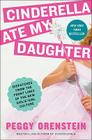
In short, I am the target audience for Peggy Orenstein's new book, Cinderella Ate My Daughter.  I bought it this weekend at our local independent bookstore after reading Eleanor yet another godawful flat story from a Disney Princess Golden Book.  (Our bargain is that I'll read them to her in the store or the library, but we won't take them home because they're badly written.)  I'm only a couple of chapters in, but let me tell you, Orenstein speaks to my soul.  She's recycling some of the material that has appeared in the NYT magazine over the last decade (I linked to my favorite of her pieces here), and has expanded and added new iterations of the same basic idea: Yes, your experience as a parent that girls' choices of what to play with and how to play are being steadily pinkened and narrowed is correct.  This is what's happening, and it may seem fairly innocent, but it's actually kind of scary.  I am filled with righteous outrage!

And so again, what do I do about it?

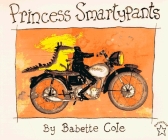
My mother-in-law gave Eleanor a new alternate-princess book for her birthday, and she's been enjoying it.  Babette Cole's Princess Smartypants is written in the mode of The Paper Bag Princess.   In this story, Princess Smartypants wants to hang out with her monster pets and stay single ("She enjoyed being a Ms.") rather than marry any of her many suitors.  She sets them all impossible tasks, then watches happily as they fail.  Then Prince Swashbuckle shows up.  He seems a good match for her -- he too can roller-disco till dawn -- but when he passes all her tests, she turns him into a toad with a magic kiss and gets to live happily alone again. 

On the one hand, I like the humor here, and the reversal of expectations, and Princess Smartypants's overalls and monsters.  On the other, her name bugs me: "Smartypants," in my experience, isn't a positive thing to be called.  (Did I mention that several of the princess-y things Eleanor got for her birthday were made by a brand called "Klutz"?)  Also, she's kind of a jerk to Prince Swashbuckle, who looks a little smarmy but just does what she's asked him to do. 

Reading this book, among all the others, makes me wonder what I'm really looking for.  Do I want a better model of princess, or just less princess in general?  Am I overreacting to what will turn out to be a nice little pre-feminist stage?  Thank goodness for Isabel's taste in books and products, which has lately expanded from dog ("Aaa-ooooo!") to monkey ("Mun-kee!").  Animals feel like such a relief.

Love, Annie

Friday, August 13, 2010

Thirteen motherless princesses

Dear Aunt Debbie,

Before we move on to wonderful parents, I want to write about two more motherless-girl fairy tales that have been getting a lot of play in our house lately.

The first is Yeh-Shen: A Cinderella Story from China, retold by Ai-Ling Louie and illustrated by Ed Young.  According to the author's note, this is a version of the oldest Cinderella story on record, dating from the T'ang dynasty (618-907 A.D. -- the first European version is dated 1634.)  It has many of the traditional Cinderella elements: orphaned girl is worked to the bone by her stepmother and mean stepsister, is eventually helped by a magical figure, gets to go to the ball, loses a precious slipper, finds it again, and marries the prince.  The twists: Yeh-Shen's only friend is an enormous fish she has raised.  After her stepmother discovers him and kills him, Yeh-Shen's magic spirit, in the form of an old man, tells her to find the fish's bones and use their magic.  It is the fish bones which provide Yeh-Shen with food, and eventually a dress and golden slippers to go to the banquet.  The king doesn't actually see her there, but is presented with her lost slipper and falls in love with the idea of the tiny-footed woman who might wear it.  (It's a wonder that Cinderella stories didn't give all the women in our family major complexes about the size of our beautiful large feet.)  He uses the slipper to set a trap for Yeh-Shen, she comes to get it, he falls in love.  Oh, and the last sentence has the stepmother and stepsister being killed in an avalanche.  It's an interesting variation, well-written, and the drawings are gorgeous.

I've mentioned before that Eleanor is, like every other girl in America, really into princesses.  If one princess is good, how much better to have an even dozen, all lushly illustrated in full-scale ball gowns?  The Twelve Dancing Princesses is a strange story, and one I'd forgotten.  This version is told by Marianna Mayer, and illustrated by K.Y. Kraft.  Their mother has of course died, and to keep them out of trouble, their father the king locks them into their bedroom every night.  Yet every morning, they're exhausted, and their dancing slippers are worn through.  What's going on?  The answer lies in the Twilight World, where they go every night for what is essentially a waltzing rave.  They bring a number of princes down with them, and make them drink a potion which freezes their hearts and leaves them only the love of dance.  The princesses' secret is discovered by a poor dreamy farmer named Peter, who becomes the castle gardener and falls in love with the youngest princess.  There's a happy ending for everyone.  I love how weird this book is -- the Twilight World has no explanation, and the princesses seem perfectly happy to live their secret night-time lives; Eleanor adores the dresses.  So we're both happy.

Love, Annie
Wednesday, June 2, 2010

Race in children's books

Dear Aunt Debbie,

What a depressing, jerky move from the folks at Penguin! I do think about race as one factor when I buy children's books, in pretty much the way you describe: I think it's a good idea for Eleanor and Isabel to have a variety of images of people in the books that surround them. (This is one of the reasons I've also been on the hunt for good books with same-sex couples in them. More on my favorites in that category in an upcoming post.)

Eleanor has, to date, never commented on the question of race, in terms of the people we know (and she has a somewhat mixed group of friends), illustrations in books, or depictions in movies. We recently watched the live-action Disney Cinderella starring Brandy, and I wondered if she would comment on the race-blind casting: Cinderella is black, the evil stepmother (Bernadette Peters) is white; one of the stepsisters is black, the other white; the king is white, the queen (Whoopi Goldberg) is black, and the prince is Filipino. Not a word, even when we discussed some of the differences between this version and the cartoon.

I'm always happy to open a book Eleanor has picked out at the library and find that the characters in it aren't all white. On Eleanor's friend Ian's recommendation, we checked out one such book yesterday, by Jane Ray:


The Apple-Pip Princess


It's a sweet fairy tale: a widowed king says he's going to retire and choose one of his three daughters to rule his kingdom. Each princess has to do something to prove her worth. Predictably, the two elder princesses are too selfish, and mess it up, while the third uses magical gifts of the land left to her by her mother to plant a lot of magic trees and win in spite of not being grand. It's a little bit treacly in places (the good princess is named Serenity), but the illustrations are wonderful, and Eleanor adores it. Everyone in the book is dark-skinned, and there's no mention of race.

On the fairy tale front, another library discovery of ours are the gorgeous retellings of classic tales illustrated in African-inspired collage by Rachel Isadora. The first of these we read was The Fisherman and His Wife.


The Fisherman and His Wife


Isadora's collages are vibrantly colored and energetic -- if we had a working scanner at the moment, I'd show you the ocean getting darker and more furious as the fisherman's wife continues to ask for ridiculous things from the flounder. We also like Isadora's versions of Hansel and Gretel and The Princess and the Pea, though be forewarned: Hansel and Gretel is a dark story, and the illustrations of the witch are quite frightening; and The Princess and the Pea is, at bottom, not an interesting story at all, though Isadora's illustrations of different African princesses are beautiful, and she teaches you how to say hello in three different African languages.

Then there are some of the gifts we've gotten from you. Three that pop immediately to mind:


Where Is Gah-Ning?


As we've said before, Bob Munsch is hysterical. This was the first of his books we'd ever read, and it has some of his trademark style: lots of pleasing repetition in the dialogue, as Gah-Ning tells her father she wants to go to Kapuskasing, and he says no to every way she could get there, followed by a totally ridiculous plot twist and a happy ending. Gah-Ning and her family are Chinese, and some of the other characters are white, but again, there's no mention of race.


Oscar's Half Birthday


Bob Graham includes a nice variety of characters in his books: in Oscar's Half Birthday, mom is black, dad is white, and the kids are mixed-race (as well as being supernaturally well-behaved, especially at bedtime). It's a very sweet depiction of an older sister and baby brother. We also liked Jethro Byrd, Fairy Child, in which Annabelle (the girl who sees the fairies) and her family are white, and all the fairies are darker-skinned -- possibly Latino?

Finally, there is the joyful, perfect poem of a book by Trisha Cooke, illustrated by Helen Oxenbury:


So Much


It's a story about waiting and having people arrive: a new family member comes in on every other page, with a catch-phrase ("Hello hello!" "Yooo-hooo!") and something they want to do to the baby ("I want to kiss the baby! I want to kiss him so much!"). On the alternating pages, all the people in the house sit and wait together, and the drawings become sepia-toned. The family is black, British, and incredibly warm. Helen Oxenbury's drawings of babies are pitch-perfect.

All of which is a long way of saying that, given books with the two covers you referenced in your last post, I'd be more likely to buy the one with the black kids. However, there are a number of other books I like better for addressing new sibling issues. What are your favorites in that category?

Love, Annie

Saturday, May 1, 2010

Books for grumpy, tired toddlers

Dear Aunt Debbie,

We got Pirate Girl from the library a while ago, and Eleanor adored it. Maybe it's time to buy a copy and get it into the regular rotation. I'm so sorry to hear Helga's Dowry is out of print! What is wrong with publishers?

I love the Williams column. My favorite exploration of the Disney princess phenomenon is a New York Times article from a few years ago by Peggy Orenstein called "What's Wrong with Cinderella?" I teach it in my Women's Voices class as we talk about gender expectations and how much of what little kids read and play with is nature, how much nurture. When should we as parents be looking for ever more princess (or train, or dinosaur) books, and when should we be trying to expand our kids' horizons?

We're going to Eleanor's good friend Ian's 3rd birthday party tomorrow, and tonight I'll be wrapping up three books. We went with one of your train recommendations, Choo Choo, by Virginia Lee Burton, as Ian is very into trains.


Choo Choo


The black and white charcoal illustrations are evocative; I must remember the style from another Burton book I read as a kid, Mike Mulligan and His Steam Shovel. It seems like a fun one to read aloud; I'll let you know how it goes over.

The other two are books you gave Eleanor over the past couple of years, both of which have spawned catchphrases in our daily life.


Grumpy Bird


Grumpy Bird, by Jeremy Tankard, has got to be one of my all-time favorites. Bird wakes up grumpy, too grumpy to eat, play, or fly, and so goes walking through the woods. He meets a series of annoyingly happy animal friends, all of whom end up following him ("Walking? I love walking!"). When he realizes that they'll do whatever he does (jump, stand on one leg), he snaps out of his mood and they all fly back to his place for a snack. What I love most about this book is the way it quietly makes fun of the sappy happy characters in so many lesser children's books. Every animal he passes asks him what he's doing, until finally Bird explodes: "WHY DOES EVERYONE WANT TO KNOW WHAT I'M DOING?" Cracks me up every time. This is also a great book to read with different accents for each of the characters. We usually read Fox's voice in a British accent, and Beaver's in a slow, kind of dumb one. Eleanor loves the book, and it gives us a handy shorthand for days when she's in a bad mood -- Oh, are you a Grumpy Bird today?


Will You Carry Me?


The last is Will You Carry Me?, by Heleen van Rossum, illustrated by Peter van Harmelen. The title is, of course, a familiar refrain to any parent of a toddler, and the book is completely charming. Thomas and Mommy are headed home from the playground, and Thomas is too tired to walk. Mommy (who has an awesome Dutch sense of style) comes up with several other things they can do: "Well, if you're too tired to walk or jump, maybe we should try...Swimming!" Mommy's good-natured channeling of Thomas's whining has popped into my head on more than one occasion when we're out and Eleanor is fussing in the same way. The pictures here are filled with strange little creatures who also walk, run, jump, swim, etc. -- it bears close reading.

Love, Annie
Friday, April 30, 2010

Princesses, take 2

Ah, Helga -- Lizzie and Mona were very fond of her. Your mother probably gave it to us. It's out of print, alas, but at libraries and Alibris, which we haven't discussed much but which is a great source for the books you remember from childhood.
I know that the princess fascination isn't new, but it does seem to have gotten more intense lately -- thanks in no small part to the Disney marketing machine. I offer here a wonderful column written by Marjorie Williams on the occasion of the death of Diana in 1997. "It is the rare little girl who wants to grow up to be queen," she writes. "To wish to be a princess is not simply to aspire upward, to royalty; it is also to aspire to perpetual daughter-hood, to permanent shelter."

A few additions to the princess book list. Cornelia Funke has two lovely strong-girl picture books. The Princess Knight is about a princess who trains with her brothers to be a knight, only to end up with her father inviting male knights to a tournament to compete for her hand. She is outraged: "You want me to marry some dimwit in a tin suit?" She sneaks into the tournament as an anonymous entrant, and gets what she wants. It's good, although feels like it's trying a bit too hard.

Another Funke which I like better is Pirate Girl, about a girl who is captured by pirates and keeps warning them that they'll be in trouble when her mother comes to get her. They all think this is ridiculous, until mom shows up as the captain of her own pirate ship, striking terror into the hearts of the bad guys. The illustrations are what make this so good: the pirate queen is a hefty Teutonic-looking redhead, clearly tickled to have her little girl back.

Both those Funke books, plus a very different but lovely one about a little brother, have been packaged together in one book, A Princess, a Pirate, and One Wild Brother, three hardcover books for the price of one.

Then there are the chapter books... Another time.

Love,
Aunt D.

Thursday, April 29, 2010

Expanding the notion of Princess

Dear Aunt Debbie,

I'll admit, we've deep-sixed a few books in this house. I've felt a little guilty each time; it's nice to know that Grandma Helen did it too. Sometimes it's because they're boring or badly written, but sometimes it's the content that makes me squirm. This is particularly true now that we've entered the beginning of a heavy princess phase in our house. (With two daughters, I expect that we're in for a good seven years of tiaras and Disney and happily ever after.)

I've been on a hunt for books that expand the notion of princess, that aren't just "She's really nice and pretty and then she marries the prince and they live happily ever after." Here are a few of my favorites that break or at least enrich or complicate the mold, some from my own childhood, some from you:


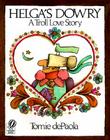
Helga's Dowry: A Troll Love Story, by Tomie dePaola
First off, everyone in this book is a troll, so they're small and dumpy and fun to look at. Helga is supposed to marry the handsome troll Lars, but he turns out to be a jerk and wants a dowry, so she uses ingenuity and troll magic to earn her own dowry, and along the way accidentally impresses the troll king, who falls in love with her. Helga is spunky and smart, and the book is a lot of fun. (I'm also a fan of dePaola's Strega Nona series.)


Petronella
, by Jay Williams
Petronella is born into a royal family that, before her, has only had sons. She was supposed to be the next Peter, find a princess to marry, and come back to rule the kingdom. Though she's a girl, she goes out adventuring anyway, looking for a prince to bring home. She finds one at the house of a great enchanter, completes impossible tasks, fights the enchanter, and ultimately realizes (once she's defeated him) that the enchanter himself is a lot more interesting than the prince, who is kind of a dip. (In a lot of ways, it's similar to Helga's Dowry.) The edition I grew up with had amazing loopy Monty Python-like illustrations by Friso Henstra. It's out of print now, but I found it for too much money here on Alibris (I hope this is the right one. The cover picture is wrong, though).. I can't vouch for the illustrations of the new version, but the story is good.


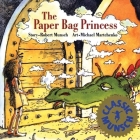
The Paper Bag Princess
, by Robert Munsch
This seems to be the one most people know. Eleanor was not as into it as some of the others, probably because Princess Elizabeth is wearing a paper bag instead of something beautiful, but it's a fun twist on the normal ending, as she runs off happily by herself after outsmarting the dragon and rescuing the dippy ungrateful prince. The thing I like most about Munsch's books is that they have the kind of random kid logic that's accurate to little kids. As in: everything in the castle is burned by the dragon except for a paper bag.


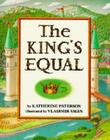
The King's Equal
, by Katherine Paterson
This is a slightly longer book, more serious in tone and in illustration style, but quite beautiful. Thanks for sending us this one. The only other thing I'd read by Paterson is Bridge to Terabithia, one of my old YA favorites which I can hardly even think about without choking up. The King's Equal isn't weepy at all, but is another story of the girl (Rosamund, poor, kind, and smart) proving herself to be as wise, beautiful, and rich as the selfish and unpleasant Prince Raphael. The nice thing about this one is that Raphael has to go off by himself for a year, along with a few goats and a magical talking wolf, to prove himself worthy of Rosamund. Eleanor really likes it. The only downside to Vladimir Vagin's intricate illustrations is that the page with the picture of three gorgeously dressed princesses has no text on it, and she's always trying to turn the page while I'm still reading so she can see the picture.


The Princess and the Pizza
, by Mary Jane and Herm Auch
This is Eleanor's favorite of your princess book recommendations, hands down. It's silly, with some nice wordplay and alliteration, and has references she can pick up. She knew the story of Snow White already, so when Auch refers to the princess with the seven little men following her, Eleanor was excited to be able to identify her. On the other hand, we hadn't yet read Rapunzel, and when we explained the Rapunzel story so Eleanor could get that reference too, suddenly all she wanted to do was play Rapunzel, which is not so feminist a story. Ah, well. Like Paper Bag Princess, in this one Princess Paulina ends up happily not married to the prince, and founder of her own successful business.

Any I'm missing here?

Love, Annie