In which Annie (high school teacher, mother of two young girls and a younger boy) and her aunt Deborah (children's bookseller, mother of two young women in their 20s) discuss children's books and come up with annotated lists.

Showing posts with label Oxenbury. Show all posts

Friday, January 11, 2013

Who's going on a bear hunt?

Dear Annie,

Such a lovely list from your pal and guest blogger Faith.  I've got to find My Henderson Robot -- sounds delightful.

Tonight at dinner, which often includes Lizzie these days (one last exam next week and she's a college graduate!), she pulled a book from the dining room shelves and asked if I'd ever blogged about it.  Your pal Denise, guest blogger extraordinaire, mentioned it in a list of summertime books, but I'm going to return to it.
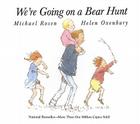
We're Going on a Bear Hunt

(words by Michael Rosen; pictures by Helen Oxenbury) just begs to be read aloud with great gusto.  I suspect you and Jeff have added a number of embellishments to it.  Michael Rosen provided the words, based on what he says was an old campfire song.  Five family members and a dog set out on an expedition, encountering a series of obstacles along the way.
We're going on a bear hunt.
We're going to catch a big one.
What a beautiful day!
We're not scared.
Oh-oh! Grass!
Long, wavy grass.
We can't go over it.
We can't go under it.
Oh, no!
We've got to go through it!
It's all wonderfully rhythmic and repetitive.  "I had this idea," Oxenbury has said, "of doing a black and white page when they're thinking and when they're saying, you know, about where they're going and what they're going to do. And then when they've decided, it burst into color."
 Subsequent obstacles include a river (Splash Splosh!), mud (Squelch Squerch!), a forest (Stumble Trip!), and a snowstorm (Hoooo Woooo!).

The arrival at a cave (Tiptoe!) leads to a startled confrontation with an actual bear, followed by a hasty retracing of steps:

The book ends with the family safe at home, in bed under the covers, and the bear wandering sadly on a beach.  I've been reading this book for a bit more than 20 years, and until tonight I'd always assumed the big guy is the dad.  I've been a little confused about the blonde in the white dress: probably the big sister, but could be the mom.  Here's Oxenbury on how she interpreted the words:
 What's wonderful about it is that nothing is described in a way that restricts you. Michael had said he envisioned it as a king and queen and jester setting off to hunt a bear, but I immediately saw it as a group of children. Everyone thinks the eldest one is the father; in fact he's the older brother. I modeled them on my own children. I didn't want adults around because they tend to stilt the imagination. The dog in the pictures was my own dog.
There's so much special in this book that it's hard to imagine it any other way.  King, queen and jester?  Can't see it.  But to change the dad to the big brother -- I'm still wrapping my mind around that one.

I remember Lizzie's first pre-school, where the kids acted out each color page of the quest.  Lizzie, it turns out, doesn't remember much from that experience, but had it read to her throughout childhood, and read it to kids she babysat.

Now, she says, it's part of her -- one of those literary references -- that comes up with friends when, say, they're going to the dining hall:

We're going to dinner
We're not scared.
Oh-oh! Stairs!
Can't go over them
Can't go under them.
Oh, no!
Have  to go down them.
Ba-bump ba-bump!
Ba-bump ba-bump!

Love,

Deborah

Saturday, January 7, 2012

Scary pictures

Dear Aunt Debbie,

The pictures of the Child's Play book section make me wish we were in DC more often.  What a great collection you've set up there!  I look forward to hearing about the expansion.

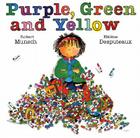
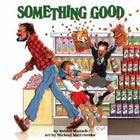
I'm posting late tonight because I've been up talking with my cousin, your daughter, Lizzie, who's visiting this weekend.  We had a lovely evening, starting out, of course, with reading the girls some of the new books you sent along with Lizzie.  I love the tiny paperback versions of the Robert Munsch books Purple, Green, and Yellow and Something Good.  (These links appear to be to normal-sized versions -- are both sizes available?)

Both books are trademark Munsch from the period where he was developing his storytelling skills with classes of preschoolers: lots of repetition and wild plot devices, pitched at a perfect kids' level.  In Purple, Green, and Yellow, Brigid badgers her mother for increasingly awesome colored markers, until she gets a whole bunch of "super-indelible-never-come-off-till-you're-dead-and-maybe-even-later coloring markers."  Then, of course, she draws all over herself, and when the doctor comes to try to fix her up, she ends up turning invisible.  But that's not the end of the story....  I didn't know Something Good before tonight: the story of a father who takes his kids to the supermarket, where his daughter Tyya complains that he never buys them "something good."  She piles a shopping cart with all kinds of sugar ("three hundred chocolate bars"), and her father gets so frustrated that he tells her to stand still and not move.  This results in Tyya being mistaken for a doll, and having a price tag applied to her nose.  Robert Munsch is awesome -- thank you!

A week ago, we had a reader question from Nelly about finding books with scary pictures: "like wolf (or fox) eating pigs (or seven kids or Red Riding hood or birds in Chicken Little) or being pictured with a fat stomach."  I've been looking through the books we have at home with this in mind, and am not coming up with much, though I feel like these are images I've seen. 

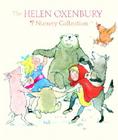
In The Helen Oxenbury Nursery Collection, there are a couple of fairly scary illustrations of foxes and wolves going after other animals.  Here's the fox in "The Little Red Hen," bursting in the door to catch the rooster and mouse:

I thought that the wolf in Peter and the Wolf might have a fat belly after eating the duck, but no, not really.  I have a dim memory of a wonderful Harriet Pincus-illustrated Little Red Riding Hood in which the hunter fills the wolf's belly with stones after taking Little Red and her grandmother out, and then sews him back up -- an image both gruesome and domestic.  It's an interesting question: which illustrators give that extra physical detail, and which don't?

Love, Annie

Monday, September 27, 2010

Mem Fox, in bedtime and playtime mode

Dear Aunt Debbie,

I love knowing that Max and Ruby were real kids.  I wonder how they feel about the drekky TV show using their names....

You mentioned a few great Mem Fox titles; tonight I'd like to sing the praises of two of them, both of which have been staples in our house for quite some time.

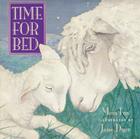
Time For Bed
, illustrated by Jane Dyer, is one of our favorite bedtime books: a gentle, lyrical rhyme which says goodnight to all kinds of small animals: "It's time for bed, little mouse, little mouse.  Darkness is falling all over the house....It's time to sleep, little bird, little bird.  So close your eyes, not another word."  The version I've linked to is a lap-sized board book (who knew there was such a thing!), and thus perfect for really little kids who are apt to tear normal pages, but love the large, double-spread pictures of parent and child animals.  I'm pretty sure I could recite this entire book from memory.  There's also a small-sized board book and a standard paper page hardcover, whose major benefit is that it contains an extra painting of a bear and the night sky.  We have all three versions.

Time for Bed was my introduction to Mem Fox, and was one of the reasons I perked right up a year and a half or so ago when I saw you'd sent us
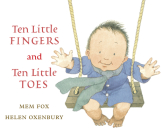
Ten Little Fingers and Ten Little Toes
.  The other reason, of course, is that it's illustrated by Helen Oxenbury, whom I adore.  It's a lovely multicultural book, listing and depicting a lot of different kinds of babies, each of whom, "as everyone knows/ had ten little fingers/ and ten little toes."  Sometimes the text gives a hint to the babies' races ("There was one little baby who was born on the ice/ and another in a tent, who was just as nice"), but more often, the babies are just happily and quietly different colors and ethnicities.  It's quite joyful.


In birthday news, both Dog and Maisy's Amazing Big Book of Words were giant hits.  Isabel is now obsessed with Dog (which, brilliantly, has a pull-tab that makes a dog's leg lift and shows him peeing), and Eleanor and her friend Martin were super into Maisy yesterday.  Here's what we looked like for much of the party (joined here by Eleanor's dear friend Ian):
Love, Annie

Sunday, June 20, 2010

Books and Movies: which comes first?

The Helen Oxenbury Nursery Collection is so great -- I'm mystified why Candlewick Books decided to put it out of print.  One of our readers has asked about how we know about out-of-print books.  There are lots of sources.  Libraries are probably the best.  They have many books which are great and may have gone out of print recently.  Then there are the books you remember from your own childhood -- alas, many of those may be no longer in print.  If you have only a vague memory of the plot, I recommend www.whatsthatbook.com -- it's lovely.  And once you know what you want, if a library loan isn't permanent enough, check out www.alibris.com.  It's a consortium of used book stores from all over the country. Prices are usually fairly reasonable, and their assessment of condition is pretty close to accurate.

Moving on..  I wanted to talk a little about movies made from books. The Ramona books, by Beverly Cleary, are going to be put into movie form this summer by Disney.  Having looked at the trailer, this depresses me a lot.  Ramona seems to be well cast, but big sister Beezus is a kind of sexy Selena Gomez -- aack!   And scenes from books spanning Ramona's life from pre-school through fourth grade have all been mushed together.  Cleary has written eight Ramona books, which take her from pre-school to fourth grade.  I'll write more about them in another post, but they're wonderfully written, full of funny moments and wry wit, very empathetic with whatever age Ramona is in the book, and understandingly realistic about the little tensions that exist within families.  Although they've been written in order, one can read any one without having read what came before.  For an excerpt from one of them, see my May 2 post.

 I want to bring up parental policy about movies made from books.  There are, of course, many of them , aimed at many different ages.  I've been impressed over the years how many parents I've talked to in the store who say they insist on reading a book before seeing the movie -- no matter how different the two are.  I know you did this, Annie, with Wizard of Oz.  It gives a child the real story before seeing how Hollywood re-works it.  And it offers lots of teachable moments for discussion  of how elements were changed.

So if there are folks out there with children between say, 5 or 6 and 10, why not do a festival of reading Ramona books before Disney undercuts them?  It would be a lovely way to spend the summer. 

Love,

Deborah

Friday, June 18, 2010

Poetry 4

Dear Aunt Debbie,

Every fall, I do a poetry project with my freshmen which requires them to choose a poet they're not familiar with and delve into his or her work, creating a personal anthology and emulating the poet's work. As we begin, I ask my students about poets and poems they already know and love. Shel Silverstein is always mentioned, and there is always a collective moment of 14-year-old nostalgia -- kids love him. Of course, then I have the sometimes difficult task of steering them towards other poets who are not Shel Silverstein in order to broaden their horizons.

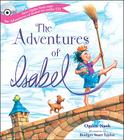
For the die-hard Silverstein fan, another surefire winner is Ogden Nash. Nash wrote volumes and volumes of light verse, some poems more adult than others. The current Nash poem in the zeitgeist, to our family's great joy, is The Adventures of Isabel.

It's the rhyming story of a spunky girl who confronts a variety of unpleasant creatures (bear, witch, giant, doctor) and defeats them in turn. A sample:

Once in a night as black as pitch
Isabel met a wicked old witch.
The witch's face was cross and wrinkled,
The witch's gums with teeth were sprinkled.

Ho, ho, Isabel! the old witch crowed.
I'll turn you into an ugly toad!
Isabel, Isabel, didn't worry,
Isabel didn't scream or scurry,

She showed no rage
and she showed no rancor,
But she turned the witch into milk
and drank her.


Eleanor is in love with this book, and not only because the heroine has her little sister's name. Bridget Starr Taylor's illustrations are brightly colored and zingy, imagining all the episodes in a fantastic and connected landscape. The rhyme and rhythm are unbelievably catchy. It includes a CD of Ogden Nash himself reading the poem in his slightly creaky voice. After a good friend gave us the book, Eleanor had us read it aloud to her easily thirty times in two days. She can now recite most of it by heart.

If all that weren't enough, I discovered last night that Natalie Merchant has just released a song using the lyrics to the poem.  [The Youtube link we had up here has been pulled due to copyright issues.  New link is a rehearsal recording of the whole song -- same feel, though Merchant isn't totally on top of the lyrics yet.]

If this is the major cultural artifact Isabel has to contend with growing up, we will consider ourselves very lucky.

After posting about Mother Goose a few nights ago, I realized I'd forgotten to mention our other favorite nursery rhyme book:The Helen Oxenbury Nursery Collection. (Of course, it's out of print. Still findable, though.)

I've always thought of Oxenbury as a brilliant illustrator, but evidently she's quite a good editor and adapter as well. The collection is divided into three parts, each excerpted from other out-of-print Oxenbury books: "Verses from Tiny Tim," "Nursery Rhymes," and "Nursery Stories." We started with the first two sections, before Eleanor was able to listen to longer stories, and there are some fabulous rhymes here. The one we chant most often is "Choosing Shoes," by Frida Wolfe:

New shoes, new shoes,
Red and pink and blue shoes.
Tell me what would you choose,
If they'd let us buy?
Buckle shoes, bow shoes,
Pretty pointy-toe shoes,
Strappy, cappy low shoes;
Let's have some to try.
Bright shoes, white shoes,
Dandy-dance-by-night shoes,
Perhaps-a-little-tight shoes,
Like some? So would I.
BUT
Flat shoes, fat shoes,
Stump-along-like-that shoes,
Wipe-them-on-the-mat shoes,
O that's the sort they'll buy.

The stories (Little Red Riding Hood, Goldilocks, The Three Little Pigs, etc.) are mostly wonderful, but Oxenbury doesn't clean them up: two of the little pigs die, as do most of the animals in "Henny Penny." This bothered me more than it did Eleanor.

On the subject of rhyme, we are in love with a weird little book (out of print? Natch.) called Pass the Celery, Ellery!
It's a rhyming alphabet book, with quirky painted illustrations of small people and large food on each page, captioned with polite requests: "Pass the abalone, Tony." "Pass the linguini, Teeny." "Pass the ratatouille, Louis." "Pass the water, daughter." As you might imagine, it's insanely catchy, and led to Eleanor trying to rhyme everything she could, all the time. Worth looking for.

Love, Annie

Wednesday, June 2, 2010

Race in children's books

Dear Aunt Debbie,

What a depressing, jerky move from the folks at Penguin! I do think about race as one factor when I buy children's books, in pretty much the way you describe: I think it's a good idea for Eleanor and Isabel to have a variety of images of people in the books that surround them. (This is one of the reasons I've also been on the hunt for good books with same-sex couples in them. More on my favorites in that category in an upcoming post.)

Eleanor has, to date, never commented on the question of race, in terms of the people we know (and she has a somewhat mixed group of friends), illustrations in books, or depictions in movies. We recently watched the live-action Disney Cinderella starring Brandy, and I wondered if she would comment on the race-blind casting: Cinderella is black, the evil stepmother (Bernadette Peters) is white; one of the stepsisters is black, the other white; the king is white, the queen (Whoopi Goldberg) is black, and the prince is Filipino. Not a word, even when we discussed some of the differences between this version and the cartoon.

I'm always happy to open a book Eleanor has picked out at the library and find that the characters in it aren't all white. On Eleanor's friend Ian's recommendation, we checked out one such book yesterday, by Jane Ray:


The Apple-Pip Princess


It's a sweet fairy tale: a widowed king says he's going to retire and choose one of his three daughters to rule his kingdom. Each princess has to do something to prove her worth. Predictably, the two elder princesses are too selfish, and mess it up, while the third uses magical gifts of the land left to her by her mother to plant a lot of magic trees and win in spite of not being grand. It's a little bit treacly in places (the good princess is named Serenity), but the illustrations are wonderful, and Eleanor adores it. Everyone in the book is dark-skinned, and there's no mention of race.

On the fairy tale front, another library discovery of ours are the gorgeous retellings of classic tales illustrated in African-inspired collage by Rachel Isadora. The first of these we read was The Fisherman and His Wife.


The Fisherman and His Wife


Isadora's collages are vibrantly colored and energetic -- if we had a working scanner at the moment, I'd show you the ocean getting darker and more furious as the fisherman's wife continues to ask for ridiculous things from the flounder. We also like Isadora's versions of Hansel and Gretel and The Princess and the Pea, though be forewarned: Hansel and Gretel is a dark story, and the illustrations of the witch are quite frightening; and The Princess and the Pea is, at bottom, not an interesting story at all, though Isadora's illustrations of different African princesses are beautiful, and she teaches you how to say hello in three different African languages.

Then there are some of the gifts we've gotten from you. Three that pop immediately to mind:


Where Is Gah-Ning?


As we've said before, Bob Munsch is hysterical. This was the first of his books we'd ever read, and it has some of his trademark style: lots of pleasing repetition in the dialogue, as Gah-Ning tells her father she wants to go to Kapuskasing, and he says no to every way she could get there, followed by a totally ridiculous plot twist and a happy ending. Gah-Ning and her family are Chinese, and some of the other characters are white, but again, there's no mention of race.


Oscar's Half Birthday


Bob Graham includes a nice variety of characters in his books: in Oscar's Half Birthday, mom is black, dad is white, and the kids are mixed-race (as well as being supernaturally well-behaved, especially at bedtime). It's a very sweet depiction of an older sister and baby brother. We also liked Jethro Byrd, Fairy Child, in which Annabelle (the girl who sees the fairies) and her family are white, and all the fairies are darker-skinned -- possibly Latino?

Finally, there is the joyful, perfect poem of a book by Trisha Cooke, illustrated by Helen Oxenbury:


So Much


It's a story about waiting and having people arrive: a new family member comes in on every other page, with a catch-phrase ("Hello hello!" "Yooo-hooo!") and something they want to do to the baby ("I want to kiss the baby! I want to kiss him so much!"). On the alternating pages, all the people in the house sit and wait together, and the drawings become sepia-toned. The family is black, British, and incredibly warm. Helen Oxenbury's drawings of babies are pitch-perfect.

All of which is a long way of saying that, given books with the two covers you referenced in your last post, I'd be more likely to buy the one with the black kids. However, there are a number of other books I like better for addressing new sibling issues. What are your favorites in that category?

Love, Annie