
In which Annie (high school teacher, mother of two young girls and a younger boy) and her aunt Deborah (children's bookseller, mother of two young women in their 20s) discuss children's books and come up with annotated lists.

Showing posts with label graphic novel. Show all posts

Wednesday, August 31, 2016

Graphic novel roundup

Dear Aunt Debbie,

As summer rolls to an end, we continue to be happily distracted by a plethora of great graphic novels. I realized recently, when recommending books to friends, that I have sadly neglected to blog about some of our favorites. Here's a roundup of our latest obsessions:
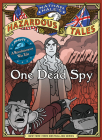
Nathan Hale's Hazardous Tales
We tend toward the fantastic and fictional in this house, but this historical graphic novel series has obsessed Eleanor and Isabel all summer. There are two Nathan Hales: There's the author and illustrator Nathan Hale, born in 1976, who we first encountered as illustrator of Rapunzel's Revenge and Calamity Jack, and who created this series. Then there's the historical Nathan Hale, the Revolutionary War spy hanged in 1776, who serves as the narrator of the series.

The first book, One Dead Spy, tells the story of the historical Nathan Hale, and provides the frame story for every other book in the series. Hale is on the gallows in New York, about to be hanged by a cheerful, none-too-smart Hangman and a pompous British soldier. He says his famous last words ("I regret that I have but one life to give for my country"), and a giant eagle swoops down, picks him up, and drops him into an enormous magical history book. On emerging, Hale can see the future -- he now knows all of American history. He becomes a sort of Scheherazade, putting off his own death by telling the Hangman and the British soldier one story from American history in each volume of the series, as they comment throughout. There are six books so far, ranging from Revolutionary history to the Civil War (Big Bad Ironclad!), from heroes like Harriet Tubman (The Underground Abductor) to some of the least appealing episodes in American history (Donner Dinner Party). Both of my girls are retaining a huge amount of historical fact from the books; we've had the whole series out from the library all summer.


Avatar: The Last Airbender

For a totally immersive world filled with compelling teen characters of both genders, many of whom happen to have powers that allow them control of the elements, check out the Avatar series. We stumbled on them at the library, not knowing anything about the animated Nickelodeon series that preceded them (and which is also really, really good). I read the first out loud to Isabel and Will expecting it to be mediocre, as TV spinoffs so often are, and was happily surprised to find excellence instead. Looking at the title page, I was less surprised: the graphic novels are scripted by Gene Luen Yang, recently named National Ambassador for Young People's Literature, author of American Born Chinese, now also writing a teenage Chinese Superman for DC Comics -- is there anything he can't do?

The Avatar: The Last Airbender graphic novels follow the adventures of Avatar Aang (a teenage boy who is also the connection between the human and spirit worlds, and can "bend" air, water, earth, and fire), and his friends Katara (a water-bender), her brother Sokka (no powers, but funny), Toph (an earth-bender), and Zuko (a fire-bender, and ruler of the Fire Nation). The characters are complex--even the villains, like Zuko's evil sister Azula, have depth--and the plots are immersive. There are three 3-part series out right now: The Promise, The Search, and The Rift. The first volume of North and South is due out later this year. It's looking like we'll all be dressing up as Avatar characters for Halloween.
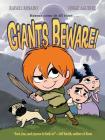

Giants Beware! and its sequel, Dragons Beware!
These excellent books came as gifts from you. They are the creation of Jorge Aguirre and Rafael Rosado, and join the list of spunky, awesome heroines on our Graphic Novels list page. The sword-wielding redhead on the cover is Claudette, daughter of blacksmith and warrior Augustine, who lost both legs and a hand to a dragon years ago. Behind her are her brother Gaston, who would rather whip up gourmet French food than fight; their friend Marie, daughter of the Marquis, aspiring princess and diplomat; and Claudette's dog Valiant. The two books (so far--it's clear that more are coming) include adventure with a touch of danger, but not so much that they become scary. Encounters with giants, dragons, and evil magic-wielding adults end well for all involved, and include a lot of humor. We're looking forward to more.
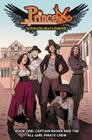

Raven the Pirate Princess
I wrote back in January about our love of Jeremy Whitley's graphic novel series Princeless, which combines a feminist sensibility with a racially diverse cast of characters, headed by Princess Adrienne, a fearless black princess who breaks herself out of the tower where she's been imprisoned by her father, makes friends with the dragon who's been sent to guard her, and sets off to rescue her similarly imprisoned sisters. In Book 3 of Princeless, Adrienne meets Raven Xingtao, the Pirate Princess, and now Raven has her own spin-off series. If anything, Whitley takes his characters even further into fabulous feminist territory as Raven assembles an all-female crew for her pirate ship and readies herself to go get her birthright back from her brothers, who usurped her place.

This series feels like it's aimed at a slightly older audience than Princeless -- middle grade and YA, I'd say. There's a little more violence, a little more sexual innuendo (between Raven and her the half-elf, Sunshine, and with her old best friend, Ximena; it's pretty clear that this comic is headed towards a lesbian relationship), and a lot of jokes about stereotypes and cultural appropriation that are very funny to a college-age sensibility. Here's Raven interviewing a bunch of male pirates before deciding she needs to stick to a female crew:


So brilliant. So much love.

There are more, of course (Ms. Marvel! Squirrel Girl! Raina Telgemeier's Baby-Sitters Club!), but I'll save them for another day.

I look forward to hearing about how it feels to be retired from bookselling!

Love, Annie

Monday, July 11, 2016

How children's books help me talk to my kids about race and gender

Dear Aunt Debbie,

Here we are a month later, with three more horrific shootings to process, with more grief and more anger and more unanswerable questions. Along with a number of my friends and acquaintances, I'm searching for ways to talk with my children about current events, ways to be honest about the complexities of race and politics in America on a kid-appropriate level.

On my local neighborhood listserve, someone suggested the websites Raising Race Conscious Children and  ParentsTogether, both of which have some excellent essays about how to talk to children of all races about race, racism, and violence.

For me, as with so many other major issues in life, I come at this conversation with my children through the books we read. Many of these are books I've brought into the house: I know their content, and when a complex issue comes up as we're reading together -- racist descriptions in Dr. Dolittle, for example -- I'm prepared to talk about it.

But increasingly, as we visit the library two or three times a week, all three of my kids are picking up and bringing home books that they read first -- sometimes entirely -- on their own. I try to pay attention without leaping in to censor their reading, even when I'm not crazy about the material they choose, and engage them in conversation about aspects of books that trouble me. As the library books pile up, however, some things slip through the cracks.

Isabel has recently been reading the Asterix comics, which I remember my brother Michael reading when we were kids, but which I've never read myself. Eleanor reads them too, because she reads every book that anyone brings into the house.

Two nights ago, Jeff picked up one of the books lying on our coffee table and came over to me, disturbed. "Have you looked at the depiction of black people in these books?" I hadn't. I did. It's horrendous.

The black characters in Asterix (almost all of them slaves seen serving white Romans) are old-school stereotypically racist, with dark skin, round white eyes, and swollen red lips. Here's an enlargement of an image on the first page of Asterix the Gladiator:


Oy.

So yesterday morning, over breakfast, we had a conversation. 

I started by telling the girls that Jeff and I had been looking at the Asterix book the night before, and that something we saw in it was really disturbing to us. We pulled it out to take a look together, and do a little kid-friendly image analysis. 

I asked them, "What do you notice about how the black people in this book are drawn?" Then I let them talk and observe the skin, the lips, the expressions, trying to allow them the space to notice things themselves rather than jumping in to tell them what I wanted them to think. (It took me several years of teaching high school to learn how well this works.)

After they had identified a number of physical features, I asked, "Do these people look like real black people?" 
"No." 
"How does this kind of drawing make them look?"
"They look like they're stupid."

Then I brought up the idea of stereotypes, which Jeff and I have talked about with the kids before: stereotypes are assumptions that you make about a whole group of people, which can damage people in that group by limiting what they are allowed to do and sometimes even hurting them in physical ways. A favorite entry point example in our house: many people used to believe that girls couldn't play sports as well as boys -- in fact, some people still think this. Because of that stereotype, girls who wanted to play sports were denied the opportunity. Bring this up, and both of my girls become immediately indignant. 

I explained that the way the black characters in Asterix are drawn is an example of an old, racist stereotype that some white people have had about black people. (You and I touched on this particular stereotype a few years ago in two posts about Little Black Sambo and its many contemporary retellings.)

Sometimes, I said, stereotypes like this can get into your head without you realizing it, because of what you read or see or hear around you. Subconsciously, those stereotypes start to change the way you think about a group of people.

We pulled out Will's 5-Minute Batman Stories to look for more stereotypes we might not have noticed. Here's a page of villains from the story "Harley Quinn's Perfect Prank": 


I asked, "What do you notice about the way Poison Ivy, Harley Quinn, and Catwoman are drawn?"
"They're all wearing lipstick and eyeshadow."
"That's true. Think about the way their whole bodies look, too. I'm a woman -- does my body look like this?" I held the book up next to me. My daughters cracked up. (Answer: No.)
Eleanor said, "It looks like they're wearing corsets. They have tiny waists and really big..." She dissolved into giggles.
"You're absolutely right, they all have really big breasts. So when you read this book and look at the pictures, what do you think you might start to think about what a beautiful woman looks like?"
More giggling. "They have really big breasts!"

[Side note: The graphic novel series Princeless, which stars a strong, independent, black princess, does a terrific job of pointing out and poking fun at both racial and gender stereotypes in comic books. The scene where Princess Adrienne examines and comments on the outfits worn by Wonder Woman, Xena, and Red Sonja, is spot-on and extremely funny.]

Next, we looked at the page at the beginning of the book that lists the cast of characters, heroes and villains alike: 


"What do you notice about who's in this book?"
"It's mostly men. The bad guys and the good guys."
"What else?"
"There's almost no black people at all. It's mostly white men."
Will pointed out: "And Killer Croc. Because he's green."

Later, when the kids told Jeff about our conversation (which they remembered in great detail several hours later), he added the question: "Who do you think is probably writing and illustrating these stories?" It didn't take the kids long to figure that one out, either.

Finally, I made the connection to current events. We talked about the shootings over the last week, and the fact that a lot of people are angry and upset over the shootings of black people by police officers, in situations where it wasn't necessary. Eleanor (very upset and indignant about racism of any kind) asked why police officers would do that. I said that part of it comes from fear, and that I think part of that fear comes from the stereotypes and assumptions that white people have about black people as a group. And part of that fear comes from the images we see -- or don't see -- of black people in the books we read and the TV and movies we watch. That's why it's so important for us to look closely at and think about what we're reading, instead of just taking it in.

Then we closed the books and went to the playground. I pushed Will on the little kid swings, and Eleanor and Isabel got themselves some big kid swings and pumped really high all by themselves, and I thought about that as a metaphor because I'm an English teacher at heart, and everyone got a little wet in the sprinkler before it was time to go home for lunch. One more conversation to fold into our understanding of the world.

Love, Annie

Tuesday, January 12, 2016

New year, new spunky feminist princess

Dear Aunt Debbie,

Happy New Year!

It's been an intense and happy holiday season, filled on our end with lots and lots of good reading. As it's been a while, here's a quick snapshot of the reader profiles at my house these days:

Eleanor, in 3rd grade, tries very hard to read at every waking moment: at the breakfast table, brushing teeth, on the street walking home from the library. We've outlawed reading at dinner, but allow it during dessert; consequently, it can now take up to 25 minutes for her to eat a single cookie.

Her tastes run to big novels about mythology and magic: she's read and reread all of Rick Riordan, from Percy Jackson through his Egyptian series and the new foray into Norse mythology. For lighter fare, there are the Dork Diaries books (not my favorites, as you know), and lots and lots of Geronimo and Thea Stilton, the strange, translated-from-the-Italian series about talking mice with long hair and clothes.

Isabel, in 1st grade, has become a full-fledged independent reader in the last several months. She went from early reader books leapfrogging up to the Critter Club series (early chapter books focusing on girls who love animals -- a clear fit), and just this past month I looked over and she was reading Ruth Chew -- real, full-on chapter books, with hardly any pictures -- and telling us all about the stories. I remember loving Ruth Chew as a kid. The Matter-of-Fact Magic books are set in 1970s Brooklyn, actually not far from where we live now; in each, children encounter small, imaginative bits of magic that change their lives a little bit, but aren't scary or terribly permanent. The fate of the world is never at stake, and practical details pop up regularly: what do you do when you use a wizard's magic umbrella to transform your clothes into bathing suits, then lose the power to change them back, and no longer have the front-door key to your house? (The Trouble With Magic.)


Will, closing in on age 3, picks up books almost as often as his sisters. He's currently obsessed with superheroes and Yoda, so we're reading aloud a lot of I Can Read! books from the library with titles like Batman: Winter Wasteland. He is building up a baseline of specific character knowledge that I'm sure will come in handy later. Meanwhile, we all know much more about the specific powers of a wide variety of superheroes, in both the DC and Marvel universes.

Despite their different interests and ages, graphic novels remain a major go-to for all three kids, a kind of common denominator. When one picks out a new graphic novel of any kind, from Avatar: the Last Airbender to My Little Pony, they all vie for a turn to read it.

We stumbled across our newest favorite graphic novel series at the library, and the girls kept the first three books in such solid rotation that it was clear we needed to own them.

Princeless is centered around the adventures of Princess Adrienne Ashe, who begins the series at age 16 having been trapped in a tower -- like her 5 older sisters before her -- by her parents, in the hope that a dashing prince will come to save her. Unlike her sisters, Adrienne makes friends with the dragon guarding her, puts on the armor of one of the hapless princes who's been eaten by that dragon, and busts out of her own tower. Her goal? To save herself, and then to head out and save her sisters.

There is so much to like here. First, Adrienne and the entire royal family (King Ashe, Queen Ashe, 7 princesses and one prince) are black. This is obvious from the illustrations, of course, but it's also front and center in the text: the first three pages of the first issue show Queen Ashe reading Adrienne a prince-saves-the-blonde-princess-in-a-tower story, and Adrienne angrily critiquing it while her mother struggles to comb her hair.

Adrienne is confident, strong, and smart, not to mention physically capable -- she teaches herself swordfighting, and almost immediately does pretty decently in combat with her father's soldiers (they think she's a knight who has killed the Princess Adrienne). She's not invincible -- there's a good amount of slapstick with Adrienne falling from balconies and being tangled in her ill-fitting armor -- but she's resilient.

Almost all of the supporting characters in the series are female. In book 1 (Save Yourself), Adrienne meets and befriends Bedelia, the teenage daughter of a dwarf blacksmith who, it turns out, has been doing all the smithing for years while her father goes to the bar. Book 2 (Get Over Yourself) brings in Adrienne's sister Angelica, the most beautiful of the princesses, who has positioned herself as the muse for a town full of artists. In Book 3 (The Pirate Princess), Adrienne and Bedelia rescue, fight, and team up with Raven Xingtao, the daughter of a pirate king. (Raven is getting her own spin-off series this month.) Book 4 (Be Yourself) focuses on the quest to save Adrienne's sister Angoisse, who is shut up in a dark swamp castle with a gorgeous but creepy vampire boyfriend. There are also Kira, a werewolf being groomed to take over her father's position of wolf pack leader; Delores Grunkmore, a dauntless goblin guide; Queen Ashe, who disappears mysteriously partway through the series (Eleanor and Isabel and I have a theory about that); and of course Sparky, Adrienne's dragon.

Contrast this with the lineup in the (otherwise wonderful) Zita the Spacegirl, in which the rag-tag bunch of creatures and robots Zita gathers on her journey are entirely male, in classic Wizard of Oz fashion.

Characters throughout the series are diverse, both racially (so nice to see such a variety of skin colors in a comic book) and in ways that play with stereotypes. I say "play with" rather than "defy" because author Jeremy Whitley's tone is often knowing -- he's consciously poking fun at and retooling narratives we've seen before, sometimes in ways that feel a little heavy-handed to me, if not to my kids. I think of Adrienne's twin brother, Devin: a sensitive guy, an artist and designer, written in direct opposition to the hyper-masculine King Ashe, who so far has no redeeming qualities.

But I felt that way about the stereotypical aspects of both Princess Angelica (the beautiful one) and Princess Angoisse (the goth one) too, and Whitley managed to find endings which allowed each princess to find her own way of being empowered. I'm willing to reserve judgment as the series goes on.

And some of the wink-wink-nudge-nudge moments are Whitley's funniest. When Adrienne first meets Bedelia in Book 1 and expresses an interest in getting some armor that fits her, Bedelia ushers her into the "Women Warriors Collection":


That would be, from left to right, the costumes worn by Wonder Woman, Red Sonja, and Xena, Warrior Princess. Adrienne and Bedelia's commentary:


[Side note: I mentioned Will's current superhero obsession, which, among other things, is bringing home to us just how sexy and sexist the depiction of female superheroes is. Here's what happens when your son asks you to google pictures of Poison Ivy -- and this is with Safe Search on! We have a lot of conversations about how Wonder Woman must be really cold.]

After walking us through the implications:


Adrienne requests that Bedelia make her some real armor. Which she does:


In my googling, I found a nice interview with Whitley about his inspirations for the Princeless series. He's white, but his wife and daughter are black, and he saw a huge gap in the kinds of comic books he'd be comfortable giving her to read:

"Good heroines are few and far between. When you look for ones that are leading books, it narrows the scope more. When you look for one that is appropriate for kids, it gets much narrower. When you talk about one with a lead female of color, the number drops to nearly zero (they exist, they are just very difficult to find). My daughter is black and while I encourage her to look for role models of all colors, girls need to be able to see girls that are like themselves in media. They need it even more when it comes to seeing them portrayed with strength."

Here's hoping these books keep selling like hotcakes. We'll certainly be buying them.

Love, Annie

P.S. What did you think of yesterday's Newbery and Caldecott winners? I was thrilled to see Roller Girl named a Newbery Honor Book!


Tuesday, September 22, 2015

Scientific women

Dear Aunt Debbie,

Welcome back from summer! It's lovely to hear from you, and to get a glimpse of the goings-on at the National Book Festival.

You asked whether Harry Potter has made an appearance in Eleanor's life. It's interesting: several of her friends and 3rd-grade classmates have gotten very into the books, but Eleanor is holding off. Twice, she's tried starting to read the first book on her own, and each time she has stopped because she feels like it's "too scary." This from a girl who within the last year devoured all of Percy Jackson, and is two-thirds of the way through the Books of Beginning, both series which include great violence, battles, magic, and end-of-the-universe stakes. And yet there's something about Harry that she doesn't feel ready for. As we've discussed in person and you've mentioned on the blog, there's a lot of material in the later Harry Potter books that isn't really appropriate for elementary-age kids, so I'm fine with Eleanor waiting until the books click for her. I've thought about beginning it as a read-aloud, but right now most of our read-aloud time also includes Isabel, and I don't really want to start Harry Potter with an almost-6-year-old.... Ah, well. Thankfully, there's plenty of time for reading and rereading.

Isabel has started out her first-grade year by declaring that she wants to become a rock star, and that her favorite subject is science. As if by magic, two of your recent gifts chronicle female scientists who became rock stars in their fields. Both books have become huge hits over here.

The Tree Lady, by H. Joseph Hopkins, is a picture book chronicling the life and times of Kate Sessions, the scientist and tree hunter who brought trees to the desert climate of San Diego in the early 1900s.

On each page, Hopkins positions Kate as an exception to the rules of her world:

Katherine Olivia Sessions grew up in the woods of Northern California. She gathered leaves from oaks and elms. She collected needles from pines and redwoods. And she braided them together with flowers to make necklaces and bracelets.

It was the 1860s, and girls from Kate's side of town weren't supposed to get their hands dirty. 

But Kate did.

...

When Kate grew up, she left home to study science in college. She looked at soil and insects through a microscope. She learned how plants made food and how they drank water. And she studied trees from around the world.

No woman had ever graduated from the University of California with a degree in science.

But in 1881, Kate did.

A nice proud feminist vibe throughout!

The illustrations, by Jill McElmurry, are beautifully specific: pictures of plant cells, specific (labeled!) types of leaves and desert trees, a real sense of the desert climate in the San Diego scenes.

There's enough of a story here to make it interesting, and enough scientific detail to encourage questions and further investigation.


The graphic novel Primates: The Fearless Science of Jane Goodall, Dian Fossey, and Biruté Galdikas, by Jim Ottaviani and Maris Wicks, gets far deeper into the complexities and triumphs of scientific research. This is a book you can get lost in.

Primates provides a clear and well-dramatized introduction to the work and lives of these three primatologists, the first to live with and study primates for years in their natural habitats: Goodall with chimpanzees, Fossey with mountain gorillas, and Galdikas with orangutans. Each woman tells her own story in first-person, and in her own font and color, which helps keep the voices distinct. There are similarities in the stories, but the very different personalities of the researchers come through well.

The fourth voice in the book is that of Louis Leakey, the anthropologist and archeologist who gave all three women their start. He believed that women were better-suited to this kind of work: more patient, more observant. Through Leakey, the three women meet each other, so there are some nice moments of crossover.

Ottaviani and Wicks don't romanticize the details of living in the bush. You get a real sense throughout of the difficulties and privations of each woman's chosen career: leeches, trekking through forest, sitting for hours, days, weeks in observation. All three come across as passionate and unconventionally brilliant, deeply dedicated to the animals and their land.

While non-kid-friendly details are alluded to in the book -- Louis Leakey's womanizing, Dian Fossey's murder -- the stories are kept age-appropriate. It feels to me like a book that will deepen with rereading as you learn more about each woman's life from other sources.

I think that Isabel responds to the fierce determination of the women depicted here: their focus and refusal to be put off. I have a feeling there are more animals in her future.

Love, Annie


Friday, May 15, 2015

Roller Girl!

Dear Aunt Debbie,

Your latest gift may have changed the course of our lives. Thanks to you, and thanks to graphic novelist Victoria Jamieson, we spent last Saturday evening watching the Brooklyn Bombshells battle the Bronx Gridlock, rooting for Hela Skelter, Sexy Slaydie, and Squid Vicious.

We're on our way to getting deeply hooked by roller derby, and here I'm holding up the reason why:


Roller Girl, Jamieson's first graphic novel, is the newest addition to our Must Have Graphic Novel shelf, which also houses Bone, Zita the Spacegirl, The Olympians, Sisters, and Smile. 

The heroine here is 12-year-old Astrid, in Portland, OR, the summer before junior high school. Astrid falls in love with roller derby after her mom takes her and her best friend Nicole to a game. Though she can't skate, she signs up for junior derby camp over the summer, assuming that Nicole will sign up with her. When Nicole chooses dance camp with a friend Astrid hates, Astrid finds herself going it alone -- working hard to become a decent skater, pushing herself intensely, and working through all of the complex friend-breakup feelings that so often come with junior high. 
Before reading the book, I had only the dimmest notion of what roller derby was. Jamieson -- a derby player herself; she skates for the Rose City Rollers under the name Winnie the Pow -- explains the basic rules clearly at the outset, and weaves in more information throughout the storyline.


When we got to the game last Saturday, both Eleanor and Isabel were immediately able to identify not only blockers and jammers, but several moves by name: "Look, pivot turns!" The technical detail, presented smoothly as part of the story, is one of the book's big pluses.

Astrid's sports success narrative is another. While her story follows the basic plotline we've all seen before in movies and books (start out a newbie, train hard, weather disappointment, keep training, play in a big exciting game at the end), what I loved here is that Astrid is initially really bad at skating, and that she toughs it out. Her stubbornness and at some points real burning anger are part of what give her the strength to get good, and when she gets good, she's still, realistically, not all that good. She feels like a real 12-year-old, all the way through.


And more things to love: Astrid is the only child of a single mom who regularly takes her and Nicole out for Evenings of Cultural Enlightenment (roller derby is one). The single mom status isn't the story -- there's no mention of Astrid's father, and she and her mom are just presented as a family without further comment. 

Perhaps most of all, there are the warmth and humor that go hand in hand with the celebration of female toughness. Derby names are an art form, punning and tongue in cheek. In the book, Astrid's idol is named Rainbow Bite, and her coaches are Heidi Go Seek and Napoleon Blownapart. At the game we went to on Saturday, one of the players called herself Davy Blockit, and did her first laps around the track with a coonskin cap before putting on her helmet for the game. Of course, the kids came up with their own names after reading the book: Eleanor chose Conan the Librarian, Isabel went with Twisted Sister, and Ian with Freakachu.

There are lots of tattoos in roller derby, much dyed hair (hair dyeing plays a big part in Astrid's plot, too), and a general sense of campy fun. And there is deep heart. Roller derby in its current incarnation has deep ties in the LGBT community; on Saturday, derby players all over the country wore warmup jerseys reading "Do It for 57," a reference to the suicide of a 15-year-old transexual derby player who killed himself because of bullying.

Both Eleanor and Isabel finished reading the book and immediately declared that they wanted to join junior derby. Gotham Girls, the New York derby league, has a junior derby team, and they take girls as young as 8. After watching the junior derby play at halftime on Saturday (my favorite names there: Little Orphan Slammie and Smacklemore), we're starting to do the research to sign Eleanor up. If it works out, I'd be proud to be a derby mom.

Love, Annie


Tuesday, December 23, 2014

Graphic memoirs, for kids and adults alike

Dear Aunt Debbie,

Happiest of holidays! I'm so glad to hear that things are humming along at the store, despite the odd objection to stories that are "too sad."

As we head into the school break, I wanted to highlight a couple of books we've recently fallen in love with, excellent reading for both kids and adults.

The kid appeal: both are graphic novel memoirs (have I mentioned we're a little obsessed with graphic novels?), both focused on the early to middle childhood years of the author/protagonist, both full of humor and intelligence and drama, both featuring smart, creative girls.

The adult appeal, especially to adults around my age: the major action in both books takes place in the 1970s and 1980s, so they have a real time capsule quality (walkmans! slouchy socks! the San Francisco earthquake! the Waltons!).

Book number 1 is from our beloved Raina Telgemeier, author of Smile and the Rapunzel story in Fairy Tale Comics. Sisters is billed as "the companion to Smile." In Smile, Telgemeier focused in depth on her fraught dental history (she knocked out her adult front teeth in an accident, and years of surgery and complicated braces followed). In Sisters, the braces take a back seat, and Telgemeier focuses on her fraught relationship with her younger sister, Amara.

The frame story puts Raina, Amara, their younger brother Will, and their mom in a minivan on a road trip from San Francisco to Colorado for a family reunion. Bickering abounds, and frequent flashbacks (with the pages tinted slightly yellow, to make it clear what's a flashback and what is present day) expand on the sisters' history. It feels like such a real family -- the back and forth among the siblings, expert at pushing each others' buttons, the ways in which small moments of connection break through. Amara loves all nature, including lizards and snakes; Raina thinks they're disgusting, and a snake figures prominently in one of the book's later scenes. The road trip offers a chance for the sisters to take stock of their relationship to each other, and to realize that their parents' marriage is in trouble. It feels like a pivotal summer.

Isabel bought Sisters at her school book fair, and we must have read it 12 times through in the first week. Both Isabel and Eleanor identified with the family deeply (two sisters! who bicker! and their brother is also named Will!), though thankfully there is no parental tension looming on the horizon in our house. We took Smile out of the library not long afterward, and we have now read it at least as many times. Telgemeier's illustrations are a little goofy and totally expressive, and she's able to explore complicated emotional material in clear and accessible ways. An absolute hit.

Book number 2 captured Eleanor before Isabel.  In El Deafo, Cece Bell tells the story of losing most of her hearing at age 4 after a bout of meningitis. It's the mid-1970s, and she's outfitted with two different hearing aids, both enormous by today's standards: a smaller one for home, and the large "Phonic Ear" for school. The people in El Deafo are depicted as rabbit-like creatures, with long ears, so the wires connected to the hearing aids are extremely visible, as Bell says they felt to her as a child.

Cece wears the Phonic Ear as a box hanging around her neck (underneath her overalls, which she wears every day to hide the box). Her classroom teacher wears a microphone, which allows Cece to hear her speech far more clearly. It turns out that the microphone is quite powerful, allowing Cece to hear her teacher anywhere in the building: in the teacher's lounge, even in the bathroom. This, then, is her superpower. Cece fights off her feelings of loneliness and difference by imagining herself as El Deafo.


El Deafo, which came as a gift from you, resonated for me because of the history of deafness in my family: as we've written about before, both of my father's parents were born deaf, and communicated largely through lip-reading rather than sign language. Cece struggles with self-identifying as deaf, and rejects learning ASL when her mother encourages it. She depicts herself as both lonely and independent, always very much herself. In one of my favorite details, she wears a red two-piece bathing suit and nothing else for pretty much the entire year she's four.

I think El Deafo resonated for the girls, especially Eleanor, because of Bell's depiction of elementary school friendships and their vagaries. There's a lot to talk about here (as there is in Smile) in terms of making friends, and standing up to your friends when they treat you in a way that makes you uncomfortable, by focusing on your differences. Eleanor's research into the life of Helen Keller (which led us to another terrific graphic novel) also whetted her interest in the subject of deafness.

Isabel loves to read graphic novels on her own, but I think she had trouble making sense of this one without adult help. She picked it up and put it down, fully getting into it only when we sat down to read it aloud together. Recently, it has come into the rotation of books she reads in bed on weekend nights -- the highest accolade.

Have a wonderful holiday, and give my love to your amazing family, all home together for Christmas!

Love, Annie

Wednesday, October 22, 2014

Graphic novels for the reluctant early reader

Dear Aunt Debbie,

Though I never went through a horse phase myself, and so far my kids haven't caught that bug, your horse book recommendations may be the beginning of a new interest in our house. I've requested a few from the library, and the way Eleanor is burning through books these days, I'm pretty sure I'll be requesting more.

Today's reader question comes from Jean, the mom of Eleanor's good friend Casey. During a recent playdate, Jean and I got to talking about our kids' experiences with reading. Casey (also in 2nd grade) is reading some, but it's been a bit of a struggle for her, and she doesn't generally pick up books on her own. Here's Jean:

I think she's resistant to reading on her own for a couple of reasons. 1) You've known Casey since she was 2. She is a very energetic kid. Running around and playing active games is when she is happiest. So she's not a natural bookworm....2) Something you said at your house really resonated with me and it makes sense for Casey: she LOVES when we read to her, which we do every day. And we'll read The Wizard of Oz, or Harry Potter, Magic Treehouse, Jenny and the Cat Club. Books that are (with the exception of maybe the Magic Treehouse books) well beyond her level. She likes a good story, but can't read at the level of a good story yet.

Jean would like to find books that Casey really wants to read:

She loves a good battle, especially when the good guy pulls through at the end. She loves adventures and mystery. She's not a fan of anything with princesses or those kind of stories (unless, perhaps, if the princess is wielding a sword). But she loves magic. And cats, as you know. Anything with cats....We are trying not to force it too much because she'll come into it in her own time. But it would be great to have books around that she may just want to pick up on her own!

Given my kids' recent reading history, it should come as no surprise to anyone that I recommended Casey and Jean check out some graphic novels. Graphic novels have bridged a gap for us, allowing for a variety of different kinds of reading. For both Isabel (who can read very few words, but will pore over pictures for hours on her own) and Eleanor (who reads all the words and doesn't dwell as much on the pictures, but enjoys them), they encourage an independent reading experience, while still making room for reading together.

With this in mind, I scoured our posts and created a new page to add over there on the right: a list of all the graphic novels we've discussed on the blog, by theme and by appropriate age range.

Here are a few I think Casey would love, many with links to previous blogs we've written about them:

Rapunzel's Revenge, by Shannon and Dean Hale. This is the present we've bought for Casey's upcoming birthday: Rapunzel reimagined as an active, braid-whipping heroine. She's awesome and has a sense of humor, and the way the Hales play with the original story is great fun.

Zita the Spacegirl, by Ben Hatke. Zita is a girl from earth whose curiosity and impulsiveness cause first her best friend (a quiet boy named Joseph) and then Zita herself to shoot off to another galaxy. Zita has to find and rescue Joseph, teaming up with a ragtag bunch of aliens and robots. There's a real emotional punch here, too. Sequels Legends of Zita the Spacegirl and The Return of Zita the Spacegirl are also excellent.

Dragon Girl: The Secret Valley, by Jeff Weigel. Alanna, the 11-year-old heroine, finds and protects a nest of baby dragons, dressing up as a dragon herself so that they won't become accustomed to humans and be in later danger. Alanna is another active, strong heroine -- I think Casey would like her. There are clearly more Dragon Girl books coming, but this is the only one out so far.

Ottoline and the Yellow Cat (and other Ottoline books), by Chris Riddell. Though the yellow cat in the first title turns out to be a bit of a villain (sorry, Casey!), these books are quirky and tremendous fun. They contain terrific characters, both human and animal, and each has a not-scary mystery as a central part of the plot. Strictly speaking, I suppose they are only half graphic novel -- many of the pages contain typed text as well as comic book-style illustration.

Guinea Pig, Pet Shop Private Eye, by Colleen AF Venable and Stephanie Yue. All the characters here are animals who live in a pet shop, where Sasspants (the guinea pig of the title) and her sidekick, Hamisher the hamster, solve mild, funny mysteries. In Book #5, Raining Cats and Detectives, the plot involves the disappearance of a large, sleepy cat. Bonus: if Casey likes these, there are a bunch of them.


This week, we discovered Cleopatra in Space, by Mike Maihack. The premise: 15-year-old Cleopatra, who will grow up to be ruler of Egypt, touches a magic tablet and is zapped into the space-age future. It turns out that the future is governed by highly intelligent talking cats (!), who tell her the galaxy is in great danger, and a prophesy says that Cleopatra will come to save them all. In this telling, Cleopatra is uninterested in schoolwork, but highly energetic and a terrific fighter. Like many of the other heroines mentioned here, she is impulsive and stubborn, but ultimately good-hearted. There's not as much emotional depth here as in Zita the Spacegirl or Dragon Girl, and some of the vocabulary in the expository parts feels a little dry/advanced for kids, but overall it's a fun read.

For an early-reader taste of several of the big names in contemporary graphic novels, try Comics Squad: Recess! This is an anthology of eight stories, each centered around something that happens at school recess. It includes a story from Gene Luen Yang (whose American Born Chinese is awesome but won't be appropriate reading for our kids for several years); a story starring Babymouse, by Jennifer L. Holm and Matthew Holm; a story starring Lunch Lady, by Jarrett J. Krosoczka; a story by Raina Telgemeier (whose Smile and Drama will be accessible to our kids in just a few years), and more.

Both of the previous books, along with Dragon Girl, were recommended to us by Holly, frequent guest blogger and mom of Eleanor's best friend Ian. Another of Ian's favorites which has become a hit in our house is the odd little series Tiny Titans, by Art Baltazar and Franco Aureliani. In it, DC Comics characters appear as elementary school-age kids, with appropriately kid-friendly plots. Perhaps "plots" is too strong a word: most of the stories are 2-4 pages long, short sketches, often with punchlines. I'll confess I'm not captivated by them, but Ian, Eleanor, and Isabel certainly are.

I'll close with recommendations for two long, intense series, and another great web resource.

Everything you say about Casey's love of a good battle, magic, and princesses only if they are sword-wielding makes me think she might love Jeff Smith's Bone books. This is the series that completely obsessed Isabel for several months. They are wild, wonderful books, which our entire family ended up reading several times through. Fair warning: the action, especially in the last couple of books, gets violent, and a few characters you come to care about deeply don't survive (though all the main ones do). Characters include the Bone cousins (strange rounded little white people), the sweet and ultimately fighting awesome secret princess Thorn, her tough cow-racing Gran'ma Ben, and a couple of rat creatures whose attempts to chase Fone Bone down are a fabulous excuse for slapstick. Try the first book: Out from Boneville.

The Amulet series, by Kazu Kibuishi, is another captivating read. Where Bone starts on the mellow side and gets progressively darker, Amulet leads with what I find to be its darkest episode.

In Book One: The Stonekeeper, Emily and Navin's father is killed in a car accident from which Emily and her mother escape. Mom, Emily, and Navin move to an old creepy family house, which turns out to contain all kinds of secrets left by Emily's great-grandfather. The greatest of these is the stone bequeathed to Emily: she becomes a Stonekeeper, possessed of great power but unsure whether the force animating the stone is good or bad. As if their father's death wasn't bad enough, Mom is kidnapped by a scary alien thing, and Emily and Navin set out into another world to rescue her.

The ensuing story (which covers six books so far, and isn't over yet) contains a wide variety of animal and robot characters, elves, both good and evil, and people who seem to be real but turn out to be animated by magic. The visuals are spectacular.

Finally, if this isn't enough for you, check out the graphic novel recommendations at A Mighty Girl (which is a pretty great website for other kinds of books, too).

And to think, back in my day we subsisted on Archie comics! Times have changed for the better.

Love, Annie

Wednesday, October 1, 2014

Fabulous Monsters

Dear Aunt Debbie,

First, an invitation to our readers:

Readers! We want to answer your book queries! We are always happy to hear from you, and eager to respond to questions. This month, we are offering a special invitation: put us to work! Is there a void in your reading-with-children life? A type of book you've been looking for, but don't know where to start? Are you starting to think about birthday or holiday gifts for the children close to you? Comment on this blog post and/or email us at annieandaunt[at]gmail[dot]com. We look forward to your ideas!

I was prompted to put out this invitation, Aunt Debbie, by your most excellent response to my friend Eunice's question about audio books for a western road trip, a post which made me want to plan our own long driving trip right now. But as the school year has just begun, and we're still settling into our new house, we'll have to make do with listening in the living room, where our books are still packed away in boxes, awaiting the arrival of new bookshelves.

Isabel's 5th birthday brought a nice little influx of books into the house. There was the fabulous birthday box from you, containing several books I'll write about soon. My brother Michael and sister-in-law Grace gave us four more Olympians graphic novels, which meant we could finally return most of them to the library -- the girls have continued to reread them nonstop since early August. And our wonderful friend and frequent guest blogger Holly came through with a well-curated selection of graphic novels.

As you know from Holly's posts about dragon-themed picture books and dragon-themed chapter books, her son Ian is in love with dragons. It makes sense, then, that Holly would find us the brand-new graphic novel Dragon Girl: The Secret Valley, by Jeff Weigel. It's pretty fantastic.

Dragon Girl is set in a vaguely medieval time, with knights and blacksmiths and dragons who are sometimes spotted roaming the countryside. 11-year-old Alanna and her older brother Hamel are orphans, taking care of themselves since the recent death of their father. Alanna discovers a cave filled with dragon eggs abandoned when their mother was killed by a knight, and takes on the responsibility of caring for the hatching baby dragons. To prevent the dragons from getting acclimated to human contact, which would endanger their lives in the future, Alanna makes herself a dragon costume to wear when she comes to bring the babies food and play with them. There are some very funny scenes of Alanna dancing and singing with the babies -- apparently, dragons like to party.

Of course, complications ensue: One baby dragon hatches at a moment when Alanna's mask is off, imprints on her immediately, and follows her home.


Meanwhile, the dragon-killing knight Sir Cedric is on the prowl, and there's a mysterious flying craft shooting from the sky, piloted by a masked figure. The story culminates in a hidden valley full of dragons, where Sir Cedric's greed and violent nature are set up against the intelligence and curiosity of the dragon-researcher Margolyn.


Alanna is a terrific character: smart, brave, kind, and stubborn in her belief in doing right. Her sibling relationship with Hamel feels realistic, and Margolyn provides a strong adult female presence in the story. There's an environmental push to the narrative -- don't destroy the land in your pursuit of wealth; learn about other creatures rather than killing them blindly -- but it doesn't feel preachy. We were all happy to see the number 1 on the book's spine, and know that there are more Dragon Girl books coming.

Eleanor, meanwhile, has become a huge Percy Jackson fan. After reading The Lightning Thief in one day a couple of weeks ago, she has finished books two and three, and is lobbying me to enroll her in Camp Half Blood next summer (have I mentioned how much I love living in Brooklyn? Role-playing Greek god camp in Prospect Park!)

Camp Half Blood is, of course, the name of the camp in the Percy Jackson series where half-bloods (children of Greek gods and their mortal paramours) spend the summer training to use their powers wisely and prepare for the Olympian battles that might be coming their way. It's a safe haven for these kids, most of whom live in the normal human world during the school year. Once inside the boundaries of Camp Half Blood, young demigods are supposed to be protected from the monsters which are free to come after them in the outside world. Percy is particularly endangered, because he's the son of Poseidon, one of the "big three" gods (along with Zeus and Hades) who promised a while back not to father any more children. Percy's existence is proof that Poseidon broke his word.

You mentioned in a post a couple of years ago that you'd stopped reading The Lightning Thief after two chapters. I think it's worth another try -- I read it last week, and was pleasantly surprised by its intelligence. Yes, as you put it, it's "a very action-action series," full of cliffhangers and bursts of violence. But the violence is tempered with a sort of video game logic. It turns out that the math teacher who turned into a homicidal monster (and made you stop reading) is really a Fury, up from Hades to punish Percy because the gods believe he stole Zeus's lightning bolt. When Percy slashes at her with his magic sword/pen, she bursts into a shower of yellow powder. She's not killed, exactly: all the mythical monsters he defeats in the book are immortal. They can be cut down in the moment, but they're never really dead, and so Percy isn't ultimately a killer.

Riordan knows his mythology, and his books are full of sly references and smart jokes. In one of my favorite scenes, Annabeth, a daughter of Athena and the major female character in the series, explains to Percy how she knows that he's been kicked out of a series of schools:

"How --"

"Diagnosed with dyslexia. Probably ADHD, too."

I tried to swallow my embarrassment. "What does that have to do with anything?"

"Taken together, it's almost a sure sign. The letters float off the page when you read, right? That's because your mind is hardwired for ancient Greek. And the ADHD -- you're impulsive, can't sit still in the classroom. That's your battlefield reflexes. In a real fight, they'd keep you alive. As for the attention problems, that's because you see too much Percy, not too little. Your senses are better than a regular mortal's. Of course the teachers want you medicated. Most of them are monsters. They don't want you seeing them for what they really are."

Okay, so there's some anti-teacher bias. (On the teacher appreciation side, Percy's Latin teacher, the wheelchair-bound Mr. Brunner, is awesome, and turns out to be the centaur Chiron in disguise -- his horse body folds up into a hidden box inside the wheelchair.) Still, I love the idea that kids with learning disabilities are secretly just wired for ancient Greek.

Greek god role play! Dragon costumes! I have the feeling we'll be reveling in fantastic creatures for months to come.

Love, Annie