In which Annie (high school teacher, mother of two young girls and a younger boy) and her aunt Deborah (children's bookseller, mother of two young women in their 20s) discuss children's books and come up with annotated lists.

Showing posts with label dePaola. Show all posts

Wednesday, February 9, 2011

On Mourning

Dear Annie,

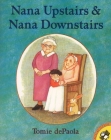
I've just reread Nana Upstairs and Nana Downstairs by Tomie de Paola. It's so lovely: most of it is about visiting his grandmother and great-grandmother. I can see why it stayed in your memory all this time. When four year-old Tom sees that his grandmother ties her 94 year-old mother into a chair so she won't fall out, he asks to be tied into his chair too. There's a picture of them sitting side by side, tied in, both smiling. And there's a sequence of Tom watching both women fix their long white hair which brought back to me memories of Aunt Martha (your great-aunt) and her crown of white braids.  After he learns Nana Upstairs has died, Tom runs to her room, only to find it empty.
Tommy began to cry.
"Won' t she ever come back?" he asked.
"No, dear," Mother said softly.  "Except in your memory.  She will come back in your memory whenever you think about her."
I wanted to move the discussion today to books that are written specifically to help children understand the death of someone they love.  Our family is grieving for someone we love this week: Bob's mother, my children's grandma, died on Sunday.  She cared about books, and with her husband raised an amazing reader, and it seems fitting to talk about mourning.

Nana is a book one can read as a story -- as you did as a child -- but which can be useful talking about someone who's died.  After both Nana Upstairs, and years later Nana Downstairs die, Tom sees a shooting star.  "Perhaps that was a kiss from Nana Upstairs," Mother tells the young Tom.  The book gives a hint of something Bigger out there, without spelling it out.
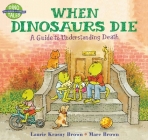
As with sex, Laurie Krasny Brown and Marc Brown have written a Very Thorough book on death:
When Dinosaurs Die: A Guide to Understanding Death
. It defines alive and dead and gives lots of examples of ways to die (after long  illness, sudden illness, accidents, as a baby, in war, "poverty, prejudice and drug abuse," and suicide).  There's a lot about missing people, about overwhelming feelings, about funerals (illustrated with one for a pet).  There are many different answers to "What Comes After Death?"  It feels like it can be just too much information.  But it does hit a lot of points.
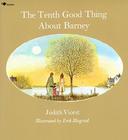
I think we've both established at some point that we're not particularly religious.  I'm fond of the treatment of heaven in Judith Viorst's
The Tenth Good Thing About Barney
. This one is about the death of a cat, and it's full of Viorst's wonderful kid-intensity. After Barney's backyard funeral, the narrator and his friend talk:
Annie said Barney was in heaven with lots of cats and angels, 
drinking cream and eating cans of tuna
I said Barney was in the ground.

Heaven said Annie, heaven.  So there!  The ground, I told her, the ground.  You don't know anything.

My father came in from the yard and took a cookie.
Big-mouthed Annie said heaven again.  I said ground.
Tell her who's right, I asked Father.  She doesn't know anything.

Maybe Barney's in heaven, my father began.  Aha, said Annie, and stuck her tongue out at me.

And maybe, said my father, Barney isn't.  What did I tell you, I said, and yanked Annie's braid.

Father made me let go.
We don't know too much about heaven, he told Annie.
We can't be absolutely sure that it's there.

But if it is there, said Annie in her absolutely sure voice,
it's bound to have room for Barney and tuna and cream.
She finished another cookie and went back home.
The beauty of Barney is that the narrator makes a list of ten good things about the departed cat.  It's an exercise people sometimes do with grieving kids.

There are other books with groups of people (or animals standing in for people) reminiscing about special moments with the person who's no longer there.  They're stories, presented as a kind of model for mourning.  I'm curious if any of our readers have had satisfactory first-hand experience with a book for their kids to help process dying.

Love,

Deborah

Friday, February 4, 2011

Death in picture books and chapter books

Dear Aunt Debbie,

In answer to KPK's comment of a few days ago, I've been trying to think of books which address the issue of death for younger readers.  The only picture book of this kind I remember from my own childhood is another by Tomie dePaola (who is starting to seem a little morbid): Nana Upstairs and Nana Downstairs.  Nana downstairs is 4-year-old Tommy's grandmother, and Nana Upstairs is her mother, and in the book, Nana Upstairs dies.  I haven't read it in a long while, but I remember it being sweet and sad.

Patricia Polacco would also be a good author to check out on this subject -- in many of her books, while death is not the main subject at hand, she takes her adult-role-model main characters all the way to death on the last page.  This is true in Chicken Sunday and  In Our Mothers' House, and The Keeping Quilt has death threaded through it, along with births and marriages.  I've written more about these particular books here.

KPK mentioned The Fall of Freddie the Leaf, which I've never read, but in a conversation on this topic today, my friend Emily cited it as one of the main books about death in her childhood.  She says it's a lovely, gentle story -- Freddie is a leaf, and he grows and then falls and dies, and becomes part of the earth and helps other things grow.

The books I read as a kid which made me think most deeply about death are all chapter books, only one of which would be appropriate to read to fairly young kids.

The first is actually referenced in your previous post as one of the books Doug reads to the kids he babysits (what a wonderful, reference-filled scene!): E.B. White's Charlotte's Web.  I still remember my father reading me the scene where Charlotte dies; I still remember sobbing.  Such a great book, and such a bittersweet ending -- all those baby spiders taking off and leaving Wilbur alone, but the promise of the one who stays, the generations to come.  That's one we should break out fairly soon, I think.

The other two both have protagonists who are about ten years old, and I think that's probably the right age to read them: Bridge to Terabithia, by Katherine Paterson, and Tuck Everlasting, by Natalie Babbitt.  I know I read both of them on my own (and then re-read, and re-read them, sobbing every time).  Bridge to Terabithia is the story of the friendship between Jess Aaron, a fifth-grade boy, and a neighbor girl named Leslie.  They create an imaginative world together in the woods near their houses (Terabithia, of course), and it's intense and wonderful, and then one morning while Jess is away -- I think at an art museum with his teacher -- Leslie tries to go to Terabithia in bad weather, has an accident, and dies.  There is so much in the book about friendship and guilt and loss; it feels horrible and preventable but altogether real.  I get choked up just writing about it.  I heard Paterson once on NPR talking about how she wrote the book after her son's best friend, an eight-year-old girl, was killed by lightning.  The book has that feel of truth to it -- she's trying to make sense of absolute tragedy.

In Tuck Everlasting, a ten-year-old girl named Winnie Foster meets the Tuck family, including one very attractive son a little older than she is.  She learns fairly quickly that he's actually a lot older -- he and his family have drunk from a spring of immortality.  Winnie is offered the chance to drink from the spring herself, and has to decide whether or not she wants eternal life and eternal youth.  I suppose with all the vampire fiction around these days, there are other places kids are puzzling over the pluses and minuses of eternal life, but for me, this was the first time I'd really pondered it.  It's hard to understand at age ten that people might want to grow old and even to die, when the time comes.  I suppose it's hard to understand on some level at any age.

Love, Annie

Friday, January 28, 2011

Death, religion, and the afterlife

Dear Aunt Debbie,

I'm so sorry the Comment Challenge happened when I was ostriched in my end-of-term work.  Maybe I'll have to challenge myself unofficially during summer vacation.

The books you and Denise have been talking about sound extraordinary and powerful, and are certainly some that I will want to read with Eleanor and Isabel when they get a little older.  War and slavery and the terrible things people do to one another are certainly tough topics to broach with kids; I know there are many difficult conversations ahead.

Right now, for me, the issues that are looming large and difficult are those of death, religion, and the afterlife.  The Christmas season brought with it a first-time awareness on Eleanor's part of the story of Jesus, and there were plenty of nativity scenes in our neighborhood for her to notice ("Look!  It's Baby Jesus!").  As you know, I come from a non-religious family.  While I want my kids to be exposed to and understand various religious traditions and beliefs, I'm not teaching them that one religion is the right path, or that I, or anyone, knows what happens after we die.  Sometimes I'm sorry I don't have this certainty, and can't pass it on to them.

Our conversations about death have stemmed sometimes from books -- fairy tales in particular, where people are always dying and coming back to life -- and sometimes from real-life conversations.  Eleanor understands, sort of, that my grandparents all died before she was born.  Recently, we were talking about Grandma Ruth, and I said I missed her, and Eleanor said, "That's okay, Mommy.  You'll get another grandma." and I had to explain that no, unlike in so many stories, death is permanent.

Last weekend at my parents' house, Eleanor wanted me to read her one of the books from their kids' bookshelf (happily, they saved everything from Michael's and my childhood): The Clown of God, by Tomie dePaola.  I had itchy I don't like that book feelings about it, but couldn't remember exactly why.  The visit before, I put her off, but last weekend we sat down and read it.

dePaola's drawings are, as always, beautiful and expressive.  The Clown of God is a retelling of an old French legend about a poor boy who raises himself up by becoming a talented juggler and clown.  He performs all over the country, making audiences happy with his act, which culminates with a rainbow of balls, the last a golden sun.  His success fades as he ages, and he gets to a point where he stumbles, and the audience throws things at him.  He quits juggling and wanders the country, begging, until he ends up at a monastery, where he sees a statue of Mary and baby Jesus being worshiped during a church service.  After the rest of the people leave, the old clown puts on his makeup and juggles for the stone-faced baby statue.  The show is amazing, best he's ever done.  Then he drops dead.  When a scandalized monk comes to see the sacrilege that is happening in the church, he finds the Jesus statue holding the golden ball, a smile on his face.

There's a lot going on here: death, the idea of doing something beautiful to make God happy, the question of why people would throw things at an old man.  I'm not sure what aspect of the book left me with my initial negative feelings about it; it's quite sweet in a number of ways.  But then there's the question of how Eleanor is taking this talk about God, coming from our house: is this a story to her like all the other stories we read?  Or does the fact that her friends are starting to talk about their belief in God make religious stories read differently to her?  (She has, in the last week, attached two necklaces to the headboard of her bed, and when I asked her why, she said, "To make God happy.")

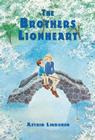
The other book that came to mind for me on this topic is a very different one, a chapter book for older readers about a pair of brothers, aged 10 and 13, who embark on a saga-like adventure after death. The Brothers Lionheart was written by Astrid Lindgren, of Pippi Longstocking fame, though it bears little resemblance in tone to its more famous cousin.  The narrator, Karl, is a terminally ill 10-year-old boy; his older brother Jonathan is strong, smart, and brave.  Karl learns at the very beginning of the book that he is about to die, and Jonathan tries to reassure him by explaining that after death, they will both go to Nangiyala, the land where sagas come from.  In saving Karl from a fire, Jonathan unexpectedly dies first; Karl follows him, and the two brothers find themselves in an afterlife filled with adventure, battles of good against evil, and traitors.  It is, and is not, the land they were hoping it to be.

I remember loving this book as a kid; tonight, rereading bits of it, I was immediately sucked in again.  There is an immense seriousness to Karl's narration -- it's an adventure story, but a weighty one, and even the ending is not easy or happy.  The Brothers Lionheart, too, makes me itch a little uncomfortably, but in a productive kind of way.  It's a vision of the afterlife which, I'm sure, will spark all kinds of interesting conversation down the road.

Love, Annie

Monday, June 14, 2010

Mother Goose was a poet

Dear Aunt Debbie,

The Piggy in the Puddle is one of the few kids' books I bought for myself as an adult before having children, simply because it cracks me up every single time I read it. What an awesome book.

I agree with you about poetry being everywhere in kids' books. Next time I write, I'll touch on a few books that fit into your other categories, but tonight I want to focus on Mother Goose.

We have several editions of Mother Goose rhymes, each of which has its particular delights.

First, there's the big old classic Real Mother Goose, illustrated by Blanche Fisher Wright:


The Real Mother Goose


I think this is the most comprehensive, with rhymes packed in sometimes five to a page. Because there are so many rhymes, it can feel overwhelming, but you find wonderful ones you've never heard of, as well as the golden oldies. There's a Table of Contents, but no index, so it takes some work to find a specific rhyme. The illustrations (first published in 1916) are pleasingly old-fashioned: bonnets and aprons abound. Because of the number of rhymes per page, not every rhyme is illustrated -- this sometimes bothers Eleanor, who wants a picture to go with everything.

Scholastic has put out a series of Real Mother Goose board books as well: The Real Mother Goose Board Book, My First Real Mother Goose, etc. These are lovely and small, easy to read and easier for kids to hold. An interesting side note in terms of our conversation on race: in the smaller board books, Scholastic has photoshopped the illustrations to make some of the children black.

Tomie dePaola has the same combination of big hardcover Mother Goose and little board books as spinoffs:


Tomie dePaola's Mother Goose


Tomie's Little Mother Goose


dePaola's illustrations are simple, cheerful, and childlike. While I love some of his other books to pieces, his Mother Goose illustrations have always struck me as a little too sweet, but maybe that's just me. Some of his rhymes in the big book are one per page, some up to four, with illustrations for each. (His big book does have an index, by the way.)

The Mother Goose we found ourselves reading most often to Eleanor are two books edited by Iona Opie and illustrated by Rosemary Wells. Have I mentioned how much I love Rosemary Wells? Opie loves her, too. In the introduction to their big book, The Very Best of Mother Goose, she writes:

I firmly believe that Rosemary Wells is Mother Goose's cousin and has inherited the family point of view. Her illustrations exactly reflect Mother Goose's many moods: glumpish, her animals look wickedly askance at the world; happy, they almost dance off the page; cosily at home, there is no greater depth of contentment. They make me shout with glee.

While the big book we have is out of print (hence the Alibris link), it appears to be a combination of two Opie/Wells books that are still quite happily in print:


My Very First Mother Goose


Here Comes Mother Goose


Tons of rhymes, each with its own giant watercolor illustrations, and joy on every page. Chapters. An index. And, of course, associated board books.

Finally, there's the Opie/Wells book of lesser-known rhymes:


Mother Goose's Little Treasures


We read this one a lot. It has some fabulous oddball rhymes, so I'll end with two of our favorites:

Mrs. Whirly sells fish,
Three ha'pence a dish.
Don't buy it,
don't buy it;
It stinks
when you fry it.


and

When the rain raineth
And the goose winketh,
Little knows the gosling
What the goose thinketh.


Man, I need to get a working scanner.

Love, Annie

Thursday, April 29, 2010

Expanding the notion of Princess

Dear Aunt Debbie,

I'll admit, we've deep-sixed a few books in this house. I've felt a little guilty each time; it's nice to know that Grandma Helen did it too. Sometimes it's because they're boring or badly written, but sometimes it's the content that makes me squirm. This is particularly true now that we've entered the beginning of a heavy princess phase in our house. (With two daughters, I expect that we're in for a good seven years of tiaras and Disney and happily ever after.)

I've been on a hunt for books that expand the notion of princess, that aren't just "She's really nice and pretty and then she marries the prince and they live happily ever after." Here are a few of my favorites that break or at least enrich or complicate the mold, some from my own childhood, some from you:


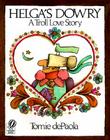
Helga's Dowry: A Troll Love Story, by Tomie dePaola
First off, everyone in this book is a troll, so they're small and dumpy and fun to look at. Helga is supposed to marry the handsome troll Lars, but he turns out to be a jerk and wants a dowry, so she uses ingenuity and troll magic to earn her own dowry, and along the way accidentally impresses the troll king, who falls in love with her. Helga is spunky and smart, and the book is a lot of fun. (I'm also a fan of dePaola's Strega Nona series.)


Petronella
, by Jay Williams
Petronella is born into a royal family that, before her, has only had sons. She was supposed to be the next Peter, find a princess to marry, and come back to rule the kingdom. Though she's a girl, she goes out adventuring anyway, looking for a prince to bring home. She finds one at the house of a great enchanter, completes impossible tasks, fights the enchanter, and ultimately realizes (once she's defeated him) that the enchanter himself is a lot more interesting than the prince, who is kind of a dip. (In a lot of ways, it's similar to Helga's Dowry.) The edition I grew up with had amazing loopy Monty Python-like illustrations by Friso Henstra. It's out of print now, but I found it for too much money here on Alibris (I hope this is the right one. The cover picture is wrong, though).. I can't vouch for the illustrations of the new version, but the story is good.


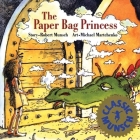
The Paper Bag Princess
, by Robert Munsch
This seems to be the one most people know. Eleanor was not as into it as some of the others, probably because Princess Elizabeth is wearing a paper bag instead of something beautiful, but it's a fun twist on the normal ending, as she runs off happily by herself after outsmarting the dragon and rescuing the dippy ungrateful prince. The thing I like most about Munsch's books is that they have the kind of random kid logic that's accurate to little kids. As in: everything in the castle is burned by the dragon except for a paper bag.


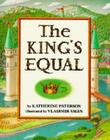
The King's Equal
, by Katherine Paterson
This is a slightly longer book, more serious in tone and in illustration style, but quite beautiful. Thanks for sending us this one. The only other thing I'd read by Paterson is Bridge to Terabithia, one of my old YA favorites which I can hardly even think about without choking up. The King's Equal isn't weepy at all, but is another story of the girl (Rosamund, poor, kind, and smart) proving herself to be as wise, beautiful, and rich as the selfish and unpleasant Prince Raphael. The nice thing about this one is that Raphael has to go off by himself for a year, along with a few goats and a magical talking wolf, to prove himself worthy of Rosamund. Eleanor really likes it. The only downside to Vladimir Vagin's intricate illustrations is that the page with the picture of three gorgeously dressed princesses has no text on it, and she's always trying to turn the page while I'm still reading so she can see the picture.


The Princess and the Pizza
, by Mary Jane and Herm Auch
This is Eleanor's favorite of your princess book recommendations, hands down. It's silly, with some nice wordplay and alliteration, and has references she can pick up. She knew the story of Snow White already, so when Auch refers to the princess with the seven little men following her, Eleanor was excited to be able to identify her. On the other hand, we hadn't yet read Rapunzel, and when we explained the Rapunzel story so Eleanor could get that reference too, suddenly all she wanted to do was play Rapunzel, which is not so feminist a story. Ah, well. Like Paper Bag Princess, in this one Princess Paulina ends up happily not married to the prince, and founder of her own successful business.

Any I'm missing here?

Love, Annie