In which Annie (high school teacher, mother of two young girls and a younger boy) and her aunt Deborah (children's bookseller, mother of two young women in their 20s) discuss children's books and come up with annotated lists.

Showing posts with label Viorst. Show all posts

Monday, January 5, 2015

Early chapter books, step by step

Dear Annie,

Happy New Year!

We're starting 2015 with an Emerging Reader, as we say in the biz.  Your pal (and guest blogger) Cyd's daughter Ellie is working her way into independent reading step by step:

We went from Learn to Read type books (Henry and Mudge, Pinkalicious, Fancy Nancy) to Mercy Watson and then to Stephanie Greene's Princess Posey series (perfect next step: chapter books but with large print, short chapters, and easy vocabulary, but high-interest level for a first grader, as they are about a first-grader) and now we've just started Julie Sternberg's
Like Pickle Juice on a Cookie
, which is also perfect: very short chapters, slightly harder vocabulary (but only slightly), written almost like verse so not much text on a page.... I need something at either the same level or just above.  She gets overwhelmed by too many words on a page and too much vocabulary she doesn't know and then gives up, so taking it up notch by notch is very important.

I've grabbed a handful of books -- all from different series -- which I would talk with Cyd and Ellie about if they came to the store.  I'm not sure where Ellie's interests lie, but here's an assortment to consider, more or less in order of difficulty.

-- The Cam Jansen series by David Adler, now up to #33.  Cam is a fifth grader with a photographic memory.  She needs only to say "click," and she memorizes a perfect image of what she's looking at.  Very useful in solving a string of mysteries with her friend Eric.  The mysteries maintain interest, and  action.  Pictures on almost every page, with occasional lapses.  Here's a two-page spread from the first book:

 
-- I know I rail against Magic Tree House books, but this is the situation they were invented for.  They're great for kids who are getting their confidence reading on their own.  Think of these books, with repetitive plots and structure, as aerobics for the reading muscles.  The reader doesn't need to figure out who the characters are every time she opens a book, she knows more or less what to expect, yet has some variety from story to story.  She can keep exercising those muscles until they're strong enough to realize they're a bit bored, and ready for something more challenging.

-- Cyd mentions that Ellie's progressed beyond the Fancy Nancy readers.  Jane O'Connor has also put her character into a chapter book mystery series: the first is
Nancy Clancy Super Sleuth
.  The mysteries are tame, the emoting is high.  As with all Fancy Nancy books, these come with a Lesson to be Learned.  In this book, it has to do with her parents trying to convince her that everything isn't a huge deal to worry about.

-- Sometimes I feel the entire publishing industry is pushing Books About Girls, and Books About Boys, with not a lot in between. But hey, you may find the perfect book if you cross the line. 
Ricky Ricotta's Mighty Robot
, by Captain Underpants author Dav Pilkey, combines slick illustrations, a little bit of graphic novel, simple text and a sense of humor.  Ricky is a mouse who befriends a giant robot.  They have adventures that involve some cartoon physical combat and villains from many planets.  They're an easier read than Captain Underpants.

-- Moving to slightly harder, the Geronimo Stilton series is wildly popular.  It's translated from the Italian, about a newspaper editor mouse who has many many adventures.  The series has spawned several spinoff series as well.  Part of the attraction of the books is the playful use of typeface:

-- The same author has started a lovely mystery series called Agatha, Girl of Mystery, under another pseudonym, Sir Steve Stevenson.  It's a little harder read.  Agatha goes to a different country in each book (eight so far), and the mystery usually involves a missing object.

-- Has Ellie read Flat Stanley by Jeff Brown yet?  A classic: Stanley wakes up one morning and he's flat.  Flat enough to be a kite, to be mailed to California, and to solve a museum theft by hanging on a wall.

Three which you've probably hit as read-alouds are worth considering for reading alone:

-- The wonderful Anna Hibiscus.  Good stories, lots of pictures, just good.

-- The Ramona books.  Ellie's probably not quite there yet, but her familiarity with them might make them feel a bit less intimidating.

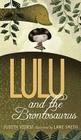
-- Lulu and the Brontosaurus comes in a nice oblong shape with illustrations on every two-page spread.  And it has that excellent repeating chant:  "I'm gonna, I'm gonna, I'm gonna, gonna get/A bronto-bronto-bronto Brontosaurus for a pet."

I've saved one of my favorites for last.  In the great sea of early chapter books, many of which are just great for this stage of getting used to reading, lovely writing is not always there.  Enter
Violet Mackerel
by Anna Branford, a relatively recent arrival from Australia. It has large type, fewer words per page, but a more sophisticated vocabulary than others with this typeface. Violet lives with her single mom (romance shows up as the series progresses) and has real-life feelings and mild adventures.  I love to sell this book: I just open it up and show the customer the first page:
Chapter One: The Red Button
Violet Mackerel is quite a small girl, but she has a theory.
  Her theory is that when you are having a very important and brilliant idea, what generally happens is that you find something small and special on the ground.  So whenever you spy a sequin, or a stray bead, or a bit of ribbon, or a button, you should always pick it up and try very hard to remember what you were thinking about at the precise moment when you spied it, and then think about that thing a lot more.  That is Violet's theory, which she calls the Theory of Finding Small Things.

Here's hoping Ellie will find many more books -- small and large -- to keep her happily reading.

Love,

Deborah


Tuesday, October 16, 2012

Families of five

Dear Annie,

I'm not so good on the Noisy Nora girl-girl-boy family structure, but here are a few classic three-child families (with thanks to the brainstorming abilities of my co-workers):
  Wendy came first, then John, then Michael. 
  Peter Pan!  (Full text here.)  Mrs Darling remembers the children's last evening at home:
She had found her two older children playing at being herself and father on the occasion of Wendy's birth, and John was saying:
  "I am happy to inform you, Mrs. Darling, that you are now a mother," in just such a tone as Mr. Darling himself may have used on the real occasion.
  Wendy had danced with joy, just as the real Mrs. Darling must have done.
  Then John was born, with the extra pomp that he conceived due to the birth of a male, and Michael came from his bath to ask to be born also, but John said brutally that they did not want any more.
  Michael had nearly cried. "Nobody wants me," he said, and of course the lady in the evening-dress could not stand that.
  "I do," she said, "I so want a third child."
  "Boy or girl?" asked Michael, not too hopefully.
  "Boy." 
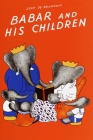
 Staying with the classics,  Babar and Celeste have an instant three-child family when their first-born turns out to be triplets in
Babar and His Children
. The girl is named Flora; the boys are Pom and Alexander.

Another Alexander, this one of the Terrible, Horrible, No Good, Very Bad Day, is afflicted with two big brothers.
At breakfast Anthony found a Corvette sting Ray car kit in his breakfast cereal box and Nick found a Junior Undercover Agent code ring in his breakfast cereal box but in my breakfast cereal box all I found was breakfast cereal.

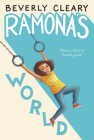
Three boys there, and on the other side of the country, three girls at the Quimbys'.  The summer after Ramona's third grade year, the ultimate little sister becomes a big sister. 

Ramona's World
starts:
Ramona Quimby was nine years old.  She had brown hair, brown eyes, and no cavities.  She had a mother, a father, a big sister named Beatrice who was called Beezus by the family, and -- this was the exciting part -- a baby sister named Roberta after her father, Robert Quimby.
     "Look at her tiny fingernails," Ramona marveled as she looked at the sleeping Roberta, "and her little eyebrows.  She is already a whole person, only little."
Of course the baby becomes a bit more problematic as she grows, learns to spit mashed peas, screams a fair amount, and sucks up adult attention.

And another big favorite: Dogger, with a wonderful girl-boy-boy family.  It's a story of siblings caring about each other.  So I'll leave you with this lovely illustration, and I'll think of your future in Brooklyn whenever I look at it:
Love,

Deborah


Tuesday, November 8, 2011

Breaking the fourth wall

Dear Aunt Debbie,

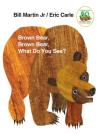
Before I move too far away from the subject of books on color, I want to include a shout-out for another Eric Carle book that Isabel adores: Brown Bear, Brown Bear, What Do You See?  Carle is the illustrator here (Bill Martin, Jr. wrote the text), so the pictures are his wonderful familiar streaky collages.  It's kind of the proto-version of The Artist Who Painted a Blue Horse: lots of illustrations of brightly-colored animals, though here most are the colors nature made them.  The question and answer format is rhythmic, and encourages kids to respond when you read it aloud: "Brown bear, brown bear, what do you see?  I see a yellow duck looking at me." We read it a lot.

Your discussion of Linda Sue Park and the way she plays with narrative voice in Project Mulberry got me thinking about other authors who address their audiences directly or in other ways consciously engage kids with the fact that they are constructing a book.  Sometimes this involves a conversation between author and character, as you write about with Park; often, it happens through a second-person address directly to the reader.

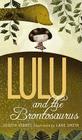
Judith Viorst (of Alexander and the Terrible, Horrible, No Good, Very Bad Day fame) has a recent entry in this category: Lulu and the Brontosaurus, which you mentioned briefly last year here.  It's a short chapter book, packed with attitude from the first page:

OKAY!  All right!  You don't have to tell me!  I know!

I know that people and dinosaurs have never lived on earth at the same time.  And I know that dinosaurs aren't living now.  I even also know that paleontologists (folks who study dinosaurs) decided that a dinosaur that was once called a brontosaurus (a very nice name) shouldn't be called brontosaurus anymore, and changed it to apatosaurus (a kind of ugly name).  But since I'm the person writing this story, I get to choose what I write, and I'm writing about a girl and a BRONTOSAURUS.  So if you don't want to read this book, you can close it up right now -- you won't hurt my feelings.  And if you still want to read it, here goes:

Most of the rest of the book is a straight narrative (though it does contain a number of parenthetical asides), about an extremely bratty little girl named Lulu who decides she wants a brontosaurus for a pet.  She's spoiled, and won't take no for an answer, so when her parents refuse to get her one, she takes off into the forest by herself.  Lulu runs into several wild animals, who she's rude to and then defeats easily: squeezing a snake, bonking a tiger on the head with her suitcase.  She finds her brontosaurus, but -- here comes the twist -- it turns out that he wants to make her into the pet, not the other way around.  She learns a little humility, and ultimately apologizes to the other animals, and life is better.  As so often happens with these Children Behaving Badly stories, she's more interesting when unrepentant.

The catchphrase that has come to us from Lulu is her catchy, repeated rhyme:

I'm gonna, I'm gonna, 
I'm gonna gonna get

A bronto-bronto-bronto 
Brontosaurus for a pet.

I'm gonna, I'm gonna, 
I'm gonna gonna get

A bronto-bronto-bronto 
Brontosaurus for a pet.

Fair warning: reading about Lulu leads to lots of chanting of the above.

At the end of the book, Viorst plays heavily with narrative voice again ("Wait!  I'm really not all that sure about this ending.  It may be a little too mushy, a little too sad").  Eleanor enjoys this telling and re-telling, and I think it's a interesting model to expose kids to when they're making up their own stories all the time.

There are some picture books I have in mind as well, but I'll save them for another night.

Love, Annie

Wednesday, February 9, 2011

On Mourning

Dear Annie,

I've just reread Nana Upstairs and Nana Downstairs by Tomie de Paola. It's so lovely: most of it is about visiting his grandmother and great-grandmother. I can see why it stayed in your memory all this time. When four year-old Tom sees that his grandmother ties her 94 year-old mother into a chair so she won't fall out, he asks to be tied into his chair too. There's a picture of them sitting side by side, tied in, both smiling. And there's a sequence of Tom watching both women fix their long white hair which brought back to me memories of Aunt Martha (your great-aunt) and her crown of white braids.  After he learns Nana Upstairs has died, Tom runs to her room, only to find it empty.
Tommy began to cry.
"Won' t she ever come back?" he asked.
"No, dear," Mother said softly.  "Except in your memory.  She will come back in your memory whenever you think about her."
I wanted to move the discussion today to books that are written specifically to help children understand the death of someone they love.  Our family is grieving for someone we love this week: Bob's mother, my children's grandma, died on Sunday.  She cared about books, and with her husband raised an amazing reader, and it seems fitting to talk about mourning.

Nana is a book one can read as a story -- as you did as a child -- but which can be useful talking about someone who's died.  After both Nana Upstairs, and years later Nana Downstairs die, Tom sees a shooting star.  "Perhaps that was a kiss from Nana Upstairs," Mother tells the young Tom.  The book gives a hint of something Bigger out there, without spelling it out.

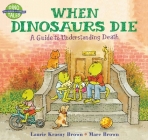
As with sex, Laurie Krasny Brown and Marc Brown have written a Very Thorough book on death:
When Dinosaurs Die: A Guide to Understanding Death
. It defines alive and dead and gives lots of examples of ways to die (after long  illness, sudden illness, accidents, as a baby, in war, "poverty, prejudice and drug abuse," and suicide).  There's a lot about missing people, about overwhelming feelings, about funerals (illustrated with one for a pet).  There are many different answers to "What Comes After Death?"  It feels like it can be just too much information.  But it does hit a lot of points.

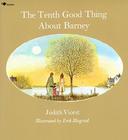
I think we've both established at some point that we're not particularly religious.  I'm fond of the treatment of heaven in Judith Viorst's
The Tenth Good Thing About Barney
. This one is about the death of a cat, and it's full of Viorst's wonderful kid-intensity. After Barney's backyard funeral, the narrator and his friend talk:
Annie said Barney was in heaven with lots of cats and angels, 
drinking cream and eating cans of tuna
I said Barney was in the ground.

Heaven said Annie, heaven.  So there!  The ground, I told her, the ground.  You don't know anything.

My father came in from the yard and took a cookie.
Big-mouthed Annie said heaven again.  I said ground.
Tell her who's right, I asked Father.  She doesn't know anything.

Maybe Barney's in heaven, my father began.  Aha, said Annie, and stuck her tongue out at me.

And maybe, said my father, Barney isn't.  What did I tell you, I said, and yanked Annie's braid.

Father made me let go.
We don't know too much about heaven, he told Annie.
We can't be absolutely sure that it's there.

But if it is there, said Annie in her absolutely sure voice,
it's bound to have room for Barney and tuna and cream.
She finished another cookie and went back home.
The beauty of Barney is that the narrator makes a list of ten good things about the departed cat.  It's an exercise people sometimes do with grieving kids.

There are other books with groups of people (or animals standing in for people) reminiscing about special moments with the person who's no longer there.  They're stories, presented as a kind of model for mourning.  I'm curious if any of our readers have had satisfactory first-hand experience with a book for their kids to help process dying.

Love,

Deborah

Sunday, September 26, 2010

Book festivities

Dear Annie,

Happy first birthday to the delightful Isabel.  I hope you've been having a special day.

I had quite a lovely day yesterday down at the National Book Festival on the Mall here in D.C.  It's basically a series of readings in the heat under huge tents by lots of different authors, each presenting every 45 minutes or so.  Laura Bush is credited with starting the festival ten years ago, "the best legacy of the Bush Administration," said Rosemary Wells, in a not-so-subtle dig.

 Rosemary Wells, best known as the author of the Max and Ruby books, ran a real pep rally for reading.  "I write to cause children to look at a book and open those pages and love what's inside....I don't want to write a book about what you should or shouldn't think."  She talked about the ability to read being the foundation of a democracy -- lots of good stuff that I agree with.

She eventually got around to good old Max and Ruby, though.  One kid asked her how she came up with them.  She replied that they're non-fiction, based entirely on her two children.  She wrote the first book when Ruby was five years old and Max was nine months.  "Ruby is 37 years old now, the mother of three, and still really bossy.  An Max is 32 and teaches horticulture at Cornell and still really dirty."

Judith Viorst, best known for Alexander And The Terrible, Horrible, No Good, Very Bad Day, read from her new and wacky
Lulu and the Brontosaurus
. I'm quite fond of that one -- lots of opportunity for parents to ham up a read-aloud.  (It might show up at your house in my Christmas box.)  She says the idea was born on a rainy day on vacation with two of her grandsons.  They demanded that she make up stories for them over the course of several hours, and eventually Lulu and the brontosaurus appeared.  Someone in the audience asked about Alexander, the subject of several of her books, at which point she said, "Alexander's going to kill me for this," and pointed to a forty-something man in the front row with a small boy in his lap.  He smiled and waved at the crowd.

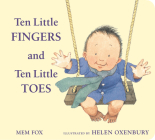
Mem Fox, author of some wonderful books for little ones --  most notably Time for Bed, Where is the Green Sheep?, and my current favorite,
Ten Little Fingers and Ten Little Toes
-- spoke about her childhood. Born in Australia, she grew up in Zimbabwe (then Southern Rhodesia), the child of missionaries and the only non-African child in her school.  Her classroom, she said, was a space under a tree.  The teacher would trace the letters of the alphabet in the air and the children wrote them with their fingers in the dirt under the tree.  Eventually they graduated to slates, which had the attraction of needing to be spat upon to be erased.  She spoke about the intense thought that goes into creating the economy of language in her board books.

I'm going to save for my next post a wonderful presentation by a great graphic novelist. 

Love,

Deborah