Dear Aunt Debbie,
Thanks for the well-wishes -- after being completely knocked out for two days, I'm feeling much better, and we had a terrific celebratory weekend for Eleanor. (We got your birthday box tonight, and have only opened part of it -- what a treasure trove!)
Coming off of this stomach bug, and watching family and friends fall prey to it and its cousins in the last couple of weeks, I'm surprised that I can't think of any good stomach flu picture books either. It's such a common childhood ailment. Maybe illustrators think it's too gross? Colds and flus provide picture-friendly runny sore noses, but no one wants to draw their favorite bunny hunched over the toilet or reaching for a bucket over the side of the bed?
The only stomachache books that come to mind are about overeating: stomachache as a punishment for gluttony. There's Eric Carle's The Very Hungry Caterpillar, who overeats (at a fairground?) on Saturday, has a terrible stomachache, then eats a "nice green leaf" on Sunday (repent, caterpillar!) and feels much better. Only then does he get to be a butterfly.
Then there's this wonderful weird old book I had as a kid (out of print now, of course): Mother Mother I Feel Sick Send for the Doctor Quick Quick Quick.
It's the brainchild of Remy Charlip (of Fortunately and Paper Bag Players fame) and Burton Supree, and you can get a sense of its pleasing wackiness from the title.
It's the story of a fat little boy who has a bad stomachache. His mother races him to the doctor, who throws him under a sheet and begins to pull all kinds of things out of him -- apparently, this boy has eaten everything in the house, from food to furniture to a birdcage with a live bird in it.
The drawings are all done in silhouette, and the book provides instructions for how to act it out as a shadow play, which I remember thinking was a cool idea, though I don't think we ever actually did it. Vintage Kids' Books My Kid Loves has a nice entry on it, with more of the evocative silhouette drawings.
So again, not really sickness, just compulsive overeating. But perhaps a book that would make a sick kid feel better anyhow?
Love, Annie
In which Annie (high school teacher, mother of two young girls and a younger boy) and her aunt Deborah (children's bookseller, mother of two young women in their 20s) discuss children's books and come up with annotated lists.
Showing posts with label Carle. Show all posts
Monday, January 30, 2012
Tuesday, November 8, 2011
Breaking the fourth wall
Dear Aunt Debbie,
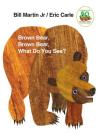
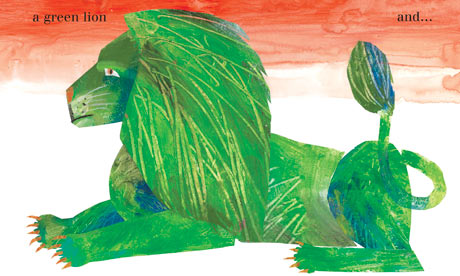
Before I move too far away from the subject of books on color, I want to include a shout-out for another Eric Carle book that Isabel adores: Brown Bear, Brown Bear, What Do You See? Carle is the illustrator here (Bill Martin, Jr. wrote the text), so the pictures are his wonderful familiar streaky collages. It's kind of the proto-version of The Artist Who Painted a Blue Horse: lots of illustrations of brightly-colored animals, though here most are the colors nature made them. The question and answer format is rhythmic, and encourages kids to respond when you read it aloud: "Brown bear, brown bear, what do you see? I see a yellow duck looking at me." We read it a lot.
Your discussion of Linda Sue Park and the way she plays with narrative voice in Project Mulberry got me thinking about other authors who address their audiences directly or in other ways consciously engage kids with the fact that they are constructing a book. Sometimes this involves a conversation between author and character, as you write about with Park; often, it happens through a second-person address directly to the reader.
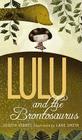
Judith Viorst (of Alexander and the Terrible, Horrible, No Good, Very Bad Day fame) has a recent entry in this category: Lulu and the Brontosaurus, which you mentioned briefly last year here. It's a short chapter book, packed with attitude from the first page:
Most of the rest of the book is a straight narrative (though it does contain a number of parenthetical asides), about an extremely bratty little girl named Lulu who decides she wants a brontosaurus for a pet. She's spoiled, and won't take no for an answer, so when her parents refuse to get her one, she takes off into the forest by herself. Lulu runs into several wild animals, who she's rude to and then defeats easily: squeezing a snake, bonking a tiger on the head with her suitcase. She finds her brontosaurus, but -- here comes the twist -- it turns out that he wants to make her into the pet, not the other way around. She learns a little humility, and ultimately apologizes to the other animals, and life is better. As so often happens with these Children Behaving Badly stories, she's more interesting when unrepentant.
The catchphrase that has come to us from Lulu is her catchy, repeated rhyme:
Fair warning: reading about Lulu leads to lots of chanting of the above.
At the end of the book, Viorst plays heavily with narrative voice again ("Wait! I'm really not all that sure about this ending. It may be a little too mushy, a little too sad"). Eleanor enjoys this telling and re-telling, and I think it's a interesting model to expose kids to when they're making up their own stories all the time.
There are some picture books I have in mind as well, but I'll save them for another night.
Love, Annie
Your discussion of Linda Sue Park and the way she plays with narrative voice in Project Mulberry got me thinking about other authors who address their audiences directly or in other ways consciously engage kids with the fact that they are constructing a book. Sometimes this involves a conversation between author and character, as you write about with Park; often, it happens through a second-person address directly to the reader.
OKAY! All right! You don't have to tell me! I know!
I know that people and dinosaurs have never lived on earth at the same time. And I know that dinosaurs aren't living now. I even also know that paleontologists (folks who study dinosaurs) decided that a dinosaur that was once called a brontosaurus (a very nice name) shouldn't be called brontosaurus anymore, and changed it to apatosaurus (a kind of ugly name). But since I'm the person writing this story, I get to choose what I write, and I'm writing about a girl and a BRONTOSAURUS. So if you don't want to read this book, you can close it up right now -- you won't hurt my feelings. And if you still want to read it, here goes:
Most of the rest of the book is a straight narrative (though it does contain a number of parenthetical asides), about an extremely bratty little girl named Lulu who decides she wants a brontosaurus for a pet. She's spoiled, and won't take no for an answer, so when her parents refuse to get her one, she takes off into the forest by herself. Lulu runs into several wild animals, who she's rude to and then defeats easily: squeezing a snake, bonking a tiger on the head with her suitcase. She finds her brontosaurus, but -- here comes the twist -- it turns out that he wants to make her into the pet, not the other way around. She learns a little humility, and ultimately apologizes to the other animals, and life is better. As so often happens with these Children Behaving Badly stories, she's more interesting when unrepentant.
The catchphrase that has come to us from Lulu is her catchy, repeated rhyme:
I'm gonna, I'm gonna,
I'm gonna gonna get
A bronto-bronto-bronto
Brontosaurus for a pet.
I'm gonna, I'm gonna,
I'm gonna gonna get
A bronto-bronto-bronto
Brontosaurus for a pet.Fair warning: reading about Lulu leads to lots of chanting of the above.
At the end of the book, Viorst plays heavily with narrative voice again ("Wait! I'm really not all that sure about this ending. It may be a little too mushy, a little too sad"). Eleanor enjoys this telling and re-telling, and I think it's a interesting model to expose kids to when they're making up their own stories all the time.
There are some picture books I have in mind as well, but I'll save them for another night.
Love, Annie
Sunday, November 6, 2011
Linda Sue Park
Dear Annie,
It makes me happy that The Artist who Painted a Blue Horse is a hit in your family. I love all the pictures, but wasn't sure how it would play with kids as a book. There's a whole category of picture books which I see before they're published and I say, "It'll be great when it's a board book," and then I don't buy them as hardcover/paper page books because I can't see the appeal to older kids. I waffled on this one, but Carle's pictures pulled me in. I have a 3-foot tall poster of the blue horse from the cover on a wall at the store -- can be seen from quite a distance.
Maybe because business is getting busier and busier (yes, all the Christmas and Hanukkah books are on display already), I find my focus with the blog bouncing all over the place. This week I've come back to Linda Sue Park, a wonderfully versatile author. I've talked about A Long Walk to Water, set in the Sudan. She's written many books, both picture books and middle-grade novels. She even has a new Christmas book this year: The Third Gift, which taught me a lot about frankincense.
Park is Korean-American, and many of her books include Korean themes. A Single Shard, for which she won the 2002 Newbery Award, is about a 12th century Korean potter and his apprentice. But the one I wanted to talk about today is about a contemporary Korean-American girl:
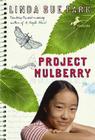
Project Mulberry. There are two things that make this book engagingly out-of-the-ordinary. First, it deals with kids' feelings about race, in age-appropriate ways. Julia and her friend Patrick want to do a project for the state fair, and her mother (who is Korean) suggests they raise silkworms. Julia doesn't want to be typecast as the Asian kid in her predominantly white small town, but doesn't know how to resist the silkworm idea. "I wanted a nice normal, All-American, red-white-and-blue kind of project," she writes.
Julia also sees that her mother is uncomfortable with black people -- it embarrasses her, but any attempts to confront her mother directly get deflected. There's a lovely scene when Patrick, Julia and her mother visit someone who they've been told might have mulberry leaves to feed to the silkworms. He answers the door, and Julia is surprised then apprehensive to discover he's black -- worried about her mother's reaction. The man is startled, he tells them, because he was expecting them to be white. The book is aimed at the fourth-to-seventh grade age range, and Park presents Julia's thought processes in an empathetic way, saying out loud those things which are often unspoken.
The other lovely unusual element of the book is that between all the chapters, there's a brief two-page discussion between the author and the main character, arguing about the direction the book should go.
Project Mulberry is part of a genre of books which say: you're not a baby anymore; we (the authors) are going to talk to you about real stuff, and we know you'll understand it, but we're also going to remember that you're not a teenager yet. Part of the progression.
Love,
Deborah
It makes me happy that The Artist who Painted a Blue Horse is a hit in your family. I love all the pictures, but wasn't sure how it would play with kids as a book. There's a whole category of picture books which I see before they're published and I say, "It'll be great when it's a board book," and then I don't buy them as hardcover/paper page books because I can't see the appeal to older kids. I waffled on this one, but Carle's pictures pulled me in. I have a 3-foot tall poster of the blue horse from the cover on a wall at the store -- can be seen from quite a distance.
Maybe because business is getting busier and busier (yes, all the Christmas and Hanukkah books are on display already), I find my focus with the blog bouncing all over the place. This week I've come back to Linda Sue Park, a wonderfully versatile author. I've talked about A Long Walk to Water, set in the Sudan. She's written many books, both picture books and middle-grade novels. She even has a new Christmas book this year: The Third Gift, which taught me a lot about frankincense.
Project Mulberry. There are two things that make this book engagingly out-of-the-ordinary. First, it deals with kids' feelings about race, in age-appropriate ways. Julia and her friend Patrick want to do a project for the state fair, and her mother (who is Korean) suggests they raise silkworms. Julia doesn't want to be typecast as the Asian kid in her predominantly white small town, but doesn't know how to resist the silkworm idea. "I wanted a nice normal, All-American, red-white-and-blue kind of project," she writes.
Julia also sees that her mother is uncomfortable with black people -- it embarrasses her, but any attempts to confront her mother directly get deflected. There's a lovely scene when Patrick, Julia and her mother visit someone who they've been told might have mulberry leaves to feed to the silkworms. He answers the door, and Julia is surprised then apprehensive to discover he's black -- worried about her mother's reaction. The man is startled, he tells them, because he was expecting them to be white. The book is aimed at the fourth-to-seventh grade age range, and Park presents Julia's thought processes in an empathetic way, saying out loud those things which are often unspoken.
The other lovely unusual element of the book is that between all the chapters, there's a brief two-page discussion between the author and the main character, arguing about the direction the book should go.
There's a lot of negotiating about plot in these little interludes, and at one point Julia gets so angry that she refuses to participate in the discussion.Me: Do you want my opinion? I am not happy with the way things are going here. I hate the project idea, Kenny [her brother] is driving me nuts, and I still haven't found another Connecticut.Ms. Park: Actually, no -- I don't want your opinion. I've written other books, and only once has a character ever talked to me. You talk to me all the time, and I'm finding that hard to get used to.Me: Like right now, while you're in the -- ahem -- bathroom. Well, I don't care whether you want my opinion or not -- you're getting it. That was a terrible chapter.Ms. Park: Would it help if I said I'm sorry you're having such a hard time?Me: If you were really sorry, you'd go back and rewrite it.Ms. Park: You're the main character. You have to have a problem or two. If you didn't, there wouldn't be any story.
Project Mulberry is part of a genre of books which say: you're not a baby anymore; we (the authors) are going to talk to you about real stuff, and we know you'll understand it, but we're also going to remember that you're not a teenager yet. Part of the progression.
Love,
Deborah
Friday, November 4, 2011
Colors!
Dear Aunt Debbie,
You make an awesome Miss Rumphius. I can totally see Mary Poppins in your future, too.
Aside from reading a ton of college essays my students write, and writing a ton of college recommendations, I tend to allow the application process to be background noise in my classes. My students are all so college-crazed at this time of year that I think allowing too much talk about it into the classroom would be unhealthy -- it sucks all the air right out. So let's move on from the SAT question to a different level of learning.
Colors. I remember when Eleanor was learning concepts that I was struck by the fact that colors didn't come to her earlier. She got shapes first, and opposites, but color recognition lagged. Isabel is the same way, perhaps even more so. In recent weeks, she's started commenting on the colors of things, but she gets them wrong probably 95% of the time. While she knows all the words for all the colors, she seems unable or uninterested in matching them up correctly. We've recently started trying to reinforce the concept that color words refer to specific colors. We'll ask Isabel what color her blue bowl is, and she'll say, brightly, "Pink!" or "Green!" (That is, until Eleanor whispers the right answer.)
So maybe she's color-blind? Or maybe it's just time for us to put a few of our favorite color-related books into the rotation.
We've mentioned the wonderful I Love Colors before. It's one of my top-favorite board books -- so totally joy-filled, especially on the last page:
I also really like the Colors section in Food for Thought:
Skewing a little more in-depth on the concepts, here are three of our favorites:
Blue Hat, Green Hat, by Sandra Boynton. On each page, a series of animals wears items of clothing in different colors: "Blue Hat, Green Hat, Red Hat, Oops." The "Oops" at the end of each page refers to the turkey, who puts on all her clothes wrong: she's standing in her hat, or wearing pants on her head, or sticking socks on her wings, all with this lovely, slightly cross-eyed smile as the other animals grow increasingly perturbed:
Blue Hat, Green Hat has a terrific rhythm to it. Even before Eleanor was old enough to understand why the turkey wearing everything upside down was funny, she liked reading it. Once she got the joke, she found it hysterical.
You recently sent us Eric Carle's latest book, The Artist Who Painted a Blue Horse. It is a huge hit. The other Carle books we own are in board book format, but this one benefits hugely from the large-format pages. It has few words, and joyful, bright, large paintings on each page.
The book begins with a painting of a child of indeterminate gender painting on a large canvas. The text reads:
Each successive page is an animal the artist paints, all in unexpected colors: a blue horse, a red crocodile, a yellow cow, a black polar bear. After a series of these great double-page spreads, the artist stands back from the canvas, paint on the floor, to say, "I am a good artist."
It's a simple, clear, exuberant book. Carle credits Franz Marc, painter of the original blue horse, as his inspiration, and includes a reproduction of one of Marc's paintings at the end. Isabel has started saying, "I am a good artist," a catchphrase I'm happy to encourage.

Finally, there is Mouse Paint, by Ellen Stoll Walsh. This one is about color mixing. Three white mice live on a white sheet of paper, so the cat can't see them. One day, they find three jars of paint in primary colors. They climb into the jars, covering themselves, then dance in puddles of paint to make secondary colors: "Look! Red feet in a blue puddle make purple!" The paint makes them sticky, so the mice wash themselves off (in the cat's water bowl, natch) and paint on the paper in both primary and secondary colors.
I love the way the narrative allows you to encourage your child to guess what the two mixed colors will form, and the mice are quite appealing. The one thing I wish this book had is a picture of the final painting: I imagine a Mondrian-like canvas, huge and blocky. I want to know what the mice create.
I'm assuming this will all sink in someday....
Love, Annie

You make an awesome Miss Rumphius. I can totally see Mary Poppins in your future, too.
Aside from reading a ton of college essays my students write, and writing a ton of college recommendations, I tend to allow the application process to be background noise in my classes. My students are all so college-crazed at this time of year that I think allowing too much talk about it into the classroom would be unhealthy -- it sucks all the air right out. So let's move on from the SAT question to a different level of learning.
Colors. I remember when Eleanor was learning concepts that I was struck by the fact that colors didn't come to her earlier. She got shapes first, and opposites, but color recognition lagged. Isabel is the same way, perhaps even more so. In recent weeks, she's started commenting on the colors of things, but she gets them wrong probably 95% of the time. While she knows all the words for all the colors, she seems unable or uninterested in matching them up correctly. We've recently started trying to reinforce the concept that color words refer to specific colors. We'll ask Isabel what color her blue bowl is, and she'll say, brightly, "Pink!" or "Green!" (That is, until Eleanor whispers the right answer.)
So maybe she's color-blind? Or maybe it's just time for us to put a few of our favorite color-related books into the rotation.
We've mentioned the wonderful I Love Colors before. It's one of my top-favorite board books -- so totally joy-filled, especially on the last page:
I also really like the Colors section in Food for Thought:
Skewing a little more in-depth on the concepts, here are three of our favorites:
Blue Hat, Green Hat, by Sandra Boynton. On each page, a series of animals wears items of clothing in different colors: "Blue Hat, Green Hat, Red Hat, Oops." The "Oops" at the end of each page refers to the turkey, who puts on all her clothes wrong: she's standing in her hat, or wearing pants on her head, or sticking socks on her wings, all with this lovely, slightly cross-eyed smile as the other animals grow increasingly perturbed:
Blue Hat, Green Hat has a terrific rhythm to it. Even before Eleanor was old enough to understand why the turkey wearing everything upside down was funny, she liked reading it. Once she got the joke, she found it hysterical.
You recently sent us Eric Carle's latest book, The Artist Who Painted a Blue Horse. It is a huge hit. The other Carle books we own are in board book format, but this one benefits hugely from the large-format pages. It has few words, and joyful, bright, large paintings on each page.
The book begins with a painting of a child of indeterminate gender painting on a large canvas. The text reads:
I am an artist
and I paint...Each successive page is an animal the artist paints, all in unexpected colors: a blue horse, a red crocodile, a yellow cow, a black polar bear. After a series of these great double-page spreads, the artist stands back from the canvas, paint on the floor, to say, "I am a good artist."
It's a simple, clear, exuberant book. Carle credits Franz Marc, painter of the original blue horse, as his inspiration, and includes a reproduction of one of Marc's paintings at the end. Isabel has started saying, "I am a good artist," a catchphrase I'm happy to encourage.
Finally, there is Mouse Paint, by Ellen Stoll Walsh. This one is about color mixing. Three white mice live on a white sheet of paper, so the cat can't see them. One day, they find three jars of paint in primary colors. They climb into the jars, covering themselves, then dance in puddles of paint to make secondary colors: "Look! Red feet in a blue puddle make purple!" The paint makes them sticky, so the mice wash themselves off (in the cat's water bowl, natch) and paint on the paper in both primary and secondary colors.
I love the way the narrative allows you to encourage your child to guess what the two mixed colors will form, and the mice are quite appealing. The one thing I wish this book had is a picture of the final painting: I imagine a Mondrian-like canvas, huge and blocky. I want to know what the mice create.
I'm assuming this will all sink in someday....
Love, Annie
Monday, July 11, 2011
Hole-y books
Dear Aunt Debbie,
I remember discovering The Far Side at Grandma and Grandpa's apartment, right next to the Doonesburys. Total magic, especially once I got old enough to really get the sly humor. I don't know when or how we all got hooked on Calvin and Hobbes, but I have vivid audio memory of Michael dissolving in fits of giggles as he read them. Good stuff.
It's interesting to see the ways in which Isabel's reading habits are similar to, and different from, Eleanor's at her age. Some of the same books are total hits, and some that were Eleanor's favorites leave Isabel cold. Isabel is far harder on the physical books than Eleanor was (with the exception of our chewed-up Goodnight Moon board book) -- we now have a number of picture books with ripped pages, from Isabel's active page-turning. Violet the Pilot has had the most egregious damage, i.e. the most love. Part of this comes from Isabel being left on her own with books more often than Eleanor was: if I'm trying to read a chapter of a longer book to Eleanor, I'll leave Isabel alone flipping pages, rather than rushing over to be part of her reading and to spare the book some wear and tear. But I think Isabel is also a very tactile reader. She likes books with flaps to lift and tabs to push and pull. And she, as Eleanor also did at her age, likes books with holes in them.
You and I, and then you again, have written about Janet and Allan Ahlberg's marvelous Peek-a-boo! The holes cut into the pages, showing what the baby sees and then enlarging to show the whole scene, are a great size for putting fingers into, and even entire small hands.
Eric Carle's The Very Hungry Caterpillar has much smaller holes, holes the size of the caterpillar as he eats his way through ascending amounts of food (mostly fruit, but then a carnival's worth of delicious junk on Saturday, and penance in the form of a "nice green leaf" on Sunday). It's such a great book: brightly colored, funny, good for counting, with pages of varying sizes and all those wonderful holes. I remember Eleanor finding it hysterical when I'd press my finger up against the back of a page to touch her finger on the front of the same page through the hole. Jeff and I continue to be mildly disturbed by the fact that the wings on Carle's butterfly appear to be upside down:
Aside from this, however, it's a great little book.
Less known, but no less tactile, is Lois Ehlert's Fish Eyes: A Book You Can Count On. It begins:
The narrator goes on to imagine what she'd see through her fish eyes: ascending numbers of different kinds of fish, all with little punched-out holes for eyes, so that the color on the next page comes through. Again, much fun with small fingers and flesh-colored fish eyes appearing and disappearing. There's also an almost-invisible dark little fish at the bottom right of each right-hand page, intimating what the next number will be.
Finally, a classic: Dorothy Kunhardt's Pat the Bunny, first published in 1940. I remember playing obsessively with our copy as a kid: touching "Daddy's scratchy face" (the patch of Daddy's skin made, literally, of sandpaper), looking into the shiny mirror, and putting my finger through "Mummy's ring" (the hole in the book!). It's one of the most pleasing tactile books I know of, and also one of the easiest to destroy, with its flimsy plastic ring binding. But totally worth getting a second copy when that happens.
Love, Annie
I remember discovering The Far Side at Grandma and Grandpa's apartment, right next to the Doonesburys. Total magic, especially once I got old enough to really get the sly humor. I don't know when or how we all got hooked on Calvin and Hobbes, but I have vivid audio memory of Michael dissolving in fits of giggles as he read them. Good stuff.
It's interesting to see the ways in which Isabel's reading habits are similar to, and different from, Eleanor's at her age. Some of the same books are total hits, and some that were Eleanor's favorites leave Isabel cold. Isabel is far harder on the physical books than Eleanor was (with the exception of our chewed-up Goodnight Moon board book) -- we now have a number of picture books with ripped pages, from Isabel's active page-turning. Violet the Pilot has had the most egregious damage, i.e. the most love. Part of this comes from Isabel being left on her own with books more often than Eleanor was: if I'm trying to read a chapter of a longer book to Eleanor, I'll leave Isabel alone flipping pages, rather than rushing over to be part of her reading and to spare the book some wear and tear. But I think Isabel is also a very tactile reader. She likes books with flaps to lift and tabs to push and pull. And she, as Eleanor also did at her age, likes books with holes in them.
You and I, and then you again, have written about Janet and Allan Ahlberg's marvelous Peek-a-boo! The holes cut into the pages, showing what the baby sees and then enlarging to show the whole scene, are a great size for putting fingers into, and even entire small hands.
Aside from this, however, it's a great little book.
If I could put on a suit of scales
Add some fins, and one of these tails
I'd close my eyes, and then I'd wish
That I'd turn into a beautiful fish!The narrator goes on to imagine what she'd see through her fish eyes: ascending numbers of different kinds of fish, all with little punched-out holes for eyes, so that the color on the next page comes through. Again, much fun with small fingers and flesh-colored fish eyes appearing and disappearing. There's also an almost-invisible dark little fish at the bottom right of each right-hand page, intimating what the next number will be.
Finally, a classic: Dorothy Kunhardt's Pat the Bunny, first published in 1940. I remember playing obsessively with our copy as a kid: touching "Daddy's scratchy face" (the patch of Daddy's skin made, literally, of sandpaper), looking into the shiny mirror, and putting my finger through "Mummy's ring" (the hole in the book!). It's one of the most pleasing tactile books I know of, and also one of the easiest to destroy, with its flimsy plastic ring binding. But totally worth getting a second copy when that happens.
Love, Annie
Subscribe to:
Posts (Atom)