In which Annie (high school teacher, mother of two young girls and a younger boy) and her aunt Deborah (children's bookseller, mother of two young women in their 20s) discuss children's books and come up with annotated lists.

Showing posts with label Wells. Show all posts

Wednesday, January 21, 2015

Game-players, large and small

Dear Aunt Debbie,

Your list of early chapter books to help a fairly new reader ramp up step by step is inspiring -- thank you for this one! I have a feeling that Isabel, as she begins to do more independent reading, may follow this trajectory as well.

With the new year came new teacher consulting work for me, and the last couple of weeks have found me scrambling to keep on top of everything. Apologies for the brief hiatus.

While my blogging has paused, reading in our house continues unabated, and since Christmas we've been helped monumentally by your excellent finds for all three kids. Today I thought I'd highlight three, all playful reads, all new to me, which have become immediate favorites.

For Eleanor, in the middle-grade range: Escape from Mr. Lemoncello's Library, by Chris Grabenstein. This is a book for book-lovers, game-players, and decoders, which makes it an excellent fit. Twelve 12-year-olds are invited to the grand opening of a huge, state-of-the-art library designed by eccentric game-making genius Luigi Lemoncello. They're locked in for an overnight party, and the next morning discover that the game will go on: anyone who chooses to stay has 24 hours to find their way out, using clues and puzzles hidden around the library.

Our hero is a video and board game-playing whiz named Kyle Keeley, who starts out less interested in books than some of the other players involved. He's a good guy, and teams up with three of the other players: Akimi, Miguel, and Sierra (sneaking in some ethnic diversity in the supporting characters, there). On the flipside, our antihero Charles Chiltington is a spoiled, rich kid who will stop at nothing to win. He teams up with a cheerleader who's smarter than she looks, and a whiny kid.

The book is packed with references to other books -- mostly children's literature, but some adult novels and stories as well. If you think this all sounds a little like Charlie and the Chocolate Factory, well, that comparison is made directly by the characters involved. There's fun in the identification of famous quotes and titles, but you don't need wildly extensive book knowledge to appreciate the story. Grabenstein includes a few small puzzles that a reader can try to work out as well. Eleanor whipped through the book in less than a day, and has declared it's one of the books she wants to use as a project choice for her 2nd grade reading portfolio. I'm reading it now (slower than my daughter), and enjoying it very much.

Isabel, the girl who only wants to read books with pictures, is now in love with The Book With No Pictures, by B.J. Novak. (Yes, that B.J. Novak -- writer and director of The Office fame.)

It's a meta-book, the kind that declares up front that it's a book, and then plays with the concept -- much like our old favorites Press Here and We Are in a Book! Novak's conceit is that he's writing to convince kids that books without pictures can be fun. He starts out:

This is a book with 
no pictures.

It might seem like no 
fun to have someone 
read you a book with 
no pictures.

It probably seems 
boring 
and 
serious.

                            Except...

Here is how books work:

Everything the words
say, the person reading
the book has to say.

No matter what.

The book goes on to make the reader say all kinds of nonsense words, with little side comments ("Wait -- what? That doesn't even mean anything"). With the right adult reading the book aloud -- it begs for over-acting -- the kid listening gets the experience of making the reader look and sound ridiculous. Isabel's favorite page reads: "My only friend in the whole wide world is a hippo named BOO BOO BUTT."

There are visuals -- changes in font, font size, and font color to liven things up. But at heart, the book is an exploration of the effect words can have -- pretty thrilling for a five-year-old.

Back in the land of picture books that do have pictures, Will is crazy about A Visit to Dr. Duck, by our beloved Rosemary Wells. It looks like it's being marketed as a Don't be afraid of going to the doctor book, which it sort of is, but the joy in this little board book is in Wells's lovely quirky use of language, and her utterly appealing animal drawings.

It begins: 


At bedtime Felix ate too many chocolate blimpies and stayed up way too late.


Felix's mama tries sugared prunes ("You'll feel perkier with the prunes") and sending Felix outside to play ("Fresh air will give you a boost.") When none of this works, she takes him to see Dr. Duck, a squat little guy who stands on his desk to greet them while Felix hides under the back of his mama's coat (Will finds this very funny). Dr. Duck lets Felix's mama stay in the room for the examination, then gives him "two spoonfuls of Happy Tummy" and sends him home. Felix sleeps, and feels like himself again. The book ends with a page of "Dr. Duck's Tips for Staying Perky" (eat fruits and vegetables, get good sleep, play outside, etc.) Will loves it so much, he has me read all the advice every time.

Thank you again for this bounty. More soon!

Love, Annie

Friday, October 19, 2012

Problematizing the middle child

Dear Aunt Debbie,

Thank you for the three-child-family recommendations!  I've thought about Peter Pan recently at bedtime, singing "Tender Shepherd" from the stage version: "One in the meadow, two in the garden, three in the nursery, fast asleep."  Something to aspire to.

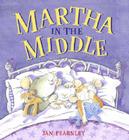
In preparation for Barleybee's arrival, my awesome brother and sister-in-law, Michael and Grace, bought Isabel a book focused on the middle child for her birthday last month.  It's appropriate in two ways.  First, though we didn't know it at the time, Jan Fearnley's Martha in the Middle mirrors the family structure we're going to have, with two older girls and a younger boy.  Second, because of Eleanor's initial difficulty pronouncing "Uncle Michael," the girls call him Uncle Mice, and this is a book with all-mouse characters.  It was a sweet, thoughtful gift.

Unfortunately, it's also one of those books that problematize a thing which is not yet a problem, and which we hope won't become one (see Julius, the Baby of the World and my problem with it, Bedtime for Frances, etc.).  The premise of Martha in the Middle is that Martha doesn't like being in the middle of everything.  Her older sister Clara gets praised for being "big and sensible."  Her younger brother Ben gets praised for being "cutesy-wootsey."  Martha feels unnoticed, uncared for, unwanted.  She decides to run away, and on her journey meets a frog who expounds on all the ways that the middle is best:

They looked at the tall sunflowers.  Martha nibbled on some of the sunflower seeds.
"See, the seeds are in the middle," said the frog.  "That's the best bit."

Martha begins to join in on the celebration of the middle, and ends up returning home, feeling quite good about herself ("I think the middle is special") and going off to play again with her siblings.

We read the book with Isabel and Eleanor once, when it arrived, and that night I hid it.  Isabel was so intent on the story, and is so interested in acting out the roles of different characters, that I fear repeated readings will give her a chip on her shoulder before Barleybee is even born.  We'll keep the book in reserve, in case that's how she feels somewhere down the line, but it's not a book for now.

Wait just a second, Annie, you may be saying.  The book you're hiding away sounds like it has almost exactly the same plot as Noisy Nora, the book you've been touting.  It's also girl-girl-boy.  Nora and Martha are both responding to feeling neglected by their parents in favor of their younger and older siblings.  Both girls choose to run away as a result.  For goodness sake, all the characters in both books are mice.

What's the difference?  Part of it, I think, is style: Rosemary Wells's rhymes are sharp and funny, the refrain is fabulous, there's a rhythm to the book that is utterly infectious.

Here's how Wells starts out:

Jack had dinner early,
Father played with Kate,
Jack needed burping,
So Nora had to wait.

First she banged the window,
Then she slammed the door,
Then she dropped her sister's marbles on the kitchen floor.

"Quiet!" said her father.
"Hush!" said her mum.
"Nora!" said her sister,
"Why are you so dumb?"

And Wells is economical: where Fearnley's text says more about Martha's feelings directly, Wells's brief lines accompanied by illustrations of Nora's increasing frustration capture the sense of wordless freak-out I am so familiar with in my own children:


Sometimes, less is more.

I want to leave you with another Expanding Family question: can you recommend some good kids' books about adoption?  There are two new lovely adopted children in our friends' lives this year, in different situations, and I'm wondering what's out there for their families.

Situation #1 (which I mentioned briefly here): a white couple who have recently adopted an African-American baby at birth.  She's their only child.  Bonus points if the book also includes dogs, as their family does.

Situation #2: Eleanor has a good friend, just turning 5, whose family is adopting a 1 1/2 year-old Ethiopian girl.  Some of the same racial depiction questions here: white parents and older sister, black adopted child.  But other questions, too: are there books out there that discuss becoming the older sibling to a little sister or brother who's not a baby?

Love, Annie

Tuesday, September 13, 2011

School as a place for connection

Dear Aunt Debbie,

Our discussion of picture books set in schools (here and here) has gotten me thinking about another kind of school story: the kind where the classroom is simply the backdrop for connection, either between friends or with a little romantic twist.

Two books pop to mind here:

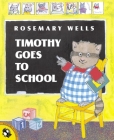
Rosemary Wells has a lovely one called Timothy Goes to School.  (The version pictured here is clearly one which, like Noisy Nora, she's re-illustrated to get it back in print.  Not the cover I know.  And evidently it's also about to become a TV series.  Urgh.)

Timothy is a little raccoon-person, and he's very excited to go to school.  His excitement is dampened when he meets Claude, a boy in his class who is better than Timothy at everything, and makes fun of what Timothy is wearing each day.  There are very sweet scenes of Timothy coming home to his mother, ears drooping, unable to enjoy his after-school snack.  The happy ending comes in the form of Violet, a little rabbit-person he meets in the audience at the talent show.  She's just as annoyed by the excellence of another girl, Grace, as Timothy is by Claude.  As Claude and Grace perform, Timothy and Violet giggle, and start to have a lot of fun with each other.  They wind up happy -- not the most successful or talented kids in their class, but with a real friendship.  It's a nice small celebration of not overachieving.

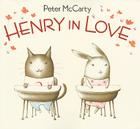
Then there's Peter McCarty's Henry in Love.  I love McCarty's fine line drawings -- expressively shaded, simple, perfect work.  (I forgot to get the book out of the girls' room before bedtime, but when I do will scan a page or two.)

It's an even simpler story: Henry wakes up, gets ready for school, gets to school, and pays attention to Chloe, who can turn a perfect cartwheel.  He is seated next to her in class when the teacher changes their seats, and shares his snack.  It is a small and wonderful moment.  McCarty's animals have a lot of subtle personality -- you don't feel like you know what they're thinking, exactly, but the wheels are clearly turning.

He has other quite excellent books as well, but I'll save them for another post.

Love, Annie

Friday, August 5, 2011

Repetition

Dear Aunt Debbie,

We like Henry and Mudge too.  Don't own any of them yet, but we have read a few here and there.  I suspect that we'll be reading more of them as Isabel moves up into the short chapter books age, since her dog obsession continues to date.

Some weeks, I feel like I have new and interesting things to write about.  And some weeks, like this one, both of my children just want the same books read to them over and over.  There are different kinds of repetition: there's the reading of Goodnight Moon once a night for two years, which is establishment of routine, and, because it's a great book, lovely.  Then there's the kind of repetition we're doing right now: a few books, the same few books, the same damned books, requested six or twelve times a day.  No, nothing else will do.  Even if these are great children's books, it gets old.  And when they aren't great....

Part of this is my fault.  I got those two Fancy Nancy books out of the library to blog about them on Monday, and then they were all Eleanor wanted to read for the rest of the week.

Isabel's books of choice at the moment are things we've had around the house for a while:

1) the Max books, which she's never allowed us to read to her before about a week ago (literally: she would bat them out of my hand), but which she now thinks are hysterical.  Max's First Word is her favorite.

2) the Little Bear books.  Isabel is actually too young to sit through a whole Little Bear book (except for A Kiss for Little Bear,which is a single story).  Nevertheless, this is what she wants: to have me start reading one of them, and then to take it away from me to examine the back of the book, or to announce "The End!" and close it, and then reach for another one: "Read Lil Bear!"  Her favorite thing to do is to identify each character in the pictures: "Tha's Cat.  Tha's Duck.  Tha's Hen.  Tha's Lil Bear!"

Part of it was circumstantial: Jeff had to work late several nights, and I usually do the morning reading time with the girls, so I was flying solo.  This made it harder to sneak in an alternate option, as both girls were unwilling to compromise on a book they might both enjoy.  Each sat there with her small pile of books, demanding attention.  I found myself on more than one occasion with two books balanced open on my lap, reading alternate pages.  At other moments, I just let Isabel fuss while I read to Eleanor, or let Eleanor pout while I read to Isabel.  (This may have affected my mood.)

I understand that repetition has great value in the child mind -- kids need to hear the same stories over and over, and enjoy knowing what's going to happen and taking part in it.  Their repeated responses aloud seem to be as important to their enjoyment of the book as the text itself. 

At the playground yesterday, I was talking to the mom of one Eleanor's friends.  The book on repeat at their house this week is Everyone Poops, by Taro Gomi, so I guess I should count myself lucky.  Earlier this week, the mom told me, she had brushed one of the illustrations of poop with her finger as she turned the page, and jokingly said, "Eww, yucky!  I touched it!"  Now her daughter repeats the gesture and disgusted response on EVERY SINGLE PAGE, giggling hysterically the whole time.  There doesn't seem to be a way to get the repetition to stop until it runs its course.  Or you hide the books while your kid's not looking.

Love, Annie

Monday, July 18, 2011

Our favorite songbook


Dear Aunt Debbie,

Books like Good Night, Gorilla, Ten Minutes Till Bedtime or Chickens to the Rescue, with their illustrations which reward close examination, are great vacation companions.  There is something to be said for a book which can take a pleasantly long time to read.

On that note, one of the other greatest hits we’ve brought along with us is a songbook.  Getting to Know You!: Rogers and Hammerstein Favorites is a most excellent compendium of songs from, you guessed it, Rogers and Hammerstein musicals, illustrated by Rosemary Wells.  (As you can see from the Alibris link, it's out of print, but findable.)  The songs come from four shows: Oklahoma!, South Pacific, Carousel, and The King and I.  The book came from my cousin (your niece) Ona, who knows how much we love 1950s musicals.  Rogers and Hammerstein have always been particular favorites for me; they were my lullabies as a child, and I’ve sung them to Eleanor and Isabel since the day they were born, as my father sang them to me.  My mother can boast that she attended the original Broadway production of Oklahoma! in utero; I’m sure it had an effect.

In much the way that she imbued several volumes of Mother Goose rhymes with her own joyful, quirky animal spirit, Wells does a terrific job here.  “The Farmer and the Cowman” who should be friends are dancing, dressed-up buffalo; “Happy Talk” is a romance on a tropical island between two furry guinea pigs; “This Was a Real Nice Clambake” boasts dancing clams as a border around a picture of some very satisfied looking dogs.

The lyrics as represented on the pages of the book are often incomplete – there isn’t room for all three verses of “Surrey with the Fringe on Top” – but a small songbook is tucked into a pocket in the back cover.  Here, you’ll find the sheet music and complete lyrics to all the songs included in the volume.  It’s a nice way to brush up on your recollection of the tune to the bridge of “Mister Snow.”  Or, of course, you can just read the lyrics aloud, as poetry:

His name is Mister Snow
And an upstanding man is he
He comes home every night in his round-bottomed boat
With a net full of herring from the sea.

An almost-perfect beau
As refined as a girl could wish
But he spends so much time in his round-bottomed boat
That he can’t seem to lose the smell of fish.

The first time he kissed me, a whiff of his clothes
Knocked me flat on the floor of the room.
But now that I love him, my heart’s in my nose
And fish is my favorite perfume! 

Both Eleanor and Isabel are in love with this book.  Isabel calls it “Happy Talk book,” and her requests for it, at top volume, are the reason the hardcover made it into our traveling bag.  It's worth the weight.

Love, Annie

Saturday, December 25, 2010

Merry Christmas!

Dear Aunt Debbie,

Christmas at my in-laws' house in Illinois!  The children are nestled all snug in their beds, my wrapping is done, there's a light layer of snow outside and plates of Christmas cookies jostling for space with the pies on the kitchen counter -- it's a lovely night.

Tonight, along with The Night Before Christmas, we read another favorite Christmas story (one we actually read all year round), and I found myself wishing for the other Christmas Eve book of my childhood, which I'm going to have to find for the girls next year.  To be honest, I should admit that Eleanor and I read these books; Isabel sat on Jeff's lap and directed him emphatically to read her
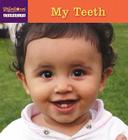
My Teeth
 and Olivia's Opposites. So she doesn't quite get Christmas yet.  It'll come.


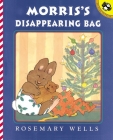
Morris's Disappearing Bag
 was a gift from you to me in 1979 -- it's inscribed "To Annie -- With love from your disappearing aunt.  Love, Debbie."  It'll be out of print by now, I thought to myself, but it isn't -- a new edition came out in 2001.  I think this may be, like Noisy Nora, a book that Rosemary Wells did new, more brightly colored illustrations for in order to get it reprinted.  The cover image here is a little different from the one we have, but I'm sure it's essentially the same.

Morris is the youngest bunny in a family of four.  On Christmas morning, his brother Victor gets a hockey set, his sister Rose gets a beauty kit, and just as you're thinking oh no, a gender-role-reinforcing little Christmas book, Morris's other sister, Betty, gets a chemistry set.  Morris gets a bear.  The other siblings play with their own presents and with each others' ("And then Victor made himself beautiful and Betty played goalie and Rose invented a new gas."), but no one will let Morris play with their toys because he's too young, and no one wants his bear.  Morris droops.  But then!  Under the Christmas tree, Morris finds an overlooked package.  Inside is a Disappearing Bag -- he crawls in and becomes invisible.  A couple of funny pages follow where Morris's siblings can't find him, but the tips of his ears or tail are showing, so your kid can.  Morris pops out of the bag, lets his silings jump into it, and plays with all of their toys on his own until bedtime.

There is something very satisfying about this little book -- it's so good about jealousy and sharing and siblings, and Rosemary Wells can't be beat for drawing droopy bunnies.  It's a Christmas story, but I've never thought of it as relegated to Christmas-time reading.  I'm glad it's still around.

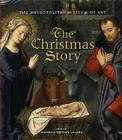
As in your house, I grew up with the King James version of Jesus's birth as one of the traditional Christmas Eve readings.  We always referred to it as "the part in the Bible where Jesus gets born."  In our house, the book was published by the Metropolitan Museum of Art: the Bible passages illustrated with reproductions of Old Masters' paintings.  In the absence of the book at the moment, I'm trying to figure out which it must have been.  This is my best guess.

There's a current version out, however, which I plan to get in the next year: The Christmas Story (Metropolitan Museum of Art).  There's something appropriate about having the story illustrated by multiple artists, from multiple years and countries -- no one person has a lock on what the Holy Family looked like, and there are such great and differing depictions of the animals as well.

And now I'm off to bed, so Santa can come.  Happy Christmas to all, and to all a good night!

Love, Annie

Sunday, September 26, 2010

Book festivities

Dear Annie,

Happy first birthday to the delightful Isabel.  I hope you've been having a special day.

I had quite a lovely day yesterday down at the National Book Festival on the Mall here in D.C.  It's basically a series of readings in the heat under huge tents by lots of different authors, each presenting every 45 minutes or so.  Laura Bush is credited with starting the festival ten years ago, "the best legacy of the Bush Administration," said Rosemary Wells, in a not-so-subtle dig.

 Rosemary Wells, best known as the author of the Max and Ruby books, ran a real pep rally for reading.  "I write to cause children to look at a book and open those pages and love what's inside....I don't want to write a book about what you should or shouldn't think."  She talked about the ability to read being the foundation of a democracy -- lots of good stuff that I agree with.

She eventually got around to good old Max and Ruby, though.  One kid asked her how she came up with them.  She replied that they're non-fiction, based entirely on her two children.  She wrote the first book when Ruby was five years old and Max was nine months.  "Ruby is 37 years old now, the mother of three, and still really bossy.  An Max is 32 and teaches horticulture at Cornell and still really dirty."

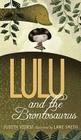
Judith Viorst, best known for Alexander And The Terrible, Horrible, No Good, Very Bad Day, read from her new and wacky
Lulu and the Brontosaurus
. I'm quite fond of that one -- lots of opportunity for parents to ham up a read-aloud.  (It might show up at your house in my Christmas box.)  She says the idea was born on a rainy day on vacation with two of her grandsons.  They demanded that she make up stories for them over the course of several hours, and eventually Lulu and the brontosaurus appeared.  Someone in the audience asked about Alexander, the subject of several of her books, at which point she said, "Alexander's going to kill me for this," and pointed to a forty-something man in the front row with a small boy in his lap.  He smiled and waved at the crowd.

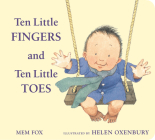
Mem Fox, author of some wonderful books for little ones --  most notably Time for Bed, Where is the Green Sheep?, and my current favorite,
Ten Little Fingers and Ten Little Toes
-- spoke about her childhood. Born in Australia, she grew up in Zimbabwe (then Southern Rhodesia), the child of missionaries and the only non-African child in her school.  Her classroom, she said, was a space under a tree.  The teacher would trace the letters of the alphabet in the air and the children wrote them with their fingers in the dirt under the tree.  Eventually they graduated to slates, which had the attraction of needing to be spat upon to be erased.  She spoke about the intense thought that goes into creating the economy of language in her board books.

I'm going to save for my next post a wonderful presentation by a great graphic novelist. 

Love,

Deborah

Thursday, June 24, 2010

Max and Ruby again.


Dear Annie,

One can see all of parenthood as a struggle between the values of a family (the real Max and Ruby, or Alice in Wonderland, or healthy food, or hundreds of other things and beliefs we hold dear) and mass-produced products which tend to undercut those values.  As adults, we've learned to screen out a certain amount of the crap (not all of it, god knows), but seeing the pull it has on our children is disturbing.  Bob and I tried to stem some of that tide by putting the TV away permanently, which we were happy to have done.  But no one outside of extremely closed communities can raise kids without the tensions of our culture.  I tend to believe that when people are as involved parents as you and Jeff are, family culture wins.  So maybe Eleanor will have memories you wish she didn't of Little Bear.  But both your girls will grow up to be adults who read Ruby out loud with a faint Chicago accent, and who will care about reading good books all their lives.

Good old Max and Ruby.  In among all those paperbacks, though, there are some very good non-TV-spinoff Max and Ruby picture books, most of them written in the '90s.  Our favorite was Max's Dragon Shirt, the tale of brother and sister getting separated from each other in a department store.  "Dragon shirt!" says Max, but Ruby is on a mission to replace Max's old blue pants. Ruby gets distracted by dresses she decides to try on (check out the purple one with cucumbers -- eggplants? -- on the skirt).  Max follows the wrong yellow dress and finds a dragon shirt, but instead of Ruby -- a teenager! (see illustration to right)  He screams, various confusions ensue, and when Ruby finally finds Max, he's eating ice cream with two policemen and the teenager.  Needless to say, Max goes home in his old pants and the dragon shirt.

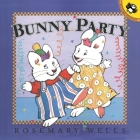
In Bunny Party, the ever-officious Ruby is organizing Grandma's birthday party.  She brings seven guests: her dolls and stuffed animals, with names like the Tooth Fairy, Rapunzel, and Mr. and Mrs. Quack.  Max manages to sneak in three of his toys one by one (my favorite is Can't-Sit-Up-Slug), and every time Ruby counts the guests, she's one chair short and confused.  "Something's wrong, Max," says Ruby, "It must be a bad counting day."  Ruby finally discovers the uninvited guests, but before she can eject them, Grandma shows up and saves the day.


And then, four years ago, just as I was thinking Wells' works were on the downhill slide, Max's ABC arrived. I keep this one shelved with the storybooks, not the ABC books, because it's a delightful story about Max's ants:
Max's Ants escaped from their Ant farm.
They went looking for Max's birthday cake.

Up Max's pants they climbed.
Bite Bite Bite went the ants
on the Birthday cake.

Max poured his Cup of Cranberry
juice onto the ants in his pants.

Down Down Down went the juice.
Delicious! The ants Drank it up.

"EEEeeeeek!" said Max's sister Ruby.
Ruby tries various schemes to catch the ants, with Max participating, although his body language is skeptical.  In the end, Max rescues the ants from the vacuum cleaner and puts them back to bed in their ant farm, where they sleep, ZZZZZ.

Which I should do as well.  Sleep.

Love,

Deborah

Monday, June 21, 2010

Max, Ruby, and how to deal with terrible adaptations

Dear Aunt Debbie,

You raise a complicated question, in this era of adaptations and TV spinoffs and You Tube clips. When should we allow our kids to watch a movie adaptation before reading a book, especially if the book is something they're not quite ready for? We try to be purists where we can (or, more accurately, where we feel it would be blasphemous for Eleanor to get a sub-par impression of a character first), but it's not that simple.

So: we read the abridged Wizard of Oz just before watching the movie, and had good conversations about the differences between the two. When Eleanor discovered the Disney Peter Pan book at our local coffee shop, and then was given the movie by her grandparents, we followed it up quickly with a good abridged version as well. But when she followed the same path to the Disney Alice in Wonderland, which is a bizarre movie and bears little resemblance to the book, we let it stand. She's too young for the full-length Alice, and when she gets old enough, I think she'll enjoy it just as much even with the movie for background.

The more insidious adaptations for us at the moment are kids' TV shows. I've mentioned previously that the Little Bear books are better than the TV series; the same goes double for the adaptation of Rosemary Wells's Max books into the TV show "Max and Ruby" and all of its associated products, including books.

The original Max board books are perfect. Each, in ten pages, chronicles a small tussle between Max and his older sister Ruby: Ruby wants Max to eat his egg for breakfast (Max's Breakfast); Ruby gives Max a lobster toy for his birthday, and he's scared of it (Max's Birthday) ; Max is in love with Ruby's doll Emily, and wants to play with her (Max's Toys). Ruby is a big sister trying to exert control, and Max wants to do things his own way, and they are very, very funny. I can't do justice to quite how funny they are without a scanner; when our new one comes, I'll add to this post the image of Max wrapped up in Ruby's stuffed snake after he can't find his red rubber elephant to sleep with in Max's Bedtime.  (As promised.)


There were originally eight Max board books; as far as I can tell, four of them are now out of print: Max's First Word (Ruby tries to get Max to say a word other than "Bang"); Max's Bath; Max's Ride (a great concept book, as Max goes over, under, etc.); and Max's New Suit (Ruby tries to make Max wear his new suit for her party).

I'm taking the time to list them all here, because it's practically impossible to find them by doing a search in the mess of dreadful TV-related "Max and Ruby" books. Ruby, in the TV show and the spinoff books, sounds like somebody's whiny grandma, nagging her way through every lengthy story. (In our house, by contrast, Jeff reads Ruby with a faint Chicago accent -- a nice flat "A." Works perfectly.) The other problem with the series is that, when you enlarge the focus from just Max and Ruby, their lack of parents becomes conspicuous. In the board books, they're the only characters, but it doesn't seem odd: every pair of siblings has some alone time. In the TV show, they apparently live alone in a gigantic house with bizarre computer-generated wallpaper (sombreros in the kitchen). Grandma is in a house nearby, and there are neighbors and friends, but parents just aren't mentioned. This is weird.

Of course, Eleanor loves the show. I've done my best to discourage her from watching it, which has worked somewhat, but her pure experience of Max and Ruby as I knew them from my brother's childhood and before we discovered the TV show has been sullied. I'm sure it won't be the last time.

Love, Annie

Monday, June 14, 2010

Mother Goose was a poet

Dear Aunt Debbie,

The Piggy in the Puddle is one of the few kids' books I bought for myself as an adult before having children, simply because it cracks me up every single time I read it. What an awesome book.

I agree with you about poetry being everywhere in kids' books. Next time I write, I'll touch on a few books that fit into your other categories, but tonight I want to focus on Mother Goose.

We have several editions of Mother Goose rhymes, each of which has its particular delights.

First, there's the big old classic Real Mother Goose, illustrated by Blanche Fisher Wright:


The Real Mother Goose


I think this is the most comprehensive, with rhymes packed in sometimes five to a page. Because there are so many rhymes, it can feel overwhelming, but you find wonderful ones you've never heard of, as well as the golden oldies. There's a Table of Contents, but no index, so it takes some work to find a specific rhyme. The illustrations (first published in 1916) are pleasingly old-fashioned: bonnets and aprons abound. Because of the number of rhymes per page, not every rhyme is illustrated -- this sometimes bothers Eleanor, who wants a picture to go with everything.

Scholastic has put out a series of Real Mother Goose board books as well: The Real Mother Goose Board Book, My First Real Mother Goose, etc. These are lovely and small, easy to read and easier for kids to hold. An interesting side note in terms of our conversation on race: in the smaller board books, Scholastic has photoshopped the illustrations to make some of the children black.

Tomie dePaola has the same combination of big hardcover Mother Goose and little board books as spinoffs:


Tomie dePaola's Mother Goose


Tomie's Little Mother Goose


dePaola's illustrations are simple, cheerful, and childlike. While I love some of his other books to pieces, his Mother Goose illustrations have always struck me as a little too sweet, but maybe that's just me. Some of his rhymes in the big book are one per page, some up to four, with illustrations for each. (His big book does have an index, by the way.)

The Mother Goose we found ourselves reading most often to Eleanor are two books edited by Iona Opie and illustrated by Rosemary Wells. Have I mentioned how much I love Rosemary Wells? Opie loves her, too. In the introduction to their big book, The Very Best of Mother Goose, she writes:

I firmly believe that Rosemary Wells is Mother Goose's cousin and has inherited the family point of view. Her illustrations exactly reflect Mother Goose's many moods: glumpish, her animals look wickedly askance at the world; happy, they almost dance off the page; cosily at home, there is no greater depth of contentment. They make me shout with glee.

While the big book we have is out of print (hence the Alibris link), it appears to be a combination of two Opie/Wells books that are still quite happily in print:


My Very First Mother Goose


Here Comes Mother Goose


Tons of rhymes, each with its own giant watercolor illustrations, and joy on every page. Chapters. An index. And, of course, associated board books.

Finally, there's the Opie/Wells book of lesser-known rhymes:


Mother Goose's Little Treasures


We read this one a lot. It has some fabulous oddball rhymes, so I'll end with two of our favorites:

Mrs. Whirly sells fish,
Three ha'pence a dish.
Don't buy it,
don't buy it;
It stinks
when you fry it.


and

When the rain raineth
And the goose winketh,
Little knows the gosling
What the goose thinketh.


Man, I need to get a working scanner.

Love, Annie

Saturday, June 5, 2010

More new baby and sibling books

Dear Aunt Debbie,

On brand-new babies:

We adore Lilly's Purple Plastic Purse (such a great book to address guilt over doing something mean and then regretting it), and read Julius, the Baby of the World soon after Isabel was born. However, we ran into the Bedtime for Frances problem: Eleanor started saying more negative things about Isabel as a consequence of reading the book than she had been on her own. We returned it to the library.

Another book you gave us in the same vein, with wonderful, realistic illustrations by Michael Emberly is Robie H. Harris's Hi New Baby!


Hi New Baby!


An older sister is less than thrilled by the appearance of her younger brother (the line Eleanor quoted from this one is "That baby is yucky!"), but quickly has some fond moments with him. One of the things I like about this one is that it's narrated by Dad, talking to the older sister in retrospect: remember when this happened?

Eleanor also really likes the book Rachel recommended in her comment, How to Be a Baby...By Me, the Big Sister. It contains some very funny lists.

On older sibling/younger sibling relationships:

As I've mentioned before, I love the treatment of sibling jealousy in A Birthday for Frances.

Rosemary Wells does siblings incredibly well. Two of our favorites (there are so many great ones) are Noisy Nora and Stanley and Rhoda (sadly, out of print).


Noisy Nora


Nora is the middle sibling, and spends the book watching her parents pay attention to her older sister and baby brother, then acting out in huge operatic ways ("First she banged the window/Then she felled some chairs/Then she took her brother's kite and flew it down the stairs!"). When all of the attention she gets is negative, she decides to run away, and everyone immediately misses her. Perhaps my favorite illustration here is Nora holding up a muffin pan in her little mouse hands, clearly about to drop it and make as much noise as she can.


Stanley and Rhoda


Stanley is a studious looking, responsible mouse, and Rhoda is his louder and far less responsible little sister. There are three stories in the book; our favorite is "Don't Touch it, Don't Look at It," in which Rhoda gets a bee sting and freaks out, while Stanley quietly calms her down.

I'll save the Max and Ruby books (NOT the ones connected with the TV show, blech) for another post. They deserve their own.

Finally, on a positive sibling note, I want to mention another gift from you:


Sisters


David McPhail's drawings of the older sister and younger sister playing together and separately have a nice pencil-sketch feel to them, and his spare text describes two girls who you feel would be fun to hang out with. It's a good Here's how we're different/ Here's how we're alike book.

Love, Annie