Dear Aunt Debbie,
Suddenly, Isabel can read.
Of course, it isn't sudden at all: we've been reading together for more than five years, pretty much since the day she was born. She's been "reading" on her own for quite some time as well, poring over picture books and graphic novels, staying up on weekend nights with her own reading light and our copy of Smile or one of the Olympians books while Eleanor whizzes through another chapter book in the bunk above and Will sings to his stuffed animals.
But, like Eleanor when she was first learning to read, Isabel has been resistant to reading out loud at home. Her fabulous kindergarten teacher sends her home every night with a book baggie containing a small pile of early readers. As part of her homework, she's supposed to read these books aloud to an adult, and practice the sight words taped to the baggie.
Cue the misery: resistance to reading aloud, complete resistance to trying to sound out any word she didn't know (or hadn't memorized). Book baggie evenings often culminated in hysterical wild guesses and dissolving onto the living room floor in boneless refusal. Needless to say, we weren't doing this every night. The level of the readers Isabel was bringing home (first A and B, then C and D) was rising based on what her teacher saw at school, but we weren't seeing any difference in her reading at home.
A few weeks ago, I went in to meet with Isabel's teacher to talk about her reading. Ms. Mazor took me through Isabel's school work, showing me how Isabel has been telling stories: first in pictures, then through accompanying words, and in her latest story, writing the words first so that she could get them down, leaving space for the pictures to come later. The writing she showed me was dramatic and vivid, and her message was clear: silly mama, you have nothing to worry about here.
Here is Isabel's story of her own birth:
For Isabel, clearly, writing and reading are happening hand in hand. The comprehension is there, and the mechanics are catching up.
The week after this meeting, Isabel picked up a note I was sending in to her teacher and read it aloud. Then it was a couple of pages of P.D. Eastman's Go, Dog. Go! Then every other page of The Cat in the Hat.
On Sunday, we sat down with The Cat in the Hat and One Fish, Two Fish, Red Fish, Blue Fish, and Isabel read 100 pages of Dr. Seuss in one sitting. (As our guest blogger/kindergarten teacher Clara noted when Eleanor was learning to read, some of those early readers are weirdly long.)
Her mom and her dad and her sister are so delighted.
Love, Annie
In which Annie (high school teacher, mother of two young girls and a younger boy) and her aunt Deborah (children's bookseller, mother of two young women in their 20s) discuss children's books and come up with annotated lists.
Showing posts with label learning to read. Show all posts
Wednesday, February 25, 2015
Monday, May 12, 2014
Let it Go
Dear Aunt Debbie,
Well, it's happened. After holding the line for years against letting badly-written Disney princess books into my house, unless they come from the library and go right back there, I have finally succumbed. I blame Frozen.
I'm sure that in your work at the bookstore-inside-a-toystore, you're aware of the Frozen-mania that has gripped children ages 4-10 in recent months. Eleanor and Isabel went to see the movie last fall, soon after it came out, and retained an enormous number of lyrics from that single viewing. Then "Let it Go" became inescapable (have you seen it sung in 25 languages?), and Isabel became obsessed with Elsa, the powerful but emotionally-stunted snow queen who can shoot ice from her hands. She got Frozen dolls for Christmas, and is planning a full-family Frozen costume for Halloween. For several periods this winter, we had to address her as "Queen Elsa," or she wouldn't answer.
And then there are the books.
At Barnes & Noble right now, there's an entire Frozen section: Little Golden books, sticker books, junior novelizations, early readers -- the Random House/Disney site has two pages of them. Several of Isabel's friends have the early readers, and these thin little books with their flat writing have become the latest object of desire. Last week, I watched seven 4-year-olds abandon their picnicking and tree-climbing in the park to press around a mom reading a Frozen book. It's just as alluring as the ice cream truck: literary kid-crack.

So when Eleanor's school held a book fair, I went ahead and got Isabel the book she wanted: A Tale of Two Sisters . A little literary reference there in the title, eh? Don't get excited -- that's as good as it gets.
Here's where I'm torn: I love books. I love watching my children grow to love books. I want books to be objects of desire for them, want them to be excited about sharing books with their friends. I want Isabel to want to learn to read, and this reader is the first book that's made her willing to try to identify the words she's looking at. Sitting with Jeff a couple of nights ago, she read aloud every instance of the names "Anna" and "Elsa," and was able to read a few smaller sight words as well.
But oh, it is so badly written. There's no author listed -- in every way, it feels like a commercial product rather than a book. Each sentence goes out of its way to drain any sense of drama or life from the story:
It's as if the publishing house believes that simple must equal boring, that there is no art to paring down a story and writing it in easy-to-read sentences. (I wonder as well whether some of these sentences are actually easy to read: the vocabulary in the book feels like it's hitting a variety of levels, including words like "kingdom," "search," and "listen.")
Would it really be so hard to do it better? Read a little Dr. Seuss, some classic Else Holmelund Minarik Little Bear, any of the amazing books we've touched on in our many posts on learning to read. I suppose that if the books are selling like crazy, there's no incentive for improvement, but I wish there were.
In the meantime, I'll focus on the positive message promoted at the end of A Tale of Two Sisters:
I'll take what I can get.
Love, Annie
Well, it's happened. After holding the line for years against letting badly-written Disney princess books into my house, unless they come from the library and go right back there, I have finally succumbed. I blame Frozen.
I'm sure that in your work at the bookstore-inside-a-toystore, you're aware of the Frozen-mania that has gripped children ages 4-10 in recent months. Eleanor and Isabel went to see the movie last fall, soon after it came out, and retained an enormous number of lyrics from that single viewing. Then "Let it Go" became inescapable (have you seen it sung in 25 languages?), and Isabel became obsessed with Elsa, the powerful but emotionally-stunted snow queen who can shoot ice from her hands. She got Frozen dolls for Christmas, and is planning a full-family Frozen costume for Halloween. For several periods this winter, we had to address her as "Queen Elsa," or she wouldn't answer.
And then there are the books.
At Barnes & Noble right now, there's an entire Frozen section: Little Golden books, sticker books, junior novelizations, early readers -- the Random House/Disney site has two pages of them. Several of Isabel's friends have the early readers, and these thin little books with their flat writing have become the latest object of desire. Last week, I watched seven 4-year-olds abandon their picnicking and tree-climbing in the park to press around a mom reading a Frozen book. It's just as alluring as the ice cream truck: literary kid-crack.
So when Eleanor's school held a book fair, I went ahead and got Isabel the book she wanted: A Tale of Two Sisters . A little literary reference there in the title, eh? Don't get excited -- that's as good as it gets.
Here's where I'm torn: I love books. I love watching my children grow to love books. I want books to be objects of desire for them, want them to be excited about sharing books with their friends. I want Isabel to want to learn to read, and this reader is the first book that's made her willing to try to identify the words she's looking at. Sitting with Jeff a couple of nights ago, she read aloud every instance of the names "Anna" and "Elsa," and was able to read a few smaller sight words as well.
But oh, it is so badly written. There's no author listed -- in every way, it feels like a commercial product rather than a book. Each sentence goes out of its way to drain any sense of drama or life from the story:
It's as if the publishing house believes that simple must equal boring, that there is no art to paring down a story and writing it in easy-to-read sentences. (I wonder as well whether some of these sentences are actually easy to read: the vocabulary in the book feels like it's hitting a variety of levels, including words like "kingdom," "search," and "listen.")
Would it really be so hard to do it better? Read a little Dr. Seuss, some classic Else Holmelund Minarik Little Bear, any of the amazing books we've touched on in our many posts on learning to read. I suppose that if the books are selling like crazy, there's no incentive for improvement, but I wish there were.
In the meantime, I'll focus on the positive message promoted at the end of A Tale of Two Sisters:
Love, Annie
Friday, May 24, 2013
Boy-girl best friends in an easy reader format
Dear Aunt Debbie,
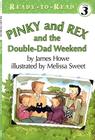
At her new reading level, Eleanor has discovered another series of Easy Reader books that she's really into, and I've been enjoying as well: the Pinky and Rex series, by James Howe. You blogged about one Pinky and Rex book a while back, when we were writing about gay and gay-friendly YA and middle grade books. As you mentioned at the time, no one in the series is explicitly gay, but there's some nice gender-bending going on.

The series focuses on elementary-school-age best friends Pinky (a boy whose favorite color is pink) and Rex (an active, ponytailed girl). Pinky has a younger sister, and Rex has a younger brother; their families live next door to each other, and their parents are friends as well. Each book contains six short chapters, with a decent amount of text on each page, and pictures (by Melissa Sweet) on each facing page.
Howe says in a note at the end of Pinky and Rex and the Double-Dad Weekend: "Writing the Pinky and Rex series gives me a chance to remember what it was like when I was seven. It also gives me a chance to say: It's okay to be different, and it's okay for boys and girls to be friends--even best friends." Happily, Howe knows how to get these ideas across without becoming treacly.
In Pinky and Rex and the School Play, Pinky wants to be an actor, and has his heart set on becoming the lead in the school play, "Davi, Boy of the Rain Forest." He convinces Rex, who has no interest in acting, to join him for the auditions. Rex impresses the director so much that he casts her as the lead, changing the name of the play to "Bahi, Girl of the Rain Forest." Pinky is cast as a monkey. Jealousy and bad feelings ensue. As rehearsals continue, however, Pinky decides to learn as much as he can about acting, even though his character is minor. He pays attention to everything that Mr. Lacey, the ponytailed teacher directing the play, says. On the day of the performance, Rex does a terrific job, and Pinky saves the play by ad-libbing and directing the other kids on stage who have frozen up and forgotten their cue. Hard work pays off: Mr. Lacey compliments Pinky, and offers him the opportunity to be the director's assistant on the next school play.
One of the most interesting moments for me comes with Rex's reaction to her success as an actor. Pinky's sister Amanda praises her after the show:
"Oh, Rex!" Amanda cried. "You were so-o-o good. Are you going to be a movie star when you grow up?"
"No way," said Rex. "I'm through with acting."
"That's too bad," her father said. "You were very good."
"I can be good at something and not have to want to do it, can't I?" Rex asked. Her father looked surprised, but nodded his head. "It's just that there's other stuff I'd rather do, like soccer."
Not the predictable moral, and a nice lesson to pull from this story.
Eleanor was so excited by these books that she came home wanting to read them aloud that evening instead of having me read to her. She took one on the subway to a birthday party the next day finishing reading it aloud to me, and on the way home, reread it silently while I talked with a friend. I'm loving this stage.
Love, Annie
At her new reading level, Eleanor has discovered another series of Easy Reader books that she's really into, and I've been enjoying as well: the Pinky and Rex series, by James Howe. You blogged about one Pinky and Rex book a while back, when we were writing about gay and gay-friendly YA and middle grade books. As you mentioned at the time, no one in the series is explicitly gay, but there's some nice gender-bending going on.
The series focuses on elementary-school-age best friends Pinky (a boy whose favorite color is pink) and Rex (an active, ponytailed girl). Pinky has a younger sister, and Rex has a younger brother; their families live next door to each other, and their parents are friends as well. Each book contains six short chapters, with a decent amount of text on each page, and pictures (by Melissa Sweet) on each facing page.
Howe says in a note at the end of Pinky and Rex and the Double-Dad Weekend: "Writing the Pinky and Rex series gives me a chance to remember what it was like when I was seven. It also gives me a chance to say: It's okay to be different, and it's okay for boys and girls to be friends--even best friends." Happily, Howe knows how to get these ideas across without becoming treacly.
One of the most interesting moments for me comes with Rex's reaction to her success as an actor. Pinky's sister Amanda praises her after the show:
"Oh, Rex!" Amanda cried. "You were so-o-o good. Are you going to be a movie star when you grow up?"
"No way," said Rex. "I'm through with acting."
"That's too bad," her father said. "You were very good."
"I can be good at something and not have to want to do it, can't I?" Rex asked. Her father looked surprised, but nodded his head. "It's just that there's other stuff I'd rather do, like soccer."
Not the predictable moral, and a nice lesson to pull from this story.
Eleanor was so excited by these books that she came home wanting to read them aloud that evening instead of having me read to her. She took one on the subway to a birthday party the next day finishing reading it aloud to me, and on the way home, reread it silently while I talked with a friend. I'm loving this stage.
Love, Annie
Friday, March 30, 2012
Guest blogger: teaching kids to read in kindergarten
Dear Aunt Debbie,
I have some thoughts on books about edgy issues, and will post about them soon. Right now, I have one more addition to our discussion of teaching kids to read. Our guest blogger tonight is Clara, mom of Isabel's good friend Vera, and a kindergarten teacher here in New York. I asked her a few weeks ago to weigh in on the subject, and here she is:
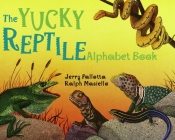
When parents ask me advice for encouraging and teaching their children to read at home, I give different advice depending on the age and type of child they have. For a child who shows no interest in learning how to read, I suggest immersing them in highly engaging books based on their interest (chosen for content rather than reading level, for parents to read with the child) to nurture a love of books. This will soon enough turn into a motivation to read independently. Books like The Yucky Reptile Alphabet Book, by Jerry Pallotta, will have a young naturalist's rapt attention, and happen to sneakily also teach letter recognition and phonemic awareness! For a child who desperately wants to read but is anxious and possibly behind his or her peers (or siblings), books should be made by the parents and children or selected very carefully from a book store. These books should include just a few words that the child can figure out from the pictures so that the child feels success right away and doesn't get discouraged by any struggle yet. A book like this may be homemade with family photos, with text like "Mommy loves me," "Grandpa loves me," and so on. After the child "reads" that book from memory, the parent can ask the child to point under each word next time he or she reads, so the child starts to get the idea that one word on the page matches to one spoken word, and begins to naturally pick up on cues like looking at the first letter.
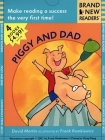
And finally, for eager young readers who are naturally beginning to crack the code like your Eleanor, I suggest getting started with short and repetitive books with a high level of picture support. All of the books in the Brand New Readers series, which can be found online and in bookstores, fit that bill. In school, we use books that are even more reliant on a pattern. For example, a book called "Who Lives in a Tree?" may have only 8 pages following the pattern of "A squirrel lives in a tree. A bird lives in a tree. A raccoon lives in a tree," and so on. These books are great for school, but are nearly impossible for parents to find outside of a specialized catalogue. Also, they are incredibly short and boring to read more than once or twice. My five year old students who are reading books at that level read 8 to 10 of those books every week in their personal "book baggie," and exchange the books for new ones once a week. Books like the Brand New Readers have a story, and recurring characters. I use them less at school because they often appear to be very easy, but break the pattern that a child has predicted so that the child needs adult support which they can't have 100% of the time at school. Perfect for reading at home! Rereading books at this stage is so crucial for memorizing high frequency words, so the more fun the stories are, the more likely your child will want to read them over and over.

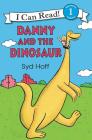
For home reading and teaching of reading, I would move from books like that to books that are often called "level 1" in book stores. I think your Aunt Debbie has pointed out that all publishers use different criteria for their so-called levels, which drives parents mad. What I suggest looking for is again high interest books, but also books that are SHORT. The classic early reader Danny and the Dinosaur, by Sid Hoff, for example, is 64 pages long. Not short! Others, like this Scholastic Level 1 reader, have half the pages, and more importantly only a sentence on each page.
Books like Dr. Seuss' Hop on Pop are in fact exhaustingly long. While it does a good job of teaching short vowel spelling patterns, no child aged 4 to 6 has the stamina to read it! Early chapter books can be challenging at first, so I recommend books that children think have chapters, but really have separate stories, like the Poppleton series by Cynthia Rylant. As a gauge, in New York City Poppleton is the level we want first graders to be reading between spring and June of first grade.
I have some thoughts on books about edgy issues, and will post about them soon. Right now, I have one more addition to our discussion of teaching kids to read. Our guest blogger tonight is Clara, mom of Isabel's good friend Vera, and a kindergarten teacher here in New York. I asked her a few weeks ago to weigh in on the subject, and here she is:
Dear Annie,
I'm glad you asked for me to guest blog about learning to read. As a teacher of kindergarten and first grade for six years, I work every day to teach all kinds of readers how to read, love books and feel confident in their reading abilities. Very close to my heart is also helping parents feel confident in their role as their child's first and most important teacher.
I'm so excited for you and Eleanor that she is learning to read! Obviously both of your girls have a big love of books, which is no surprise. That Eleanor can read at her age is special and should definitely be encouraged. I'm also relieved to hear of your awareness that too much pressure could be bad for her, and even poor book choices could dampen her interest.
For home reading and teaching of reading, I would move from books like that to books that are often called "level 1" in book stores. I think your Aunt Debbie has pointed out that all publishers use different criteria for their so-called levels, which drives parents mad. What I suggest looking for is again high interest books, but also books that are SHORT. The classic early reader Danny and the Dinosaur, by Sid Hoff, for example, is 64 pages long. Not short! Others, like this Scholastic Level 1 reader, have half the pages, and more importantly only a sentence on each page.
Books like Dr. Seuss' Hop on Pop are in fact exhaustingly long. While it does a good job of teaching short vowel spelling patterns, no child aged 4 to 6 has the stamina to read it! Early chapter books can be challenging at first, so I recommend books that children think have chapters, but really have separate stories, like the Poppleton series by Cynthia Rylant. As a gauge, in New York City Poppleton is the level we want first graders to be reading between spring and June of first grade.
This was a very long letter to a mom who sounds like she knows what she's doing already. But it's so important to check ourselves as parents, especially when we realize we have been presented with a child who is either ahead of or behind the curve for their age group. I am far too wordy in my letter writing today, but if you had insisted I write a one sentence piece of advice to parents on teaching their children to read, it would be this: "Read together, every day." For a child who associates reading with love will not find it difficult to love to read.
Best wishes on your reading adventures!
Thanks, Clara!
Love, Annie
Love, Annie
Friday, March 16, 2012
Guest blogger: my mom, on teaching kids to read
Dear Aunt Debbie,
To continue our conversation about learning to read, with some book recommendations and technical know-how, here's my mom (who has written her own early reader books, and has guest blogged for us before):
Once children had read and reread these little books or other similar ones, then I got them to read some of the Primary Phonics series, published by Educators Publishing Service (EPS). They are available in teachers’ stores, such as the Bank Street Bookstore in New York City, or you can search for them online. [Here's the Alibris link, but a quick Google search turns up a bunch of places you can find them. Some of the top links are Christian homeschooling sites. This doesn't mean the phonics books have religious content, just that they're clearly used a lot in homeschooling situations.]
Many books in this series were written by Barbara Makar, and many have some sort of welcome conflict or aggression in them, which I always felt gave them more bite than some of the non-story pap that is in many phonetic readers.
Maybe because I couldn’t stand going through the whole phonics series with kids --and/or because once most kids are jump-started, they begin to absorb whole words whether or not they are phonetically regular -- as soon as I could, I would switch them to Real Books (i.e. not written by textbook people), like the early Dr. Seuss readers or the marvelous just-republished Monster series.

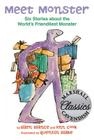
Meet Monster: Six Stories about the World's Friendliest Monster is a book containing a reprint of the first of many stories of a series written in 1973 by Ann Cook and Ellen Blance, and charmingly illustrated by Quentin Blake (big Roald Dahl illustrator). As they say on the copyright page, “The authors believe that initial reading experiences should be closely linked to the spoken language of children. Therefore, the Monster stories draw upon the words and expressions used by children from five to eight years old as they talked with the authors about Monster and his adventures.” Here is how the first story starts:
To continue our conversation about learning to read, with some book recommendations and technical know-how, here's my mom (who has written her own early reader books, and has guest blogged for us before):
Dear Sister Debbie and Daughter Annie,
Thank you so much for the shout-out on my little books! It’s fun to see them on your wonderful blog. I always knew that you liked them, but it’s quite another thing to read that you like them! We are going to try to find a way to make them available for download over the internet soon, in case anyone is interested.
I wrote those books when I was working as a reading specialist, so my job was to teach kids who had problems learning to read. The method I found most successful was to teach them phonics in a very structured way and, once they had mastered the consonant sounds, I got them started reading right away in phonetically regular books, so that they would be sure to have success right off the bat, and would find that reading was fun.
I wrote my little books to fill in the gap between blending sounds to make words and reading the first phonics readers.
It’s important for kids not to have too many unfamiliar words in whatever they are trying to read, especially when it’s their first book. Before I showed grand-daughter Eleanor the little short-a books I wrote, I made sure that she could put together the sounds of the words that were in the books, so that she could recognize and/or figure out, for example, the difference between “bat” and “bag” when she saw those words in a story.
[Want more technical discussion of this method of teaching reading? See section at the bottom of this post. Want straight-up book recommendations? Keep reading.]
Once children had read and reread these little books or other similar ones, then I got them to read some of the Primary Phonics series, published by Educators Publishing Service (EPS). They are available in teachers’ stores, such as the Bank Street Bookstore in New York City, or you can search for them online. [Here's the Alibris link, but a quick Google search turns up a bunch of places you can find them. Some of the top links are Christian homeschooling sites. This doesn't mean the phonics books have religious content, just that they're clearly used a lot in homeschooling situations.] Many books in this series were written by Barbara Makar, and many have some sort of welcome conflict or aggression in them, which I always felt gave them more bite than some of the non-story pap that is in many phonetic readers.
Maybe because I couldn’t stand going through the whole phonics series with kids --and/or because once most kids are jump-started, they begin to absorb whole words whether or not they are phonetically regular -- as soon as I could, I would switch them to Real Books (i.e. not written by textbook people), like the early Dr. Seuss readers or the marvelous just-republished Monster series.
Meet Monster: Six Stories about the World's Friendliest Monster is a book containing a reprint of the first of many stories of a series written in 1973 by Ann Cook and Ellen Blance, and charmingly illustrated by Quentin Blake (big Roald Dahl illustrator). As they say on the copyright page, “The authors believe that initial reading experiences should be closely linked to the spoken language of children. Therefore, the Monster stories draw upon the words and expressions used by children from five to eight years old as they talked with the authors about Monster and his adventures.” Here is how the first story starts:
Once upon a time there was a city.
A monster comes to this city to live.
Monster is not ugly
like other monsters.
He’s very tall,
and his head is skinny.
It has very few words per page, good spacing of the text, and nice large illustrations. The stories in “Meet Monster” tell how monster comes to a city, decides he likes it, finds a suitable house, moves in, cleans it, looks long and hard for a friend, finds a nice little boy, and even a lady monster, and then goes to the beach with the little boy. It is greatly to be hoped that the further adventures of Monster and Lady Monster will soon follow the republishing of these. We used to keep battered copies of the originals where I worked, and never let them be borrowed, so that we wouldn’t lose them, they are so good.
Another wonderful series that is currently out of print but still find-able is the “Pleasure Reading Series,” written by Edward W. Dolch, Marguerite P. Dolch, and Beulah F. Jackson. You may have heard of the Dolch Word lists, careful compilations of the most commonly used words in the English language, graded for difficulty and grade level. The same Dolch family wrote these stories, which are retellings of famous folk and fairy tales, using a 1000-word vocabulary. They are just wonderful, since they are written in a literate, easy-to-read style, and include lots of repetition. “Teach reading by having kids read,” has always been my motto, and these stories do the trick.
The one drawback of the Dolch books is that they are sparsely illustrated, with just one full-page drawing per story. But if you have a beginning reader who will feel really grown-up reading a book without pictures on every page, these books are great. (Why doesn’t someone republish them with lots of pictures? I wonder.) Search just for “Dolch” at alibris.com or biblio.com to find them.
To give you a feeling for the diction, here is the beginning of “Beauty and the Beast,” found in “Old World Stories.”
Once upon a time, long, long ago, there lived a very rich man. He had six daughters that he loved very much. Since he was so rich, he gave them everything they asked for. They had beautiful clothes to wear, the nicest things to eat, and they never had to do a bit of work.
More technical discussion of the method of teaching reading mentioned above:
I use the method embodied in the Structural Reading series written by Catherine Stern, Toni S. Gould, and Margaret Stern, a brilliant mother/daughter/daughter-in-law team, (who also, by the way, co-authored the best method for teaching arithmetic ever devised).
They were not the first or only people to figure out that a good structured sequence for teaching phonics would be to start with 3-letter words with a vowel in the middle. CVC (consonant-vowel-consonant) words are cool, because the sound of the vowel will always be short, therefore predictable. So you teach the short-a words, then go on to the short-i words, then short-o words, and then short-u, and last but not least, short-e. (You remove short-e from the AEIOU series and put it at the end because it’s the hardest sound to distinguish, being so schwa-like.)
A lot of programs teach in this way using so-called “word families,” rhyming words like “cat, sat, mat, bat.” The pitfall in teaching like this is that children will tend to look at the first letter of a word, and then think they are reading it, when all they are doing is hearing the rhyme. The genius of the Stern approach is to present the first two letters of a CVC word as a unit, and then to add on the last letter, always the hardest for a kid to hear. So you teach them to pronounce words slowly: ba t, ma n, ba g, etc, lingering over the short vowel sound, and clipping the final consonant sound sharply, as if you were British. Then you get them to assemble words with word cards, or dominoes, that you make.
They have a website for the math program, but if you go to the link for the reading program listed there, it will put you on to McGraw Hill’s website, where it will seem that you can order the books, but McGraw Hill has a weird policy of not allowing anyone but teachers to order the teachers’ editions since they don’t want kids to order them and cheat (a particularly hilarious supposition in the case of books designed to teach children to read). So if you go there, be sure to sign in as a homeschooling parent, so you will be allowed to purchase books. But then also be aware that when books are out of print, you will get a message that you don’t have the right credentials. It’s probably best to give them a call.
I await with pleasure your blog readers' recommendations for good first books for kid readers.
Love, Judy
Love, Judy
Me too!
Love, Annie
Love, Annie
Labels:
Cook,
Dolch,
learning to read,
Makar,
phonics,
Stern,
structural reading
Monday, March 12, 2012
The best learning to read books you can't buy in stores
Dear Aunt Debbie,
In your last post, you included the text of one of my mom (your sister)'s awesome first-reader books. A large reason I love these books, however, has to do with my mom's extremely expressive and wonderful line drawings. With her permission, and a working scanner, I present to you two complete books: "The Cat and the Cab," and "Am I A Man?"
And the next:
You'll understand if, growing up with these books, I have very high standards for the rest of what's out there.
Love, Annie
In your last post, you included the text of one of my mom (your sister)'s awesome first-reader books. A large reason I love these books, however, has to do with my mom's extremely expressive and wonderful line drawings. With her permission, and a working scanner, I present to you two complete books: "The Cat and the Cab," and "Am I A Man?"
And the next:
You'll understand if, growing up with these books, I have very high standards for the rest of what's out there.
Love, Annie
Saturday, March 10, 2012
Learning to read: word families
Dear Aunt Debbie,
I'm finding Eleanor's first forays into reading fascinating, and also the first time in reading to my children that I've felt like I don't fully know what I'm doing. I have no memory of learning to read, and aside from knowing that it involves memorizing some sight words and learning to sound things out phonetically, am not sure how to best teach and encourage Eleanor.
I've asked my mom (a reading specialist, and the person whose teaching is getting Eleanor to read at the moment) and a friend who teaches kindergarten and first grade (and therefore, reading) to guest blog in the next couple of weeks, so we can get some expert voices in here.
In the meantime, I hit the library shelves yesterday on my way home. As you mentioned in your last post, the reading levels governing each series seem wildly different. I picked up a few books which seemed feasible in the near future, and two which I knew immediately upon looking at them would work with Eleanor right now.
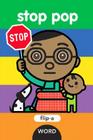
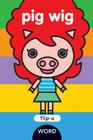
These are from the Flip-a-Word series, written by Harriet Ziefert and illustrated by Yukiko Kido. The idea behind each book is to introduce kids to "word families": words which end with two or more of the same letters. The words are short, and within each family, they rhyme. Once you get the end sound -- "op," "un," "an," "ig," etc. -- it's easy to change the first letter and be able to read a number of related words: "stop," "pop," "top," "cop" (Flip-a-Word:Stop Pop).
The illustrations are blocky and bold, and in each word family section, there's a page in the middle with a hole in it, so that the face on the bun is the same as the face on the sun, and the face on the boy in "run" is the same as the girl having "fun." Each word is presented solo, then as part of a short phrase ("cop on top of pop") with an accompanying drawing. The pigs with wigs in Flip-a-Word: Pig Wig are particularly funny. At the end, there's a page with all the words in each family laid out together, and in each section one slightly more complex word joins them ("twig," "plan"). Finally, there's a page containing all the words used throughout the book, mixed up and in different colors and fonts.
Immediate buy-in from Eleanor. The books are clear and simple enough for her to read aloud immediately, so there's a sense of mastery, and they're funny, so there's joy in the decoding.
I look forward to more ideas from you, too!
Love, Annie
I'm finding Eleanor's first forays into reading fascinating, and also the first time in reading to my children that I've felt like I don't fully know what I'm doing. I have no memory of learning to read, and aside from knowing that it involves memorizing some sight words and learning to sound things out phonetically, am not sure how to best teach and encourage Eleanor.
I've asked my mom (a reading specialist, and the person whose teaching is getting Eleanor to read at the moment) and a friend who teaches kindergarten and first grade (and therefore, reading) to guest blog in the next couple of weeks, so we can get some expert voices in here.
In the meantime, I hit the library shelves yesterday on my way home. As you mentioned in your last post, the reading levels governing each series seem wildly different. I picked up a few books which seemed feasible in the near future, and two which I knew immediately upon looking at them would work with Eleanor right now.
Immediate buy-in from Eleanor. The books are clear and simple enough for her to read aloud immediately, so there's a sense of mastery, and they're funny, so there's joy in the decoding.
I look forward to more ideas from you, too!
Love, Annie
Monday, March 5, 2012
Learning to read!
Dear Aunt Debbie,
Thank you for those science series suggestions -- I'm looking forward to checking some of them out. I have to admit, nonfiction isn't my strong suit as a reader myself or as something I seek out for my kids. But it's something I'd like to explore more.
As I mentioned last week, Eleanor is really starting to learn to read! She's been practicing with a few amazing short books my mom wrote and illustrated years ago (which I'd love to get published in some form), and last night read two of them to Isabel by herself to distract Isabel while I was cutting her fingernails. Tonight, Eleanor received a letter from a friend of my mom's -- written to be aimed at her level -- and was able to read almost all of it herself.
So my question is, what should I be steering her towards next? We have a bunch of Learning to Read series books, some Level 1, most Level 2 or 3. But what comes even before that? Are there any particularly good, very early readers that Eleanor can pick up right away? Anything dreadful I should be steering the family away from?
Love, Annie
P.S. On the subject of repetitive books that can drive you crazy, I came across this blog post: If You Give A Mouse A Cookie, You're Fucked: 10 Tips for Avoiding Terrible Children's Books. It made me laugh so hard I cried.
Thank you for those science series suggestions -- I'm looking forward to checking some of them out. I have to admit, nonfiction isn't my strong suit as a reader myself or as something I seek out for my kids. But it's something I'd like to explore more.
As I mentioned last week, Eleanor is really starting to learn to read! She's been practicing with a few amazing short books my mom wrote and illustrated years ago (which I'd love to get published in some form), and last night read two of them to Isabel by herself to distract Isabel while I was cutting her fingernails. Tonight, Eleanor received a letter from a friend of my mom's -- written to be aimed at her level -- and was able to read almost all of it herself.
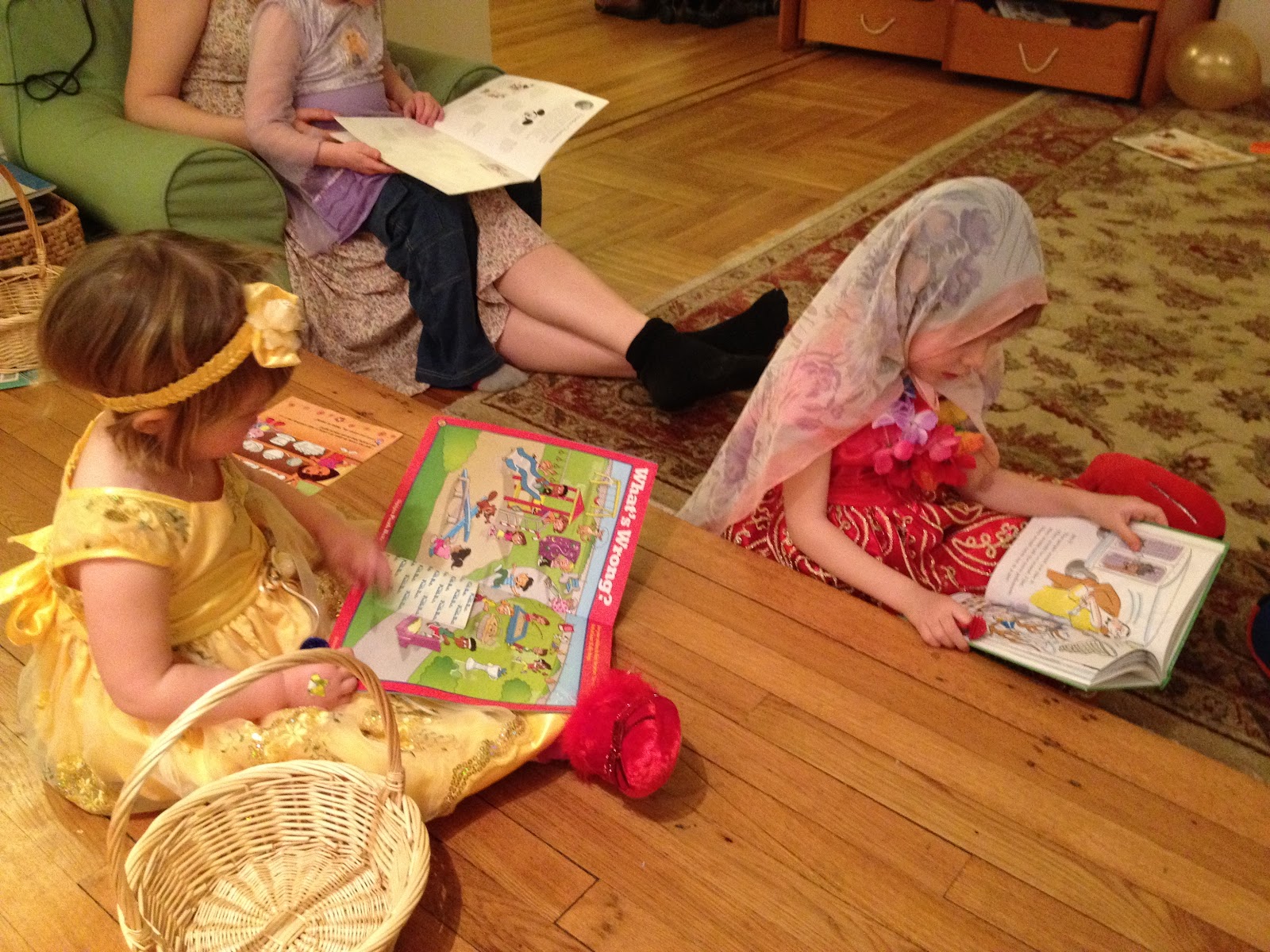
| Taking a break from dress-up. These girls are so ready to read. |
Love, Annie
P.S. On the subject of repetitive books that can drive you crazy, I came across this blog post: If You Give A Mouse A Cookie, You're Fucked: 10 Tips for Avoiding Terrible Children's Books. It made me laugh so hard I cried.
Subscribe to:
Posts (Atom)