In which Annie (high school teacher, mother of two young girls and a younger boy) and her aunt Deborah (children's bookseller, mother of two young women in their 20s) discuss children's books and come up with annotated lists.

Showing posts with label mythology. Show all posts

Wednesday, October 8, 2014

Animals and magic in the great early chapter books

Dear Aunt Debbie,

Your breadth of book knowledge makes me so happy. Now I'm excited to read more of the books you recommended for 13-year-old Jack!

Today I'm responding to another reader request. Chloe, a friend from college and mother of Jackson, writes:

Jackson (nearly 5) has finally been showing interest in beginning chapter books -- we've been reading Winnie the Pooh (which he seems to tolerate) and at school they just finished Charlotte's Web (which he loved). What are the great early chapter books -- that have ZERO Ninja Turtles in them -- that we can read to him? He can't read yet on his own. He is that classic boy-kid who loves superheroes as much as he loves animals...ok, maybe superheroes a little more.

Chloe, you're at a fabulous point!

Our pages of book lists (over there on the right) are a good place to start. Check out Early chapter books and the sections on "Diaper bag books" and "Short chapter books" on the Learning to read books page.

Aunt Debbie has already pointed you to My Father's Dragon, by Ruth Stiles Gannett, and some thoughts on the transition to chapter books, with its possible pitfalls (the Stuart Little problem!).

Knowing the intense love of animals going on in your house, a few specific recommendations:

The Doctor Dolittle series, by Hugh Lofting. The veterinarian Doctor Dolittle can speak and understand animal languages -- not through any kind of magic, but because he pays attention, bonds with the animals, and is open to learning from his parrot, Polynesia. Some books are narrated by 9-year-old Tommy Stubbins, who becomes Doctor Dolittle's apprentice. Bonus: chapters are short, and the animal characters are all well-drawn.

Wind in the Willows, by Kenneth Grahame. The version we love is slightly abridged, but gorgeously illustrated by Inga Moore -- pictures on almost every page. Mole, Water Rat, Mr. Badger, and the indomitable Toad of Toad Hall are vivid companions.  Right now the girls and I are reading Inga Moore's version of The Secret Garden (first time for Isabel, a re-read for Eleanor). Moore's illustrations break open books that would otherwise be inaccessible to most 5-year-olds.

The Cricket in Times Square, by George Selden, might also be a hit. The animal characters are wonderful, and, like Doctor Dolittle, it has a nice young boy as protagonist. (Also like Doctor Dolittle, there's some unfortunate racial stereotyping -- see blog posts linked above.)

Let's throw in a little magic:

The Amazing World of Stuart, by Sara Pennypacker, was one of Isabel's favorite early chapter books last year. In it, 8-year-old Stuart makes himself a cape out of 100 ties, and suddenly gains superpowers. The catch: he has a different power each day, and doesn't know what it will be.

Half Magic, by Edward Eager. This has become one of my favorite gifts to give kids in the 5-7 age range. Four siblings find a magic coin, which grants wishes -- but, it turns out, only half of what they ask for, so they have to get creative. Eager's writing is totally engaging and terribly funny. If you and Jackson like this one, he has several more in the series.

Isabel's love of superheroes has found a natural extension in the Narnia books and D'Aulaire's Greek Myths and Norse Myths. (As you may have noticed, we're on a real mythology kick over here.) If you're up for some graphic novel action, I can't say enough good things about George O'Connor's Olympians series.

Then there's always Roald Dahl, who tosses in fine sprinklings of magic and makes for a gripping read-aloud, though the undercurrent of misanthropy always turns me off a little.

Finally, two more that don't fall into either the animal or superhero/magic categories, but which we've loved as entry-level chapter books for their depiction of kids:

Jamie and Angus, by Anne Fine, focuses on the relationship between a boy (Jamie) and his stuffed Highland bull (Angus). It is fine and tender, with a nice British flavor.

Anna Hibiscus, by Nigerian storyteller Atinuke, is also wonderfully warm, and provides a window into life in an African city. Lots to enjoy and discuss.

Do let us know if any of these are a hit with Jackson!

Love, Annie


Wednesday, October 1, 2014

Fabulous Monsters

Dear Aunt Debbie,

First, an invitation to our readers:

Readers! We want to answer your book queries! We are always happy to hear from you, and eager to respond to questions. This month, we are offering a special invitation: put us to work! Is there a void in your reading-with-children life? A type of book you've been looking for, but don't know where to start? Are you starting to think about birthday or holiday gifts for the children close to you? Comment on this blog post and/or email us at annieandaunt[at]gmail[dot]com. We look forward to your ideas!

I was prompted to put out this invitation, Aunt Debbie, by your most excellent response to my friend Eunice's question about audio books for a western road trip, a post which made me want to plan our own long driving trip right now. But as the school year has just begun, and we're still settling into our new house, we'll have to make do with listening in the living room, where our books are still packed away in boxes, awaiting the arrival of new bookshelves.

Isabel's 5th birthday brought a nice little influx of books into the house. There was the fabulous birthday box from you, containing several books I'll write about soon. My brother Michael and sister-in-law Grace gave us four more Olympians graphic novels, which meant we could finally return most of them to the library -- the girls have continued to reread them nonstop since early August. And our wonderful friend and frequent guest blogger Holly came through with a well-curated selection of graphic novels.

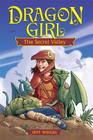
As you know from Holly's posts about dragon-themed picture books and dragon-themed chapter books, her son Ian is in love with dragons. It makes sense, then, that Holly would find us the brand-new graphic novel Dragon Girl: The Secret Valley, by Jeff Weigel. It's pretty fantastic.

Dragon Girl is set in a vaguely medieval time, with knights and blacksmiths and dragons who are sometimes spotted roaming the countryside. 11-year-old Alanna and her older brother Hamel are orphans, taking care of themselves since the recent death of their father. Alanna discovers a cave filled with dragon eggs abandoned when their mother was killed by a knight, and takes on the responsibility of caring for the hatching baby dragons. To prevent the dragons from getting acclimated to human contact, which would endanger their lives in the future, Alanna makes herself a dragon costume to wear when she comes to bring the babies food and play with them. There are some very funny scenes of Alanna dancing and singing with the babies -- apparently, dragons like to party.

Of course, complications ensue: One baby dragon hatches at a moment when Alanna's mask is off, imprints on her immediately, and follows her home.


Meanwhile, the dragon-killing knight Sir Cedric is on the prowl, and there's a mysterious flying craft shooting from the sky, piloted by a masked figure. The story culminates in a hidden valley full of dragons, where Sir Cedric's greed and violent nature are set up against the intelligence and curiosity of the dragon-researcher Margolyn.


Alanna is a terrific character: smart, brave, kind, and stubborn in her belief in doing right. Her sibling relationship with Hamel feels realistic, and Margolyn provides a strong adult female presence in the story. There's an environmental push to the narrative -- don't destroy the land in your pursuit of wealth; learn about other creatures rather than killing them blindly -- but it doesn't feel preachy. We were all happy to see the number 1 on the book's spine, and know that there are more Dragon Girl books coming.

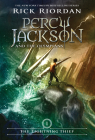
Eleanor, meanwhile, has become a huge Percy Jackson fan. After reading The Lightning Thief in one day a couple of weeks ago, she has finished books two and three, and is lobbying me to enroll her in Camp Half Blood next summer (have I mentioned how much I love living in Brooklyn? Role-playing Greek god camp in Prospect Park!)

Camp Half Blood is, of course, the name of the camp in the Percy Jackson series where half-bloods (children of Greek gods and their mortal paramours) spend the summer training to use their powers wisely and prepare for the Olympian battles that might be coming their way. It's a safe haven for these kids, most of whom live in the normal human world during the school year. Once inside the boundaries of Camp Half Blood, young demigods are supposed to be protected from the monsters which are free to come after them in the outside world. Percy is particularly endangered, because he's the son of Poseidon, one of the "big three" gods (along with Zeus and Hades) who promised a while back not to father any more children. Percy's existence is proof that Poseidon broke his word.

You mentioned in a post a couple of years ago that you'd stopped reading The Lightning Thief after two chapters. I think it's worth another try -- I read it last week, and was pleasantly surprised by its intelligence. Yes, as you put it, it's "a very action-action series," full of cliffhangers and bursts of violence. But the violence is tempered with a sort of video game logic. It turns out that the math teacher who turned into a homicidal monster (and made you stop reading) is really a Fury, up from Hades to punish Percy because the gods believe he stole Zeus's lightning bolt. When Percy slashes at her with his magic sword/pen, she bursts into a shower of yellow powder. She's not killed, exactly: all the mythical monsters he defeats in the book are immortal. They can be cut down in the moment, but they're never really dead, and so Percy isn't ultimately a killer.

Riordan knows his mythology, and his books are full of sly references and smart jokes. In one of my favorite scenes, Annabeth, a daughter of Athena and the major female character in the series, explains to Percy how she knows that he's been kicked out of a series of schools:

"How --"

"Diagnosed with dyslexia. Probably ADHD, too."

I tried to swallow my embarrassment. "What does that have to do with anything?"

"Taken together, it's almost a sure sign. The letters float off the page when you read, right? That's because your mind is hardwired for ancient Greek. And the ADHD -- you're impulsive, can't sit still in the classroom. That's your battlefield reflexes. In a real fight, they'd keep you alive. As for the attention problems, that's because you see too much Percy, not too little. Your senses are better than a regular mortal's. Of course the teachers want you medicated. Most of them are monsters. They don't want you seeing them for what they really are."

Okay, so there's some anti-teacher bias. (On the teacher appreciation side, Percy's Latin teacher, the wheelchair-bound Mr. Brunner, is awesome, and turns out to be the centaur Chiron in disguise -- his horse body folds up into a hidden box inside the wheelchair.) Still, I love the idea that kids with learning disabilities are secretly just wired for ancient Greek.

Greek god role play! Dragon costumes! I have the feeling we'll be reveling in fantastic creatures for months to come.

Love, Annie

Thursday, August 28, 2014

The Greeks, tweaked

Dear Aunt Debbie,

I just took the time to read Lois Lowry's Newbery speech, which you linked to in last week's post, and now I'm sitting here with tears in my eyes. I think I'll skip the movie, but I'll go back to reread The Giver soon.

We are settling into our new house (the first house I've ever lived in, after a lifetime of New York apartments), unpacking and feeling out how the spaces will work. Because of contractor slowness, we are without the full wall of bookshelves we'd planned in the living room, so we haven't yet been able to unpack the major part of our library. I feel a little hobbled by this. But we are making do! There's one tall bookshelf crammed to the gills in the kids' playroom, and we have a nice pile of books out from the library.

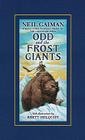
We are still deep into mythology over here -- maybe something about the discombobulation of a move makes the Big Dramatic stories more attractive? With both girls, I'm reading aloud Odd and the Frost Giants, which is tremendous fun now that we've read D'Aulaire's Norse Myths cover to cover. Both Eleanor and Isabel are quick to catch references to the classic stories: Thor (in the form of a bear) repeatedly mentioning Loki's time in the form of a mare, which annoys Loki to no end; brief mentions of Thor's wife Sif and the lovely Freya.

We've all been rereading George O'Connor's Olympians series (we're really going to have to buy that boxed set), tucking the books into backpacks for subway and playground reading.

And Eleanor has been captivated by two middle grade chapter book series based -- more or less -- on characters from Greek mythology. I've read one of each series, and while I'm not a convert to either, there is some interesting play happening in each.

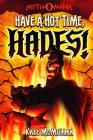
The series I like more is Myth-O-Mania, by Kate McMullan. In each of the nine books, Hades narrates an alternate version of a classical Greek myth, presenting himself as the hero of a number of stories, and Zeus as a blowhard who exaggerates his achievements. The titles are exclamatory and cute: Have a Hot Time, Hades!Say Cheese, Medusa!, Keep a Lid on It, Pandora! Long Greek names are shortened to nicknames: Eurystheus, the king who assigns Hercules his labors, is "Eury"; Persephone is "Phony" or "P-phone"; Cerberus is "Cerbie." Many of the more unsavory parts of the original myths are explained away in Hades' breezy retellings. In Phone Home, Persephone!, there is no kidnapping. Persephone has a crush on Hades, and hitches a ride to the underworld, then tricks him into falling in love with her. In Get to Work, Hercules!, Hercules doesn't kill the Nemean lion, but somewhat accidentally frightens him into running headfirst into a tree.

Still, McMullan has clearly read her mythology. Her books are parodies, playing off of details, large and small, from the original myths. Part of the pleasure Eleanor is taking in the books (which she has reread more than once) comes from identifying the ways in which they stay true to the stories, and the ways they tweak them.

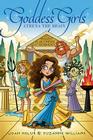
Then you have the Goddess Girls, by Joan Holub and Suzanne Williams. Their covers teem with large-eyed cartoon characters and titles swirled in girly script. The narrative places a number of Greek gods together in middle school, with Zeus as the principal. They refer to each other as "godboys" and "goddessgirls." The nods to the original myths are far smaller here. In the first book, Athena the Brain, Athena discovers at age 12 that she's the daughter of Zeus, when a magical scroll comes in through her window (she's been living on earth with the family of her friend Pallas) and tells her she's going to Mount Olympus Academy. So we lose one of the best origin stories in mythology, and get a thin version of the first chapter of Harry Potter instead.

Athena is the new girl, making friends with Aphrodite, Persephone, and Artemis, fighting with Medusa, and learning how to be a goddess after growing up on earth. While Eleanor loves these books, she was somewhat bothered by the ways in which Holub and Williams play fast and loose with the gods' ages: Zeus is the principal, and therefore an adult, but Poseidon (who should be Zeus's older brother) is a godboy who the goddessgirls have crushes on. There are cute moments: the Trojan War begins as a class project, with each goddessgirl and godboy being given a hero to guide on a quest. Athena has brought her toy wooden horse from earth, and on the spur of the moment makes it into the Trojan Horse.

The series wouldn't be my choice, but every time I see Eleanor start to reread another one and cringe a little at the level of cute, I remind myself of the reams of Sweet Valley High I read at just a few years older than she is now. She loves something I don't. But more than that, she loves to read. It'll be just fine.

Love, Annie

Saturday, August 9, 2014

Greek gods as superheroes? Oh, yes.

Dear Aunt Debbie,

I adore William Steig's vocabulary. What a find!

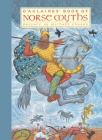
In the midst of packing to move, with all the drama and unsettling that provides, we are deep into mythology right now. I've written before about my childhood obsession with D'Aulaires' Book of Greek Myths. I broke it out for the first time close to four years ago with Eleanor, when she was too young for many of the stories but enjoyed the pictures. Two years later, I read a number of the myths with her -- the ones at the beginning, focused on the twelve Olympians, we read multiple times. Several weeks ago, we took the book out again, and Isabel was hooked. The D'Aulaires include illustrations on every page to satisfy my visual daughter.

Happily, it was a read-aloud to satisfy both Eleanor and Isabel at the same time. Most mornings and nights, we'd read together; sometimes Eleanor would read her own book, and I'd re-read Isabel one or two of the myths she requested. (And where was Will? Sometimes with Jeff; often playing on the floor or sitting on my lap and putting things down my shirt while I held the book open behind him; sometimes shutting the book and shoving his board books at me. Three is more complicated than two.)

After we'd finished the Greeks, cover to cover, we started in on D'Aulaires' Book of Norse Myths, which your girls loved so much. Again, total buy-in from both girls (though Isabel asked, quite early in the book, "Where are all the goddesses?" Say what you will about the Greeks and their gender issues; they did a great job with equal representation.)

And then I remembered to look in my closet.

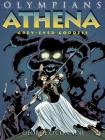
Two years ago, when Eleanor decided to dress up as Athena for Halloween, you gave us George O'Connor's graphic novel Athena: Grey-Eyed Goddess, with the warning that we should preview it to make sure it wasn't too violent for Eleanor. I flipped through it, saw a couple of images that made me think it might not be the right time, and put it on a shelf in my closet, meaning to read it through when I had the chance. Like I said, that was two years ago.

I was a fool to let it sit so long. George O'Connor's Olympians series is absolute genius. There are six so far: Zeus: King of the Gods, Athena: Grey-Eyed Goddess, Hera: The Goddess and Her Glory, Hades: Lord of the Dead, Poseidon: Earth Shaker, and Aphrodite: Goddess of Love. They're coming out as a boxed set this October. We currently have them all out from the library, but we're going to need to buy them.

What makes these books so, so good? O'Connor is a Greek myth nerd from way back, and in writing and illustrating his graphic novels, he draws on lots of original sources. Reading his author's notes at the end of each book, it's clear that O'Connor has thought deeply about how to present each of the gods, choosing which aspects of their stories to include to shape a fully-rounded and complex picture of each of them. There is rich characterization here.

This is true particularly of the goddesses. O'Connor provides about as feminist a reading of Greek mythology as I think you can make, given the material. In Hades: Lord of the Dead, Persephone speaks up against being treated like a pawn by her kidnapper Hades and her mother Demeter. Ultimately, she enjoys the prospect of being Queen of the Underworld, and (in one of what I think are very few moments where O'Connor actually changes the source material) she chooses to return to Hades, rather than being forced to because she absentmindedly ate a few pomegranate seeds.

In O'Connor's telling, Hera is much more than just a jealous spouse, making life difficult for Zeus and his illegitimate children. She has a keen sense of humor, and seems very much in control of herself. Hera's tormenting of Heracles is depicted as a way to help him become the greatest hero on earth, and made more complex by the inclusion of an episode where she nurses him as an infant in order to save his life:


You may notice here that Heracles is dark-skinned. So is Aphrodite, and so are a host of other more minor characters -- there's some diversity going on, which is also nice.

O'Connor's illustrations are both thoughtful and gripping. The gods appear as Marvel-comics versions of themselves -- lots of rippling muscles and glaring faces, lots of action sequences when recounting the Olympians' many battles. But there are so many subtle touches. The Titans are dark and shadowy, their heads touching the sky, reddish clouds floating about their heads like hair:


Poseidon's son, the Cyclops Polyphemos, has a head modeled on the skull of an elephant, because O'Connor is drawing on the theory that the ancient Greeks discovered mastodon skulls and mistook the trunk hole for a single eye socket, giving rise to the legend of the Cyclopes:


I should note here that this episode in Poseidon:Earth Shaker is fairly graphic. I'm far less concerned about exposing my kids to violence in graphic novels after reading all of the Bone series with Eleanor and Isabel -- the last book, in particular, is quite bloody. Still, even Isabel paused over Polyphemos eating Odysseus's men two at a time, and Odysseus driving a sharpened stake into his eye. ("I don't like that part," she said, looking at it again.)

In some ways, I'm glad we're discovering the series now rather than two years ago. Eleanor is reading them on her own, and returning on her own to the excellent material included at the end of each book: O'Connor's footnotes, which he calls "G[r]eek Notes"; author's notes; character profile pages; questions for discussion. She came out of her room tonight after Isabel and Will were asleep and wanted to discuss Question 7 at the end of Aphrodite: Goddess of Love: "Very few people believe in the Greek gods today. Why do you think it is important that we still learn about them?" Eleanor's answer: because it's the way to pass the stories on to future generations, and then if people want to believe in them again, they can. Then she combed through the end pages and wrote a list of one of the sacred plants of each god before finally going to bed.

My heart sings.

Love, Annie

Thursday, July 11, 2013

Griffins and unicorns and kraken, oh my!

Dear Aunt Debbie,

Your haiku summarization of the beginning of The Secret Garden is perfect, and gives me a new level of appreciation for the extreme condensing that some of these early readers provide.  (On a more adult level, have you seen these "ultra-condensed classics"? Some are pretty funny.)

Back in the world of unabridged chapter books, Eleanor and I have finished the Little House series.  We left Laura and Almanzo married and settling down on their own small farm, after a sweet, low-key courtship.  Our Little House sojourn has led to a number of chapter books piling up, and Eleanor's next pick was something totally different: middle-grade fantasy filled with mythological creatures and cliffhanger chapter endings.

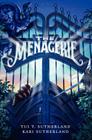
I'm speaking of The Menagerie, the latest book by my friend-from-college Tui T.Sutherland, co-written with her sister Kari Sutherland.  Tui and Kari were in New York recently to promote The Menagerie at the great independent bookstore Books of Wonder, along with a number of other middle-grade authors, and we bought ourselves a signed copy there.  It turned out to be a terrific purchase -- Eleanor loves this book, and we swept through it in less than a week.

The plot: There's a secret menagerie filled with mythological creatures (unicorns, dragons, griffins, etc.) in the small town of Xanadu, Wyoming.  Before the story begins, six griffin cubs have just escaped, and their possible discovery in the town threatens the existence of the Menagerie.  There are two protagonists: Logan Wilde, a boy who's just moved to Xanadu from Chicago after his mother left him and his father, and Zoe Kahn, the youngest child of the family that has run the Menagerie for generations.  Logan stumbles into the mystery of the missing cubs, and finds an immediate connection with the animals, but struggles with the question of why his mother has abandoned him.  Zoe spends the book worried about saving the Menagerie: agents from a governmental agency tasked with overseeing mythological animals are due to inspect the premises, and the missing cubs are a huge problem.  There are a host of other characters, human and animal, and sometimes a combination of the two.

What I like most about this book, and about Tui's series Avatars, is the level of research that underlies the characters: each animal in the Menagerie comes from the mythology or folktales of a different culture, and the result is a kind of mythological mash-up.  There are windows into a wide variety of stories that a reader might pursue, from the phoenix to the kelpie (a Celtic water-horse spirit) and the kitsune (a Japanese fox spirit -- who knew?).  Several of the characters here suffer from enlarged egos, and the clashes between the phoenix and the goose who lays golden eggs are particularly funny.

The narration alternates between close-third-person chapters from Logan's and Zoe's point of view.  Both are appealing characters, of the observant quirky loner type I've always been fond of.  Logan is African-American, and there are sprinkled references to racial and ethnic diversity among the other characters: the school librarian, who may be hiding a secret herself, is Indian, and a variety of skin tones are mentioned.  There are a few too many mean-girls in the book for my taste: Zoe's older sister Ruby and adopted sister Keiko, her former best friend Jasmin, a host of mermaids.  That being said, both Zoe and her mom are down-to-earth, and Logan's mom, in absentia, becomes a really interesting character by the end of the first book.

Because yes, The Menagerie is the first book in a trilogy.  This came as a shock to Eleanor this morning when we reached the end, and only one of the many outstanding plot questions was answered, followed immediately by a dramatic twist and the words "To be continued...."  She was thrilled and frustrated in equal measure.  We're both sorry we have to wait until next March for book two.

The multiple cliffhangers throughout this book captured Eleanor's imagination all week.  Waking up, it was the first thing she asked for, and in the afternoons after day camp, she'd turn to me out of the blue and say, "But we still don't know who opened the gate to let the griffins out," or "What's going to happen to Logan?  He's right there, and the SNAPA agents are coming!"  A couple of times, when I had to pause in our reading to change a diaper or otherwise take care of Will, Eleanor read a full chapter on her own (putting the bookmark back where she and I had stopped, so that I would reread what she'd read and we could talk through the words and pop culture references she didn't know).  I love the way in which her independent reading is starting to dovetail with our reading together.

From her excitement over this book to the early readers and flashlight I found stashed under her pillow tonight, I have a feeling this is going to be an excellent reading summer.

Love, Annie


Monday, September 17, 2012

The lure of Greek mythology

Dear Aunt Debbie,

I have a feeling that Nicholas Flamel is in Eleanor's future.  We're back to Greek mythology here in our house, poring over the pages of D'Aulaires' Book of Greek Myths with obsessive interest.  I wrote almost two years ago about our first dip into the book, and wondered what would spark Eleanor's interest in it when she got a little older.  The answer?  Halloween.

For a month or more, Eleanor had been pushing to dress up as Daenerys Targaryen, the teenage Mother of Dragons from George R.R. Martin's Game of Thrones series.  Jeff and I have both been reading the books, and Eleanor asks about the stories in them, so Jeff had told her a few highly edited bits, and she thought Daenerys sounded awesome.  Baby dragons!  Being familiar with more of the (sexy, violent) plot, I wasn't a fan of the idea.  Eleanor's best friend, Ian, decided to dress up as a dragon, then as a dragon with multiple heads, and started calling himself a hydra.  Mythology!  I thought, and brought out the D'Aulaires'.

We started by looking at the pantheon (image in my earlier post), and then reading all the stories about the major goddesses: Artemis, Athena, Aphrodite, Hera, Persephone.  Artemis was interesting to Eleanor for a moment, but she comes off as fairly cruel in the whole turning Actaeon into a deer and letting his hounds kill him just because he sees her bathing episode.  Hera doesn't have much going for her in the role of jealous wife.  Aphrodite was of course the goddess I cast myself as when I was a little older than Eleanor, but not a particularly empathetic character, and a little hard to make a costume for.  Frankly, I was plugging for Athena the whole time, and am very happy that's where we've ended up.  We bought supplies today to make her breastplate (with Medusa's head on it, no less), spear, helmet, and owl.  We're ready to go.

And Eleanor doesn't want to put the book down.  We went back and started at the beginning, with Gaia and Uranus coming together to produce their Titan children and then their hideous monsters.  Now we're reading straight through: tale after tale filled with...well...sex and violence.  When you place them side by side, the Greek myths don't actually come off much cleaner or more kid-appropriate than Game of Thrones.  The D'Aulaires wrote them in kid-friendly language (Zeus has many "wives"), but there's no getting around the intensity of death and kidnapping, even when you elide all the rape.  Along with killing Actaeon, Artemis and her twin, Apollo, kill all 14 of Niobe's children because Niobe has a big ego and a bigger mouth.  It's heavy stuff.

On the other hand, Isabel is going as Minnie Mouse.  It's nice to have two.

Love, Annie

Sunday, November 7, 2010

Mythology: moving north

Dear Annie,

Yes, I would definitely cast Grandma (my mother) as Athena, the smart warrior, rather than Hera, the vengeful jealous spouse.  Athena fits much better.  D'Aulaires' Greek myths are wonderful.  Greek mythology is going through a big resurgence with middle-graders these days thanks to a former middle school teacher who's written a series of 21st-century fantasy novels with contemporary characters who discover they're the half-mortal children of Greek gods and goddesses.  The Lightning Thief and sequels by Rick Riordan have been wildly popular.  In terms of literary merit, they're a bit too slam-bam action-action-action for my taste, but they've whetted the appetite of the post-Harry Potter generation for mythology.

In our household, while we loved the Greek myths, we came back many times to
D'Aulaires' Book of Norse Myths
. They gave the Norse myths the same written-for-kids but not dumbed-down treatment.  I like the Norse gods better: they're not as pouty, although they're certainly plenty quarrelsome.  And they were ultimately mortal: killed off when Christianity arrived. The central caring-but-tragic relationship between Odin and the trickster Loki is wonderful.  And many of the stories have a great sense of humor.  Consider the story of Skade, a maiden from the rival world of the Jotun.  The Norse gods have killed her father and she demands that they pay a fine.  They offer her a Norse god as a husband, thus elevating her to goddess status.  She agrees, on the condition that they must first make her laugh.  Loki ties himself to a billy goat, eventually resulting in laughter.  Then they give her the pick of the gods, on the condition that she must choose by looking only at their legs -- which she's clearly giving much thought to in this illustration:
She ends up picking Njord, who loves the seashore, while she's a big skier and loves the mountains.  They spend nine days at the seashore, and another nine in the mountains, then agree to live separately.  "Thereafter he and Skade seldom saw each other, but in a friendly fashion they went together to all godly gatherings.  Skade stayed in her mountains and become the goddess of skiers."

And while we're on the subject of the Norse crowd, I'm quite fond of a recent book by Neil Gaiman,
Odd and the Frost Giants
.  In it, a boy leaves his village on a fjord and in the wild meets a bear, a fox and an eagle.  While they believe he's asleep, the animals speak with each other, but when Odd says he's been listening, they deny (in words) that they can speak.  It turns out that they're Thor, Loki and Odin, enchanted into their current forms and kicked out of Asgard, the home of the gods, by the Frost Giants.  The three spend much of their time bickering amusingly, while Odd turns out to be the only one with any common sense.  He ultimately acts sensibly and bravely and restores the gods to their home.  It's quite short, a good early chapter book  Gives one a taste for the Norse stories.

Love,

Deborah

Friday, November 5, 2010

Cultivating an early obsession with Greek mythology

Dear Aunt Debbie,

Thanks for the well-wishes!  I'm sure it will be fine -- we'll prep Eleanor for the filling, read some books, and make sure she gets novocaine or the like.  With any luck, she won't have any traumatizing memories later....

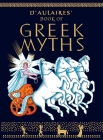
Earlier today, I was having a conversation with an art teacher friend of mine about getting through a section of the syllabus jam-packed with Greek and Roman art, which she doesn't find as interesting as Renaissance-and-later work.  She mentioned that part of the difficulty was not being able to keep all the stories straight.  My immediate reaction was to recommend to her the book which taught me everything I could possibly need to know about Greek mythology, a book I pored over for hours at a time in early elementary school:  D'Aulaires' Book of Greek Myths.

It is because of Ingri and Edgar Parin D'Aulaire that I learned the Greek gods and goddesses the way some kids learn dinosaurs: obsessively, insanely, down to every last attribute.  At age seven, I decided to believe in the Greek gods, and whispered prayers to Aphrodite into a little pink shell necklace I wore.  I cast all the members of my family as gods and goddesses of the Greek pantheon: My mom was Demeter, my dad Dionysus, Michael was the baby Hermes, I was of course Aphrodite, Grandpa was Zeus, and Grandma was either Hera (because she was married to Zeus) or Athena (much more like her, really).  Looking back, I think I actually did a pretty good job.

What makes the D'Aulaires's book so incredibly good?  It's a combination of the retelling of the tales -- totally accessible to a wide age-range, but full of the original details, sexy and grisly as they often are -- and the extraordinary drawings.  The drawings are done in colored pencil; some full-color, some black and white, some in a sort of sepia-toned black on brown.  This is how I will forever see the gods on Mount Olympus:

Hera and her henchman Argus with the captive Io:

Athena emerging from Zeus's head:


Persephone being pulled down into the underworld by Hades:


I've read some of the stories with Eleanor, though she's still a little young for the whole book.  The story she's most taken by is Demeter and Persephone, which makes sense: it's the story of the enforced separation of a mother and daughter, a primal and intense idea.  I look forward to seeing what catches her imagination as she gets a little older.

Love, Annie