In which Annie (high school teacher, mother of two young girls and a younger boy) and her aunt Deborah (children's bookseller, mother of two young women in their 20s) discuss children's books and come up with annotated lists.

Showing posts with label Riordan. Show all posts

Monday, September 5, 2016

Harry Potter and the Girl who Reads Everything

Dear Aunt Debbie,

A couple of nights ago, Eleanor came into my bedroom needing to talk about why she wanted to stop reading a book. On non-school nights, we let the kids stay up with reading lights, and Eleanor is always the last to turn hers off, reading until 10 or sometimes even 11 PM. Then she'll come downstairs to find me and Jeff, or into our room, with a smile on her face, that little smile that says I know I shouldn't be up, but now is my favorite time to talk with you, alone.
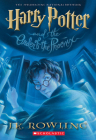
A couple of nights ago, she wasn't smiling. Earlier this week, she had begun to read Harry Potter and the Order of the Phoenix, the fifth Harry Potter book. I wrote this summer about Eleanor starting the series; how much I love what she is getting from the books, but how I have also been trying to slow her down, out of fear that the emotional content will take her too deeply over her head too young. I said I was fine with books 1-3, but discouraged book 4, in which Harry experiences the first death of a character we have grown to like, a fellow student murdered by Voldemort during the Tri-Wizard Tournament. My caution was rebuffed; she read on. After book 4, she reassured me the content was fine. She paused again, but late in the summer she began pushing to read book 5. She borrowed it from my parents last week.

Which brings us to Eleanor walking into my bedroom with The Order of the Phoenix under her arm, upset. A little more than 500 pages in, she had just read a scene set in a wizarding hospital, in which Harry, Ron, Hermione, and Ginny run into their friend Neville and his grandmother. Neville and Mrs. Longbottom are there to visit Neville's parents, who were tortured into insanity by one of Voldemort's followers.

It's not a dramatic or violent scene:

Neville's mother had come edging down the ward in her nightdress. She no longer had the plump, happy-looking face Harry had seen in Moody's old photograph of the original Order of the Phoenix. Her face was thin and worn now, her eyes seemed overlarge, and her hair, which had turned white, was wispy and dead-looking. She did not seem to want to speak, or perhaps she was not able to, but she made timid motions toward Neville, holding something in her outstretched had.

"Again?" said Mrs. Longbottom, sounding slightly weary. "Very well, Alice dear, very well -- Neville, take it, whatever it is...."

But Neville had already stretched out his hand, into which his mother dropped an empty Droobles Blowing Gum wrapper. 

"Very nice, dear," said Neville's grandmother in a falsely cheery voice, patting his mother on the shoulder. But Neville said quietly, "Thanks Mum."

His mother tottered away, back up the ward, humming to herself. Neville looked around at the others, his expression defiant, as though daring them to laugh, but Harry did not think he'd ever found anything less funny in his life.

In telling me what had upset her, Eleanor was close to tears: the image of parents unable to communicate with their child, unable to do more than hand him a useless gum wrapper, was deeply troubling. This, even more than the images of death threaded through the books, was what made her want to stop reading. It was empathy; the book striking too close to a horror she could imagine.

But she didn't feel she could stop reading. Why not?

"I'm supposed to be the girl who reads everything," she said, hugging me. Oh dear.

"No," I said carefully, "you're the girl who loves to read. And you're someone who reads deeply, and who gets emotionally involved in the books you read. This is a good thing. But sometimes that might mean that something your friends have read is going to feel different to you than it did to them when they read it." We talked about how people read in different ways, and how something that feels scary to one reader might not to another. I mentioned that J.K. Rowling wrote the Harry Potter books to be read by kids who were Harry's age in each book -- by that rule, she's a 9 year old reading something written for 15 year olds. There's nothing to be ashamed of if it doesn't feel like the right thing to be reading at the moment.

She decided she wanted to stop reading the book, and I said I thought that was a good decision. The wonderful thing about books is that they will be there for you when you're ready for them. Until then, you can reread the first four books, and pick up the next one sometime in the future, when it feels like the right time. We practiced what she might say to her friends who have read the whole series, if they ask why she hasn't finished. She said, "I'll say it makes me feel too much emotional pressure to read it right now." Then she asked if we could give the book back to my parents for now, "so I won't feel possessed by the urge to pick it up again."

Two things struck me deeply about this conversation. First, Eleanor's determination about what feels "real" and what doesn't. She compared Harry Potter to the Percy Jackson series, saying that Percy Jackson felt less scary because "it couldn't really happen." Of course, both series are fantasy, filled with magic and impossible occurrences, but I understood what she meant: the situations in Rick Riordan's books feel more episodic; even when terrifying things happen, you're not really worried that the main characters will be hurt. There are so many moments in J.K. Rowling's books like the one between Neville and his mother: moments that feel emotionally real; not plot points, but character moments. (I googled the gum wrappers while writing this post, and found both that a lot of fans had wondered whether Neville's mother was slipping him secret messages, and that J.K. Rowling had said in an interview that that wasn't happening at all. She based the scene on the experience of a friend visiting his mother, who had Alzheimer's.) As she reads, Eleanor feels the difference.

The second thing that struck me was how much this book choice mattered to Eleanor in terms of her self-perception. I read somewhere recently that kids start to consciously carve out aspects of their identity around this age, 8 or 9; they start to see themselves as a certain type of person, and to act accordingly. This wasn't just about the question of stopping a particular book; because Harry Potter is so big, and because several of her friends have read the whole series, Eleanor saw it as something she should be doing as well as something she wanted to be doing. Because she's the girl who reads everything.

And that's where we try to step in as parents, right? To say yes, I see who you are becoming, and I love who you are becoming, and take my hand and step just a little over this way, see it just a little bit differently. See? It's still you, this slightly changed image. It's maybe even a slightly truer you.

I think often of something my Grandpa Frank, your father, used to say about kids: "You raise what you get." Here they are, these amazing young people growing into themselves; all we can do is try to know them and raise them the best that we can. Thank goodness we have books to help us along.

Love, Annie


Tuesday, January 12, 2016

New year, new spunky feminist princess

Dear Aunt Debbie,

Happy New Year!

It's been an intense and happy holiday season, filled on our end with lots and lots of good reading. As it's been a while, here's a quick snapshot of the reader profiles at my house these days:

Eleanor, in 3rd grade, tries very hard to read at every waking moment: at the breakfast table, brushing teeth, on the street walking home from the library. We've outlawed reading at dinner, but allow it during dessert; consequently, it can now take up to 25 minutes for her to eat a single cookie.

Her tastes run to big novels about mythology and magic: she's read and reread all of Rick Riordan, from Percy Jackson through his Egyptian series and the new foray into Norse mythology. For lighter fare, there are the Dork Diaries books (not my favorites, as you know), and lots and lots of Geronimo and Thea Stilton, the strange, translated-from-the-Italian series about talking mice with long hair and clothes.

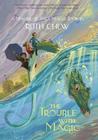
Isabel, in 1st grade, has become a full-fledged independent reader in the last several months. She went from early reader books leapfrogging up to the Critter Club series (early chapter books focusing on girls who love animals -- a clear fit), and just this past month I looked over and she was reading Ruth Chew -- real, full-on chapter books, with hardly any pictures -- and telling us all about the stories. I remember loving Ruth Chew as a kid. The Matter-of-Fact Magic books are set in 1970s Brooklyn, actually not far from where we live now; in each, children encounter small, imaginative bits of magic that change their lives a little bit, but aren't scary or terribly permanent. The fate of the world is never at stake, and practical details pop up regularly: what do you do when you use a wizard's magic umbrella to transform your clothes into bathing suits, then lose the power to change them back, and no longer have the front-door key to your house? (The Trouble With Magic.)


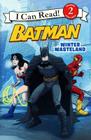
Will, closing in on age 3, picks up books almost as often as his sisters. He's currently obsessed with superheroes and Yoda, so we're reading aloud a lot of I Can Read! books from the library with titles like Batman: Winter Wasteland. He is building up a baseline of specific character knowledge that I'm sure will come in handy later. Meanwhile, we all know much more about the specific powers of a wide variety of superheroes, in both the DC and Marvel universes.

Despite their different interests and ages, graphic novels remain a major go-to for all three kids, a kind of common denominator. When one picks out a new graphic novel of any kind, from Avatar: the Last Airbender to My Little Pony, they all vie for a turn to read it.

We stumbled across our newest favorite graphic novel series at the library, and the girls kept the first three books in such solid rotation that it was clear we needed to own them.

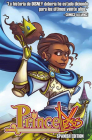
Princeless is centered around the adventures of Princess Adrienne Ashe, who begins the series at age 16 having been trapped in a tower -- like her 5 older sisters before her -- by her parents, in the hope that a dashing prince will come to save her. Unlike her sisters, Adrienne makes friends with the dragon guarding her, puts on the armor of one of the hapless princes who's been eaten by that dragon, and busts out of her own tower. Her goal? To save herself, and then to head out and save her sisters.

There is so much to like here. First, Adrienne and the entire royal family (King Ashe, Queen Ashe, 7 princesses and one prince) are black. This is obvious from the illustrations, of course, but it's also front and center in the text: the first three pages of the first issue show Queen Ashe reading Adrienne a prince-saves-the-blonde-princess-in-a-tower story, and Adrienne angrily critiquing it while her mother struggles to comb her hair.

Adrienne is confident, strong, and smart, not to mention physically capable -- she teaches herself swordfighting, and almost immediately does pretty decently in combat with her father's soldiers (they think she's a knight who has killed the Princess Adrienne). She's not invincible -- there's a good amount of slapstick with Adrienne falling from balconies and being tangled in her ill-fitting armor -- but she's resilient.

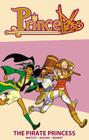
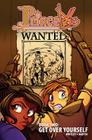
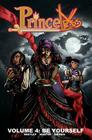
Almost all of the supporting characters in the series are female. In book 1 (Save Yourself), Adrienne meets and befriends Bedelia, the teenage daughter of a dwarf blacksmith who, it turns out, has been doing all the smithing for years while her father goes to the bar. Book 2 (Get Over Yourself) brings in Adrienne's sister Angelica, the most beautiful of the princesses, who has positioned herself as the muse for a town full of artists. In Book 3 (The Pirate Princess), Adrienne and Bedelia rescue, fight, and team up with Raven Xingtao, the daughter of a pirate king. (Raven is getting her own spin-off series this month.) Book 4 (Be Yourself) focuses on the quest to save Adrienne's sister Angoisse, who is shut up in a dark swamp castle with a gorgeous but creepy vampire boyfriend. There are also Kira, a werewolf being groomed to take over her father's position of wolf pack leader; Delores Grunkmore, a dauntless goblin guide; Queen Ashe, who disappears mysteriously partway through the series (Eleanor and Isabel and I have a theory about that); and of course Sparky, Adrienne's dragon.

Contrast this with the lineup in the (otherwise wonderful) Zita the Spacegirl, in which the rag-tag bunch of creatures and robots Zita gathers on her journey are entirely male, in classic Wizard of Oz fashion.

Characters throughout the series are diverse, both racially (so nice to see such a variety of skin colors in a comic book) and in ways that play with stereotypes. I say "play with" rather than "defy" because author Jeremy Whitley's tone is often knowing -- he's consciously poking fun at and retooling narratives we've seen before, sometimes in ways that feel a little heavy-handed to me, if not to my kids. I think of Adrienne's twin brother, Devin: a sensitive guy, an artist and designer, written in direct opposition to the hyper-masculine King Ashe, who so far has no redeeming qualities.

But I felt that way about the stereotypical aspects of both Princess Angelica (the beautiful one) and Princess Angoisse (the goth one) too, and Whitley managed to find endings which allowed each princess to find her own way of being empowered. I'm willing to reserve judgment as the series goes on.

And some of the wink-wink-nudge-nudge moments are Whitley's funniest. When Adrienne first meets Bedelia in Book 1 and expresses an interest in getting some armor that fits her, Bedelia ushers her into the "Women Warriors Collection":


That would be, from left to right, the costumes worn by Wonder Woman, Red Sonja, and Xena, Warrior Princess. Adrienne and Bedelia's commentary:


[Side note: I mentioned Will's current superhero obsession, which, among other things, is bringing home to us just how sexy and sexist the depiction of female superheroes is. Here's what happens when your son asks you to google pictures of Poison Ivy -- and this is with Safe Search on! We have a lot of conversations about how Wonder Woman must be really cold.]

After walking us through the implications:


Adrienne requests that Bedelia make her some real armor. Which she does:


In my googling, I found a nice interview with Whitley about his inspirations for the Princeless series. He's white, but his wife and daughter are black, and he saw a huge gap in the kinds of comic books he'd be comfortable giving her to read:

"Good heroines are few and far between. When you look for ones that are leading books, it narrows the scope more. When you look for one that is appropriate for kids, it gets much narrower. When you talk about one with a lead female of color, the number drops to nearly zero (they exist, they are just very difficult to find). My daughter is black and while I encourage her to look for role models of all colors, girls need to be able to see girls that are like themselves in media. They need it even more when it comes to seeing them portrayed with strength."

Here's hoping these books keep selling like hotcakes. We'll certainly be buying them.

Love, Annie

P.S. What did you think of yesterday's Newbery and Caldecott winners? I was thrilled to see Roller Girl named a Newbery Honor Book!


Wednesday, October 1, 2014

Fabulous Monsters

Dear Aunt Debbie,

First, an invitation to our readers:

Readers! We want to answer your book queries! We are always happy to hear from you, and eager to respond to questions. This month, we are offering a special invitation: put us to work! Is there a void in your reading-with-children life? A type of book you've been looking for, but don't know where to start? Are you starting to think about birthday or holiday gifts for the children close to you? Comment on this blog post and/or email us at annieandaunt[at]gmail[dot]com. We look forward to your ideas!

I was prompted to put out this invitation, Aunt Debbie, by your most excellent response to my friend Eunice's question about audio books for a western road trip, a post which made me want to plan our own long driving trip right now. But as the school year has just begun, and we're still settling into our new house, we'll have to make do with listening in the living room, where our books are still packed away in boxes, awaiting the arrival of new bookshelves.

Isabel's 5th birthday brought a nice little influx of books into the house. There was the fabulous birthday box from you, containing several books I'll write about soon. My brother Michael and sister-in-law Grace gave us four more Olympians graphic novels, which meant we could finally return most of them to the library -- the girls have continued to reread them nonstop since early August. And our wonderful friend and frequent guest blogger Holly came through with a well-curated selection of graphic novels.

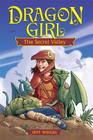
As you know from Holly's posts about dragon-themed picture books and dragon-themed chapter books, her son Ian is in love with dragons. It makes sense, then, that Holly would find us the brand-new graphic novel Dragon Girl: The Secret Valley, by Jeff Weigel. It's pretty fantastic.

Dragon Girl is set in a vaguely medieval time, with knights and blacksmiths and dragons who are sometimes spotted roaming the countryside. 11-year-old Alanna and her older brother Hamel are orphans, taking care of themselves since the recent death of their father. Alanna discovers a cave filled with dragon eggs abandoned when their mother was killed by a knight, and takes on the responsibility of caring for the hatching baby dragons. To prevent the dragons from getting acclimated to human contact, which would endanger their lives in the future, Alanna makes herself a dragon costume to wear when she comes to bring the babies food and play with them. There are some very funny scenes of Alanna dancing and singing with the babies -- apparently, dragons like to party.

Of course, complications ensue: One baby dragon hatches at a moment when Alanna's mask is off, imprints on her immediately, and follows her home.


Meanwhile, the dragon-killing knight Sir Cedric is on the prowl, and there's a mysterious flying craft shooting from the sky, piloted by a masked figure. The story culminates in a hidden valley full of dragons, where Sir Cedric's greed and violent nature are set up against the intelligence and curiosity of the dragon-researcher Margolyn.


Alanna is a terrific character: smart, brave, kind, and stubborn in her belief in doing right. Her sibling relationship with Hamel feels realistic, and Margolyn provides a strong adult female presence in the story. There's an environmental push to the narrative -- don't destroy the land in your pursuit of wealth; learn about other creatures rather than killing them blindly -- but it doesn't feel preachy. We were all happy to see the number 1 on the book's spine, and know that there are more Dragon Girl books coming.

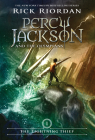
Eleanor, meanwhile, has become a huge Percy Jackson fan. After reading The Lightning Thief in one day a couple of weeks ago, she has finished books two and three, and is lobbying me to enroll her in Camp Half Blood next summer (have I mentioned how much I love living in Brooklyn? Role-playing Greek god camp in Prospect Park!)

Camp Half Blood is, of course, the name of the camp in the Percy Jackson series where half-bloods (children of Greek gods and their mortal paramours) spend the summer training to use their powers wisely and prepare for the Olympian battles that might be coming their way. It's a safe haven for these kids, most of whom live in the normal human world during the school year. Once inside the boundaries of Camp Half Blood, young demigods are supposed to be protected from the monsters which are free to come after them in the outside world. Percy is particularly endangered, because he's the son of Poseidon, one of the "big three" gods (along with Zeus and Hades) who promised a while back not to father any more children. Percy's existence is proof that Poseidon broke his word.

You mentioned in a post a couple of years ago that you'd stopped reading The Lightning Thief after two chapters. I think it's worth another try -- I read it last week, and was pleasantly surprised by its intelligence. Yes, as you put it, it's "a very action-action series," full of cliffhangers and bursts of violence. But the violence is tempered with a sort of video game logic. It turns out that the math teacher who turned into a homicidal monster (and made you stop reading) is really a Fury, up from Hades to punish Percy because the gods believe he stole Zeus's lightning bolt. When Percy slashes at her with his magic sword/pen, she bursts into a shower of yellow powder. She's not killed, exactly: all the mythical monsters he defeats in the book are immortal. They can be cut down in the moment, but they're never really dead, and so Percy isn't ultimately a killer.

Riordan knows his mythology, and his books are full of sly references and smart jokes. In one of my favorite scenes, Annabeth, a daughter of Athena and the major female character in the series, explains to Percy how she knows that he's been kicked out of a series of schools:

"How --"

"Diagnosed with dyslexia. Probably ADHD, too."

I tried to swallow my embarrassment. "What does that have to do with anything?"

"Taken together, it's almost a sure sign. The letters float off the page when you read, right? That's because your mind is hardwired for ancient Greek. And the ADHD -- you're impulsive, can't sit still in the classroom. That's your battlefield reflexes. In a real fight, they'd keep you alive. As for the attention problems, that's because you see too much Percy, not too little. Your senses are better than a regular mortal's. Of course the teachers want you medicated. Most of them are monsters. They don't want you seeing them for what they really are."

Okay, so there's some anti-teacher bias. (On the teacher appreciation side, Percy's Latin teacher, the wheelchair-bound Mr. Brunner, is awesome, and turns out to be the centaur Chiron in disguise -- his horse body folds up into a hidden box inside the wheelchair.) Still, I love the idea that kids with learning disabilities are secretly just wired for ancient Greek.

Greek god role play! Dragon costumes! I have the feeling we'll be reveling in fantastic creatures for months to come.

Love, Annie

Monday, June 3, 2013

Reading humility

Dear Annie,

It was so delightful to see you and all of yours this weekend!  I read two books to Isabel; Eleanor read two books to me.  And it was a pleasure to meet the newest relative: young Will was wonderful.

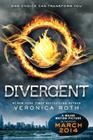
As you know, I was in New York for Book Expo America, the annual booksellers' conference.  It always provides a few unexpected moments that make me glad I was there; this time the surprise came from a wildly successful 24 year-old writer of YA dystopian fiction.  Veronica Roth has sold 3 million copies of
Divergent
and its sequel,
Insurgent
.  Divergent has a YA-familiar story line: in a future controlled society, teenagers get sorted into different groups which narrowly define them for life.  The government is repressive and more corrupt than originally believed by our teenage protagonist.  There's friendship, betrayal, and a fair amount of hand-to-hand combat.  The book ends leaving fans impatient for the sequel.

BEA's Children's Author Breakfast is often inspirational for the hundreds of booksellers gathered at the Javits Center.  (See Lowry, Selznick, and others.)  In theory, this year Roth had tough acts to follow: she spoke after Mary Pope Osborne (Magic Tree House: 110 million books in print) and Rick Riordan (Lightning Thief and many mythology-based sequels: 33 million books in print).  Osborne's speech had been okay; Riordan's felt like he'd said the same words at every book event he'd ever been to.  Then Roth got up, and with an occasional quaver in her voice, spoke from the heart.

She had, she said, been an obsessive child reader until high school.  She had a boyfriend who felt he was too cool for Harry Potter, ridiculing the excitement around the release of the last book.  She ended up reading it in secret weeks after it came out, not telling anyone that she had.  "After that I became ashamed of a lot of the books I liked and tried to push myself to read the books I felt you weren't supposed to be ashamed of."  This eventually led to her stopping reading for pleasure. "I lost my love of reading at the same moment I started to say, 'I already know' instead of 'I'm here to learn.'  In other words, at the moment that I lost my reading humility."

She said her fans got her back into the love of reading because of their unapologetic enthusiasm for many different kinds of literature.
When I talk about reading humility, I'm not talking about turning off your critical brain. I'm talking about the way you read. Reading like someone who is there to learn means assuming at the outset that a book is valuable and searching it for that value. If, at the end of that search, you don't come up with anything, it's important to be able to figure out why. But it's that starting place, that willingness to love things, that I most admire about young readers.

Roth went on to talk about bringing the "I'm here to learn" attitude to her writing -- both in the editing process, and in dealing with reader reaction.


A few months after my first book came out, several book bloggers in the Young Adult blog-o-sphere made me aware of something. There's a trend in Young Adult books in which a sexual assault is used as a plot device, either to illustrate just how bad an antagonist is or to heighten the suspense, which is harmful for many reasons. Chiefly, that it doesn't engage with the issue of sexual assault with care and respect. The aforementioned bloggers indicated to me that a scene in 'Divergent' participated in this trend.


She went through months of feeling defensive before she acknowledged that she used the assault to advance the plot without incorporating its emotional effect on her character.
 
I couldn't change what I had written, but I could change the way I reacted to it. So, I talked about it on my blog, and it was humbling. That act of humility, painful and uninviting though it was, it was a gift. I realized that if I wanted to write a character whose experience was different than mine, humility could drive me to diligent research, careful depiction, thoughtful revision and openness to critique. It could make me free to say, 'I'm here to learn' instead of 'I already know.' And if and when I failed I could be free to say, 'Maybe you have a point, and I can do better next time' instead of 'your critiques are not valid.'

I think what I like about Roth is the sense of her as a work in progress: someone who's still thinking and working things out even though she's become a star in the YA world.  It made me think I should pick up Insurgent sometime soon and check out the author's evolution.

Love,

Deborah

Here's the whole speech.

Sunday, September 18, 2011

YA Hit Parade, take two

Dear Annie,

It's an interesting list your students have created.  I've read at least pieces of each of those series and understand the attraction of them all.  But very little of this list are titles that I would guess will stay with the readers throughout life.

The one most likely to, IMHO, is Harry Potter.  My experience of it, and that of my children and customers, was that the year or more between each book was crucial to one's appreciation of the series.  A new book would come out, it would be inhaled by all within a week of publication, then it could be savored.  There were re-readings, and intense speculation about what would happen next.  The characters soaked into kids' consciousness, so that when the next book arrived, one would be reacquainting oneself with old friends.  Rowling's little asides and character tics were appreciated all the more for the familiarity.  I often wonder how the easy availability of all seven books affects readers' experiences now.  I suspect your current freshmen had most of them available when they started the series.

The Percy Jackson series by Rick Riordan (first syllable pronounced like "fire") has been phenomenally popular.  The basic concept of the books, starting with The Lightning Thief, is that there's a group of kids in contemporary society who are the half-mortal children of Greek gods and goddesses.  Riordan, who used to be a middle school teacher, says he invented the stories to interest his own children in Greek mythology.  The popularity of the books has created a wave of interest in anything related to mythology -- it's been fascinating.  Two years ago, Riordan spoke at the Washington DC Book Festival on the National Mall.  The tent where he spoke was overflowing with kids clutching their books.  When he arrived on stage, it felt like a major rock star was there: the crowd cheered, screamed, waved, jumped up and down.  Riordan has started two other series: one on Egyptian mythology (biracial brother and sister, separated by divorce, who are direct descendants of Egyptian gods), and a follow-up to Percy Jackson, introducing Roman mythology.

I will confess to you something I don't often say aloud.  When I first read The Lightning Thief before it came out, I stopped after two chapters.  I think the deciding moment was the scene where a teacher on a field trip turns into some sort of monster with knives shooting out of her fingers.  It's a very action-action series, with teenagers constantly deciding the future through individual combat.  Parts have more depth to them too, but I wonder about the series' staying power.  What do your students talk about liking about Percy Jackson?

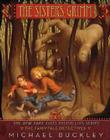
I think of the Sisters Grimm as being a bit younger than the others on your list.  Also very popular, in part I think because it maintains good mysteries through the books.  The sisters have inherited the responsibility to keep fairy tale characters confined to a small town in upstate New York and not let them escape and wreak havoc on modern society.  The characters, with well-known names from fairy tales, all have personalities fairly far off from how they are in the original tales (Grimm and others).

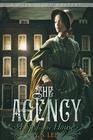
I'm surprised and pleased that The Agency, by Y.S. Lee made it onto the lists. It feels a step up in both sophistication and language.  You've already linked to an enthusiastic review.  The fact that the heroine is Anglo-Asian, and that the author has a PhD in Victorian literature and culture, give the books a deeper, engaging edge.  The heroine is fallible in sympathetic but sometimes excruciating ways.  Your parallel to the Sally Lockhart stories is a good one.

I'm curious to know more about why your students love the books they do.  Anybody out there who wants to talk about your favorites?

Or maybe I'll just hear more from you...

Love,

Deborah

Friday, September 16, 2011

YA reading list

Dear Aunt Debbie,

You make me look forward to my children's math education!  In the meantime, we are forging ahead with Edward Eager with Eleanor, and rereading The Adventures of Isabel, In the Night Kitchen, and When Sophie Gets Angry -- Really, Really Angry... multiple times a day with Isabel.  Her new favorite phrase: "Read't again!"

At the beginning of every semester, I ask my high school students to write me introductory letters, telling me a little bit about themselves and their history with reading and writing.  I asked my 9th-graders specifically to name books they love, and as I read through them, I jotted down notes about the titles that came up most often.

The Harry Potter books were the hands-down favorite -- everyone has read them, and everyone adores them, no surprise.  Those books have staying power.  The Hunger Games trilogy wasn't far behind.

The third most-popular books mentioned were the Percy Jackson series, by Rick Riordan.  You wrote about them briefly a little while ago, when we were talking about mythology.  I think it's time I checked them out.

Two other series that came up often: Mortal Instruments, by Cassandra Clare, and  The Sisters Grimm, by Michael Buckley.  The description of the first book of Mortal Instruments ("the handsome Jace introduces fifteen-year-old Clary Fray to the world of the Shadowhunters, a secret cadre of warriors dedicated to driving demons out of our world....") doesn't fill me with a great desire to pick that one up, but the idea behind The Sisters Grimm seems promising: two young sisters, descendants of the Grimm Brothers, find out that they are fairy-tale detectives and need to solve mysteries in a world where the characters from fairy tales have come to life.

Finally, I was intrigued by the mention of The Agency series, by Y.S. Lee: Mary Quinn, orphan and thief in Victorian London, is taken in by a girls' school which turns out to be the cover for an all-female detective agency.  Here's a more thorough take on the series from the blog Brown Paper.  They sound similar in tone to the Sally Lockhart mysteries, though I'm not holding my breath that they're as good.

I'm sure you're far more familiar with all of these titles than I am.  I'd be interested to hear your thoughts, both on these books in particular and on why series seem to have eclipsed stand-alone novels so completely in the hearts of teenagers.

Love, Annie

Sunday, November 7, 2010

Mythology: moving north

Dear Annie,

Yes, I would definitely cast Grandma (my mother) as Athena, the smart warrior, rather than Hera, the vengeful jealous spouse.  Athena fits much better.  D'Aulaires' Greek myths are wonderful.  Greek mythology is going through a big resurgence with middle-graders these days thanks to a former middle school teacher who's written a series of 21st-century fantasy novels with contemporary characters who discover they're the half-mortal children of Greek gods and goddesses.  The Lightning Thief and sequels by Rick Riordan have been wildly popular.  In terms of literary merit, they're a bit too slam-bam action-action-action for my taste, but they've whetted the appetite of the post-Harry Potter generation for mythology.

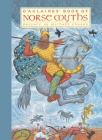
In our household, while we loved the Greek myths, we came back many times to
D'Aulaires' Book of Norse Myths
. They gave the Norse myths the same written-for-kids but not dumbed-down treatment.  I like the Norse gods better: they're not as pouty, although they're certainly plenty quarrelsome.  And they were ultimately mortal: killed off when Christianity arrived. The central caring-but-tragic relationship between Odin and the trickster Loki is wonderful.  And many of the stories have a great sense of humor.  Consider the story of Skade, a maiden from the rival world of the Jotun.  The Norse gods have killed her father and she demands that they pay a fine.  They offer her a Norse god as a husband, thus elevating her to goddess status.  She agrees, on the condition that they must first make her laugh.  Loki ties himself to a billy goat, eventually resulting in laughter.  Then they give her the pick of the gods, on the condition that she must choose by looking only at their legs -- which she's clearly giving much thought to in this illustration:
She ends up picking Njord, who loves the seashore, while she's a big skier and loves the mountains.  They spend nine days at the seashore, and another nine in the mountains, then agree to live separately.  "Thereafter he and Skade seldom saw each other, but in a friendly fashion they went together to all godly gatherings.  Skade stayed in her mountains and become the goddess of skiers."

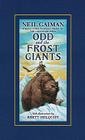
And while we're on the subject of the Norse crowd, I'm quite fond of a recent book by Neil Gaiman,
Odd and the Frost Giants
.  In it, a boy leaves his village on a fjord and in the wild meets a bear, a fox and an eagle.  While they believe he's asleep, the animals speak with each other, but when Odd says he's been listening, they deny (in words) that they can speak.  It turns out that they're Thor, Loki and Odin, enchanted into their current forms and kicked out of Asgard, the home of the gods, by the Frost Giants.  The three spend much of their time bickering amusingly, while Odd turns out to be the only one with any common sense.  He ultimately acts sensibly and bravely and restores the gods to their home.  It's quite short, a good early chapter book  Gives one a taste for the Norse stories.

Love,

Deborah