In which Annie (high school teacher, mother of two young girls and a younger boy) and her aunt Deborah (children's bookseller, mother of two young women in their 20s) discuss children's books and come up with annotated lists.

Showing posts with label superheroes. Show all posts

Monday, July 11, 2016

How children's books help me talk to my kids about race and gender

Dear Aunt Debbie,

Here we are a month later, with three more horrific shootings to process, with more grief and more anger and more unanswerable questions. Along with a number of my friends and acquaintances, I'm searching for ways to talk with my children about current events, ways to be honest about the complexities of race and politics in America on a kid-appropriate level.

On my local neighborhood listserve, someone suggested the websites Raising Race Conscious Children and  ParentsTogether, both of which have some excellent essays about how to talk to children of all races about race, racism, and violence.

For me, as with so many other major issues in life, I come at this conversation with my children through the books we read. Many of these are books I've brought into the house: I know their content, and when a complex issue comes up as we're reading together -- racist descriptions in Dr. Dolittle, for example -- I'm prepared to talk about it.

But increasingly, as we visit the library two or three times a week, all three of my kids are picking up and bringing home books that they read first -- sometimes entirely -- on their own. I try to pay attention without leaping in to censor their reading, even when I'm not crazy about the material they choose, and engage them in conversation about aspects of books that trouble me. As the library books pile up, however, some things slip through the cracks.

Isabel has recently been reading the Asterix comics, which I remember my brother Michael reading when we were kids, but which I've never read myself. Eleanor reads them too, because she reads every book that anyone brings into the house.

Two nights ago, Jeff picked up one of the books lying on our coffee table and came over to me, disturbed. "Have you looked at the depiction of black people in these books?" I hadn't. I did. It's horrendous.

The black characters in Asterix (almost all of them slaves seen serving white Romans) are old-school stereotypically racist, with dark skin, round white eyes, and swollen red lips. Here's an enlargement of an image on the first page of Asterix the Gladiator:


Oy.

So yesterday morning, over breakfast, we had a conversation. 

I started by telling the girls that Jeff and I had been looking at the Asterix book the night before, and that something we saw in it was really disturbing to us. We pulled it out to take a look together, and do a little kid-friendly image analysis. 

I asked them, "What do you notice about how the black people in this book are drawn?" Then I let them talk and observe the skin, the lips, the expressions, trying to allow them the space to notice things themselves rather than jumping in to tell them what I wanted them to think. (It took me several years of teaching high school to learn how well this works.)

After they had identified a number of physical features, I asked, "Do these people look like real black people?" 
"No." 
"How does this kind of drawing make them look?"
"They look like they're stupid."

Then I brought up the idea of stereotypes, which Jeff and I have talked about with the kids before: stereotypes are assumptions that you make about a whole group of people, which can damage people in that group by limiting what they are allowed to do and sometimes even hurting them in physical ways. A favorite entry point example in our house: many people used to believe that girls couldn't play sports as well as boys -- in fact, some people still think this. Because of that stereotype, girls who wanted to play sports were denied the opportunity. Bring this up, and both of my girls become immediately indignant. 

I explained that the way the black characters in Asterix are drawn is an example of an old, racist stereotype that some white people have had about black people. (You and I touched on this particular stereotype a few years ago in two posts about Little Black Sambo and its many contemporary retellings.)

Sometimes, I said, stereotypes like this can get into your head without you realizing it, because of what you read or see or hear around you. Subconsciously, those stereotypes start to change the way you think about a group of people.

We pulled out Will's 5-Minute Batman Stories to look for more stereotypes we might not have noticed. Here's a page of villains from the story "Harley Quinn's Perfect Prank": 


I asked, "What do you notice about the way Poison Ivy, Harley Quinn, and Catwoman are drawn?"
"They're all wearing lipstick and eyeshadow."
"That's true. Think about the way their whole bodies look, too. I'm a woman -- does my body look like this?" I held the book up next to me. My daughters cracked up. (Answer: No.)
Eleanor said, "It looks like they're wearing corsets. They have tiny waists and really big..." She dissolved into giggles.
"You're absolutely right, they all have really big breasts. So when you read this book and look at the pictures, what do you think you might start to think about what a beautiful woman looks like?"
More giggling. "They have really big breasts!"

[Side note: The graphic novel series Princeless, which stars a strong, independent, black princess, does a terrific job of pointing out and poking fun at both racial and gender stereotypes in comic books. The scene where Princess Adrienne examines and comments on the outfits worn by Wonder Woman, Xena, and Red Sonja, is spot-on and extremely funny.]

Next, we looked at the page at the beginning of the book that lists the cast of characters, heroes and villains alike: 


"What do you notice about who's in this book?"
"It's mostly men. The bad guys and the good guys."
"What else?"
"There's almost no black people at all. It's mostly white men."
Will pointed out: "And Killer Croc. Because he's green."

Later, when the kids told Jeff about our conversation (which they remembered in great detail several hours later), he added the question: "Who do you think is probably writing and illustrating these stories?" It didn't take the kids long to figure that one out, either.

Finally, I made the connection to current events. We talked about the shootings over the last week, and the fact that a lot of people are angry and upset over the shootings of black people by police officers, in situations where it wasn't necessary. Eleanor (very upset and indignant about racism of any kind) asked why police officers would do that. I said that part of it comes from fear, and that I think part of that fear comes from the stereotypes and assumptions that white people have about black people as a group. And part of that fear comes from the images we see -- or don't see -- of black people in the books we read and the TV and movies we watch. That's why it's so important for us to look closely at and think about what we're reading, instead of just taking it in.

Then we closed the books and went to the playground. I pushed Will on the little kid swings, and Eleanor and Isabel got themselves some big kid swings and pumped really high all by themselves, and I thought about that as a metaphor because I'm an English teacher at heart, and everyone got a little wet in the sprinkler before it was time to go home for lunch. One more conversation to fold into our understanding of the world.

Love, Annie

Thursday, February 11, 2016

The categorizing mind

Dear Aunt Debbie,

There's a new kind of reader in our house.

I've always enjoyed the way that kids have their own reading personalities, their ways of approaching and engaging with books. Eleanor was ready for chapter book read-alouds far earlier than Isabel, and her love of a long, gripping narrative has continued well into her own independent reading years. Isabel has always responded intensely to visuals, and graphic novels have eased her transition from emerging reader to full-on independent reader. Will, it turns out, has a categorizing mind.

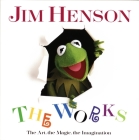
This first became apparent last spring when Eleanor was doing a 2nd grade nonfiction project about Jim Henson. We took a bunch of books out of the library (how much do I love the Brooklyn Public Library?), among them a nice big coffee table book about all of Henson's creative projects ever: Christopher Finch's Jim Henson --The Works: The Art, the Magic, the Imagination.

It's a pretty fabulous book, especially if you're interested in the Muppets at all: accounts of Henson's early life, his first commercial projects, the birth of Sesame Street and the Muppet Show, his later, weirder TV shows and movies. Lots of glossy pictures, including a four-page spread with thumbnails of the guest stars in every Muppet Show episode that ever aired. (Bob Hope! Lesley Ann Warren! Alice Cooper!)

Will became obsessed with this book. He was just over 2 years old, and would sit on the couch turning the pages over and over -- so much so that, after he ripped a couple and we taped them, we returned the book to the library and bought our own used copy. He called it "Gog Book" (for "Frog," a.k.a. Kermit). And as he turned the pages, Will was categorizing: memorizing names and faces, putting things in order in his mind.

He particularly loved the big Muppet monsters: Sweetums, Thog, the purple-bodied twins/triplets The Mutations. One double-page spread contains pictures of the cast of puppeteers, showing who played which characters, and Will would ask us to read all the names: Richard Hunt played Janice, Scooter, Beaker, and Wayne of Wayne and Wanda. "Who played Thog?" The book didn't say. "Look it up on your 'puter, Mommy." I looked it up. Turns out it was Jerry Nelson.

Probably three weeks later, Jeff was reading the Gog Book with Will, and got to that page. "Daddy, Jerry Nelson played Thog." Okay, though it doesn't say that in the book. "No! Jerry Nelson played Thog!" Total nerd recall.

While full-bodied Muppet monsters still hold a place in his heart, Will has lately moved on to a full-fledged superhero obsession. Again, there is so much categorizing going on: the names of superheroes, followed of course by the powers and weapons of each one. What does Batman carry in his utility belt, you ask? Why, among other things, Batarangs, Batcuffs, and Batrope, of course.

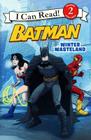
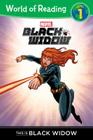
As I mentioned in my last post, we've been reading a ton of superhero early reader books, some better than others. Generally speaking, we've found the I Can Read! books featuring the DC superheroes (Batman, Superman, Wonder Woman) to be better written than the World of Reading books about the Marvel superheroes (the Avengers, Spiderman, X-Men). Not loads better, but enough that the language allows you to read aloud with a little dramatic flair.

Here's Donald Lemke writing Batman: Winter Wasteland:

When he arrived in Gotham City, he spotted his coldest enemy, Mr. Freeze.
The frozen felon fired icy blasts at nearby buildings.
"Stop right there!" shouted Batman.
The villain turned and smiled.
"Don't you mean freeze?" he asked.

Compare that to Clarissa Wong writing This is Black Widow:

She was an orphan.
She lived at the Red Room.
The Red Room was a secret camp.
It was an evil place.
The camp leaders trained her to be a spy.
They taught her to steal.
She knew the Red Room was bad.

Yup, that's the book I read aloud five times yesterday.

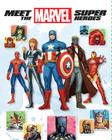
Your latest slam-dunk gift, however, gives me hope for the Marvel universe. A month ago, you gave us Will's current favorite book, Meet the Marvel Superheroes, by Chris "Doc" Wyatt. It's an illustrated character encyclopedia, listing more than 100 Marvel superheroes, from the best-known to some I'd never heard of (Squirrel Girl, anyone?). The lineup is more diverse than I feared it might be -- lots of women, and a decent if not huge number of superheroes of color (Ms. Marvel, a.k.a. Kamala Khan, is the daughter of Pakistani immigrants; Black Panther stars in a new series this year written by Ta-Nehesi Coates). None of the depictions of women are so sexualized as to make me cringe, though it is interesting to note how many of the female superheroes have powers that involve mind control. (Those crazy women -- they can make us do anything they want!)

We read this book all the time. Will has memorized names, relationships, weapons, powers. Each page contains handy thumbnail illustrations of the superheroes related to the one depicted on the page, which helps with the categorization.

I hesitate to be gender reductive here, but it does strike me that I've seen this kind of reading pattern -- learn all the facts about a particular universe, categorize them, repeat them -- more often with boys than with girls. But even as I write that, I think of the power of the superhero narrative: Will takes all of his knowledge and puts it into 24/7 roleplay, dressing up and casting all of us as superheroes around the dinner table, stopping our conversation to announce: "There's a new villain in Gotham City!"

So I'll take a step back from trying to categorize this type of reading, and go get ready to fight crime. You might not know it, but I'm Batwoman.

Love, Annie

Tuesday, January 12, 2016

New year, new spunky feminist princess

Dear Aunt Debbie,

Happy New Year!

It's been an intense and happy holiday season, filled on our end with lots and lots of good reading. As it's been a while, here's a quick snapshot of the reader profiles at my house these days:

Eleanor, in 3rd grade, tries very hard to read at every waking moment: at the breakfast table, brushing teeth, on the street walking home from the library. We've outlawed reading at dinner, but allow it during dessert; consequently, it can now take up to 25 minutes for her to eat a single cookie.

Her tastes run to big novels about mythology and magic: she's read and reread all of Rick Riordan, from Percy Jackson through his Egyptian series and the new foray into Norse mythology. For lighter fare, there are the Dork Diaries books (not my favorites, as you know), and lots and lots of Geronimo and Thea Stilton, the strange, translated-from-the-Italian series about talking mice with long hair and clothes.

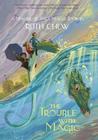
Isabel, in 1st grade, has become a full-fledged independent reader in the last several months. She went from early reader books leapfrogging up to the Critter Club series (early chapter books focusing on girls who love animals -- a clear fit), and just this past month I looked over and she was reading Ruth Chew -- real, full-on chapter books, with hardly any pictures -- and telling us all about the stories. I remember loving Ruth Chew as a kid. The Matter-of-Fact Magic books are set in 1970s Brooklyn, actually not far from where we live now; in each, children encounter small, imaginative bits of magic that change their lives a little bit, but aren't scary or terribly permanent. The fate of the world is never at stake, and practical details pop up regularly: what do you do when you use a wizard's magic umbrella to transform your clothes into bathing suits, then lose the power to change them back, and no longer have the front-door key to your house? (The Trouble With Magic.)


Will, closing in on age 3, picks up books almost as often as his sisters. He's currently obsessed with superheroes and Yoda, so we're reading aloud a lot of I Can Read! books from the library with titles like Batman: Winter Wasteland. He is building up a baseline of specific character knowledge that I'm sure will come in handy later. Meanwhile, we all know much more about the specific powers of a wide variety of superheroes, in both the DC and Marvel universes.

Despite their different interests and ages, graphic novels remain a major go-to for all three kids, a kind of common denominator. When one picks out a new graphic novel of any kind, from Avatar: the Last Airbender to My Little Pony, they all vie for a turn to read it.

We stumbled across our newest favorite graphic novel series at the library, and the girls kept the first three books in such solid rotation that it was clear we needed to own them.

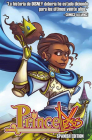
Princeless is centered around the adventures of Princess Adrienne Ashe, who begins the series at age 16 having been trapped in a tower -- like her 5 older sisters before her -- by her parents, in the hope that a dashing prince will come to save her. Unlike her sisters, Adrienne makes friends with the dragon guarding her, puts on the armor of one of the hapless princes who's been eaten by that dragon, and busts out of her own tower. Her goal? To save herself, and then to head out and save her sisters.

There is so much to like here. First, Adrienne and the entire royal family (King Ashe, Queen Ashe, 7 princesses and one prince) are black. This is obvious from the illustrations, of course, but it's also front and center in the text: the first three pages of the first issue show Queen Ashe reading Adrienne a prince-saves-the-blonde-princess-in-a-tower story, and Adrienne angrily critiquing it while her mother struggles to comb her hair.

Adrienne is confident, strong, and smart, not to mention physically capable -- she teaches herself swordfighting, and almost immediately does pretty decently in combat with her father's soldiers (they think she's a knight who has killed the Princess Adrienne). She's not invincible -- there's a good amount of slapstick with Adrienne falling from balconies and being tangled in her ill-fitting armor -- but she's resilient.

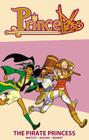
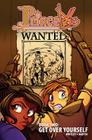
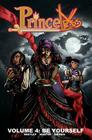
Almost all of the supporting characters in the series are female. In book 1 (Save Yourself), Adrienne meets and befriends Bedelia, the teenage daughter of a dwarf blacksmith who, it turns out, has been doing all the smithing for years while her father goes to the bar. Book 2 (Get Over Yourself) brings in Adrienne's sister Angelica, the most beautiful of the princesses, who has positioned herself as the muse for a town full of artists. In Book 3 (The Pirate Princess), Adrienne and Bedelia rescue, fight, and team up with Raven Xingtao, the daughter of a pirate king. (Raven is getting her own spin-off series this month.) Book 4 (Be Yourself) focuses on the quest to save Adrienne's sister Angoisse, who is shut up in a dark swamp castle with a gorgeous but creepy vampire boyfriend. There are also Kira, a werewolf being groomed to take over her father's position of wolf pack leader; Delores Grunkmore, a dauntless goblin guide; Queen Ashe, who disappears mysteriously partway through the series (Eleanor and Isabel and I have a theory about that); and of course Sparky, Adrienne's dragon.

Contrast this with the lineup in the (otherwise wonderful) Zita the Spacegirl, in which the rag-tag bunch of creatures and robots Zita gathers on her journey are entirely male, in classic Wizard of Oz fashion.

Characters throughout the series are diverse, both racially (so nice to see such a variety of skin colors in a comic book) and in ways that play with stereotypes. I say "play with" rather than "defy" because author Jeremy Whitley's tone is often knowing -- he's consciously poking fun at and retooling narratives we've seen before, sometimes in ways that feel a little heavy-handed to me, if not to my kids. I think of Adrienne's twin brother, Devin: a sensitive guy, an artist and designer, written in direct opposition to the hyper-masculine King Ashe, who so far has no redeeming qualities.

But I felt that way about the stereotypical aspects of both Princess Angelica (the beautiful one) and Princess Angoisse (the goth one) too, and Whitley managed to find endings which allowed each princess to find her own way of being empowered. I'm willing to reserve judgment as the series goes on.

And some of the wink-wink-nudge-nudge moments are Whitley's funniest. When Adrienne first meets Bedelia in Book 1 and expresses an interest in getting some armor that fits her, Bedelia ushers her into the "Women Warriors Collection":


That would be, from left to right, the costumes worn by Wonder Woman, Red Sonja, and Xena, Warrior Princess. Adrienne and Bedelia's commentary:


[Side note: I mentioned Will's current superhero obsession, which, among other things, is bringing home to us just how sexy and sexist the depiction of female superheroes is. Here's what happens when your son asks you to google pictures of Poison Ivy -- and this is with Safe Search on! We have a lot of conversations about how Wonder Woman must be really cold.]

After walking us through the implications:


Adrienne requests that Bedelia make her some real armor. Which she does:


In my googling, I found a nice interview with Whitley about his inspirations for the Princeless series. He's white, but his wife and daughter are black, and he saw a huge gap in the kinds of comic books he'd be comfortable giving her to read:

"Good heroines are few and far between. When you look for ones that are leading books, it narrows the scope more. When you look for one that is appropriate for kids, it gets much narrower. When you talk about one with a lead female of color, the number drops to nearly zero (they exist, they are just very difficult to find). My daughter is black and while I encourage her to look for role models of all colors, girls need to be able to see girls that are like themselves in media. They need it even more when it comes to seeing them portrayed with strength."

Here's hoping these books keep selling like hotcakes. We'll certainly be buying them.

Love, Annie

P.S. What did you think of yesterday's Newbery and Caldecott winners? I was thrilled to see Roller Girl named a Newbery Honor Book!