In which Annie (high school teacher, mother of two young girls and a younger boy) and her aunt Deborah (children's bookseller, mother of two young women in their 20s) discuss children's books and come up with annotated lists.

Monday, February 14, 2011

"I only like princesses."

Dear Aunt Debbie,

The Fairy's Return is next on our list of chapter books after The Voyages of Doctor Dolittle.  Eleanor really likes the cover, natch.  I'm glad to know that it's a little post-modern (though what else would I expect from the woman who bought me the anthology Stories for Free Children?).  In the last month or so, Eleanor has been hitting the princess obsession hard, and it's driving me a little crazy.

We've written before (here and here, among other places) about the inescapable allure of princess stories, and the ways in which the Disney machine has commodified what might have started as a natural interest into a full-scale kid lifestyle.  Eleanor's 4th birthday brought a host of new princess products into our house (mostly courtesy of her friends, who got her what she asked for), and with them and the post-birthday letdown has come a period of trying behavior.  At preschool, she told one of her teachers that she was bored with Circle Time and only wanted "to talk about princesses."  Coming home last week, she was asked by a neighbor if she liked cats: "No, I only like princesses."  It doesn't seem to matter to her that this isn't objectively true: the Doctor Dolittle she's so heavily into right now is about the farthest thing possible from a princess story, and over the weekend she had a great time at the Brooklyn Children's Museum watching sea anemones, then painted a pretty awesome underwater scene featuring a jellyfish.  But there's something about the marketing of Disney Princess that has infiltrated the way she conceptualizes what she is, and should be, interested in.
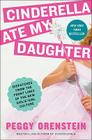
In short, I am the target audience for Peggy Orenstein's new book, Cinderella Ate My Daughter.  I bought it this weekend at our local independent bookstore after reading Eleanor yet another godawful flat story from a Disney Princess Golden Book.  (Our bargain is that I'll read them to her in the store or the library, but we won't take them home because they're badly written.)  I'm only a couple of chapters in, but let me tell you, Orenstein speaks to my soul.  She's recycling some of the material that has appeared in the NYT magazine over the last decade (I linked to my favorite of her pieces here), and has expanded and added new iterations of the same basic idea: Yes, your experience as a parent that girls' choices of what to play with and how to play are being steadily pinkened and narrowed is correct.  This is what's happening, and it may seem fairly innocent, but it's actually kind of scary.  I am filled with righteous outrage!

And so again, what do I do about it?

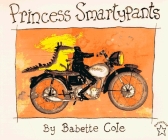
My mother-in-law gave Eleanor a new alternate-princess book for her birthday, and she's been enjoying it.  Babette Cole's Princess Smartypants is written in the mode of The Paper Bag Princess.   In this story, Princess Smartypants wants to hang out with her monster pets and stay single ("She enjoyed being a Ms.") rather than marry any of her many suitors.  She sets them all impossible tasks, then watches happily as they fail.  Then Prince Swashbuckle shows up.  He seems a good match for her -- he too can roller-disco till dawn -- but when he passes all her tests, she turns him into a toad with a magic kiss and gets to live happily alone again. 

On the one hand, I like the humor here, and the reversal of expectations, and Princess Smartypants's overalls and monsters.  On the other, her name bugs me: "Smartypants," in my experience, isn't a positive thing to be called.  (Did I mention that several of the princess-y things Eleanor got for her birthday were made by a brand called "Klutz"?)  Also, she's kind of a jerk to Prince Swashbuckle, who looks a little smarmy but just does what she's asked him to do. 

Reading this book, among all the others, makes me wonder what I'm really looking for.  Do I want a better model of princess, or just less princess in general?  Am I overreacting to what will turn out to be a nice little pre-feminist stage?  Thank goodness for Isabel's taste in books and products, which has lately expanded from dog ("Aaa-ooooo!") to monkey ("Mun-kee!").  Animals feel like such a relief.

Love, Annie

Sunday, February 13, 2011

The Fairy's Mistake

Dear Annie,


Ah, Dr. Dolittle.  So delightful.  I have fond memories of my father, your Grandpa Frank, reading the books to me.  And it was such a pleasure to read them to our girls.  One of my favorite characters was always the Pushmi-Pullyu, a gazelle-unicorn cross with two heads, one on either end of its body.  It argued with itself a fair amount.

I realized, reading the books with Lizzie and Mona, that Dr. Dolittle was the first animal rights activist.  In one of the later books he liberates the animals from a circus in the dead of night.  There's an overland coach ride  to get the seals to the ocean and freedom.

I just re-read a story I gave Eleanor recently: "The Fairy's Mistake," by Gail Carson Levine.  It's part of a collection of six short stories:
The Fairy's Return
.  They're post-modern fairy tales by the author of Ella Enchanted (the subject of a recent guest blog).  Levine takes a classic fairy tale -- one in which a disguised fairy rewards a generous sister and punishes the selfish one -- and asks what would really happen if you had jewels coming out of your mouth and your sister spoke bugs and snakes.

Ethelinda slurped the water.  "Thank you.  Your kindness merits a reward.  From now --"
"You don't have..." Rosella stopped.  Something funny was happening in her mouth.  Had she lost a tooth?  There was something hard under her tongue.  And something hard in her cheek.  "Excuse me."  Now there was something in her other cheek.  She spat delicately into her hand.
They weren't teeth.  She was holding a diamond and two opals.
"There, dearie."  Ethelinda smiled.  "Isn't that nice?"

Of course it turns out not to be nice.  A passing prince realizes that the heretofore impoverished Rosella is a source of constant riches and proposes to her on the spot.  She causes small riots of everyone around her who pounce on every jewel she utters.  The prince shuts her in a huge library with empty chests and tells her to read aloud until they're full.  In the meantime, the evil sister is demanding major payment from all the local shops to keep her from entering their stores and distributing creepy creatures everywhere.  It takes the slightly clueless fairy a little while to realize what's going on, then to find the solution. 

It's a quietly funny read. I'm curious what Eleanor will think of it.  Definitely not Disney-esque, although there are poofy dresses.

Love,

Deborah

Friday, February 11, 2011

The perfection of Doctor Dolittle

Dear Aunt Debbie,

I was so sorry to hear about the death of Bob's mom.  I hope you are all doing okay.  What a week for us to be discussing books about death!

Tonight I'm going to shift gears to bring up the newest obsession in our house, and an old, old favorite of mine: the Doctor Dolittle books, by Hugh Lofting.  My father read me the entire series when I was about 4 years old, and the books are among my earliest memories of being read to. While I retained the sense of loving them deeply, I had forgotten most of the stories -- unlike the Chronicles of Narnia, I never returned to Doctor Dolittle on my own as a reader.  I had a feeling that this would be the right time for Eleanor to hear them, and my parents gave her their wonderful old copies of four Doctor Dolittle books for her birthday a couple of weeks ago.  They are a perfect fit.  First thing in the morning and last thing before bed, Eleanor asks for chapters.  In less than a week, we've finished the  first book and are a third of the way into the second.


The first book, The Story of Doctor Dolittle, introduces John Dolittle, M.D., a doctor and naturalist who likes animals more than people.  With the help of Polynesia, a most excellent gray African parrot, he learns to speak a variety of animal languages, and becomes an animal doctor renowned throughout the world (that is, the world of animals).  He doesn't care about money, and his animals (Dab-Dab the duck, Chee-Chee the monkey, and Jip the dog, among others) band together to take care of him and his house, until he's called away to Africa to cure an epidemic among the monkeys.

The Voyages of Doctor Dolittle is narrated by Tommy Stubbins, a nine-year-old boy who becomes Doctor Dolittle's assistant.  It is a longer book, and probably the best of the series; in it, there are multiple voyages as well as mysteries closer to home, in the fictional Puddleby-on-the-Marsh.  All the animal characters are back, and the impression of the good doctor, a gentle, inquisitive man, is highlighted by Tommy's perceptions of him.

There is so much to love in Lofting's writing.  The language is clear but not simplistic; the descriptions of nature and animals are strong.  There is no magic involved in Doctor Dolittle, and then Tommy's, ability to understand animals: it's all about close observation and understanding that animals communicate in different ways.  The virtues extolled: curiosity, noticing things, patience and practice, caring for others no matter their species. There is warmth and humor and people named things like "Matthew Mugg, the Cat's-Meat man."  As a parent of a just-one-more-chapter kind of child, I was also happy to find that the chapters are super-short; it's never hard to find a place to stop when you have to get ready to go to school, or to brush teeth before bed.

The caveat to mention about The Story of Doctor Dolittle has to do with the depiction of the tribe Doctor Dolittle encounters in Africa, the Jolliginkis.  Descriptions of their king and his son, Prince Bumpo, in the original edition are problematically old-fashioned-racist in places.  When my father read me the original, he says he just changed the language as it needed to be changed, and left some parts out.  The copy I read to Eleanor, which I have linked to above, is a Bowdlerized version -- the African characters' roles have been cut down significantly, and all the racist parts are gone.  It worked for us this time through.  Such an odd problem to have with Lofting, when the moral of all the stories is about complete acceptance of difference -- only connect!

In all other respects, these are perfect books for a four-year-old.  We are very happy.

Love, Annie

Wednesday, February 9, 2011

On Mourning

Dear Annie,

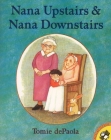
I've just reread Nana Upstairs and Nana Downstairs by Tomie de Paola. It's so lovely: most of it is about visiting his grandmother and great-grandmother. I can see why it stayed in your memory all this time. When four year-old Tom sees that his grandmother ties her 94 year-old mother into a chair so she won't fall out, he asks to be tied into his chair too. There's a picture of them sitting side by side, tied in, both smiling. And there's a sequence of Tom watching both women fix their long white hair which brought back to me memories of Aunt Martha (your great-aunt) and her crown of white braids.  After he learns Nana Upstairs has died, Tom runs to her room, only to find it empty.
Tommy began to cry.
"Won' t she ever come back?" he asked.
"No, dear," Mother said softly.  "Except in your memory.  She will come back in your memory whenever you think about her."
I wanted to move the discussion today to books that are written specifically to help children understand the death of someone they love.  Our family is grieving for someone we love this week: Bob's mother, my children's grandma, died on Sunday.  She cared about books, and with her husband raised an amazing reader, and it seems fitting to talk about mourning.

Nana is a book one can read as a story -- as you did as a child -- but which can be useful talking about someone who's died.  After both Nana Upstairs, and years later Nana Downstairs die, Tom sees a shooting star.  "Perhaps that was a kiss from Nana Upstairs," Mother tells the young Tom.  The book gives a hint of something Bigger out there, without spelling it out.

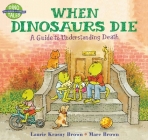
As with sex, Laurie Krasny Brown and Marc Brown have written a Very Thorough book on death:
When Dinosaurs Die: A Guide to Understanding Death
. It defines alive and dead and gives lots of examples of ways to die (after long  illness, sudden illness, accidents, as a baby, in war, "poverty, prejudice and drug abuse," and suicide).  There's a lot about missing people, about overwhelming feelings, about funerals (illustrated with one for a pet).  There are many different answers to "What Comes After Death?"  It feels like it can be just too much information.  But it does hit a lot of points.

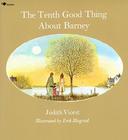
I think we've both established at some point that we're not particularly religious.  I'm fond of the treatment of heaven in Judith Viorst's
The Tenth Good Thing About Barney
. This one is about the death of a cat, and it's full of Viorst's wonderful kid-intensity. After Barney's backyard funeral, the narrator and his friend talk:
Annie said Barney was in heaven with lots of cats and angels, 
drinking cream and eating cans of tuna
I said Barney was in the ground.

Heaven said Annie, heaven.  So there!  The ground, I told her, the ground.  You don't know anything.

My father came in from the yard and took a cookie.
Big-mouthed Annie said heaven again.  I said ground.
Tell her who's right, I asked Father.  She doesn't know anything.

Maybe Barney's in heaven, my father began.  Aha, said Annie, and stuck her tongue out at me.

And maybe, said my father, Barney isn't.  What did I tell you, I said, and yanked Annie's braid.

Father made me let go.
We don't know too much about heaven, he told Annie.
We can't be absolutely sure that it's there.

But if it is there, said Annie in her absolutely sure voice,
it's bound to have room for Barney and tuna and cream.
She finished another cookie and went back home.
The beauty of Barney is that the narrator makes a list of ten good things about the departed cat.  It's an exercise people sometimes do with grieving kids.

There are other books with groups of people (or animals standing in for people) reminiscing about special moments with the person who's no longer there.  They're stories, presented as a kind of model for mourning.  I'm curious if any of our readers have had satisfactory first-hand experience with a book for their kids to help process dying.

Love,

Deborah

Friday, February 4, 2011

Death in picture books and chapter books

Dear Aunt Debbie,

In answer to KPK's comment of a few days ago, I've been trying to think of books which address the issue of death for younger readers.  The only picture book of this kind I remember from my own childhood is another by Tomie dePaola (who is starting to seem a little morbid): Nana Upstairs and Nana Downstairs.  Nana downstairs is 4-year-old Tommy's grandmother, and Nana Upstairs is her mother, and in the book, Nana Upstairs dies.  I haven't read it in a long while, but I remember it being sweet and sad.

Patricia Polacco would also be a good author to check out on this subject -- in many of her books, while death is not the main subject at hand, she takes her adult-role-model main characters all the way to death on the last page.  This is true in Chicken Sunday and  In Our Mothers' House, and The Keeping Quilt has death threaded through it, along with births and marriages.  I've written more about these particular books here.

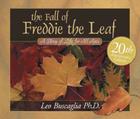
KPK mentioned The Fall of Freddie the Leaf, which I've never read, but in a conversation on this topic today, my friend Emily cited it as one of the main books about death in her childhood.  She says it's a lovely, gentle story -- Freddie is a leaf, and he grows and then falls and dies, and becomes part of the earth and helps other things grow.

The books I read as a kid which made me think most deeply about death are all chapter books, only one of which would be appropriate to read to fairly young kids.

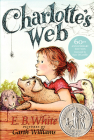
The first is actually referenced in your previous post as one of the books Doug reads to the kids he babysits (what a wonderful, reference-filled scene!): E.B. White's Charlotte's Web.  I still remember my father reading me the scene where Charlotte dies; I still remember sobbing.  Such a great book, and such a bittersweet ending -- all those baby spiders taking off and leaving Wilbur alone, but the promise of the one who stays, the generations to come.  That's one we should break out fairly soon, I think.

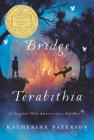
The other two both have protagonists who are about ten years old, and I think that's probably the right age to read them: Bridge to Terabithia, by Katherine Paterson, and Tuck Everlasting, by Natalie Babbitt.  I know I read both of them on my own (and then re-read, and re-read them, sobbing every time).  Bridge to Terabithia is the story of the friendship between Jess Aaron, a fifth-grade boy, and a neighbor girl named Leslie.  They create an imaginative world together in the woods near their houses (Terabithia, of course), and it's intense and wonderful, and then one morning while Jess is away -- I think at an art museum with his teacher -- Leslie tries to go to Terabithia in bad weather, has an accident, and dies.  There is so much in the book about friendship and guilt and loss; it feels horrible and preventable but altogether real.  I get choked up just writing about it.  I heard Paterson once on NPR talking about how she wrote the book after her son's best friend, an eight-year-old girl, was killed by lightning.  The book has that feel of truth to it -- she's trying to make sense of absolute tragedy.

In Tuck Everlasting, a ten-year-old girl named Winnie Foster meets the Tuck family, including one very attractive son a little older than she is.  She learns fairly quickly that he's actually a lot older -- he and his family have drunk from a spring of immortality.  Winnie is offered the chance to drink from the spring herself, and has to decide whether or not she wants eternal life and eternal youth.  I suppose with all the vampire fiction around these days, there are other places kids are puzzling over the pluses and minuses of eternal life, but for me, this was the first time I'd really pondered it.  It's hard to understand at age ten that people might want to grow old and even to die, when the time comes.  I suppose it's hard to understand on some level at any age.

Love, Annie

Thursday, February 3, 2011

Yes, but

Dear Annie,

I'm so glad you and I have the same take on Ladybug girl.  One wants it to be better because the illustrations are so engaging and she has a slightly tough feel to her.  And it's not, but it's still okay.  Ladybug Girl and Bumblebee Boy is my favorite too.  Books like that, which have a message but still have a bit of personality, are why the world doesn't need the Berenstain Bears, to get back to an old thread.

I'm going to defer the discussion of death books -- must go ransack my shelves for some good ones first.

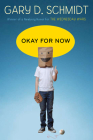
I'm in the thick of meetings with sales reps to order books for the summer right now.  And I've just read the first Seriously Good (Although Flawed) book of the year.  I'm putting it on my might-win-an-award list -- although we know how bad my record is on those predictions.  It's
Okay for Now
by Gary Schmidt. It's due out in mid-April.  (Note: spoilers throughout the following paragraphs.)  Schmidt's a lovely writer: this book is full of very special individuals. There are a few old chestnuts among the characters, but the narrator, Doug Swieteck, is wonderfully done.  The book follows him through his eighth grade year: it's 1968 and his family moves to a small town in upstate New York.  His older brother is an aspiring hood who steals his stuff and beats him up.  His father is abusive to the entire family and the whole town is suspicious of the brothers.  Two adults help Doug discover some of the joys of the world: a science teacher who figures out that he can't really read, and a librarian who introduces him to the prints of John James Audubon.

Underneath the glass was this book.  A huge book.  A huge, huge book.  Its pages were longer than a good-size baseball bat.  I'm not lying.  And on the whole page, there was only one picture.  Of a bird.
     I couldn't take my eyes off it.
     He was all alone, and he looked like he was falling out of the sky and into this cold green sea.  His wings were back, his tail feathers were back, and his neck was pulled around as if he were trying to turn but couldn't.  His eye was round and bright and afraid, and his beak was open a little bit, probably because he was trying to suck in some air before he crashed into the water.  The sky around him was dark, like the air was too heavy to fly in.
     This bird was falling and there wasn't a single thing in the world that cared at all.
     It was the most terrifying picture I had ever seen.
     The most beautiful.

He starts drawing copies of the Audubon prints.  The nasty brother rips one up once, which he takes in stride because he's used to being pushed around and abused.  So when one discovers the deep hostility of his father's abuse -- and Doug's emotional scars -- it really hits.

There are funny and touching moments too.  He learns to read and then tries out his skills on the kids he babysits for.  I figured you'd appreciate this line, Annie:
And it wasn't like you could read to all of them at once, or even three of them, or two.  It was five kids, five books.
     This takes a long time.  I'm not lying.
     But I didn't care, because I figured it all out, thanks to Miss Cowper's County Literacy Unit.
     I figured out Sam-I-Am for Phronsie.
     I figured out Circus McGurkus for Davie.
     I figured out Jack, Kack, Lack, Mack, Nack, Ouack, Pack, and Quack for Joel.
     I figured out Andy and the thorn in the lion's paw for Polly.
     And I even figured out why Wilbur is one terrific pig for Ben.
     You know what this feels like, to figure all this out?
     Do you really know what it feels like?
Okay, so now I'm coming to the problematic part: the ending.  There are a lot of bad things that happen in among the good things.  But almost all of it gets resolved.  People change.  Those who can't communicate learn to listen to each other.  Young romance stays true.  The town's suspicions are dispelled.  Parents reconcile.  There's even the implication that the horrendous dad has turned a new leaf. 

I want to say, Yes, but...

This is a book aimed at 10 to 14 year-olds.  We don't need gritty realism throughout.  There's a lot to think about in this book, and the bad things people do to each other -- especially the bad stuff adults do to kids -- is harsh.  But it's well written:  one can imagine inhabiting that life.  But I just don't believe a father who's been uncommunicative and violent to his entire family is all of a sudden going to realize that kind of behavior is a bad thing and stop.  So how do we present the world to a ten year-old?  Look, there's bad stuff, some parents hit their kids.  Do we end on a more realistic but depressing note, saying that kind of parent isn't going to stop?  Or do we hand out a little hope with the bad news?  Schmidt opted for the hope.  I wish he'd found a more nuanced way to deal with it, but it's still a really good book.

Love,

Deborah

Tuesday, February 1, 2011

Independent girls and their dogs

Dear Aunt Debbie,

Thank you for the birthday wishes (and the birthday box of books, which we're just getting into)! We had a lovely, celebratory weekend, and everyone was exhausted afterwards. Time does feel exceptionally strange in relation to parenthood. Eleanor's first six months felt about three years long, but then it all speeded up dramatically, and Isabel was walking and talking in no time at all. Now my girls are starting to develop a real sisterly relationship, both affectionate and competitive. One of the main areas of competition at the moment has to do with reading time. Jeff often works late, which means I put the girls to bed by myself. Bath time is no problem, and I can wrangle everyone into pajamas just fine, but then it's time for books, and there are very few that can please both my four-year-old and my 16-month-old at the same time. I often find myself reading a chapter book or long picture book to Eleanor with one hand while holding a board book for Isabel in the other, every now and then pausing in my reading to bark or moo.

Recently, we've found two books which hold both girls' interest at the same time. As you might guess from knowing my kids, they both involve spunky, independent girls and their dogs.

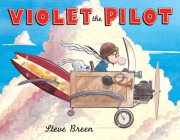
The first is Violet the Pilot, written and illustrated by Steve Breen.  It's the story of Violet Van Winkle, a mechanical genius who by the age of eight is building flying machines out of the spare parts she finds in her parents' junkyard.  She is, of course, a social outcast, misunderstood by her peers but loved and appreciated by her dog, Orville, who goes flying with her.  The time period appears to be the 1930's -- Violet has a picture of Amelia Earhart on one wall -- and the vibe is sweet and imaginative and old-fashioned.  The pages showing Violet's creations (the Tubbubbler, the Bicycoptor) are particularly fun.  In true underdog style, Violet's most ambitious flying machine, which she wants to take to the local air show, saves the day in an unexpected way.  Even Orville gets a medal.

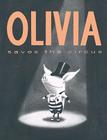
The other big hit is one of Ian Falconer's Olivia books: Olivia Saves the Circus.  I've said before that I like Olivia's Opposites better than the more narrative Olivia books, which are a little meandering, but this one is pretty great.  Olivia is asked to tell her class about what she did over her vacation, so she spins a tall tale about having to save the circus by performing all the acts herself after all the performers are felled by ear infections.  We were primed to like the illustrations, as several of them were co-opted for Olivia's Opposites; Olivia as a lion tamer (Quiet/Loud) is a particular favorite.  And of course, Olivia with her not-very-trained dogs brings the house down.  On her bedroom wall, Olivia has a fantastic poster of Eleanor Roosevelt, her arms raised in a joyful, explanatory way.

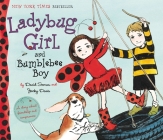
Now that I think about it, another book that seems to go with these two is the Ladybug Girl series -- Ladybug Girl and Bumblebee Boy is our favorite.  Ladybug Girl is the superhero identity of Lulu, who runs around with her dog Bingo and uses her imaginative powers to explore and enjoy the world around her.  Okay, so it's a little treacly/heavy-handed at times, but I like the emphasis on imaginative play, the fact that she's not wearing pink, and the way Ladybug Girl and Bumblebee Boy supports boys and girls playing together and addresses how to compromise on games and how to include other kids who want to play with you.  (We're just getting into the first experiences with conscious exclusion of friends; I'm on the lookout for books that touch on that horrible, complex issue.)

 I'm interested to hear your thoughts on books about dealing with the deaths of loved ones -- there's so much more to say on that issue.  But for now, I'm happy to leave it on a lighter note.

Love, Annie