In which Annie (high school teacher, mother of two young girls and a younger boy) and her aunt Deborah (children's bookseller, mother of two young women in their 20s) discuss children's books and come up with annotated lists.

Thursday, January 17, 2013

Placing my bets

Dear Annie,

A big thank you to Holly.  Her post offered two excellent elements in kids' literature: good adventure series for younger kids, and heroic rodents.  But the thing that made me happiest about the post is that I didn't know about either series.  I always love learning about new books from people who have been enjoying them.  Way to go, Holly and Ian.  It seems not that long ago that Ian was an exclusively-train guy.


In the world of bookselling, we're in the annual run-up to the American Library Association awards, coming on January 28.  The two biggest awards will be the Newbery and Caldecott medals -- for writing and illustration, respectively.

As I've pointed out before, in my 14 years of bookselling, I've had many favorite books, but I've never successfully predicted the winner of either medal.  Speculation about the awards is all over the place, as often happens.  This year, one book in each category has really stood out to me as the best .

I wrote about Wonder by R.J. Palacio a year ago, and I've been recommending it on almost a daily basis since then.  I've been hoping all year that it will win the Newbery.  Today, as she was leaving the toy store, a customer came over to the book section to tell me how much both she and her children had loved the book -- I'd sold it to her in the fall.  She says she's given it to other kids several times since then.  It's about kindness and cruelty and a fifth grader's struggle to be part of a school community when his severe facial deformities "make other ordinary kids run away screaming in playgrounds."  He's a great character.  And Palacio advocates for understanding and kindness without moralizing or sledgehammering her point.  It will make me very happy if this is the year I'm right.

And for the Caldecott, I'm hoping Sleep Like a Tiger, with words by Mary Logue and amazing illustrations by Pamela Zagarenski, gets the Caldecott for best illustration.  It was in your Christmas box o' books from me, so you know what I'm talking about.  An I-won't-go-to-sleep child is ever-so-gently cajoled into sleep by parents with infinite patience and imagination.  A while ago I had a lovely conversation with a customer who started talking about all the symbolism in the illustrations and how carefully they'd been planned out.

Given my track record, it could be that my advocacy of these books is the kiss of death.  We've been talking about doing a promo for the books on the store's Facebook page listing these two titles with the line, "The book lady's never predicted the awards right.  Will this be her year?"

I hope so.

Love,

Deborah

Monday, January 14, 2013

Guest blogger: Hedgehogs and Mice

Dear Aunt Debbie,

Helen Oxenbury's illustrations are so joyful!  We're Going on a Bear Hunt has inspired a number of happy moments of charging forward in our family, too.

As I charge on with my portfolios, here's our regular guest blogger Holly, mother of Eleanor's good friend Ian, on their current adventure reading:

I prefer to wait out a series -- tv, movie or book -- until it is complete and then have a wonderful binge. You would think I would have learned from the rollercoaster of emotions I feel toward George RR Martin not to dabble with unfinished series again, but we seem to have fallen for two children's series which have left us uncertain about the fates of several small mammals we've become attached to.

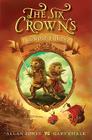
The first series is The Six Crowns by Allan Jones, illustrated by Gary Chalk. I was dubious at first because the verse that describes the titular six crowns is really lame: 
Six are they, the Badgers' crowns.
If power ye seek, they must be found.
Crystal, iron, and flaming fire --
Gather them, if ye desire.
Ice and wood and carven stone --
The power they give
Is yours
Alone.

However, once you work out the bizarre cosmology of the Sundered Lands (islands floating in air, Six Crowns of the Badgers of Power) it becomes a very fun, never a dull moment adventure quest led by a fabulously morally questionable but terrifically gutsy girl hedgehog, Esmeralda, and the reluctant homebody hero hedgehog, Trundle. Here's how she gets him what she has decided is his hero's sword:
Esmeralda came to a skidding halt, leaning back and hefting the cobblestone. She let it fly. There was a chime and clash of smashing glass, and almost before Trundle knew what was going on, she had reached in through the broken window of Honesty Skanks Gold Star Pawnshop and had grabbed hold of the sword. ... Esmeralda pushed the sword into Trundle's hands "I should have thought of this from the start! It would have saved us a lot of bother!"
There are really nasty pirates and lots of fighting and explosions. I wouldn't have thought that Ian would be able to take the scariness level but we zoomed through all three of the series that are available so far. Maybe when hedgehogs are in danger it's less of a deal breaker?
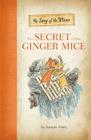
Our family fell for another furry hero in the book, The Song of the Winns: The Secret of the Ginger Mice by Frances Watts. The first book is all we can find, although it seems like the others may have come out in Australia.
The main characters are four young mice living in a world where due to a complex political backstory they find that they are sought by the Queen. The kids are allied with an underground resistance movement, FIG (Free and Independent Gerander) which would likely lead to some interesting discussions of real life politics in an older child than Ian.  What gripped him was the Huck Finn feel of the book -- two of the mice actually escape down a river on a raft. On the journey you feel you actually get to know each character and watch their relationships to each other develop. So often in kid's adventure books I find I have to differentiate the characters myself by giving one a funny voice. Even the villians are complex and interesting. This is a book I looked forward to reading every night and which Ian agreed with us upon. I look forward to Book Two and Three as well!
Holly

And love from me,

Annie

Friday, January 11, 2013

Who's going on a bear hunt?

Dear Annie,

Such a lovely list from your pal and guest blogger Faith.  I've got to find My Henderson Robot -- sounds delightful.

Tonight at dinner, which often includes Lizzie these days (one last exam next week and she's a college graduate!), she pulled a book from the dining room shelves and asked if I'd ever blogged about it.  Your pal Denise, guest blogger extraordinaire, mentioned it in a list of summertime books, but I'm going to return to it.

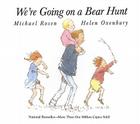
We're Going on a Bear Hunt

(words by Michael Rosen; pictures by Helen Oxenbury) just begs to be read aloud with great gusto.  I suspect you and Jeff have added a number of embellishments to it.  Michael Rosen provided the words, based on what he says was an old campfire song.  Five family members and a dog set out on an expedition, encountering a series of obstacles along the way.
We're going on a bear hunt.
We're going to catch a big one.
What a beautiful day!
We're not scared.
Oh-oh! Grass!
Long, wavy grass.
We can't go over it.
We can't go under it.
Oh, no!
We've got to go through it!
It's all wonderfully rhythmic and repetitive.  "I had this idea," Oxenbury has said, "of doing a black and white page when they're thinking and when they're saying, you know, about where they're going and what they're going to do. And then when they've decided, it burst into color."
 Subsequent obstacles include a river (Splash Splosh!), mud (Squelch Squerch!), a forest (Stumble Trip!), and a snowstorm (Hoooo Woooo!).

The arrival at a cave (Tiptoe!) leads to a startled confrontation with an actual bear, followed by a hasty retracing of steps:

The book ends with the family safe at home, in bed under the covers, and the bear wandering sadly on a beach.  I've been reading this book for a bit more than 20 years, and until tonight I'd always assumed the big guy is the dad.  I've been a little confused about the blonde in the white dress: probably the big sister, but could be the mom.  Here's Oxenbury on how she interpreted the words:
 What's wonderful about it is that nothing is described in a way that restricts you. Michael had said he envisioned it as a king and queen and jester setting off to hunt a bear, but I immediately saw it as a group of children. Everyone thinks the eldest one is the father; in fact he's the older brother. I modeled them on my own children. I didn't want adults around because they tend to stilt the imagination. The dog in the pictures was my own dog.
There's so much special in this book that it's hard to imagine it any other way.  King, queen and jester?  Can't see it.  But to change the dad to the big brother -- I'm still wrapping my mind around that one.

I remember Lizzie's first pre-school, where the kids acted out each color page of the quest.  Lizzie, it turns out, doesn't remember much from that experience, but had it read to her throughout childhood, and read it to kids she babysat.

Now, she says, it's part of her -- one of those literary references -- that comes up with friends when, say, they're going to the dining hall:

We're going to dinner
We're not scared.
Oh-oh! Stairs!
Can't go over them
Can't go under them.
Oh, no!
Have  to go down them.
Ba-bump ba-bump!
Ba-bump ba-bump!

Love,

Deborah

Wednesday, January 9, 2013

Guest blogger: Sleeper Hits of 2012

Dear Aunt Debbie,

I remember with great fondness Grandpa (your father) reading me The Light Princess -- is there something in it about having to cut her hair as well, or am I confusing it with another story?  In any case, sounds like the right time for us to rediscover it here.

On Monday, I collected my fabulous, time-consuming creative writing portfolios from my high school students, which means it's time for our winter round of guest bloggers!

The first is my friend Faith, a masterful blogger and writer in her own right over at The Pickle Patch and in Faith in Vermont, a regular column in the Addison County Independent, where she writes about raising her three girls in small-town Vermont after living in New York and the Bay Area.

Here she is:

Sleeper Hits of 2012: Five Books That Unexpectedly Delighted Our Family

Parents like to think that their children are exceptional – and of course, every child is exceptional, in their own special way. But I’ve been forced to admit that, when it comes to taste in reading material, my own children (three girls aged 22 months to five years) are decidedly, predictably…ordinary. On our weekly trips to the library, they head immediately for the rotating display of “Ready-to-Read” books; anything with Dora, Tinkerbell, or a Disney princess on the cover is a definite take-home. The “literary” books that I slip into our tote bag usually get a single polite listen. Even tried-and-true classics, like The Cat in the Hat, have bombed in our house.

I tend to believe, at least in the beginning stages, that any reading is good reading (within reason, of course; I draw the line at A Child’s Guide to Cooking Meth). I’m just grateful to have three children who love to read, and I’m DELIGHTED when my children love books with a literary nutritional value greater than, say, Fruit Loops. Sometimes, their choices surprise me, and these books I call “sleepers:” books in which nothing much happens, that are dated, or that have a moralizing message; books that I wouldn’t expect to attract children in an age of Fruit Loop literature. Herewith, five sleeper books that delighted our brood this year:


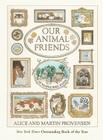
Our Animal Friends at Maple Hill Farm
by Alice and Martin Provensen. One of the best books you’ve never heard of – I certainly hadn’t heard of it, and it’s not in our local library. It was recommended by two mothers of older children, and is the most realistic and charming depiction of farm life I’ve ever read. Alice and Martin Provensen lived on Maple Hill Farm in upstate New York, and this book is a catalogue of the animals – both welcome and unwelcome – who also lived there. It’s a sleeper because it’s long (many animals live on a farm), and because it has no plot. But it’s filled with honest details – sometimes hilariously brutal – that entertain all the ages in our house. Like the understated conclusion to a page chronicling a day in the life of chickens: “A fox is carrying Big Shot [the rooster] away.” Or, following a description of some wonderful farm dogs: “Other dogs are foolish dogs who do useless, foolish things. These dogs aren’t around any more.” Or, my personal favorite, which I’ve sometimes quoted (unfortunately): “Field mice are on the pantry shelves. Why don’t they stay in the fields?”


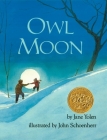
Owl Moon
, by Jane Yolen. A particular favorite of my 22-month-old, who has been known to demand ten readings in one sitting. I have no idea why, since, like Maple Hill Farm, it’s a book in which not much happens: a girl and her father walk through moonlit woods looking for owls, they see an owl, they go home. Add to that the kind of gorgeous, poetic language that would usually make my children’s eyes glaze over (“When you go owling you don’t need words or warm or anything but hope…. The kind of hope that flies on silent wings under a shining Owl Moon.”), and you have a book that seems designed to delight parents and bore children. But my toddler can’t get enough of it.


My Henderson Robot, by Matthew Swanson and Robbi Behr. You probably won’t find this book at your library or local bookstore; it’s available from Idiots’ Books, a small enterprise run by Matthew and Robbi (both college classmates of mine). Compared with the previous two books, My Henderson Robot is action-packed, but here’s the plot summary from Idiots’ Books: “In which a little girl makes a friend and does the boring, inconsequential, plot-deadening things that kids do. Not much happens.” My Henderson Robot is filled with the sort of quirky details that fill my own children’s heads, which is probably why they find it so relatable. Their favorite detail: “At night the Henderson Robot waits by my closet door to keep any monsters out. He keeps his blue eye open so I can know where he is. He shuts his red eye so it can get some rest.” I have a particular fondness for the closing lines: “We step outside. The sky is green. It is hours until lunch.” Depending on the day, this seems like a perfect description of the idyllic, endless days of childhood – or the existential despair I sometimes feel as a parent immediately following breakfast.


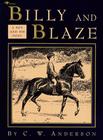
Billy and Blaze
,  by C. W. Anderson. Somehow, I am the mother of two horse-crazy girls. Horses played almost no role in my own childhood, or in my reading. Perhaps because we live in Vermont, where horses are a daily presence, my oldest daughters can’t get enough of them. The day came when they wanted to read only “horse books.” Since this isn’t my area of expertise, I turned to our wonderful children’s librarian, who said, “Well, it’s pretty dated, but try Billy and Blaze.” Thus began our relationship with Billy and his pony, Blaze. Billy and Blaze is the first of an eleven book series written between 1936 and 1970. They’re certainly dated, with illustrations in the Nancy Drew/Hardy Boys vein. We’ve read five Billy and Blaze books so far, and the stories are formulaic: Billy is riding his pony when they suddenly encounter some minor emergency (often involving a homeless dog). Boy and pony save the day with their intelligence and pluck, and Billy proclaims Blaze “the best pony in the world.” Despite their mid-century wholesome blandness and their male protagonist (usually a turn-off for my girls), the Billy and Blaze books have all merited repeat readings in our house.


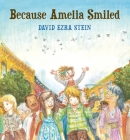
Because Amelia Smiled
, by David Ezra Stein. Published in 2012 and filled with action, Because Amelia Smiled is a sleeper because it’s the type of parent-pleasing book – beautiful message disguised as children’s literature – that I always want my children to love, but which they usually spurn. The premise is simple: “Because Amelia smiled, coming down the street…Mrs. Higgens smiled, too. She thought of her grandson, Lionel, in Mexico and baked some cookies to send him.” And so on, until Amelia’s smile has indirectly changed lives around the world.  Perhaps because the message – that doing small things with great joy can make a big difference – is somewhat subtle, hidden behind delightfully illustrated mini-narratives, this book didn’t set off my daughters’ “preachy” alarm. So for a change I get to read a book that chokes me up, and my audience is riveted.

I hope that one of these books – or another surprising treasure – delights your family in 2013. Feedback on your favorite sleepers welcome!

Faith

And love from me,

Annie


Sunday, January 6, 2013

Levity

Dear Annie,

What a spectacular book Little Nemo in Slumberland is.  And those pictures of Jeff and Isabel reading!  We need to incorporate them into our permanent collection here on the blog.  The sheer size of the book makes me think of lying on the floor reading the Sunday funnies.

Way back in November, you wrote about George MacDonald's The Princess and the Goblin.  I'm curious to know what happens if you give it another try with Eleanor.  I don't know the book, but have been a fan of MacDonald's
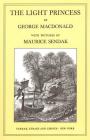
The Light Princess
since my own childhood.  Was it part of your growing up?  It's such a delightful combination of fairy tale and wordplay.  And in 1969 (a year before publication of In the Night Kitchen) Maurice Sendak did a wonderful series of illustrations for it -- including one with a naked baby which apparently triggered none of the controversy that came a year later.

After longing for a child, a king and queen finally have a baby.  They forget to invite the king's sister, Princess Makemnoit, to the christening.  So of course she shows up, muttering a charm at the font:
"Light of spirit, by my charms,
Light of body, every part,
Never weary human arms --
Only crush thy parents' heart!"
They all thought she had lost her wits, and was repeating some foolish nursery rhyme; but a shudder went through the whole of them notwithstanding.  The baby, on the contrary, began to laugh and crow; while the nurse gave a start and a smothered cry, for she thought she was struck with paralysis: she could not feel the baby in her arms.  But she clasped it tight and said nothing.
   The mischief was done.
The princess has no gravity, in both senses of the word.  When the baby is tossed into the air, she floats upward until air resistance slows her.  One summer day a breeze blows her out a window:
She's found in a rose bush. laughing cheerily.  She laughs at everything: floating above the servants' reach she's "like a baby-laughter-cloud in the air, exploding continuously."  She takes nothing seriously, making light of everything -- which makes her parents predictably sad.  To propel herself across the ground, she must hold onto rocks in each hand.
I may here remark that it was very amusing to see her run, if her mode of progression could properly be called running.  For first she would make a bound; then, having alighted, she would run a few steps, and make another bound.  Sometimes she would fancy she had reached the ground before she actually had, and her feet would go backwards and forwards, running upon nothing at all, like those of a chicken on its back.  Then she would laugh like the very spirit of fun; only in her laugh there was something missing.  What it was, I find myself unable to describe.  I think it was a certain tone, depending upon the possibility of sorrow -- morbidezza, perhaps.  She never smiled.
Eventually it is discovered that swimming gives her some gravity: she loves it and becomes a tad more serious when water is keeping her from floating away.  "Perhaps that was because a great pleasure spoils laughing." 

During one nighttime solitary swim, a prince wanders into the story and falls into the lake, where he falls in love with the lovely princess.  The evil witch gets wind of this and makes bad things happen to the swimming lake, and then the prince offers himself as a sacrifice to restore it.  His near-death -- and a good long cry on her part -- restore her gravity, and introduce her to love.  The wedding, which leads to happily ever after, has to be postponed, however, until she learns to walk, "for she could walk no more than a baby."

A satisfying and funny tale.

Love,

Deborah

Friday, January 4, 2013

Anxiety and wonder

Dear Aunt Debbie,

I vividly remember going to see Les Mis with you, Lizzie, and Mona when the girls were maybe 8 and 9, which would put me in my early 20s.  I hadn't read the book, and didn't know the musical well, but they talked at length about the casting choices (Cosette was way too sweet; Gavroche looked too well-fed).  I love the story of your girls and Les Mis.  You never can tell what's going to stick.

My big Christmas present for Jeff this year was a book which has become an instant hit in our house, especially with Isabel.  Little Nemo in Slumberland: So Many Splendid Sundays collects some of the best of Winsor McCay's groundbreaking comic strips, originally published between 1905 and 1910.

Each one is a newspaper-sized, full-page, full-color spread depicting Little Nemo (a small boy) and his adventures trying to get to Slumberland, or get to stay in Slumberland, or get back to Slumberland, a magical kingdom that exists only in the world of dreams.  For some number of panels, Nemo gets closer to his goal.  Then something crazy happens: the dream-horse he's riding gets into a race and goes too fast, and he falls off; the garden he's walking through suddenly becomes giant; the houses he passes grow legs and begin to chase him.  Things are always changing shape, coming to life, becoming unstable.  In the last panel of every strip, we see Nemo in his bed, waking up as if from a nightmare or being woken by one of his parents from a dream he doesn't want to leave.  It's an extraordinary mixture of wonder and anxiety.

So it's a giant book (and I mean GIANT) of Sunday newspaper comics from the early 1900s, which doesn't necessarily sound like the first thing a 3-year-old would gravitate towards, but these are magical.  Isabel has been asking for them every night: "More Memo, Daddy!"  When Jeff reads to her, she's totally engrossed:


Here's a glimpse of what she's so taken by:


This edition of Little Nemo is put out by Sunday Press, and is to my knowledge the most true to the size and colors of the original strip.  I grew up with an earlier edition -- a fatter, but smaller, book collecting Little Nemo comics from a larger range of years, though in less spectacular form.  Looking through this book, I was interested to see how many of the story details I'd forgotten, but how many of the images I remembered.  I think there's something about the intensity of every page that cements it in your mind.

In the earliest strips, Nemo is invited to Slumberland by a host of fairies and other dreamworld creatures at the behest of the Princess, daughter of King Morpheus, who desperately wants to meet Nemo.  He's not excited to go, and often resists; by the bottom of the page, he's usually calling for his mother.

As the series continues, and Nemo finally gets to Slumberland and meets the Princess (she's very sweet), the anxiety shifts.  Now danger comes in the form of Flip, a little fat cigar-chewing imp of a guy who doesn't like the way Slumberland has treated him in the past, and has the ability to wake everyone up and thereby make Slumberland disappear.  He's childish and dangerous, and causes Nemo to wake up when he doesn't want to.

In later strips, Nemo and Flip become, if not friends exactly, partners in crime, and are joined by a wild little jungle imp creature who doesn't speak.  They get out of Slumberland by accident and keep trying to return; there's lots of slipping and falling and slapstick humor.

Through all of it, there's a sense of the pleasure and the danger of children running amok in a world built by adults.  There are rules being enforced, but as often as not they seem random and easy to break; chaos always ensues.

We're not sure yet what Isabel is taking from it, but she's drinking it all in.

Love, Annie

Tuesday, January 1, 2013

Les Mis: just right?

Dear Annie,

Happy New Year!

Sometimes we forget that young readers usually have two characteristics we take for granted in older readers.  The first is taste: a preference for a certain kind of story, or a desire to avoid specific genres.   I sometimes see this with the fiction/non-fiction choice.  Some adults define "reading" as "reading fiction."  No matter how voracious a child's appetite is for browsing books crammed with snippets of information, a grown-up can still feel there's something lacking.  Or other times a parent to whom I've recommended a book that I love will come back and say in a disappointed tone that the child didn't like it.  That can be code for it's too hard, or it's too scary, or I don't want to read what everyone else is reading.  But sometimes it can just mean they genuinely don't like it.  My job is to find one s/he does like.

The second aspect of kids' reading -- which your family illustrates effortlessly -- is that children, like adults, often enjoy reading many different things.  Just as an adult will linger over a heart-warming feature in the paper, and on the same day immerse herself in a complex 21st century novel, a kid can read one of those "just right" bland readers, then jump all over the room when a grown-up reads her Nancy Drew.

The discussion of "just right" reading you cited from the NY Times hits some of those points.  In my perfect world, no one would start reading Harry Potter until they were at least 10, then they'd read one book a year until they were 16.  Fat chance.  Lisa Van Drasek's essay has a much more nuanced attitude toward the ubiquitousness of the Harry Potter books in early elementary school -- basically it's, let 'em read them early if they want, and they'll read them again later and have a richer experience on the re-reading.

I keep coming back to parental involvement in kids' reading (and their lives) as the best barometer of what to read.  Lizzie showed an interest in adventure and epic tales early on, starting with her fascination with Davy Crockett at age 4, going on through King Arthur and The Hobbit at 5, and falling into the arms of Victor Hugo beginning in first grade.  We offered some of those choices, and followed her curiosities with others.

We were already listening to many musicals, but a wonderful babysitter brought a CD of the Les Miserables music with her one evening, and we had a new world to discover.  First we found a horrendously chopped 112-page early chapter book telling the story which left out whole plot lines (no Eponine!).  At that point, Lizzie wanted more, and the Fryeburg Maine library had a 500-page abridgement.  I think we didn't make it through that one because Lizzie was wanting the whole thing.  So for eight months of her second grade year, Bob and I alternated reading her the unabridged Les Miserables.  That book is looong.  And it has whole chapters on subjects like the history of the Parisian sewer system, the relationship of Louis Philippe to the bourgeoisie, and (one of my favorites) the evolution of Parisian barricade building from 1832 to 1848.  It's full of religion, poverty and suffering, and humiliation and prostitution.  It's epic.  We all saw the musical, more than once.  Mona was swept along on the musical and discussion of the book ("I knew there was a lot in the book about the bishop," she says now).  All of it was a wonderful experience.  But was it "just right" for Lizzie to have it read to her at age 7?  Could anyone have predicted what it would mean to us?  No way.

Last week all four of us went to the new Les Mis movie.  We all came out of the movie trying to remember what was in the book vs. the stage version vs. the movie.  We debated the casting, the changes to some of the music, the characters, Hugo's intentions.  We each confessed which scene made us cry the most.  It's probably 16 years since Diana the wonderful babysitter grabbed a CD as she headed to our house, but the literary and theatrical journey hasn't ended yet.

Love,

Deborah