In which Annie (high school teacher, mother of two young girls and a younger boy) and her aunt Deborah (children's bookseller, mother of two young women in their 20s) discuss children's books and come up with annotated lists.

Friday, July 8, 2011

Exuberant birdy nonsense

Dear Aunt Debbie,

Funny you should mention birds.  Isabel's new favorite book these days (along with Violet the Pilot, Even Firefighters Hug Their Moms, and Grumpy Bird, which are all in heavy rotation) is The Pelican Chorus: and Other Nonsense.  It's a collection of three of Edward Lear's strange, pleasing, nonsensical rhyming poems, illustrated by Fred Marcellino.  It's a joyful, weird book.

Why does Isabel love it so much?  Perhaps it's Lear's language, the steady, tongue-twisty rhymes which are so pleasing to read aloud.  Marcellino's drawings -- so many animals for Isabel to identify -- clearly add to the appeal.

Of the three poems contained here, the only one I was familiar with before reading the book was "The Owl and the Pussycat," probably Lear's most widely known poem.  It's one I've had occasion to hear multiple times in my classroom as well.  When I assign Poet Studies to my ninth-graders and tell them they have to focus on a poet who wrote primarily for adults (thus no Shel Silverstein option), a couple of boys always choose Lear.  It's no surprise that a 14-year-old boy takes pleasure in reading this stanza aloud:

The other two poems are "The New Vestments," about a man who makes a very unusual outfit out of all kinds of food, and then is stripped of it by animals and kids as he walks through the town, leaving him completely naked by the end.  A sampling:


When I first read this one, I found it kind of cruel and odd, but both Eleanor and Isabel think it's so funny that I've changed my mind.

The third poem is "The Pelican Chorus," the story of the king and queen of the pelicans, whose daughter leaves home (much like those little bluejays) to marry the King of the Cranes.  The delight of this poem comes in its repeated chorus:

Ploffskin, Pluffskin, Pelican jee,
We think no birds so happy as we!
Plumpskin, Ploshkin, Pelican jill,
We think so then, and we thought so still!

I challenge you to read that aloud a few times and not have it stuck in your head for the rest of the day.

Love, Annie

Thursday, July 7, 2011

Leaving the nest

Dear Annie,

Several times in the past few weeks, I've found myself stopping and re-reading one particular new picture book.  It's non-fiction, aimed at a very young audience, by an unlikely author: John Berendt, best known for Midnight in the Garden of Good and Evil.    This one's called
My Baby Blue Jays
.  A pair of blue jays chose the balcony outside Berendt's Manhattan home office to build a nest, and the author snapped pictures from the first checking-out-the-neighborhood visit through nest-building, egg-sitting, baby-feeding, and babes going out into the wide world.  The tone of the book is gently conversational.  "After a few weeks, three little blue jays were born," reads one page.  Then:

They settled into their new home and were very curious about anybody, like me, who took a close look at them.


Note expression of baby.  Their parents feed them a lot, and then one (presumed male) hops out of the nest, onto the balcony, and very precipitously to the ground two floors below. ("As he fell, he fluttered his wings frantically.  Not enough to fly, just enough to slow his fall a little.")  Berendt abandons all pretense of getting any work done and stalks this little adventurer with his camera.

At last he reached the top step. And he looked out through the gate at the sidewalk. Once again, he looked first to his left. And then to his right.

He eventually leaves for the wide world.  Berendt ends with a picture of an adult jay in his backyard, "but by now he looks so much like the other grown-up blue jays that I'm not sure which he is."

I'm obviously fond of this book because it has to do with children leaving the nest, which mine have recently done, although it took them considerably longer than these jays to make the jump.  But there's more than that.  It's such a friendly book about urban nature.  I have misty memories of a pigeon family on the fire escape at your parents' apartment one year, and their fascinated tracking of the birds' progress.  One feels so graced by these small folk making themselves at home.  It's such a lovely thing to share with a child, snuggled up reading.

Love,

Deborah

Monday, July 4, 2011

Communal listening: Selected Shorts

Dear Aunt Debbie,

I love the image of you, Bob, Lizzie, and Mona listening to all those books on tape in the car. Growing up car-less, I didn't have such regular audio book exposure; the one such event I remember distinctly was listening to Derek Jacobi read the Robert Fagles translation of The Iliad on a long summer night rental car ride on a trip up to Nova Scotia.  Amazing, but after four hours or so of spears going through men's eyeballs and out their spines, it got a little creepy.

I wasn't the big audio book listener in my family.  That honor goes to my brother Michael, whose youthful lack of reading I've written about briefly before.  I can remember Michael shutting himself in his room for hours, rearranging baseball cards in binders with plastic sleeves or finger-weaving long chains with potholder loops as he listened to Treasure Island and Peter Pan over and over.  (I'm sensing a proper Robert Louis Stevenson blog post coming up in my near future.)

The main form of family listening that I began to enjoy in junior high school is not technically for children -- it's the extraordinary series Selected Shorts.  The short stories in the series are performed by actors on the stage of Symphony Space, a theater on the Upper West Side of Manhattan, and broadcast in different configurations in hour-long programs on NPR stations.  Symphony Space was our neighborhood theater, and a huge part of my childhood -- even before I got hooked on Selected Shorts, I had performed there with my elementary school chorus, and I'd seen Gilbert and Sullivan operettas and Raffi concerts on the same stage.  We started going to Selected Shorts regularly on Wednesday nights in the spring when I was about 13.  I had to pause in my attendance when I went away to college, but resumed when I returned to New York for graduate school and then afterwards, commuting from Brooklyn for every show until I had children and it became unfeasible.  (My last in-person show was 3 days before Eleanor's due date.)

There is something magical in the communal listening that takes place in that theater.  Over the years, the Selected Shorts audience has become one of the most attentive spaces I've ever been in.  When you get a really good reader, you can feel the whole audience breathing together.  You can hear it in the recordings -- the laughter at the funny stories is so genuine, and the intake of breath when there is fear or surprise is deep.

I've used Selected Shorts recordings in my classroom at various points in my career: Hattie Winston reading Toni Cade Bambara's "Gorilla, My Love," Linda Lavin reading Grace Paley's "The Loudest Voice," James Naughton's devastating reading of Michael Cunningham's "White Angel." As well as being personally excellent to listen to, they're a fantastic teaching tool.

Michael, the young non-reader, would slump down into his plush seat with his jacket wrapped around his face and appear to be sound asleep.  Years later, however, when he dove into Dostoevsky and never looked back, he would mention particular stories, or moments in stories, and it became clear he'd been listening all along.  Audio books allow for this kind of literacy by osmosis.  It's a beautiful thing.

Love, Annie

Sunday, July 3, 2011

Family listening

Dear Annie,

Ah, so well said.  And so full of cross-generational memories!  It's wonderful to know that my father read you all the R.L. Stevenson adventures that he read with such relish to me.  No wonder we all love reading with kids so much.  Our imaginations were formed by the voracious reading habits of a quiet Ohio boy of the 1920s whose parents didn't read to him.

There's one reading experience that I discovered with my kids that wasn't a part of my childhood: audio books.  We got into them as a form of entertainment on long trips, then the girls and I would listen in the car when we were running around town, and ultimately the girls would listen to much-loved books over and over again in their rooms.  For reasons I don't quite understand, the audio book experience is different from a parent reading a book.  Sure, there's the obvious difference of having a skilled professional performing the book.  But it also puts parents and kids together on the same side of the experience: we all listen together. 

I never read the Ramona books by Beverly Cleary as a child, and was thrilled to read them to the girls, but the best discovery of all was the
Stockard Channing recordings
.  Cleary is so empathetic to Ramona, whatever age she is.  And Channing captures that real understanding of what it's like to be in kindergarten and angry at the injustice of school rules, or in third grade and throwing up in public, or participating in a wedding with too-tight shoes.  Channing adds dimension to the books, without distorting them.

The summer Mona turned 10 and Lizzie was 11 we drove across the country, listening to books on tape all the way.  There was something very odd about listening to P.G. Wodehouse, a wildly witty British author (and inventor of Jeeves the butler) while driving across Wyoming, but it worked!


And of course the ultimate voice/book combination, embedding itself in the brains of an entire generation since 1999, is
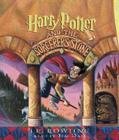
Jim Dale reading Harry Potter
.  He did all seven books, creating voices for hundreds of characters.  I've already written about his "Sorr-eee, Harr-eee,"
an inflection that's positively contagious.

We wondered at times if the girls' love of some audio books was keeping them from reading on their own.  They always read to themselves, but sometimes audio books trumped reading.  During those in-between years of knowing how to read, but not being able to read everything one wanted to fluently, I think the audios sometimes snuck in as a welcome escape.  And the well-loved ones were welcome background noise: it used to drive me crazy that Lizzie would do math homework while listening to a book.  The homework got done, though, and she's been a committed read-to-herself reader for a long time.  But it was a stage in the process of becoming fluent. 

Love,

Deborah

Saturday, July 2, 2011

What do we read to our kids? What do we let them discover alone?

Dear Aunt Debbie,

Rachel's question is an interesting one.  I haven't ever sat down and worked out hard and fast rules about this subject, but looking at my own history as a reader, as a child who was read to, and now as a parent reading to my children, I notice a few choices I've made, largely subconsciously.

Some of the first chapter books I wanted to read to Eleanor were series that I remember my parents reading to me: Narnia and Doctor Dolittle, in particular.  My memories of these books, and of the intense, talking through the plot experiences I had with them, are still vivid.  Reading them to Eleanor has been amazing.

So books like these are fond memories, but they're also packed with issues and ideas that can be teased out with the adult reading them; they're books that benefit from conversation and processing.  The discussion of death in the Narnia books, for example, isn't something I'd want my kids going through on their own for the first time.

Even when Eleanor and Isabel learn to read, there will be books at a slightly higher reading level than they can, or will want to, pick up on their own.  Some of these are classics -- a little harder to get into, at times.  If it weren't for Grandpa, your father, reading me Mistress Masham's Repose, or Treasure Island, Kidnapped, and David Balfour, I don't know that I would ever have picked them up.  His reading aloud of these adventure stories brought them to life for me, and strengthened the connection between us.

Some books are just better, and funnier, when read aloud.  As you've written, we've read a lot of James Thurber aloud in our family over the years, and especially when shared communally, he makes me laugh so hard I cry.  When Grandpa was losing his memory towards the end of his life, I'd read him Thurber stories.  Even when he couldn't remember the plot of the story from the beginning to the end, he appreciated the construction of every individual sentence -- the language is so so good aloud.  Years before that, I read aloud Mark Twain's The Adventures of Huckleberry Finn to Grandpa and Grandma, the summer I was 13 years old and she was dying of cancer.  It was one of my favorite things about that summer.  Twain lifted us all out of ourselves.

Many of the books I remember reading most voraciously on my own are those I've written about in our long discussion of good chick-lit (here, and here, and here, among other places).  Books with a little more romance or even sex in them than might be really comfortable to read with your parents, books packed with dialogue, quick good reads that don't necessarily shine as literary paragons.  I remember going through an entire series of Noelle Streatfeild's Shoe Books (Ballet Shoes is the first).  Though I loved them, I'm pretty sure that they wouldn't have worked the same way as read-alouds -- on my own, I could whiz through them and not worry about similar storylines boring anybody.

I guess I'm ultimately not too worried about forcing my loves on Eleanor and Isabel, or spoiling their reading experience of anything in particular.  There are always things I'll want to share with them, and there will be things I adored that they'll reject; there will be things they find to read on their own that I won't love as much as they do, and things I will.  There will never be a lack, thank goodness, of books.

Love, Annie

Wednesday, June 29, 2011

Unrestrained id: so attractive!

Dear Annie,

I think kids can distinguish fairly early between outrageous unlikely-to-happen or flat-out impossible stuff in books, and more realistic fiction.  And some of the outrageous stuff -- like the scary stuff we've written about -- is a direct line to the subconscious.  I suspect Eleanor knows that it's highly unlikely that a ten year-old girl can live alone and carry a horse around with one hand.  But it's cool.  Pippi, like another classic character, the Cat in the Hat, is both funny and attractive because she's so unrestrained, so beyond the rules.  And Tommy and Annika, like Sally and her unnamed narrator/brother ("I"), have to process the craziness and still live by their own rules of behavior (e.g., going home to bed every night), even as the crazy one enables them to push the envelope a bit.  Tommy and Annika have the internalized parents to help restrain them; Sally and I have a Very Serious goldfish invoking the name of Mother:
But our fish said, "No! No!"
Make that cat go away!
Tell that Cat in the Hat
You do NOT want to play.
He should not be here.
He should not be about.
He should not be here
When you mother is out!"

 So there you have it: id and superego, with ego (split into siblings) getting to process it all.  And when you're in the thick of the Processing It years of childhood, it's wildly entertaining to watch behavior you're learning not to do.

Not to say that all writing about beyond-the-rules behavior is a good thing.  You've got to have good writing and some engaging characters too -- which both Astrid Lindgren and Dr. Seuss provide quite nicely.  One of the more love-her-or-hate-her characters in kids' literature these days is
Junie B. Jones
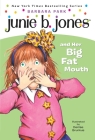
, by Barbara Park. She's rude, she has terrible grammar, she rarely learns from her mistakes, and she's in 27 books, which follow her through kindergarten and first grade.  I'm in the hate-her camp on this one.  But the people who love her, and whose children love her, do so for that titillation of bad behavior.  Look, she's more clueless than I am! 

And on another Pippi-inspired note, I'd like to point out an excellent post after your previous entry from our own guest blogger Rachel of Even in Australia.   Here's the central question, and it's wonderful food for thought and discussion on another day:
So, here's the question - which books do we read to our kids and which do we let them read and discover on their own?
I encourage our readers to read the entire comment.

Love,

Deborah

Monday, June 27, 2011

Revisiting Pippi: the right book at the right time

Dear Aunt Debbie,

Almost exactly a year ago, I wrote about trying to read Pippi Longstocking to Eleanor, and discovering that she wasn't quite ready for it yet.  I attributed this partly to Eleanor not having had school experience, as a certain amount of Pippi's humor comes from resisting and rejecting the structures adults have planned for her.

We picked it up again a few weeks ago, and suddenly it was the only thing Eleanor wanted to read.  She's still on the young side for some of the humor (she's 4 1/2, and Pippi and Tommy and Annika are, I think, about ten), but the spirit of independence and the hilarity of Pippi's behavior have totally captivated Eleanor.  So now I find myself thinking about Pippi in other ways.

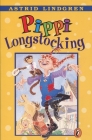
Pippi Longstocking is a fascinating character.  Like so many other heroines we've discussed here, she's an orphan: her mother died early, and her father, a sea captain, was swept overboard.  She lives in a little house her father left her, with only a horse and her monkey, Mr. Nilsson, for company, but she never seems lonely or upset.  In this sense, she's more the Ottoline kind of lone child heroine than the Sara Crewe kind.  Pippi misbehaves like crazy in this book: she refuses to follow kids' rules, and won't let the townspeople take her to a children's home; on the one day she tries going to school, she speaks out of turn and is rude to the teacher, then draws all over the floor; at the circus and at Tommy and Annika's mother's tea party, she's insanely disruptive and gets all the attention in the room by making up wild stories about her grandmother's disobedient, ankle-biting maid.

And then there's the bit that I'd forgotten: Pippi is the strongest girl in the world, and utterly fearless.  She can lift her horse down from the porch without breaking a sweat.  Over the course of several chapters, she picks up policemen, robbers, bullies, and a circus strongman; rides a bull and breaks off his horns to keep him from goring Tommy; and rescues two little boys from a raging fire.

Astrid Lindgren writes Pippi as a sort of naif.  When she's bad, she's unaware of why she's causing such disturbances; when she's heroic, though she's self-congratulatory, you feel like she still doesn't quite understand why what she's done is particularly special.  She's a little otherworldly.  The only times Pippi gets upset are when she realizes she's upset other people -- on some level, she knows that she can't quite behave properly, and feels a little bad about it, though not bad enough to change.  Pippi is perfectly herself.

All this makes Pippi an interesting role model.  Jeff commented on how he didn't particularly like the bad behavior is funny aspect of some of the stories, and on one level I agree, but man, I love having an inexplicably strong female character in our pantheon.  Good manners are great to reinforce, but sometimes a girl just needs to lift her horse down from the porch and go for a crazy ride.

Love, Annie