In which Annie (high school teacher, mother of two young girls and a younger boy) and her aunt Deborah (children's bookseller, mother of two young women in their 20s) discuss children's books and come up with annotated lists.

Showing posts with label YA novels. Show all posts

Friday, September 14, 2012

Current 9th grade favorites

Dear Aunt Debbie,

I love the idea of mutual storytelling, the ways in which kids and parents end up telling a story together -- so true to life, and so lovely.  We're excited, as always, for the arrival of the Birthday Box.

I've made it to the end of the first full week back at school, always both invigorating and exhausting.  Last year, I wrote about some of my ninth-graders' favorite books, as described in the introductory letters they write to me.  I asked the same question of them again this year, and thought I'd mention a few of the results tonight.  Many familiar titles, of course -- Harry Potter, The Hunger Games -- but a few I haven't read that sound interesting.  Such as...
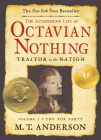
The Astonishing Life of Octavian Nothing, Traitor to the Nation, by M.T. Anderson.  On your recommendation, I read Anderson's Feed a while ago, and found it totally compelling.  While Feed is set in a dystopian future (ah, how YA authors love dystopian futures), Octavian Nothing is historical fiction, set in Revolutionary War-era Boston.  Octavian is a young black man being raised by a group of rational philosophers who realizes belatedly that he's part of an experiment testing whether Africans are "a separate and distinct species."  It sounds like an interesting exploration of the issues surrounding slavery and utopian idealism at the time.
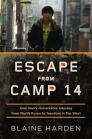

Escape from Camp 14: One Man's Remarkable Odyssey from North Korea to Freedom in the West
, by journalist Blaine Harden, is nonfiction, and not technically YA, though more than one of my Korean students mentioned it.  It's the true story of a man born and raised in a North Korean prison camp, and sounds intense and brutal in its details --  Shin Dong-hyuk saw his family killed, and was subjected to all kinds of overwork and abuse.  As a chronicle of recent history and ongoing abuses, it sounds fascinating.

But where, you may ask, is the nice long series with magic, supernatural powers, intrigue, and multiple sequels?  Some of my students recommend The Alchemyst: The Secrets of the Immortal Nicholas Flamel, by Michael Scott.  The premise: twins Sophie and Josh are interrupted in their summer jobs in San Francisco by the realization that Josh's boss is actually Nicholas Flamel, historical alchemist who was supposed to have died close to 700 years earlier, but has been making and taking an immortality potion for all that time.  There is theft and a host of evildoers, and a Codex of ancient prophecies, which apparently name the twins as actors in the battle between good and evil.  Scott draws on mythology and history -- Flamel was a real person -- and develops six books from the premise.  Maybe I should start making up my summer reading list for next year right now.

Love, Annie

Friday, February 17, 2012

Realistic kid behavior in fantasy worlds

Dear Aunt Debbie,

I'm sorry you've been down with a cold this week -- hope you're feeling better!

I've been thinking about YA and chapter books, and the qualities that make a child or teenage protagonist feel realistic, sometimes in uncomfortable ways.  I started on this tack when talking to Jeff earlier this week.  He's currently reading The Hunger Games, which I devoured last year, so that we can go see the movie together next month.  Jeff was struck by a couple of points he felt were unrealistic.

First: in their initial training, the Career Tributes (the teenagers who come from the richer districts and have been training for their whole lives for the Hunger Games) band together and form immediate alliances, while the other Tributes, who were chosen from poorer districts and are far less prepared, don't band together, and remain loners.

Second: this is a world in which everybody has grown up watching the Hunger Games on TV, and seen how the social dynamics play out multiple times.  Would Katniss really be so surprised when Peeta declares his love for her in his live TV interview?  Wouldn't she be prepared for, and understand, the reasoning behind playing up a romantic connection between them?

While I see his point on both counts, neither of these moments made me pause as a reader.  This may partly be that I read more YA literature than my husband does.  But it's more than that: I spend a lot of time with teenagers, and the teenage behavior Suzanne Collins describes feels true to me.  I've been teaching creative writing for 12 years, and have read enough stories of lost friendships and romantic entanglements and entanglements that they're not sure are romantic, but might be, to believe that Katniss would honestly be caught off guard by Peeta, no matter what she'd seen on TV before.

As a teacher who watches cohorts of students cycle through high school, I've become familiar with the tropes of teenage life, with what happens to a class when they hit junior year, and when they then become seniors.    To some extent, my students are aware that the paths they're taking have been trodden before, that the plots of their stories aren't brand new.  But they are brand new to them. 

So yes, I believe that the weaker Tributes wouldn't immediately band together like their own little armed Breakfast Club; in an atmosphere of suspicion, and in their untrained state, they wouldn't make that early move to connect, or even see connection with the other "losers" as a strength.

This week, Eleanor and I are reading The Borrowers, which came in your latest wonderful package.  We're loving it -- such suspense!  Such pleasure in imagining where Borrowers might live in our own home, and what they might be taking!  I hadn't read it in years, and one of the things I'd forgotten was the intensity and discomfort of Arietty's first meeting with the human boy.  She's 14 years old, and a few inches tall; he's 10, and a giant.  When the boy spots her, his first move is to threaten to squash her -- he thinks she's a possibly evil fairy -- and the rest of the interaction isn't much better.  He's threatening and pushy, and she's brave, but thoughtless about revealing information to him.  In short, he acts like a 10-year-old, and she acts like a 14-year-old.

There's something wonderful about reading child protagonists who feel emotionally plausible in this way.  A recognition: yes, I know that kid.  I've been that kid.  That kid speaks to me.

Love, Annie

Monday, March 28, 2011

Guest blog: Gay YA

Dear Aunt Debbie,

How can I have missed Diana Wynne Jones?  Her name is familiar to me, but honestly, I'm not sure that I read a single one of her books as a kid.  Clearly someone who needs to go on my list now.

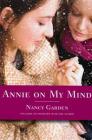
In expanding our discussion of YA books, I checked in with my friend Emily for her advice about YA books about gay teenagers.  Her first thought was Nancy Garden's Annie on My Mind, which I read in grad school and found...okay.  It was written in 1982, and feels a little dated; worth reading for being one of the first lesbian YA books with a (sort-of) happy ending, but nothing I wanted to reread the heck out of.

Emily contacted her friend and book maven Tatiana, who responded with an email so comprehensive and awesome that I immediately asked for her permission to turn it into a guest blog.  And here it is:

Okay, here's what I got.

First, graphic novels:


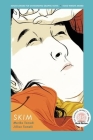
Skim
by Mariko Tamaki & Jillian Tamaki, super beautiful book about a HS Asian girl who falls in love with her female teacher.
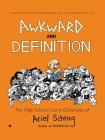
Ariel Shrag has a series of four books called
Awkward, Definition
, Potential and Likewise that are basically a diary of each year of HS and her budding lesbianism (but oh my god is her girl-dating brutal to those of us who have dated emotionally brutal girls).

Book books:

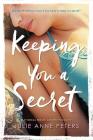
Basically the holy grail of lesbian YA books is Julie Anne Peters.  She writes a ton of them and they're way better than what a lot of other people are putting out.


Keeping You a Secret
is the best one she's got.  She also has Luna, which is another transgender book, focusing on a girl and her budding M to F brother.  There's Far From Xanadu and Rage, which are more standard girls falling for unattainable girls stories, Rage with some domestic violence thrown in (very good, but issue-y).  There's Between Mom and Jo which is lesbian mom divorce told by son. 

Then there's a bunch of books by other authors that I though were just "eh", but I'll mention them anyway. Kissing Kate, Empress of the World, Crush, Girl Walking Backwards. These are much more your standard, "hey I'm in love with a straight girl I can't have," maybe I'm gay stories.  Except for Crush which, if I remember correctly is more "hey, I think I'm in love with a straight girl, I'm really not, I'm just a confused adolescent and my book is boring." 

Anyway, back to the good stuff. 

Dare Truth or Promise
, budding lesbians in New Zealand with some religious questions thrown in for good measure.  Very good.  There's
The IHOP Papers
, which I think is about an under-20 gay girl, but Ali Liebegott is a Michelle Tea protege so there's a lot of sex drugs & rock and roll.  Speaking of Michelle Tea, she wrote a YA book.  Rose of No Man's Land.  Not bad, very Michelle Tea-esque though.

If you want boys, I have a few recommendations I picked up from someone's teacher friend. 
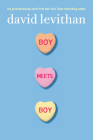
Boy Meets Boy
and Finlater, Finlater I think is speficially about non-white gay boys.  Haven't read either of them yet, but will be getting around to them eventually (I have a soft spot for girls, obviously).

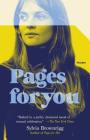
Moving on to books that I don't consider YA but have young protagonists, there's the absolutely insanely wonderful
Pages for You
, which is about a girl who moves off to college and falls in love with her TA.  Also Stir-Fry, another start-of-college hey-I-like-girls in Ireland book.

There's anything by Helen Oyeyemi, she is Nigerian and grew up in England, all her protagonists are girls in high school or younger and her books are sheer poetry.  Really amazing. 

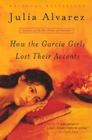
There's the classic How the Garcia Girls Lost Their Accents which my mom handed to me when I was young much the same way older lesbians handed me Rubyfruit Jungle when I was young (I say don't bother with RJ, it's just not worth it, Dorothy Allison did it better and with way way more talent than the cat lady)

And I think that's it for now, but I'll keep my eye out.

:)

Thank you, Tatiana!  

Anything to add, especially on the gay boy front?

Love, Annie 

Friday, March 25, 2011

Teen lit to pleasantly obsess both boys and girls

Dear Aunt Debbie,

Nice Publisher's Weekly piece!  I enjoyed your quotes.  It's always good to read an article that implies that the selling of real live books has a future.

I'm finding this conversation on YA lit for girls vs. boys fascinating.  I threw it out there to my network on Facebook, and got some interesting responses as well.  I'm going to summarize here (with few links, so I can get to bed some time tonight), and then focus in on three books which, in my experience, appeal across gender lines.

Male friends mentioned: Dungeons and Dragons rulebooks (tongue in cheek, but two more echoed it), Louis Lamour, Robin McKinley's The Hero and the Crown (dragon-fighting heroine -- I loved this one too), Isaac Asimov's Foundation series, Sherlock Holmes stories, Edgar Rice Burroughs's Tarzan books, the Oz series, the Lloyd Alexander Black Cauldron series, Susan Cooper's Dark is Rising series, the EarthSea Trilogy by Ursula LeGuin, Agatha Christie, Ian Fleming, Gregory McDonald's "Fletch" mysteries, and Judy Blume.  This last bunch come from my friend Mark (husband of excellent guest blogger Cyd), who wrote about Blume and YA realism several years ago here, in the Times.

Female friends mentioned: Lois Duncan, Christopher Pike, Sweet Valley High (I admit, I read them all too, borrowing them from friends in junior high), Gone With the Wind, A Wrinkle in Time, Judy Blume, Nancy Drew, Jane Eyre, Constance C. Green's A Girl Called Al series, and Richard Peck.

Definitely more sci-fi going on on the male side, but I was heartened by the amount of crossover. 

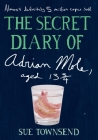
Jeff's cousin Megan wrote that she, her husband, and her sister all loved a book I hadn't thought about in ages: The Secret Diary of Adrian Mole, aged 13 3/4, by Sue Townsend.  It's the first book in a British series I discovered on my one childhood trip to England, and found massively funny.  Adrian Mole is a neurotic teenage boy, a fabulous unreliable narrator who keeps a diary recounting his obsessions and daily humiliations.  It's set in 1981-82, and I remember a great deal of focus on Charles and Diana's wedding.  I also read and loved the first sequel, The Growing Pains of Adrian Mole.  There are a bunch of other sequels following Adrian into adulthood.


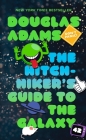
My friend Zara mentioned another great junior high school love of mine.  Aside from Madeline L'Engle, the only science fiction I got truly obsessive about were Douglas Adams books: The Hitchhiker's Guide to the Galaxy trilogy (which is five books long), and the Dirk Gently books.  Adams's brand of offbeat, deadpan humor made me dissolve into laughter, and I devoured the stories of hapless Arthur Dent, off with his towel in space with Zaphod Beeblebrox.  The only gender discrepancy I remember in the Adams fan base of my youth was that I had a soft spot for So Long, and Thanks for All the Fish, the only book with a love story, while my male friends thought it was a little weaker.  It's also the one where Arthur learns the secret of flight: you fall, and forget to hit the ground.

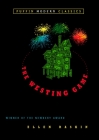
Finally, there is The Westing Game, by Ellen Raskin.  Raskin calls her book "a puzzle mystery": the six apartments in brand-new Sunset Towers on the shores of Lake Michigan are rented out to families chosen for reasons which are only explained by the book's end.

Who were these people, these specially selected tenants?  They were mothers and fathers and children.  A dressmaker, a secretary, an inventor, a doctor, a judge.  And, oh yes, one was a bookie, one was a burglar, one was a bomber, and one was a mistake.  Barney Northrup had rented one of the apartments to the wrong person.

The empty Westing mansion looks down at them from up on the north cliff -- Sam Westing disappeared fifteen years before.  Then, on Halloween evening, smoke begins to rise from the chimney....

The cast of characters is decently diverse -- the judge is a black woman, the family who owns the top-floor restaurant are Chinese -- and one of the protagonists is a spunky 13-year old girl named Turtle Wexler.  The mystery is such that I didn't fully understand the ending the first time I read it (probably at age 10 or so), but loved it anyway.  It rewards rereading.

So I read it, and reread it, and then for years I forgot The Westing Game, until one day a year out of college, shortly before I was leaving the Boston area to move to Seattle for a year, I noticed it again on the bookshelf of a male friend I was just getting to know better.  He happened to have two copies; he had been obsessed with the book himself; he gave me one of them.  Reader, I married him.

Love, Annie

Saturday, March 12, 2011

First loves: Cynthia Voigt

Dear Aunt Debbie,

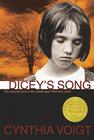
While I find it hard to call Cynthia Voigt's books chick lit, they were another staple of my teenage years: intense, beautifully written, full of deeply memorable characters.  She's written a number of series, some of which I don't know at all (though the Bad Girls books seem like promising titles in light of our current thread).  But when I think of Cynthia Voigt, what leaps to mind are her Tillerman Cycle books, beginning with Homecoming, Dicey's Song, and  A Solitary Blue.  These books (there are seven in total) chronicle the lives of the four Tillerman children after they are abandoned by their mother and have to find their way to relatives who can help them restart their lives.  Dicey is the oldest: she's 13 in the first book, taking care of her sister Maybeth and brothers James and Sammy.

Voigt doesn't soft-pedal what it means to take care of kids when you're a child yourself; I remember the scenes on the road as both harrowing and specific.  (There's a peanut butter sandwich-making scene that sticks in my head.)  By the end of the first book, the Tillermans have found a place to live with their prickly grandmother, and in Dicey's Song there's a little more breathing room.  Dicey is a wonderful heroine -- strong, independent, responsible even as she's totally overwhelmed by the amount of responsibility placed on her.  She's also fairly androgynous -- short-haired, not into dresses, often mistaken for a boy.  In later books, she begins a relationship with Jeff Greene (the protagonist of A Solitary Blue, and one of the main men on my friend Cyd's literary crush list, at least through high school).

This is one of the great things about Voigt's books: like L'Engle, she writes a number of books set in the same world but with a focus on different characters.  The later Tillerman books can stand on their own, but if you've read Dicey's Song, scenes in A Solitary Blue and Come a Stranger take on greater resonance.  Come a Stranger focuses on Dicey's friend Mina, an aspiring ballet dancer who faces racism at a New England ballet camp (she's black and from Maryland; perhaps one possible answer to Denise's question in the comments about diverse YA chick lit characters?).

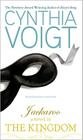
The other Voigt book that's stayed with me is a totally different genre:  Jackaroo: A Novel of the Kingdom.  The current cover art appears to be unfortunately romance-novel-y; what I remember doesn't read that way at all.  Jackaroo is set in a medieval-ish time and place called the Kingdom, and its heroine is a strong-willed, practical innkeeper's daughter named Gwyn.  She discovers the mask and sword of the legendary Jackaroo (a Robin Hood figure), and decides to use the disguise herself to help people in need.  It turns out that she's not the first person to have done this -- Jackaroo's identity is used by a number of people, for different reasons.  It's a good mystery. 

This thread is making me ridiculously happy.

Love, Annie

Wednesday, March 2, 2011

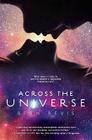
Across the Universe

Dear Annie,

Today I acted out a variation on what NPR calls a "driveway moment."  I've been listening to an audio book in the car -- as I almost always do when I don't have passengers.  Most of my driving consists of the 20 minute ride to and from work these days, which means it can take a while to get through a thick YA novel.  So today, when I was about eight hours into it, I popped the book out of the CD player and brought it home to listen to the last hour and a half because I needed to know how it came out.

The book is
Across the Universe
, by Beth Revis.  It's a heavily-marketed book which crosses many genres -- mystery, sci-fi, dystopian fantasy, even a little romance (although not as much as one of the covers implies).  Part of the marketing plan is a reversible book jacket, so that it can sell across all those genres.  I just discovered the book jacket thing today -- it cheered me up.  The one on the right is a cross-section of a spaceship that's been traveling for centuries.  All the action is in the spaceship, whose thousands of residents live in a classic over-controlled-for-your-own-good society.  One of the things I like about this book is that we learn the origins and motivations of the repressive regime, and on one level, their actions are understandable.  Into this completely closed world arrives a teenage girl, who's been there all along, but as part of a cargo of frozen people who are supposed to stay frozen until the ship reaches a distant planet.  She's mysteriously thawed out in what may be a murder attempt and rescued by the teenage boy who's being groomed to be the next autocratic leader of the ship.  Both teenagers narrate the action in alternating chapters. 

Revis has created a vivid picture of life inside a big metal ship -- one definitely identifies with the claustrophobic reaction of Amy, the recently-revived person.  Most residents are a mysteriously passive workforce; the obviously intelligent and creative people live mainly in a mental hospital.  Part of population control has to do with sex drive being chemically manipulated: everyone believes that humans have mating seasons like animals -- and when "the season" arrives, coupling couples are everywhere.  There's one horrific attempted rape scene.  The controlled society is built on layers of untruths: everything from mating seasons to self-serving re-writing of history.  Elder, the leader-in-training, discovers lies and secrets throughout the book, fueling his adolescent anger at the current leader/father figure.

This books doesn't have the depth of, say, The Knife of Never Letting Go, of which, as you know, I'm quite fond.  But it really pulls you in, and given that the humans are stuck inside of a space ship for centuries, it opens a lot of questions about how to structure a functioning society.  It's got a few twists at the end -- and lots of set-up for book #2 of what will eventually be a trilogy.

Love,

Deborah

Wednesday, May 19, 2010

YA Fantasy: Beyond Vampires

Dear Annie,

What an excellent post! Reinforces all my initial negatives about the Twilight series.

Okay, so you ask about whether there's any such thing as "really good fantasy/fairy/faerie/vampire YA lit being written out there." I suspect that as far as faeries and vampires are concerned, that's an oxymoron. But that could just be my prejudice. There is one riotously funny vampire satire, The Reformed Vampire Support Group. It's about a group of slightly sickly vampires who have banded together in an AA-like group to keep each other from attacking humans. They do, of course, still need blood -- you'll never think the same way about guinea pigs again.

For those folks who actually take Twilight seriously, I tend to recommend Libba Bray's Gemma Doyle Trilogy (first book: A Great and Terrible Beauty). My Lizzie got fond of these books toward the end of high school. It's a combination 19th-century British boarding school tale, crossed with magic and mysterious dark men (probably magical) hanging out in poorly lit places. But the writing's okay, and the author is definitely thinking more about women's place in society.

Two good recent YA fantasy books:

Graceling
, by Kristin Cashore creates a really interesting medieval-style world where some people are born with "graces": extraordinary talents. Katsa, the heroine, believes her "grace" is killing people: she's excellent at combat and has been forced into the role of enforcer for an evil king. Turns out her talent is more complex than that. Takes a sympathetic guy (who's also a great fighter) to help her figure out what's going on. Has a satisfyingly unpredictable ending. The sequel/companion book, called Fire, is pretty dismal: Cashore creates a different main character who is so beautiful that everyone goes nuts around her because they're consumed by desire. Kind of the ultimate cheesy fantasy.

Then there's a very interesting trilogy-in-progress called Chaos Walking. First book is
The Knife of Never Letting Go
. It's set on a planet which has been colonized by earthlings who came as fundamentalist settlers. Shortly after arrival, a virus infects all the men, making their thoughts audible to others. Women are unaffected. The first book involves an odyssey through many settlements, each of which has dealt with the issue differently, from extreme repression of women to hippie matriarchy. The bad guys are really bad, setting out to take over all the settlements, using extreme coercion and torture in the process. They have also enslaved what remains of the native population. I've read the first two books wondering when the action was going to veer into awful sexual violence, but so far that hasn't happened. A lot of adults try to manipulate the teenage protagonists, and there are some fuzzy lines between resistance and collaboration. It's one of those series that gives a teenager a lot to think about. Also a good read -- I really want the last book to come out, already.

And then, aimed at the sixth grade and up crowd, one more trilogy which is great and impossible to sell. Just mentioning the premise in the presence of a parent is the kiss of death: dystopian future in an America divided into 12 states, each of which must send two teenagers a year to a reality television show which involves the contestants killing each other until there's one winner. Two books are out:
The Hunger Games
and

Catching Fire
, the third is coming in August. They're psychologically and politically fascinating books. Katniss, the main character and Hunger Games contestant in the first book, is horrified by the games and improvises her way into resistance, initially simply to save herself, and ultimately because her acts on television have helped fuel an underground movement. It sounds grim, but the core of this series is anger mixed with hope.

Time to get back to cheerier stuff --

Love,

Deborah

Tuesday, May 18, 2010

On Twilight. Oy.

Dear Aunt Debbie,

Ah, Twilight. Yes, after realizing how many of my high school students had read the series (most of them in junior high), and after one of my all-time favorite students told me I needed to read them because the gender issues in them were really disturbing, I read all four books. They're not good books, but they are quick, gripping reads -- the kind of book you read obsessively for two days and then it's done, and while you're reading you keep thinking, ah yes, this was written to be turned into a movie.

What bothers me about the ubiquity of the Twilight books is the relationship dynamic they set up for the (mostly) tween (mostly) girls reading them. Because Edward is a vampire, and Bella is human, every romantic encounter they have is freighted with danger: he is so in love with her, so aroused by the smell of her blood, that if he loses control, they both know he might kill her. Because he doesn't want to do this, he is by turns emotionally cold and crushingly overprotective. While there's a logic to his behavior in the fantasy world Meyer has created, in our world, a relationship like this would be abusive. I worry about Edward helping shape the concept for so many girls of what it means to have a "good" boyfriend.

(Spoiler alert -- in the next couple of paragraphs, I'm going to reference major plot points in Book 4.)

This ties into the question of sexual desire, and who is supposed to feel it. A lot has been written about Twilight as a sexy abstinence book -- Bella and Edward don't have sex until after they get married, early in the last book. Before this, Bella wants to, but Edward won't go along with it. She desires him intensely, but knows that she has to keep a lid on her desire, because if she turns him on too much, he might lose control and kill her. There are a few scenes where she doesn't hold back while kissing him, then gets mad at herself for tempting him too much. Because, you know, boys can't control themselves the way girls can.

When they finally do have sex, it is reported to be mind-blowingly fantastic (we don't actually get a sex scene), but Bella wakes up covered in bruises. Edward feels terrible and never wants to touch her again; Bella reassures him that she's fine, doesn't hurt at all, and wants to do it again immediately. Then it turns out she's pregnant, and I don't know what happened to Meyers during her own pregnancies, but this one is horrible -- the half-vampire baby makes Bella violently ill, breaks her ribs, and brings her to the brink of death while ripping its way out of her. (Another picture I'm thrilled to have put in the minds of my students.) This paves the way for Edward to finally turn Bella into a vampire, which she's been asking him to do for three books. And the moral is? We're all happy, young, gorgeous, rich vampires who don't need to kill people. And did I mention we're gorgeous? And young? And rich?

I read my fair share of bad books as a kid: dozens of Sweet Valley High books, for one, which I borrowed from a friend in junior high. It was like eating junk food. I knew this at the time, knew that these were fun books but that they were essentially the same, and that I wasn't getting anything real from them. All I've retained is that the main characters were twins, and they had perfect size-6 figures and wore gold chain necklaces with their names spelled out so people could tell them apart. I'm sure if I re-read SVH, I'd find plenty of gender issues to object to as well. But like you, I think that when something terrible is part of the larger picture of reading, and if it gets kids going and interested in reading more, it's not necessarily so bad.

That being said, I'd like to know that there's some really good fantasy/fairy/faerie/vampire YA lit being written out there as well. Is there? What do you recommend when this question comes up?

Love, Annie

Monday, May 17, 2010

YA: good stuff & the other stuff

Dear Annie,


Getting back to the YA question. Feed is definitely dark, although its social commentary is spot-on. Marcelo and Godless, though, are both pretty life-affirming – figuring out who you are and getting comfortable with the idea. Oh sure, you might climb a water tower and go swimming inside and worry that someone might seriously injure themselves – but hey, that’s what we do at this age, in one form or another. And in the meantime you’re rejecting your parents’ religion and figuring out what you believe.


A lot of current YA books that publishers are pushing right now are series with vampires, werewolves, and faeries (with that spelling). Yech. It’s scary how unimaginative publishing companies can be – and how ruled by marketing machines. Roger Sutton, editor of The Horn Book, has a good editorial about that in the current issue. See especially his last paragraph.


So is this the moment for us to talk about the Twilight series? I resisted carrying it at the store for a while, then caved to demand. I confess I’ve only read half of one of them, and was overwhelmed by what a romance novel it was: too many adjectives, too much heavy breathing, and a too passive leading lady. Our kid clientele goes up through high school, but I 've been struck by how many of the kids who want to get Twilight are middle-schoolers. I think the movies have driven some of that -- one day I watched an argument between a boy who came up about to my elbow and his mother: "Mo-om, everyone in the whole sixth grade is reading it!" She eventually caved and got it for him.


I have a certain amount of ambivalence about reading junk. Sometimes it's relaxing and, in the context of other (better) stuff that kids are reading too, is all part of a mix. I don't think one book is going to warp anyone permanently. Yet when something takes off as much as this series has, it makes me nervous. I don't want to say a teenager shouldn't read it, but I wish eveyone who reads it had someone to have an intelligent discussion with about it. Which I gather you've done some of with your students, n'est-ce pas?


Love,


Deborah


Saturday, May 15, 2010

YA, Part 2

Dear Annie,


We read The Ruby in the Smoke with Lizzie and she liked it, but didn't want to rush on into the others. A couple of years later I read and loved Tiger in the Well, the one about 19th-century identity theft. I'm such a huge fan of The Golden Compass and sequels that I've always thought of the Sally Lockhart series as good, but one notch below. I love the many-layered aspect of The Golden Compass, and Pullman's hostility to organized religion. So much is going on in his books at once. I should go revisit Ruby.


My favorite YA book – and by that I mean, say, 8th grade and up – is probably
Feed
, by M.T. Anderson. It’s set in a dystopian future where everyone has computer chips in their brains (“wetware”) so that they can access the internet (the Feed) just by thinking about it. IM-ing is constant. And the Feed can access your thoughts, so it’s always beaming thought-specific advertising directly to your brain. It’s kind of fascinating at the beginning of the book, and evolves darker as the story progresses. The main character meets a young woman who’s trying to resist the Feed, and although he’s intrigued he ultimately retreats into his programmed world. The beauty of the book is in the language: Anderson has created teenspeak which is completely understandable and just a bit off from the present day. There’s a great audiobook of Feed also. Our girls listened to it a lot.


Marcelo in the Real World
, by Francisco X Stork is another I’ve become quite fond of. Marcelo is an Asperger’s kid, in the summer before his senior year in high school. His over-controlling lawyer father wants him to leave his special school and mainstream into the local high school. Father and son make a deal that if Marcelo can work all summer in the mailroom at his father’s law firm, then he can choose what school he goes to. Marcelo’s voice is pitch-perfect: he explains in his slightly-detached way how he analyzes and interacts with the world. The law firm gives him an array of fast-talking, sarcastic, and occasionally just plain nasty people to try to figure out. The ending wraps up a bit too neatly, but the journey is quite wonderful.


And as long as I’m on a roll with contemporary YA with male main characters, I’ll toss in
Godless
, by Pete Hautman.A high school boy creates a new religion that worships the local water tower. Chapters are preceded by quotes from the bible that he writes: they all make a lot of sense – after all water is very primal. It’s all about questioning of faith and, because the object of worship is a huge water tower, risk-taking. Another piece of good writing.


Love,


Deborah