In which Annie (high school teacher, mother of two young girls and a younger boy) and her aunt Deborah (children's bookseller, mother of two young women in their 20s) discuss children's books and come up with annotated lists.

Showing posts with label gay. Show all posts

Saturday, August 4, 2012

Gay marriage, political and non-political

Dear Aunt Debbie,

Visiting my parents last week in Manhattan, the girls and I stopped in at Bank Street Bookstore, one of our favorite independent children's bookstores anywhere.  Imagine my surprise when the first display to hit my eyes as I walked in the door was a selection of books about gay marriage and families with gay parents!  Maybe there's something in the air.

The display included a few of the books you've recently written about: And Tango Makes Three, Donovan's Big Day, King and King, and Monday is One Day, which I hadn't seen before, but enjoyed.
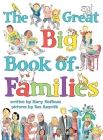
In the same vein of books aiming to be inclusive of all different kinds of families, there was also The Great Big Book of Families, by Mary Hoffman, illustrated by cartoonist Ros Asquith.  On each two-page spread, this book focuses on a subject -- holidays, where people live, pets, who makes up a family -- and then provides text and drawings to illustrate as many options as possible.  It's nicely multicultural, and includes families with gay parents.  On skimming, I found the text a little didactic, but the overall message of inclusiveness was nice.

Then there were two books which took on the subject of gay marriage in different ways, each beginning with a child's negative reaction, and ending happily, one in a totally non-political context, and one which makes it clear that the fight for gay marriage is a civil rights issue.
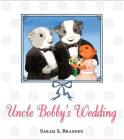
In Uncle Bobby's Wedding,by Sarah S. Brannan, the characters are all anthropomorphized guinea pigs.  Chloe has a close relationship with her Uncle Bobby (some sweet scenes of them playing together outdoors), and is upset when she learns he's getting married.  The nice thing about the book is that the gender of Uncle Bobby's fiance, Jamie, is never the issue, and in fact isn't remarked on at all.  The family is clearly supportive of the wedding, and Chloe's reaction is due entirely to her worry that she won't have as close a relationship to Bobby once he has a husband.  Before the wedding, Bobby and Jamie spend quality time together with Chloe, and she comes to love him, too.  There's a nice line about the two of them planning to have kids of their own, but still having a special relationship with Chloe.  Chloe demands to be their flower girl, and the wedding is a success.
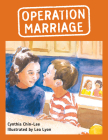
Operation Marriage, by Cynthia Chin-Lee, is set in California in the few months in 2008 when same-sex marriage was legal there, just before the passage of Proposition 8.  It's based on a true story about a pair of kids -- the older sister, Alex, narrates the book -- who push their two moms to get married legally amid the campaigning for and against Prop. 8.  Alex's best friend, Zach, tells her he can't be friends with her anymore because her parents aren't really married, and his father says that two women can't be married.  Alex and her brother Nicky decide that the way to fix this is to make their moms' union legal, and they go home and begin "Operation Marriage" to encourage Mama Kathy and Mama Lee to marry under California law: they play the wedding march, and make a wedding program to give their mothers.  The moms are very sweet -- their initial reaction is to say, but of course we're married, and break out the videos of their commitment ceremony.  After some talking, however, they're convinced.  Alex and Nicky get new wedding clothes, and the family has a small, warm, civil ceremony.  Even after Prop. 8 is passed, Alex feels like her mothers are truly married.  And Zach and his mom show up at the door to apologize for letting the issue divide the friends.  It's a nice combination of realistic, political, and hopeful.  Reading it, I felt like it would make a good historical picture book in the future, dramatizing the last throes of the fight against marriage rights for all.  Let's hope so.

Love, Annie

Monday, July 30, 2012

More gay-inclusive picture books

Dear Aunt Debbie,

Now we're starting to get a good list together.  I'm interested to find A Different Dragon, and more books that include gay and lesbian parents without that being the only focus of the book.  We enjoyed And Tango Makes Three and King and King a couple of years ago -- time to get them out of the library again, I think.  While I don't have further suggestions at the moment of books I've read with the girls, I've done a little searching around and found a nice annotated list and a few books that seem worth following up on.

The list is Gay-Themed Picture Books for Children, written by a research-loving librarian who also includes picture books about kids born from donor eggs or sperm.  A number of the books here do seem like One Issue Books, but there's a wide variety, and tags along the sidebar to help you navigate.  And I hadn't thought before about incorporating books about donor offspring as well.

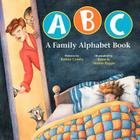
Two books by Bobbie Combs incorporate same-sex (and multi-racial) parents into scenes illustrating letters of the alphabet and counting.  ABC a Family Alphabet Book provides a word for each letter, and a sentence using the word:

A is for Awake.
Every morning, I am the first one awake in our house.


L is for Lunch.
We always pack a picnic lunch when my moms take me to the beach.

The writing seems a little flat, but the concept of the book worth checking out.

123 a Family Counting Book is sadly out of print (that's the Alibris link), but the reviews I've found of it say the illustrations are spectacular -- full of really interesting things to count, and again incorporating same-sex parents into the scenes rather than making them the focus of a story.


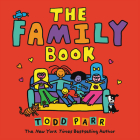
Todd Parr, writer and illustrator of roughly 3000 brightly-colored picture books, includes same-sex couples in The Family Book, along with single-parent families, families with adopted kids, and other possible constellations.  While I haven't read this one, I'm familiar with The Grandma Book and The Grandpa Book, which are also pleasantly inclusive -- each contains a picture of a grandparent zooming around in a wheelchair, among other things.  Both Isabel and Eleanor like to identify which of their grandparents best fits each page ("Papa has a wheelchair!  Lala likes to sew things!").  I find Parr's work to be a little neon and a little boring for my taste, but I can see why kids respond to it.

Finally (at least for now), there's the out-of-print Lucy Goes to the Country, by Joseph Kennedy, which follows a rambunctious cat getting into all kinds of adventures when her owners -- a gay couple she refers to as her two "Big Guys" -- bring her to a backyard barbecue where she chases a dog up a tree and causes general mayhem.  The fact that her owners are gay isn't referenced directly in the text, but is clearly part of the background in the illustrations, and there is a mention of two women and their daughter in the text as well.

I'm feeling a little better about what's out there, but this is clearly a genre that's ripe for more authors to write in....

Love, Annie


Sunday, July 29, 2012

Two moms/two dads

Dear Annie,

Wow.  Two and a half years, 460 posts, and we haven't done two mommies/two daddies books.  We're making up for that now.

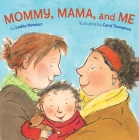
I'm quite fond of Mommy, Mama, and Me which you mentioned, and
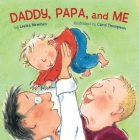
Daddy, Papa, and Me
, also by Leslea Newman.  They're simple, not exceptionally artful, but enthusiastic and aimed at the very young:
The mom version is about lots of stuff to do in a day; the guy version is a bit more play-centric: "Daddy wears a shiny crown./Papa dresses like a clown."

I don't know A Tale of Two Mommies, which you ask about, but Vanita Oelschlager has also done A Tale of Two Daddies, with the same headless parents issue.

For a more contemporary on-the-issues book, Newman has written Donovan's Big Day.  We follow a six-or-so year-old boy as he gets up and gets ready for a big event (puts on a suit all by himself, clips on his new tie).  Grandparents, cousins, aunts and uncles all are there to help, but no parents.  They get to what appears to be a church, say hi to lots of grownups, and Donovan follows his younger cousin down the aisle.  Then his aunt gives him his cue:
He handed one shiny gold ring to Mommy.
He handed one shiny gold ring to Mama.
He stood next to them without saying a word
while they slid the shiny gold rings
onto each other's fingers,
looked into each other's eyes,
said mushy things to each other,
and smiled and laughed and cried.
Big hugs and kisses all around at the end.

In comments on your last post, Beth mentions two quite wonderful picture books:


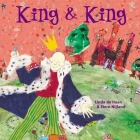
King and King
, by Linda de Haan and Stern Nijland (translated from the Dutch), also ends with a marriage.  A prince's mother demands that he find a suitable princess to marry.  He auditions an array of not-very-fascinating women, but one of them brings along her brother, Prince Lee.  The electric look that passes between the princes when they meet lets us know what will happen next.  They fall in love, marry, and live happily ever after.  There's a sequel in which they adopt a child -- it's okay but not up to the standards of this one.

  And Tango Makes Three by Justin Richardson and Peter Parnell tells the true story of two Central Park Zoo male penguins who paired up and built a nest together.  Zookeepers gave them an egg to hatch, and they raised Tango, their daughter:
The illustrations help to make this a very sweet building-a-family story.   The wikipedia entry on the true story seems to say that all three of them are still living at the Central Park Zoo.  One of the dads has since paired with a female, and when Tango grew up, she found a female partner.

As you point out, it's great to find books that don't scream, This Book is About an Important Issue.  There's one more that I've been told about by a few customers but haven't been able to get for the store. 
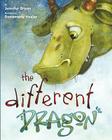
The Different Dragon
by Jennifer Bryan is about a boy with two moms.  The story focuses on one of the moms telling him a bedtime story about a dragon.  The boy and mom create the story together, changing it as they tell it.  The story focuses on the dragon and the process -- the fact of two moms is a given, but not a focus.  Has anybody out there read this one?

Any other two moms/two dads good books?

Love,

Deborah


Friday, July 27, 2012

Searching for great gay-friendly picture books

Dear Aunt Debbie,

Over the last few months, quite a number of my friends have welcomed new babies into their lives -- they seem to come in waves, like weddings did in my mid-twenties.  I found myself heading to my favorite independent bookstore multiple weekends in a row to buy a few first board books for each family.  As I did so, I found myself wondering, as I have in the past, about whether there are any really great children's books out there involving gay characters, especially families with gay or lesbian parents, that aren't purely Message Books.  You know the kind I mean: well-meaning, but didactic, more about Showing Gay People are Normal than about telling a story.

For pretty much any new baby, I gravitate towards the books I highlighted in my "brand-new babies" section of the Top 25 (well, 33) picture books list I wrote up a couple of months ago.  Several of these books depict animal characters rather than human ones, and a couple of them (Baby! Baby! and I Love Colors) have terrific photos of babies, but no adults at all.  But it's nice for kids to have books which reflect the families they have, and do so in natural, easy ways.

For white friends of mine who have just adopted an African-American baby, I included Vera B. Williams's fabulous "More, More, More," Said the Baby, in which the illustrations to the three brief stories show racial diversity unobtrusively, in the context of a beautifully-written celebration of chasing after and playing with your small child.

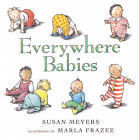
For my college roommate and her partner, welcoming their first child, one of my choices was Everywhere Babies, by Susan Meyers, illustrated by Marla Frazee.  Frazee's illustrations are the reason I like this book, and the reason you first recommended it to me.  In the packed pictures of babies being hugged, fed, rocked, and played with in various ways, there are depictions of a number of different kinds of families, including what appears to be an interracial lesbian couple passed out on a bed next to a sleeping baby in a cradle, and a few pairs of dads who might be couples themselves.  The text accompanying these pictures is general and rhythmic:

Every day, everywhere, babies are born --
fat babies, thin babies, small babies, tall babies, 
winter and spring babies, summer and fall babies.
...
Every day, everywhere, babies are fed --
by bottle, by breast, with cups and with spoons,
with milk, and then cereal, carrots, and prunes.

You get the idea.  It's fine, and scans well, but it doesn't cry out for multiple rereadings.  The pictures are inclusive, but the last whole family shown on the page celebrating the baby's first birthday is still white and hetero.  I'd like to find a book I love as much as the others on my list that depicts families which look more like the families my gay friends are now creating.

I've written before about Patricia Polacco's In Our Mothers' House, which tells the story of a lesbian couple and their three adopted kids, each of a different race (the eldest daughter narrates).  There are a lot of things to like about the book, as with pretty much anything Polacco writes, but it's not the book I'm looking for.

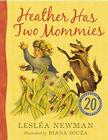
At the library today, I picked up the infamous Heather Has Two Mommies, Leslea Newman's oft-banned book which made so many headlines 15 and 20 years ago.  I'd never actually read it, but it's -- okay.  It's clearly an Issue Book, and while it shows a sweet, loving family made up of two moms and a daughter, it's also a little odd in the way it opens up the issue.  Heather goes to a playgroup for the first time, and realizes for the first time that all the other kids have daddies, and she doesn't.  She feels bad, and cries, and the teacher consoles her, and has all the kids draw pictures of their different families, so everyone can appreciate that all kinds of families provide love and support.  It is, of course, the most diverse preschool group EVER, so there's another girl with two daddies, and an adopted kid, and a kid with divorced parents, and multiple races represented.  Maybe still useful for getting across the Message, but odd in its implication that Heather would never have run across other families different from her own before going to playgroup, and that her moms would never have talked to her about their own family.

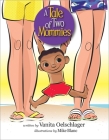
On the same shelf, I found the more recent A Tale of Two Mommies, by Vanita Oelschlager (spoiler alert: it has nothing to do with Dickens).  In this one, a little dark-skinned boy answers the questions of two other kids on the beach about which of his moms (here, "Momma" and "Mommy") takes on which responsibilities of parenting:

Which mom coaches your T-ball team?
Which mom's there when you've had a bad dream?


Mommy is the coach of my T-ball team. 
Both mommies are there when I've had a bad dream.

The mommies appear largely from the waist down, as two pairs of long white legs -- I think the facelessness is supposed to represent a child's-eye view, but I find it a little disconcerting.  Again, it's -- okay.

In doing a quick online search, I came across some good reviews for Leslea Newman's newer Mommy, Mama, and Me -- have you read it?  I'd love your suggestions on some of the newer stuff out there.  Our foray into gay YA generated a nice long list of options (which you can find here under "Gay and Gay-Friendly YA"); I'd love to do the same for picture books.


Love, Annie

Monday, March 28, 2011

Guest blog: Gay YA

Dear Aunt Debbie,

How can I have missed Diana Wynne Jones?  Her name is familiar to me, but honestly, I'm not sure that I read a single one of her books as a kid.  Clearly someone who needs to go on my list now.

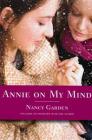
In expanding our discussion of YA books, I checked in with my friend Emily for her advice about YA books about gay teenagers.  Her first thought was Nancy Garden's Annie on My Mind, which I read in grad school and found...okay.  It was written in 1982, and feels a little dated; worth reading for being one of the first lesbian YA books with a (sort-of) happy ending, but nothing I wanted to reread the heck out of.

Emily contacted her friend and book maven Tatiana, who responded with an email so comprehensive and awesome that I immediately asked for her permission to turn it into a guest blog.  And here it is:

Okay, here's what I got.

First, graphic novels:


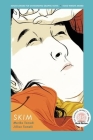
Skim
by Mariko Tamaki & Jillian Tamaki, super beautiful book about a HS Asian girl who falls in love with her female teacher.
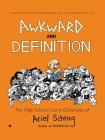
Ariel Shrag has a series of four books called
Awkward, Definition
, Potential and Likewise that are basically a diary of each year of HS and her budding lesbianism (but oh my god is her girl-dating brutal to those of us who have dated emotionally brutal girls).

Book books:

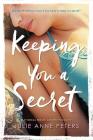
Basically the holy grail of lesbian YA books is Julie Anne Peters.  She writes a ton of them and they're way better than what a lot of other people are putting out.


Keeping You a Secret
is the best one she's got.  She also has Luna, which is another transgender book, focusing on a girl and her budding M to F brother.  There's Far From Xanadu and Rage, which are more standard girls falling for unattainable girls stories, Rage with some domestic violence thrown in (very good, but issue-y).  There's Between Mom and Jo which is lesbian mom divorce told by son. 

Then there's a bunch of books by other authors that I though were just "eh", but I'll mention them anyway. Kissing Kate, Empress of the World, Crush, Girl Walking Backwards. These are much more your standard, "hey I'm in love with a straight girl I can't have," maybe I'm gay stories.  Except for Crush which, if I remember correctly is more "hey, I think I'm in love with a straight girl, I'm really not, I'm just a confused adolescent and my book is boring." 

Anyway, back to the good stuff. 

Dare Truth or Promise
, budding lesbians in New Zealand with some religious questions thrown in for good measure.  Very good.  There's
The IHOP Papers
, which I think is about an under-20 gay girl, but Ali Liebegott is a Michelle Tea protege so there's a lot of sex drugs & rock and roll.  Speaking of Michelle Tea, she wrote a YA book.  Rose of No Man's Land.  Not bad, very Michelle Tea-esque though.

If you want boys, I have a few recommendations I picked up from someone's teacher friend. 
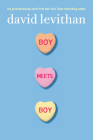
Boy Meets Boy
and Finlater, Finlater I think is speficially about non-white gay boys.  Haven't read either of them yet, but will be getting around to them eventually (I have a soft spot for girls, obviously).

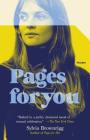
Moving on to books that I don't consider YA but have young protagonists, there's the absolutely insanely wonderful
Pages for You
, which is about a girl who moves off to college and falls in love with her TA.  Also Stir-Fry, another start-of-college hey-I-like-girls in Ireland book.

There's anything by Helen Oyeyemi, she is Nigerian and grew up in England, all her protagonists are girls in high school or younger and her books are sheer poetry.  Really amazing. 

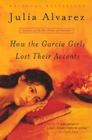
There's the classic How the Garcia Girls Lost Their Accents which my mom handed to me when I was young much the same way older lesbians handed me Rubyfruit Jungle when I was young (I say don't bother with RJ, it's just not worth it, Dorothy Allison did it better and with way way more talent than the cat lady)

And I think that's it for now, but I'll keep my eye out.

:)

Thank you, Tatiana!  

Anything to add, especially on the gay boy front?

Love, Annie 

Sunday, May 16, 2010

Social issues embedded in picture books

Dear Aunt Debbie,

These books sound fabulous -- I'll clearly be reading some of them myself before Eleanor is ready to go there. It strikes me, though, how dark their themes are. This is a comment (a complaint?) I've heard a lot about recent YA books, though I'm not sure how different they are in tone from previous generations. Do you think books for teens have gotten darker or weightier? Is this necessarily a bad thing if it's true?

I think about this as we've been reading a lot of Patricia Polacco in our house. Her picture books often touch on weighty or at least societally complex issues, but the touch is light and the illustrations filled with swiftness and joy.

I first came across Polacco's wonderful book Chicken Sunday long before I had kids, when I was right out of college and teaching at a boarding school. That year, I was part of a group of teachers who met once a month to talk about "issues of educational equity and diversity." For one meeting, our assignment was to find a children's book with themes of diversity. I think we were supposed to do a swap with the books after the session, but everyone wanted to keep the books they'd picked, so we all took our own home again.


Chicken Sunday


What I like about Chicken Sunday is that it isn't preachy. It's the 1950's, I think, and the narrator is white, and her best friends and adopted grandmother are black, and the hat-maker is Jewish, and the complexities are there underneath the narrative, but they're not made too explicit. The grandmother talks about how the hat-maker had "a hard life," and in one illustration you can see a number tattooed on his arm, but that's all that's mentioned. So there's this other level that, at some point, Eleanor can notice and ask questions about, but for right now, it's a story about the kids wanting to save up to buy an Easter hat, and being unfairly accused of throwing eggs, and doing something creative to get the hat for their grandmother.

When I was looking recently for good books involving same-sex couples, you mentioned Polacco's In Our Mothers' House, with the caveat that the story isn't as good as some of her others.


In Our Mothers' House


Like Chicken Sunday, In Our Mothers' House is told in retrospect. The narrator is one of three children adopted by a warm, loving lesbian couple (the kids call their mothers Marmee and Meema). They live in Berkeley, and all of their neighbors are totally accepting of them except for one family, where the parents keep their kids away. The most explicit this family's homophobia gets is when the mother tells Meema and Marmee: "I don't appreciate what you two are!" Then she walks away, and everybody else in the neighborhood hugs them. It's enough to spark a question in a child reader: why doesn't this mother like their family? Polacco leaves the complexities of the conversation to the parent reader. Mostly, I appreciate this approach.

I'd like the book to be a little less episodic -- here's another warm, loving thing that happened in our house or neighborhood as I was growing up -- and to have more of a single narrative. That said, it does part of what I want it to do: provides pictures and text that normalize the idea of a household with two moms, and with adopted kids of different races. Eleanor's first reaction to the book was not positive: she sighed as we got to the end and said, "This book is long." But then when we went to pick which books to return to the library that week, she wanted to keep it. We've renewed it twice now, and she's asked me to read it to her multiple times. What's her favorite part? When Meema and Marmee, who always wear pants, don huge flowing dresses to host a mother-daughter tea at their house. So, she's 3.

The other two Polacco books we're reading regularly were your recommendations as well. And because you put it so well in the email you sent to me recommending them, I'm going to quote you here:

Go out and get Thunder Cake.
A girl and her babushka'd grandma, on grandma's farm, see that a thunderstorm is brewing. Girl is scared. Grandma says they have to make a thunder cake before it hits, so they race. To the cows for milk, the chickens for eggs, etc. It has those lovely energetic Polacco people and animals with hands and feet going in many directions. And the last page, after the two sit down to their cake as the (slow-moving) storm crashes, is the recipe, complete with a secret ingredient.

I also really like The Keeping Quilt, which follows a quilt through many generations of Polacco's family. Don't know if this one will read to Eleanor a little too slowly, like Our Mothers. I've given it as a wedding gift, because it's so full of family. She of course has a pretty serious quilter for a grandma, so it might resonate.


Eleanor loves them both. The Keeping Quilt doesn't feel slow at all, but again touches on so many periods of history, here especially Russian Jewish immigrant history, that there is a rich layer waiting for her to get a little older. And, of course, there are a lot of wedding dresses for her to look at.

Love, Annie