Dear Aunt Debbie,
I'm sorry you've been down with a cold this week -- hope you're feeling better!
I've been thinking about YA and chapter books, and the qualities that make a child or teenage protagonist feel realistic, sometimes in uncomfortable ways. I started on this tack when talking to Jeff earlier this week. He's currently reading The Hunger Games, which I devoured last year, so that we can go see the movie together next month. Jeff was struck by a couple of points he felt were unrealistic.
First: in their initial training, the Career Tributes (the teenagers who come from the richer districts and have been training for their whole lives for the Hunger Games) band together and form immediate alliances, while the other Tributes, who were chosen from poorer districts and are far less prepared, don't band together, and remain loners.
Second: this is a world in which everybody has grown up watching the Hunger Games on TV, and seen how the social dynamics play out multiple times. Would Katniss really be so surprised when Peeta declares his love for her in his live TV interview? Wouldn't she be prepared for, and understand, the reasoning behind playing up a romantic connection between them?
While I see his point on both counts, neither of these moments made me pause as a reader. This may partly be that I read more YA literature than my husband does. But it's more than that: I spend a lot of time with teenagers, and the teenage behavior Suzanne Collins describes feels true to me. I've been teaching creative writing for 12 years, and have read enough stories of lost friendships and romantic entanglements and entanglements that they're not sure are romantic, but might be, to believe that Katniss would honestly be caught off guard by Peeta, no matter what she'd seen on TV before.
As a teacher who watches cohorts of students cycle through high school, I've become familiar with the tropes of teenage life, with what happens to a class when they hit junior year, and when they then become seniors. To some extent, my students are aware that the paths they're taking have been trodden before, that the plots of their stories aren't brand new. But they are brand new to them.
So yes, I believe that the weaker Tributes wouldn't immediately band together like their own little armed Breakfast Club; in an atmosphere of suspicion, and in their untrained state, they wouldn't make that early move to connect, or even see connection with the other "losers" as a strength.
This week, Eleanor and I are reading The Borrowers, which came in your latest wonderful package. We're loving it -- such suspense! Such pleasure in imagining where Borrowers might live in our own home, and what they might be taking! I hadn't read it in years, and one of the things I'd forgotten was the intensity and discomfort of Arietty's first meeting with the human boy. She's 14 years old, and a few inches tall; he's 10, and a giant. When the boy spots her, his first move is to threaten to squash her -- he thinks she's a possibly evil fairy -- and the rest of the interaction isn't much better. He's threatening and pushy, and she's brave, but thoughtless about revealing information to him. In short, he acts like a 10-year-old, and she acts like a 14-year-old.
There's something wonderful about reading child protagonists who feel emotionally plausible in this way. A recognition: yes, I know that kid. I've been that kid. That kid speaks to me.
Love, Annie

Showing posts with label Norton. Show all posts
Showing posts with label Norton. Show all posts
Friday, February 17, 2012


Sunday, June 5, 2011
Large Dolls and Little People
Dear Annie,
This thread goes deep.

I realized after posting last time that I should have mentioned
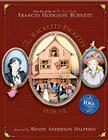
The Racketty Packetty House, by Frances Hodgson Burnett, whose praises we'd been singing. It's another class-warfare-among-dolls tale. The Racketty Packetty House has been around in a girl's family since the time of Queen Victoria's childhood, and it's old and shabby, but the dolls are oh so jolly and optimistic. The current (1908 or so) girl receives Tidy Castle, inhabited by aristocratic and supercilious dolls, and plans are made to burn Racketty Packetty House. Fairies, true love and a real princess intervene and all ends oh so jolly. It's been beautifully re-illustrated by Wendy Anderson Halperin.
 Our household never bonded with The Littles, probably because we had spent so much time immersed in
The Borrowers, by Mary Norton. They are also small people (tail-less) who, in the first book, are discovered under the floorboards by an unhappy boy who is living with an elderly relative. Pod, Homily and Arrietty Clock (named for the furniture closest to their secret home) carry on the tradition of their tribe, "borrowing" from the humans they live near. This, of course, is the explanation for the disappearance of small items -- safety pins, earrings, stamps, thread, etc. -- from all our homes. Daughter Arrietty accidentally reveals herself to the boy, resulting in a friendship and more danger for all the Borrowers. They eventually have to flee the house, and find other Borrower colonies and other adventures in The Borrowers Afield, The Borrowers Afloat, The Borrowers Aloft and The Borrowers Avenged. After the first reading, Mona never let us read aloud the first chapter of the first book. It's the set-up chapter, narrated by an elderly woman explaining how her brother as a boy had his adventures with the little people. It's a slog, necessary the first time, but definitely skippable after that.
 Bob and I have just had a delightful dinner conversation remembering The Mennyms by Sylvia Waugh, which we haven't read for at least ten years, but who remain with us. They're a family of life-size rag dolls, mysteriously brought to life ("born knowing" how to be people) after the death of the elderly lady who sewed them. They live in her house, paying rent to her heirs, selling crafts and written articles to make a living, but never coming in contact with humans. Like the characters in many of the books we've been discussing, they have wonderful names: Sir Magnus and Tulip the grandparents, Joshua and Vinetta, the parents, teenagers Soobie (he's made of blue cloth, and descends into bouts of depression from time to time) and the rebellious Appleby (female), younger twins Poopie and Wimpey, and the baby Googles. There's even Miss Quigley, a "neighbor" who lives in the hall closet and sneaks outside to ring the bell and come visit for tea. Their lives are full of paranoia -- will they be discovered? -- and pretending. They're cloth dolls, but they pretend to cook, eat and sleep. They do not age, stuck forever in the age that was sewn into them. It's wacky and full of feeling. And quite well written. The first of the five Mennyms books was published in 1993, but they are all, alas, out of print. Worth digging up, however. I'd say ages 7 or 8 and up.
We'll all miss you as you immerse yourself in portfolios, Annie. But after our last round of guest blogging, I'm looking forward to what your pals have to say this time.
Love,
Deborah
This thread goes deep.
I realized after posting last time that I should have mentioned
The Racketty Packetty House, by Frances Hodgson Burnett, whose praises we'd been singing. It's another class-warfare-among-dolls tale. The Racketty Packetty House has been around in a girl's family since the time of Queen Victoria's childhood, and it's old and shabby, but the dolls are oh so jolly and optimistic. The current (1908 or so) girl receives Tidy Castle, inhabited by aristocratic and supercilious dolls, and plans are made to burn Racketty Packetty House. Fairies, true love and a real princess intervene and all ends oh so jolly. It's been beautifully re-illustrated by Wendy Anderson Halperin.
 Our household never bonded with The Littles, probably because we had spent so much time immersed in
 The Borrowers, by Mary Norton. They are also small people (tail-less) who, in the first book, are discovered under the floorboards by an unhappy boy who is living with an elderly relative. Pod, Homily and Arrietty Clock (named for the furniture closest to their secret home) carry on the tradition of their tribe, "borrowing" from the humans they live near. This, of course, is the explanation for the disappearance of small items -- safety pins, earrings, stamps, thread, etc. -- from all our homes. Daughter Arrietty accidentally reveals herself to the boy, resulting in a friendship and more danger for all the Borrowers. They eventually have to flee the house, and find other Borrower colonies and other adventures in The Borrowers Afield, The Borrowers Afloat, The Borrowers Aloft and The Borrowers Avenged. After the first reading, Mona never let us read aloud the first chapter of the first book. It's the set-up chapter, narrated by an elderly woman explaining how her brother as a boy had his adventures with the little people. It's a slog, necessary the first time, but definitely skippable after that.

We'll all miss you as you immerse yourself in portfolios, Annie. But after our last round of guest blogging, I'm looking forward to what your pals have to say this time.
Love,
Deborah
Sunday, July 4, 2010
Caveat Lector
Dear Annie,
Part of my job when I'm selling books is to issue the occasional warning. One category of those warnings is: the first chapter is tough, but stick with it. I say this almost every time someone says they're thinking of getting The Hobbit for their child. It's true, the beginning drags. But just stick with it, I say, until Bilbo hits the road. As soon as he gets moving, so does the plot. Another book which gets this warning is The Borrowers by Mary Norton, which was a big favorite of Mona's: little people living under the floorboards. After we read it the first time, she always refused to let us read the first chapter, which explained why the full-size human boy was living in his elderly relative's home, and had nothing to do with little people.
Scary, as you so eloquently put it, is a little more complicated. Each child -- and each parent -- reacts differently. The wonderful Santore-illustrated Wizard of Oz whose praises we've sung here -- is often rejected by parents because they think their children aren't ready for the scary parts. When I read it with my girls, I kept a post-it in the book reminding me of the three pages where I would skip a line or rework something scary: the one I remember is the decapitation of a cat, which takes place in half a sentence.
I've run into quite a large number of kids who can tolerate -- even enjoy -- scary stuff in the context of fantasy writing: as long as they know it's taking place in an imaginary world, it's okay. But they will reject books with real-life bad situations that they can imagine happening to them or those they love.
So much depends on what age a child is. The death of Babar's mother is often much harder on the parent who is reading than on the child who's listening and, like Eleanor, doesn't quite yet understand what death is. I have vivid memories of the specific moment at which each of our girls was devastated by realizing someone we were reading about was dead. In Lizzie's case, it was Andrew Jackson; for Mona is was Casey Jones. There was nothing exceptionally traumatic about these deaths over other ones that had come up in their books. The difference was their growing awareness. Both girls were around 5 or 6, and had matured to the point of understanding the finality of death.
Leaving scary for a moment, the other place it's clear that kids reach different levels of understanding at different ages is sense of humor. A wonderful school librarian I used to work with told me she never recommended The Phantom Tollbooth -- which is full of wordplay -- before the third grade. Second graders, she said, can sit and listen to it straight-faced. But try reading it to the next grade up, and it's hilarious.
You ask about when is the right time to introduce your child to books with scary bits -- but there is no clear answer. It sounds like Eleanor is figuring out how to handle scary stuff -- and that she likes it enough not to reject it. I think parental comfort with the level of scary is equally as important as the child's. Stopping and talking about something scary can help. A friend's child would simply reach out and shut a book his mother was reading if it got too creepy: a clear message.
I'm going to leave fairy tales for another post -- lots to explore there in the wonderful world of the subconscious.
Love,
Deborah
Part of my job when I'm selling books is to issue the occasional warning. One category of those warnings is: the first chapter is tough, but stick with it. I say this almost every time someone says they're thinking of getting The Hobbit for their child. It's true, the beginning drags. But just stick with it, I say, until Bilbo hits the road. As soon as he gets moving, so does the plot. Another book which gets this warning is The Borrowers by Mary Norton, which was a big favorite of Mona's: little people living under the floorboards. After we read it the first time, she always refused to let us read the first chapter, which explained why the full-size human boy was living in his elderly relative's home, and had nothing to do with little people.
Scary, as you so eloquently put it, is a little more complicated. Each child -- and each parent -- reacts differently. The wonderful Santore-illustrated Wizard of Oz whose praises we've sung here -- is often rejected by parents because they think their children aren't ready for the scary parts. When I read it with my girls, I kept a post-it in the book reminding me of the three pages where I would skip a line or rework something scary: the one I remember is the decapitation of a cat, which takes place in half a sentence.
I've run into quite a large number of kids who can tolerate -- even enjoy -- scary stuff in the context of fantasy writing: as long as they know it's taking place in an imaginary world, it's okay. But they will reject books with real-life bad situations that they can imagine happening to them or those they love.
So much depends on what age a child is. The death of Babar's mother is often much harder on the parent who is reading than on the child who's listening and, like Eleanor, doesn't quite yet understand what death is. I have vivid memories of the specific moment at which each of our girls was devastated by realizing someone we were reading about was dead. In Lizzie's case, it was Andrew Jackson; for Mona is was Casey Jones. There was nothing exceptionally traumatic about these deaths over other ones that had come up in their books. The difference was their growing awareness. Both girls were around 5 or 6, and had matured to the point of understanding the finality of death.
Leaving scary for a moment, the other place it's clear that kids reach different levels of understanding at different ages is sense of humor. A wonderful school librarian I used to work with told me she never recommended The Phantom Tollbooth -- which is full of wordplay -- before the third grade. Second graders, she said, can sit and listen to it straight-faced. But try reading it to the next grade up, and it's hilarious.
You ask about when is the right time to introduce your child to books with scary bits -- but there is no clear answer. It sounds like Eleanor is figuring out how to handle scary stuff -- and that she likes it enough not to reject it. I think parental comfort with the level of scary is equally as important as the child's. Stopping and talking about something scary can help. A friend's child would simply reach out and shut a book his mother was reading if it got too creepy: a clear message.
I'm going to leave fairy tales for another post -- lots to explore there in the wonderful world of the subconscious.
Love,
Deborah
Subscribe to:
Posts (Atom)