In which Annie (high school teacher, mother of two young girls and a younger boy) and her aunt Deborah (children's bookseller, mother of two young women in their 20s) discuss children's books and come up with annotated lists.

Showing posts with label Judy Blume. Show all posts

Tuesday, July 17, 2012

Rule-breakers and their siblings

Dear Aunt Debbie,

While I understand the desire to write about a book in a way that doesn't give away major plot elements, that is one very strange review.  We read the first Clementine book several months ago, and enjoyed it -- shades of Ramona or Junie B. Jones, with uncontrollable but generally well-meaning acting out, and a quirky heroine with a pleasant, also quirky family.  Knowing that this is the series Pennypacker is most famous for, I'd think a reviewer would want to drop a hint about unexpected darker content. 
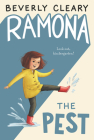
Eleanor and I just finished Ramona the Pest.  As you've written before, Beverly Cleary does a terrific job of communicating kid-logic.  Ramona's thought processes and obsessions feel age-appropriate, though there's also a clear adult sensibility in the narration, providing details which allow you to see what's going on beyond Ramona's understanding.  Ramona is exactly Eleanor's age in the book -- five years old, and starting kindergarten.  So there's some room for identification with a character there, but at the same time, Eleanor is not anywhere near the kind of rule-breaker Ramona is.  As we read about Ramona's inability to keep herself from pulling her classmate Susan's curls, even when she wants to please her teacher, Miss Binney, Eleanor seemed a little confused: why can't Ramona control herself better?

As foil to Ramona, there is of course her older sister Beezus, who follows rules, is concerned about reputation, and finds Ramona's uncontrollable behavior incredibly hard to deal with.  There's something to identify with there, too, in the older sister.  But of course Beezus isn't as interesting a character as Ramona.  We get one book from her perspective (Beezus and Ramona), as opposed to Ramona's seven.
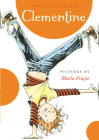
Clementine's
foil isn't a sibling (she has a younger brother, who she refers to with a changing variety of vegetable names: "Spinach," "Lima Bean"; at least in the first book, he's not much of a character), but her friend Margaret, who is neat, clean, organized, and rule-following. And, you know, less interesting than Clementine.
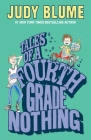
One of the few series I can think of in which the perspective stays with the better-behaved sibling is Judy Blume's Tales of a Fourth Grade Nothing.  Peter Hatcher narrates this and the following three books, recounting his tribulations as older brother to the rambunctious, rule-breaking Fudge.  Of course, the series is referred to as the Fudge Books.  I've always liked Peter as a narrator -- exasperated, but ultimately fond, taking responsibility for his little brother even as he feels like he's being driven crazy.  He's a nice guy, and the books are very funny.  And perhaps my own older-sibling status as I was growing up made me gravitate toward him, rather than Ramona.

On a final note, sad news: I read last night that this week we lost both Donald J. Sobel, author of the Encyclopedia Brown mysteries, and Else Holmelund Minarik, author of the Little Bear books, which are some of our most beloved here.  Both had long lives, but it's a loss just the same.

Love, Annie

Friday, March 25, 2011

Teen lit to pleasantly obsess both boys and girls

Dear Aunt Debbie,

Nice Publisher's Weekly piece!  I enjoyed your quotes.  It's always good to read an article that implies that the selling of real live books has a future.

I'm finding this conversation on YA lit for girls vs. boys fascinating.  I threw it out there to my network on Facebook, and got some interesting responses as well.  I'm going to summarize here (with few links, so I can get to bed some time tonight), and then focus in on three books which, in my experience, appeal across gender lines.

Male friends mentioned: Dungeons and Dragons rulebooks (tongue in cheek, but two more echoed it), Louis Lamour, Robin McKinley's The Hero and the Crown (dragon-fighting heroine -- I loved this one too), Isaac Asimov's Foundation series, Sherlock Holmes stories, Edgar Rice Burroughs's Tarzan books, the Oz series, the Lloyd Alexander Black Cauldron series, Susan Cooper's Dark is Rising series, the EarthSea Trilogy by Ursula LeGuin, Agatha Christie, Ian Fleming, Gregory McDonald's "Fletch" mysteries, and Judy Blume.  This last bunch come from my friend Mark (husband of excellent guest blogger Cyd), who wrote about Blume and YA realism several years ago here, in the Times.

Female friends mentioned: Lois Duncan, Christopher Pike, Sweet Valley High (I admit, I read them all too, borrowing them from friends in junior high), Gone With the Wind, A Wrinkle in Time, Judy Blume, Nancy Drew, Jane Eyre, Constance C. Green's A Girl Called Al series, and Richard Peck.

Definitely more sci-fi going on on the male side, but I was heartened by the amount of crossover. 

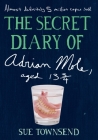
Jeff's cousin Megan wrote that she, her husband, and her sister all loved a book I hadn't thought about in ages: The Secret Diary of Adrian Mole, aged 13 3/4, by Sue Townsend.  It's the first book in a British series I discovered on my one childhood trip to England, and found massively funny.  Adrian Mole is a neurotic teenage boy, a fabulous unreliable narrator who keeps a diary recounting his obsessions and daily humiliations.  It's set in 1981-82, and I remember a great deal of focus on Charles and Diana's wedding.  I also read and loved the first sequel, The Growing Pains of Adrian Mole.  There are a bunch of other sequels following Adrian into adulthood.


My friend Zara mentioned another great junior high school love of mine.  Aside from Madeline L'Engle, the only science fiction I got truly obsessive about were Douglas Adams books: The Hitchhiker's Guide to the Galaxy trilogy (which is five books long), and the Dirk Gently books.  Adams's brand of offbeat, deadpan humor made me dissolve into laughter, and I devoured the stories of hapless Arthur Dent, off with his towel in space with Zaphod Beeblebrox.  The only gender discrepancy I remember in the Adams fan base of my youth was that I had a soft spot for So Long, and Thanks for All the Fish, the only book with a love story, while my male friends thought it was a little weaker.  It's also the one where Arthur learns the secret of flight: you fall, and forget to hit the ground.

Finally, there is The Westing Game, by Ellen Raskin.  Raskin calls her book "a puzzle mystery": the six apartments in brand-new Sunset Towers on the shores of Lake Michigan are rented out to families chosen for reasons which are only explained by the book's end.

Who were these people, these specially selected tenants?  They were mothers and fathers and children.  A dressmaker, a secretary, an inventor, a doctor, a judge.  And, oh yes, one was a bookie, one was a burglar, one was a bomber, and one was a mistake.  Barney Northrup had rented one of the apartments to the wrong person.

The empty Westing mansion looks down at them from up on the north cliff -- Sam Westing disappeared fifteen years before.  Then, on Halloween evening, smoke begins to rise from the chimney....

The cast of characters is decently diverse -- the judge is a black woman, the family who owns the top-floor restaurant are Chinese -- and one of the protagonists is a spunky 13-year old girl named Turtle Wexler.  The mystery is such that I didn't fully understand the ending the first time I read it (probably at age 10 or so), but loved it anyway.  It rewards rereading.

So I read it, and reread it, and then for years I forgot The Westing Game, until one day a year out of college, shortly before I was leaving the Boston area to move to Seattle for a year, I noticed it again on the bookshelf of a male friend I was just getting to know better.  He happened to have two copies; he had been obsessed with the book himself; he gave me one of them.  Reader, I married him.

Love, Annie