In which Annie (high school teacher, mother of two young girls and a younger boy) and her aunt Deborah (children's bookseller, mother of two young women in their 20s) discuss children's books and come up with annotated lists.

Showing posts with label Hyman. Show all posts

Wednesday, April 6, 2011

Revisiting . . .

Dear Annie,

We keep coming back to Trina Schart Hyman -- she's so good.  I want to put in a plug for another fairy tale she illustrated: Snow White.  It went out of print fairly recently, but I couldn't find a used copy for less than $39, and most are significantly more than that, alas.

She illustrates Snow White as a young teenager, which I like.  But the best part of her pictures is that the evil stepmother is really beautiful, not twisted and mean like the Disney version.  My scanner is still broken, so I can only show you the second-best picture, but you can still get my drift:


Well, capes based on books.  I've got a picture for that one too.  I've already told the story of Lizzie's 6 year-old hobbit birthday party for which I sewed 17 hobbit capes.  Here's Lizzie in her Bilbo Halloween costume (complete with wig) with the cape that became the prototype for the other 16.  I think it was a Simplicity pattern.  We used the wig again when she was John Lennon for Halloween in fifth grade.

And as long as I'm referring to past posts, I'd like to report that I read Jackaroo by Cynthia Voigt on my recent quick trip to New York -- all those hours on a bus were perfect for complete immersion.  Wonderful!  Gwyn is such a great character, and there are so many times in the book when Voigt creates many different levels of meaning and action.  How are the other books in Voigt's Kingdom series?  As good?

Love,
Deborah

Monday, April 4, 2011

Role play

Dear Aunt Debbie,

We are just getting into all the deep imaginative play at our house, and I'm looking forward to the ways in which Eleanor and Isabel will create worlds together.  Right now, we're gearing up for a costumed role play: Eleanor's friend is having a fairy tale costume birthday party next weekend.  I kind of expected Eleanor would go for a princess costume, but she's decided that we're all going as the characters from Little Red Riding Hood instead.  (She's Little Red, of course; I'm Grandma; Jeff and Isabel have both been cast as wolves.)

This current fascination owes a lot, I'm sure, to the gorgeous Trina Schart Hyman
Little Red Riding Hood
we recently bought.  We've both written before (here and here) about Hyman's lush illustrations, and this book is no exception.  There is such affection between the mother and Little Red, with their wisps of hair flying free of their bonnets.  Her older people -- the grandmother, the woodcutter -- look realistically tired.  Hyman often frames her pictures with wooden looking curlicues, turning the pages into Joseph Cornell-like boxes.  It makes the story feel old-fashioned, and also I think pleasingly contained -- this wolf is scary, certainly, but he's not about to leap off the page and attack you.

I'm taking a page from Playing By the Book's Zoey and trying to sew up a red riding hood out of a long red skirt.  Will let you know how that goes.

Love, Annie

Sunday, November 28, 2010

Hanukkah approaches!

Dear Annie,

'Tis the season of holidays, and this year they're coming fast and furious.  Hanukkah starts early this year: this Wednesday is the first night of Hanukkah.  It's made the usual build-to-a-late-December-crescendo in the toy store a little different this year.  Variety.  Always good.

I'm a big believer in kids having some understanding of major holidays in our society, even if not all of them are ones celebrated by their families.  Lizzie and Mona's private school dealt with the religion question with sequential immersion.  There was a big Christmas Assembly, with the first graders doing the Jesus/Mary/Joseph pageant, the headmaster reading The Grinch, and everyone singing a carol or two.  And come spring break, they'd have the Passover Assembly, with the kindergartners doing the plagues (ah, those hopping frogs), and Moses and Pharoah with their paper beards confronting each other.  The littlest ones got to ask the Four Questions.  Holidays from other traditions were discussed, but the Jewish/Christian mix was the big one for their school.

So, here for all of us, are my two favorite Hanukkah picture books:


Hershel and the Hanukkah Goblins
, by master storyteller Eric Kimmel, wonderfully illustrated by Trina Schart Hyman tells the story of a wandering beggar who finds a village which doesn't celebrate Hanukkah because a group of goblins has taken over the synagogue and harasses the populace.  Hershel sets out to evict them  by spending the eight nights of the holiday in the synagogue.  He outsmarts the goblins one by one on each night, managing to keep the candles burning every night.  (Lots of potential on the different-voices hamming it up front.)  On the last night he must face the dreaded King of the Goblins.  A good story.

And then there's
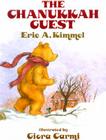
The Chanukkah Guest
, also by Eric Kimmel, illustrated by Giora Carmi, which does much more than just remind us there are many spellings of Chanukkah.  It's set in another village, where 97 year-old Bubba Brayna still makes the best latkes in town.  Smells of her cooking awaken a bear.  When he arrives at Bubba's house, the very near-sighted, hard-of-hearing old lady mistakes him for the rabbi, feeds him latkes, responds to his growls as though they were conversation, spins the dreidel with him, and sends him off with the scarf she has knitted for the rabbi.  There's lots of charming slapstick in these scenes.  Then her intended guests -- the rabbi and the villagers -- arrive and figure out what happened, to some worries and a lot of laughter.

May your holiday guests bring you much joy and a few surprises.

Love,

Deborah

Sunday, August 15, 2010

If it's gotta be a princess

Dear Annie,

I know I promised Good Parents (harder than I'd thought to find 'em), and I swear I'll do it next time.  But right now I want to suggest another way to stay on a princess-y path, but read more varied stuff.

King Arthur and other stories of brave knights, many of which include princesses.

I'll start with one of Lizzie's early favorites, Young Guinevere, a picture book by Robert D. San Souci.  It's a little off from the mainstream Arthurian stories, but it's about a princess who runs around in the woods and shoots bows and arrows and does stuff.  Ends with her going off to marry Arthur.  Out of print, alas, but I've included an Alibris link here.


You've talked about Trina Schart Hyman with your Rapunzel entries.  I'm fond of her art, and she has some very good illustrations for stories of knights and ladies, several of them done for retellings by Margaret Hodges, .  I'll start with
Merlin and the Making of the King
, which is structured like an early chapter book, and gives some of the basic Malory stories, with lush illustration.  A good introduction the the sword in the stone story, Morgan Le Fay, Lady of the Lake, Mordred and the death of Arthur.  I think it skims pretty lightly over Guenevere and Lancelot.

Hodges and Hyman also collaborated on two great picture books:
Saint George and the Dragon
is a retelling from The Faerie Queen. Hyman won the Caldecott Medal for best illustration for this one. It gets a bit gruesome at times: St. George does in the dragon rather graphically.  And if you happen to get this (I have no copy of it here in Maine, so I can't scan, alas), the elderly medieval couple on the back cover are portraits of the author and her husband, with the Green Mountains of Vermont where both Hodges and Hyman lived in the background.

Back to Malory, Hodges and Hyman did
The Kitchen Knight
, about Gawaine's brother Gareth and the sisters Linette and Linesse, neither of whom one could call a shrinking violet.

And just because I'm on a roll with Trina Schart Hyman, I want to include two others of hers:


Bearskin
, written by Howard Pyle, now out of print. About a young man raised by a very loving bear who must accomplish various tasks to win the hand of the princess he loves. What makes this edition of the story so special is that Hyman has given a wide range of ethnicities to the characters: the prince is Asian, the princess is black, her parents and the members of the court are a melange of many colors, all with lots of personality.

And on the subject of non-wimpy princesses, one last book, for an older crowd:
The Serpent Slayer
illustrated by Hyman and written by her daughter Katrin Tchana. It's a collection of retellings of fairy tales from around the world which showcase strong and fearless women.  Some of them pretty intense, as you can see from the cover.

Love,

Deborah

Friday, August 6, 2010

The harsh truths told by fairy tales

Dear Aunt Debbie,

Saffy's Angel: clearly another book to put on my library list.  You are turning me into a reader of YA books again.  Just whizzed through Catching Fire, the second book in the Hunger Games trilogy, and am already biting my nails for the third book to be released.  YA fiction can be so intensely gripping.

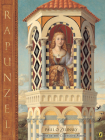
But YA books aren't the only ones that deal with dark themes.  I mentioned a month ago that we'd been reading Eleanor a gorgeously illustrated version of Rapunzel (retold by Barbara Rogasky, illustrated by Trina Schart Hyman); last week, we bought another Rapunzel, this one retold and illustrated by Paul O. Zelinsky.  Again, it was the illustrations that drew us to the book: Zelinsky's oil paintings have a Renaissance feel, really stunning.  Where Trina Schart Hyman's illustrations are lush and storybook:


Zelinsky's are crisp and dramatic:


Much of the story is the same in both books, including the difficult parts: the parents losing their child to the witch; Rapunzel being locked in the tower, the prince's fall and blinding after the witch catches him.  The main difference between them is the way in which the witch (sorceress, in Zelinsky's version) finds out about the prince.  In Rogasky's telling, Rapunzel is weaving a ladder from pieces of silk the prince brings her, so they can escape together:

     After some time, the ladder was almost finished, and Mother Gothel still knew nothing.  But one day, when Rapunzel had watched the witch make her clumsy climb to the tower room, the girl forgot her secret.
      "Mother Gothel," she said, "how is it that it takes you so long to climb up here when the king's son does it so fast?"
      "Oh, wretched girl!" The witch flew into a rage.  "Wicked, ungrateful child!  I thought I had hidden you from all the world.  I thought I had given you all your heart could desire.  And now you have betrayed me!"

In Zelinsky's retelling, there is no escape plan, and he mentions that Rapunzel and the prince hold a marriage ceremony for themselves on the first night the prince visits.  Time passes, and then: 


     One day when the sorceress entered the tower, Rapunzel said, "If you please, Stepmother, help me with my dress.  It is growing so tight around my waist, it doesn't want to fit me anymore."
       Instantly the sorceress understood what Rapunzel did not.  "Oh, you wicked child!" she shrieked.  "What do I hear you say?  I thought I had kept you safe, away from the whole world, but you have betrayed me!"


 Check out the convex mirror on the table, reinforcing the pregnancy theme.

In the first version, Rapunzel comes off as a little dumb; in the second, she's a sexual innocent, and the revelation of her love is something she couldn't possibly suppress.  Reading this version prompted Eleanor to ask, as she didn't when the Rogasky/Hyman Rapunzel had twin babies in the wilderness, "How did she get pregnant?"

Fairy tales are so elemental, so stark.  Abandonment, death, marriage, childbirth.  I love them, and so does Eleanor, but it's a little bizarre that they are among the first stories we tell our children.  If these themes appeared in contemporary children's books, would anybody read them?  Is it our own familiarity with certain stories that allows us to comfortably introduce them to our children?

Love, Annie

Friday, July 2, 2010

The Scary Parts

Dear Aunt Debbie,

Oh, I hope that they'll reprint the Michael Hague-illustrated The Lion, the Witch, and the Wardrobe. I'll have to check out his Tolkien, too, when we get to that age.  I wasn't a huge Tolkien fan myself, though I did eventually read them all (and saw all the movies).  I remember getting stuck on the beginning of The Hobbit at least three times, as Tolkien went on and on about every detail of the entrance hallway, just before Bilbo Baggins left his house for the rest of the book.  But I know Lizzie loved the books; I remember visiting your house when she was in high school and marveling at the life-sized cutout of Viggo Mortensen as Aragorn propped up in the corner of her room.

So what is the right age to introduce your kids to books with scary bits?  After my last post, my good friend Cyd commented about her daughter Rebekah's strong reaction to the dog running away in Beverly Cleary's Ribsy, saying that she couldn't believe Eleanor (a month younger than Rebekah) was ready for Narnia.  This got me thinking about what does and doesn't scare Eleanor, and why.

My theory is that things like witches (which she knows are imaginary) and death (which she doesn't fully understand), are far less scary to Eleanor than things closer to home.  Rebekah really does have a wonderful dog of her own, so I can imagine that the thought of a dog getting lost and not being able to find his way home would be extremely frightening.  When we watched the movie Up with Eleanor, the moment which upset her most was when Carl, the old man, lost his house.  Eleanor burst into tears: "But where is he going to live?"  Out of all the frightening and sad things that had happened in the movie, this was the one she could relate to most.

We've read a number of fairy tales with Eleanor, and I've been surprised by her hardiness in the face of awful plot developments.  We have a gorgeous edition of Rapunzel illustrated by Trina Schart Hyman from the library right now, and of course I didn't pre-read it before we read it together, and I had forgotten how dark it is.  Rapunzel's parents have their baby taken from them by the witch, and never see her again; Rapunzel grows up with no contact with anyone but her witch-mother, and is locked away by her when she turns twelve (such interesting puberty-related issues there!); after the witch has discovered Rapunzel's relationship with the prince, she attacks him and he falls from the tower, landing on thorn bushes which poke his eyes and blind him.  Rough stuff.  When faced with this (or with the White Witch, or Aslan's death), Eleanor has taken to doing what she does during the scary parts of movies: she gets a blanket and hides in it.  She doesn't want me to stop reading, and in fact will say "I like the scary parts," but she wants to hide nonetheless, and will turn away even from a book, like Narnia, that doesn't have pictures on every page.  It's a measure of control, I suppose.

I'm trying to go along with where she seems to be, prepping her for some of the scary parts when it's something I've read beforehand (that's what we did with The Wizard of Oz, and with Narnia), and stopping when she wants to.  As in so many other aspects of life, we do our best to follow her lead and enjoy the surprises along the way.

Love, Annie