In which Annie (high school teacher, mother of two young girls and a younger boy) and her aunt Deborah (children's bookseller, mother of two young women in their 20s) discuss children's books and come up with annotated lists.

Showing posts with label David Wiesner. Show all posts

Monday, October 21, 2013

Adventuresome boys

Dear Aunt Debbie,

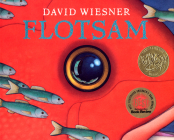
As soon as I saw those little green aliens, I recognized the hand of David Wiesner -- they're clearly related to the undersea tourists in Flotsam:


I look forward to Mr. Wuffles!

In the last few weeks, I've had a couple of conversations with parents of boys around Eleanor's age and a little older -- 7-10 year olds -- about books to encourage independent reading. One mom said that her son was only interested in non-fiction; one that hers was mired in Captain Underpants and its ilk. Both were looking for ways to broaden their kids' reading habits.

I suggested that they check out our book lists of early chapter books and middle grade books, and thought in particular of Hero on a Bicycle, Little House in the Big Woods and Farmer Boy, and The Search for Delicious.  I realize, however, that middle grade books are not my area of expertise, and would love to ask you to weigh in.

You've written before about the unfortunate tendency of both publishers and consumers to designate books as "girls' books" or "boys' books," and the assumption that girls will read about male characters, while boys won't read about female characters. Many books are marketed with covers that pigeonhole them by gender, even if their content doesn't. When I mentioned that Eleanor was reading the American Girl books obsessively (30 books to date, and counting), and that I was impressed by the writing and historical detail in them, one mom wondered if there were an equivalent "for boys." Much as I'd like to say that boys would enjoy these adventure and history-filled narratives too, I know it's a hard sell to get an eight-year-old boy to carry around books emblazoned with "American Girl" on the cover. Is there a boy/more gender neutral version of this kind of historical fiction out there?

Happily, Eleanor and Isabel don't have any qualms about cross-gender reading. In easing Isabel into chapter books, in fact, we've recently been reading a number of books with boys as main characters. Two of your recommendations have been big hits.

Isabel liked Stink: The Incredible Shrinking Kid, partly because of the comic book/superhero retellings at the end of each chapter. I wasn't crazy about the book. I made the mistake of not reading through it first on my own (though you warned me to do so!), and was blindsided by the rather grisly death of Stink's class pet, a newt named Newton.  He jumps out of Judy Moody's hands and down into the drain of the kitchen sink while they're cleaning his tank. Judy goes to turn on the light switch to look for him, and hits the garbage disposal switch instead. Isabel was more interested than upset by this development, and requested repeated readings of the chapter, but I can see plenty of kids of both genders who might dissolve into tears.
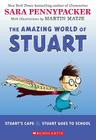
We're both big fans of The Amazing World of Stuart, by Sara Pennypacker.  Stuart, age 8, has just moved to a new town and is worried about making friends and upset that all of his treasures were thrown away accidentally because they looked like trash.  He copes by making a cape out of 100 ties (he staples them together, with a lone purple sock as a hidden pocket).  In each of the following chapters, the cape's magic sets off an adventure: Stuart finds seeds in the pocket and grows giant plants bearing hot buttered toast; Stuart's cat and his neighborhood sanitation man switch bodies, and Stuart has to pick up the trash; Stuart gets locked in the bathroom at school and sneaks out through a hole which he can fold up and put in his pocket.  There is no discussion of the weirdness or improbability of these events.  Stuart's parents seem oblivious to them, and I wondered at first whether all would be revealed as Stuart's imagination, but that never happens either.  Isabel is lately into telling a lot of largely made-up stories about her own life, and continues to want Little Nemo above all other reading at night, so a book which blends the realistic and the fantastical is right up her alley.  We're reading it on repeat. Thank you for this one!

Love, Annie

Wednesday, October 16, 2013

Cat vs. aliens

Dear Annie,

Some evenings I sit here in the dining room facing a large box full of F and Gs, "Folded and gathered": the book business term for unbound picture books which are sent out as samples to book buyers.  So I admit I occasionally blast through them kind of quickly, looking for something that will catch my eye and slow me down enough to read it thoroughly.  Last spring I was moving along so rapidly that when I found a wonderfully strange wordless book, I didn't even notice the name of the author.

It was about a house cat who discovers a very small alien space ship which looks remarkably like a cat toy:
 The cat bats it around, causing the little green people in the vehicle to sustain alien bruises, hold their heads, and discover that a crucial piece of equipment has been broken.  So they leave the ship and make a run for it...
...  to safety beneath a radiator.  There they find a series of paintings showing that the cat has been terrifying small beings for a while:

 They also discover the ants and ladybugs who seem to have been doing the painting.  It may be hard to see in this picture, but the insects are speaking a language very different from the aliens'.  This leads the green people to draw a picture of the cat chasing their spaceship, and ants and aliens become friends.  They post for pictures (note the green people saying "cheese!"), share food, and get better at communicating:

While the cat sits mesmerized outside the radiator cover, the insects find the solution to the broken equipment problem and the group comes up with a game plan to get the aliens back to their ship.  There's a photo finish, and a lovely ending.

What a book!  When I closed the F&G, imagine my surprise when I discovered the author/illustrator is the great David Wiesner, creator of Flotsam, Tuesday, Art & Max, and several other amazing books.  He's won the Caldecott Medal for best illustration three times.

He's done another amazing one with
Mr. Wuffles!, which went on sale this week.  The plot is delightful, but there are so many other aspects.  The emotions of aliens and ants are so vividly described in body language.  And Wiesner's alien language in the speech bubbles makes me want to try decoding it.  I haven't even described any of the cat/human interaction in this story, and the pitch-perfect way Wiesner captures both feline indifference and cat obsessive concentration.

So here's a great little video from Wiesner explaining the book and giving action shots of the model for Mr. W.  (Not a cat video!).


Love,

Deborah


Monday, August 29, 2011

After the hurricane

Dear Annie,

I know some of those September 11 books and will devote a post to them soon.  Right now, we're about to be on the road trying to get home after Hurricane Irene blasted up the I-95 corridor just before we were going to take that route home to DC.  So we're still in New England, not badly blown about, but I thought I'd do a short list of hurricane books.

Time of Wonder, by Robert McCloskey, which we've written about here (look again at those great windy illustrations!) is the first that comes to mind.  The build-up, the drama, the aftermath, complete with downed tree.
Hurricane
, by David Wiesner (whose works we've explored here and here), is another picture book which does the storm, then lingers on the fantasy world of playing in a fallen tree.
And where would a good natural phenomenon be without Ms. Frizzle?
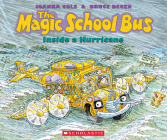
The Magic School Bus Inside a Hurricane
gives the explanation for what's going on in Joanna Cole's usual breezy funny fact-filled style.  The bus starts as a hot-air balloon, then transforms into the airplane on the cover of the book. 

These picture books are about hurricanes which have their scary moments, but are something to get through basically unscathed.  On a much more serious level, for kids about ten and up, Dark Water Rising by Marian Hale is a fictional account of the 1900 Galveston Texas hurricane.  Wikipedia calls it the most deadly natural disaster ever in the U.S.: thousands of people died when Galveston was submerged by a hurricane.  The book follows one 16 year-old boy through a horrifying night as he watches much of the city being swept away. 

A number of books have been written -- from picture books about lost dogs to a magical/fantasy book for teens -- about Katrina, and they keep coming out.  I'm without scanner or my bookshelves right now, so can't explore that route -- but they're out there.

In the meantime, I'm off to pack the car, hit the road, and inspect the damage back home.  Am worried about all those books in the store staying dry...

Love,

Deborah

Thursday, January 13, 2011

Moon Over What?

Dear Annie,

I hope that grading your students' portfolios is bringing you much pleasure, even as it consumes your time.  I really liked Cyd's guest blog entry.  I haven't looked closely enough at Close Your Eyes -- it's on my to-order list right now.

My week started with what is now for me a once-a-year ritual: Monday morning I was holed up in my bosses' house across the street from our store, with their home office computer playing the live webcast of  the American Library Association awards. Their teenage daughter's laptop was on the desk (thank you, Zoe), open to the ordering page of a national book wholesaler. As soon as a winner was announced for one of the four or five big awards, I'd enter it in the shopping cart and pray there was still available stock. The winners often sell out within minutes after the announcement. Every year there are one or two books from small publishers who had no idea they were about to hit the jackpot, and it takes two months for them to get another print run going. So if I don't get an order in immediately, it could be a while before I'll have those books in stock. The whole process is both nerve-wracking and fun; when I worked in television news, the adrenaline rushes were more or less daily, but in the book business, there are very few moments when one  has the opportunity to react well under pressure.

And, as in the news business, the excitement of it all tends to distract from the content. It's taking me a while to process some of the winners. Very little this year was predictable. The biggest surprise, for me, was the Newbery medal (for best children's literature), which went to
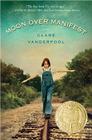
Moon over Manifest
, by Clare Vanderpool.  She's a first-time author who wrote the book over the course of five years when her four children were growing up.  I hadn't read the book -- reviews describing the 12 year-old heroine as "plucky" and "scrappy" put me off a bit.  I'm about a third of the way through it now, haven't formed a coherent opinion yet -- will report more soon.  It's the story of a small town during the Depression.  There was no clear front-runner in this contest this year, but I was sad that two of my favorites, Countdown and A Tale Dark and Grimm were completely iced out.  They're still great books, I'll still be able to sell them, but these awards really do have a big influence on demand and publishers' allocation of resources.  It's funny, I have to disengage from the books I was rooting for before being able to appreciate the chosen few.

The other surprise was the Caldecott Medal, which went to
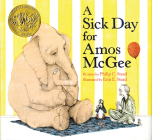
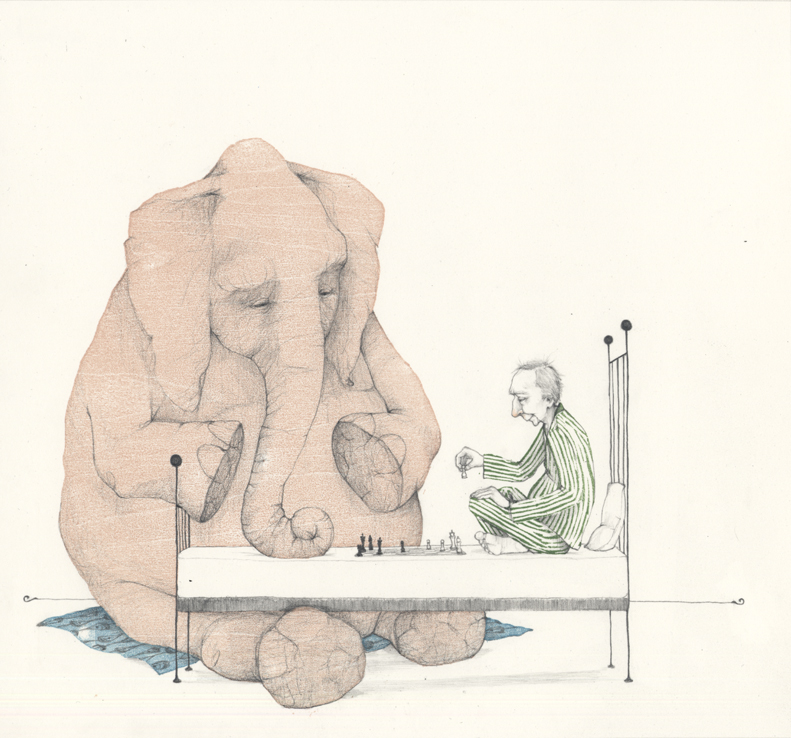
A Sick Day for Amos McGee
, illustrated by Erin Stead. It's a lovely book, in many senses of the word. The text, written by the illustrator's husband Philip Stead, tells a sweet and quiet story of a zookeeper who tends his charges lovingly:


When he gets sick, some of them leave the zoo and go to his house to take care of him. The illustrations are wonderful: full of feeling, and with enough going on that you can keep discovering things in subsequent readings.  It's great and definitely merited the big award.


But with the Caldecott, there was also, so to speak, the elephant in the room: David Wiesner's
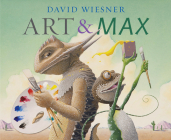
Art and Max
. I've really enjoyed this book (see blog entry from back in October) and have had a lot of fun watching both kids and adults read it for the first time. All year it's been clear this is a very wonderful book.  But Wiesner is also the winner of three previous much-deserved Caldecott medals.  It's clear the award committee decided to look to other candidates -- Art and Max didn't even receive an Honor.  It's one of those questions one can debate at length: should a clear front-runner be passed by to make room for newer talent?  I don't have an answer on this one, and I think it's great that the Steads' book won, but something seems vaguely not-right in here somewhere.

In the meantime, I've got several more award-winning books to catch up on -- a task I'm looking forward to.

Love,

Deborah

Wednesday, October 13, 2010

weird and wonderful

Dear Annie,

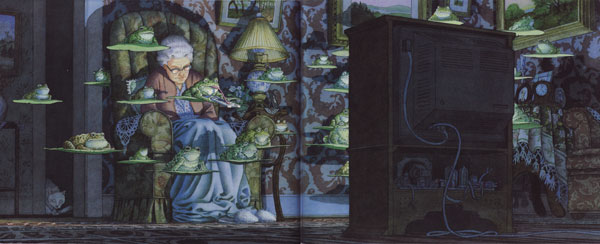
David Wiesner does such amazing books.  After your post of those great Flotsam pictures, I thought I'd add two from Tuesday.  Frogs arise from a pond at 8 p.m. on a Tuesday evening, floating on lily pads, and end up in a town observing the locals and wreaking a little mischief.  As with Flotsam, there's always lots going on in every picture:


He's just released a new one (it's been four years since Flotsam):

Art & Max
.  It's much more exuberant than either of the other two books we've been talking about. Arthur is a takes-himself-so-seriously Artist, and his friend Max is an enthusiastic and clueless newbie to painting.  When Max wonders what he should paint, Arthur suggests, "you could paint me."  Max then covers Arthur with paint:
The process of trying to remove the paint reduces Arthur to a line drawing, then he unravels to a scribble.  Max has to rebuild his friend, all the while gaining confidence in his artistic abilities.

It all ends happily, with each character (lizard?) taking on a bit of the creative approach of the other. 

I'm curious what your group of three year-olds would think of it.  It seems to me to be both very sophisticated in its approach to the process of making art, yet it also has a straightforward plot, brimming with energy.

The new store opened its doors for business today, despite the fact that we still haven't received shipments from two major publishers.  So we opened without Goodnight Moon, but Harper swears it will be there on Friday.

Love,

Deborah

Monday, October 11, 2010

Living happily in our cloud of words (and pictures)

Dear Aunt Debbie,

It's funny -- when we started reading chapter books with Eleanor, I had the brief worried thought: Does this mean we're leaving behind our wonderful stash of picture books?  But of course it doesn't.  Even if we didn't have Isabel coming up through the ranks, thrusting her dog-themed board books at me and insisting, "Woof!", Eleanor moves easily among different kinds of books.  Like all readers, sometimes she's in the mood for one thing, and sometimes another.  Me too. 

I can see how, especially in a recession, parents might balk at buying a lot of brand-new hardcover picture books, at close to $20 a pop -- I do.  As I've mentioned several times, we often make the library our testing ground, and then buy the books we've checked out repeatedly.  But have you noticed, as a bookseller, anything like the "trend" the Times is reporting on?

One of the library books Eleanor has fallen in love with this week is a wordless book you wrote about back in May: Flotsam, by David Wiesner.  It's such a gorgeous book, and so rich -- Jeff and I have found ourselves poring over it as well.  Eleanor has been reading it a lot, both talking it through with us and just staring into the pages as she drinks her milk in the morning.  In Flotsam, a curious boy already examining crabs on the beach finds an old underwater camera, develops the film in it, and sees extraordinary underwater scenes: mechanical fish, a family of octopi reclining on living room furniture, giant starfish stretching with islands on their backs, and finally an explanation of the camera's provenance. 


I wonder what Eleanor makes of some of it.  I look at these pictures and tease out what is real and what's fantastical.  But here's Eleanor, for whom magnifying glasses, microscopes, and old-fashioned film developing are just as strange and wonderful as the magical bits are to me.  I think this is one I'll shell out the bucks for, maybe for Christmas.  I'd like to have it around so the girls can easily re-read it as they get older.
 
Your also post reminds me that I need to write at some point about more of the classics: Maurice Sendak, Robert McCloskey.  I'll get on that soon.

Love, Annie

Sunday, May 23, 2010

Beyond Words

Dear Annie,

A delightful Dutch book arrived from a publisher this week, reminding me just how varied wordless books can be. This one, called
The Surprise
, by Sylvia van Ommen, follows a serious and industrious sheep while it takes a bath, rides a motorbike to go to the store, buys red dye, dyes its wool (while it’s still on), shears itself, etc., all the way through knitting a gift for a friend. It’s both whimsical and very clear and straightforward.

Peggy Rathmann is the queen of toddler/preschooler wordless books, with both
Good Night Gorilla
, a hilarious and simple story about a mass zoo escape (the goal is to sleep in the zoo-keeper's house), and
10 Minutes till Bedtime
about a boy getting ready for bed while a tour group of hamsters complicates the process. It’s all in the details, and there are lots of them. You can spend many minutes, if not hours, discovering all the things going on in each picture. And it has a number of references in it to Good Night Gorilla.

In Quentin Blake's
Clown
, a group of toys is thrown out, and the clown doll sets out to find a new home for all of them. He has setbacks along the way, but ultimately finds a family in need of some cheering up, and they all end up happily together. Blake -- perhaps best-known for his illustrations of Roald Dahl books -- puts lots of emotion into this one.

David Wiesner does more complex, weirder and (sometimes) darker wordless books, but for an older child, they're quite wonderful. In
Tuesday
, frogs float out of a swamp one evening on lily pads and have adventures in town, turning back into their land-based selves at the end of the evening. The pictures are amazing, bordering on the eerie, with details one can keep finding on re-readings. And his
Flotsam
puts a washed-up camera at the feet of a boy exploring the beach. He develops the film in the camera, finding fantastic pictures of magical underwater worlds, and self-portraits of other children who have found the camera. At the end, he takes a picture of himself, and sends the camera back into the waves.

I'll end at the ocean still, on another younger book.
Wave
, by Suzy Lee, shows a girl's day at the beach, with all the wonder and occasional overwhelmingness of the waves. Lovely.

So now that I've listed these, I'm wondering how you as the reader in the parent/child group, feel about wordless books. A welcome change? An extra task (now I've got to make up the story too...)? Something that can be read without you around? What do you think of them?

Love,

Deborah