In which Annie (high school teacher, mother of two young girls and a younger boy) and her aunt Deborah (children's bookseller, mother of two young women in their 20s) discuss children's books and come up with annotated lists.

Showing posts with label D'Aulaire. Show all posts

Saturday, August 9, 2014

Greek gods as superheroes? Oh, yes.

Dear Aunt Debbie,

I adore William Steig's vocabulary. What a find!

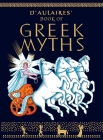
In the midst of packing to move, with all the drama and unsettling that provides, we are deep into mythology right now. I've written before about my childhood obsession with D'Aulaires' Book of Greek Myths. I broke it out for the first time close to four years ago with Eleanor, when she was too young for many of the stories but enjoyed the pictures. Two years later, I read a number of the myths with her -- the ones at the beginning, focused on the twelve Olympians, we read multiple times. Several weeks ago, we took the book out again, and Isabel was hooked. The D'Aulaires include illustrations on every page to satisfy my visual daughter.

Happily, it was a read-aloud to satisfy both Eleanor and Isabel at the same time. Most mornings and nights, we'd read together; sometimes Eleanor would read her own book, and I'd re-read Isabel one or two of the myths she requested. (And where was Will? Sometimes with Jeff; often playing on the floor or sitting on my lap and putting things down my shirt while I held the book open behind him; sometimes shutting the book and shoving his board books at me. Three is more complicated than two.)

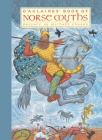
After we'd finished the Greeks, cover to cover, we started in on D'Aulaires' Book of Norse Myths, which your girls loved so much. Again, total buy-in from both girls (though Isabel asked, quite early in the book, "Where are all the goddesses?" Say what you will about the Greeks and their gender issues; they did a great job with equal representation.)

And then I remembered to look in my closet.

Two years ago, when Eleanor decided to dress up as Athena for Halloween, you gave us George O'Connor's graphic novel Athena: Grey-Eyed Goddess, with the warning that we should preview it to make sure it wasn't too violent for Eleanor. I flipped through it, saw a couple of images that made me think it might not be the right time, and put it on a shelf in my closet, meaning to read it through when I had the chance. Like I said, that was two years ago.

I was a fool to let it sit so long. George O'Connor's Olympians series is absolute genius. There are six so far: Zeus: King of the Gods, Athena: Grey-Eyed Goddess, Hera: The Goddess and Her Glory, Hades: Lord of the Dead, Poseidon: Earth Shaker, and Aphrodite: Goddess of Love. They're coming out as a boxed set this October. We currently have them all out from the library, but we're going to need to buy them.

What makes these books so, so good? O'Connor is a Greek myth nerd from way back, and in writing and illustrating his graphic novels, he draws on lots of original sources. Reading his author's notes at the end of each book, it's clear that O'Connor has thought deeply about how to present each of the gods, choosing which aspects of their stories to include to shape a fully-rounded and complex picture of each of them. There is rich characterization here.

This is true particularly of the goddesses. O'Connor provides about as feminist a reading of Greek mythology as I think you can make, given the material. In Hades: Lord of the Dead, Persephone speaks up against being treated like a pawn by her kidnapper Hades and her mother Demeter. Ultimately, she enjoys the prospect of being Queen of the Underworld, and (in one of what I think are very few moments where O'Connor actually changes the source material) she chooses to return to Hades, rather than being forced to because she absentmindedly ate a few pomegranate seeds.

In O'Connor's telling, Hera is much more than just a jealous spouse, making life difficult for Zeus and his illegitimate children. She has a keen sense of humor, and seems very much in control of herself. Hera's tormenting of Heracles is depicted as a way to help him become the greatest hero on earth, and made more complex by the inclusion of an episode where she nurses him as an infant in order to save his life:


You may notice here that Heracles is dark-skinned. So is Aphrodite, and so are a host of other more minor characters -- there's some diversity going on, which is also nice.

O'Connor's illustrations are both thoughtful and gripping. The gods appear as Marvel-comics versions of themselves -- lots of rippling muscles and glaring faces, lots of action sequences when recounting the Olympians' many battles. But there are so many subtle touches. The Titans are dark and shadowy, their heads touching the sky, reddish clouds floating about their heads like hair:


Poseidon's son, the Cyclops Polyphemos, has a head modeled on the skull of an elephant, because O'Connor is drawing on the theory that the ancient Greeks discovered mastodon skulls and mistook the trunk hole for a single eye socket, giving rise to the legend of the Cyclopes:


I should note here that this episode in Poseidon:Earth Shaker is fairly graphic. I'm far less concerned about exposing my kids to violence in graphic novels after reading all of the Bone series with Eleanor and Isabel -- the last book, in particular, is quite bloody. Still, even Isabel paused over Polyphemos eating Odysseus's men two at a time, and Odysseus driving a sharpened stake into his eye. ("I don't like that part," she said, looking at it again.)

In some ways, I'm glad we're discovering the series now rather than two years ago. Eleanor is reading them on her own, and returning on her own to the excellent material included at the end of each book: O'Connor's footnotes, which he calls "G[r]eek Notes"; author's notes; character profile pages; questions for discussion. She came out of her room tonight after Isabel and Will were asleep and wanted to discuss Question 7 at the end of Aphrodite: Goddess of Love: "Very few people believe in the Greek gods today. Why do you think it is important that we still learn about them?" Eleanor's answer: because it's the way to pass the stories on to future generations, and then if people want to believe in them again, they can. Then she combed through the end pages and wrote a list of one of the sacred plants of each god before finally going to bed.

My heart sings.

Love, Annie

Monday, September 17, 2012

The lure of Greek mythology

Dear Aunt Debbie,

I have a feeling that Nicholas Flamel is in Eleanor's future.  We're back to Greek mythology here in our house, poring over the pages of D'Aulaires' Book of Greek Myths with obsessive interest.  I wrote almost two years ago about our first dip into the book, and wondered what would spark Eleanor's interest in it when she got a little older.  The answer?  Halloween.

For a month or more, Eleanor had been pushing to dress up as Daenerys Targaryen, the teenage Mother of Dragons from George R.R. Martin's Game of Thrones series.  Jeff and I have both been reading the books, and Eleanor asks about the stories in them, so Jeff had told her a few highly edited bits, and she thought Daenerys sounded awesome.  Baby dragons!  Being familiar with more of the (sexy, violent) plot, I wasn't a fan of the idea.  Eleanor's best friend, Ian, decided to dress up as a dragon, then as a dragon with multiple heads, and started calling himself a hydra.  Mythology!  I thought, and brought out the D'Aulaires'.

We started by looking at the pantheon (image in my earlier post), and then reading all the stories about the major goddesses: Artemis, Athena, Aphrodite, Hera, Persephone.  Artemis was interesting to Eleanor for a moment, but she comes off as fairly cruel in the whole turning Actaeon into a deer and letting his hounds kill him just because he sees her bathing episode.  Hera doesn't have much going for her in the role of jealous wife.  Aphrodite was of course the goddess I cast myself as when I was a little older than Eleanor, but not a particularly empathetic character, and a little hard to make a costume for.  Frankly, I was plugging for Athena the whole time, and am very happy that's where we've ended up.  We bought supplies today to make her breastplate (with Medusa's head on it, no less), spear, helmet, and owl.  We're ready to go.

And Eleanor doesn't want to put the book down.  We went back and started at the beginning, with Gaia and Uranus coming together to produce their Titan children and then their hideous monsters.  Now we're reading straight through: tale after tale filled with...well...sex and violence.  When you place them side by side, the Greek myths don't actually come off much cleaner or more kid-appropriate than Game of Thrones.  The D'Aulaires wrote them in kid-friendly language (Zeus has many "wives"), but there's no getting around the intensity of death and kidnapping, even when you elide all the rape.  Along with killing Actaeon, Artemis and her twin, Apollo, kill all 14 of Niobe's children because Niobe has a big ego and a bigger mouth.  It's heavy stuff.

On the other hand, Isabel is going as Minnie Mouse.  It's nice to have two.

Love, Annie

Tuesday, September 27, 2011

Big and little

Dear Aunt Debbie,

We've spent much of the last few days celebrating Isabel's second birthday, and so have had plenty of opportunity to think about questions of aging, looking forward and looking back, as you do in your last post.  Isabel is working through what it means to be growing, not big yet, but not truly small either.  The repeated dialogue:

Isabel: "I'm little."
Me: "Yes, you are."
Isabel (emphatic): "I'm bigger!"

And of course, they're both true.

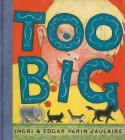
All this had me thinking about a lovely little book by Ingri and Edgar Parin D'Aulaire, the couple who gave us all those fabulous Greek and Norse myths.

Too Big
is the story of a little boy who wakes up and finds he is too big for his clothes:

He could not get into his little pants because he was
TOO BIG.
He could not get into his little coat because he was
TOO BIG.

The little boy is also too big to lift his cat by the tail, ride on his dog (the poor pained dog splays out its legs), or ride the horse.  The happy ending is paradoxical:

"Never mind," said the little boy.
"I'll grow bigger
and bigger
and when I grow up
I will ride on an
ELEPHANT."

Some of the logic in the book escapes me: how exactly can you be too big to lift a cat by the tail, or to ride a horse?  But the conclusion the boy comes to makes a kind of child mind sense.  I'm not little anymore, and I'm getting bigger, so clearly I will be enormous, and end up getting to do things I can't do yet.

The D'Aulaires' illustrations alternate between full-color and black-and-white spreads, each page filled with energy and movement.  It's a charming, short, picture-filled book, and both girls have loved it.  Nice to have a way to talk about a sense of scale.

Love, Annie

Sunday, November 7, 2010

Mythology: moving north

Dear Annie,

Yes, I would definitely cast Grandma (my mother) as Athena, the smart warrior, rather than Hera, the vengeful jealous spouse.  Athena fits much better.  D'Aulaires' Greek myths are wonderful.  Greek mythology is going through a big resurgence with middle-graders these days thanks to a former middle school teacher who's written a series of 21st-century fantasy novels with contemporary characters who discover they're the half-mortal children of Greek gods and goddesses.  The Lightning Thief and sequels by Rick Riordan have been wildly popular.  In terms of literary merit, they're a bit too slam-bam action-action-action for my taste, but they've whetted the appetite of the post-Harry Potter generation for mythology.

In our household, while we loved the Greek myths, we came back many times to
D'Aulaires' Book of Norse Myths
. They gave the Norse myths the same written-for-kids but not dumbed-down treatment.  I like the Norse gods better: they're not as pouty, although they're certainly plenty quarrelsome.  And they were ultimately mortal: killed off when Christianity arrived. The central caring-but-tragic relationship between Odin and the trickster Loki is wonderful.  And many of the stories have a great sense of humor.  Consider the story of Skade, a maiden from the rival world of the Jotun.  The Norse gods have killed her father and she demands that they pay a fine.  They offer her a Norse god as a husband, thus elevating her to goddess status.  She agrees, on the condition that they must first make her laugh.  Loki ties himself to a billy goat, eventually resulting in laughter.  Then they give her the pick of the gods, on the condition that she must choose by looking only at their legs -- which she's clearly giving much thought to in this illustration:
She ends up picking Njord, who loves the seashore, while she's a big skier and loves the mountains.  They spend nine days at the seashore, and another nine in the mountains, then agree to live separately.  "Thereafter he and Skade seldom saw each other, but in a friendly fashion they went together to all godly gatherings.  Skade stayed in her mountains and become the goddess of skiers."

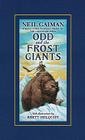
And while we're on the subject of the Norse crowd, I'm quite fond of a recent book by Neil Gaiman,
Odd and the Frost Giants
.  In it, a boy leaves his village on a fjord and in the wild meets a bear, a fox and an eagle.  While they believe he's asleep, the animals speak with each other, but when Odd says he's been listening, they deny (in words) that they can speak.  It turns out that they're Thor, Loki and Odin, enchanted into their current forms and kicked out of Asgard, the home of the gods, by the Frost Giants.  The three spend much of their time bickering amusingly, while Odd turns out to be the only one with any common sense.  He ultimately acts sensibly and bravely and restores the gods to their home.  It's quite short, a good early chapter book  Gives one a taste for the Norse stories.

Love,

Deborah

Friday, November 5, 2010

Cultivating an early obsession with Greek mythology

Dear Aunt Debbie,

Thanks for the well-wishes!  I'm sure it will be fine -- we'll prep Eleanor for the filling, read some books, and make sure she gets novocaine or the like.  With any luck, she won't have any traumatizing memories later....

Earlier today, I was having a conversation with an art teacher friend of mine about getting through a section of the syllabus jam-packed with Greek and Roman art, which she doesn't find as interesting as Renaissance-and-later work.  She mentioned that part of the difficulty was not being able to keep all the stories straight.  My immediate reaction was to recommend to her the book which taught me everything I could possibly need to know about Greek mythology, a book I pored over for hours at a time in early elementary school:  D'Aulaires' Book of Greek Myths.

It is because of Ingri and Edgar Parin D'Aulaire that I learned the Greek gods and goddesses the way some kids learn dinosaurs: obsessively, insanely, down to every last attribute.  At age seven, I decided to believe in the Greek gods, and whispered prayers to Aphrodite into a little pink shell necklace I wore.  I cast all the members of my family as gods and goddesses of the Greek pantheon: My mom was Demeter, my dad Dionysus, Michael was the baby Hermes, I was of course Aphrodite, Grandpa was Zeus, and Grandma was either Hera (because she was married to Zeus) or Athena (much more like her, really).  Looking back, I think I actually did a pretty good job.

What makes the D'Aulaires's book so incredibly good?  It's a combination of the retelling of the tales -- totally accessible to a wide age-range, but full of the original details, sexy and grisly as they often are -- and the extraordinary drawings.  The drawings are done in colored pencil; some full-color, some black and white, some in a sort of sepia-toned black on brown.  This is how I will forever see the gods on Mount Olympus:

Hera and her henchman Argus with the captive Io:

Athena emerging from Zeus's head:


Persephone being pulled down into the underworld by Hades:


I've read some of the stories with Eleanor, though she's still a little young for the whole book.  The story she's most taken by is Demeter and Persephone, which makes sense: it's the story of the enforced separation of a mother and daughter, a primal and intense idea.  I look forward to seeing what catches her imagination as she gets a little older.

Love, Annie