In which Annie (high school teacher, mother of two young girls and a younger boy) and her aunt Deborah (children's bookseller, mother of two young women in their 20s) discuss children's books and come up with annotated lists.

Saturday, December 1, 2012

A lush Snow White

Dear Aunt Debbie,

It's funny that you brought up Curious George this week.  The day before your post about him, my friend and colleague Mark was talking at lunch about reading so many Curious George books to his twin boys, so often, that he and his wife have started trading ideas for an adult spin-off about what the Man in the Yellow Hat does every time he goes off and leaves George alone.  One concept: the Man in the Yellow Hat is secretly trying to abandon George in every story, but in various ways keeps getting pulled back to him.  These are the thoughts going through the brain of the parent forced to read the same not-so-great books ad nauseum....

We're starting to think about gift-giving at our house too, though the regular drumbeat of kids' birthday parties always has us looking for the best books to give kids around Eleanor and Isabel's ages.  This morning we went to Isabel's friend Sydney's party (she's the one whose mom gave Isabel the gorgeous Bird, Butterfly, Eel).  When asked what we should get for Sydney, our newly-princess-loving Isabel didn't hesitate: "She'd like Snow White."

Charles Santore (he of the brilliantly illustrated Wizard of Oz, still one of my favorite go-to gifts) has illustrated Snow White with a similar lushness.  His paintings are gorgeous, and the book includes a few spectacular two-page spreads, including one of Snow White running through the forest filled with wild animals on her way to the dwarfs' house:


Santore's dwarfs are individualized, but not buffoons -- they look like real people, small middle-aged men:


You may notice that Santore, hewing close to the original text, depicts Snow White as a young girl: she's seven years old when she becomes more beautiful than her stepmother, and has her death sentence proclaimed.  She's a kid here, rather than Trina Schart Hyman's young teenager, and her youth makes some of her decisions a little more understandable, though still not exactly smart.  In this version, the evil queen disguises herself as a peddler woman not once, but three times, leading to Snow White's death and resurrection from lace-up dress and poisoned comb before we get to that deadly apple.  You think she'd learn.

The picture on the cover is one of the last ones in the book.  To move away from the creepy idea of Snow White as a child bride, Santore has her age in the illustrations as she sleeps; when she wakes up again, she looks to be in her early 20s, and a wedding makes sense.  Reader alert: Santore's faithfulness to the original Brothers Grimm includes the fate of the wicked queen, who is forced to put on a pair of magic slippers at Snow White's wedding to the prince:

The minute they were on her feet, the slippers forced her to dance and dance, faster and faster, until she dropped down dead.  There was great rejoicing in the hall, and Snow White and the prince lived in the palace and reigned happily over the land for many, many years.

Um, yay?  Eleanor and Isabel both really like this bit -- such a vivid, strange way to kill your enemy -- but it would be easy for parents of more squeamish children to leave a sentence or two out.  The final picture shows only the shoes.

Love, Annie


Wednesday, November 28, 2012

Hanukkah surprise

Dear Annie,

It was so delightful to see you and yours over Thanksgiving.  I already feel like that was quite a while ago.  The toy store is gearing up to full holiday mode: we're close to sold out of advent calendars, and sales are brisk enough in both toys and books that we know which hot items won't last until Christmas.  And the first night of Hanukkah is only ten days away.

Both those holidays have to do with finding comfort and joy in unexpected places.  I've been happily surprised by the discovery of not joy exactly, but satisfaction, from an unlikely book.  It's a Curious George knock-off -- there's a multi-level industry of CG-related books and cartoons that were never imagined by his creators, H.A. and Margret Rey.  I'm not very fond of  them -- although I carry a few of the better ones.  But Happy Hanukkah, Curious George, a board book written by Emily Flaschner Meyer, fulfills its purpose quite nicely. 

The two- or three year-old setting off to Hanukkah celebrations with the relatives will get the entire rundown of what's going to happen, and a little advice on thinking about others too.  Each page of the book, marked by a tab, hits one event, starting with George and the Man in the Yellow Hat (hatless) wrapping gifts.  They arrive at a party, light the menorah, play dreidel, make latkes and clean up -- most of it in straightforward rhyme.  Except for a more chant-able cooking scene:

On the last page, George washes dishes and learns about "doing helpful mitzvahs/All throughout the year."

It's not literature by any stretch, but it's oddly endearing -- I don't think I'm doing a very good job at explaining why.  It's offering a little help for a new situation.

And even though this is a knockoff decades after the Reys died, it seems right that Curious George is celebrating Hanukkah.  In 1940, the Reys were German Jews living in Paris: they fled the city on bicycles the day the Nazis marched in.  They carried a few belongings and the manuscript for a book about a monkey named Fifi.  After they arrived in the U.S., Fifi changed to George, and the book empire began.

Love,

Deborah

Sunday, November 25, 2012

Goblins! And, you know, princesses too.

Dear Aunt Debbie,

It was so lovely to see you, Bob, and Lizzie this week!  Much joy of Thanksgiving pies and reading of books.

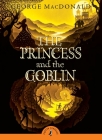
Your mention in your last post of a YA book involving goblins made me think of one of my childhood favorites, which I remember my father reading to me: George Macdonald's 1872 fantasy The Princess and the Goblin.  We have a bit of a goblin mythology going in our house, sparked by Jeff's habit of telling the girls that the metal doors in the sidewalk (going down into store basements) or in the walls of the Brooklyn-Battery Tunnel are "goblin doors."  Many a morning walk to school has involved Jeff's elaborate goblin stories, with Eleanor's eager participation.

Because of this, and because of my fond memories of the book, I picked up The Princess and the Goblin with Eleanor maybe a year ago, only to run into the Stuart Little Problem.  Perhaps it's time to try again.

It's a bit of a dark tale, centering on eight-year-old Princess Irene, who lives a cloistered life in her father's castle, unaware of the goblins who live in the hills just below.  One evening, she and her nursemaid Lootie stay out too late, and are almost captured by goblins, but are saved by a miner boy named Curdie, who sings to drive them away (in this world, goblins hate singing).  Irene becomes aware after this incident of the danger and darkness just outside her walls and beneath her feet.  Through Curdie's underground spying, she later learns of a plot the goblins have to make war on the humans, who exiled them belowground years before.  My memory is that there's some sympathy for the goblins' predicament, but that they're largely described as unpleasant and ill-formed -- a tribe of Calibans.

On the upper floors of the castle, Irene discovers her great-great grandmother, who lives up in a high attic raising white pigeons, and offers Irene advice.  I can't remember if the great-great grandmother is supposed to be some kind of spirit or is definitely corporeal -- it's that kind of book.  Over the course of the story, Irene develops a friendship with Curdie, who gets a chance to rescue her from the goblins later, and there's a sequel about the two of them: The Princess and Curdie.

In the last few weeks, Isabel has caught the Princess bug, and there's been a lot of Cinderella role-playing going on (though she likes to be one of the stepsisters more often than not, because she can pretend to be really mean).  I have a feeling we'll be reading princess books for quite some time yet.

Love, Annie

Monday, November 19, 2012

Flood waters: the National Book Award

Dear Annie,

Yes, happy 500th post!  

This past weekend I read
Goblin Secrets
by William Alexander, winner last week of the National Book Award for Young People's Literature.  As you know, I often try to predict the American Library Association's Newbery and Caldecott medals.  But I'm always clueless about what kids' book the National Book Foundation is going to pick.   I don't know what to make of this choice.

Goblin Secrets takes place in the city of Zombay where some people have been turned into not-quite-people (a play on name of city?) because their hearts have been removed and replaced with machinery.  Other parts of some people are machinery too: eyes and limbs.  The hearts are used as fuel -- "coal" -- to power other machines.  This world has some wonderfully original imagery: there's so much dust in Zombay that dust fish live in the piles on street corners, for instance.  It's a richly imagined, although not always understandable place.

Rownie, who's maybe 8 or maybe 10 years old, is a street urchin kept (not really cared for) by Graba: she's Baba Yaga in an urban setting.  His older brother Rowan has disappeared, believed to have become an actor.  Acting is illegal in Zombay "Players are liars," declares an official edict.  "Citizens may not be players and must not pretend to be other than they are."  Rownie falls in with a troupe of goblin actors.  Goblins appear to be humans who have "changed" into something more magical but are ostracized by the rest of society.  They wear masks in their performances, which may (or may not) have personalities of their own.

The tension in the tale comes from both the fascination with the illegal art of acting, and predictions of an impending flood which is anticipated to wipe out the poorer half of Zombay.  There are also the witch Graba's attempts to recapture Rownie.  Plot elements abound in this book.  There are wonderful moments.  But for me, the moments didn't add up.   The climax of the book centers on whether a flood can be stopped and a city saved.  I admit I wondered when the judges made their choice, and in what city: was it pre- or post-Sandy?

The writing is up there in the higher levels of kidlit, but the story doesn't knit together.  Goblin Secrets does not feature an early adolescent boy who must save the world through individual physical combat, for which I am grateful.  The boy only needs to save one city.  And it doesn't end on set-up for a sequel, although one is possible.

It feels like a good debut novel, with issues one feels the author is good enough to work through in the future.  Awards -- so odd.

Here we are facing Thanksgiving week, and about to see each other -- I can't wait!  So, dear readers, we're taking the rest of the week off to enjoy the holiday.  We'll be back next week.

Love,

Deborah


Saturday, November 17, 2012

A few more adoption titles

Dear Aunt Debbie,

It's funny that you wrote about adoption-appropriate baby books on Wednesday -- that very morning, my friend Jonathan was talking about the search for a baby book for his adopted daughter.  There must be something in the air....

After guest blogging for us last week on Ethiopian children's books, my friend Jean checked in with the adoption listserves she's on, and has passed along a few more recommended titles:

Whoever You Are
, by the excellent Mem Fox, is not directly an adoption book, but focuses on the ways in which all children share a common humanity: "Little one, whoever you are, wherever you are, there are little ones just like you all over the world.''  It's full of richly-colored pictures of children of all races and cultures, and the message seems similar to Fox's Ten Little Fingers and Ten Little Toes, one of our favorites.


God Found Us You, by Lisa Tawn Bergren, is directly about adoption -- in this case, a mother and baby fox -- and, as the title indicates, comes with a strong religious viewpoint.  The text is largely a conversation, with Little Fox asking Mama Fox to retell the story of "the day I came home."  In the comments I've found on the book, there's a split between adoptive parents who find the book's message loving and reassuring, and those who feel like it puts too much emphasis on how depressed the mother fox was before Little Fox came.


I Love You Like Crazy Cakes, by Rose Lewis, is the first-person story of a single mother who travels to China to adopt her daughter, and is based on Lewis's own experience.  It seems particularly applicable to families adopting internationally, and the illustrations are warm and loving (by Jane Dyer, who also illustrated Mem Fox's Time for Bed).


On the distinctly documentary-feeling side, there are the books When You Were Born in Vietnam,When You Were Born in China, and When You Were Born in Korea, each filled with cultural information and a lot of photographs of orphanages and adopting families.  A good resource for international Asian adoptions.

Finally, Jean pointed me to this blog, The Wayfarer, which has a list of books for both parents and children about adoption, specifically adoption from Ethiopia, and largely with a Christian focus.

I'm excited for Thanksgiving, and looking forward to seeing you then!

Love, Annie

P.S. Happy 500th blog post on Annie and Aunt!

Wednesday, November 14, 2012

Baby book, adoption-style

Dear Annie,

Thanks to your pal Jean for the Ethiopian books.  It's interesting how the folklore stories feel very similar to ones from European traditions.  Congratulations to Jean, Casey and family on their new arrival.

On occasion, adoptive families are faced with small reminders of their differences from birth families.  In the world of books, those reminders often show up in one of the staples of baby shower gifts: The Baby Memory Book.  They're those books that one always intends to go back and fill in the spaces one was too tired to write at the time: exact time of birth, weight, baby's first smile, baby's first solid food/steps/words/etc.  The first page often includes spaces for details of pregnancy ("Mommy's food cravings") and childbirth ("what Mommy was doing when she went into labor" etc.). 

Along with those books, I also carry
Our Chosen Child: How You Came To Us And The Growing Up Years
by Judith Levy.  It's a fill-in-the-blanks book chronicling an adopted child from "Waiting for You" all the way up to "Teenage Years"  and "Looking Ahead."  It's got the how mom and dad met stuff, and the family tree (no mention of birth parents, but one can add lines fairly easily if one chooses).  Once the adoption's official, it keeps following the milestones in a child's life.  Like many books in this genre, it can get cloying fast:
We're two loving people,
Almost as happy as we could be.
We just needed a special angel,
To join our family tree.
And like some of the gay parent books we talked about, it doesn't make being adopted the point of the book.  The focus is the kid growing up, and the adoption is one of the details.

Love,

Deborah


Monday, November 12, 2012

Guest blogger: Ethiopian children's books


Dear Aunt Debbie,

I've often wondered whether the people who design the covers of many YA books ever actually read the books themselves.  The cross-legged stance of the girl on the cover of A Corner of White might keep me from picking it up, too.

I've written recently about our friends who are adopting a 1 1/2 year old girl from Ethiopia.  Jean, mom of Eleanor's friend Casey, who will be the big sister, is our guest blogger tonight.  When I asked her if she knew of any international adoption books she'd recommend, she said that instead, they've focused on books which will give Casey a clearer understanding of Ethiopian life (and a little bit of the Amharic language) before her sister arrives.  Here's Jean, with a summary of some of her favorites:

So here are the Ethiopian books I was telling you about.  Hope this is helpful for your blog!

Silly Mammo, retold by Gebregeorgis Yohannes
Silly Mammo is the story of the obedient, if not the most astute, young boy of Weizero (Mrs.) Terunesh.  When Weizero Terunesh finally decides Mammo needs to start helping with expenses, she sends him out to earn a living.  But while obedient and hard-working, Mammo never quite figures out how to bring his earnings back to his mother.  One mishap after another (e.g., carrying money in his hand, falling and dropping the money because he didn't know to put the money in his pocket - upon his mother's scolding that his earnings should be in his pocket, he goes out the next day, finds work and is paid with a bottle of milk . . . which he dutifully pours into his pocket . . . and the story continues with similar mishaps about how to get the earnings back to his mother).  Meanwhile, a beautiful, but mute girl, Tewabech, lives in a nearby town.  Her father heard that she would be cured if she could only laugh and offers her hand in marriage to any man that can make her laugh.  You can see where this is going.  As she sadly gazes out her window, she sees the obedient young Mammo carrying a donkey on his back - another failed attempt to follow the instruction of his mother, at which point she promptly breaks out into laughter.  Mammo is brought into their home and they fall in love.  It's a cute story and Casey enjoys all the silly antics of Mammo.  What's also neat is that it incorporates some Amharic words, so exposes Casey to a few additional words in another language (e.g., Ababa (dad), Weizero (Mrs.), eshi (ok))  Also, in  the version that we have also, the story is printed both in English and in the Amharic fidel (Amharic characters), so she becomes familiar with a different kind of script than the English letters.
A Saint and His Lion tells the story of Tekla, who at birth is determed to be destined for greatness, but ultimately suffers a crippling accident that affects his ability to walk.  While he is bed-ridden, he falls in love with scripture and dreams of becoming a priest.  Despite his disabilities, he attempts to find monks who will teach him to become a priest.  On his way to the monks, he discovers an injured lion and cares for the lion until he is healed.  Thereafter, he settles in with the monks and, upon mastering his biblical studies, he sets out to share the good news of Christ.  But as he is attempting to travel, he falls.   After many attempts, given his bad leg, he simply cannot stand back up.  But the same lion he once saved returns, carries him on his back to safety, and ultimately travels around with him.  Being able to enter villages on the back of the lion does wonders for spreading the word of Christ and opens people's minds to the faith.  Despite his set backs, his good heart and perseverance allows him to achieve the greatness he was destined for at his birth.  

Fire on the Mountain
, by Jane Kurtz
Fire on the Mountain is the story of Alemayu, who is orphaned after his parents died.  He journeys to find his sister, who is working as a servant in a rich man's estate, where he is also able to find some work.  One day, the rich man brags how he is braver than others and can withstand the coldness of the air on the mountain.  Alemayu speaks up and says, matter-of-factly, that he too could withstand such coldness.  Offended that someone would seemingly challenge him, the rich man makes a deal with Alemayu.  If he can withstand one night with only a light shawl on the mountain, he would give him money and four cows, so he would no longer have to work as a servant.  But if he loses, he and his sister would have to leave the estate, never again permitted to work there.  Alemayu accepts the challenge and passes the evening shivering on the mountain, listening to the hyenas in the distance.  When Alemayu returns the following morning, cold but alive, the rich man asks how he did it.  Alemayu responds that he survived by staring at a  fire of a shepherd on a distant mountain, and pretending that the fire was also warming him.  Based on this, the rich man claims that Alemayu lost the bet, on the theory that staring at a distant fire was the same as making a fire.  The rich man intends to prepare a great feast to celebrate his having won the bet.  He tells Alemayu that he and his sister can stay this one night, but they will have to leave the next morning and never come back.  The other servants are appalled at how devious and unfair the rich man acted.  But they spend all day preparing injera and Ethiopian stews for the feast, which fills the estate with the incredible smells of the food for the occassion.  After the rich man arrives, he sits down and waits, but no food is served.  He demands music, and the musician moves her fingers, but no sound emerges.  When he demands to know what is going on, they explain that smelling the food is the same as eating it; pretending to play an instrument is the same as enjoying its sounds.  The next day, the rich man gives Alemayu his cows and money he owes him.

Tsion's Life is not so much a story, as a detailed account of a day in the life of a young girl in Ethiopia.  It provides examples of customs, ordinary daily activities, and cultural examples of Ethiopian life, while teaching some Amharic words in the process.  For example, it tells you how to say palace in Amharic (bet mengest), and then tells of various Ethiopian palaces, like the Lalibela, where eleven churches are carved out of a stone mountain and connected by tunnels. Or it tells how to say mother in Amharic ("enat") and then proceeds to talk about Tsion's mother and what she does for a living in Ethiopia.  It's a good book to use to teach kids about the similarities and differences between Ethiopian and American cultures and experiences.

One other book I thought of, which isn't an international adoption book, but is adoption related, is Tell Me Again About the Night I Was Born. It's written by Jamie Lee Curtis, and is a cute story about a young girl asking her parents to tell them about the night she was born, how they received a call that her birth mother was in labor, how they frantically boarded the flight, how perfect she was when they saw her, etc.  I think its a pretty popular book for families who find each other through domestic adoption.

All the best,
Jean

And love from me,

Annie