Dear Aunt Debbie,
The book trailer you linked to in your last post -- by John Green, for The Fault in Our Stars -- is fascinating. It's funny and energetic and strange, and I can see immediately why Green has such an intense teenage following. My student Nicole, who I quoted raving about the book, got her copy signed, and it was clearly a Celebrity Experience. Are authors, and YA authors in particular, our new rock stars? Does this form of celebrity allow for a wider range of what celebrity means, given that it's so quirky?
Watching Green's trailer, and a few others linked to through the Adult Books 4 Teens site, made me think about the role of self-promotion in the publishing business at the moment, and the idea of book trailers in particular. How common are they in the children's book world? How much of an effect do they have? Is this largely a YA phenomenon, since it's an audience that's likely to be online a lot? What do you think of them? Do you watch a lot of book trailers?
I know I'm asking a lot of questions here, but I'll confess I'm old-fashioned when it comes to finding books. I'm sure I've watched fewer than 10 book trailers total; I like book reviews and word-of-mouth advice. As someone who I'm sure is deluged by requests from people who want you to push their books in your store, what do you think of all this online, Author as Interesting Online Personality self-promotion?
A moment of self-promotion I recently enjoyed: Gary Shteyngart, author of The Russian Debutante's Handbook (which is, by the way, an adult book that might appeal to some teens) in a short film on his recollections of Stuyvesant High School, his (and my) alma mater, and the school where I now teach. I, too, failed to excel athletically in that gym. Even without the common experience, however, I can imagine myself being drawn to his work because of odd little films like this.
Love, Annie

Friday, April 6, 2012


Wednesday, April 4, 2012
Death and renewal
Dear Annie,
I haven't read Virgin Suicides either. I feel nervous about suicide books in the same way you feel about anorexia books. No matter how awful the suicide, I fear that some teenagers are particularly vulnerable to seeing it as an attractive choice. You talked about "anorexia porn"; I have the same worries over a romantic vision of suicide.
The idea of dying young -- by whatever means -- is hugely attractive in YA. As one comes to terms with one's own mortality, reading about those who don't make it becomes wildly interesting. So that's one reason The Fault in Our Stars, about teenagers with cancer, is so popular. I haven't finished reading it, but it's also a really good, well-written book. There's one other element which contributes to its wild popularity. John Green, the author, is a master of social marketing. When he twittered the title of the book last summer (more than six months before its publication date), The Fault in Our Stars became an online bestseller. He and his brother Hank have a video blog which (I confess) can get a little addictive. Here's his entry the day the book was published.
Back in January I wrote about the store going through an expansion. The first step was re-carpeting the whole space. Then we knocked down some walls and spread out into the retail space next door. And on Monday, the book section finally got its new shelving. So right now the floor is littered with piles of books waiting to go onto different shelves. Sports books are moving into the space previously occupied by mysteries, but I can't move mysteries until I shuffle early chapter books to the right, but first teen & adult books have to move -- to the current location of the sports section. So stuff ends up on the floor, even though there's more space. The only area that's just about finished is a lovely new Star Wars, fine arts and gift book section in the alcove that used to house Play Doh (which has moved into the new space). I'll post photos once it's all in order.
We talked about the teen & adult section two weeks ago in the context of adult books for the YA audience. I've just found a blog within the School Library Journal called "Adult Books 4 Teens." It seems to deal mostly with new books, but I'm keeping an eye on it.
Have a lovely time on your spring break.
Love,
Deborah
I haven't read Virgin Suicides either. I feel nervous about suicide books in the same way you feel about anorexia books. No matter how awful the suicide, I fear that some teenagers are particularly vulnerable to seeing it as an attractive choice. You talked about "anorexia porn"; I have the same worries over a romantic vision of suicide.
The idea of dying young -- by whatever means -- is hugely attractive in YA. As one comes to terms with one's own mortality, reading about those who don't make it becomes wildly interesting. So that's one reason The Fault in Our Stars, about teenagers with cancer, is so popular. I haven't finished reading it, but it's also a really good, well-written book. There's one other element which contributes to its wild popularity. John Green, the author, is a master of social marketing. When he twittered the title of the book last summer (more than six months before its publication date), The Fault in Our Stars became an online bestseller. He and his brother Hank have a video blog which (I confess) can get a little addictive. Here's his entry the day the book was published.
We talked about the teen & adult section two weeks ago in the context of adult books for the YA audience. I've just found a blog within the School Library Journal called "Adult Books 4 Teens." It seems to deal mostly with new books, but I'm keeping an eye on it.
Have a lovely time on your spring break.
Love,
Deborah
Monday, April 2, 2012
Death, two ways
Dear Aunt Debbie,
I'm going to do something tonight that I don't usually do: recommend two books which I have not actually read. Both fall under the category of edgy issues in YA books, though neither is focused on anorexia. (I agree with you -- all novels about eating disorders, even those in which the protagonist is exceptionally damaged by the experience, make me worry that kids reading them will use them as blueprints to develop eating disorders of their own: a kind of anorexia porn.)
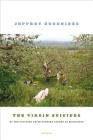
 The first is an adult novel which can be read as YA: Jeffrey Eugenides' The Virgin Suicides. It is, in fact, about suicide: the suicides, within a year, of five beautiful young daughters from the same family, as seen by the neighborhood boys who watch them. A good friend and grad school colleague of mine used to teach this book at the beginning of her Women's Voices course, using it to engage HS students in questions of how societal forces shape our understanding of femininity, and how the girls involved are objectified by the boys, who don't really know them. I read and loved Middlesex, Eugenides' lyrical, generational saga narrated from the point of view of a young hermaphrodite; I'd trust him to take on the issue of suicide.
 The second is a proper YA novel that has taken my students by storm. The Fault in Our Stars, by John Green, is a girl-meets-boy story which takes place in a cancer support group. (We've mentioned Green before in the context of gay YA.)
In recent weeks, I've seen a number of students carrying it around, and two (one HS freshman, one junior) chose to recommend it to the entire class as a Minutes gift. Today I asked the freshman, Nicole, if she'd mind writing a few sentences about why she liked it so much. She lit up like I'd given her a prize. Here's what she wrote:
The Fault in Our Stars gives you a sarcastic, young cancer-ridden girl who has given up on life and gives you hope, along with an idealized, pretentious boy who pulls on your heartstrings. I read it and just wanted to get up and make the world better and devote the rest of my measly life to making people happy.
A resounding endorsement! Have you read either?
Love, Annie
I'm going to do something tonight that I don't usually do: recommend two books which I have not actually read. Both fall under the category of edgy issues in YA books, though neither is focused on anorexia. (I agree with you -- all novels about eating disorders, even those in which the protagonist is exceptionally damaged by the experience, make me worry that kids reading them will use them as blueprints to develop eating disorders of their own: a kind of anorexia porn.)
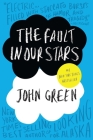 The second is a proper YA novel that has taken my students by storm. The Fault in Our Stars, by John Green, is a girl-meets-boy story which takes place in a cancer support group. (We've mentioned Green before in the context of gay YA.)
In recent weeks, I've seen a number of students carrying it around, and two (one HS freshman, one junior) chose to recommend it to the entire class as a Minutes gift. Today I asked the freshman, Nicole, if she'd mind writing a few sentences about why she liked it so much. She lit up like I'd given her a prize. Here's what she wrote:
The Fault in Our Stars gives you a sarcastic, young cancer-ridden girl who has given up on life and gives you hope, along with an idealized, pretentious boy who pulls on your heartstrings. I read it and just wanted to get up and make the world better and devote the rest of my measly life to making people happy.
A resounding endorsement! Have you read either?
Love, Annie
Sunday, April 1, 2012
Fairy folk
Dear Annie,
Huuuge thank you to Clara. Her post on learning to read was so smart and clear. I really appreciate her distinguishing among different early reader series. I've resisted bringing in the Brand New Readers which she talked about, simply because I sometimes feel overwhelmed by every publisher having a differently-leveled early reader series. But now I'll start carrying them in the store because Clara has explained to me what they do well. I'm going to repeat her summing-up advice, because it's so important to raising a reader:

 Moving back to chapter books, a lovely new one went on sale this week.
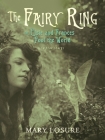
The Fairy Ring, by Mary Losure is a magical piece of non-fiction. It tells the story of two Yorkshire cousins during World War I who took pictures of drawings of fairies and passed them off as photos of the real thing. One of the girls claimed that she actually saw fairy folk, apart from the faked pictures. The book says that the girls staged the pictures in response to adults belittling them when they talked about fairies. The mother of one of the girls gave the photos to an adult member of the Theosophists, who believed in fairies, and before long Sir Arthur Conan Doyle wrote a book using the photos as proof of the existence of fairy folk. It's the story of a lie tumbling out of control. The girls stood by their story for decades, in the face of escalating adult interest and skeptical reporters. The mother who released the photos said she believed they were true because she couldn't imagine her daughter lying to her. The father, who publicly disparaged his daughter's intelligence, believed the pictures were a hoax, but couldn't prove it.
The book has many levels. It's the story of a hoax. Of family dynamics gone wrong. Of a close friendship. Of a social movement that wanted to find magic in the world. And of educated upper-class men believing the pictures were true because they thought young working-class Yorkshire girls were incapable of a sophisticated hoax. It's a lovely read.
Love,
Deborah
Huuuge thank you to Clara. Her post on learning to read was so smart and clear. I really appreciate her distinguishing among different early reader series. I've resisted bringing in the Brand New Readers which she talked about, simply because I sometimes feel overwhelmed by every publisher having a differently-leveled early reader series. But now I'll start carrying them in the store because Clara has explained to me what they do well. I'm going to repeat her summing-up advice, because it's so important to raising a reader:
... if you had insisted I write a one sentence piece of advice to parents on teaching their children to read, it would be this: "Read together, every day." For a child who associates reading with love will not find it difficult to love to read.

 Moving back to chapter books, a lovely new one went on sale this week.
 The Fairy Ring, by Mary Losure is a magical piece of non-fiction. It tells the story of two Yorkshire cousins during World War I who took pictures of drawings of fairies and passed them off as photos of the real thing. One of the girls claimed that she actually saw fairy folk, apart from the faked pictures. The book says that the girls staged the pictures in response to adults belittling them when they talked about fairies. The mother of one of the girls gave the photos to an adult member of the Theosophists, who believed in fairies, and before long Sir Arthur Conan Doyle wrote a book using the photos as proof of the existence of fairy folk. It's the story of a lie tumbling out of control. The girls stood by their story for decades, in the face of escalating adult interest and skeptical reporters. The mother who released the photos said she believed they were true because she couldn't imagine her daughter lying to her. The father, who publicly disparaged his daughter's intelligence, believed the pictures were a hoax, but couldn't prove it.
The book has many levels. It's the story of a hoax. Of family dynamics gone wrong. Of a close friendship. Of a social movement that wanted to find magic in the world. And of educated upper-class men believing the pictures were true because they thought young working-class Yorkshire girls were incapable of a sophisticated hoax. It's a lovely read.
Love,
Deborah
Friday, March 30, 2012
Guest blogger: teaching kids to read in kindergarten
Dear Aunt Debbie,
I have some thoughts on books about edgy issues, and will post about them soon. Right now, I have one more addition to our discussion of teaching kids to read. Our guest blogger tonight is Clara, mom of Isabel's good friend Vera, and a kindergarten teacher here in New York. I asked her a few weeks ago to weigh in on the subject, and here she is:
 When parents ask me advice for encouraging and teaching their children to read at home, I give different advice depending on the age and type of child they have. For a child who shows no interest in learning how to read, I suggest immersing them in highly engaging books based on their interest (chosen for content rather than reading level, for parents to read with the child) to nurture a love of books. This will soon enough turn into a motivation to read independently. Books like The Yucky Reptile Alphabet Book, by Jerry Pallotta, will have a young naturalist's rapt attention, and happen to sneakily also teach letter recognition and phonemic awareness! For a child who desperately wants to read but is anxious and possibly behind his or her peers (or siblings), books should be made by the parents and children or selected very carefully from a book store. These books should include just a few words that the child can figure out from the pictures so that the child feels success right away and doesn't get discouraged by any struggle yet. A book like this may be homemade with family photos, with text like "Mommy loves me," "Grandpa loves me," and so on. After the child "reads" that book from memory, the parent can ask the child to point under each word next time he or she reads, so the child starts to get the idea that one word on the page matches to one spoken word, and begins to naturally pick up on cues like looking at the first letter.
 And finally, for eager young readers who are naturally beginning to crack the code like your Eleanor, I suggest getting started with short and repetitive books with a high level of picture support. All of the books in the Brand New Readers series, which can be found online and in bookstores, fit that bill. In school, we use books that are even more reliant on a pattern. For example, a book called "Who Lives in a Tree?" may have only 8 pages following the pattern of "A squirrel lives in a tree. A bird lives in a tree. A raccoon lives in a tree," and so on. These books are great for school, but are nearly impossible for parents to find outside of a specialized catalogue. Also, they are incredibly short and boring to read more than once or twice. My five year old students who are reading books at that level read 8 to 10 of those books every week in their personal "book baggie," and exchange the books for new ones once a week. Books like the Brand New Readers have a story, and recurring characters. I use them less at school because they often appear to be very easy, but break the pattern that a child has predicted so that the child needs adult support which they can't have 100% of the time at school. Perfect for reading at home! Rereading books at this stage is so crucial for memorizing high frequency words, so the more fun the stories are, the more likely your child will want to read them over and over.

For home reading and teaching of reading, I would move from books like that to books that are often called "level 1" in book stores. I think your Aunt Debbie has pointed out that all publishers use different criteria for their so-called levels, which drives parents mad. What I suggest looking for is again high interest books, but also books that are SHORT. The classic early reader Danny and the Dinosaur, by Sid Hoff, for example, is 64 pages long. Not short! Others, like this Scholastic Level 1 reader, have half the pages, and more importantly only a sentence on each page.
Books like Dr. Seuss' Hop on Pop are in fact exhaustingly long. While it does a good job of teaching short vowel spelling patterns, no child aged 4 to 6 has the stamina to read it! Early chapter books can be challenging at first, so I recommend books that children think have chapters, but really have separate stories, like the Poppleton series by Cynthia Rylant. As a gauge, in New York City Poppleton is the level we want first graders to be reading between spring and June of first grade.
I have some thoughts on books about edgy issues, and will post about them soon. Right now, I have one more addition to our discussion of teaching kids to read. Our guest blogger tonight is Clara, mom of Isabel's good friend Vera, and a kindergarten teacher here in New York. I asked her a few weeks ago to weigh in on the subject, and here she is:
Dear Annie,
I'm glad you asked for me to guest blog about learning to read. As a teacher of kindergarten and first grade for six years, I work every day to teach all kinds of readers how to read, love books and feel confident in their reading abilities. Very close to my heart is also helping parents feel confident in their role as their child's first and most important teacher.
I'm so excited for you and Eleanor that she is learning to read! Obviously both of your girls have a big love of books, which is no surprise. That Eleanor can read at her age is special and should definitely be encouraged. I'm also relieved to hear of your awareness that too much pressure could be bad for her, and even poor book choices could dampen her interest.
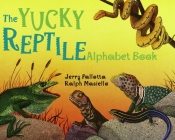 When parents ask me advice for encouraging and teaching their children to read at home, I give different advice depending on the age and type of child they have. For a child who shows no interest in learning how to read, I suggest immersing them in highly engaging books based on their interest (chosen for content rather than reading level, for parents to read with the child) to nurture a love of books. This will soon enough turn into a motivation to read independently. Books like The Yucky Reptile Alphabet Book, by Jerry Pallotta, will have a young naturalist's rapt attention, and happen to sneakily also teach letter recognition and phonemic awareness! For a child who desperately wants to read but is anxious and possibly behind his or her peers (or siblings), books should be made by the parents and children or selected very carefully from a book store. These books should include just a few words that the child can figure out from the pictures so that the child feels success right away and doesn't get discouraged by any struggle yet. A book like this may be homemade with family photos, with text like "Mommy loves me," "Grandpa loves me," and so on. After the child "reads" that book from memory, the parent can ask the child to point under each word next time he or she reads, so the child starts to get the idea that one word on the page matches to one spoken word, and begins to naturally pick up on cues like looking at the first letter.
 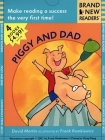 And finally, for eager young readers who are naturally beginning to crack the code like your Eleanor, I suggest getting started with short and repetitive books with a high level of picture support. All of the books in the Brand New Readers series, which can be found online and in bookstores, fit that bill. In school, we use books that are even more reliant on a pattern. For example, a book called "Who Lives in a Tree?" may have only 8 pages following the pattern of "A squirrel lives in a tree. A bird lives in a tree. A raccoon lives in a tree," and so on. These books are great for school, but are nearly impossible for parents to find outside of a specialized catalogue. Also, they are incredibly short and boring to read more than once or twice. My five year old students who are reading books at that level read 8 to 10 of those books every week in their personal "book baggie," and exchange the books for new ones once a week. Books like the Brand New Readers have a story, and recurring characters. I use them less at school because they often appear to be very easy, but break the pattern that a child has predicted so that the child needs adult support which they can't have 100% of the time at school. Perfect for reading at home! Rereading books at this stage is so crucial for memorizing high frequency words, so the more fun the stories are, the more likely your child will want to read them over and over.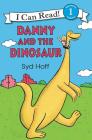
For home reading and teaching of reading, I would move from books like that to books that are often called "level 1" in book stores. I think your Aunt Debbie has pointed out that all publishers use different criteria for their so-called levels, which drives parents mad. What I suggest looking for is again high interest books, but also books that are SHORT. The classic early reader Danny and the Dinosaur, by Sid Hoff, for example, is 64 pages long. Not short! Others, like this Scholastic Level 1 reader, have half the pages, and more importantly only a sentence on each page.
Books like Dr. Seuss' Hop on Pop are in fact exhaustingly long. While it does a good job of teaching short vowel spelling patterns, no child aged 4 to 6 has the stamina to read it! Early chapter books can be challenging at first, so I recommend books that children think have chapters, but really have separate stories, like the Poppleton series by Cynthia Rylant. As a gauge, in New York City Poppleton is the level we want first graders to be reading between spring and June of first grade.
This was a very long letter to a mom who sounds like she knows what she's doing already. But it's so important to check ourselves as parents, especially when we realize we have been presented with a child who is either ahead of or behind the curve for their age group. I am far too wordy in my letter writing today, but if you had insisted I write a one sentence piece of advice to parents on teaching their children to read, it would be this: "Read together, every day." For a child who associates reading with love will not find it difficult to love to read.
Best wishes on your reading adventures!
Thanks, Clara!
Love, Annie
Love, Annie
Wednesday, March 28, 2012
Edgy issues
Dear Annie,
 Of your Margaret Atwood list, Handmaid's Tale and Cat's Eye are the only ones I've read. I like the idea of having them on a high school-and-up shelf. I vividly remember reading her first novel,
The Edible Woman, pretty close to its release in 1969. It's about a young woman who finds herself in a suffocating engagement. Gradually, she finds there are fewer and fewer foods she can face eating. It starts with meat, then eggs, and her appetite keeps getting narrower and narrower. She feels she's being consumed by expectations of those around her, but she herself consumes less and less. Back then, the term eating disorder wasn't in wide circulation.
 I carry a number of young adult books with edgy themes, but I tend to shy away from two particular issues: eating disorders and suicide. I don't know enough about teenage psychology to feel confident about selling books detailing how a character does it. Laurie Hals Anderson, the author of Speak, recently wrote
Wintergirls, about a high school girl lost in the world of anorexia. The character has already gone through one hospitalization, and a friend with whom she had a pact to avoid eating has died. There's a lot of detail on how to get around adult supervision and demands to eat. It's fascinating and feels very realistic -- I learned a lot, although the ending is slightly unconvincingly optimistic. It feels like a book that needs your community of readers, rather than becoming a lone reading experience. I don't carry it.
 I was equally unenthusiastic about
Thirteen Reasons Why by Jay Asher. It's a novel in which a high school girl records audiotapes detailing 13 reasons why she's committing suicide -- each reason is associated with someone she knows. That description was enough for me to decide I didn't want to bring it into the store. Then it got lots of very positive reviews, a few customers talked to me about it, and I finally read it. The book tells the experience of one of the 13 students who receives the tapes after Hannah dies. He had a crush on her when she arrived as a new student, but real connection between them didn't quite happen. The tapes detail a downward spiral of Hannah trying to overcome her outsider status; she's bruised by a mean-spirited social group; and labels that get unfairly attached to her lead to her being increasingly abused. In her depression she sees no way out, but as a final act she leaves the tapes to show 13 people how each of them -- even ones who seemed unconnected to her victimization -- contributed to her despair. "Everything affects everything," she says. It gives a reader plenty to think about the social interactions of high school, and a push to examine one's own complicity in actions that could create someone else's misery. There's something weirdly hopeful in it, even though it's about Hannah's tragedy. A sense that some people can learn from their mistakes. So I've broken my own embargo on the subject and am carrying this one.
Love,
Deborah
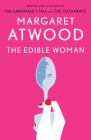 Of your Margaret Atwood list, Handmaid's Tale and Cat's Eye are the only ones I've read. I like the idea of having them on a high school-and-up shelf. I vividly remember reading her first novel,
 The Edible Woman, pretty close to its release in 1969. It's about a young woman who finds herself in a suffocating engagement. Gradually, she finds there are fewer and fewer foods she can face eating. It starts with meat, then eggs, and her appetite keeps getting narrower and narrower. She feels she's being consumed by expectations of those around her, but she herself consumes less and less. Back then, the term eating disorder wasn't in wide circulation.
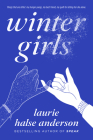 I carry a number of young adult books with edgy themes, but I tend to shy away from two particular issues: eating disorders and suicide. I don't know enough about teenage psychology to feel confident about selling books detailing how a character does it. Laurie Hals Anderson, the author of Speak, recently wrote
 Wintergirls, about a high school girl lost in the world of anorexia. The character has already gone through one hospitalization, and a friend with whom she had a pact to avoid eating has died. There's a lot of detail on how to get around adult supervision and demands to eat. It's fascinating and feels very realistic -- I learned a lot, although the ending is slightly unconvincingly optimistic. It feels like a book that needs your community of readers, rather than becoming a lone reading experience. I don't carry it.
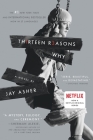
Thirteen Reasons Why by Jay Asher. It's a novel in which a high school girl records audiotapes detailing 13 reasons why she's committing suicide -- each reason is associated with someone she knows. That description was enough for me to decide I didn't want to bring it into the store. Then it got lots of very positive reviews, a few customers talked to me about it, and I finally read it. The book tells the experience of one of the 13 students who receives the tapes after Hannah dies. He had a crush on her when she arrived as a new student, but real connection between them didn't quite happen. The tapes detail a downward spiral of Hannah trying to overcome her outsider status; she's bruised by a mean-spirited social group; and labels that get unfairly attached to her lead to her being increasingly abused. In her depression she sees no way out, but as a final act she leaves the tapes to show 13 people how each of them -- even ones who seemed unconnected to her victimization -- contributed to her despair. "Everything affects everything," she says. It gives a reader plenty to think about the social interactions of high school, and a push to examine one's own complicity in actions that could create someone else's misery. There's something weirdly hopeful in it, even though it's about Hannah's tragedy. A sense that some people can learn from their mistakes. So I've broken my own embargo on the subject and am carrying this one.
Love,
Deborah
Monday, March 26, 2012
Grown-up reading: Margaret Atwood
Dear Aunt Debbie,
I have yet to see the Hunger Games movie, but was struck today by a Jezebel post summarizing some of the racist reactions to the casting of Rue as a black girl which were captured on Twitter. It's a disturbing piece, and also points out how often people who declare themselves to be rabid fans aren't actually reading all that closely. The Jezebel post quotes the first description of Rue in Suzanne Collins's novel: "She has dark brown skin and eyes, but other than that's she's very like Prim in size and demeanor...." A second post provides a run-down of the probable or certain skin color of every other major character in The Hunger Games.
Both pieces of commentary posit that Collins includes people of different races in the Hunger Games universe as part of her social criticism: the upper-class people in the Capitol are white and blond; the people in the Districts have a variety of darker skin tones. It's not an issue I paid a lot of attention to while reading the books, but looking back now, it's clearly there. (Nice to see, by the way, that the Ender's Game cast is similarly diverse.)
You asked last week about suggestions for contemporary adult authors whose books would make sense on your store's expanded YA shelves. The first author who leaped to my mind would keep excellent company with the dystopian visions of Suzanne Collins and Orson Scott Card, though her body of work encompasses far more than that one genre.
 I'm speaking, of course, of Margaret Atwood: novelist, essayist, poet, short story writer. I started reading Atwood in high school, and teach her disturbingly prescient novel The Handmaid's Tale every semester in my Women's Voices course. The Handmaid's Tale takes place in Gilead, a near-future version of the United States in which birth rates have plummeted, and the government has been taken over by religious fundamentalists who relegate all people to specific, rigid social roles. Women are not allowed to work, read, or have their own money, and are divided up by function: Marthas cook and clean, Wives are the upper-class partners of Commanders, and Handmaids are fertile women who are assigned to Commanders in the hope that they'll produce more babies via what is essentially state-sanctioned rape. The narrator, Offred, isn't a heroine in the traditional sense. She's a fairly normal woman who dreams of escape but is kept in her place by fear; she's who most of us might be in the same situation.
This isn't science fiction, but what Atwood calls "speculative fiction": everything that happens in her books is possible, if you take to a farther extent things people have already done in the world, and done to each other. Atwood wrote The Handmaid's Tale in 1986; when I teach it, we read a packet of accounts of women under fundamental Islamic regimes in Afghanistan and Iran, and the parallels are frightening.

 Atwood is a terrific storyteller. Her prose is gripping and easy to read, and she often structures her novels as a series of small revelations. You begin in a world where you don't understand the rules; with every chapter, she gives you more information about what happened in the past to bring you there as well as what's about to happen in the future. This is an author who knows cliffhangers. Her books feel like pleasure reading, but scratch the surface and there are all kinds of deeper questions at play: about gender relations, about power, about genetic modification and the environment.
I'd happily hand The Handmaid's Tale (or Cat's Eye, or The Robber Bride, or The Blind Assassin, or Oryx and Crake) to a high school student to explore solo; each of them also rewards deep study. I'd love to see them on your shelves.
Love, Annie
I have yet to see the Hunger Games movie, but was struck today by a Jezebel post summarizing some of the racist reactions to the casting of Rue as a black girl which were captured on Twitter. It's a disturbing piece, and also points out how often people who declare themselves to be rabid fans aren't actually reading all that closely. The Jezebel post quotes the first description of Rue in Suzanne Collins's novel: "She has dark brown skin and eyes, but other than that's she's very like Prim in size and demeanor...." A second post provides a run-down of the probable or certain skin color of every other major character in The Hunger Games.
Both pieces of commentary posit that Collins includes people of different races in the Hunger Games universe as part of her social criticism: the upper-class people in the Capitol are white and blond; the people in the Districts have a variety of darker skin tones. It's not an issue I paid a lot of attention to while reading the books, but looking back now, it's clearly there. (Nice to see, by the way, that the Ender's Game cast is similarly diverse.)
You asked last week about suggestions for contemporary adult authors whose books would make sense on your store's expanded YA shelves. The first author who leaped to my mind would keep excellent company with the dystopian visions of Suzanne Collins and Orson Scott Card, though her body of work encompasses far more than that one genre.
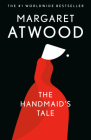
This isn't science fiction, but what Atwood calls "speculative fiction": everything that happens in her books is possible, if you take to a farther extent things people have already done in the world, and done to each other. Atwood wrote The Handmaid's Tale in 1986; when I teach it, we read a packet of accounts of women under fundamental Islamic regimes in Afghanistan and Iran, and the parallels are frightening.
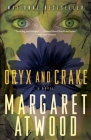
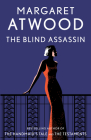 Atwood is a terrific storyteller. Her prose is gripping and easy to read, and she often structures her novels as a series of small revelations. You begin in a world where you don't understand the rules; with every chapter, she gives you more information about what happened in the past to bring you there as well as what's about to happen in the future. This is an author who knows cliffhangers. Her books feel like pleasure reading, but scratch the surface and there are all kinds of deeper questions at play: about gender relations, about power, about genetic modification and the environment.
I'd happily hand The Handmaid's Tale (or Cat's Eye, or The Robber Bride, or The Blind Assassin, or Oryx and Crake) to a high school student to explore solo; each of them also rewards deep study. I'd love to see them on your shelves.
Love, Annie
Subscribe to:
Posts (Atom)