In which Annie (high school teacher, mother of two young girls and a younger boy) and her aunt Deborah (children's bookseller, mother of two young women in their 20s) discuss children's books and come up with annotated lists.

Sunday, March 25, 2012

Books, movies & the thought process

Dear Annie,

Ah, the power of beautiful writing.  There's another quote from the New York Times piece you cited on brain science that I especially liked:
...individuals who frequently read fiction seem to be better able to understand other people, empathize with them and see the world from their perspective. This relationship persisted even after the researchers accounted for the possibility that more empathetic individuals might prefer reading novels. A 2010 study by Dr. Mar found a similar result in preschool-age children: the more stories they had read to them, the keener their theory of mind — an effect that was also produced by watching movies but, curiously, not by watching television. ....
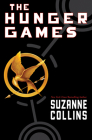
I've been thinking a fair amount about translating the emotional states of fiction to the screen since seeing The Hunger Games movie Thursday night.  Visually, it felt very true to my mental picture of the book.  Your quote from Natalie Babbitt describing "a lovely greenish glow in the forest, a glow pierced everywhere by tree trunks like fingers thrust into an aquarium full of tinted water" could be about scenes in the movie.

The strongest part of
the book
is being able to follow the main character's state of mind and her thought process as her strategy evolves before and during the games.  And given that she rarely talks with other characters about it, that process is really hard to convey in a movie.  It's much easier to show the action, and her reactions to the action.  (Spoiler Alert for the rest of this paragraph)  There's a pivotal scene in a cave where Katniss decides to buy in to the star-crossed lovers strategy.  Reading it, we see that she's  struggling with the decision, and that her feelings about Peeta are extremely mixed.  Her decision is an act of strength.  The movie can't convey her struggle, and instead it shows her responding to direction from Hamish, her coach.  I felt it turned her into a wimp in a crucial scene where she's actually incredibly strong.

Given the blockbuster nature of the film from its inception, in other ways it kept fairly true to the book, though.  But as with the Harry Potter movies, I wonder if someone who hadn't read the book would be able to follow what was happening.  Many parts of The Hunger Games were telescoped into visual flashes in the film.  Some worked (a loaf of bread in the rain, returned to several times), and others did not (was that rice in a briefly glimpsed riot?).

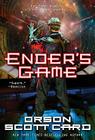
It did much better than some.  Like for instance the disastrous movie of the amazingly wonderful The Golden Compass.  The Next Big Movie in YA books seems to be on the horizon.  The cast for a movie version of Ender's Game by Orson Scott Card -- a sci fi classic -- has just been announced.  The book, first published in a short version in 1977, then expanded to the
novel we now know
in 1985, has never made it to the screen.  Most of the characters in the book are between 6 and 11 years old, and Card was apparently opposed to studios' desires to make Ender older.  Some sort of compromise seems to have been reached, with Asa Butterfield (better known as Hugo) in the lead.  He doesn't look like he's six years old, but he's not 16 either.  The cast is stellar, with Harrison Ford and Ben Kingsley playing grizzled commanders.  Ender's Game, like The Hunger Games, has so much riveting, often violent action in it, that one worries for the lead character's internal life.  Ender's thought process -- both strategic and emotional -- is the the heart of the book.  The movie's due out in 2013 -- we'll find out then if we'll be able to see all of Ender.

Love,

Deborah

Friday, March 23, 2012

Reading improves the mind -- literally

Dear Aunt Debbie,

I'm intrigued by the latest question you've posed, about contemporary adult books which would be appropriate for the YA shelf, and I've started thinking about possible answers.  Over the last several days, however, both Eleanor and I were felled by a nasty flu, and we're in recovery mode.  So here's a promise of a nice juicy post on Margaret Atwood next week, and a brief reflection on sick reading and the beauty and power of well-constructed sentences.

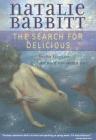
Post-fever but not quite ourselves again, Eleanor and I stayed home and spent much of the day reading Natalie Babbitt's The Search for Delicious, which you sent Eleanor a while back.  I don't think I'd ever read it before, though I know Babbitt from the brilliant and wrenching Tuck Everlasting.  What a lovely book!

It's a fable of sorts.  Babbitt sets up a story on two levels: a magical level filled with ageless creatures who care for different parts of the earth (dwarves in the mountains, mermaids in the waters, woldwellers in the forests, winds in the skies), and a human level with kingdoms and people who fight each other all the time.  The backstory involves a lovely young mermaid named Ardis, who loses her favorite doll and weeps for it for hundreds of years.  The hero is a 12-year-old boy named Gaylen, who is tasked with going out into the kingdom as the king's messenger to poll the people on what food should become the definition of the word "delicious" in the Prime Minister's new dictionary.  Simply asking this question gets everybody upset, and with the aid of a bad guy, brings the country to the brink of civil war.  Gaylen meets all kinds of people in his travels, from the human world and the natural/ageless magical world.  Of course, the stories come together, and the ending is satisfying to all.

There's a lot to like about this book -- interesting and thoughtful perspectives about the ways in which nature and human beings interact, and how nature's time frame is very different from human time (much like Tuck Everlasting, actually).  As our reader Annette pointed out months ago during our discussion of books with maps, there's quite a nice map of Gaylen's journey on the first pages.

I was struck today, however, by the beauty of Natalie Babbitt's language.  What a joy to read aloud!  She has well-balanced sentences, a wide-ranging and evocative vocabulary, and a way with similes and metaphors.  A few samples (try reading them aloud to see how good they feel to say):

There was a lovely greenish glow in the forest, a glow pierced everywhere by tree trunks like fingers thrust into an aquarium full of tinted water; and Gaylen slipped between them like a small fish.  With the trees all around him and the rain dancing on the leaves high over his head, he felt as if he were going deeper and deeper into a world that existed tranquil and quite separate from the one he had left behind (42).


The woman on the porch peered out at the boy and the big horse in his royal draperies, and her eyes opened very wide.  She put aside the bowl of potatoes she had been peeling and called in a loud voice, "Mildew! Mildew!  Come here at once!"  Then she came down the path.  She was a big woman with a red face and red hands and she wore a dark jacket and a great many skirts and petticoats.  The man who had been plowing loped puffing to her side and they both stood staring up at Gaylen with their mouths open (66).


Gaylen sat behind the boulder and frowned.  Everywhere he went, it seemed, Hemlock came after or had already been, weaving in and out of his path like an ill-intentioned wasp.  He waited until the clang and echo of Ballywrack's hoofbeats faded before he came out of the shadows.  He wrapped the loop of Marrow's reins around a loose rock, gave the horse a pat of reassurance, and stole away to the tunnel to follow.  Feeling his way, he crept into black darkness down a twisting corridor of cool, smooth stone.  The corridor was dry and fragrant -- it smelled, surprisingly, of apples, like the cellar of a well-kept farmhouse (94-95).

As I was reading these passages to Eleanor today, and enjoying them immensely, I was reminded of a New York Times article I read last week.  According to the latest research in neuroscience, reading vivid descriptions of sensory details or intense emotional exchanges stimulates the same regions of the brain that actually experiencing these sensory details or interactions would stimulate:

Last month,...a team of researchers from Emory University reported in Brain & Language that when subjects in their laboratory read a metaphor involving texture, the sensory cortex, responsible for perceiving texture through touch, became active. Metaphors like “The singer had a velvet voice” and “He had leathery hands” roused the sensory cortex, while phrases matched for meaning, like “The singer had a pleasing voice” and “He had strong hands,” did not.


I highly recommend the rest of the article.  And then, of course, recommend that you go right back to reading fiction.


Love, Annie

Wednesday, March 21, 2012

Grown-up reading

Dear Annie,

Whatever New York City is paying you, it isn't enough.  I am so consistently impressed by your teaching.  You put so much thought and preparation into it, and you care so deeply about what your students will get out of it.  One of your points which particularly struck me was reading a book as a community experience.  It's not the teenager and the book alone: it's a group of people who have read the book by themselves processing it together.

At the store, we've been working on an expansion.  New shelves for the book section will be arriving in about a week and a half.   I'll have about 100 feet of new shelves -- very exciting.  A lot of it will help relieve pressure on already overloaded sections, but we'll be adding new books in several categories.  I bring this up now because one of the sections that's expanding is our Teen/Adult area.  When I read your post, it flashed through my mind that I should bring in a copy or two of Rule of the Bone.  And then I thought no, the reason it works for high school freshman is that you're shaping the entire discussion.  This is not a book one wants to hand to a kid and walk away.

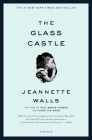
I'm in the middle of reading an adult book right now:
The Glass Castle
, by Jeannette Walls. It's a memoir of growing up in a highly dysfunctional and eccentric family.  Somehow I wasn't aware of it when it made a big splash on publication in 2005.  A customer recommended it to me: it had been assigned to her son when he was a junior in high school.  Makes one think a lot about the parent-child relationship.  It will probably end up in our expanded Teen/Adult section.  I'm casting about for more contemporary books that will appeal to high schoolers and parents.  I've done pretty well expanding our fantasy reading up to adult levels.  And in more traditional literature, we have a range of 19th and 20th century adult books.  Many of them pop up on summer reading lists; some are there because staff members feel a special connection.  Austen, Brontes, Dickens, Doyle, Dumas, Golding, Huxley, Lessing, Orwell, Rushdie, Salinger, Steinbeck, Twain, Vonnegut (am reeling off this list from memory -- would have more if I were looking at the shelves). Lots of them are wonderful, but I want to carry some more surprising and current ones too.  Ones that high schoolers can connect with, without necessarily having a community to discuss them with.

Suggestions?

Love,

Deborah

Monday, March 19, 2012

Explicit content

Dear Aunt Debbie,

I need to figure out when I'm going to see that movie.  Like you, all of my students, and thousands of other people in the interestingly wide demographic that has become obsessed with the books, I whizzed through the Hunger Games trilogy.  I'm not sure at what age I'd want my kids reading it, but I have two good friends with 9 and 11-year old daughters who loved the series.  I do know that it's the kind of book I'd want to read with my kids, so that we could discuss the issues involved: both the intense violence, which gets quite graphic at times, and the larger social issues raised by Katniss's struggle.

Later this week, I'll be introducing a similarly fraught text to my ninth-grade students.  Russell Banks's Rule of the Bone contains all kinds of intense content: drug use, sexual abuse, child pornography, murder.  Every year, before I give it out to my freshmen, I have a moment of doubt: is this material too controversial?  Is it damaging to expose students to some aspects of the shadier sides of our culture that some of them may, so far, have escaped?  Then I bite the bullet, hand out the book, and spend the next month leading intense, real-world discussions of a text every one of my students finds gripping.

Rule of the Bone is narrated by Chappie (a.k.a. Bone), a 14-year-old pothead who lives in upstate NY.  Chappie's voice is informal and full of attitude -- lots of long, run-on sentences that feel breathless and realistically teenage-y.  In the first chapter, he steals from his mom and stepfather to buy pot, smokes, and holds his stepfather's rifle up to the window to imagine shooting people walking by.  It's not hard to tell that he's been through something bad, though the details of what's happened to him don't emerge immediately.  There's a lot of anger in the narration, but Chappie is also an appealing anti-hero.  He's been called a next-generation Holden Caulfield, and I think the comparison is apt.

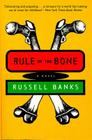
As the story progresses, Chappie undergoes a series of transformations: he is presumed dead after a fire, and runs away with a friend; together, they get tattoos, and Chappie reinvents himself as Bone because of his chosen symbol (see book cover).  Other major characters emerge: Froggy, a.k.a. Rose, a little girl who Bone tries to save, sort of; I-Man, a Rastafarian illegal immigrant who takes Bone under his wing.  Much of the second half of the book takes place in Jamaica.  Because of the journey aspect of the book, and the racial themes which become prevalent as Bone grows close to I-Man and tries to emulate him, Rule of the Bone has been likened to Huckleberry Finn as well.

Teaching Rule of the Bone allows me to break open conversations with my students about identity, race relations, drug use, abuse, sexuality, what it means to be a family, and all kinds of juicy symbolism.  Given the TV and movies they watch and the video games they play, I'm pretty sure that most of the content we address, while shocking, isn't out of the realm of what they've seen before.  The difference is that we're analyzing it in a community.  By bringing these subjects into the classroom, we can identify and explore them -- it's a kind of safe space.

I introduce Rule of the Bone by providing my students with a list of the most frequently banned books of the last decade.  (I'm stacking the deck here: the #1 banned book is Harry Potter, which elicits immediate shock waves.)  Using this list as evidence, I ask them to debate the statement:

"Student exposure to controversial material should be limited in some cases."

I give them rules for the debate: one person at a time, direct opposing arguments, etc.  Then I sit back and watch them make all the arguments on both sides.  In the last five minutes of class, I tell them that the book we're about to read contains controversial material.  I encourage them to think about all of the arguments they've made for allowing mature students to handle complex and touchy subjects.  I ask for their maturity.  I ask them not to read ahead, but if they do, not to spoil the plot. Then we read a really excellent, complicated book -- together.

Love, Annie

Sunday, March 18, 2012

Hunger mania

Dear Annie,

I would like to report that I have my ticket to the opening  midnight show of The Hunger Games movie this Thursday night -- will be going with some of my co-workers.  The movie has been fueling an across-the board popularity for the book that at times reminds me of the Twilight years.

I've been getting lots of questions from parents who are uncomfortable with the idea of their children reading
The Hunger Games
and sequels.  This week, a mom whose 11 year-old wants to read the book asked me about it, and before I could say much, her 9 year-old fourth grader gave us a detailed, fairly accurate summary of the book.  She hadn't read it -- but it's so popular that even 9 year-olds know the plot.  The day before, a regular customer had stopped me on the street to ask about its appropriateness for his ten year-old grandson.

My first reaction is to say, this is your child, you need to go by whatever fits your family's standards.  The people who ask about the book are always ones who haven't read it, and the basic description, as I've mentioned before, is one which makes many parents of preteens recoil.  Most of the book takes place in a reality TV show in which the teenage contestants kill each other off: the last one standing is the winner.  But, as you know, it's not a book about how to kill people: it's about repressive government, members of the oppressed class figuring out how to resist that government, strategy, psychological manipulation, integrity -- and hope.

What's the right age to read disturbing books?  What kind of disturbing is something to worry about?  What is a parent worried about -- bad dreams? bad values? bad behavior? warped view of human interaction?  I am writing here as a parent who read both Treasure Island and
The Hobbit
to Lizzie when she was Eleanor's age -- yes, five years old. Within the world of books in our household, those choices made sense.   She craved stories of adventure.  Despite the fact The Hobbit contained a scene combining two of Lizzie's biggest fears -- wolves and fire -- she loved the book.  We re-read it with her multiple times.  In my 13 years of bookselling I've probably recommended The Hobbit for a five or six year old only a handful of times. 

Both those books have scary scenes, but not horrifying ones.  The protagonists maintain one's faith in human (or hobbit) nature.  But a book which presents institutionalized cruelty, as in The Hunger Games -- at what age is a child ready to process that?  And once it becomes a part of playground conversation -- does that inoculate kids against its more disturbing elements?  Is it just another action plot, not to be taken too seriously?  I think of The Hunger Games as process-able by most sixth graders. And I think of most fourth graders as not being there yet.  But it's a book about resisting cruelty, about trying to hold onto the important values in life as one is being devalued.  When is one's child ready for those themes?

One of the things I say to those parents who want guidance on The Hunger Games is that it's a good book, one they might want to read themselves -- for their own interest, and to make a more informed judgement than I can offer about their children. 

And pretty soon, I'll be able to add the movie  to those conversations.

Love,

Deborah

Friday, March 16, 2012

Guest blogger: my mom, on teaching kids to read

Dear Aunt Debbie,

To continue our conversation about learning to read, with some book recommendations and technical know-how, here's my mom (who has written her own early reader books, and has guest blogged for us before):

Dear Sister Debbie and Daughter Annie,

Thank you so much for the shout-out on my little books!   It’s fun to see them on your wonderful blog.  I always knew that you liked them, but it’s quite another thing to read that you like them!  We are going to try to find a way to make them available for download over the internet soon, in case anyone is interested.

I wrote those books when I was working as a reading specialist, so my job was to teach kids who had problems learning to read.  The method I found most successful was to teach them phonics in a very structured way and, once they had mastered the consonant sounds, I got them started reading right away in phonetically regular books, so that they would be sure to have success right off the bat, and would find that reading was fun.  

I wrote my little books to fill in the gap between blending sounds to make words and reading the first phonics readers.

It’s important for kids not to have too many unfamiliar words in whatever they are trying to read, especially when it’s their first book.  Before I showed grand-daughter Eleanor the little short-a books I wrote, I made sure that she could put together the sounds of the words that were in the books, so that she could recognize and/or figure out, for example, the difference between “bat” and “bag” when she saw those words in a story.    

[Want more technical discussion of this method of teaching reading?  See section at the bottom of this post.  Want straight-up book recommendations?  Keep reading.]

Once children had read and reread these little books or other similar ones, then I got them to read some of the Primary Phonics series, published by Educators Publishing Service (EPS).  They are available in teachers’ stores, such as the Bank Street Bookstore in New York City, or you can search for them online. [Here's the Alibris link, but a quick Google search turns up a bunch of places you can find them.  Some of the top links are Christian homeschooling sites.  This doesn't mean the phonics books have religious content, just that they're clearly used a lot in homeschooling situations.]  


Many books in this series were written by Barbara Makar, and many have some sort of welcome conflict or aggression in them, which I always felt gave them more bite than some of the non-story pap that is in many phonetic readers.

 Maybe because I couldn’t stand going through the whole phonics series with kids --and/or because once most kids are jump-started, they begin to absorb whole words whether or not they are phonetically regular -- as soon as I could, I would switch them to Real Books (i.e. not written by textbook people), like the early Dr. Seuss readers or the marvelous just-republished Monster series. 


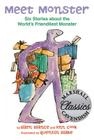
Meet Monster: Six Stories about the World's Friendliest Monster
is a book containing a reprint of the first of many stories of a series written in 1973 by Ann Cook and Ellen Blance, and charmingly illustrated by Quentin Blake (big Roald Dahl illustrator).   As they say on the copyright page, “The authors believe that initial reading experiences should be closely linked to the spoken language of children.  Therefore, the Monster stories draw upon the words and expressions used by children from five to eight years old as they talked with the authors about Monster and his adventures.”   Here is how the first story starts:

Once upon a time there was a city.
A monster comes to this city to live.

Monster is not ugly
like other monsters.
He’s very tall,
and his head is skinny.

It has very few words per page, good spacing of the text, and nice large illustrations.  The stories in “Meet Monster” tell how monster comes to a city, decides he likes it, finds a suitable house, moves in, cleans it, looks long and hard for a friend, finds a nice little boy, and even a lady monster, and then goes to the beach with the little boy.  It is greatly to be hoped that the further adventures of Monster and Lady Monster will soon follow the republishing of these.  We used to keep battered copies of the originals where I worked, and never let them be borrowed, so that we wouldn’t lose them, they are so good.

Another wonderful series that is currently out of print but still find-able is the “Pleasure Reading Series,” written by Edward W. Dolch, Marguerite P. Dolch, and Beulah F. Jackson.  You may have heard of the Dolch Word lists, careful compilations of the most commonly used words in the English language, graded for difficulty and grade level.  The same Dolch family wrote these stories, which are retellings of famous folk and fairy tales, using a 1000-word vocabulary.   They are just wonderful, since they are written in a literate, easy-to-read style, and include lots of repetition.   “Teach reading by having kids read,” has always been my motto, and these stories do the trick.

The one drawback of the Dolch books is that they are sparsely illustrated, with just one full-page drawing per story.  But if you have a beginning reader who will feel really grown-up reading a book without pictures on every page, these books are great.  (Why doesn’t someone republish them with lots of pictures?  I wonder.)  Search just for “Dolch” at alibris.com or biblio.com to find them.

To give you a feeling for the diction, here is the beginning of “Beauty and the Beast,” found in “Old World Stories.”

Once upon a time, long, long ago, there lived a very rich man.  He had six daughters that he loved very much.  Since he was so rich, he gave them everything they asked for.  They had beautiful clothes to wear, the nicest things to eat, and they never had to do a bit of work.


More technical discussion of the method of teaching reading mentioned above:
I use the method embodied in the Structural Reading series written by Catherine Stern, Toni S. Gould, and Margaret Stern, a brilliant mother/daughter/daughter-in-law team, (who also, by the way, co-authored the best method for teaching arithmetic ever devised).   
They were not the first or only people to figure out that a good structured sequence for teaching phonics would be to start with 3-letter words with a vowel in the middle.  CVC (consonant-vowel-consonant) words are cool, because the sound of the vowel will always be short, therefore predictable.   So you teach the short-a words, then go on to the short-i words, then short-o words, and then short-u, and last but not least, short-e.   (You remove short-e from the AEIOU series and put it at the end because it’s the hardest sound to distinguish, being so schwa-like.)
A lot of programs teach in this way using so-called “word families,” rhyming words like “cat, sat, mat, bat.”  The pitfall in teaching like this is that children will tend to look at the first letter of a word, and then think they are reading it, when all they are doing is hearing the rhyme.  The genius of the Stern approach is to present the first two letters of a CVC word as a unit, and then to add on the last letter, always the hardest for a kid to hear.  So you teach them to pronounce words slowly: ba  t, ma  n, ba g, etc, lingering over the short vowel sound, and clipping the final consonant sound sharply, as if you were British.  Then you get them to assemble words with word cards, or dominoes, that you make.
They have a website for the math program, but if you go to the link for the reading program listed there, it will put you on to McGraw Hill’s website, where it will seem that you can order the books, but McGraw Hill has a weird policy of not allowing anyone but teachers to order the teachers’ editions since they don’t want kids to order them and cheat (a particularly hilarious supposition in the case of books designed to teach children to read).  So if you go there, be sure to sign in as a homeschooling parent, so you will be allowed to purchase books.  But then also be aware that when books are out of print, you will get a message that you don’t have the right credentials.   It’s probably best to give them a call.
I await with pleasure your blog readers' recommendations for good first books for kid readers.

Love, Judy
Me too!

Love, Annie



Wednesday, March 14, 2012

Still learning to read (6)

Dear Annie,

Judy sure can write -- and the way she draw smiles is always spot-on, don't you think?  I love those books.

When the girls were in the early grades, I used to volunteer at their school library, where I learned huge amounts about children's literature from the excellent librarian.  One of the many habits she instilled in me was to avoid calling learn-to-read books easy readers -- because for those who use them, they're hard work.  Calling them easy doesn't acknowledge the effort a child puts into it.

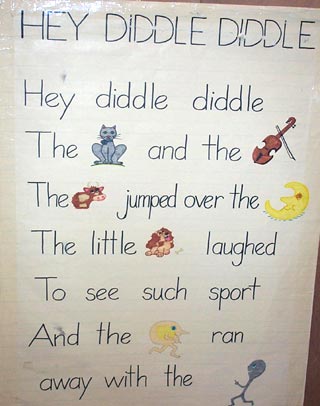
Both Lizzie and Mona were comfortable readers by the middle of first grade, but they arrived there on different paths.  Learning to read is of course not something that one does all at once.  Everything gets lined up over the course of years.  From the start, children are doing a lot of listening: they learn how to make the sounds of words and distinguish among them.  They can hear rhymes. Even before they know the alphabet,  they learn that marks on paper are symbols representing other things.  Rebus books, which put pictures in the place of some words, emphasize that connection.  Here's a Rebus poster:
Lizzie connected with a phonics-based way of learning.  It relies heavily on understanding the sounds of letters and understanding how some letters change when they're near other letters -- H or a silent E, for example.  Your mother's wonderful books are phonics readers.  It's the way most parents believe they learned.  When Mona entered first grade, she was eager and impatient to learn to read.  I will never forget her wailing at the end of her first day of school: "Sophie can read Go Dog Go and I can't!" She caught on right away to elements of what's sometimes called the whole language approach.  She understood the phonics elements, and was capable of sounding out words, but she tackled the written word differently.  This approach encourages readers to take cues from illustrations and what one knows about the book before one starts reading.  The way I saw it work with Mona was that she'd look at the first letter or two of a word and make what was basically an educated guess.  If she couldn't figure it out quickly, she'd slow down and sound out.  It wasn't intuitive for us as parents -- and she made a lot of mistakes at first, but it got the job done.  On the first day of second grade she chose Charlotte's Web as her first reading assignment.  Here's a slightly longer definition of the different approaches -- it's on a commercial website, but the basic description seems pretty good.  The one-vs-the-other doesn't ring true for our experience.  It feels more like there's a range and kids learn by mixing different amounts of each method.

When the girls were learning, I asked your mother, the reading specialist, about these approaches.  My recollection of her response (we need to hear from you, Judy!) was something like a shrug and a "whatever works."  She wasn't dismissing them -- she was involved in the day-to-day work of helping lots of kids read, and the same thing wasn't going to work for each one of them. 

Love,
Deborah