In which Annie (high school teacher, mother of two young girls and a younger boy) and her aunt Deborah (children's bookseller, mother of two young women in their 20s) discuss children's books and come up with annotated lists.

Sunday, February 26, 2012

The sequel that ate the author

Dear Annie,

Sometimes one or two books that turn out to be commercial successes take on a life of their own and swallow their authors, forcing them into sequel after sequel.  I'm thinking here first of Mercer Mayer, whose Little Critter books you gently criticize.  I am very un-fond of them -- feel they're barely a step up from the dreaded Berenstain Bears.  The driving force behind the series is to give lessons in behavior, rather than to tell a story or engage a kid in other ways.  But Mayer has done some good books, too. 
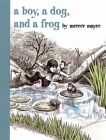
A boy, a dog and a frog
, his first book, is a wordless delight showing a boy and his dog trying to catch a frog, who eventually follows them home.  He did several boy/frog books.
evicting the kangaroo
 And then there's
What do you do with a kangaroo?
  Wasn't that one of the books that lived on the kids' bookshelf at my parents' (your grandparents') apartment?  A series of animals attempts to move into a girl's home, making many imperious demands.  What do you do?  You throw them out!  Except that they keep reappearing....  Mayer wrote that one in 1973, a dozen years before Laura Numeroff launched her series with If You Give a Mouse a Cookie, but there are some parallels in the feel of both books: kid at home intimidated by demanding but ultimately lovable animal interloper.  Repetitive structure, giggles of anticipation.  And Numeroff, like Mayer, got taken over by the form and still can't stop cranking them out.

I completely sympathize with your antsiness at reading and re-reading average stuff.  I have misty memories of evenings when Bob and I would get a choice in the picture book rotation too.  Small relief.  It sounds like you might be moving to a broader range of books that both girls will be happy with these days, even if they keep coming back to a few.  Is this true?  Is Isabel getting into longer stuff?

Love,

Deborah

Friday, February 24, 2012

Enduring the unobjectionable

Dear Aunt Debbie,

I agree with you: it is full-on weird to return a book just because you didn't like it.  Your post got me thinking about my own responses to books I don't particularly like.  As I've mentioned before, I try to keep our shelves free of badly-written, overly commercial, or otherwise obnoxious books.  In keeping with Grandma Helen's advice, I have been known to throw a few clunkers out in the dead of night (or at least, after bedtime).

But what of the perfectly okay?  I'm talking here about books that my kids love, and that I think are...fine.  Totally decent.  Not bad or harmful in any way.  Enjoyable to read in small doses.  Just, well, not all that interesting.

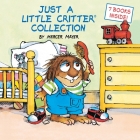
Two series pop to mind: Little Critter, by Mercer Mayer, and the If You Give... books, starting with If You Give a Mouse A Cookie, by Laura Numeroff and Felicia Bond.  Part of the problem with each is the sheer volume of the series.

There are more than 70 Little Critter books, and counting.  In each, Little Critter (an appealingly prickly little hedgehog-like person) focuses on one idea, and repeats it with variations: "When I get bigger, I'll...."; "I wanted to do X, but Mom wouldn't let me.  I was just so mad!"; "I can do X all by myself"; etc.  Each page repeats the same basic formula, and there's always a very slight twist at the end ("I'm not bigger yet!").  The Little Critter book we own is a collection of seven stories, and reading the same formula over and over (which is a requirement -- I have never successfully read only one story from the book and been allowed to put it down) can feel mind-numbing.

Mind-numbing, and depressingly literal.  One of my pet peeves about Little Critter is that Mercer Mayer doesn't do anything interesting with the text he includes in his drawings.  There are often labels on food or toys, or single pages of books Little Critter is reading.  Without fail, they are boring: a shopping bag reads "Best Food"; a toy duck is labeled "Duck"; a book is titled "Read This Book."  Compare this to the fantastic, old-school brand names on kitchen products in In the Night Kitchen ("Kneitel's Fandango," "Phoenix Baking Soda," "Hosmer's Free Running Sugar: It Pours"), or the psychology-related book titles Kevin Henkes sneaks into Chrysanthemum.  Is it too much to ask a kids' author to sneak in a little tidbit for the parents to enjoy?

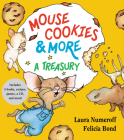
In comparison to the Little Critter juggernaut, the 8 If You Give... books don't seem like so many.  Except that we own them all.  Again, here, we started with an anthology:  Mouse Cookies and More: A Treasury.  It includes four books (...Mouse a Cookie, ...Moose a Muffin, ...Pig a Pancake, and If You Take a Mouse to School), as well as song lyrics, recipes, activities, and a CD.  Again, individually, I like these books.

In each, a demanding animal asks for increasingly elaborate things from the boy (or girl, but mostly boy) he (or she, but mostly he) is visiting.  Many of the requests are domestic: they want a cookie, to draw a picture, to make puppets or a kite.  In the later books (...Dog a Donut, ...Cat a Cupcake, ...Pig a Party), they go farther afield, to the beach, and museums.  The child caring for the animal invariably winds up looking exhausted by the end of the story.  There's a nice wink at parents here -- the animal exhausts the child just as my own child exhausts me!  And Felicia Bond's illustrations are bright and bold, with lots of action.

But it's the same construction, every time: "If you give..., he'll want....  Then he'll ask for..." etc., all the way back to the original item given.

I know that kids love repetition, and that it's developmentally appropriate -- it gives both Eleanor and Isabel great pleasure to be able to predict what's going to happen on the next page, to essentially be able to recite these books.  There is good nature here, and well-aimed humor.  But oh, some nights, I would really rather be reading something else.

Love, Annie

Wednesday, February 22, 2012

Unhappy return

Dear Annie,

Well, it was fun to get an unsolicited author response -- Nick Bruel on our Bad Kitty post. He's both a former bookseller, and the father of an Isabel, so he fits right in here.

Speaking of bookselling, someone came into the store today to return a book she bought several months ago.  The reason she returned it was that she was shocked at what a bad book she found it to be.  The nine year-old for whom she bought it didn't like it, and it had cruelty to animals in it, she said.

The book was one I had recommended: The 13 Clocks by James Thurber, which Neil Gaiman called "probably the best book in the world," and whose praises I sang here.  I'd been thinking of it this week in the context of the lovely discussion going on in the comments about your post on Charlotte's Web, another book whose writing leaves many in awe.

So this customer didn't agree about Thurber's fable-like 20th century fairy tale, which is her right, completely.  There are many readers in the world, each with their own opinions.  I re-read The 13 Clocks today, looking for cruelty to animals: I found 11 princes run through by the evil duke's sword, reference to "slaying the thorny Boar of Borythorn," (who turns out to be fictitious), a description of the castle looking "as if the gaunt Duke stalked from room to room, stabbing bats and spiders, killing mice" -- and  the murder of time by the clock-destroying duke.

Neil Gaiman, in his introduction to the book,  elaborates on his superlative: "And if it's not the best book, then it's still very much like nothing anyone has ever seen before, and, to the best of my knowledge, no one's ever really seen anything like it since."  Which also serves as an explanation of why a child might be put off by it, especially if reading it alone: too different, too weird, too wordy. 

I remain stunned by people who feel they can return a book they've read some or all of because it didn't please them.  The store has a fairly liberal return policy, which we see as part of maintaining good relations with our customers.  The book came back in good condition, but it still feels wrong to me.  If one buys a book, one is taking the risk of not liking it.  One doesn't demand money back from a bad movie -- is the situation with a book different? 

Love,

Deborah

Monday, February 20, 2012

Cynical politics and awesome first ladies

Dear Aunt Debbie,

And Happy Presidents' Day to you!  Bad Kitty sounds like a funny way to get into the topic of politics, though perhaps, as you say, a tad cynical for a first time through.  Then again, it's hard not to feel cynical these days when trying to explain the democratic process to one's children.  We've had a few conversations about the presidential election with Eleanor -- nothing about the Electoral College, so I'm afraid I'm no help on that front, but a few of those Major Conversations that pop up when you're not expecting them as a parent, often just before bedtime: What color is God's skin?  What happens when we die?  What's the difference between Democrats and Republicans?

We read Duck for President a while back, and while I adore Doreen Cronin and Betsy Lewin's Dooby Dooby Moo, I remember not loving this one as much.  It's wacky, as their books about the animals on Farmer Brown's farm tend to be, but at least when we last picked it up, also struck me as aimed at slightly older, more savvy readers.  Maybe worth picking up again.

The most presidential book we own at the moment is Eleanor's new book of  Obama paper dolls, which my father bought for her birthday.  They're Tom Tierney dolls -- the best paper doll artist ever, and worthy of a complete post someday soon.  It's laudatory, and the text inside is mostly about the clothes.  I love Tom Tierney.  (If you're feeling quite cynical and a little more adult, but still want an activity book, I'd recommend the Idiots' Books mix and match book Build Your Own President, created by my former college classmates, Matthew Swanson and Robbi Behr.)

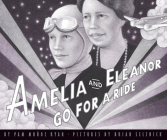
Rachel at Even in Australia posted recently about historical president books.  Her post made me realize that I've never written here about the first book you gave Eleanor, sent to us mere weeks after she was born: Amelia and Eleanor Go for a Ride, by Pam Munoz Ryan, illustrated by Brian Selznick.

The Eleanor of the title is, of course, Eleanor Roosevelt; Amelia is Amelia Earhart, and apparently the two women were friends in real life.  Ryan draws inspiration from an actual historical episode: an evening when Amelia joined Eleanor for dinner at the White House, and later in the evening the two went flying in an airplane together.  In the fictionalized version, the flight is a spur of the moment decision, and Amelia and Eleanor are the only ones in the plane, swooping over Washington DC at night.  They return to the White House only to go out again, so that Eleanor can take Amelia for a spin in her new car.  The back of the book provides accurate historical information: there were other pilots on the plane, it was arranged ahead of time, Earhart didn't fly it the whole way, etc.  I like having the facts laid out at the end, but allowing for a little bit of fantasy in the plot.

Our Eleanor is a big Eleanor Roosevelt fan, and the depiction of Roosevelt and Earhart is compelling.  They're both presented as strong-willed, charismatic women who aren't shy about pursuing their interests.  And of course, Selznick's drawings are fantastic -- I didn't make the connection until picking the book up again last week that of course these portraits and DC landscapes were penned by the artist and writer who created Hugo Cabret and Wonderstruck.  What an awesome man.  And what awesome women.

Love, Annie

Sunday, February 19, 2012

Bad Kitty: Civics Instructor?

Dear Annie,

I'm so glad you're enjoying The Borrowers.  It goes on for five books, but as with most series, the first is the best.  I'm also curious to see the new movie, The Secret World of Arrietty.  It seems to be based on at least the first two books, but the initial meeting of the human boy and Borrower girl appears to be a good deal more Disney-fied than your description of the book, alas.  But it's gotten some good reviews.  Hmm.

A customer asked me for a book a few weeks ago that would explain the Electoral College to her six year-old.  I understand the desire for one, but I couldn't think of any (suggestions, anyone?).   Then
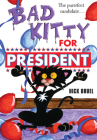
Bad Kitty Runs for President
by Nick Bruel arrived at the store.  Bad Kitty is one of those gender-nonspecific characters, like Piggie, who turns out to be female.  Bad Kitty, through three picture books and five chapter books, is a mostly-obnoxious but often funny acter-outer, with occasional bursts of real likability.  Bad Kitty Meets the Baby, for example, is a new-sibling book with a lovely Chinese baby adoption twist to it. 

Bad Kitty Runs for President is not about the Electoral College, but it's a realistic-to-cynical explanation of democracy in action in America.  It bears more resemblance to politics of the past few months than to an upbeat civics text explaining how-a-bill-becomes-a-law.  In the book, the narrator persuades Bad Kitty to run for president of the Neighborhood Cat Club.  The only hint of an issue is Bad Kitty's anger at stray cats moving into the neighborhood (shades of anti-immigrant feeling?), and both sides of the argument are briefly laid out.  But issues quickly get bypassed while babies are kissed, money is raised, deceptive character claims are made ("This is Kitty," says her ad, "What a Good Kitty.  Such a Very Good Kitty."), and an attack ad is aired alleging that the opponent is really a dog.

Salted between episodes of Bad Kitty frenetic activity are "Uncle Murray's Fun Facts," explaining things like voter registration, and how massive amounts of money get funneled into campaigns, including PACs and Super PACs.  And when Bad Kitty works her way up to what promises to be an explosive tantrum when she loses, there's a little lecture about living in a democracy.  Given the cynicism of previous chapters, the concluding lines seem a bit starry-eyed:
Democracy makes sure that EVERYONE has a chance to participate, that EVERYONE has a chance to win, and that EVERYONE has the chance to become the leader of his or her community.
You may not like how the election ended, Kitty.  But you have no choice but to live with the results if you want to live in a democracy.
The book's format (early chapter) and look say that it's aimed primarily at second-to-fourth grade kids.  Is that the age to go into the major failures of the political process?  The trivialization of issues, the influence of money, the dishonesty of campaign claims: these are all very real parts of American politics.  I think I'd aim for this book not to be the first explanation of civics that a politically-emergent child reads.  But I wouldn't mind it being part of the mix in the early grades.

Have you started explaining presidential politics to Eleanor, or is that something for future years?

Love,

Deborah

Friday, February 17, 2012

Realistic kid behavior in fantasy worlds

Dear Aunt Debbie,

I'm sorry you've been down with a cold this week -- hope you're feeling better!

I've been thinking about YA and chapter books, and the qualities that make a child or teenage protagonist feel realistic, sometimes in uncomfortable ways.  I started on this tack when talking to Jeff earlier this week.  He's currently reading The Hunger Games, which I devoured last year, so that we can go see the movie together next month.  Jeff was struck by a couple of points he felt were unrealistic.

First: in their initial training, the Career Tributes (the teenagers who come from the richer districts and have been training for their whole lives for the Hunger Games) band together and form immediate alliances, while the other Tributes, who were chosen from poorer districts and are far less prepared, don't band together, and remain loners.

Second: this is a world in which everybody has grown up watching the Hunger Games on TV, and seen how the social dynamics play out multiple times.  Would Katniss really be so surprised when Peeta declares his love for her in his live TV interview?  Wouldn't she be prepared for, and understand, the reasoning behind playing up a romantic connection between them?

While I see his point on both counts, neither of these moments made me pause as a reader.  This may partly be that I read more YA literature than my husband does.  But it's more than that: I spend a lot of time with teenagers, and the teenage behavior Suzanne Collins describes feels true to me.  I've been teaching creative writing for 12 years, and have read enough stories of lost friendships and romantic entanglements and entanglements that they're not sure are romantic, but might be, to believe that Katniss would honestly be caught off guard by Peeta, no matter what she'd seen on TV before.

As a teacher who watches cohorts of students cycle through high school, I've become familiar with the tropes of teenage life, with what happens to a class when they hit junior year, and when they then become seniors.    To some extent, my students are aware that the paths they're taking have been trodden before, that the plots of their stories aren't brand new.  But they are brand new to them. 

So yes, I believe that the weaker Tributes wouldn't immediately band together like their own little armed Breakfast Club; in an atmosphere of suspicion, and in their untrained state, they wouldn't make that early move to connect, or even see connection with the other "losers" as a strength.

This week, Eleanor and I are reading The Borrowers, which came in your latest wonderful package.  We're loving it -- such suspense!  Such pleasure in imagining where Borrowers might live in our own home, and what they might be taking!  I hadn't read it in years, and one of the things I'd forgotten was the intensity and discomfort of Arietty's first meeting with the human boy.  She's 14 years old, and a few inches tall; he's 10, and a giant.  When the boy spots her, his first move is to threaten to squash her -- he thinks she's a possibly evil fairy -- and the rest of the interaction isn't much better.  He's threatening and pushy, and she's brave, but thoughtless about revealing information to him.  In short, he acts like a 10-year-old, and she acts like a 14-year-old.

There's something wonderful about reading child protagonists who feel emotionally plausible in this way.  A recognition: yes, I know that kid.  I've been that kid.  That kid speaks to me.

Love, Annie

Tuesday, February 14, 2012

From memoirist to YA novelist

Dear Aunt Debbie,

When I was twelve, and we moved into the first apartment where I had my own room, I did some of my decorating with romance novel posters I snagged at an NYC Book Fair.  The tagline on one of them read: "Against Fate and Fortune, they found a Love that sealed their Destinies."  When I tracked down the book and read it, of course, the star-crossed lovers were barely star-crossed at all -- both from the same social class, with nothing much keeping them apart but attitude.  I wonder sometimes whether the writers of those back-cover blurbs have read any part of the book they're blurbing.  They're pretty fantastic, though.

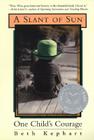
I love the Beth Kephart piece you linked to about the promising future of YA novels -- several more titles to put on my reading list.  I know Kephart only from her first book, the memoir A Slant of Sun: One Child's Courage.  A number of years ago, our friend Beth Tascione adapted it as a one-woman show, which we saw at the NY Fringe Festival.  It was a powerful evening of theater, and afterwards I bought and read the book, which I found quite moving.  This was before I had children; I'd be interested to reread it and see how parenthood has changed (and, I'd guess, intensified) my reactions.

In A Slant of Sun, Kephart writes about raising her son, Jeremy, who was diagnosed at age 2 with a pervasive developmental disorder.  Her account of working through this diagnosis and learning how to bring Jeremy out of himself and reach for human connection with him is straightforward and honestly written, with some lyrically beautiful passages.  It's not a book for kids, but it is one for parents, of all kinds of children.

I'm interested to see that Kephart has moved to writing YA novels -- have you read them?  Her website (which is great) says she wrote five memoirs first, and this made me wonder about connections between the genres.  Does making meaning of your own life lead naturally to plotting the lives of others?  Is there something more direct and attractive about writing for teenagers than adults? 

Love, Annie