In which Annie (high school teacher, mother of two young girls and a younger boy) and her aunt Deborah (children's bookseller, mother of two young women in their 20s) discuss children's books and come up with annotated lists.

Sunday, February 12, 2012

Looking on the bright side

Dear Annie --

Ah, golden underpants, book bonanzas and more -- inspiration strikes so originally at the kids' books blogs we've passed the Liebster to.  And another thank you to The Literary Lunchbox for giving us the hot potato.

I've just come back from Toy Fair, the toy industry's big trade show in New York.  Even though I've been working in a toy store for the past 13 years, this was the first time I've gone to it.  It's big.  It has a lot of stuff I recognize from our stores, and a lot of stuff we don't carry.  It's weirdly fun to run into people dressed in Ugly Doll outfits, not to mention some very short people dressed as round, slightly vegetable-ish characters I didn't recognize.  And I saw some very endearing stuffed animals of Elephant and Piggie which we'll be carrying.

As I was packing to go, I opened a box of bound galleys, which is what we call sample copies of chapter books, from a publisher from whom I need to order new books that will be coming out this summer.  I figured I'd grab a few to read on the bus to New York.  I can do a rough sort of one of these boxes pretty quickly.  I started reading the blurbs on the backs of some of the books, and the sameness of many of them are I-could-laugh-or-I-could-rant material.  I pulled five (from a box of 20) galleys: they're all aimed at the Young Adult market, three have women in big dresses on the covers, one has a woman in a tank top, and the last has a slightly squished-looking heart.  Here are the back-cover blurbs:
He's not a vampire. He's not a werewolf.
He's something else...the Temptation.
--
The fate of the paranormal world rests in Evie's hands.
--
. . . gritty alternate reality where vampires make the rules...and one girl dares to break them.
--
There's normal, and then there's paranormal, and neither is Quinlan's cup of Diet Coke.
--
A breathtaking, postapocalyptic romance inspired by Jane Austen's PERSUASION.
That last one's my favorite.  Aaagh!  It's even conceivable that some of these could be good reading.  Maybe.  But the way they're being marketed is so symptomatic of the pack mentality of many publishing houses these days.  In the words of Beth Kephart, YA novelist:
Teeth sink. Wings ascend. Murderous games hold court. Landscapes are annihilated, and then annihilated again. It's a package deal.
I quote Kephart because she wrote a lovely essay published in Shelf Awareness (an intelligent newsletter for the book industry)  offering an optimistic take on current YA writing.  Despite the formulaic stuff, she argues, the books which have recently received awards or other forms of attention are getting better and better:
Ten years ago, when I chaired the National Book Awards Young People's Literature Jury, I yearned for the dawning of a movement much like the one that I believe we are seeing today--for a time when the dominant YA books were the risk-taking books, tantalizing in their shape and form, fresh and original in their language, soulful. I believed then, and I believe now, that enduring YA books have the capacity to alert, embolden and inspire; to live outside marketing labels; to stretch young readers' ideas about how words can take them to places they've never gone.
Kephart's essay lists a number of very good recent YA books -- definitely worth taking a look at.

Love,

Deborah

p.s.   I ended up taking two other galleys on the bus with me, both middle grade non-fantasy.

Saturday, February 11, 2012

A little love for our fellow kid-lit bloggers

Dear Aunt Debbie,

Interesting question about the current reputation of Strunk & White.  We have a bunch in the English Dept. bookroom (or at least we used to), but I'm not sure how often it's taught in high school.  My guess would be that most of my students don't know about it.  Perhaps it's time for me to break it out again....

Last week, Ali B. at Literary Lunchbox honored us with a Liebster Award.  Thank you, Ali!

It's a lovely thing -- an apparently grassroots way for small bloggers to spread a little love for each others' blogs.  I haven't been able to find the origin of the award, but there are a lot of blogs out there who have given it to each other, and it seems warm and nice. Think "pay it forward" rather than "chain letter."

Here's what I have found:


Liebster is a German word that means dearest,and this award is given to bloggers with less than 200 followers who deserve more recognition.

The rules:
  1. Thank your Liebster Blog Award presenter on your blog.
  2. Link back to the blogger who awarded you.
  3. Give your top 5 picks for the award.
  4. Inform your top 5 by leaving a comment on their blogs.
  5. Post the award on your blog.
So this is what I'll be doing tonight.

My top 5 picks are all blogs we've been linking to in our sidebar for quite a while; I encourage readers to check them out.

Even in Australia is written  by a friend of mine who is also the mom of two small girls.  She covers a wide variety of subjects and asks thought-provoking questions about them.  I also love the photos she posts of her library book stacks -- totally inspiring.

Storied Cities is written by another Brooklyn mom who reads a ton with her kids and reviews books about cities, set in cities, or in some other way connected to the urban life.  Her reviews focus on how the book connects to the city.  She has a great, no-nonsense voice.

Vegbooks focuses on books which help parents and teachers support vegetarian and vegan kids in their lives.  The reviews are written by several collaborators, each with his or her own perspective; they're thorough and interesting.  Jessica Almy, the creator of Vegbooks, lives in your neck of the woods, and has been a frequent and insightful commenter here.

LitLad is focused on the reading life of a mom blogger and her two sons, ages 9 and 5.  Especially on days when I feel we're skewing a little girl-heavy here, this is a great place to go.  The Boy-Tested Book Bonanza! page gives you a good sense of the feeling here.

Smiling Like Sunshine focuses on natural family living.  Much of the blog is devoted to lifestyle ideas, but there's a good amount of talk about books, especially on Book Sharing Mondays.

And I need to add one, who's strictly over the 200 followers limit, but whom I adore: Playing by the Book, hands-down the most creative book blog I know.  Zoe is the mom of two girls just a tad older than mine, and along with reading them extraordinary books, she excels in creating and documenting funky craft projects.  The latest: a pair of golden underpants meant to be worn on the head.

Inspiring, awesome stuff.

Love, Annie

Friday, February 10, 2012

E.B. White: some writer

Dear Annie,

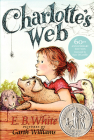
Charlotte's Web: wonderful book,  intense family experience.

You quoted the book's vivid opening lines.  I offer the closing ones:
Wilbur never forgot Charlotte.  Although he loved her children and grandchildren dearly, none of the new spiders ever quite took her place in his heart.  She was in a class by herself.  It is not often that someone comes along who is a true friend and a good writer.  Charlotte was both.
 We often think of Charlotte's Web when we're in Maine, where large spiders are frequent residents in our big old house and barn.  As you may recall, we tend to refrain from banishing all of Charlotte's descendants from our screen porch -- some years they're inside the screen, some years outside.
screen spider at sunset.
I wonder what Eleanor will think of the spiders the next time you guys visit.

I love the way White draws the reader into the world of the farm and the wonderfully individual personalities of the animals.  Even as we the adult readers can see the inevitability of death (and what are they raising those geese for?), lives are lived to their fullest.  There's Templeton's unapologetic selfishness, the dithering of the geese, Charlotte's intelligence and caring.  And Fern and Wilbur, both growing up before our eyes.  And the names!  Fern and Avery Arable, the Zuckermans, Henry Fussy.

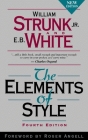
White, like Charlotte, cared deeply about language.  I first became aware of
The Elements of Style
, by William Strunk, Jr. and White when I was in high school.  I have no idea if it's a book teenagers still know about.  Do your students?  Strunk had been a professor of White's; he had written a small book laying out rules and guidelines for writers.  In 1957, five years after the publication of Charlotte's Web and a decade after Strunk's death, White revised the book, adding a few essays of his own, and it's been in print ever since.  In the introduction, White uses not a lot of words to create a sense of his professor, and to put the reader there in the lecture hall in a way that feels not unlike sitting on Fern's stool watching the conversation:
"Omit needless words!" cries the author on page 17, and into that imperative Will Strunk really put his heart and soul.  In the days when I was sitting in his class, he omitted so many needless words, and omitted them so forcibly and with such eagerness and obvious relish, that he often seemed in the position of having short-changed himself, a man left with nothing more to say yet with time to fill, a radio prophet who had outdistanced the clock.  Will Strunk got out of this predicament by a simple trick: he uttered every sentence three times.  When he delivered his oration on brevity to the class, he leaned forward over his desk, grasped his coat lapels in his hands, and in a husky, conspiratorial voice said, "Rule thirteen.  Omit needless words!  Omit needless words!  Omit needless words!"
We're all so glad that White kept the needed words in.

Love,

Deborah

Monday, February 6, 2012

Pigs, spiders, and mortality

Dear Aunt Debbie,

This past Saturday afternoon, we took the girls to a local elementary school (one of the places we're looking at for Eleanor's kindergarten next year) to see a production of Charlotte's Web, as acted by 4th and 5th graders.  School plays are a big hit in our family these days, even when we don't know the kids acting in them -- inspiring, especially for our theater-loving Eleanor.

But I wanted Eleanor's first interaction with Charlotte's Web to be with the book itself -- E.B. White's words, Garth Williams's pictures.  We started last week, and finished on Saturday morning.

Without the impetus of the play, I think we would have waited -- I wasn't at all sure how Eleanor would react to Charlotte's death, and all of the other questions of mortality the book raises.  My father reminded me of my own reaction: we were on a bus coming back from somewhere, and he says they didn't prepare me well enough, and I fell into hysterical, inconsolable sobbing in public.  I think I was about Eleanor's age, maybe a little younger.

With this in mind, but feeling from past experience that Eleanor could probably handle it, we embarked.  Jeff did most of the reading: we've been taking turns reading chapter books to Eleanor, so that each of us gets the full experience of one book with her, rather than a few chapters here or there.  Because Jeff often works late, and Isabel doesn't yet have the patience for chapter books, this means that some weeks, our chapter book reading is pretty slow.  I ceded my claim to Charlotte's Web, listening out of the corner of my ear as I read Gingerbread Girl and The Philharmonic Gets Dressed and Niccolini's Song over and over to Isabel.  Jeff had never read the book himself, and I knew that I wouldn't be able to get through parts of it without completely breaking down.

It's a brilliant book.  E.B. White's language is clear and firm, and he sets a tone of straightforward discussion of tough issues from the first paragraph:

"Where's Papa going with that ax?" said Fern to her mother as they were setting the table for breakfast.
"Out to the hoghouse," replied Mrs. Arable.  "Some pigs were born last night."
"I don't see why he needs an ax," continued Fern, who was only eight.
"Well," said her mother, "one of the pigs is a runt.  It's very small and weak, and it will never amount to anything.  So your father has decided to do away with it."
"Do away with it?" shrieked Fern.  "You mean kill it?  Just because it's smaller than the others?"

Death, and the desire to escape it, are there right from the beginning.  White is both empathetic and unsentimental: you feel for Wilbur, and for Fern and Charlotte (each of whom saves Wilbur's life at one point in the book), but White never lets you forget that death is a necessary and everyday part of life.  Wilbur's first interaction with Charlotte involves him learning about the way she sucks the blood from flies and other insects; he's appalled by her bloodthirsty nature, even as he admires her cleverness and wants to be able to be her friend.

If you're looking for it, foreshadowing of Charlotte's death comes early.  In Chapter 15, "The Crickets," White writes about the sad intimations of the crickets' song:

Everybody heard the song of the crickets.  Avery and Fern Arable heard it as they walked the dusty road.  They knew that school would soon begin again.  The young geese heard it and knew that they would never be little goslings again.  Charlotte heard it and knew that she hadn't much time left.

That's where Jeff paused in his Thursday night reading to ask Eleanor, "What do you think that means?"  We talked about the lifespan of spiders, how they don't live through the winter, and Eleanor said, "But Charlotte will!  She's a magic spider, because she can talk!" And I said that, in the world of this book, even though the animals can talk, it doesn't mean that they're magic -- that animals and people in this book are capable of dying.  And Eleanor teared up, and resisted, and then seemed to take it in a little, and they went on reading.

So on Saturday morning, when Charlotte died, we were at least somewhat prepared.  Eleanor cried.  I cried.  Jeff teared up.  Isabel sat on the loveseat making one Barbie doll dance on another one's head, and singing to herself.  Eleanor said, "But I love Charlotte!  She's one of my favorite characters!" and we all hugged, and sniffled, and wiped our eyes, and after a couple of minutes, Jeff read the last chapter.

It was a good first real death.

Love, Annie

Sunday, February 5, 2012

Dogs in New York

Dear Annie,

I'm so pleased you like Niccolini's Song with its wonderful lullabies for trains and babies.  It is, alas, out of print.  Mark Buehner, the illustrator, has done a lot of other lovely books -- although none perhaps as emotionally evocative as Niccolini.  He does, however, have some good dog picture books.


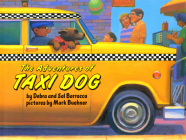
The Adventures of Taxi Dog
, written by Debra and Sal Barracca, follows a stray dog and the taxi driver who adopts him through the streets of New York, picking up fares in rhyme.  I've met a number of people who love this book a lot, but it's never resonated in that way with me.  Buehner's art is good (although his version of New York is overwhelming full of white people) -- and Isabel will undoubtedly appreciate the fact that Max the dog is on every page.

Buehner did Taxi Dog in 1990, shortly after he moved to New York from Utah.  Fourteen years later, he illustrated
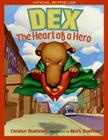
Dex: The Heart of a Hero
, written by his wife, Caralyn Buehner.  It's a riot.  Dex is the ultimate 98-pound weakling -- I suppose in dog terms it would be 9.8 pounds.  He's a dachshund who's either ignored or ridiculed by the neighborhood dogs and cats (it looks like we're in New York still, and all characters are animals).  He has Walter Mitty-esque dreams of becoming a superhero: "The Mighty Dex flew up into the dark and starry night...."  So he starts training: running up and down garbage piles, dragging socks full of sand to the corner and back, doing push-ups, circling five times at night before going to sleep.  My scanner is, alas, on the fritz again.  I would love to show you the six-panel illustration of Dex doing body-builder poses in front of the mirror: "Faster than a rolling ball, stronger than the toughest rawhide, able to leap tall fences in a single bound!"  He gets himself a superhero costume (see cover) and starts his career by helping a puppy across the street.  He saves a mouse from falling down a storm drain, tackles a purse snatcher (bulldog), and organizes a neighborhood cleanup day.  I love that his superhero-ness is so non-magical, and his heroic deed are so pedestrian.  He takes himself very seriously.

He finally gets his wish to fly to the rescue when the cat who has been his biggest detractor gets stuck in a tree and all the animals of the neighborhood run to Dex to rescue him.  Dex harnesses the laws of physics: he stands on one end of a see-saw --
"Everybody on the other end! One! Two! Three!"
All the animals jumped together on the other end of the teeter-totter, catapulting Dex into the air.  He soared over the crowd, his ears and cape streaming out behind him...
The illustration is of a wide-eyed caped dachshund bouncing straight up,  with caption: "The Mighty Dex flew up into the dark and starry night..."  He saves the cat, the crowd chants "Su-per Dog!" and the cat and Dex end up partners in matching caped outfits.

Buehner's illustrated some other interesting ones too: a short story by Octavio Paz rewritten for kids, and a delightful tall tale about a man who grows balloons on a farm.  Stories for another night.

Love,

Deborah

Friday, February 3, 2012

Lullaby for trains

Dear Aunt Debbie,

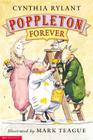
Happily, our stomach bug was not nearly as bad as Ramona's.  I have no new ideas on the stomach flu book front, but in conversation with a colleague today was reminded of two lovely Poppleton stories that have to do with being sick.  In Poppleton, there's "The Pill," in which Fillmore is sick and convinces Poppleton he has to have his pill inside a piece of cake, which results in a tremendous amount of cake being eaten.  In Poppleton Forever, it's "The Cold," in which Poppleton has a bad cold, and his friend, a llama named Cherry Sue, tries to cure him by bringing him a bowl full of oranges.  Each time he peels an orange, he sneezes, and the orange ends up across the room, in some different strange spot.

But moving away from stomachs and colds, and back to trains....

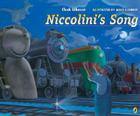
One of your gifts for Isabel in Eleanor's birthday package was the lovely Niccolini's Song,by Chuck Wilcoxen.  We've been reading it three times a day.  It's about a mild-mannered train yard night watchman, Niccolini, who is surprised one night when, after an earlier scare, a steam engine begins to talk to him.  It's worried about the next day, and having trouble falling asleep.  Niccolini sings the engine a lullaby: "a song about gentle hills, steady tailwinds, and feathers for freight."

After this first night, the other engines want Niccolini to sing to them, too.  In Wilcoxen's text, the trains come across very much like children, and Niccolini a tender father:

Niccolini knew that some of the trains were perfectly capable of falling asleep without a lullaby.  In fact, there were nights when certain engines (who felt unloved) would wake themselves up just to have Niccolini sing them back to sleep.  Niccolini didn't mind.  The words came to him easily, the tune was always the same, and it cost him nothing to bring them comfort.

One night, a harried mother walks her sleepless baby down by the train yard; the baby, too, is soothed by Niccolini's song.  The story expands: other mothers come, with other babies, in a quieting parade.  Then one night, there's a terrible wind, and so many sleepless parents and children come to be soothed by Niccolini that no one can hear them.  And so he enlists the engines to whistle his song, while he conducts.

This is a deeply gentle book.  Mark Buehner's illustrations all have the feel of dusky night, every page both detailed and dim, so you have to peer at them closely.  I love the roundedness of his forms: both the trains and Niccolini himself have depth and heft.  Here's Niccolini, early in the book, leaning to listen to the engines:


 Isabel's favorite illustrations are the ones with mothers and babies, which she likes to identify and comment on: "There's the mother.  There's her baby.  Where's the daddy?  He's home asleep."  For me, though, this is the image that sticks: Niccolini, listening for danger and ready to blow his whistle (look at the tension in his turning form), on the cusp of discovering something miraculous. 

Love, Annie

Wednesday, February 1, 2012

Tummy misery

Dear Annie,

I'd never thought of The Very Hungry Caterpillar as a cautionary tale on overeating -- interesting interpretation!  But the overeating leads ultimately to beauty and flight...

The other illness from overeating I can think of is
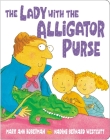
The Lady with the Alligator Purse
, which is about a baby drinking the bathwater, eating the soap, and being misdiagnosed. Lovely video of three sisters reading it here.

I'm taking you up on the Throw-Up Challenge.  (The Upchuck Event?)  I still can't think of any in the picture book category. 

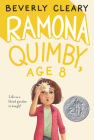
I return to the Ramona books by Beverly Cleary, exquisitely empathetic portrayals of life from pre-school to fourth grade.  I've just re-read Chapter 6 of
Ramona Quimby, Age 8
: "Supernuisance."  Ramona is in third grade and her loving but overloaded parents are struggling with financial problems.  She has overheard her teacher describe her as "a nuisance," which has deflated her enthusiasm for anything in school.  So one morning when her parents' car breaks down, she arrives in her classroom with its wall of science experiments (fruit flies growing in colored oatmeal), feeling increasingly bad:
She sat motionless, hoping the terrible feeling would go away.  She knew she should tell her teacher, but by now Ramona was too miserable even to raise her hand.  If she did not move, not even her little finger or an eyelash, she might feel better
   Go away, blue oatmeal, thought Ramona, and then she knew that the most terrible, horrible, dreadful, awful thing that could happen was going to happen.  Please, God, don't let me. . . . Ramona prayed too late.
   The terrible, horrible, dreadful, awful thing happened.  Ramona threw up.  She threw up right there on the floor in front of everyone.  One second her breakfast was where it belonged.  Then everything in her middle seemed to go into reverse, and there was her breakfast on the floor.
Ramona is miserable and humiliated.  The teacher sends a student to take Ramona to the office, and she gives the rest of the class permission to "hold your noses and file into the hall until Mr. Watts comes and cleans up."

The school secretary is the mensch of the story, cleaning Ramona up, settling her on a cot, and calling her mother.  Mrs. Quimby is at work, leading Ramona to worry that her illness will cause her mother to lose her job.  When Ramona throws up again, the secretary gets her to the toilet in time, gives her a cup of water and cheerfully says, "You must feel as if you've just thrown up your toenails."

Cleary charts Ramona's misery -- from willing herself not to throw up in the taxi her mother has brought to take her home, through the days of fever and slow recovery.  First she can think only of the secure feel of the clean sheets on her bed.  Family members look in on her from the doorway.  Then she's aware they're having dinner without her.  Next her world expands enough to understand that they're being especially quiet just for her.  There's ginger ale, and later dry toast.  And when she asks sadly for  butter on the toast, we know she's on the way up, at least physically.
Remembering what had happened at school, she began to cry.
   "Dear heart," said her mother. "Don't cry.  You just have a touch of stomach flu.  You'll feel better in a day or so."
   Ramona's voice was muffled.  "No, I won't."
   "Yes, you will."  Mrs. Quimby patted Ramona through the bedclothes.  
   Ramona turned enough to look at her mother with one teary eye.  "You don't know what happened," she said.
   Mrs. Quimby looked concerned.  "What happened?"
   "I threw up on the floor in front of the whole class," sobbed Ramona.
She works her way out of misery during her convalescence in the next chapter, and by the time she gets back on the school bus, throwing up is in the distant past. 

I trust your misery is also a dim memory at this point.  And that it hasn't visited itself on others near and dear to you.

Love,

Deborah