In which Annie (high school teacher, mother of two young girls and a younger boy) and her aunt Deborah (children's bookseller, mother of two young women in their 20s) discuss children's books and come up with annotated lists.

Showing posts with label fairy tale. Show all posts

Tuesday, April 29, 2014

Four years of Annie and Aunt!

Dear Aunt Debbie,

As I was sitting down to write this post, I realized that we've just hit our 4-year mark: We began Annie and Aunt on April 27, 2010, when Eleanor was 3, Isabel was a baby, and Will wasn't even a thought in anybody's mind. Time flies. Happy anniversary!

While our posting regularity has slipped in the last year or so since Will's birth, I continue to love writing to you about the books I'm reading with my kids, and to love learning from you about books old and new. Here's to another great year to come!

A family reading update:

In the last couple of weeks, we've gone on spring break and returned, tired and happy. Eleanor brought The Fairy's Return with her to Florida and read it obsessively (see new picture to the upper right) -- that's a book with staying power. It's lovely to see her reading it independently now, since it started for us three years ago as a read-aloud.
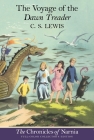
Together, Isabel and Eleanor and I are moving through the Chronicles of Narnia. The Voyage of the Dawn Treader was our vacation reading. It's a far more rollicking adventure than Prince Caspian, filled with visits to islands inhabited by strange creatures and teeming with unexpected dangers. Kind of an elementary-school version of The Odyssey, without all the death.

Only Lucy and Edmund Pevensie are in this book, Peter and Susan having been deemed too old to return to Narnia. What enlivens the narrative most is the bad behavior of the Pevensies' cousin Eustace Scrubb, who comes along for the ride. He's a perfect pill of a boy until he gets turned into a dragon about halfway through the book (it's his own fault, and he turns out okay). C.S. Lewis is at his best when he has normal, changeable, imperfect kids to write about. In The Lion, the Witch, and the Wardrobe, Edmund plays the role of stinker, and his bad behavior gives the other kids something to play off of. By the end of the book, however, he's redeemed, and in Prince Caspian all four Pevensie children are terribly decent throughout. While I'd love to see my own children be so polite, functional, and moral, it's not as interesting a story to read.

The Voyage of the Dawn Treader begins with Eustace, and you know immediately you're in for some fun:

There was a boy called Eustace Clarence Scrubb, and he almost deserved it. His parents called him Eustace Clarence and his masters called him Scrubb. I can't tell you how his friends spoke to him for he had none. He didn't call his Father and Mother "Father" and "Mother", but Harold and Alberta. They were very up-to-date and advanced people. They were vegetarians, non-smokers and tee-totallers, and wore a special kind of underclothes. In their house there was very little furniture and very few clothes on beds and the windows were always open.

Eustace Clarence liked animals, especially beetles, if they were dead and pinned on a card. He liked books if they were books of information and had pictures of grain elevators or of fat foreign children doing exercises in model schools.

Eustance Clarence disliked his cousins, the four Pevensies -- Peter, Susan, Edmund and Lucy. But he was quite glad when he heard that Edmund and Lucy were coming to stay. For deep down inside him he liked bossing and bullying; and, though he was a puny little person who couldn't have stood up even to Lucy, let alone Edmund, in a fight, he knew that there are dozens of ways to give people a bad time if you are in your own home and they are only visitors.
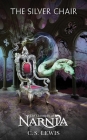
While Eustace becomes reformed over the course of the voyage, he retains his personality. He and a classmate of his, a girl named Jill Pole, are the two humans transported to Narnia in the next book, The Silver Chair. We're a few chapters in, and Jill and Eustace's minor bickering is highly entertaining. The narrative -- they've been sent by Aslan to find the lost prince of Narnia and bring him home, and are headed into giant country -- is gripping. We're clearly going to be reading all seven of the books in a row.

Will's current favorite is a book you gave Isabel three years ago: Nina Laden's excellent board book Peek-a WHO? We read it over and over, and he laughs every time.

Your gifts keep on giving.

Love, Annie

Sunday, September 15, 2013

East of the Sun and West of the Moon

Dear Aunt Debbie,

I love your suggestions for encouraging Isabel toward chapter books. I've ordered the read-aloud version of James and the Giant Peach for her birthday -- I think Roald Dahl's humor and meanness might work very well for Isabel's sensibility, and Quentin Blake's drawings can only help. She responds so strongly to illustrations.

One of our favorite picture books at the moment is a lavishly illustrated fairy tale: East of the Sun & West of the Moon, written and illustrated by Mercer Mayer. This authorship surprised me a few weeks ago when we picked up my childhood copy of the book at my parents' place (sadly, the book is out of print, though there are used copies out there -- the link above is to Alibris). The only other Mercer Mayer books we own are the not-terribly-interesting Little Critter series.  I'd forgotten that Mayer is also responsible for such extreme strangeness and beauty.

East of the Sun & West of the Moon is a retelling of a Scandinavian fairy tale, and contains elements familiar from other fairy tales as well.  A proud, beautiful maiden, the daughter of a farmer, falls on hard times when her parents lose their money and her father becomes gravely ill.  To cure him, she must bring back a clear drink of water from the spring of the South Wind.  She is helped in this by a frog, who asks her to grant him three wishes in return.  Of course she agrees, and her father gets well again; their fortunes are restored, and the young woman has forgotten the frog by the time he shows up and asks to visit her, then to have her hand in marriage.  She refuses him; when he insists she keep her promise, the maiden throws him against the wall, killing him.  It turns out he wasn't a frog at all, but a handsome youth, enchanted by an evil troll princess.  Death frees him from his frog-body, but he is seized by trolls, who take him away to the kingdom "east of the sun and west of the moon," where the troll princess plans to marry him.

The maiden, racked with guilt, embarks on a quest to save the youth from the fate she helped solidify.  She travels through vivid landscapes, visiting enormous wise creatures from whom she asks advice and receives gifts.  Two of my favorites:

The Salamander who lives in the fiery heart of a mountain of ice, and knows "everything that is in the heart of the world."


The Great Fish of the Sea, who knows "everything that is in the blood of the world."


Finally, the North Wind brings her to the land east of the sun and west of the moon, where she works for the troll princess, cleaning floors while the trolls torment her.


The maiden uses the gifts given to her by the creatures she's met to rescue the youth, who has been frozen in a block of ice, and defeat the trolls.  It's a happy ending, and a somewhat empowering one: the maiden shoots the troll princess in the heart and turns the other trolls to stone with no help from the youth, who looks like he needs a little time to wake up from being frozen.

Mayer's writing is poetic, and the descriptions of the connection between the maiden and the youth pretty sexy at times (Father Forest tells the maiden: "I know what is in your body and in the body of the youth, and I know that your bodies call to each other." Va-voom!). The illustrations are rich and elemental, emphasizing the maiden's smallness in relation to the creatures she meets.  The pictures I've scanned here are the ones which remained ingrained in my memory from my own childhood thirty years ago.  Vivid stuff.

In two days at my parents' place, Isabel asked us to read her this book seven times.  She drank it in.  So this week I'm thinking, if we're not doing so many chapter books just yet, I'm okay with that.

Love, Annie

Saturday, December 1, 2012

A lush Snow White

Dear Aunt Debbie,

It's funny that you brought up Curious George this week.  The day before your post about him, my friend and colleague Mark was talking at lunch about reading so many Curious George books to his twin boys, so often, that he and his wife have started trading ideas for an adult spin-off about what the Man in the Yellow Hat does every time he goes off and leaves George alone.  One concept: the Man in the Yellow Hat is secretly trying to abandon George in every story, but in various ways keeps getting pulled back to him.  These are the thoughts going through the brain of the parent forced to read the same not-so-great books ad nauseum....

We're starting to think about gift-giving at our house too, though the regular drumbeat of kids' birthday parties always has us looking for the best books to give kids around Eleanor and Isabel's ages.  This morning we went to Isabel's friend Sydney's party (she's the one whose mom gave Isabel the gorgeous Bird, Butterfly, Eel).  When asked what we should get for Sydney, our newly-princess-loving Isabel didn't hesitate: "She'd like Snow White."

Charles Santore (he of the brilliantly illustrated Wizard of Oz, still one of my favorite go-to gifts) has illustrated Snow White with a similar lushness.  His paintings are gorgeous, and the book includes a few spectacular two-page spreads, including one of Snow White running through the forest filled with wild animals on her way to the dwarfs' house:


Santore's dwarfs are individualized, but not buffoons -- they look like real people, small middle-aged men:


You may notice that Santore, hewing close to the original text, depicts Snow White as a young girl: she's seven years old when she becomes more beautiful than her stepmother, and has her death sentence proclaimed.  She's a kid here, rather than Trina Schart Hyman's young teenager, and her youth makes some of her decisions a little more understandable, though still not exactly smart.  In this version, the evil queen disguises herself as a peddler woman not once, but three times, leading to Snow White's death and resurrection from lace-up dress and poisoned comb before we get to that deadly apple.  You think she'd learn.

The picture on the cover is one of the last ones in the book.  To move away from the creepy idea of Snow White as a child bride, Santore has her age in the illustrations as she sleeps; when she wakes up again, she looks to be in her early 20s, and a wedding makes sense.  Reader alert: Santore's faithfulness to the original Brothers Grimm includes the fate of the wicked queen, who is forced to put on a pair of magic slippers at Snow White's wedding to the prince:

The minute they were on her feet, the slippers forced her to dance and dance, faster and faster, until she dropped down dead.  There was great rejoicing in the hall, and Snow White and the prince lived in the palace and reigned happily over the land for many, many years.

Um, yay?  Eleanor and Isabel both really like this bit -- such a vivid, strange way to kill your enemy -- but it would be easy for parents of more squeamish children to leave a sentence or two out.  The final picture shows only the shoes.

Love, Annie


Sunday, April 24, 2011

Gail Carson Levine redeems princess stories

Dear Aunt Debbie,

Happy Easter!  We did indeed have some egg-dyeing yesterday and some egg-hunting this morning at my parents' place.  And we did indeed fail to find one hidden egg, so that will be an exciting surprise for my parents at some point in the future.  I was reminded this morning as we traded off hiding and hunting of our tradition at Aunt Martha's house: first the adults would hide the eggs for the kids, and then the kids would hide a second round for the adults.  Grandma always won the grown-up hunt; she was quite competitive about it, too.

Thank you for the Peek-A-Boo explanation.  Makes total sense now, and I'm glad Dad isn't going anywhere too dangerous.  Sadly, Emma's query rings no bells for me.  Maybe this is one to post up at whatsthatbook.com?

Your mention of Emma's post about Ella Enchanted made me realize that I haven't yet written to you about Eleanor's reaction to Gail Carson Levine's The Fairy's Return and Other Princess Tales, which you wrote about a couple of months ago.   It's a collection of six stories, each set in the village of Snettering-on-Snoakes in the Kingdom of Biddle, each pulling from classic fairy tale tropes and recasting them in realistic, funny, and interesting ways.  You wrote about "The Fairy's Mistake," which is pretty fabulous in terms of imagining what it might be like if fairy tale things happened in real life.

One of our other favorites is "Princess Sonora and the Long Sleep," Levine's take on Sleeping Beauty.  In this one, a fairy gives the baby princess the gift of being ten times as smart as any other person on earth, thus making her life extraordinarily difficult -- no other kids want to play with her, her answers bore everyone, she has no intellectual equal.  Because she's so smart, Sonora understands the spindle finger-pricking curse that awaits her, and decides to hide a spindle for herself so she can choose the hour of her hundred-year sleep.  Of course, this goes wrong, and in Levine's world the hundred-year-sleep leaves her filthy with dust and cobwebs, but the prince who comes to awaken her has as his main characteristic an intense curiosity -- no one has ever been able to answer all of his questions....

The heroes and heroines of these stories are realistic, appealing people, with dispositions both interesting a sweet.  Levine alternates among stories of princes finding love with farm girls, princesses finding love with baker's sons, and royalty finding love with each other.  She plays with elements of The Princess and the Pea, Cinderella (it's a boy, Cinderellis, here), Sleeping Beauty, Rapunzel, and lesser-known fairy tale elements: the glass hill, the goose who people's hands stick to, the girl turned into a toad.

Eleanor adores the book.  It's close to 400 pages, all told, and we've already read it through twice completely, with a few forays into individual stories as well.  A total hit!  Princesses who are actually pretty decent role models!  A sense of humor!  Good find.

Love, Annie

Monday, April 4, 2011

Role play

Dear Aunt Debbie,

We are just getting into all the deep imaginative play at our house, and I'm looking forward to the ways in which Eleanor and Isabel will create worlds together.  Right now, we're gearing up for a costumed role play: Eleanor's friend is having a fairy tale costume birthday party next weekend.  I kind of expected Eleanor would go for a princess costume, but she's decided that we're all going as the characters from Little Red Riding Hood instead.  (She's Little Red, of course; I'm Grandma; Jeff and Isabel have both been cast as wolves.)

This current fascination owes a lot, I'm sure, to the gorgeous Trina Schart Hyman
Little Red Riding Hood
we recently bought.  We've both written before (here and here) about Hyman's lush illustrations, and this book is no exception.  There is such affection between the mother and Little Red, with their wisps of hair flying free of their bonnets.  Her older people -- the grandmother, the woodcutter -- look realistically tired.  Hyman often frames her pictures with wooden looking curlicues, turning the pages into Joseph Cornell-like boxes.  It makes the story feel old-fashioned, and also I think pleasingly contained -- this wolf is scary, certainly, but he's not about to leap off the page and attack you.

I'm taking a page from Playing By the Book's Zoey and trying to sew up a red riding hood out of a long red skirt.  Will let you know how that goes.

Love, Annie

Sunday, February 13, 2011

The Fairy's Mistake

Dear Annie,


Ah, Dr. Dolittle.  So delightful.  I have fond memories of my father, your Grandpa Frank, reading the books to me.  And it was such a pleasure to read them to our girls.  One of my favorite characters was always the Pushmi-Pullyu, a gazelle-unicorn cross with two heads, one on either end of its body.  It argued with itself a fair amount.

I realized, reading the books with Lizzie and Mona, that Dr. Dolittle was the first animal rights activist.  In one of the later books he liberates the animals from a circus in the dead of night.  There's an overland coach ride  to get the seals to the ocean and freedom.

I just re-read a story I gave Eleanor recently: "The Fairy's Mistake," by Gail Carson Levine.  It's part of a collection of six short stories:
The Fairy's Return
.  They're post-modern fairy tales by the author of Ella Enchanted (the subject of a recent guest blog).  Levine takes a classic fairy tale -- one in which a disguised fairy rewards a generous sister and punishes the selfish one -- and asks what would really happen if you had jewels coming out of your mouth and your sister spoke bugs and snakes.

Ethelinda slurped the water.  "Thank you.  Your kindness merits a reward.  From now --"
"You don't have..." Rosella stopped.  Something funny was happening in her mouth.  Had she lost a tooth?  There was something hard under her tongue.  And something hard in her cheek.  "Excuse me."  Now there was something in her other cheek.  She spat delicately into her hand.
They weren't teeth.  She was holding a diamond and two opals.
"There, dearie."  Ethelinda smiled.  "Isn't that nice?"

Of course it turns out not to be nice.  A passing prince realizes that the heretofore impoverished Rosella is a source of constant riches and proposes to her on the spot.  She causes small riots of everyone around her who pounce on every jewel she utters.  The prince shuts her in a huge library with empty chests and tells her to read aloud until they're full.  In the meantime, the evil sister is demanding major payment from all the local shops to keep her from entering their stores and distributing creepy creatures everywhere.  It takes the slightly clueless fairy a little while to realize what's going on, then to find the solution. 

It's a quietly funny read. I'm curious what Eleanor will think of it.  Definitely not Disney-esque, although there are poofy dresses.

Love,

Deborah

Friday, January 7, 2011

The Golden Rule via fairy tales

Dear Aunt Debbie,

We will have to try again with some of King-Smith's books.  At your suggestion a few months ago, we took Three Terrible Trins out of the library.  I liked what I read of it, but Eleanor found it frightening -- in the first chapter, three mouse husbands of the trins' mother die at the hands of the cats, and Eleanor, who has not been fazed by much more intense moments of violence in other contexts, was really disturbed.  You never know.

A while ago, Gina asked in a comment for recommendations of picture books that might help teach her 4-year-old twins about compassion and helping others.  One place we've been going recently to have this discussion is into fairy tales.

It started with trying to think of another way to explain to Eleanor that she shouldn't grab toys away from Isabel, even if they were her toys.  I heard myself saying, for the millionth time, "How do you feel when someone grabs something away from you?" and then I thought of teaching her the Golden Rule.  It has a sparkling, toddler-friendly name, and it's incredibly helpful in a variety of sibling and playdate situations.  I've used the formal phrasing ("Do unto others as you would have them do unto you"), but have mostly paraphrased it as "Treat other people the way you would like to be treated."  Then we found, on separate library trips, two really weird and wonderful fairy tales that helped reinforce the message.  They are both out of print, so get ready for some Alibris links.

Up the Chimney, retold by Margaret Hodges and illustrated by Amanda Harvey, is a revisiting of an old English folktale.  A family with two daughters keeps all their money in a long-tailed bag, and when it's stolen, the girls decide to help out by going to seek their fortunes.  The eldest girl goes first.  She can't find any work in town, and on her way farther out into the country, things start talking to her.  She passes an oven with bread baking, and the loaves say, "Little girl, little girl, take us out.  We have been baking seven years, and no one has come to take us out."  She does.  Then it's a cow who needs to be milked (again, seven years, ow), and then a laden apple tree that needs help shaking down its apples.  She helps them both.

The girl finds a job as maid to a witch, who warns her not to look up the chimney.  When the girl does look up, her parents' stolen money bag falls down on her, and she runs off home with it.  The witch pursues her, but the tree and the cow and the oven and baker all help hide her, because -- Golden Rule Alert! -- she helped them first.  She gets home safe with the money.  The second sister decides she'll do the same, but she turns out to be selfish and won't help anyone who asks her, so when the witch comes looking for her, the tree points in her direction and the witch beats her with a broomstick and takes the money away.  Generosity and compassion are rewarded!  Selfishness is punished, but not with anything too horrific!

Eleanor loves this book.  I think part of the attraction for her is that the moral is clear and written at her level -- she talks it through and really gets it.  There's also some fun repeating poetry in the witch chase scenes:
Cow of mine, cow of mine,
Have you seen a girl
With a willy-willy wag, and a long-tailed bag,
Who's stole my money, all I had?
Finally, the illustrations are energetic and funny, all the characters leaping around with their arms up, and in modern dress.  The older sister has a long expressive braid, and the selfish younger sister wears a walkman and a pink feather boa.
The second is a book by Robert San Souci, of Young Guinevere fame, based on a Russian tale: Peter and the Blue Witch Baby. In this tale, handsome young tsar Peter runs afoul of a witch.  When he goes off in search of his chosen bride, the Little Sister of the Sun, the witch seeks her revenge by planting herself in his palace in the form of a baby.  With Peter gone, the witch baby grows into an enormous blue giant baby, with clanging iron teeth, and destroys everything she can.  Meanwhile, Peter meets three sad giants on his way to the Little Sister of the Sun.  To cheer them up, he gives each giant one of the three magic gifts he was bringing to impress his lady love: a pebble which turns into mountains, a seed which becomes a forest, and a glass bead which creates a gush of water.  The giants are happy.  Later, when he needs saving from the blue witch baby, the giants all help him.  Golden Rule Alert!

I like the morals in these stories partly because they're not treacly.  In my book, it's more fun to discuss empathy in the context of giant blue witch babies with gnashing iron teeth than it is, say, with the Berenstain Bears.

For the next couple of weeks, as I wrestle with my end-of-semester grading, I've invited a few book-loving parent friends to step in as guest bloggers.  Stay tuned for Cyd's pick on Monday.

Love, Annie

Wednesday, November 10, 2010

Grimm and good

Dear Annie,

Back in August we had some discussion of fairy tales, their scariness, and what works for what ages.  Over the past two days I finally picked up and read a book I thought I wasn't going to like at all, but which is really quite amazing and completely demonstrates the emotional depth and power of fairy tales, specifically Grimms'.

 
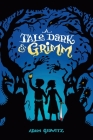
A Tale Dark and Grimm
, by Adam Gidwitz, a teacher at St. Ann's School in your fair borough of Brooklyn, is a brilliant book, just published this fall.  It's hard to describe because it sounds contrived and weird and gory, but it knits together the primal creepiness of fairy tales with very well realized and defined emotion.  Gidwitz puts two characters named Hansel and Gretel into six (more or less) of the original Grimm tales, substituting them for the child characters in each story.  He does it in such a way that they become one unified story, ending up with  three chapters of his own original tales which bring the action full circle.  In the first story, Faithful Johannes, a king and queen are guilt-ridden for having caused the death of their faithful servant because they didn't trust him.  They are told they can bring him back to life by killing their own children (Hansel and Gretel), so the king cuts off their heads.  After Johannes comes back to life, "he placed little Hansel's head back on his body, and little Gretel's head on hers, and instantly they began to leap and play as if nothing had happened, and as if they were not covered in blood."

But:
Late that night, they lay in their beds, unable to sleep.
"Hansel," Gretel said.
"Yes, Gretel?"
"Did you hear what Father said?"
"Yes."
"He cut off our heads to save that ugly old man."
Hansel was silent.
"And Mommy was glad that he did.  Do you think they hate us?"
Hansel was silent still.
"I think we should run away," Gretel said.  "In case they want to do it again."
"That's just was I was thinking," Hansel answered.  "Just what I was thinking...."
And so they set off in search of good grown-ups -- and immediately find a baker in the forest with a house made of cake, launching us into the traditional H&G story.  In other chapters there are scenes of cannibalism, dismemberment, serial murder and various other forms of violence. At the end of almost every one, adults have at the least disappointed and often come very close to murdering the sister and brother.  Sounds awful, right?  But the gore and violence have a point: crudely put, it's whatever doesn't kill you makes you stronger.  The children grow and learn more, and eventually end up back at the gates of their parents' castle.  More murder and resurrection await -- and redemption and reconciliation in the end. Very satisfying.

Gidwitz uses a device throughout the book which, like much of the rest of this book, sounds like it shouldn't work, but it mostly does.  He occasionally breaks into boldface type and turns and speaks directly to the reader.  It feels a bit like Lemony Snicket at the beginning -- there's a lot of send-the-little-kids-out-of-the-room-it's-too-scary-for-them.  But he also uses it to talk about the feelings of the stories.  The asides give the reader a chance to catch one's breath and consider the larger themes.

As his website demonstrates, Gidwitz has thought a lot about fairy tales and uses of the imagination.  He includes writings of Bruno Bettelheim, G.K. Chesterton and Seamus Heaney to talk about the creative process and the unconscious.  His essays  Tears into Blood and Why Do I Write Fairy Tales If They're So Bloody? explore how he sees children reacting to scary/violent stories.

When I say children here, I'm not talking about pre-schoolers.  The publisher calls it a book for children ten and older, which seems about right to me.  And Gidwitz is quite clear that there are some kids who will never want to read it.  He's not setting out to traumatize readers, but to engage those who want to be engaged in some pretty intense feelings.  And he really does it well.

Love,

Deborah

Monday, August 9, 2010

Motherless children

Dear Aunt Debbie,

I agree with you, Bettelheim, and Kathryne that there are good reasons to read fairy tales to kids: they're a way of working through fears safely, they're exciting, and they are referenced throughout our culture.  I think the age at which you read them to a child, and the versions you read, has to be specific to the child -- you learn by reading what's going to scare the pants off your kid, and what she or he will adore.  I agree with Rachel as well that I'm not thrilled with a lot of the motherlessness in these stories, but I think I understand why it's there.

When we started reading fairy tales to Eleanor (and we were certainly spurred to do this earlier than I might have by the ubiquity of Disney princess stuff), she went through a brief period of time when she'd say to me, "I want a stepmother."  She said it thoughtfully, not in anger.  Perhaps, in her mind, having a stepmother was a way into the fairy tale world, since so many princesses (Cinderella, Snow White, Ariel, Belle) begin their stories motherless.  In a way, it reaffirms the power and safety of having a mother: if any of these princesses had mothers around, none of the bad stuff (and none of the adventure) would have happened to them in the first place.  When I explained that telling me she wanted a stepmother hurt my feelings, she began to lean over to me fondly at odd moments and say, "Oh, Mommy, I love you.  And I don't want a stepmother."

Rachel's comment brought to mind two of my favorite chapter books from my elementary school years.  In each, the protagonist(s) are orphaned, thus opening their lives up for adventure that wouldn't be possible if they had a mother and father taking care of them.  I haven't read either book in years, but I'm pretty sure they stand the test of time.

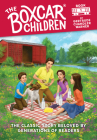
The Boxcar Children, by Gertrude Chandler Warner, focuses on a family of four kids who are orphaned.  They run away from their orphanage and a grandfather they think is cruel (though of course ultimately they're wrong) and live in an abandoned boxcar with their dog, Watch.  I remember scenes of homemaking in the boxcar, and the sense of having to create a whole new life.  In looking it up, I see that it was the first in a giant series, though I don't remember reading any of the others.


A Little Princess
is by Frances Hodgson Burnett, of Secret Garden fame.  Sara Crewe begins motherless, and is orphaned when her father dies in India (the book was first published in 1904, so it's quite Imperial British Empire).  She goes from being one of the richest pupils at a boarding school run by a meanie to being the poorest, and in a Cinderella turn she has to do the school's housework and live in the attic.  Again, one of the things I remember most fondly about the book is Sara making her attic space livable and even homey.  This one has the added benefit of cruel boarding school girls, which resonates with anyone who's ever been a girl around other girls. 

Now that I think about it, in both of these books there isn't much active adventure -- more creating the best and most home-like situation possible in bad circumstances.  I suppose that's true in fairy tales like Cinderella and Rapunzel as well.  Still, there must be something liberating about projecting yourself into the dangerous and adventurous situation, and then comforting about being able to turn again to mom on the couch beside you or in the next room.

Love, Annie

Sunday, August 8, 2010

Fairy Tale Anxieties

Dear Annie,

As you say, fairy tales are elemental and stark.  Primal, one could say.  I think Disney has conditioned us to think of fairy tales as stories for young children, but most of them are adult folktales, or were written for adults originally.  They're also, as Rachel points out in her comment, very woven into our culture, for better or worse.

I tend to subscribe to the general sense of Bruno Bettelheim's analysis of children and fairy tales, summarized well in this article.  The situations and characters in fairy tales, Bettelheim says, reflect thoughts that children have, but don't know how to process. 
Bettelheim argues that what children really gain from these grim and troubling stories of being shoved in a witches oven, having one’s head cut off, or being eaten by a wolf (all not exactly a ball of fun) is the symbolic assurance that all difficulties in life can be mastered with the right attitude and some courage. Folk tale characters experience existential anxieties that are inherent in human nature: the need to be loved, the fear that one is thought worthless (look at poor Jack with his handful of beans!), the value of life and joy, and the ever-present spectre of death.
I've spoken with a number of teachers who read fairy tales to kids in grade school, older than the ages that parents usually turn to these tales.  I often recommend fairy tale collections as gifts for kids who are five, six or seven.  Even though children those ages are able to pay attention to much longer books, the emotional intensity of fairy tales, and the leaps of imagination they entail, appeal to children who are dealing more with how they fit in the world.  They can envision themselves as grappling independently with the world, even if their reality is quite sheltered.

I've never been a fan of the young adult horror genre, but it has a devoted following.  I think the motivations for reading it fit into Bettelheim's analysis: facing one's primal fears, and vicariously vanquishing them.  Again and again.   One gains strength by seeing what it's possible to overcome.

Adam Gopnik wrote an interesting piece on fairy tales in The New Yorker back in 2002 which rambles a bit but discusses both the Bettelheim take on folktales, and a more conservative they-teach-you-good-conservative-values argument. 

Such a rich vein, fairy tales.

Love,

Deborah

Friday, August 6, 2010

The harsh truths told by fairy tales

Dear Aunt Debbie,

Saffy's Angel: clearly another book to put on my library list.  You are turning me into a reader of YA books again.  Just whizzed through Catching Fire, the second book in the Hunger Games trilogy, and am already biting my nails for the third book to be released.  YA fiction can be so intensely gripping.

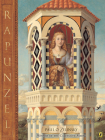
But YA books aren't the only ones that deal with dark themes.  I mentioned a month ago that we'd been reading Eleanor a gorgeously illustrated version of Rapunzel (retold by Barbara Rogasky, illustrated by Trina Schart Hyman); last week, we bought another Rapunzel, this one retold and illustrated by Paul O. Zelinsky.  Again, it was the illustrations that drew us to the book: Zelinsky's oil paintings have a Renaissance feel, really stunning.  Where Trina Schart Hyman's illustrations are lush and storybook:


Zelinsky's are crisp and dramatic:


Much of the story is the same in both books, including the difficult parts: the parents losing their child to the witch; Rapunzel being locked in the tower, the prince's fall and blinding after the witch catches him.  The main difference between them is the way in which the witch (sorceress, in Zelinsky's version) finds out about the prince.  In Rogasky's telling, Rapunzel is weaving a ladder from pieces of silk the prince brings her, so they can escape together:

     After some time, the ladder was almost finished, and Mother Gothel still knew nothing.  But one day, when Rapunzel had watched the witch make her clumsy climb to the tower room, the girl forgot her secret.
      "Mother Gothel," she said, "how is it that it takes you so long to climb up here when the king's son does it so fast?"
      "Oh, wretched girl!" The witch flew into a rage.  "Wicked, ungrateful child!  I thought I had hidden you from all the world.  I thought I had given you all your heart could desire.  And now you have betrayed me!"

In Zelinsky's retelling, there is no escape plan, and he mentions that Rapunzel and the prince hold a marriage ceremony for themselves on the first night the prince visits.  Time passes, and then: 


     One day when the sorceress entered the tower, Rapunzel said, "If you please, Stepmother, help me with my dress.  It is growing so tight around my waist, it doesn't want to fit me anymore."
       Instantly the sorceress understood what Rapunzel did not.  "Oh, you wicked child!" she shrieked.  "What do I hear you say?  I thought I had kept you safe, away from the whole world, but you have betrayed me!"


 Check out the convex mirror on the table, reinforcing the pregnancy theme.

In the first version, Rapunzel comes off as a little dumb; in the second, she's a sexual innocent, and the revelation of her love is something she couldn't possibly suppress.  Reading this version prompted Eleanor to ask, as she didn't when the Rogasky/Hyman Rapunzel had twin babies in the wilderness, "How did she get pregnant?"

Fairy tales are so elemental, so stark.  Abandonment, death, marriage, childbirth.  I love them, and so does Eleanor, but it's a little bizarre that they are among the first stories we tell our children.  If these themes appeared in contemporary children's books, would anybody read them?  Is it our own familiarity with certain stories that allows us to comfortably introduce them to our children?

Love, Annie

Sunday, June 6, 2010

The Bard of Columbus

Dear Annie,

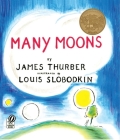
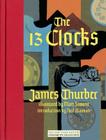
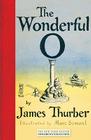
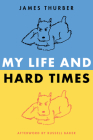
The time has come to celebrate James Thurber (1894-1961), best known for his essays and cartoons for The New Yorker, but also a wonderful children’s author. He was from Columbus, Ohio, not far from Cambridge, where my father, your grandfather, grew up. Grandpa always felt an affinity for Thurber – mostly because of their shared love of language – but also for the Midwestern sensibility. Four of Thurber’s books – two fairy tales, a fable, and a memoir – are wonderful family reads with children of different ages:


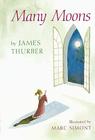
Many Moons
, with two editions in print, each with a different illustrator, is a read-in-one-sitting picture book. A young princess is fading away because she wants someone to bring her the moon. All the wise men of the kingdom tell the king why it’s impossible – it’s 35,000 miles away and made of molten copper, 150,000 miles away and made of green cheese, 300,000 miles away and pasted on the sky. The court jester finally asks the girl how big the moon is, and she says, “It is just a little smaller than my thumbnail, for when I hold my thumbnail up at the moon, it just covers it.” The jester gets the goldsmith to make a very small golden disk and hang it on a chain:
“What is this thing I have made?” asked the Royal Goldsmith when he had finished it.
“You have made the moon,” said the Court Jester. “That is the moon.”
“But the moon,” said the Royal Goldsmith, “is 500,000 miles away and is made of bronze and is round like a marble.”
“That’s what you think,” said the Court Jester as he went away with the moon.


The 13 Clocks
is a chapter book fairy tale, complete with evil duke, imprisoned princess, and disguised prince, as well as various magical characters. In the introduction to the New York Review of Books reprinted edition, Neil Gaiman calls it “probably the best book in the world.” Superlatives can always be debated, but the language and the story in this one are very special. It makes a great read-aloud because sometimes the paragraphs reveal themselves to be poetry as one reads. As in this scene, where the Golux, a magical ally of the prince, is figuring out a charm put on the commoner Hagga that turns her tears into jewels: if the tears are sad, the jewels are permanent, but tears of laughter soon dissolve.

“What happened on that awful day to make him value sorrow over and above the gift of laughter? Why have these jewels turned to tears a fortnight after?”
“There was a farmer from a near-by farm, who laughed,” said Hagga. “’On second thought,’ the good king said, ‘I will amend and modify the gift I gave you. The jewels of sorrow will last beyond all measure, but may the jewels of laughter give you little pleasure.’”
The Golux groaned. “If there’s one thing in the world I hate,” he said, “it is amendments.”

The Wonderful O
(also reprinted by NYRB) was one of my favorites as a child, although I now understand I must have been reading on my own for several years before I discovered it. It has held a special place in my brother’s heart as well, because your Uncle Al frequently wielded Captain Black’s threat: “ I”ll squck his thrug till all he can whupple is geep.” The book is the story of pirates from the black-sailed ship Aeiu taking over the peaceful island of Ooroo and banishing the use of the letter O. The book is all wordplay, with lots of lists of things permitted and banished
There was great consternation on the island now for people could have pigs, but no hogs or pork or bacon; sheep, but no mutton or wool; calves, but no cows. Geese were safe as long as one of them did not stray from the rest and become a goose, and if one of a family of mice wandered from the nest, he became a mouse and lost his impunity. Children lost their ponies, and farmers their colts and horses and goats and their donkeys and their oxen.
A clandestine resistance movement is organized, and of course eventually triumphs. The best way to read this book is aloud, with a child who is already a comfortable reader sitting next to you. So both of you can hear the marvels of the language, and also scan each line for the forbidden O.

And last, the perfect book to take to the beach (or wherever family vacation takes you):
My Life and Hard Times
, a thin volume of essays about Thurber’s childhood. Best known of the bunch is “The Night the Bed Fell,” one of the classic stories of American humor. I can never decide if I find that one the funniest, or “More Alarms in the Night,” which has young Jamie waking his father in the middle of the night because he has forgotten a name:
I had been trying all afternoon, in vain, to think of the name Perth Amboy. It seems now like a very simple name to recall and yet on the day in question I thought of every other town in the country, as well as such words and names and phrases as terra cotta, Walla-Walla, bill of lading, vice versa, hoity-toity, Pall Mall, Bodley Head, Schumann-Heink, etc., without even coming close to Perth Amboy. I suppose terra cotta was the closest I came, although it was not very close.
The New Jersey Turnpike has never been the same for me.

One caveat on this very funny book. I would recommend a parent reading “A Succession of Servants” on one’s own before plunging into it aloud. It’s a reminiscence about many different maids from many different ethnic groups who worked for the Thurbers. Some of the language is a century old, particularly Thurber’s rendition of black dialect. There’s nothing that screams, oh-no-can’t-do-this-one, but it would help to know what you’re getting into.

My Life and Hard Times, which was written for adults, probably works best with older kids -- maybe 9 or 10 and up. And of course grown-ups: bring it along for yourself, too.

Love,

Deborah