In which Annie (high school teacher, mother of two young girls and a younger boy) and her aunt Deborah (children's bookseller, mother of two young women in their 20s) discuss children's books and come up with annotated lists.

Monday, November 5, 2012

Ice is nice


Dear Annie,

There's a chill in the air here: the first frost is predicted for tonight.  And who better to get us thinking about winter than the Moomintrolls?   I'm startled that they've never made an appearance in Annie and Aunt.  Another day I'll write more about their odd and delightful personalities, their chapter books, comic books, cartoons, and intense following around the world, especially in Russia and Japan.  Tove Jansson, a Swedish author living in Finland, created them in 1945, and kept cranking out books until the '70s.  They focus on a family of, well, Moomintrolls and a variety of their friends.  It all feels slightly Winnie-the-Pooh -ish, in a Finnish sort of way.

Today I'm sticking with Moomin's Winter Follies, a comic book first published in 1955. Moomintroll, the son and main character in the Moomin family, wakes to discover "Glass all over our pond." It doesn't stop him from attempting his morning swim:

(Moominmama is never without her purse; Moominpapa's top hat is his identifying object. )
The attempt at hibernating lasts only a few pages: when they leave the house, they discover snow everywhere and the energetic newcomer Mr. Brisk organizing Winter Games.  Skating, skiing, snowball fights -- the charmingly zaftig Moomins aren't the competitive sports types.  Two female characters develop crushes on the oblivious Mr. Brisk, much to Moomintroll's dismay.  All works out in the end, of course.


Then there's the lovely small
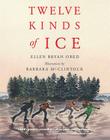
Twelve Kinds of Ice
by Ellen Bryan Obed, with illustrations by Barbara McClintock.  Obed remembers the many kinds of ice she and her siblings observed over the course of Maine winters.  First Ice "came on the sheep pails in the barn -- a skim of ice so thin that it broke when we touched it."  The fourth kind of ice, Field Ice, is frozen puddles in the fields big enough for the first skating of the season. 

The family devotes a 100-by-50 foot space to an outdoor rink, clearing weeds and stubble and putting up framing boards.
When the snow came, we began making garden ice.  The first step was snow packing.  Everyone worked on this -- Dad and Mom, my brothers, my sister and I.  We stamped and packed the snow hard with our boots and shovels.  We packed it with our skis.  We packed it with the toboggan, on which one or two of us sat to be pulled back and forth across the hardening surface.
   Suddenly, Dad would say, "Time to get the hose!"
The rink becomes a neighborhood center, with hockey games and figure skaters.  In February there's  an ice show, attended by fans from near and far.
The show is the climax of the season, and the thaw isn't far behind.  There's Last Ice, and then -- until the late fall -- Dream Ice:
This ice came in our sleep.  We never knew when it would come, but when it did, we could skate anywhere we wanted -- down roads, in and out of yards, and over the tops of trees.  We could do any jump we pleased without practicing.  Double axels over houses and splits over telephone wires.  We did spins on chimney tops and spirals down slanting roofs.  We lifted off our skates into the sky to land on the back edges of clouds.
I hope all this ice has been a little respite from the news.  Here's hoping for a good day tomorrow.

Love,

Deborah

Friday, November 2, 2012

More adoption books

Dear Aunt Debbie,

Your list of books about adoption is a great place to start.  I've done a little poking around through online lists, and have found a few more that look like they might be good.  Caveat: I haven't read any of these, and as Message Books, I'm afraid that some of them in full-text version may be unreadably cheesy.  That being said, here are three that look worth checking out:

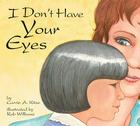
I Don't Have Your Eyes, by Carrie A. Kitze.  On each page, the text notes a physical difference between parent and child, followed by a similarity in personality or behavior:

I don't have your eyes...
...but I have your way of looking at things.

I don't have your toes...
...but I have your way of dancing through life.

It's not the story of one white parent and Asian adopted child, as the cover might imply; each illustration depicts a different family, so a variety of races and possible family situations are covered.

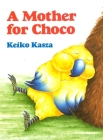
Taking interracial adoption into the animal world, there's Keiko Kasza's A Mother for Choco, which follows a little fat-cheeked yellow bird on his journey to find a mother.  He starts out by looking for animals who have physical similarities to him: the giraffe is yellow, but has no wings; the penguin has wings, but no big round cheeks; he is rebuffed by both.  Then he finds Mrs. Bear, who takes him in with the question, "If you had a mommy, what would she do?"  The story ends with Choco joining a family which  clearly contains some other adopted animals: a pig, a hippo, and an alligator Mrs. Bear has already taken in.  Aside from being a little concerned about the welfare of a bird in the company of a bear and an alligator, this one sounds sweet.


Emma's Yucky Brother, by Jean Little, sounds like it might be an interesting choice for Eleanor's friend, whose family is adopting a toddler this spring.  It's an I Can Read book, aimed at early elementary school age kids, and tells the story of Emma welcoming her new adopted brother, Max.  Max is four years old, and though Emma is tremendously excited to have him join the family, his entry is a little rough.  While the reviews I've read of this one sound good, I'm a little wary of it being the kind of book which raises problems that might not come up on their own.  Worth a look, though.

Love, Annie

Wednesday, October 31, 2012

Adopting

Dear Annie,

The images of storms you posted as Hurricane Sandy was battering us all were quite evocative.  The New York experience has been so awful.  I'm glad you came through unscathed, although disrupted.

As promised, I've been digging for books about biracial adoptions, and about adopting kids older than babies.  I haven't found a lot, but here are some offerings.

Starting with the ever-chipper Todd Parr

We Belong Together: A Book About Adoption and Families
. It opens:
We belong together because ...
you needed a home
and I had one to share.
Now we are a family.

The illustrations for that page appear to be a single-mom family living with grandma and grandpa.  Parr offers a wide variety of kinds of families -- single parents, gay parents, straight parents, and even a two-page spread about dog adoption ("We all needed someone to play catch with"). *  His people come in a wide variety of skin colors, most of them not found in nature (see illustrations to right and left).

A cheerful, loving not very explanatory introduction to adoption for little ones.

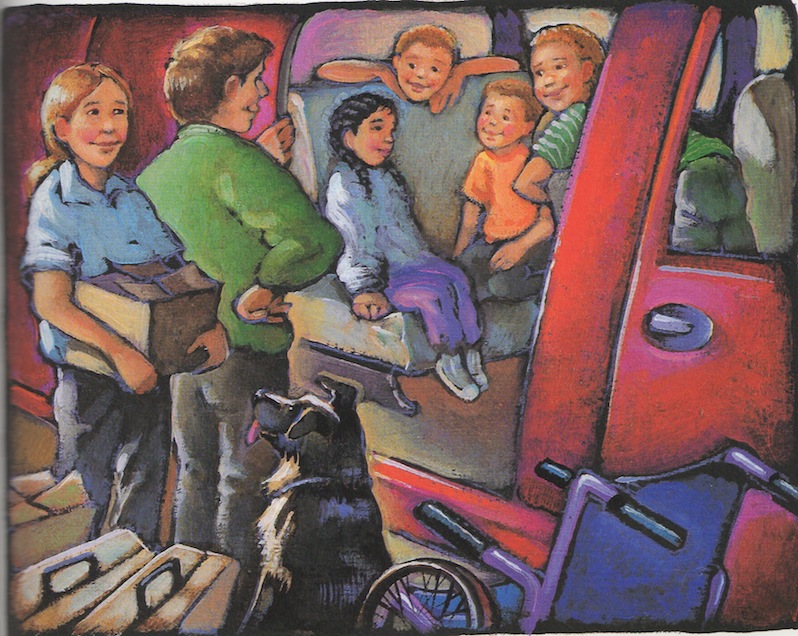
Then there's Beginnings: How Families Come to Be by Virginia Kroll (out of print: link is Alibris).  It starts with dark-haired probably Hispanic parents telling their genetic-offspring son about his birth.  Each chapter is the story of a different child, told as a child-parent conversation.  There's a Korean adoption, an uncle adopting his nephew after his single-mom sister dies, two private adoptions (single white mom adopting white kid, black couple adopting black baby).  Then there's Nicole, a maybe-Hispanic girl in a wheelchair -- five or six years old -- being adopted by a mostly-blond white family:
"You had three sons.  Now me."
Nicole
"I kept thinking how beautifully black braids went with blond buzz cuts as I looked at all my children.  Pretty soon your brown eyes hooked into your brothers' blue, and you all began bickering over whose ice cream cone was biggest and whose singing voice was best, as brothers and sisters do."


Nina Bonita
Kane-Miller, part of the Usborne publishing house, has a Brazilian book, by Ana Maria Machado which is a fable-ish storybook about race and mixed families.  A white rabbit meets a black girl at the beach (feels so Brazilian already!) and asks how he can have fur as beautifully dark as her skin.  She spins yarns at him -- painted herself with ink, drank too much coffee, etc. -- which he methodically tries, to no avail.  Then he gets the concept of born-that-way, finds himself a dark spouse, and has children of many hues.  It's a while since I've read this one, but it does have a whimsically celebratory feel to it.


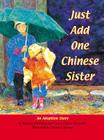
And finally, for your friends who are adopting a 1 1/2 year-old Ethiopian girl: I can find no African adoption books. Just Add One Chinese Sisterby Patricia McMahon and Conor Clarke McCarthy is the story of a family going to China and bringing home a daughter who appears to be two or a little younger.  The mother is telling the story to Claire, the daughter, when she's a little older, but on every page there's a sidebar with commentary the brother wrote as events unfolded.  Son and parents are embarking on this new event together.  Before they head to China, there's a baby shower.  Conor comments: "I think this new sister now has more clothing than I do.  And more toys than I had."  It's bemused, not resentful.  Conor ends up being the first family member to inspire laughter in his shy sister.  And when they're met at the airport by well-wishing friends, Conor is the one she holds on to.

Happy day-after your birthday, by the way.

Love,

Deborah

* I found a book that included a dog!  Do I get the bonus points?


Monday, October 29, 2012

Blogging from a hurricane

Dear Aunt Debbie,

The wind is howling outside my windows, and the lights have been flickering, but so far our power has remained on.  Fingers crossed.  I hope you're doing well down in DC, too.

I kept thinking tonight of amazing storm images from children's books we've written about here:

Robert McCloskey's Time of Wonder:


Patricia Polacco's Thunder Cake:


Rachel Isadora's The Fisherman and His Wife:


Yup, that's pretty much how we're feeling, here in New York.  Stay safe.

Love, Annie

Saturday, October 27, 2012

Hurricane Nina

Dear Annie,

I love  thinking of you and Eleanor sneaking in extra chapter reading time to enjoy Starry River of the Sky.  That book makes me happy.

We've just spent the day battening hatches around here in preparation for Hurricane Sandy.  A storm of a different nature is the subject of today's book: the angry pre-schooler. 
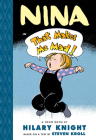
Nina in That Makes Me Mad!
by Hilary Knight and Steven Kroll is another Toon reader which makes a great read-aloud for a certain age (hello, Isabel).   Yes, Hilary Knight is a familiar name: he's the 85 year-old illustrator of the Eloise books.  Nina was  originally written in 1976 -- this version of the book is dedicated to Kroll, who died last year.  It's been re-formatted to fit the Toon graphic novel format

girl-girl-boy
Nina is the middle child in a girl-girl-boy family. 


   And she has a list of grievances, each with its own two-page spread:


(1976 explains Mom's fashion sense -- she's in skirts and sensible heels throughout.)

Other things that make her mad include:
When you promise and then you forget...
When I try and it doesn't work...
When I try and no one else does...
When you stop me before I can finish...
Nina is younger than Maya (who makes a mess), more full of pure frustration, less artfully funny.  But Nina's feelings are a good point to start the Anger Discussion -- an addition to our list of books about tantrums.  One can imagine Nina in a few years calming down and becoming Eloise -- why have we never written about her?

There's a nice little trailer for this book, with a tag line I'm fond of:

"Available at retailers that don't make Nina mad."

Hope that includes me.

Love,

Deborah

Thursday, October 25, 2012

Starry River

Dear Aunt Debbie,

Last month, you sent us Grace Lin's Starry River of the Sky, and ended your post wanting to know what we'd think of it.  The verdict is in: Eleanor LOVED it, perhaps more than any other chapter book we've read in a few months.  We read it very quickly, sneaking in a chapter as part of our morning reading along with a picture book for Isabel, and another chapter or two at night.  (There were enough references to animals, and drawings by Lin at the beginnings of chapters, to keep Isabel somewhat engaged.)

What worked so well about this book?  Part of it is the structure Lin uses in Where the Mountain Meets the Moon as well: stories within stories.  The stories in Starry River offered Eleanor multiple opportunities to piece together elements of plot by herself in ways she clearly found satisfying.

At the beginning of the book, the protagonist, Rendi, is presented as a mystery.  We know he's on the run, but don't know where he's going or what he's running from.  He's hostile and uncommunicative, but appealing -- it's clear he's upset by something real.  The mysterious guest at the inn, Madame Chang, tells stories based on Chinese mythology, including the story of WangYi and his wife, who becomes the Moon Lady.  She gets Rendi to agree to tell stories in return, and when he does, it becomes immediately clear that he's telling the true story of his own father.

Or I should say: it becomes immediately clear to an adult reader.  To a five-year-old, it becomes interesting, then exciting, then thrilling to spot the connections and figure out the truth.  The stories invite a gentle spirit of detective work, and wind together in a satisfying puzzle-like way.  When we finished, Eleanor asked immediately if we could read it again soon.  Thank you!

Love, Annie


Monday, October 22, 2012

We have a contender! I hope.

Dear Annie,

I'll definitely talk about adoption books soon.  I have to sort through my shelves in the store.

I applaud you wanting to avoid the stereotypes of birth order.  As a third child (girl [your mom]-boy-girl [me] family) I'm sensitive to the concept of overlooking the youngest. So take lots of pictures of him!

Last week, when I opened a shipment from Houghton Mifflin, I discovered I'd ordered quite a lot of copies of one particular picture book.  Hmm, I thought, what was I thinking those many months ago when I was ordering new books?  Then I re-read it, and thought, oh dear, I didn't order enough.


Sleep Like a Tiger
by Mary Logue is magic. The illustrations by Pamela Zagarenski are both other-worldly and cozy, formal and wacky.  The book starts with a girl wearing a crown on a scooter.  She does not want to go to sleep, "even though the sun had gone away."  A small tiger is walking out of the picture with a large orange ball on its back.  The girl insists she isn't sleepy.

Parents appear, also wearing crowns, but clearly understanding of her situation:


The parents persuade her to brush teeth and get into bed.
   "Does everything in the world go to sleep?" she asked.
   "Yes," her parents told her.
   "Our dog is sleeping right now, curled up in a ball on the couch, where he's not supposed to be."
Bats, cats, whales, bears, snails  -- parents reassure her all have to sleep (the snails "curl up like a cinnamon roll inside their shell").  The girl adds the tiger to the list.  We see a tiger in a Rousseau-like jungle, with a crown floating above its head.  The parents kiss her goodnight.
   "I'm still not sleepy," she told them.
   "We know," they agreed.
   "You can stay awake all night long."
   They left her door open a crack.
There she is, warm and cozy in her "cocoon of sheets":

She imitates each of the animals her parents talked about, circling like a whale, wriggling like a cat, and of course, like the tiger, she falls asleep.  The last picture in the book is the cover illustration.

It's beautiful and lyrical, with enough bits of humor and oddity to make it special.

As you know, I'm terrible at predicting winners of the big children's book awards.  But I think, I hope, I want this one to be a contender for the Caldecott medal for illustration.    It's so beautiful and odd, yet also wonderfully kid-friendly.  It makes me happy to read it.

Goodnight!

Love,

Deborah