In which Annie (high school teacher, mother of two young girls and a younger boy) and her aunt Deborah (children's bookseller, mother of two young women in their 20s) discuss children's books and come up with annotated lists.

Saturday, January 1, 2011

The technology of reading

Dear Aunt Debbie,

First off, Happy New Year!  I hope you all rang it in joyfully.  We saved your Christmas box until last night, and devoured much of it immediately -- I'll post on a few soon.

I know exactly what you mean about that itchy preposterous feeling.  I'm having trouble as well coming up with more good examples, but my most recent one came while reading The Knife of Never Letting Go, which I otherwise found gripping and thought-provoking.

MINOR SPOILER ALERT for those who haven't read it yet -- you might want to skip the next paragraph if you don't want to know something about the plot, though I'm not giving away any of the book's biggest secrets.

For much of the book, Todd carries with him his mother's journal, which his adopted father Ben gives him when he's sent running away from Prentisstown, and which tells the story of her life on New World up to the day of her death, when Todd was a baby.  Ben also includes a map and a brief page of writing and tells Todd to read them when he gets far enough away from his hometown to be somewhat safe.  Trouble is, Todd can't read well -- it's serious work for him, and his macho instinct kicks in and he doesn't want to ask for help.  But when it becomes clear to Viola, the girl he ends up traveling with, that one of the things Ben has written is "You must warn them," I find it extremely hard to believe that Todd wouldn't immediately hand the book over to Viola and ask her to read the whole page.  And why doesn't she take it out of his bag and read it when he's comatose for five days and she's just sitting there watching him?  I spent much of the book wanting to know more about what was in that inner book, and the lack of use it gets feels ultimately uncomfortable to me --weirdly dismissive of Todd's mother and anything she might have had to teach Todd or Viola.

We spent much of the first day of the new year reading, and Isabel practiced for the land-speed record of pulling books off shelves as quickly as we reshelved them.  Eleanor played as well with one of her new Christmas presents: a Tag reader, a generous gift from Jeff's aunt.  Are you familiar with the system?  It's a chunky pen which you can load up with software and then use with special Tag books in astonishing ways: the pen will read individual words aloud, or make sounds when passed over an object, or read the whole story, or ask questions as part of identification games.  I am both awed by the technology and a little uncomfortable with it -- I'm an old-fashioned book person, with no interest myself in electronic readers, and I'm not sure how this kind of reading experience will fold in with all of Eleanor's others.  The pen also somehow takes in data about how Eleanor is using it, which raises privacy concerns for me.  It makes me feel pretty old-fashioned (she said, writing on her public blog).
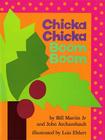
The book we got with the pen is Chicka Chicka Boom Boom, by Bill Martin Jr and John Archambault.  It's a nice alphabet rhyme of a book, and I like the fact that all the letters are lower-case, as Eleanor is less familiar with them than with capital letters.  She played with it a bit this afternoon, but spent the most time touching the pen to the sample page catalogue that came along with it, getting glimpses of a Tinkerbell book and jonesing for Disney Princess books.  We've ordered the interactive world map for her birthday -- not  what she most wants, but what we'd rather have in the house than sparkly princess noises.  I'm curious to see how this pans out.  I'll report back.

May the first days of 2011 bring you much joy.

Love, Annie

Thursday, December 30, 2010

Preposterous!

Dear Annie,

Such a pleasure to hear from an editor/illustrator!   Jackie Morris mentioned in her comment that she's working on illustrating nursery rhymes: yesterday she posted some of those pictures.

I've been trying to catch up on books that might win the Newbery and Caldecott medals this year: always impossible to predict, but I keep trying...  They'll be announced on January 10. 

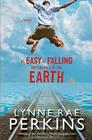
I find myself with very mixed feelings about
As Easy as Falling Off the Face of the Earth
, a middle-grade novel by Lynne Rae Perkins, who won a Newbery a few years ago for Criss Cross, a quiet but good novel.  I read so many novels written for kids that I sometimes don't register bad or mediocre writing -- I'm just charging along for plot, feeling mildly dissatisfied.  Then a book will come along which is qualitatively different, and my brain will scream, "Wow, good writing!"  That's how I felt getting into this one.  It's about Ry, a 15 year-old boy who gets off a broken-down train in the middle of nowhere in Montana to try for cell phone reception, and gets left behind when it unexpectedly starts up.  The book is full of eccentric adult characters, and ties several subplots together well.

With the help of a benign but opinionated man Ry meets in a small Montana town, he travels to his home in Wisconsin, then cross-country to Florida, flies in a homemade private plane to Puerto Rico, and sails from there to a remote Caribbean island where his parents (whose phone and credit cards have been stolen) are vacationing.  In the meantime, his grandfather (who has fallen on his head and lost his short-term memory) and dogs in Wisconsin have disappeared.  The dogs are a lovely, although occasionally confusing subplot: Perkins (who is also an illustrator) does them as an occasional page of graphic novel.  My scanner is still busted, but here's what the dogs look like:
and here's part of their conversation when they realize they have no humans at their new home:
"Hey, do you remember that movie?"
"What movie?"
"Where the dogs and the cat find their way back to the old house?"
"I love that movie.  That's a really good movie.  Except for the cat."
"I think that's what happened to us.  I think we need to find our people.  We need to go back to the old house."
"How can we do that?"
"We're dogs.  We have 'instinct.'"
"Well...okay."
In the last panel they are heading down a long straight road.  They are, unsurprisingly, completely clueless, but end up being found and flown back home by the end of the book.

There's lots of riveting action: a charmingly hair-raising ride with a crazy old guy who can't see out of the stolen Oldsmobile he's speeding down a highway, the 15 year-old with a learner's permit driving through large freeway interchanges getting lost in the middle of the night, a ride in a plane that logically shouldn't be able to fly -- it goes on and on. 

My problem is that the plot is, well, preposterous.  Somehow this 15 year-old kid and the adults around him don't think to go to the police to get help contacting his parents.  When police finally do show up when it becomes clear that Grandpa is missing, they don't question why this kid is traveling thousands of miles with an unrelated adult. The whole plot could have evaporated with one phone call.  It all hangs on such an unlikely premise.

I feel grinch-like grousing about this.  But there's so much likable in this book that I find myself more bothered by its big flaw than if it had just been an average book.  I keep thinking yes, I've had this sensation before: what other book was it?  and not coming up with it.  But you know what I mean?

Love,

Deborah

Tuesday, December 28, 2010

A gorgeous treasury of poems

Dear Aunt Debbie,

We are well-fed, well-loved, and well-gifted here in the midwest.  Not so bad to be here while a blizzard rages back home, too.

Christmas brought us some excellent books.  I took the opportunity to buy Eleanor several library favorites: In Our Mothers' House and The Keeping Quilt; Tell Me a Mitzi and Tell Me A Trudy; and Flotsam.  On your recommendation, I also tracked down a copy of Young Guinevere, which is an immediate hit with Eleanor.  I love the depiction of Guinevere in the crazy enchanted forest near her father's castle fighting and then teaming up with a wolf who turns out to be a shape-shifting child, and then doing battle with a giant beast with the head of a serpent, the body of a leopard, and the tail of a lion.  Quite unlike other Arthurian legends I've seen.  Eleanor is, of course, impressed by Guinevere's long auburn hair and silk dresses.  I was nice to talk to Lizzie on Christmas day and hear that those were major details she retained as well....

As for me, I'm two-thirds of the way through The Knife of Never Letting Go, and devouring it in great gulps.  What a book!

One of the surprise gifts of the season came for Eleanor from a family friend.  The Barefoot Book of Classic Poems is a gorgeous anthology of poetry, beautifully chosen and illustrated by Jackie Morris (do you know her?  I'd never heard of her, and now I want to find out more).  It is a rich and varied collection, combining poets and poems you might expect in a children's collection (A.A. Milne, Ogden Nash, Lewis Carroll, Robert Louis Stevenson) and poets who come as a surprise in this setting (Marianne Moore, William Carlos Williams, Sylvia Plath, Rainer Maria Rilke).  The book is organized roughly by the idea of a journey from birth to death, with childhood, nature, animals, love, and war along the way.  Each poem is sumptuously illustrated with landscapes and figures.  Morris's choices are excellent, as is her ordering.  The poems talk to each other: Elizabeth Barrett Browning's "How Do I Love Thee?" faces Shakespeare's "Sonnet 18" ("Shall I compare thee to a summer's day?"), as lovers clasp hands across the page break.  She's a gifted editor, and artist.  I want to read a poem every night, and give this book to all kinds of people now.  How often do you get to watch your father-in-law read your almost-4-year old "Jabberwocky" on one night and "The Tyger" on the next?

Love, Annie

Sunday, December 26, 2010

Slam

Dear Annie,

Happy Christmas certainly happened.  We had a lovely day giving each other gifts and then just hanging out and trying to figure out how the gifts worked.  Pete Thompson, the girls' cousin on Bob's side (you may remember him as the amazing photographer at your brother's wedding), joined us for Christmas Eve and Day -- including our marathon book-reading! -- which was quite nice.   Before becoming a fashion photographer, which he is now, Pete spent many years shooting skateboarders in action.  Somehow we started talking about legendary skateboarder Tony Hawk (with whom Pete had worked on occasion), and it led to discussion of a great young adult book.


Slam
, by Nick Hornby is another one of those books it's extremely hard to sell to anyone's parent.  I'll just say, "It's a wonderful book about a 15 year-old boy who fathers a child," and 90% of parents will say, let's see something else. Sam, the main character, is very into skateboarding (he would say skating -- the full word is uncool) and Tony Hawk is his idol.  He talks to a poster of Hawk that hangs in his room, and after he's read Hawk's autobiography, the poster responds to him, in lines from the book.
After a while, I started talking to Tony Hawk about other things -- about school, Mum, Alicia, whatever, and I found that he had something to say about those things too.  His words still came from his book, but the book is about his life, not just skating, so not everything he says is about sacktaps and shove-its.
   For example, if I told him about how I'd lost my temper with Mum for no reason, he'd say, "I was ridiculous.  I can't believe my parents didn't duct-tape me up, stuff a sock in my mouth and throw me in a corner."  And when I told him about some big fight at school, he said, "I didn't get into any trouble, because I was happy with Cindy."  Cindy was his girlfriend of the time.  Not everything Tony Hawk said was that helpful, to tell you the truth, but it wasn't his fault.  If there was nothing in the book that was exactly right, then I had to make some of the sentences fit as best I could.  And the amazing thing was that once you made them fit, then they always made sense, if you thought about what he said hard enough.
Then when Sam's girlfriend tells him she's pregnant, things start happening which Sam interprets as Tony playing tricks on him.  Every now and then Sam wakes up in the future, after the baby is born, and spends a day as his pre-baby self trying to figure out What's going on and what he's supposed to do.  They're wonderfully funny and poignant scenes.

The book is about being handed a life you hadn't expected, and managing to bumble through, even learning a fair amount as you go.  Hornby has called it a cautionary tale, but it's much more than that.  A very good read.  When it came out in 2007, Bob wrote an article on Hornby and the blossoming of young adult literature. Good reading all around.

I hope you're all still having a good time out there in the midwest.

Love,

Deborah

Saturday, December 25, 2010

Merry Christmas!

Dear Aunt Debbie,

Christmas at my in-laws' house in Illinois!  The children are nestled all snug in their beds, my wrapping is done, there's a light layer of snow outside and plates of Christmas cookies jostling for space with the pies on the kitchen counter -- it's a lovely night.

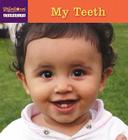
Tonight, along with The Night Before Christmas, we read another favorite Christmas story (one we actually read all year round), and I found myself wishing for the other Christmas Eve book of my childhood, which I'm going to have to find for the girls next year.  To be honest, I should admit that Eleanor and I read these books; Isabel sat on Jeff's lap and directed him emphatically to read her
My Teeth
 and Olivia's Opposites. So she doesn't quite get Christmas yet.  It'll come.


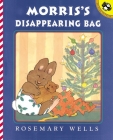
Morris's Disappearing Bag
 was a gift from you to me in 1979 -- it's inscribed "To Annie -- With love from your disappearing aunt.  Love, Debbie."  It'll be out of print by now, I thought to myself, but it isn't -- a new edition came out in 2001.  I think this may be, like Noisy Nora, a book that Rosemary Wells did new, more brightly colored illustrations for in order to get it reprinted.  The cover image here is a little different from the one we have, but I'm sure it's essentially the same.

Morris is the youngest bunny in a family of four.  On Christmas morning, his brother Victor gets a hockey set, his sister Rose gets a beauty kit, and just as you're thinking oh no, a gender-role-reinforcing little Christmas book, Morris's other sister, Betty, gets a chemistry set.  Morris gets a bear.  The other siblings play with their own presents and with each others' ("And then Victor made himself beautiful and Betty played goalie and Rose invented a new gas."), but no one will let Morris play with their toys because he's too young, and no one wants his bear.  Morris droops.  But then!  Under the Christmas tree, Morris finds an overlooked package.  Inside is a Disappearing Bag -- he crawls in and becomes invisible.  A couple of funny pages follow where Morris's siblings can't find him, but the tips of his ears or tail are showing, so your kid can.  Morris pops out of the bag, lets his silings jump into it, and plays with all of their toys on his own until bedtime.

There is something very satisfying about this little book -- it's so good about jealousy and sharing and siblings, and Rosemary Wells can't be beat for drawing droopy bunnies.  It's a Christmas story, but I've never thought of it as relegated to Christmas-time reading.  I'm glad it's still around.

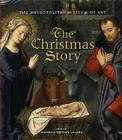
As in your house, I grew up with the King James version of Jesus's birth as one of the traditional Christmas Eve readings.  We always referred to it as "the part in the Bible where Jesus gets born."  In our house, the book was published by the Metropolitan Museum of Art: the Bible passages illustrated with reproductions of Old Masters' paintings.  In the absence of the book at the moment, I'm trying to figure out which it must have been.  This is my best guess.

There's a current version out, however, which I plan to get in the next year: The Christmas Story (Metropolitan Museum of Art).  There's something appropriate about having the story illustrated by multiple artists, from multiple years and countries -- no one person has a lock on what the Holy Family looked like, and there are such great and differing depictions of the animals as well.

And now I'm off to bed, so Santa can come.  Happy Christmas to all, and to all a good night!

Love, Annie

Wednesday, December 22, 2010

Christmas Eve

Dear Annie,

This is my last post before Christmas, so here's what the four of us will be reading on Christmas Eve:

Starting from the bottom:

The two Night Before Christmas versions blogged earlier this month.

 A facsimile edition of the 1939 Rudolph the Red-Nosed Reindeer written for the Montgomery Ward department stores.  This is very far from my favorite Christmas song.  I think of it as the ultimate Washington scenario: odd guy gets bullied until someone in power decides he's useful, at which point bullies tell him he'll go down in history.  But hey, the book showed up in our pile of Christmas tradition many years ago.

The Polar Express. by Chris Van Allsburg What can I say?  It's a wonderful classic with slightly fascist imagery.  We all love it.

Jingle Bugs, by David Carter.  He's done quite a few bug pop-up books.  Some of the lines from this one: "Who's in the chimney, warm and snug?" [pull tab, a Santa with buggy eyes and antennae pops out of a chimney] "Ho, ho, ho!  It's Santa Bug!"  This goes on through "jingle bugs swinging to and fro," "Gift-wrapped bugs for you and me,"  and on and on.  Pop-ups are very well engineered.

The Gift of the Magi, by O. Henry.  The wonderful story of hair sold to buy a watch chain for a watch sold to buy combs for the hair.  We read the Lisbeth-Zwerger illustrated edition, still beautifully in print.  I've never understood why they didn't just return the combs and go buy back the watch, but I guess that's a story for another day.

Spot's First Christmas, by Eric Hill.  This is the one that, per Grandma's advice, I would have thrown out -- but I realized it too late, alas. Also, it was given to the girls by a friend whom we love.  It's inane, it doesn't rhyme, it's full of Spot and his mother getting ready for Christmas, mostly with Spot wanting to know what presents he's getting.  Our girls have a weird sentimental attachment to it.  I think they're also amused by how much I dislike it.  There was a little serious discussion about giving it to Isabel for Christmas this year, given her dog obsession.  I was willing to mail it if Lizzie and Mona wanted to buy it, but the decision was finally that they worried that you'd feel the same way about it that I do, and that you'd hold it against them for years.  You have been spared.

The Story of Christmas, words from the Bible, illustrated by Jane Ray.  Part of the Christmas tradition of your mother's and my non-religious family was to read the King James Bible story of Jesus' birth.  Our parents felt, as I did with my kids, that if you're going to get the pagan elements of the celebration, you should know the religious story on which it's based.  The language, needless to say, is beautiful.  And Jane Ray's illustrations in this out-of-print books are gorgeous.  All the characters are very middle eastern Semitic-looking, except for an occasional blond angel.

A Christmas Story, by Mary Chalmers, which I remember owning in miniature edition as a child, tells how a girl named Elizabeth, along with Harry Dog, Hilary Cat, and Alice Rabbit find and and trim a tree.  When they discover there is no star for the top, Elizabeth goes out in the snow to find one.  She encounters one of the best-named characters in children's literature: "the Santa Claus for rabbits and other small animals."  He gives her a star, which she carried home triumphantly.  The last word in the book is, "There!." Ahh.

Babar and Father Christmas is one of the longer ones, but totally enjoyable. Babar sets off to find Father Christmas to ask him to deliver to the Elephants' country.  One of the challenges of the book is pronouncing PRJMNESWE, the town in Bohemia near which Father Christmas lives.  Babar finally finds him, and they work out a deal which results in no additional work for the old guy, but joy and presents for the little elephants.

And last -- and best, in many of our opinions -- is The Story of Holly and Ivy, by Rumer Godden, illustrated by Barbara Cooney.   An orphan wandering alone in a small town, a doll in a toy shop, and a slightly sad middle-aged woman married to a policeman all wish for each other, and get their wishes.  This is such a wonderful book that someday -- maybe next December -- I'll devote a whole entry to it.  It's long, it's magical.  We love it.

It's a huge pile.  It takes a couple of hours to read them all.  In recent years we've pulled out one of the three biggest --Holly and Ivy, Babar, or The Gift of the Magi -- to read on the 22nd or 23rd, so that we still have time to race off to our rooms to wrap gifts before midnight Christmas Eve. 

Happy Christmas to all.

Love,

Deborah

Monday, December 20, 2010

An appetizing alphabet

Dear Aunt Debbie,

What an unsettling customer story!  I wonder if being in a children's bookstore also brings out the deep immaturity in some people....  I'm glad it ended the way it did, and wish you no one like that in the store this week.

I didn't mean to sound grinchy in my last post -- I love holiday books too, and I do want to hear about the other Christmas Eve titles you read each year.  I'll get back to Christmas books on Friday.  For now, though, here's another of our favorite alphabets.

A Apple Pie
is a British alphabet rhyme from the 1600s, detailing what happens to an apple pie with every letter of the alphabet: "B bit it, C cut it, D dealt it," etc.  I grew up with the wonderful Kate Greenaway version, which has just been republished -- lots of girls in empire-waisted dresses and little white caps digging into and playing wholesome-looking games with their pies.

The version we have now is illustrated by Gennady Spirin, and is pleasingly odd.  The pie in Spirin's drawings is gigantic: not a normal pie, but one which on some pages much be rappeled down by tiny soldiers and inspected (the letter I, natch) with scientific instruments.  Each page is packed with detail: not only the letter and its accompanying sentence and illustration, but also an animal and another food beginning with the same letter.  A comes with ants crawling over an apple, for example.  It rewards close looking.

And now I'm off to get as close as I do these days to bookstore work by reshelving the many, many books Isabel has thrown to the floor in her tornado-like fashion. 

Love, Annie