In which Annie (high school teacher, mother of two young girls and a younger boy) and her aunt Deborah (children's bookseller, mother of two young women in their 20s) discuss children's books and come up with annotated lists.

Thursday, January 31, 2013

My love/hate relationship with Roald Dahl

Dear Aunt Debbie,

I've often found our family's taste to be out of the mainstream; I've even been known to take a perverse pride in it.  That being said, I'm sorry that your favorites this year didn't win the big awards.  Ah, well.  Maybe next year?

I am, happily, writing to you from my maternity leave (or rather, in Dept. of Education parlance, my Restoration of Health leave, which comes before my Maternity and Childcare leaves.  Each of these, you understand, requires separate forms).  In any case, I've finished up my end-of-semester grading and am able to rest a bit and prepare for the arrival of Barleybee, who's due in a few weeks.  So there's a maternity leave from the blog pending, but right now, I'm back!

Thank you for the fabulous birthday gifts for Eleanor (and Isabel, and Barleybee) -- we've been reading new books from you since opening them last night.  As always, you are an amazing gift-giver.

The book I want to focus on tonight came from you for Christmas, and reading it to Eleanor has reminded me of how much I love -- and really, really don't love -- Roald Dahl.

Like pretty much every kid I know, I went through a huge Roald Dahl phase in elementary school.  I've read most of his novels, and scenes from several of them -- Danny the Champion of the World, James and the Giant Peach, Charlie and the Chocolate Factory -- are ingrained in my mind.  I have vivid memories of lying to my mother about how much I had left to read and sneaking an extra chapter in before bedtime: these were addictive, thrilling page-turners, filled with heroic kids and mostly ineffectual or evil adults; modern, super-readable fairy tales.  Jeff remembers loving Dahl as well.  Tonight when we talked about it, he referred to a "gleefully malevolent juvenile quality that spoke to me as a ten-year-old boy."  His aunt Karen, who teaches elementary school in Texas, reports that her 3rd graders love Dahl more than just about anyone, from the fabulous plots to cliffhangers and the fart-joke humor.

Even as a kid, though, there were moments that made me queasy.  There's a lot of straight-up meanness in Dahl's work, not only in books like The Twits, which Jeff remembers as "an exercise in sustained cruelty," but in some of the books containing his most empathetic characters.  Reading Charlie and the Chocolate Factory and now The BFG to Eleanor, it's hard not to feel that Roald Dahl just didn't like people very much.  Aside from one main character at a time -- Charlie, Sophie, Matilda -- the supporting cast is treated with an off-hand cruelty that's quite off-putting.  In The BFG, Dahl takes equal delight in describing farts ("whizz-poppers"), good dreams that the BFG catches and puts in jars, and the bone-crunching bloody exploits of the mean hairy giants who gallop off every night to eat people in all corners of the world.  When the bad giants are caught at the end, they're sentenced to a sadistic imprisonment, forced to eat repulsive snozzcumbers in a pit while being watched by tourists.  Somehow, it feels more cruel than killing them off.

Eleanor loved The BFG. She loved the heroine, Sophie, who is brave and intelligent and gets to ride in a friendly giant's ear.  She loved the BFG, with his charming way of mangling words and his vocation of blowing good dreams into the ears of sleeping children.  She was on tenterhooks whenever Sophie was in danger of being discovered by the mean giants, jumping around on the couch or covering her head with a pillow.  As I read her the many descriptions of giants eating "human beans," however, or the almost as gross descriptions of hairy giant bellies and slobbery wet giant mouths, I couldn't help wondering if I were setting her up for nightmares.

Maybe these are books better read by kids alone, and a few years older.  I can't decide -- it's hard to separate out the pleasure from the meanness.

Love, Annie

Monday, January 28, 2013

The best?

Dear Annie,

I am proud to report that my record for never predicting the winners of the Newbery and Caldecott medals will stand untarnished for another year.

Awards, award committees -- oy!

I'll start with the good news.  Note the little silver circles on the covers of Sleep Like a Tiger and Extra Yarn:
They both won Caldecott Honors for best illustration: Pamela Zagarenski is the artist for Tiger; Jon Klassen for Yarn.  Annie and Aunt regulars will note that guest blogger Clara was eloquent on the subject of Extra Yarn just one post ago.

Jon Klassen also won the Caldecott Medal for This Is Not My Hat.

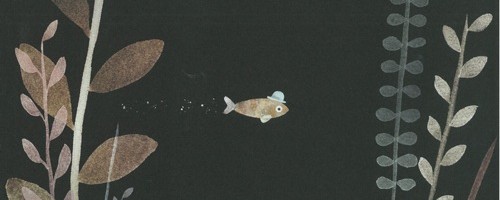
page from This Is Not My Hat
It's dark, funny, and an understandable choice for the top illustrator honors, even though I personally think Sleep Like a Tiger would have been a better one.

Then we get to the question of literature.  Sigh.  Wonder, which was my complete favorite, didn't win any awards: not a Newbery medal or honor, not even a mention in the category of books about disabilities (the American Library Association gave out lots of awards today: Newbery and Caldecott are the most visible).


The One and Only Ivan
, by Katherine Applegate, is the 2013 Newbery Medal winner.  If the author sounds vaguely familiar, it's because over the course of five years in the late '90s she wrote the 54 books in the
Animorphs series.  One assumes she took a bit more time with this one.  It's the story of several animals -- including a gorilla named Ivan -- who live in neglect in a shopping mall zoo.  Ivan is depressed.  An older elephant dies from an out of control foot infection -- but first she elicits a promise from Ivan to look after the newest arrival: a baby elephant.  Working with the young daughter of the mall custodian, Ivan paints pictures which eventually gain enough attention for the plight of the animals that they end up in a zoo in much better circumstances.

I have to go back and re-read this one.  It's got lots of lovable animals in it -- a plus for many young readers.  But I remember feeling that it fell into a genre of kids' books which presents suffering as a necessary preliminary to enlightenment/happiness. The Miraculous Journey of Edward Tulane by Kate DiCamillo is similar.  These are definitely love-it-or-hate-it books.  I come out on the negative side: they feel heavy-handed in their morality and depressing in their action.  But there exist people I respect who are moved by them.  (See a thoughtful Heavy Medal Blog entry here.) My heart sinks to think of the significant number of very good books that came out this year -- not just Wonder.  And this is the best the ALA can offer kids?

Those great books from 2012 -- and of course many more from years past -- are still there, of course, waiting to connect with readers who will love them. 

And as for awards -- there's always next year...

Love,

Deborah


Friday, January 25, 2013

Guest blogger: Extra Yarn

Dear Aunt Debbie,

I'm nearing the end of my grading marathon (and the beginning of my maternity leave -- Monday is my last day at work, and Barleybee should be making his entrance sometime in the next few weeks).  Here, to round things out, is my friend Clara, kindergarten teacher and mom of Isabel's good friend Vera, who wrote beautifully for us some months ago about teaching kindergartners to read.


I have a new favorite picture book for our home library: Extra Yarn, by Mac Barnett, illustrated by Jon Klassen. 

It came to us at Christmas, a nearly forgotten gift left under the tree in a shadow and rediscovered when we returned from traveling for the holidays. I promptly bought one for my classroom and a few for any upcoming occasions requiring gifts for children or teachers. Everyone I mentioned the book to hadn't yet heard of it, but I'm hoping to see it in bookstore windows all over the city soon. 

The illustrator is known for I Want My Hat Back, which is also part of our home library, and Extra Yarn certainly wouldn't be the same without his sparse, powerful paintings. The author's name didn't ring a bell at first, but when I looked him up I found that I have bought his books for my nieces and my classroom (Billy Twitters and His Blue Whale Problem, The Clock Without a Face, and Oh No!: Or How My Science Project Destroyed the World). Phrases used by reviewers to describe Barnett's other books include surreal, clever, slyly subversive, definitely funny, and wonderfully ridiculous. Extra Yarn, however, is subtle and touching. Funny and subversive, yes, those too, but it has its own simple tone.

It begins:

Annabelle proceeds to knit herself a sweater, and one for her dog, but she still has extra yarn. A neighborhood boy makes fun of her sweater. Her eyebrows furrow but she reasons that he must be jealous and so she makes a sweater for him, and one for his dog while she's at it. But she still has extra yarn. In school, the other children are distracted from their work because they can't help but turn around to look at Annabel's colorful sweater set against their world of grays. Her teacher bans the sweater from the school, but again Annabelle figures that if she simply knits sweaters for her whole class, they won't have to turn around anymore. Her teacher doesn't believe she is up to the task.

"Impossible," said Mr. Norman. "You can't!"
But it turned out she could. And she did.


After knitting for the entire town (even the neighborhood nudist, for whom she knits a hat), Annabelle knits for the animals (you will recognize forest friends from I Want My Hat Back) and every inanimate object that will hold a row of knits and purls. 

She is then visited by a duke from across the sea who is quite fond of fashion. He offers her a million dollars for her box, but she says no. He steals it by night, sailing with the box to his land across the ocean, which is aptly painted in only blacks and grays. When he opens the box and finds it empty, he hurls it back into the ocean, cursing Annabelle to never be happy again. With no words for the next two page spread, the box floats back to shore into Annabelle's hands. The curse to "never be happy again" still hangs in the air. The book simply ends with "But it turns out, she was."

My husband and I argue over who gets to read Extra Yarn during bedtime stories. He loves that the illustrator puts this book in its own world, one with incongruous time signatures; prominently featured are soot, a count in an elaborate sea vessel, and a pickup truck. I love that there is a magic box that is never called magic, and a girl that is generous without ever being called so. I adore that this child does not act selfish for 95% of the book (a huge pet peeve of mine and far too common), serving as a bad role model to her readers, and then miraculously learns her lesson to become generous. She just is. She's not even celebrated for it, except perhaps by her readers. 

Mac Barnett's language matches this feeling of just being, just doing. Annabelle just has extra yarn. She just knits beautiful sweaters for others. She just is happy. And Jon Klassen's illustrations couldn't fit the story better either. Annabelle's simply painted gray scale town is transformed by her simple, repeated acts of generosity and her extraordinary box of yarn. 

The book does not hit readers over the head with morals, magic, or the domino effect one person's kindness can have on others. It remains a simple, sweet story that leaves you feeling, well, just good.

Lots of love, C

p.s. If you don't have it by then, when Barleybee arrives, he just may find himself with a copy of this book and if I can find the right box of yarn, something to keep his head warm. 

I can't wait!

Love, Annie

Wednesday, January 23, 2013

Dear Annie,

Ona as a guest blogger!  Way to go!  I love your story about Sally, Ona -- proving once again what we already know: we have yet another excellent teacher in the family.

I'm quite fond of The Dot, which Ona mentioned, and Peter Reynolds' sequel,
Ish
.  In Ish, a boy who loves to draw is ridiculed by his older brother -- "WHAT is THAT?" he laughs, pointing at Ramon's attempt to draw a vase of flowers.  This kills Ramon's joy in art: he keeps starting pictures and then crumpling them up.  He then discovers that his little sister has been rescuing the drawings, flattening them, and displaying them on her walls because she likes them.  When he tells her one drawing was supposed to be a vase, she says it's "vase-ish."  The concept of -ish frees him to enjoy his art again.

I was also pleasantly surprised to find a book by JoAnn Deak in Ona's list.  She's written two books for adults: How Girls Thrive and Girls Will Be Girls: Raising Confident and Courageous Daughters.  She makes a point that about 80% of each gender conforms to what we think of as stereotypical boy or girl behavior -- and about 20% don't.  For every four girls whose parents say, "We gave her a truck and she gave it a name and tucked it into her doll bed," there's one who says, "Vroom vroom," and pushes it across the floor.  I find this a helpful concept in the unending debate about boy stuff/girl stuff.  (Nice piece on same here.)  She's not saying that 80% of girls want to be exclusively pink princesses, but that certain forms of play are more common in different genders.

It was so lovely to see you and your amazing daughters (who were busy building the Brooklyn-Battery Tunnel with Magna-Tiles and sending cars through it) over the weekend.  And the most amazing part of all was listening to Eleanor reading books to us.  She did an excellent rendition of We're Going on a Bear Hunt, complete with inflection that would make a middle-schooler proud.  Given all the great readings she's listened to from her parents I suppose it's no surprise.  But it's certainly impressive.

Love,

Deborah

Monday, January 21, 2013

Guest blogger: Making Mistakes


Dear Aunt Debbie,

I hope you're right this year!  I've certainly agreed with your votes before, over the official committees'.

I'm still knee-deep in portfolios, so I've asked another family member to be our next guest blogger: my cousin, and your niece, Ona, who teaches kindergarten in Seattle.  Here she is, in the first of what I hope will be many guest blogger appearances:

Making Mistakes

Much of my year as a kindergarten teacher is spent on life lessons. My hope is to impart these lessons in a fun way-- and at times these ideas outweigh the academic material.  One such lesson is that the brain needs to explore, try new things and make mistakes. Every day I point out to my students mistakes that I have made, as well as complimenting them on catching them, "Wow, you have sharp eyes that you caught my mistake." (Adults: check out the awesome book Brain Rules, by John Medina-- highly recommended for teachers and parents alike!) 

Making mistakes is a fresh topic in my mind this year as I have a perfectionist in my class. I will call her "Sally." I can relate to Sally as I have similar traits so I have even more of a vested interest while working with her. Sally becomes so frustrated if her work is not "perfect" that she will cry or just give up. I found out at our recent parent teacher conferences that Sally's mother regularly scans and photoshops her "mistakes" and prints off a new page so her daughter can have it "just the way she wanted." After her mom told me this, she asked me, "Is that too much?"

I offered the following books:

Your Fantastic, Elastic Brain: Stretch It, Shape It by JoAnn Deak Ph.D. and illustrated by Sarah Ackerley is a kid-friendly version of Brain Rules [Annie's note: it seems to be out of print, and the Alibris link above links only to pricey versions.  Try the library?]. With cartoon-like images, it alternates from simple ideas and language, to a specific explanation of how the brain and its various parts function. The most important take away is that it is crucial for your brain to make mistakes so it can learn. Deak provides an example of jumping into a swimming pool. If this is the first jump, the signals from your brain might make you feel nervous or scared. Once you jump, the brain can remember the sensations it felt and the experience becomes less daunting the second time around. During ages 0-10 the brain grows and learns the most.  The more things you try and the more mistakes you make, the better! Cool lesson for kids, right?


Another fantastic exploration into making mistakes is the artistic book, The Dot, by Peter H. Reynolds. A little girl, Vashti, is asked to draw and is so worried about how to draw that she is frozen, as Reynolds says "glued to her seat." "I just CAN'T draw!" is a frequent line in the beginning of the book, a line I hear in my classroom too. Vashti's teacher says, "Just make your mark and see where it takes you." What a beautiful message-- this encourages Vashti to try by drawing a simple dot, and the more she does the more confident she becomes. At the end of the story Vashti teaches another student to “make your mark.”


Another way of helping kids become unglued from their seats is to provide a structure as a starting-off point.
I Can Draw People
 and I Can Draw Animals,
 by Ray Gibson, are from a series that I often use in my classroom. The books offer a step-by-step take on drawing and each page has numbered directions: Step 1, Step 2 and Step 3. Children follow the shapes that are drawn in each step, thereby adding another detail to their picture. This is a beauty of this series as reading is not necessary, just copying the steps. The scaffolding that this provides helps those kids who say, "I can't draw" start with the most basic shapes and at the end discover they have drawn an angel or a giant or a lion!

Sally is becoming like Vashti. Last week she came up to me during art class and was beaming. She proudly told me that she had made a mistake and figured out how to fix it-- all by herself! I asked Sally if she cried or got upset and quit, and with a big smile she said, "Nope!" What a teachable moment this was-- Sally  felt the joy of overcoming a difficulty and she made her mark. I hope that these selections help you and yours do the same.

Love, Ona

And love from me, 

Annie

Thursday, January 17, 2013

Placing my bets

Dear Annie,

A big thank you to Holly.  Her post offered two excellent elements in kids' literature: good adventure series for younger kids, and heroic rodents.  But the thing that made me happiest about the post is that I didn't know about either series.  I always love learning about new books from people who have been enjoying them.  Way to go, Holly and Ian.  It seems not that long ago that Ian was an exclusively-train guy.


In the world of bookselling, we're in the annual run-up to the American Library Association awards, coming on January 28.  The two biggest awards will be the Newbery and Caldecott medals -- for writing and illustration, respectively.

As I've pointed out before, in my 14 years of bookselling, I've had many favorite books, but I've never successfully predicted the winner of either medal.  Speculation about the awards is all over the place, as often happens.  This year, one book in each category has really stood out to me as the best .

I wrote about Wonder by R.J. Palacio a year ago, and I've been recommending it on almost a daily basis since then.  I've been hoping all year that it will win the Newbery.  Today, as she was leaving the toy store, a customer came over to the book section to tell me how much both she and her children had loved the book -- I'd sold it to her in the fall.  She says she's given it to other kids several times since then.  It's about kindness and cruelty and a fifth grader's struggle to be part of a school community when his severe facial deformities "make other ordinary kids run away screaming in playgrounds."  He's a great character.  And Palacio advocates for understanding and kindness without moralizing or sledgehammering her point.  It will make me very happy if this is the year I'm right.

And for the Caldecott, I'm hoping Sleep Like a Tiger, with words by Mary Logue and amazing illustrations by Pamela Zagarenski, gets the Caldecott for best illustration.  It was in your Christmas box o' books from me, so you know what I'm talking about.  An I-won't-go-to-sleep child is ever-so-gently cajoled into sleep by parents with infinite patience and imagination.  A while ago I had a lovely conversation with a customer who started talking about all the symbolism in the illustrations and how carefully they'd been planned out.

Given my track record, it could be that my advocacy of these books is the kiss of death.  We've been talking about doing a promo for the books on the store's Facebook page listing these two titles with the line, "The book lady's never predicted the awards right.  Will this be her year?"

I hope so.

Love,

Deborah

Monday, January 14, 2013

Guest blogger: Hedgehogs and Mice

Dear Aunt Debbie,

Helen Oxenbury's illustrations are so joyful!  We're Going on a Bear Hunt has inspired a number of happy moments of charging forward in our family, too.

As I charge on with my portfolios, here's our regular guest blogger Holly, mother of Eleanor's good friend Ian, on their current adventure reading:

I prefer to wait out a series -- tv, movie or book -- until it is complete and then have a wonderful binge. You would think I would have learned from the rollercoaster of emotions I feel toward George RR Martin not to dabble with unfinished series again, but we seem to have fallen for two children's series which have left us uncertain about the fates of several small mammals we've become attached to.

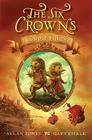
The first series is The Six Crowns by Allan Jones, illustrated by Gary Chalk. I was dubious at first because the verse that describes the titular six crowns is really lame: 
Six are they, the Badgers' crowns.
If power ye seek, they must be found.
Crystal, iron, and flaming fire --
Gather them, if ye desire.
Ice and wood and carven stone --
The power they give
Is yours
Alone.

However, once you work out the bizarre cosmology of the Sundered Lands (islands floating in air, Six Crowns of the Badgers of Power) it becomes a very fun, never a dull moment adventure quest led by a fabulously morally questionable but terrifically gutsy girl hedgehog, Esmeralda, and the reluctant homebody hero hedgehog, Trundle. Here's how she gets him what she has decided is his hero's sword:
Esmeralda came to a skidding halt, leaning back and hefting the cobblestone. She let it fly. There was a chime and clash of smashing glass, and almost before Trundle knew what was going on, she had reached in through the broken window of Honesty Skanks Gold Star Pawnshop and had grabbed hold of the sword. ... Esmeralda pushed the sword into Trundle's hands "I should have thought of this from the start! It would have saved us a lot of bother!"
There are really nasty pirates and lots of fighting and explosions. I wouldn't have thought that Ian would be able to take the scariness level but we zoomed through all three of the series that are available so far. Maybe when hedgehogs are in danger it's less of a deal breaker?
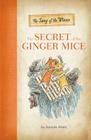
Our family fell for another furry hero in the book, The Song of the Winns: The Secret of the Ginger Mice by Frances Watts. The first book is all we can find, although it seems like the others may have come out in Australia.
The main characters are four young mice living in a world where due to a complex political backstory they find that they are sought by the Queen. The kids are allied with an underground resistance movement, FIG (Free and Independent Gerander) which would likely lead to some interesting discussions of real life politics in an older child than Ian.  What gripped him was the Huck Finn feel of the book -- two of the mice actually escape down a river on a raft. On the journey you feel you actually get to know each character and watch their relationships to each other develop. So often in kid's adventure books I find I have to differentiate the characters myself by giving one a funny voice. Even the villians are complex and interesting. This is a book I looked forward to reading every night and which Ian agreed with us upon. I look forward to Book Two and Three as well!
Holly

And love from me,

Annie