In which Annie (high school teacher, mother of two young girls and a younger boy) and her aunt Deborah (children's bookseller, mother of two young women in their 20s) discuss children's books and come up with annotated lists.

Thursday, April 19, 2012

Marcia Williams: on beyond comic books

Dear Annie,

There are multiple industries these days of Shakespeare graphic novels.  I'll stop myself from recounting all the riotously funny "updated" versions in mangashakespeare
(King Lear
in a Last of the Mohicans setting; Hamlet in a 2017 environmentally devastated word; a steampunk Twelfth Night -- and there's more!).  But unlike some Shakespeare comics, it uses some of the original language.

Every now and then I think, wow, two years into this blog and we haven't yet written about X.   Today, X = Marcia Williams, wonderfully kid-friendly translator of classics and folktales into her unique style of graphic novels.  Here's some of her Midsummer Night's Dream:


Her
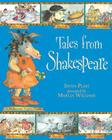
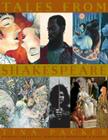
Tales from Shakespeare
retells seven plays, including A Winter's Tale. And a second volume does seven more. They all have a lovely whimsical quality, even while doing tragedy.  The text under the pictures narrates the story, and the pictures use actual Shakespeare quotes.  They work well as a read-aloud, pointing as you go.

We first discovered Williams with her graphic novel version of Robin Hood, followed soon after by Tales of King Arthur.  She's done Greek Myths and  The Odyssey; her latest is on Egyptian mythology.  Her Charles Dickens and Friends retells Oliver Twist, David Copperfield, Great Expectations, A Tale of Two Cities and A Christmas Carol -- and in 48 (large, kinda dense) pages!  I've never seen her Canterbury Tales or Don Quixote (both not published in the U.S., alas) -- but I'm curious.

Love,

Deborah

Tuesday, April 17, 2012

Illustrated Shakespeare for older kids

Dear Aunt Debbie,

We'll have to check out those other intro-to-Shakespeare picture books -- they look terrific.  The other form of illustrated Shakespeare books I have on my shelves are a couple of graphic novel versions I bought during my first year of teaching, at a Massachusetts boarding school where the English Department used them to get high school kids interested in Shakespeare.


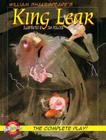
Ian Pollock's Illustrated King Lear
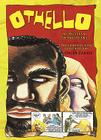
and Othello, illustrated by Oscar Zarate, each contain the complete, unabridged text of Shakespeare's plays, filled with wild, animated drawings.  Pollock's King Lear leans toward the surreal, with characters of wildly different sizes, and moments when the word is made flesh.  Here, Lear excoriates his daughter Goneril, and appears to pull a bloody lump from himself to illustrate that she is "a disease that's in my flesh, which I must needs call mine":


It's engaging and creepy and a little mad, which fits with the plot of the play: Lear's own descent into madness and powerlessness.

Oscar Zarate's illustrations for Othello are more straightforward, though similarly creepy at times.  Lots of play with light and shadow, and the pages become darker as Othello succumbs to Iago's poisonous lies (here, depicted as a physical sword skewering him):

and begins to believe that Desdemona is unfaithful:

I'll confess here that these are not illustrations which give me pleasure when I return to them.  There's violence here, harshness, ugliness.  All of it is drawn from the text, but it's almost too intense for me at times.  That being said, I can see them hooking YA readers accustomed to graphic novels and manga.  They bring the plays to violent life.

Love, Annie

Sunday, April 15, 2012

Shakespeare storytelling

Dear Annie,

A Winter's Tale -- one of the odder Shakespeare plays.  Interesting place to start.  Bruce Coville has also done five other long picture book retellings of the bard.  People tend to buy them when they're taking a child to a Shakespeare play for the first time.  I like the idea of separating a book telling the story from an actual performance, as you did with Eleanor.  There are two collections of stories that might work for her.

The first, from Barefoot Books (which brought us a great collection of poetry) is
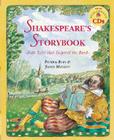
Shakespeare's Storybook
. It first came out as the picture book-size volume we see here, but they've recently put out a smaller edition the size of a chapter book.  The subtitle is "Folk Tales that Inspired the Bard."  Author Patrick Ryan retells seven folktales and stories in circulation in the 16th century that, according to his introduction, Shakespeare used for his plays.  (John, father of Annie, and Shakespeare scholar -- is this accurate?)  The plays that resulted are The Taming of the Shrew, Romeo and Juliet, The Merchant of Venice, As You Like It, Hamlet, King Lear and A Winter's Tale.  In contrast to the lines you quoted, I offer the opening paragraphs of "The Flower Princess," precursor to A Winter's Tale:
   There once was a young king of Sicilia who was selfish, restless and hard-hearted.  His people wished he would fall in love and settle down.  But the king said this would never happen.
   Yet one day the king met a young country girl.  "You're so beautiful!" he exclaimed. 
   That she was, and as kind and generous as the king was mean-spirited.  His heart softened and he fell in love with her.  Before long, the king asked her to be his wife.
There's a baby daughter, and then of course bad things happen, followed by good things in the neighboring kingdom of Bohemia.  The stories are the inspirations for Shakespeare: he took off from them and went in other directions.  Every page is beautifully illustrated by James Mayhew, and they're a good starting point to talk about the plays.

Then there's the lovely
Tales from Shakespeare
by Tina Packer.  It's a more traditional re-telling of the plays, with occasional real quotes thrown in.  It includes A Midsummer Night's Dream, Hamlet, Much Ado About Nothing, King Lear, As you Like It, The Tempest, Othello, Twelfth Night, and Romeo and Juliet.  Each 15-or-so page story has one full-page picture by a different major children's illustrator (Mark Teague, Mary Grandpre, and Kadir Nelson, to name three).  Here's a bit of As You Like It, when Rosalind (in drag) confronts Orlando:
..."I am he that is so love-shaked, Orlando admitted.  "I pray you tell me your remedy.  Did you ever cure any so?"
  "Yes, one, and in this manner," Rosalind said.  "He was to imagine me his love.  I would now like him, then loathe him; now entertain him, then forswear him; now weep for him, then spit at him.  Thus would I cure you, too, if you would but call me Rosalind and come every day to woo me."
   Orlando considered this strange proposal.  He did not wish to be cured of his love for Rosalind, but this would give him a chance to practice wooing her.  Besides, this boy seemed like jolly company, and everyone else in the dukes' court was tired of hearing about his beloved.  And in some strange way, the boy even looked like fair Rosalind.  "Now, by the faith of my love, I will, good youth."
The quotes are chopped down from the real speeches, but close.  They give a feel for the language.

Now I must get back to store work: my orders for advent calendars (which will go on sale in November) are due in tomorrow.  We plan ahead in this business...

Love,

Deborah

Friday, April 13, 2012

Shakespeare for kids

Dear Aunt Debbie,

I'm looking forward to the entry you promise on puberty and periods, perhaps more than the advent of those things themselves.  Happily, we still have a number of years to go.

This afternoon, I found myself talking to the girls about Shakespeare.  Jeff and I are headed tomorrow to a matinee of The Taming of the Shrew while my parents babysit, and when Eleanor asked why they couldn't come with us, I had to explain that we were going to "a grown-up play."

This is a funny way to refer to Shrew, a play I teach regularly to my 9th graders because of its mix of high and low-brow humor, its slapstick comedy and dirty wordplay, and elements of romance, fighting, and disguise which wouldn't be out of place in a children's theater.  What is the right age to introduce kids to Shakespeare?

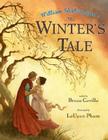
Eleanor was recently given a children's book retelling of, of all things, The Winter's Tale, retold by Bruce Coville and sumptuously illustrated by LeUyen Pham.  It's Shakespeare's story adapted into prose, accessible to younger readers -- Eleanor likes and can follow it with some parsing of the text -- but aimed at a higher-than-picture-book reading level.  Here are the opening paragraphs:

There is a disease that can twist men's hearts and make them mad, and the name of that disease is jealousy.  

This was the sickness that came upon Leontes, King of Sicilia, in what should have been the time of his greatest happiness.  He had a lovely and loving wife.  He had a fine young son.  And his greatest friend, King Polixenes of Bohemia, had been in court for an extended visit.


The jealousy started on the day Polixenes wished to return home.  Though Leontes bid him stay, as he had several times before, Polixenes was firm.  "I must return to my own kingdom, my own wife and child," he protested.


"You speak to him," said Leontes to his queen, Hermione.

Of course, Leontes interprets Polixenes' reaction to Hermione as proof that they are having an affair, and banishes her to prison, where she has her baby.  Leontes says the child isn't his, and sends her off to be abandoned in the wild to die.  Their son dies of grief, and word comes that Hermione is dead, too.  Leontes feels terrible!  I wonder why I am reading this book to my 5-year-old!  Then 16 years pass.  The abandoned baby, rescued by shepherds, grows into the lovely Perdita, and falls in love with Prince Florizel, the son of King Polixenes.  Festivals, disguises, and revelations follow, culminating in everyone coming back to Leontes' court and the lovers getting to be together when it's revealed they're both royal.  Everyone is happy, and even Hermione comes back to life (or is revealed to have been alive the whole time).

I've always found The Winter's Tale to be both painfully beautiful in its language and deeply, deeply weird: a problem play, not quite tragedy or comedy.  Reading it as a picture book makes me think of it in a new way -- it possesses the harsh logic of a fairy tale, as we've discussed here and here.  There are terrible losses early on, large gaps in time, magical resurrections.  In some ways, it makes more sense as a kids' book than it does as a book for adults; Eleanor has far less of a problem with the emotional logic involved than I do.

While Isabel isn't able to sit through the lengthy story, she too loves Pham's illustrations, painted in glowing colors and soft draperies.  Lots of expressive hands and faces.  I appreciate the racial diversity in the casting as well: both Paulina, (the awesome servant who's the only one willing to fully stand up to Leontes, and who hides Hermione for 16 years) and her first husband Antigonus are black; no mention of this in the text, just a fact in the pictures.

Maybe I should be scouting New York for upcoming productions of The Winter's Tale for Eleanor's next theatrical outing....

Love, Annie

American girls

Dear Annie,

I have a vivid memory of an emergency room waiting area (Lizzie had broken a wrist falling from a tree) where Mona sat the whole time with her back to the TV, reading Meet Addy by Connie Porter, another American Girl book.  She was in first grade -- I think it was the first chapter book she read on her own.  The American Girl series plug along at the store, selling steadily but not amazingly.  Each of the American Girl historical figure dolls has an accompanying six book series -- and some have a seventh book focusing on a friend of the central character.  The company, which started in 1986, was bought by Mattel (the mega-toy business that brings us Barbie, among many others) 12 years later.  They've kept the basic marketing scheme: upscale dolls, clothing and accessories which are sold directly to consumers, and books and a handful of games that are more widely available.

I suspect you'll find more of the "reasonable writing, interesting historical detail" you describe in the Molly book if you guys keep going.  They deal with historical issues of whatever time they're about in quiet but straightforward ways.  Most of them have the same titles and trajectory in the six books: Meet Molly, Molly Learns a Lesson, Molly's Surprise, etc.   One author, Valerie Tripp, wrote the Molly books, as well as all of Kit, Josephina, Felicity and half of Samantha.  I will admit that I was disconcerted a few years back when they introduced a historical character who is younger than I:  the story of Julie is set in San Francisco in 1974.

The American Girl publications that fly off our shelves, though, are the advice books.  They publish quite a few, all aimed at 8-to-12 year olds, with titles like, A Smart Girl's Guide to Friendship Troubles/...to Staying Home Alone/...to her Parents' Divorce/...to Manners/...to Sticky Situations/ ...to Boys.  Their advice is pretty solid, full of common sense and pushing girls to think for themselves. 

Then there's the runaway bestseller,
The Care and Keeping of You: The Body Book for Girls
.  It's the ultimate puberty-but-no-sex explainer.  We've discussed books about where babies come for young kids, and someday we'll do another entry on puberty and periods.  There are other books too, but this one is an excellent place to start.

Love,

Deborah

Monday, April 9, 2012

Traveling with friends

Dear Aunt Debbie,

Thank you for getting us entered into the Independent Book Blogger Awards!  Readers, please go vote for us there starting tomorrow (Tuesday)!  I'm looking forward to perusing some more book blogs I don't know about yet.

Our regular reader (and my former awesome student) Erica has corrected me in a comment on my use of the term "book trailer" to describe John Green's vlog about The Fault in Our Stars.  I spent a little bit of time tonight looking at John Green and his brother Hank's Nerdfighters site, which seems to be a rich and intense world.  Their goal: "We fight to increase awesome and decrease suck."  Looks like a nice community to be able to join, especially if you're a nerdy HS student.

I'm still left with the question: publishers are pushing for authors to make book trailers and have more of an online presence, but are people really watching these things regularly, if they're not part of an organic community with a larger goal?

We've been on vacation this week, which means very few new books, but a lot of good rereading of old ones, especially skinny little books that can slip easily into the back of the diaper bag so I can pull them out when we're waiting in line at an amusement park, or at the table in a restaurant before the food has come.

So hello, old friends: Little Bear, Poppleton, A Bargain for Frances, The Golly Sisters, the Nutshell Library.  Eleanor and I are rereading The Lion, the Witch and the Wardrobe, which is just as gripping as it was for her the first time around, and opens the way for different conversations than it did when she was 3 1/2.  I love that book.

But our Narnia comes in a nice heavy hardcover, so we needed a chapter book of reasonable length to keep Eleanor occupied without weighing down the diaper bag.  Enter Molly Learns a Lesson, the second in a series of six American Girl books which Eleanor received for Christmas and her birthday from her grandmother, my mother-in-law, along with her Molly McIntire doll.  You and I have chatted briefly about the American Girl experience.  I was pleasantly surprised when we read the first one a few months ago: reasonable writing, interesting historical detail.  Molly is the spunky 1944 girl whose father is a doctor over in London helping treat soldiers in a military hospital.  There's a kind of Little Women feel to some of it -- a fatherless family pulling together on the Home Front and trying to help the war effort, while the children are drawn into their own smaller intrigues.  There's also a certain amount of Learning of Lessons, even in the books that don't have it in the title, but all in all both Eleanor and I are engaged.

It's interesting to read them today and think about what aspects are anachronistic -- I remember reading my mom's old copy of Junior Miss, by Sally Benson, published in 1941, and both enjoying it tremendously and feeling a little uncomfortable about the gender roles portrayed in the relationship between Judy Graves and her friends.  (This, in a brief review on a lovely librarian blog, is the copy I read.)  In Valerie Tripp's Molly stories, there's a lot of boys-against-girls stuff going on, but it's also carefully modulated: the very smart girl wins the class multiplication bee, rather than the obnoxious boy, though Molly herself isn't very good at multiplication.  You can feel the hand of the editor urging caution in creating female characters with the right combination of strength, endearing flaws, and historical accuracy.  It's an interesting mix.

Love, Annie

Sunday, April 8, 2012

We're in a contest

Dear Annie,

I have very little experience of book trailers.  They come in several forms.  There are the produced-by-publishers ads for upcoming books -- usually YA ones.  There are the homage-to-a-book-I-love ones produced by kids who understand more than I ever will about video production.  And there are the school-produced (by grown-ups or kids) ones which are aimed at getting more kids to read.  No one's ever come into the store and said to me, I've just seen a great book trailer -- do you have the book?  I have the impression that trailers are more a way to stay in a book after one has read it, rather than an enticement to go find it.  What do your students say about them?

Alert readers may notice that there's a "Vote for this Blog" button over there to the right.  It's a bit premature -- voting starts the day after tomorrow.  We've entered the Independent Book Blogger Awards, sponsored by Goodreads.com.  The first round of voting, which will produce shortlists in four categories, is from April 10 to 23.  Then a panel of experts takes over to determine the winners.  We're in it for the fun of finding other people's blogs, and in hopes that others will find ours.  We've submitted five entries from the past year:
Piggie is a Girl!

On Choosing Books

I'm Glad the Giving Tree Wasn't My Mother

Grandma: A Reading Recollection

First Loves: Science Fiction

And we wanted to put in our list of Picture Books, because it's fun to browse  But it didn't fit the contest definitions.  Feel free to check 'em all out, dear readers.

Love,

Deborah