In which Annie (high school teacher, mother of two young girls and a younger boy) and her aunt Deborah (children's bookseller, mother of two young women in their 20s) discuss children's books and come up with annotated lists.

Saturday, March 12, 2011

First loves: Cynthia Voigt

Dear Aunt Debbie,

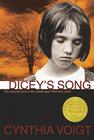
While I find it hard to call Cynthia Voigt's books chick lit, they were another staple of my teenage years: intense, beautifully written, full of deeply memorable characters.  She's written a number of series, some of which I don't know at all (though the Bad Girls books seem like promising titles in light of our current thread).  But when I think of Cynthia Voigt, what leaps to mind are her Tillerman Cycle books, beginning with Homecoming, Dicey's Song, and  A Solitary Blue.  These books (there are seven in total) chronicle the lives of the four Tillerman children after they are abandoned by their mother and have to find their way to relatives who can help them restart their lives.  Dicey is the oldest: she's 13 in the first book, taking care of her sister Maybeth and brothers James and Sammy.

Voigt doesn't soft-pedal what it means to take care of kids when you're a child yourself; I remember the scenes on the road as both harrowing and specific.  (There's a peanut butter sandwich-making scene that sticks in my head.)  By the end of the first book, the Tillermans have found a place to live with their prickly grandmother, and in Dicey's Song there's a little more breathing room.  Dicey is a wonderful heroine -- strong, independent, responsible even as she's totally overwhelmed by the amount of responsibility placed on her.  She's also fairly androgynous -- short-haired, not into dresses, often mistaken for a boy.  In later books, she begins a relationship with Jeff Greene (the protagonist of A Solitary Blue, and one of the main men on my friend Cyd's literary crush list, at least through high school).

This is one of the great things about Voigt's books: like L'Engle, she writes a number of books set in the same world but with a focus on different characters.  The later Tillerman books can stand on their own, but if you've read Dicey's Song, scenes in A Solitary Blue and Come a Stranger take on greater resonance.  Come a Stranger focuses on Dicey's friend Mina, an aspiring ballet dancer who faces racism at a New England ballet camp (she's black and from Maryland; perhaps one possible answer to Denise's question in the comments about diverse YA chick lit characters?).
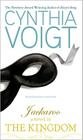
The other Voigt book that's stayed with me is a totally different genre:  Jackaroo: A Novel of the Kingdom.  The current cover art appears to be unfortunately romance-novel-y; what I remember doesn't read that way at all.  Jackaroo is set in a medieval-ish time and place called the Kingdom, and its heroine is a strong-willed, practical innkeeper's daughter named Gwyn.  She discovers the mask and sword of the legendary Jackaroo (a Robin Hood figure), and decides to use the disguise herself to help people in need.  It turns out that she's not the first person to have done this -- Jackaroo's identity is used by a number of people, for different reasons.  It's a good mystery. 

This thread is making me ridiculously happy.

Love, Annie

Wednesday, March 9, 2011

Chick Lit, Part 3: Joan Bauer

Dear Annie,

I'm getting all enthusiastic about reading more L'Engle. Haven't thought of putting her and chick lit in the same sentence before.

I wanted to add another author to our chick lit list today: Joan Bauer.  My favorite of her books is
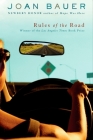
Rules of the Road
, about a sixteen year-old girl who takes a summer job driving an elderly woman from Chicago to Texas. The woman is the owner of a shoe company and her son is scheming to take over the business and cut corners in unpleasant ways.  Jenna starts the book working in one of the company's stores, with a joie de shoes that goes through the book:
I leaped onto the sliding ladder in the back room of Gladstone's Shoe Store of Chicago, gave it a shove, and glided fast toward the end of the floor to ceiling shelves of shoeboxes. My keen retailer's eye found the chocolate loafers, size 13, I slid the ladder to the Nikes, grabbed two boxes of easy walkers (white and beige) size 4 1/2 narrow, pushed again to women's saddles, found the waxhides, size 7, rode the ladder to the door one-handed. Children, do not try this at home. I am a shoe professional.
I think of this as a coming of age book with a sense of humor and without a love interest.  During the trip and events surrounding the takeover struggle, Jenna grows up and gains confidence in lovely ways.  She's helped along by the cranky Mrs. Gladstone and a handful of Mrs. G's elderly pals.  Bauer balances humor and intense parent-child conflicts throughout the book.  She always puts a capital-I Issue in her books.  In this one, Jenna's father is an alcoholic who's spiraling downward.  Part of Jenna's growing up is her learning to stand up to him.  There's also an older shoe salesman who's in AA, the if-only character.

I also love that her summer of discovering herself doesn't involve discovering a boy.  At one point, Mrs. G's friend Alice gives Jenna a haircut and a new dress and she briefly flirts with a young man.  Then she moves on, feeling good and not needy.

Bauer has a new book out this spring,
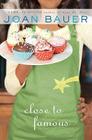
Close to Famous
, aimed more at the middle-grade crowd. Foster, the protagonist, is 12 years old and wants to be a famous TV chef. She's constantly inventing new muffins and cupcakes, even as she and her mother escape the mother's abusive boyfriend (an Elvis impersonator) and move to a small town full of endearing but stock small-town characters. The Issues in this one are spousal abuse and (separately) illiteracy. But again the book has to do with a girl understanding her own self-worth. I like this writer.

Love,

Deborah

Tuesday, March 8, 2011

Madeline L'Engle as chick lit

Dear Aunt Debbie,

Yes, I'm a big L'Engle fan, and a bit of a completist: I'm pretty sure I've read every YA book she wrote, and own a copy of most of them.  I read and re-read a number of YA authors obsessively:  Cynthia Voight, Lois Lowry, Judy Blume, and Paula Danziger were my favorites aside from L'Engle.  More on them in another post.

The Austins books never really grabbed me.  They were well-written, but they didn't contain the spark that the Wrinkle in Time series held.  I think part of it is that I could never fully identify with Vicky Austin: too normal and pretty and well-adjusted.  Give me an outcast nerd poised to bloom, anytime.

L'Engle saw her YA novels as being written in two different frameworks.  I think of them as realistic and magical, but a little searching has helped me with the terms she herself used: Chronos and Kairos.  Wikipedia explains:

The ancient Greeks had two words for time, chronos and kairos. While the former refers to chronological or sequential time, the latter signifies a time in between, a moment of undetermined period of time in which something special happens. What the special something is depends on who is using the word. While chronos is quantitative, kairos has a qualitative nature.

Wrinkle in Time and the other books following the Murry-O'Keefe families are, of course, Kairos.  The Austins and their ilk are Chronos.  I remember buying one of L'Engle's later books in hardcover and finding a chart, a sort of double family tree, in the inside front cover.  It was wildly exciting, laying out all of the characters in both sets of books and their relationships to each other, and indicating the few characters that move between the two frameworks.  This was one of the pleasures of reading so much L'Engle: you keep finding characters you know at one age from one book at a completely different age in another.

So, a few favorites:

The Young Unicorns
is one of the Austin family books, but the character I remember most strongly from it is Vicky's friend Emily Gregory, a brilliant blind musician.  The book is set in New York, on the Upper West Side of Manhattan, and has some intense scenes in abandoned subway tunnels as well as at the Cathedral of St. John the Divine, where L'Engle worked for years..  It's a mystery, full of danger and intrigue.  It's my favorite Chronos book, hands down.

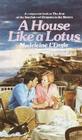
The second-generation Kairos books focus on Meg and Calvin's oldest child (they have seven.  And are professional scientists together.  How can you not love them?).  Polyhymnia is called Poly in some books and Polly in others; in any case, she was my second-favorite L'Engle heroine, after Meg.  My favorite of the Polly books is the last, chronologically: A House Like A Lotus.  It's a complex read, despite the cheesy cover picture on this now out-of-print edition.  Polly is 16 years old, working at a conference in Cyprus, mentored by an older lesbian woman named Maxa.  Maxa is terminally ill, and in a moment of misery and drunkenness she makes a move on Polly, which sends Polly running.  Much of the book is about Polly trying to work through what she feels was a major breach of trust, and coming to terms with the complexity of loving someone as a mentor even after she disappoints you personally.  It's a really good book.

Finally, there are L'Engle's two semi-autobiographical novels, The Small Rain and
A Severed Wasp
.  They're labeled as adult fiction, but I read them as a teenager and loved them.  L'Engle's alter-ego is a pianist named Katherine Forrester.  The first book focuses on her young-womanhood; in the second, she is 70 years old, returning to New York from a life in Europe.   I remember both as pleasingly sweeping and dramatic.

What a pleasure to revisit these books!  I really need to dig some boxes out of my parents' storage room.

Love, Annie

Sunday, March 6, 2011

Chick Lit, part 1

Dear Annie,

I didn't realize you were such a Madeleine L'Engle fan.  A couple of people have told me they were disappointed in The Austin Chronicles, her realistic fiction series.  But I've never tried them myself.  I love A Wrinkle in Time, although, as with the Narnia books, I wish it didn't have that injection of religion in it.

Denise left a bunch of questions on your L'Engle post that I'd love to answer.  She wants
books that young adolescent girls can read who are interested in romance and relationships - who need to stop reading "chic" lit - Gossip Girl-like books - and who are smart enough to read more challenging ones. I can only think of Jane Austen but would like to recommend more modern literature.
For the Jane Austen sensibility, there's
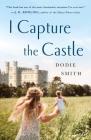
I Capture the Castle
by Dodie Smith, author oddly enough of 101 Dalmatians (another interesting kids' book, for a different audience). She wrote it in 1948, and I usually describe it as Pride and Prejudice set in Depression-era England. The writing is wonderful, as illustrated by the book's first paragraph:
I write this sitting in the kitchen sink. That is, my feet are in it; the rest of me is on the draining-board, which I have padded with our dog's blanket and the tea-cosy. I can't say that I am really comfortable, and there is a depressing smell of carbolic soap, but this is the only part of the kitchen where there is any daylight left. And I have found that sitting in a place where you have never sat before can be inspiring -- I wrote my very best poem while sitting on the hen-house. Though even that isn't a very good poem. I have decided my poetry is so bad that I mustn't write any more of it.
The narrator's father is an impoverished writer who wrote one brilliant novel 20 years earlier and has done nothing since. The family, including 17 and 20 year-old daughters, are living a hand-to-mouth existence in a decaying castle in the country. Then two wealthy young American brothers buy the estate next door, and the comedy of manners begins. It's quite wonderful, but probably not the first step when one is trying to entice Gossip Girls fans.

My favorite recent entry in this category is
The Disreputable History of Frankie Landau-Banks
by E. Lockhart. I saw her speak once and she introduced herself saying, "I write feminist Chick Lit," which is quite an accurate description.  E. Lockhart, I discovered only last week, is a pen name.  Under her real name, Emily Jenkins, she's written several wonderful books for younger kids, including Toys Go Out, a great early chapter book blogged about here.

Disreputable History was a runner-up for the Printz Award (YA literature) and the National Book Award the year it came out.  It's about a girl who becomes noticeably more attractive between her freshman and sophomore years at an upper-crust boarding school.  Boys who ignored her the year before now pay lots of attention to her, but after a while she realizes they don't actually listen to her.  She also figures out that a centuries-old secret society is still in existence at this school, but that it remains all-male, even though the school is now coed. So she sets out to get revenge -- through staging some wonderfully outrageous pranks.  It's wildly funny.

Next time I'll talk more about other authors in this category.  There are many ways to avoid the really trashy stuff, some of it with slightly classier trash, but some of it better than that.

Stay tuned..

Love,

Deborah

Friday, March 4, 2011

First loves: science fiction

Dear Aunt Debbie,

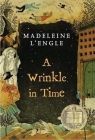
All these sci-fi dystopian world trilogies make me think of the first sci-fi trilogy I fell in love with: Madeline L'Engle's A Wrinkle in Time and its sequels: A Wind in the Door and A Swiftly Tilting Planet.  (It's ultimately a quintet, but I still think of the first three books L'Engle published as the real ones.)

You recently posted a wonderful 90-second video version of the book here, and it plays a pivotal role in the recent YA novel When You Reach Me; it's no surprise to me that L'Engle's work would inspire this kind of creativity.  Like every other girl in the world who felt at times out of place among her peers, I identified to the hilt with Meg Murry, and there is nothing better in a YA book than kids (Meg's little brother, Charles Wallace, and their new friend Calvin O'Keefe) banding together to save an adult (Meg and Charles Wallace's father).  Plus, scientific concepts, and travel through space and time, and a kind of mysticism throughout -- these are such great books.

I can still remember exactly where I was when I first read the climactic scene where Meg finds the brain, IT, in the room with Charles Wallace on the planet of Camazotz: my mom and I had gone downstairs in my elementary school to pick Michael up from his pre-K room, and my mom was talking for a long time with the teacher, so I kept reading.  The brain sitting, pulsing, on its dais (that's where I learned the word "dais") is linked in my memory with the bright walls of the pre-K room, the tiny plastic chairs and school-issue table I sat at, devouring the moment and at the same time scared enough by it that I had to make myself conscious of where I was in real life.

A Swiftly Tilting Planet was my second favorite, or at some ages my first: it has Charles Wallace being sent into the bodies of four different people at different points in time in order to affect the future of the world, Quantum Leap-style, while Meg slips in and out of telepathic communication with him from her perch in her old room, where she's sitting hugely pregnant with her first child.  (Meg's happy marriage to Calvin, and her adult beauty and auburn hair, were always a big plus for me.)  There's a poem, too, that needs repeated reciting: St. Patrick's rune, which Calvin's worn-down, unhappy mother teaches Charles Wallace at the beginning of the book and which begins the time travel via unicorn:

At Tara in this fateful hour,
I place all Heaven with its power,
And the sun with its brightness,
And the snow with its whiteness,
And the fire with all the strength it hath,
And the lightning with its rapid wrath,
And the winds with their swiftness along their path,
And the sea with its deepness,
And the rocks with their steepness,
And the Earth with its starkness
All these I place
By God's almighty help and grace
Between myself and the powers of darkness!

Elemental.

I fell so in love with Madeline L'Engle because of these books that I went on to read pretty much every book she wrote -- and she wrote a ton of them.  Many are science fiction, many realistic fiction, and some characters move back and forth between the worlds.  I have other favorites too, a whole shelf full, but they're a subject for another night.

Love, Annie

Wednesday, March 2, 2011

Across the Universe

Dear Annie,

Today I acted out a variation on what NPR calls a "driveway moment."  I've been listening to an audio book in the car -- as I almost always do when I don't have passengers.  Most of my driving consists of the 20 minute ride to and from work these days, which means it can take a while to get through a thick YA novel.  So today, when I was about eight hours into it, I popped the book out of the CD player and brought it home to listen to the last hour and a half because I needed to know how it came out.

The book is
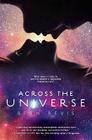
Across the Universe
, by Beth Revis.  It's a heavily-marketed book which crosses many genres -- mystery, sci-fi, dystopian fantasy, even a little romance (although not as much as one of the covers implies).  Part of the marketing plan is a reversible book jacket, so that it can sell across all those genres.  I just discovered the book jacket thing today -- it cheered me up.  The one on the right is a cross-section of a spaceship that's been traveling for centuries.  All the action is in the spaceship, whose thousands of residents live in a classic over-controlled-for-your-own-good society.  One of the things I like about this book is that we learn the origins and motivations of the repressive regime, and on one level, their actions are understandable.  Into this completely closed world arrives a teenage girl, who's been there all along, but as part of a cargo of frozen people who are supposed to stay frozen until the ship reaches a distant planet.  She's mysteriously thawed out in what may be a murder attempt and rescued by the teenage boy who's being groomed to be the next autocratic leader of the ship.  Both teenagers narrate the action in alternating chapters. 

Revis has created a vivid picture of life inside a big metal ship -- one definitely identifies with the claustrophobic reaction of Amy, the recently-revived person.  Most residents are a mysteriously passive workforce; the obviously intelligent and creative people live mainly in a mental hospital.  Part of population control has to do with sex drive being chemically manipulated: everyone believes that humans have mating seasons like animals -- and when "the season" arrives, coupling couples are everywhere.  There's one horrific attempted rape scene.  The controlled society is built on layers of untruths: everything from mating seasons to self-serving re-writing of history.  Elder, the leader-in-training, discovers lies and secrets throughout the book, fueling his adolescent anger at the current leader/father figure.

This books doesn't have the depth of, say, The Knife of Never Letting Go, of which, as you know, I'm quite fond.  But it really pulls you in, and given that the humans are stuck inside of a space ship for centuries, it opens a lot of questions about how to structure a functioning society.  It's got a few twists at the end -- and lots of set-up for book #2 of what will eventually be a trilogy.

Love,

Deborah

Monday, February 28, 2011

Competing messages

Dear Aunt Debbie,

Of course you're right -- parental involvement in reading is natural and vitally important in terms of the message a kid takes away from a book.  There are still books I don't want in the house, but when we bring home or are gifted with less than great books, there is opportunity for discussion about them.  And then sometimes I secretly throw them away.

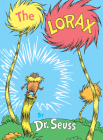
But it's not always the parents', or the author's, intent that comes through.  Thinking about this subject, I was reminded of Eleanor's reaction to The Lorax, Dr. Seuss's classic of environmental awareness.  We read the book multiple times in a period of a couple of weeks: the Once-ler sent down his grovulous glove and told in low tones the story of how he deforested the land of Truffula trees to make and sell Thneeds, depriving all the local animals (Bar-ba-loots!  Swomee Swans!) of their natural habitats, and leaving the land miserable and polluted, despite the Lorax's warnings.  The story ends with the Once-ler tossing down the last Truffula seed for "you" (the boy standing in for the reader) to take care of, and a moment of hope that the trees can be brought back if you care and work hard enough.

What did Eleanor learn from all this?  For months afterwards, she would chant the Once-ler's words at every opportunity: "Business is business, and business must grow!"

There's a takeaway for you.

Love, Annie