Dear Annie,
Well, it's late, and I'm a bit brain dead because I've spent the last four hours going through the many offerings of three different small non-fiction publishers. Some of the titles I've been looking at:
I Know Someone with Cancer
A Day in the Life: Meerkat
Inside My Body: Why do I have Periods? (photo of pained-looking teenager holding her stomach on cover)
Predator vs. Prey: Dolphins Vs. Fish
Robert E. Lee: The Story of the Great Confederate General (this one's a comic book)
Although some of these publishers' many new books are obviously not right for our clientele (the cover of the period book, for example, discourages further reading), many of them just might be good and useful for kids with different focused interests. The meerkat book, for example, has lots of charming photos, clear writing, and interesting information. Did you know that meerkats eat scorpions because they aren't affected by their poison? I didn't. Am going to order that one.
The cancer book is one of those too much information/too little processing of it books, so I'm passing on that one. A slim volume called The Legacy of the Holocaust is one I had to read all of before deciding that yes, it's a keeper.
All of this is to make a point about the New Yorker article on kids' books about emotions that you pointed out in your last post. I understand the basic point that Daniel Zalewski is making: kids' books these days are too tolerant of bad behavior. He gives examples of some books he feels are over the top on this issue, and others which are okay with him. I could pick nits with a few of his characterizations of individual books, but generally agree with most of his criticisms (Knuffle Bunny excepted).
But he's assuming parents have no capacity for critical thinking. Because these books exist, he's damning a generation of parents, whether or not they're reading them to their kids. And he's also assuming that to read a book about a child behaving badly is to accept that behavior. Part of the charm of Trixie's dad getting up in the middle of the night to get Knuffle Bunny back is that it's so silly. To read it to one's child does not mean you're going to acquiesce to an outrageous demand.
We're talking about picture books here. And one of the advantages of this genre is that a parent can often read the whole thing before reading it to a kid. Not always possible, I know, but parental control of reading material is much more a possibility here than later in children's lives. If a parent reads and is repelled by the message in Pinkalicious, cited in the New Yorker piece, one does not have to read it again. Or one can talk about what's wrong with it with a child.
Because how can someone grow up to be a critical thinker if they're not given the chance to understand competing points of view? Every book one reads to a child doesn't have to be debated and disagreed with. But if one only read books whose message one supported completely, reading time would be a blander experience.
Love,
Deborah

Sunday, February 27, 2011


Saturday, February 26, 2011
Kids behaving badly
Dear Aunt Debbie,
I love the Tim Noah piece -- I've never thought about sulking, as opposed to other forms of acting out, in literature before. But reading your discussion of Spinky Sulks (a Steig I don't know, but will certainly look up now), I'm stumped. You could argue that Grumpy Bird begins as a sulking book -- Grumpy Bird is deep in his own funk for a while -- but he doesn't hole up anywhere, and it doesn't take him too long to snap out of it. I'd be curious to hear of other books that take on sulking in a serious way.
 Pondering the art of the sulk got me thinking about books we have that take on intense emotions, several of which you sent us about a year and a half ago, when Eleanor was deep in age 2 1/2. One of our favorites is When Sophie Gets Angry -- Really, Really Angry..., by Molly Bang. Sophie's anger starts with something small: her sister takes a toy gorilla away from her, and their mother confirms that it is the sister's turn. Sophie trips over a toy truck (hooray for non-gendered toys!), and then she goes off into a full-blown tantrum.
Sophie's anger is outsized. In Bang's vibrant paintings, her shadow grows huge and orange and smashes the wall; her roar blows toys and books across the room.

The figures of Sophie and her family members are outlined in colored lines, and as Sophie gets angry, her outline changes from yellow to orange to bright red (her sister's stays green). Then ("PABAM!") she runs out of the house. "She runs and runs until she can't run anymore." Luckily for Sophie, she lives in the middle of a beautiful, safe, forested area, so she runs to her favorite beech tree, climbs it, and cools off by looking at the ocean. "The wide world comforts her." She calms down (back to yellow), climbs down, and goes home, aware now of the sounds of the animals around her. Everyone is glad to see her, and she and her sister and parents do a jigsaw puzzle together.
I like the honesty of the anger in this book, and the way that the rest of the family just lets Sophie deal with her tantrum herself until she's ready to come back to them. The arc of Sophie's anger rings true. The book opens up avenues for conversation about the way anger feels: on the copyright page at the end, it asks directly, "What do you do when you get angry?" Of course, we live in the middle of a city, and running out the door to climb a tree when you're upset is not an option here. Every time we read the book, I find myself a little wistful about Sophie's family's bucolic life. So close to the ocean! And there's dad, sitting on the couch with his seed catalogue....

Sometimes I'm Bombaloo, by Rachel Vail, feels much more like a story of anger and cooling down that might happen in an apartment. It's another younger-sibling-annoys-the-older-sibling-into-a-tantrum story (here it's a little brother and a block tower that gets knocked down). The narrator, Katie Honors, describes herself as a generally good kid, but explains that sometimes she loses control of herself: "I'm bombaloo." Losing your temper, in this formulation, is like being taken over by something wild and uncontrollable -- you become someone else. I'm of two minds about this formulation. On the one hand, it makes sense; who hasn't felt this way at times? On the other hand, it feels a little like a free pass: It wasn't me, Mommy, it was Bombaloo. I do like that it's humor that brings Katie back to herself and allows her to calm down.
At about the same time you sent us When Sophie and Bombaloo, the New Yorker published Daniel Zalewski's wrap-up of books about children's anger and the ways parents deal with it. It's pretty damning towards a number of books -- the thesis is that parents have become hyper-aware of the ways they shouldn't discipline their children, and so have become ineffectual at doing so, and that a number of contemporary children's books depict children running roughshod over their parents. I'd be interested to hear whether, and how much, you agree with Zalewski. And of course, this opens up the can of worms that is Amy Chua's Tiger Mothering, if we want to go there....
Love, Annie
I love the Tim Noah piece -- I've never thought about sulking, as opposed to other forms of acting out, in literature before. But reading your discussion of Spinky Sulks (a Steig I don't know, but will certainly look up now), I'm stumped. You could argue that Grumpy Bird begins as a sulking book -- Grumpy Bird is deep in his own funk for a while -- but he doesn't hole up anywhere, and it doesn't take him too long to snap out of it. I'd be curious to hear of other books that take on sulking in a serious way.
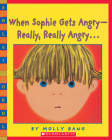 Pondering the art of the sulk got me thinking about books we have that take on intense emotions, several of which you sent us about a year and a half ago, when Eleanor was deep in age 2 1/2. One of our favorites is When Sophie Gets Angry -- Really, Really Angry..., by Molly Bang. Sophie's anger starts with something small: her sister takes a toy gorilla away from her, and their mother confirms that it is the sister's turn. Sophie trips over a toy truck (hooray for non-gendered toys!), and then she goes off into a full-blown tantrum.
Sophie's anger is outsized. In Bang's vibrant paintings, her shadow grows huge and orange and smashes the wall; her roar blows toys and books across the room.

The figures of Sophie and her family members are outlined in colored lines, and as Sophie gets angry, her outline changes from yellow to orange to bright red (her sister's stays green). Then ("PABAM!") she runs out of the house. "She runs and runs until she can't run anymore." Luckily for Sophie, she lives in the middle of a beautiful, safe, forested area, so she runs to her favorite beech tree, climbs it, and cools off by looking at the ocean. "The wide world comforts her." She calms down (back to yellow), climbs down, and goes home, aware now of the sounds of the animals around her. Everyone is glad to see her, and she and her sister and parents do a jigsaw puzzle together.
I like the honesty of the anger in this book, and the way that the rest of the family just lets Sophie deal with her tantrum herself until she's ready to come back to them. The arc of Sophie's anger rings true. The book opens up avenues for conversation about the way anger feels: on the copyright page at the end, it asks directly, "What do you do when you get angry?" Of course, we live in the middle of a city, and running out the door to climb a tree when you're upset is not an option here. Every time we read the book, I find myself a little wistful about Sophie's family's bucolic life. So close to the ocean! And there's dad, sitting on the couch with his seed catalogue....

Sometimes I'm Bombaloo, by Rachel Vail, feels much more like a story of anger and cooling down that might happen in an apartment. It's another younger-sibling-annoys-the-older-sibling-into-a-tantrum story (here it's a little brother and a block tower that gets knocked down). The narrator, Katie Honors, describes herself as a generally good kid, but explains that sometimes she loses control of herself: "I'm bombaloo." Losing your temper, in this formulation, is like being taken over by something wild and uncontrollable -- you become someone else. I'm of two minds about this formulation. On the one hand, it makes sense; who hasn't felt this way at times? On the other hand, it feels a little like a free pass: It wasn't me, Mommy, it was Bombaloo. I do like that it's humor that brings Katie back to herself and allows her to calm down.
At about the same time you sent us When Sophie and Bombaloo, the New Yorker published Daniel Zalewski's wrap-up of books about children's anger and the ways parents deal with it. It's pretty damning towards a number of books -- the thesis is that parents have become hyper-aware of the ways they shouldn't discipline their children, and so have become ineffectual at doing so, and that a number of contemporary children's books depict children running roughshod over their parents. I'd be interested to hear whether, and how much, you agree with Zalewski. And of course, this opens up the can of worms that is Amy Chua's Tiger Mothering, if we want to go there....
Love, Annie
Wednesday, February 23, 2011
Spinky and Gorky: two great guys
Dear Annie,
Mirette is so wonderful. It was one of several Mom-gets-choked-up read-alouds in our family. When Mirette steps out on the wire -- so daring! so selfless! -- to help Bellini, I'd get teary every time.
Speaking of your posts, there's a great princess discussion going on in the comments back in "I only like princesses." I know you know it's there, but I highly recommend it to our readers.
 Today I want to visit two wonderful characters created by the late great William Steig. Both guys, although for reasons beyond me, whenever I read
Gorky Rises to my girls, they insisted that I change him to a she. This is not easy at 5 in the afternoon, snuggled up on the couch with two small warm bodies and feeling a bit drowsy. I still remember the elbows that would dig into my ribs to keep Gorky female.
In any case, Gorky, who is a clothed frog, wants some magic in his/her life, so s/he mixes up

Spinky Sulks, however, is on a completely different level of intensity, as is clear from the first page:
Love,
Deborah
Mirette is so wonderful. It was one of several Mom-gets-choked-up read-alouds in our family. When Mirette steps out on the wire -- so daring! so selfless! -- to help Bellini, I'd get teary every time.
Speaking of your posts, there's a great princess discussion going on in the comments back in "I only like princesses." I know you know it's there, but I highly recommend it to our readers.
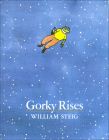 Today I want to visit two wonderful characters created by the late great William Steig. Both guys, although for reasons beyond me, whenever I read
 Gorky Rises to my girls, they insisted that I change him to a she. This is not easy at 5 in the afternoon, snuggled up on the couch with two small warm bodies and feeling a bit drowsy. I still remember the elbows that would dig into my ribs to keep Gorky female.
In any case, Gorky, who is a clothed frog, wants some magic in his/her life, so s/he mixes up
After adding a bit of father's cognac, s/he finally dumps in a bottle of mother's perfume.a little of this and then a little of that: a spoon each of chicken soup, tea, and vinegar, a sprinkle of coffee grounds, one shake of talcum powder, two shakes of paprika, a dash of cinnamon, a splash of witch hazel.
Gorky falls asleep in a field holding the magic stuff andThat did it! The thick stuff sank to the bottom of the mixing glass and [s]he had a reddish-golden liquid full of tiny bubbles that glinted like particles of fire. This, obviously, was the magic formula [s]he had long been seeking.
S/he floats high and low, attracting the attention of many characters on the ground, rising through a thunderstorm, somersaulting above the head of cousin Gogol (yep), and going on into the dead of night. By releasing the magic formula one drop at a time, Gorky manages to descend, landing on Elephant Rock in his/her own neighborhood. One last drop transforms the rock into an elephant, released from rockdom after ten million years (shades of Sylvester and the Magic Pebble). Gorky's distraught parents are ecstatic to have their child back, although it takes a little convincing for them to believe the whole story. The book is a lyrical and sweet and loving adventure. The only time, thankfully, that my children insisted on sex change.Whatever had kept him[/her] fastened to the earth let go its hold and Gorky's slumbering body rose in the air, like a bubble rising in water, and moved off in an easterly direction.
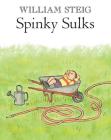
Spinky Sulks, however, is on a completely different level of intensity, as is clear from the first page:
Spinky is angry for a host of slights, among them that his sister called him Stinky, and his brother disagreed with his assertion that Philadelphia is the capital of Belgium. His siblings apologize. Mom tells him she has loved him "ever since the moment he was born. And even before that." His father tells Spinky "he was one of the most popular of the three children." But his sulk builds and builds. We see him draped over a porch railing, turning away from family and friends, rejecting candy from Grandma -- all with a scowl and a frown. This goes on for days, with Spinky holing up in a hammock, refusing to go inside. He finally softens: "Maybe these people didn't know how to behave, but at least they were trying. Was it their fault they couldn't do better?" He finds a face-saving way to end the standoff.Spinky came charging out of the house and flung himself on the grass. He couldn't even see the dandelions he was staring at, he was so upset. His stupid family! They were supposed to love him, but the heck they did. Not even his mother.
And for a delightful contemplation of the art of the sulk and Spinky's parallels to Achilles, see this article by Tim Noah in Slate.After that, Spinky's family was much more careful about his feelings.Too bad they couldn't keep it up forever.
Love,
Deborah
Monday, February 21, 2011
Ah, gay Paris!
Dear Aunt Debbie,
You sent us Dodsworth in New York a little while ago, and it's a favorite here. The duck is just so odd, and Dodsworth himself so quirky, that it's a really pleasing read. There are of course moments that make no geographic sense if you know New York City (Dodsworth takes a taxi following a bus the duck is riding from the Upper East Side to Coney Island: a) No such bus. b) Hell of an expensive taxi ride.), but that's a minor complaint in a fun book. We took Dodsworth in Paris out of the library a little while ago, and it wasn't as big a hit, but still enjoyable. We like to read the duck with a broad nasal accent.
 Now you've got me thinking about Paris. So many great children's books about the city, starting of course with the unimpeachable Madeline, by Ludwig Bemelmans. My mom (your older sister), says that Madeline was the first book she pretended to have learned to read: she knew the whole thing by heart, including when to turn the pages, and "read" it aloud to Grandma and Grandpa at a pretty young age. I can probably do the whole book from memory myself at this point, after reading it over and over to Eleanor:"In an old house in Paris that was covered in vines/Lived twelve little girls in two straight lines." At about age 3 and a little earlier, it was one of Eleanor's most-requested books, and her favorite page was the one where Madeline "pooh-pooh"s the tiger in the zoo. Eleanor would stop me every time: "The other girls are all scared of the tiger, but not Madeline!" A great role model.
Paris isn't the focus of the text, of course: it's Madeline's appendicitis and the other girls' jealousy over her hospital visit and fabulous scar. But the drawings are full of Parisian locations and local color, and an end-note identifies every location the girls walk through. Reading it as an adult, there are moments that seem like they might be stressful for children: where are the girls' parents, and why are they living with a nun? Will Madeline be okay? I don't remember any sense of stress from it as a child, however -- on the contrary, Miss Clavel's final benediction reads to me even now as a moment of peace and grace: "'Good night little girls, thank the lord you are well. And now go to sleep,' said Miss Clavel."

Another book with Paris as its backdrop and a high-spirited girl as its heroine is Mirette on the High Wire, by Emily Arnold McCully. I'd never heard of this one until you sent it to Eleanor, but what a lovely book it is! Mirette lives and works in her mother's boarding house. She becomes fascinated with one of the boarders there, a quiet man who turns out to be the great Bellini, a high-wire walker who performed extraordinary feats before losing his confidence on the wire. Mirette sees him practicing on the clothesline outside and asks him to teach her; he refuses, saying essentially that he doesn't want to doom her to his career. But she's been bitten by the bug, and practices on her own for weeks until she can walk the clothesline on her own. It's a redemption story: Bellini teaches Mirette, and in doing so regains his own confidence. Mirette is strongly the main character, and the relationship between the two is kind and focused. One of the things I like about the book is the emphasis it puts on practice, on really wanting something and working hard to get it, and on the truth that even when you become very good at something, you can have setbacks. There are two sequels: Mirette and Bellini Cross Niagara Falls and Starring Mirette and Bellini, the first of which we've read. Not as good as the original (largely, to my mind, because the starring role goes to a boy named Jakob instead of to Mirette), but still an interesting read.
 Finally, I want to mention Barbara McClintock's Adele & Simon. Here we are again in early 20th century Paris, following the responsible Adele and her absent-minded little brother, Simon, as they wend their way home from school through the city, stopping an improbable number of times. Simon starts with a number of possessions; at each stop, he loses something, and the joy of the book is to search the extremely detailed double page spread drawings to find the thing he's lost. The first time through, there were several items it took me a while to find, and Eleanor had to do some serious searching. Here's another take on it from Storied Cities, a lovely blog our friend Rachel (of Even in Australia) mentioned recently.
And now go to sleep, said Miss Clavel.
Love, Annie
You sent us Dodsworth in New York a little while ago, and it's a favorite here. The duck is just so odd, and Dodsworth himself so quirky, that it's a really pleasing read. There are of course moments that make no geographic sense if you know New York City (Dodsworth takes a taxi following a bus the duck is riding from the Upper East Side to Coney Island: a) No such bus. b) Hell of an expensive taxi ride.), but that's a minor complaint in a fun book. We took Dodsworth in Paris out of the library a little while ago, and it wasn't as big a hit, but still enjoyable. We like to read the duck with a broad nasal accent.
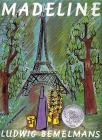 Now you've got me thinking about Paris. So many great children's books about the city, starting of course with the unimpeachable Madeline, by Ludwig Bemelmans. My mom (your older sister), says that Madeline was the first book she pretended to have learned to read: she knew the whole thing by heart, including when to turn the pages, and "read" it aloud to Grandma and Grandpa at a pretty young age. I can probably do the whole book from memory myself at this point, after reading it over and over to Eleanor:"In an old house in Paris that was covered in vines/Lived twelve little girls in two straight lines." At about age 3 and a little earlier, it was one of Eleanor's most-requested books, and her favorite page was the one where Madeline "pooh-pooh"s the tiger in the zoo. Eleanor would stop me every time: "The other girls are all scared of the tiger, but not Madeline!" A great role model.
Paris isn't the focus of the text, of course: it's Madeline's appendicitis and the other girls' jealousy over her hospital visit and fabulous scar. But the drawings are full of Parisian locations and local color, and an end-note identifies every location the girls walk through. Reading it as an adult, there are moments that seem like they might be stressful for children: where are the girls' parents, and why are they living with a nun? Will Madeline be okay? I don't remember any sense of stress from it as a child, however -- on the contrary, Miss Clavel's final benediction reads to me even now as a moment of peace and grace: "'Good night little girls, thank the lord you are well. And now go to sleep,' said Miss Clavel."
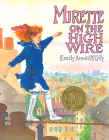
Another book with Paris as its backdrop and a high-spirited girl as its heroine is Mirette on the High Wire, by Emily Arnold McCully. I'd never heard of this one until you sent it to Eleanor, but what a lovely book it is! Mirette lives and works in her mother's boarding house. She becomes fascinated with one of the boarders there, a quiet man who turns out to be the great Bellini, a high-wire walker who performed extraordinary feats before losing his confidence on the wire. Mirette sees him practicing on the clothesline outside and asks him to teach her; he refuses, saying essentially that he doesn't want to doom her to his career. But she's been bitten by the bug, and practices on her own for weeks until she can walk the clothesline on her own. It's a redemption story: Bellini teaches Mirette, and in doing so regains his own confidence. Mirette is strongly the main character, and the relationship between the two is kind and focused. One of the things I like about the book is the emphasis it puts on practice, on really wanting something and working hard to get it, and on the truth that even when you become very good at something, you can have setbacks. There are two sequels: Mirette and Bellini Cross Niagara Falls and Starring Mirette and Bellini, the first of which we've read. Not as good as the original (largely, to my mind, because the starring role goes to a boy named Jakob instead of to Mirette), but still an interesting read.
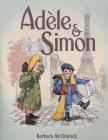 Finally, I want to mention Barbara McClintock's Adele & Simon. Here we are again in early 20th century Paris, following the responsible Adele and her absent-minded little brother, Simon, as they wend their way home from school through the city, stopping an improbable number of times. Simon starts with a number of possessions; at each stop, he loses something, and the joy of the book is to search the extremely detailed double page spread drawings to find the thing he's lost. The first time through, there were several items it took me a while to find, and Eleanor had to do some serious searching. Here's another take on it from Storied Cities, a lovely blog our friend Rachel (of Even in Australia) mentioned recently.
And now go to sleep, said Miss Clavel.
Love, Annie
Sunday, February 20, 2011
Wanderlust
Dear Annie,
It's February and gray and dreary so I'm going to turn to the allure of travel. Specifically, with the delightlfully wacky Tim Egan's Dodsworth. So far he's been to three cities :


As you can see from the covers, the titles should be Dodsworth and Duck. In the first book,
Breakfast at Hodges' cafe (pancakes) leads to Hodges' misbehaving duck (many pancakes end up in air and on ground) stowing away in Dodsworth's luggage. This is discovered on the train to New York, where Dodsworth has booked ship passage to Paris. He buys the duck a train ticket back home, but the duck takes off, and Dodsworth spends a day looking for him in some of the major sights of New York, a la Madeline's wanderings through Paris. Finally, he finds a woman feeding bread to some ducks, but "Only one duck was throwing bread back at the lady." The duck once again outruns Dodsworth and jumps on the Paris-bound ship. As the curtain comes down on book one, they're on their way to France.
I'm not quite sure what kind of animal Dodsworth is. A fox? A weasel? Muskrat? The predominant other species appear to be pigs, cows and hippos. In Paris, the duck acquires an acorn-shell beret and tries unsuccessfully to become a street performer (while dancing unintentionally on a painting by Dodsworth). There's much exasperation, and a hasty exit from Paris in a hot air balloon.
While floating in to London, the duck sees Buckingham Palace and declares his intention to stay there. "It's not a motel," cautions Dodsworth. They go into a pub near Picadilly Circus, where there are darts:
One could call these books picture books, or early readers, in the short-chapter tradition of the Frog and Toad books. They make entertaining read-alouds and can come in handy for the family who travels. The next stop is Dodsworth in Rome, which will be out in April.
Love,
Deborah
It's February and gray and dreary so I'm going to turn to the allure of travel. Specifically, with the delightlfully wacky Tim Egan's Dodsworth. So far he's been to three cities :
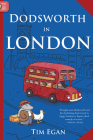
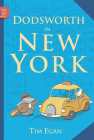
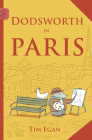
As you can see from the covers, the titles should be Dodsworth and Duck. In the first book,
Dodsworth wanted adventure.He wanted to fly in a plane.He wanted to sail on a ship.He wanted to see the world.But first, he wanted breakfast.
Breakfast at Hodges' cafe (pancakes) leads to Hodges' misbehaving duck (many pancakes end up in air and on ground) stowing away in Dodsworth's luggage. This is discovered on the train to New York, where Dodsworth has booked ship passage to Paris. He buys the duck a train ticket back home, but the duck takes off, and Dodsworth spends a day looking for him in some of the major sights of New York, a la Madeline's wanderings through Paris. Finally, he finds a woman feeding bread to some ducks, but "Only one duck was throwing bread back at the lady." The duck once again outruns Dodsworth and jumps on the Paris-bound ship. As the curtain comes down on book one, they're on their way to France.
I'm not quite sure what kind of animal Dodsworth is. A fox? A weasel? Muskrat? The predominant other species appear to be pigs, cows and hippos. In Paris, the duck acquires an acorn-shell beret and tries unsuccessfully to become a street performer (while dancing unintentionally on a painting by Dodsworth). There's much exasperation, and a hasty exit from Paris in a hot air balloon.
While floating in to London, the duck sees Buckingham Palace and declares his intention to stay there. "It's not a motel," cautions Dodsworth. They go into a pub near Picadilly Circus, where there are darts:
The duck looked at a dart.Once again, chaos ensues and they leave. They eventually get separated (two different double-decker buses) and Dodsworth is confused by a very similar-looking duck with a British accent ("I am the Royal Duck. Her Majesty's Duck.") and is then distraught because he's lost his friend. There's a day-long search through the sights of London, and of course the duck is found entertaining the queen in Buckingham Palace. They end up staying there for a week.
Dodsworth looked at the duck.
"Don't even think about it," he said.
The duck smiled.
The duck grabbed the dart.
Dodsworth jumped at the duck.
He wasn't fast enough.
The duck threw the dart.
One could call these books picture books, or early readers, in the short-chapter tradition of the Frog and Toad books. They make entertaining read-alouds and can come in handy for the family who travels. The next stop is Dodsworth in Rome, which will be out in April.
Love,
Deborah
Friday, February 18, 2011
Back to baby board books
Dear Aunt Debbie,
I loved The Queen Who Couldn't Bake Gingerbread -- we've read it recently at my parents' place. Yes, you definitely gave me Stories for Free Children. That's the first place I read "X: A Fabulous Child's Story," by Lois Gould, which Orenstein writes about in Cinderella Ate My Daughter. I now use it to open the discussion of nature vs. nurture in my senior Women's Voices class. It's a good read. The other major memory I have of Stories for Free Children is a piece about Amelia Bloomer and women starting to wear pants which I remember finding fascinating. Ironically, at the time, I was refusing to wear pants myself. So I suppose I have my own history to look back on as I recite the mantra: this too shall pass....
With so much interesting stuff happening on the Big Kid front, I fear that Isabel's reading habits have been getting short shrift. At 16 months, she is in love with books (she "reads" to the other babies at daycare), and extremely specific in what she will and will not let you read to her. She refers to a number of books by name: "Munny" ("Bunny") is Home for a Bunny; "Up" is Olivia's Opposites; "Doss" ("Dogs") refers to any of the roughly 5000 board books we now have about dogs.
 One of her latest favorites came from you: "Meow" refers to Where's the Cat?, by Stella Blackstone and Debbie Harter. This is a wonderful book. Each right hand page asks "Where's the cat?" and provides a clue by showing a tiny bit of ear or paw poking out from under something; when you turn the page, the wide-eyed black and white cat reveals itself in an active catlike pose: "on the chair," "up the stair," etc. The drawings are intense and colorful. Eleanor often joins in on reading this one too, answering every "Where's the cat?" by pointing to the right place on the page matter-of-factly: "There he is."
 Margaret Wise Brown's Big Red Barn, illustrated by Felicia Bond, is another go-to book right now, so much so that the corners are starting to fray. I could read pretty much anything Margaret Wise Brown writes a thousand times in a row and not get tired of it -- something about her rhythm and her simplicity which is pitch-perfect for children but never cloying. (I just tried to refer to her as "Brown," and couldn't do it -- why is it that some authors need to be referred to by their full names?) Here's a sample:
in a field of corn.
There are lots of animal noises, and, happily, dogs and cats show up a little later. Everyone goes to sleep at night, under a big beautiful moon.
Love, Annie
I loved The Queen Who Couldn't Bake Gingerbread -- we've read it recently at my parents' place. Yes, you definitely gave me Stories for Free Children. That's the first place I read "X: A Fabulous Child's Story," by Lois Gould, which Orenstein writes about in Cinderella Ate My Daughter. I now use it to open the discussion of nature vs. nurture in my senior Women's Voices class. It's a good read. The other major memory I have of Stories for Free Children is a piece about Amelia Bloomer and women starting to wear pants which I remember finding fascinating. Ironically, at the time, I was refusing to wear pants myself. So I suppose I have my own history to look back on as I recite the mantra: this too shall pass....
With so much interesting stuff happening on the Big Kid front, I fear that Isabel's reading habits have been getting short shrift. At 16 months, she is in love with books (she "reads" to the other babies at daycare), and extremely specific in what she will and will not let you read to her. She refers to a number of books by name: "Munny" ("Bunny") is Home for a Bunny; "Up" is Olivia's Opposites; "Doss" ("Dogs") refers to any of the roughly 5000 board books we now have about dogs.
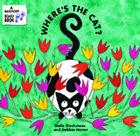 One of her latest favorites came from you: "Meow" refers to Where's the Cat?, by Stella Blackstone and Debbie Harter. This is a wonderful book. Each right hand page asks "Where's the cat?" and provides a clue by showing a tiny bit of ear or paw poking out from under something; when you turn the page, the wide-eyed black and white cat reveals itself in an active catlike pose: "on the chair," "up the stair," etc. The drawings are intense and colorful. Eleanor often joins in on reading this one too, answering every "Where's the cat?" by pointing to the right place on the page matter-of-factly: "There he is."
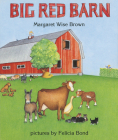 Margaret Wise Brown's Big Red Barn, illustrated by Felicia Bond, is another go-to book right now, so much so that the corners are starting to fray. I could read pretty much anything Margaret Wise Brown writes a thousand times in a row and not get tired of it -- something about her rhythm and her simplicity which is pitch-perfect for children but never cloying. (I just tried to refer to her as "Brown," and couldn't do it -- why is it that some authors need to be referred to by their full names?) Here's a sample:
There was a big pile of hay
And a little pile of hay,
And that is where the children play.
But in this story the children are away.
Only the animals are here today.
The sheep and the donkey,
The geese and the goats,
Were making funny noises
Down in their throats.
An old scarecrow was leaning on his hoe.
And a field mouse was born...
There are lots of animal noises, and, happily, dogs and cats show up a little later. Everyone goes to sleep at night, under a big beautiful moon.
Love, Annie
Wednesday, February 16, 2011
One last princess
Dear Annie,
I gave you Stories for Free Children? That sounds in character, but I have no memory of it.
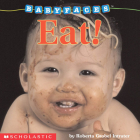
The predominant attitude toward gender has changed so much in the 12 years I've been selling books and toys. It used to be only the occasional customer -- usually of grandparent age -- who would specify that a gift must be for a girl (or a boy). Now it's rare that someone doesn't specify a gender-related gift -- for any age. One of the more startling moments of transition for me came when someone asked for a book for a six month-old. I showed her
Eat!, a delightful book full of pictures of babies eating. She recoiled from the cover and said, "No, I want a book for a girl." That made me wonder for quite a while -- what said "not girl" about that? I think she meant that girls aren't messy. Oy.

I'm happy to hear regular highlights from Cinderella Ate My Daughter as you go. I'm so glad Peggy Orenstein wrote that book. Your princess problem is, of course, being created by forces outside of the home. You just have to keep believing that your values will ultimately trump. There have been times when I've talked with Lizzie or Mona about something that was central to their lives at age 4 or 5 and they will literally have no memory of it. So you can always hope..
I swear this is the last time I'll talk about royalty in children's books for a while, but your mention of Stories for Free Children reminded me of a book I was so happy to give you when you were around four: The Queen Who Couldn't Bake Gingerbread, by Dorothy Van Woerkom. A king sets out to find a bride who is beautiful and wise and can bake gingerbread. Various princesses try to please him, to no avail. But when he asks the wise Princess Calliope if she can bake gingerbread she replies, no, but can you play the slide trombone? Neither can satisfy the other's heart's desire, but they decide to marry anyway and agree not to discuss the longed-for skill. They can't keep the promise -- there's a fight, the forbidden words (gingerbread! trombone!) are spoken, and they both stomp off to opposite ends of the castle. Soon sounds of a slide trombone being played by a novice float from the queen's tower, and the smell of burnt gingerbread wafts from the king's. Each finds happiness in learning what they wanted, reconciliation takes place, and all's well. This book has so many lessons: about unrealistic expectations, about grown-ups fighting and making up, about working for what you want. And it's a lot of fun. Out of print, but findable.
Love,
Deborah
I gave you Stories for Free Children? That sounds in character, but I have no memory of it.
The predominant attitude toward gender has changed so much in the 12 years I've been selling books and toys. It used to be only the occasional customer -- usually of grandparent age -- who would specify that a gift must be for a girl (or a boy). Now it's rare that someone doesn't specify a gender-related gift -- for any age. One of the more startling moments of transition for me came when someone asked for a book for a six month-old. I showed her
Eat!, a delightful book full of pictures of babies eating. She recoiled from the cover and said, "No, I want a book for a girl." That made me wonder for quite a while -- what said "not girl" about that? I think she meant that girls aren't messy. Oy.
I'm happy to hear regular highlights from Cinderella Ate My Daughter as you go. I'm so glad Peggy Orenstein wrote that book. Your princess problem is, of course, being created by forces outside of the home. You just have to keep believing that your values will ultimately trump. There have been times when I've talked with Lizzie or Mona about something that was central to their lives at age 4 or 5 and they will literally have no memory of it. So you can always hope..
I swear this is the last time I'll talk about royalty in children's books for a while, but your mention of Stories for Free Children reminded me of a book I was so happy to give you when you were around four: The Queen Who Couldn't Bake Gingerbread, by Dorothy Van Woerkom. A king sets out to find a bride who is beautiful and wise and can bake gingerbread. Various princesses try to please him, to no avail. But when he asks the wise Princess Calliope if she can bake gingerbread she replies, no, but can you play the slide trombone? Neither can satisfy the other's heart's desire, but they decide to marry anyway and agree not to discuss the longed-for skill. They can't keep the promise -- there's a fight, the forbidden words (gingerbread! trombone!) are spoken, and they both stomp off to opposite ends of the castle. Soon sounds of a slide trombone being played by a novice float from the queen's tower, and the smell of burnt gingerbread wafts from the king's. Each finds happiness in learning what they wanted, reconciliation takes place, and all's well. This book has so many lessons: about unrealistic expectations, about grown-ups fighting and making up, about working for what you want. And it's a lot of fun. Out of print, but findable.
Love,
Deborah
Subscribe to:
Posts (Atom)