In which Annie (high school teacher, mother of two young girls and a younger boy) and her aunt Deborah (children's bookseller, mother of two young women in their 20s) discuss children's books and come up with annotated lists.

Showing posts with label Vail. Show all posts

Thursday, August 9, 2012

One's own drummer

Dear Annie,

I promised to revisit the gay-themed books for kids topic one more time, mostly because I wanted to mention two books which sort of fit, but maybe not quite...
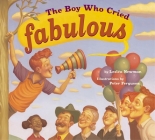
The Boy Who Cried Fabulous
is by Leslea Newman, who seems to have written about half the books about gay parents -- starting with Heather has Two Mommies.  She's not one to be coy about a topic, but it's interesting what she's written here:
When Roger started out for school,
his mother set a simple rule.
 She said, "Now Roger, you go straight --
 straight to class, and don't be late."
 . . .
but then he came upon a store,
its windows full of lovely clothes
so colorful that Roger froze,
then clapped his hands in fits of glee 
and shouted out in ecstasy:
"What a fabulous coat,
is it silk or wool?
What a fabulous bell,
can I give it a pull?
What a fabulous door, 
does it open wide?
What a fabulous store,
can I come inside?"
He admires the clothes, the customers, the day, the world.  Everything is "fabulous" (although "simply divine" sneaks in there too).  Roger has such enthusiasm for every distraction that he's constantly late wherever he goes.  His parents (one mom, one dad) are very irritated.  The next day as the family goes to town together, mom and dad ban the use of the word fabulous.  Although he's trying hard, Roger just can't toe the line, but his exuberant descriptions sprout new adjectives: marvelous, wonderful, dazzling, glorious, etc.  The scene becomes crazier and crazier as Roger ends up dancing on tables then leading happy townsfolk in a parade, complete with elephant ride.  A moment of suspense ensues as he turns to see his parents' reaction.
"We've never, ever had such fun,
and you are the world's most fabulous son!" 
It's fun, it's a good story, written with panache.  Maybe it's about following your enthusiasms, maybe it's about parents accepting their gay sons.  The differing interpretations feels a bit like The Lion the Witch and the Wardrobe, it's a wonderful magical tale, and some also see it as carrying a Christian message with a clear crucifixion allegory.

note the bird
Another excellent character bucking his family's expectations is Liam, star of
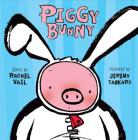
Piggy Bunny
, by Rachel Vail, illustrated by Jeremy Tankard of Grumpy Bird fame.  Liam is a piglet who wants to grow up to be the Easter Bunny: he practices hopping, eats salad and tries to deliver eggs.  His parents point out that he's "a terrific piglet" (nice adjective choice) and they love all his sweet piggy attributes. 
"You are perfect," said Liam's dad, just exactly the way you are."
"Just exactly the way I am," said Liam, "is like a piglet who is going to be the Easter Bunny."
Then Liam's grandparents visit and Grandma bucks the family attitude.
"They just have the imagination of a kumquat, the lot of them."  She shook her large head.  "Go put on your Easter Bunny suit, Liam.  Then they'll see."
Turns out he doesn't have one.
Liam's grandpa smiled gently.  "This is the kind of problem" he whispered, "that is called fixable."
They go to the internet to solve the problem.  When it arrives, the suit is itchy and doesn't quite fit right, but when he looks in the mirror,
looking back at him, was Liam, the Easter Bunny.  
A happy piggy.

This is an enjoyable book on many levels: it's funny, it's a believe-in-yourself story, and the author (in a very nice discussion with the illustrator) even calls it subversive. One of my co-workers pointed out another interpretation.  Julian, who used to be Nicole, read it through with a huge smile and said, "This is me."  Liam, the transgender piglet.  It's his current staff pick.

Love,

Deborah


Saturday, February 26, 2011

Kids behaving badly

Dear Aunt Debbie,

I love the Tim Noah piece -- I've never thought about sulking, as opposed to other forms of acting out, in literature before.  But reading your discussion of Spinky Sulks (a Steig I don't know, but will certainly look up now), I'm stumped.  You could argue that Grumpy Bird begins as a sulking book -- Grumpy Bird is deep in his own funk for a while -- but he doesn't hole up anywhere, and it doesn't take him too long to snap out of it.  I'd be curious to hear of other books that take on sulking in a serious way.

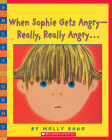
Pondering the art of the sulk got me thinking about books we have that take on intense emotions, several of which you sent us about a year and a half ago, when Eleanor was deep in age 2 1/2.  One of our favorites is When Sophie Gets Angry -- Really, Really Angry..., by Molly Bang.  Sophie's anger starts with something small: her sister takes a toy gorilla away from her, and their mother confirms that it is the sister's turn.  Sophie trips over a toy truck (hooray for non-gendered toys!), and then she goes off into a full-blown tantrum.

Sophie's anger is outsized.  In Bang's vibrant paintings, her shadow grows huge and orange and smashes the wall; her roar blows toys and books across the room. 


The figures of Sophie and her family members are outlined in colored lines, and as Sophie gets angry, her outline changes from yellow to orange to bright red (her sister's stays green).  Then ("PABAM!") she runs out of the house.  "She runs and runs until she can't run anymore."  Luckily for Sophie, she lives in the middle of a beautiful, safe, forested area, so she runs to her favorite beech tree, climbs it, and cools off by looking at the ocean.  "The wide world comforts her."  She calms down (back to yellow), climbs down, and goes home, aware now of the sounds of the animals around her.  Everyone is glad to see her, and she and her sister and parents do a jigsaw puzzle together.

I like the honesty of the anger in this book, and the way that the rest of the family just lets Sophie deal with her tantrum herself until she's ready to come back to them.  The arc of Sophie's anger rings true.  The book opens up avenues for conversation about the way anger feels: on the copyright page at the end, it asks directly, "What do you do when you get angry?"  Of course, we live in the middle of a city, and running out the door to climb a tree when you're upset is not an option here.  Every time we read the book, I find myself a little wistful about Sophie's family's bucolic life.  So close to the ocean!  And there's dad, sitting on the couch with his seed catalogue....

Sometimes I'm Bombaloo
, by Rachel Vail, feels much more like a story of anger and cooling down that might happen in an apartment.  It's another younger-sibling-annoys-the-older-sibling-into-a-tantrum story (here it's a little brother and a block tower that gets knocked down).  The narrator, Katie Honors, describes herself as a generally good kid, but explains that sometimes she loses control of herself: "I'm bombaloo."  Losing your temper, in this formulation, is like being taken over by something wild and uncontrollable -- you become someone else.  I'm of two minds about this formulation.  On the one hand, it makes sense; who hasn't felt this way at times?  On the other hand, it feels a little like a free pass: It wasn't me, Mommy, it was Bombaloo.  I do like that it's humor that brings Katie back to herself and allows her to calm down.

At about the same time you sent us When Sophie and Bombaloo, the New Yorker published Daniel Zalewski's wrap-up of books about children's anger and the ways parents deal with it.  It's pretty damning towards a number of books -- the thesis is that parents have become hyper-aware of the ways they shouldn't discipline their children, and so have become ineffectual at doing so, and that a number of contemporary children's books depict children running roughshod over their parents.  I'd be interested to hear whether, and how much, you agree with Zalewski.  And of course, this opens up the can of worms that is Amy Chua's Tiger Mothering, if we want to go there....

Love, Annie