
In which Annie (high school teacher, mother of two young girls and a younger boy) and her aunt Deborah (children's bookseller, mother of two young women in their 20s) discuss children's books and come up with annotated lists.

Showing posts with label T.H. White. Show all posts

Wednesday, September 19, 2012

Wisdom and an owl

Dear Annie,

Athena -- a far cry from princess-in-pink.
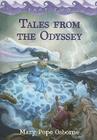
You and Eleanor might like to check out Mary Pope Osborne's
Tales from the Odyssey
. It was originally written as six little books (one of them called The Gray-Eyed Goddess), but the publisher has sensibly pulled them into two volumes -- still pretty short.  Yes, she's the author of the Magic Tree House books, which are not my favorites, but this is better.  I confess I've only browsed through these tales, but they consistently get surprised and pleased reviews from customers.  I'm curious what you'd think of them.

One of the joys of domestic life in our household is the high quality literary references.  Bob and I were discussing your latest post at dinner, and he reached a book off the shelf and read me a few pages.  It was The Sword in the Stone by T. H. White, and the scene is one in which the young Arthur -- known as the Wart -- first meets Merlyn, and his owl Archimedes.  At first the owl tries hard to ignore him, then perches skeptically on his shoulder as the humans converse.
   . . . he felt a curious sensation at his ear.  "Don't jump," said Merlyn, just as he was going to do so, and the Wart sat still.  Archimedes, who had been standing forgotten on his shoulder all this time, was gently touching himself against him.  His beak was right against the lobe of the ear, which its bristles made to tickle, and suddenly a soft hoarse little voice whispered, "How d'you do," so that it sounded right inside his head.
   "Oh, owl!" cried the Wart, forgetting about Merlyn's troubles instantly.  "Look, he has decided to talk to me!"
   The Wart gently leaned his head against the soft feathers, and the brown owl, taking the rim of his ear in its beak, quickly nibbled right round it with the smallest nibbles.
   "I shall call him Archie!" exclaimed the Wart.
   "I trust you will do nothing of the sort," cried Merlyn instantly, in a stern and angry voice, and the owl withdrew to the farthest corner of his shoulder.
   "Is it wrong?"
   "You might as  well call me Wol, or Olly," said the owl sourly, "and have done with it."
   "Or Bubbles," added the owl in a bitter voice.
   Merlyn took the Wart's hand and said kindly, "You are only young, and do not understand these things.  But you will learn that owls are the politest and most courteous, single-hearted and faithful creatures living.  You must never be familiar, rude or vulgar with them, or make them to look ridiculous.  There mother is Athene, the goddess of wisdom, and though they are often ready to play the buffoon for your amusement, such conduct is the prerogative of the truly wise.  No owl can possibly be called Archie."
   "I am sorry, owl," said the Wart.
   "And I am sorry, boy," said the owl.  "I can see that you spoke in ignorance, and I bitterly regret that I should have been so petty as to take offense where none was intended."
I hope Eleanor's Athena is both truly wise and equipped with an exceptional owl.

Love,

Deborah

Thursday, June 23, 2011

More Mistress Masham

Dear Annie,

Ah, Mistress Masham's Repose.  One of the greats of children's literature.  It was published in 1946, the year of my brother's birth.  I don't know how my parents came upon it, but it was much loved in our household.   Yes, I too can hear my father's voice reading it.

One of Bob's and my magical discoveries when we met was that we both had fathers who had read us Mistress Masham, which we both loved.

It's such a beautifully written book.  Near the start of the story, when Maria has taken a first step toward gaining the confidence of the Lilliputians she has discovered, they solemnly parade themselves and their livestock in front of her (see picture in your post).
They all stood gazing at her with their mouths open, and the mothers held their children tightly by the hand, and the men stood rather in front, in case of emergency.
Nobody knew what to do.
Finally she remembered her instructions.  She called out that she was going to stand up, so they must not be afraid.  When she did stand, there was another "Ooo!"
Maria presents gifts, carefully planned with her friend the Professor.  Silk scarves, razors, needles, nails -- and "a shilling's worth of chocolate creams":
She had gone through a tussle with the Professor about  these.  He, with his giant's obsession about choosing small things for small people, had wanted to buy an old-fashioned sweet which was sometimes used on cakes, called Hundreds and Thousands.  They were tiny pellets of hard sugar, colored pink or white or blue.  Maria had insisted on full-sized chocolates.  Which  would you have preferred, then: a hard piece of sugar about the size of a toffee apple, or a chocolate cream the size of a pram?
Maria  befriends the colony, but cannot resist the allure of their novelty:
The more she adored and wondered at the doings of her six-inch People, the more she wanted to take control of them.  She wanted to play with them, like lead soldiers, and even dreamed of being their queen.  She began to forget what the Professor had said, about not being an owner.
This all  leads to a disastrous accident and Maria must make amends before she can regain the confidence of the People.  The Plot Thickens as the evil vicar and governess plot against Maria and -- when they discover them -- the Lilliputians.  It's exciting: there are chases, a dungeon, acts of courage.  But the real core of the book is about a ten year-old and a group of grown-ups one tenth her size learning to love and respect each other.  It's wonderful.

The language is sophisticated and often difficult for younger kids.  Even for a strong ten year-old reader it can be tough.  It's a pleasure as a read-aloud when a child is ready, though.  We read it with both our girls -- I think we may also have had a false start at a too-young age before savoring it together later on.  And for the map afficianados among us (hello, Ian!) there's a great map of the grounds of Malplaquet, Maria's decaying estate.

Love,

Deborah

Monday, June 20, 2011

Back to the little people

Dear Aunt Debbie,

Portfolios, those gorgeous, time-consuming projects put together by my junior and senior students, are done.  I've still got some grading to do, it's true, but I'm back to something resembling my normal state of exhaustion, and summer is so close I can smell it.

Before we get too far removed from the thread we were pursuing so happily when end-of-semester grading intervened, I want to bring us back to books about little people.  Specifically, one book: a book whose title was so much a part of my childhood that it sounds completely normal to me, until I step back and look at it and realize its oddity.  It is a title which tells you nothing about the contents of the book, which is hard to parse when you first hear it, and which, if you hadn't fallen in love with it at a young age, would probably be hard to remember.  Oddly, the author is T.H. White, who generally knew a thing or two about titles (see The Sword in the Stone and The Once and Future King).

I'm writing, of course, of Mistress Masham's Repose.  

It was one of my grandfather's (your father's) favorite books, so I have no doubt that you, too, remember him reading passages out loud.  I can remember his excitement about me being ready for him to read it aloud -- I think we may have had a false start or two when I was too young for it -- and his great pleasure in my loving it too.

Mistress Masham's Repose is the story of 10-year-old orphaned Maria (yup, another orphan), an heiress of sorts who lives on her ruined estate under the care of her guardian, the vicar Mr. Hater, and a horribly mean governess, Miss Brown.  Maria lives in general misery save for the friendship of a dotty old professor and a nice cook.  Then, one day, she discovers the city of tiny people living on an island in the corner of the estate, in a run-down temple known as "Mistress Masham's Repose." 

The tiny people turn out to be the descendants of Gulliver's Lilliputians, a community in exile.  Maria tries to befriend them, and there is some comedy in her large bumbling -- I remember particularly a Lilliputian being wrapped up in her handkerchief and very red-faced and angry when he's tumbled out.  They eventually grow to understand and like each other, and Maria and the professor must become the Lilliputians' protectors when Miss Brown and Mr. Hater get wind of their presence, and sense a chance to make money off of them.

I would love to reread this book -- it's been years.  Happily, after being out of print for a while, this is another gem that's been reprinted under the auspices of the New York Review Children's Collection.

Did your kids ever get into this one?

Love, Annie