In which Annie (high school teacher, mother of two young girls and a younger boy) and her aunt Deborah (children's bookseller, mother of two young women in their 20s) discuss children's books and come up with annotated lists.

Monday, November 29, 2010

Screaming latkes

Dear Aunt Debbie,

I must confess, goy that I am, that I don't know much about Hanukkah books.  Our local library children's section has a bunch of them, none of which, at least at a cursory glance, looks particularly great.  At one point last year, Eleanor picked out a Hanukkah version of "The Twelve Days of Christmas," with cartoony drawings of a raucous family getting five spinning dreidels, four bags of gelt, etc.  We brought it home and read it, but as she didn't have any experience of Hanukkah yet and didn't know the song the book was parodying, it was a bit of a bust.  I'll try the books you suggest, and would certainly be interested in hearing about others (thanks, Rachel!).
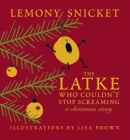
When I mentioned this topic to my wonderful student teacher, however, she perked right up.  "Have you read The Latke Who Couldn't Stop Screaming?" she asked.  I confessed that I had not. She told me it was by Lemony Snicket (I've read none of his books, but know they are huge favorites -- what's your take on him?), and that she loved it so much she had given a dramatic reading of it to her family over Thanksgiving.  I asked Zara to tell me a little more about it, and here's what she wrote:
The Latke Who Couldn't Stop Screaming: A Christmas Story
“This story ends in someone’s mouth, but it begins in a tiny village more or less covered in snow.”  And so begins what is definitely not another Christmas story, and although it’s written in a picture-book format, the humor will appeal to adults.  The book follows a latke that was created in a cottage that was “regarded with some suspicion, as it was the only place not decorated with flashing colored lights at this time of year.”  As the latke runs around the town, he meets some other holiday favorites—flashing lights, a candy cane, a pine tree.  With every new encounter, the latke tells a little more about the history and celebration of Hanukah.  But he just can’t stop screaming, because nobody seems to understand that Hanukah isn’t Christmas—as the latke shouts, it’s “something completely different!!” 
Finally, a story about how it can sometimes feel to be a Jew at Christmastime.  Sure, we love the candy canes, and the lights are beautiful, but Hanukah is more than eight days of presents, and it’s definitely not a Jewish Christmas.  The latke reminds us about the true meaning of Hanukah—having hope even when you feel outnumbered.  It’s hard to be the house without the decorations or the latke constantly trying to explain himself to a candy cane who just doesn’t understand. 
So true.  Thank you, Zara!

Love, Annie

Sunday, November 28, 2010

Hanukkah approaches!

Dear Annie,

'Tis the season of holidays, and this year they're coming fast and furious.  Hanukkah starts early this year: this Wednesday is the first night of Hanukkah.  It's made the usual build-to-a-late-December-crescendo in the toy store a little different this year.  Variety.  Always good.

I'm a big believer in kids having some understanding of major holidays in our society, even if not all of them are ones celebrated by their families.  Lizzie and Mona's private school dealt with the religion question with sequential immersion.  There was a big Christmas Assembly, with the first graders doing the Jesus/Mary/Joseph pageant, the headmaster reading The Grinch, and everyone singing a carol or two.  And come spring break, they'd have the Passover Assembly, with the kindergartners doing the plagues (ah, those hopping frogs), and Moses and Pharoah with their paper beards confronting each other.  The littlest ones got to ask the Four Questions.  Holidays from other traditions were discussed, but the Jewish/Christian mix was the big one for their school.

So, here for all of us, are my two favorite Hanukkah picture books:


Hershel and the Hanukkah Goblins
, by master storyteller Eric Kimmel, wonderfully illustrated by Trina Schart Hyman tells the story of a wandering beggar who finds a village which doesn't celebrate Hanukkah because a group of goblins has taken over the synagogue and harasses the populace.  Hershel sets out to evict them  by spending the eight nights of the holiday in the synagogue.  He outsmarts the goblins one by one on each night, managing to keep the candles burning every night.  (Lots of potential on the different-voices hamming it up front.)  On the last night he must face the dreaded King of the Goblins.  A good story.

And then there's
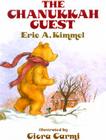
The Chanukkah Guest
, also by Eric Kimmel, illustrated by Giora Carmi, which does much more than just remind us there are many spellings of Chanukkah.  It's set in another village, where 97 year-old Bubba Brayna still makes the best latkes in town.  Smells of her cooking awaken a bear.  When he arrives at Bubba's house, the very near-sighted, hard-of-hearing old lady mistakes him for the rabbi, feeds him latkes, responds to his growls as though they were conversation, spins the dreidel with him, and sends him off with the scarf she has knitted for the rabbi.  There's lots of charming slapstick in these scenes.  Then her intended guests -- the rabbi and the villagers -- arrive and figure out what happened, to some worries and a lot of laughter.

May your holiday guests bring you much joy and a few surprises.

Love,

Deborah

Friday, November 26, 2010

Introducing the Thanksgiving story

Dear Aunt Debbie,

And happy Thanksgiving to you!  We missed you and your sweet potato biscuits, but my mom did a masterful job with the Johnson family pumpkin pie, and apple pie to boot.  It was a good day.

This is the first year that Eleanor has begun to be exposed to, and to take in, the Thanksgiving story.  It's interesting -- I remember getting all dolled up in elementary school in construction paper Pilgrim and Indian hats and headdresses, way back before I'd read Howard Zinn's A People's History of the United States and started realizing how much had been revised and left out, and I found myself wondering recently how the story would come down to Eleanor and Isabel.  At preschool, they've done a nice job: they talked about the Pilgrims, and Eleanor came home to inform me solemnly that the Pilgrims came on a ship, "but they weren't the first people here."  Then they had homework: for Friday, each kid was given a plastic grocery bag and asked to fill it with the possessions they'd want to take with them on the Mayflower.  Evidently Eleanor really thinks the New World needs a Snow White Barbie doll and a plastic fireman's hat, among other things.  Her friend Ella (who I am sure will be massively into Ella Enchanted when she gets old enough) was a little more practical, and brought a lot of snacks.

Our first exposure to the Thanksgiving story actually came earlier this year, when we took the book Pilgrim Cat, by Carol Antoinette Peacock, out of the library.  I didn't realize at first that it was a Thanksgiving-related book.  It's decent picture-book historical fiction, about a young girl, Faith Barrett, who is among the passengers on the Mayflower, and makes friends with a cat who jumps on board just before the ship sails.  Faith and Pounce, the cat, become close friends, and he sticks by her through a difficult and dangerous time.  There's a nice surprise toward the end when Pounce disappears in the New World and is found again having given birth to kittens -- he is a she!  Just after this, there is the first Thanksgiving feast, complete with an accurate description of what they probably ate.  Lots of fish, it turns out.

Pilgrim Cat feels like a nice initial level of introduction to Colonial history.  Some of the story is prettied up a bit: there's no indication, for example, that the arrival of settlers threatens the Wampanoag people they interact with, and all the Pilgrim and Indian encounters are very positive.  But there's some good realism here too: conditions on the ship are described in bleak detail, and while waiting with many other passengers on the ship while some of the men land and build houses, Faith gets very sick with a fever that kills a great number of the people on board.  Eleanor and I had a bit of a discussion about that.  Squanto appears, and there are lovely drawings by Doris Ettinger depicting the daily activities the Pilgrims engaged in.  You get the feeling that Peacock did her research.  Now if only there were a dog involved, perhaps Isabel would be interested too....

Love, Annie

Wednesday, November 24, 2010

Emma on Ella

Dear Annie,

Last week I received an e-mail from an old friend, a recent Swarthmore graduate who's been reading our blog. Emma has always cared deeply about books.  Her family gave our girls both Harry Potter and the Sorcerer's Stone and The Golden Compass before we had heard of either one.  And I remember Lizzie, our Tolkien fan, calling Emma, also a Tolkien fan, after the first Lord of the Rings movie came out to ask Emma's opinion of it before venturing to the movie herself.

After reading some of our princess discussion, Emma wanted to make sure we mention
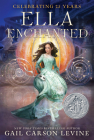
Ella Enchanted
, by Gail Carson Levine.  It's a middle-grade novel which can be read to younger kids, and still (see below) savored by older ones.  Levine has said that she wrote it because she was always perplexed by what a wimp Cinderella was, caving to the obnoxious whims of step-family.  So Levine added a fairy at her christening, whose curse was that Ella would have to obey any order phrased as a direct command.

Here's what Emma wrote:

Ella Enchanted is a retelling of Cinderella, set in a beautifully described magical world called Frell. Ella is in some ways our typical Cinderella-- with a dead mother, horrid stepsisters, and a pair of glass slippers-- but she also has an impressively complete backstory and personality. Instead of the traditional virtues of compassion, kindness, and beauty (those are mostly foisted on her prince), she's given a gift for languages, a sense of humor, and an independent streak a mile wide.

It is probably my favorite book that I've read since leaving picture books-- better than Civil War histories or Walter Benjamin or even Neil Gaiman. I can't speak to why it has such a strong hold on my heart, but there it is. In fact it's sitting next to me in bed now, because I've been rereading it the past couple of days. Ella is very sure of herself and of what she wants and doesn't want. She's a strong woman without giving up any of the "woman" part; I never feel that when she's mocking the things she learns in finishing school she's mocking anything about femininity or being a woman. The magic of this book is summed up for me by what Ella says when she finally breaks her curse: "I was made anew. Ella. Just Ella. Not Ella, the slave. Not a scullery maid. Not Lela. Not Eleanor. Ella. Myself unto myself. One. Me." That insistence on being herself on her own terms is what I think makes her such a great hero and character.

Whew! I'm making myself tear up here. Anyway: I think this book appeals to princess-story-loving girls while avoiding a lot of the typical downfalls of those kinds of stories-- I am a princess-story-loving girl, so I should know.
Many thanks to Emma for this.

And a Happy Thanksgiving to all.

Love,

Deborah

Monday, November 22, 2010

Keeping the frog alive

Dear Aunt Debbie,

Ah, Howard Gardner.  I think that the idea of multiple intelligences is in some ways a good one -- kids do learn in different ways.  All too often, though, what it turns into in classrooms is a lot of chalk and talk, plus an assigned poster with glitter on it.  There is little room, and little incentive, for teachers in a test-focused system to experiment with projects which might actually reach kids in different ways.  (Education schools may preach it, but they don't always practice it: I'm reminded of a story that Michael told about the education professor who gave his class a handout and a Power Point about the Socratic Method.  It is to laugh.  Or maybe cry.)

I teach on the high school level, 9th through 12th grade.  I've been teaching for a little more than ten years, and in that time I've come to realize that one of my major pedagogical goals is to provide my students with the scaffolding, focus, room and choice they need to connect more deeply with reading and writing on both an analytical and an emotional level.  Some of my assignments include ways to get into the book in a non-standard reading and writing way, but for most we read a book, and then we write: about the book, about ourselves as inspired by the book, about ourselves and the book at the same time.

There's a wonderful Flannery O'Connor speech in which she bemoans the student's search for the one true meaning of a story: "Every time a story of mine appears in a Freshman anthology, I have a vision of it, with its little organs laid open, like a frog in a bottle."  We talk in class about how to avoid that feeling, that we're analyzing a story to death.  How do you keep the frog alive?  Study the way it jumps without dissecting it? 

In that same speech, O'Connor writes: "A story really isn't any good unless it successfully resists paraphrase, unless it hangs on and expands in the mind.  Properly, you analyze to enjoy, but it's equally true that to analyze with any discrimination, you have to have enjoyed already." Laura Miller touches on the same theme in The Magician's Book: "If literary writing has any distinguishing characteristic, it's that the more you look at it the more you see, and the more you see the more you want to go on looking.  It invites a plurality of interpretation.  'A genuine work of art must mean many things,' wrote George MacDonald, the Scottish writer whom Lewis regarded as his master.  'The truer its art, the more things it will mean.'  The meaning of Animal Farm is fairly obvious, but what's the meaning of King Lear?  The question doesn't even make sense, really; it's like asking what I mean, or what you mean.  Works of art, like human beings, are irreducible."

Sometimes, the best way to express how we feel and think about a work of art isn't just through writing.  When I assign the final portfolio to my juniors and seniors in Writers' Workshop, I encourage them to bind and organize their collection of work in a way which is creative and true to them.  Many make books; some go far beyond that when given creative freedom.  I've gotten portfolios hidden inside giant Lego motherships, portfolios hand-written on rice paper made into lanterns, portfolios sewn into the panels of quilts.  If you give kids the freedom and the encouragement to be creative beyond your wildest imaginings, I've found, they will do it almost every time.

This is what I think Lizzie and Mona's best projects (and your amazing Hobbit party creation) have in common: the freedom in each for the reader to express herself in a focused but open way, to come at it in a way that surprises even herself.

Love, Annie

Sunday, November 21, 2010

If you build it..

Dear Annie,

School projects.  Get ready -- they may well continue through all 12 grades.  Is this true at Stuyvesant where you teach?  Lizzie and Mona were constantly being assigned some form of art project to go with many different subjects.  Mona even had to do an elaborate poster (with glitter) of a "dream house" for Spanish her senior year -- a project based on a book whose title I can't remember.  It's my impression that the large number of projects was part of their school (and around here it wasn't alone) trying to incorporate Howard Gardner's theory of multiple intelligences into the curriculum.  The concept is that different kids learn in different ways, and expanding the curriculum to more tactile and spatial activities -- like dioramas -- will be a more effective way to teach some children, though all the grades.  I feel silly saying this to you -- you're the teacher here.   What do you think of Gardner?

Projects I'll never forget -- although they weren't all assigned.  When Lizzie's fourth grade studied the Greek gods, she made a fantastic necklace out of Sculpey of the 12 gods and goddesses, using as a guide the D'Aulaire illustration you posted a couple of weeks ago.  She gave it to her teacher, who was quite good, and she displayed it on her wall at school for years.  I coveted it, though.

Then in fifth grade they each had to do "traveling biographies": researching an historical figure, writing a paper, and dressing up as that person and visiting other classrooms to talk about the person.  The project included a self-portrait which was half student/half subject: posters Bob and I have kept ever since.  Lizzie chose Jane Austen, whom she'd just discovered.  And Mona did Prudence Crandall, a white woman who started a school for free African Americans in Connecticut in the 1830s, and was eventually forced to close it by the enraged white townspeople.  That project was wonderful.

It's a little confusing, but that's Lizzie/Jane on the left, and Prudence/Mona on the right.

Then there was the structure of a cell out of jello.   Turns out that gummy bears dissolve in jello, so you can't really see the ribosomes or whatever they were.

But if you say "project" and "children's book" to me in the same sentence, the first thing that comes to mind is Lizzie's Hobbit birthday party.  It was my biggest June Cleaver moment: I sewed 17 hobbit capes (complete with hoods) for all the guests.  It took about a week, happening in the middle of a huge shut-the-schools-for-a-week snowstorm.  Lizzie is in college now, but the six foot-long Pin the Foot on the Hobbit poster that I drew still hangs above her bed.  He's foot-less -- we've long since lost the furry feet.  All very satisfying but exhausting.  (I'm so impressed with Playing by the Book.)

 One last note.  Gina posted a question on your last post asking about books to teach "about kindness, compassion, gratitude, helping others, etc."  It's a great question to kick around, and I intend to come back to it soon.  Gina, I'd recommend starting with Shirley Hughes.  We have two recent posts -- one on her Alfie books, and one on Dogger, the ultimate book about selflessness.

This is a slightly brief post tonight because we're off to the airport to pick up Mona, coming in from California.  Thanksgiving approaches.

Love,

Deborah

Friday, November 19, 2010

School book projects

Dear Aunt Debbie,

The exchanging of heads!  An absolute memory explosion for me as well.  I read very few of the later Oz books, but I had a good friend who had them all, and when I borrowed them this scene was one of the ones which stayed with me.  So fascinating and creepy, and somehow playing into both the idea of dress-up and the understanding of having different moods in a deeply compelling way.

I've been trying to remember my own book-related projects, and am not coming up with much.  I know there were dioramas in shoeboxes, and can remember watching Shrinky Dinks curl up and flatten out and setting them up as people in my scene -- but what book was that for?  There was the time in fifth grade when my friend Matthew and I, obsessed with Daulaires' Book of Greek Myths, decided to make a model of Mount Olympus, complete with little dolls of the gods and goddesses sitting on top.  I wanted to start by making the dolls, but Matthew was convinced we needed the mountain first, so we made a four-foot tall model out of chicken wire in Mrs. Forrest's classroom and covered maybe one-quarter of it with papier-mache before we lost steam and moved onto something else.

Oh, and then there was Elizabeth Blackwell, First Woman Doctor (I'm linking to the Alibris page of the book it probably was -- there are a lot of bios of her out there, but this one, published in 1966, seems likely to be what I had from the school library).  For her, I mounted a doll made of stockings stuffed with cotton and dressed in a lab coat with a homemade stethoscope onto a thin round wooden frame which I think came from a wheel of cheese.  That one stayed up in my room for a long time.

I hope my girls get to do crazy, slightly pointless artistic stuff like that in school too, along with the test prep they're no doubt headed for.  Of course, I can always supplement with ideas from Playing by the Book at home....

Are there any projects from your childhood or Lizzie and Mona's that stand out for you?

Love, Annie