In which Annie (high school teacher, mother of two young girls and a younger boy) and her aunt Deborah (children's bookseller, mother of two young women in their 20s) discuss children's books and come up with annotated lists.

Sunday, February 17, 2013

Guest blogger: Souper Stories

Dear Annie,

Extended family and friends are still basking in the happiness of Will's existence.  We hope at least some of you are getting some sleep, and that Will's entry into your family is going smoothly.

Today I get to introduce one of our regular guest bloggers, your pal Denise, who has written previously about social awareness, the essence of summer,  art and trying to read to two kids of different ages at once.  On this wintry evening, she is tackling the subject of soup, in many contexts.


The chilling winter days have been bringing out the soup in me. I started off the week with Red Lentil Soup (page 36) from a cookbook that Annie recommended,
Moosewood Restaurant Cooks at Home: Fast and Easy Recipes for Any Day
. The recipe was indeed simple and easy to modify based on the vegetables I had in my fridge: onion, ginger, carrots, roasted red peppers in a jar. While I cooked, the kids played horses and dinosaurs without fighting; less than 40 minutes later, the beautiful pinkish-orange soup with a slightly silky, slightly rustic texture was on the table. Most importantly, it was approved by the grand critic, Miss Jazzy. I served it with warm pita bread and sautéed kale, and had enough for a couple of lunches.

Later on this week, I made another delightful soup from this cookbook: North African Cauliflower (p. 33). This was Emerson’s favorite which isn’t surprising since he loves cauliflower the way most kids love mac n’ cheese. Three particular ingredients make this soup special: cauliflower, potato, and ground fennel. I sautéed shallots, shiitake mushrooms, and tempeh bacon and used this as a garnish. This was equally satisfying and warming.

This brings me to a few souper picture books on the kids’ shelves
Mouse Soup
by Arnold Lobel is one of those precious books that is funny and entertaining for kids and parents. I marvel over how cleverly it is constructed. The book begins with a weasel catching an adorable mouse who is reading a book under a tree (I can relate – so often I want to just read a book but am chased away by my duties as a mother and teacher). The weasel puts him in a pot to make mouse soup, but the mouse convinces the weasel that he needs four stories in it to make it good, so the mouse proceeds with telling distinct narratives. Some ingredients to these whimsical stories include: a beehive, stones on a hill, loud crickets, and a dying thorn bush that is revived. In the end of the book, the mouse tells the weasel to find the ingredients from the stories to put into the mouse soup which allows him to escape. The last page shows the mouse sitting in his chair reading his book, a moment I pine for.

Another story where soup also saves is
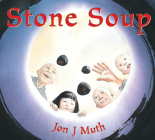
Stone Soup
by Jon J. Muth. Here three Zen monks, Hok, Lok, and Siew, go on a journey to answer the question, “What makes one happy?” They come across a village in the mountains where the people had experienced many hardships; here “the villages worked hard, but only for themselves.” This changes with the help of the monks who build a fire and make stone soup in a small tin pot. A little girl walks by and helps them find three stones. Then she goes home to get a bigger pot. Eventually, people from the village curiously peer from their windows and begin to offer ingredients to the large pot of soup. In the end, the monks as well as the villagers learn that “to be happy is as simple as making stone soup.”

These stories create an internal warmth much needed in winter, especially on those cold evenings after long days of transporting children, working, and carrying around book bags, food bags, heavy coats. I guess it would be best to leave that all at the doorstep and focus on making soup in the kitchen. The kids will chop and add ingredients to the pot; after, they will do the dishes while I recline in the living room chair and read. If only it were that simple.

Many thanks to Denise.  And wishing you lots of warmth in Brooklyn, Annie.

Love,

Deborah
  

Wednesday, February 13, 2013

Will!

Dear Annie,

The entire extended family is dancing with joy, waiting for this little guy to wake up, grow a bit, and dance with us:

Will!
Will arrived early this morning, missing his uncle's birthday by a few hours.  You're now a five-person nuclear family.  I suspect Will's big sisters (how does that title feel to Isabel?) will start reading to him soon.  The new baby books, of course, and the three-child-family ones, and many many more.

We can't wait to meet him.  In the meantime, we will send him books and ooh and aah over his pictures, and cheer on his amazing sisters.

I offer you two quotes from children's literature, to celebrate the boy.

I've cited Ramona's wonder at having a baby sister in the three-child-family post, but here's a snippet again:
"Look at her tiny fingernails," Ramona marveled as she looked at the sleeping Roberta, "and her little eyebrows.  She is already a whole person, only little."
And from William Steig's Sylvester and the Magic Pebble, a different context -- the missing Sylvester has been restored to his parents --but applicable to the birth of a baby as well:
When they had eventually calmed down a bit, and had gotten home, Mr. Duncan put the magic pebble in an iron safe. Some day they might want to use it, but really, for now, what more could they wish for? They all had all that they wanted.
I suspect you have all you want right now (except maybe more sleep...).   Enjoy tomorrow's homecoming, and all that follows.  We have guest bloggers waiting in the wings, and will be very happy to hear all about your five-person family whenever you come up for air.

With much love for all,

Deborah

Saturday, February 9, 2013

Forerunners of Minpins

Dear Annie,

It's funny, I've always thought of the Minpins -- which we also loved -- as being one of Dahl's scarier books.  It's that nightmare sense of being chased by something very scary, belching fire...

The Minpins was Dahl's last book, published in 1991 shortly after he died.  The little people make one think of the Oompa Loompas from Charlie and the Chocolate Factory (1964).   The monsters Little Billy's mother warns him against -- Whangdoodles, Hornswogglers, Snozzwanglers -- are the same ones who terrorized the Oompa Loompas in Charlie.  The world of the Minpins, sans Gruncher, seems much more harmonious than their forbears, though.

I was poking around on various kid-reading book sites today, and came across a lovely photo of a different sort of harmony.  One of the frequently-cited ways a parent can encourage a child to become a reader is to model the behavior oneself.  Then one ends up with a family of readers.
I love the dad's hand on the kid's leg.  In touch.  I can't figure out what the dad is reading, but the book on the right is a compilation of three Tintin books.  Tintin: another topic we should take up one day.

Love to you,

Deborah

Tuesday, February 5, 2013

Dahl, a little less mean

Dear Aunt Debbie,

Of course, just after writing about my mixed feelings for Roald Dahl last week, we cracked open one of your birthday presents for Eleanor, a slim, beautifully illustrated picture book with all the adventure and none of the nastiness I've come to expect of him.

The Minpins begins:

Little Billy's mother was always telling him exactly what he was allowed to do and what he was not allowed to do.

All the things he was allowed to do were boring.  All the things he was not allowed to do were exciting.

One of the things he was NEVER NEVER allowed to do, the most exciting of them all, was to go out through the garden gate all by himself and explore the world beyond.

Of course, the majority of the story involves Little Billy doing exactly that.  Inspired by a voice in his ear that he thinks of as the Devil, he hops out the window and runs off to explore the Forest of Sin, though his mother has warned him of the horrible creatures living there: Whangdoodles, Hornswogglers, Snozzwanglers, Vermicious Knids, and the Terrible Bloodsuckling Toothpluckling Stonechuckling Spittler.  (Okay, I admit that so far it sounds very Dahl-like.)

Once in the forest, Little Billy is chased by a monster he can hear and smell but not quite see -- the puffs of smoke are too great.  He climbs a tree to get away, and finds himself face-to-face with first one, and then hundreds, of Minpins: tiny people who live inside the trees.  The horror of the monster below is forgotten as Little Billy peers into their miniature rooms through postage-stamp sized windows.  The illustrations, by Patrick Benson, are intense and lovely in equal measure.

The Minpins are friendly as can be, and show Little Billy how they live, foraging for food and exploring on the backs of all the birds in the forest.

They urge him not to climb back down the tree, as the monster who was chasing him -- the Red-Hot Smoke Belching Gruncher -- is waiting below.  Little Billy learns about the Gruncher from the Minpins, devises a plan to destroy him, and enlists the Minpins' help in doing so.  He's calm in the face of danger, and earns the respect of the Minpins.  Plus, he gets to fly on the back of a very large swan.

The Gruncher is a funny creation: from the beginning to the end of the story, we get only glimpses of him through the smoke.  There's none of the usual Roald Dahl detail -- the Gruncher is a fuzzy nightmare creature, not a specific terror.  What sticks, and what has captured both Eleanor and Isabel's attention, is the wonder of Little Billy's meeting the Minpins.  Little people, as we've written about before (also here and here), are endlessly fascinating, and there's a sense of wonder in Little Billy's ultimate explorations.

That's the way The Minpins ends, with this sense of wonder in Dahl's final words to the reader:

Watch the birds as they fly above your heads and, who knows, you might well spy a tiny creature riding high on the back of a swallow or a raven.  Watch the robin especially because it always flies low, and you might see a nervous young Minpin perched on the feathers having its first flying lesson.  And above all, watch with glittering eyes the whole world around you because the greatest secrets are always hidden in the most unlikely places.  

Those who don't believe in magic will never find it.

Love, Annie

Sunday, February 3, 2013

Dahl: wonderful but nasty

Dear Annie,

Happy Maternity Leave!  And may your leave and increase of family be Restorative of Your Health!

I thought a lot about the Roald Dahl question before sending The BFG to Eleanor.  With the exception of The Giraffe and the Pelly and Me -- which one could almost call sweet -- I find The BFG the least problematic of Dahl's wonderful-but-nasty books. 

We read it with Lizzie when she was about Eleanor's age -- and I remember her being entranced with it.  I was worried about the opening scene when a giant hand comes through Sophie's window and kidnaps her -- but it was my worry, not Lizzie's.  At dinner tonight, she got a sort of far-away smile on her face and said she remembers really loving it, and loving the BFG.  She remembers snozzcumbers and his fractured language.

I opened Mona's copy tonight looking for a good example of the BFG's speech and came upon this, from early in the book:
"Would you teach me how to make an elefunt?" the BFG asked.
"What do you mean?" Sophie said.
"I would dearly love to have an elefunt to ride on," the BFG said dreamily.  "I would so much love to have a jumbly big elefunt and go riding through green forests picking peachy fruits off the trees all day long.  This is a sizzling-hot muckfrumping country we is living in.  Nothing grows in it except snozzcumbers.  I would love to go somewhere else and pick peachy fruits in the early morning from the back of an elefunt."
Sophie was quite moved by this curious statement. 
And there's always his signature, "Am I right? or left?" There is, of course, a Goodreads page out there with nothing but BFG quotes.

Dahl is part of a British tradition of children's literature which is not gentle.  But his protagonists are always good, and triumph over the bad guys in the end.  Harry Potter's Dursleys are very Dahl-esque: caricatured cruel relatives.  And revenge is savored.  I'm more uncomfortable with Charlie and the Chocolate Factory with its repeated humiliation of the obnoxious kids than with the BFG -- but no question that they're both books some reasonable parents will choose to skip.

I hope you're glad you didn't, though. 

Sweet dreams to you all.

Love,

Deborah

Thursday, January 31, 2013

My love/hate relationship with Roald Dahl

Dear Aunt Debbie,

I've often found our family's taste to be out of the mainstream; I've even been known to take a perverse pride in it.  That being said, I'm sorry that your favorites this year didn't win the big awards.  Ah, well.  Maybe next year?

I am, happily, writing to you from my maternity leave (or rather, in Dept. of Education parlance, my Restoration of Health leave, which comes before my Maternity and Childcare leaves.  Each of these, you understand, requires separate forms).  In any case, I've finished up my end-of-semester grading and am able to rest a bit and prepare for the arrival of Barleybee, who's due in a few weeks.  So there's a maternity leave from the blog pending, but right now, I'm back!

Thank you for the fabulous birthday gifts for Eleanor (and Isabel, and Barleybee) -- we've been reading new books from you since opening them last night.  As always, you are an amazing gift-giver.

The book I want to focus on tonight came from you for Christmas, and reading it to Eleanor has reminded me of how much I love -- and really, really don't love -- Roald Dahl.

Like pretty much every kid I know, I went through a huge Roald Dahl phase in elementary school.  I've read most of his novels, and scenes from several of them -- Danny the Champion of the World, James and the Giant Peach, Charlie and the Chocolate Factory -- are ingrained in my mind.  I have vivid memories of lying to my mother about how much I had left to read and sneaking an extra chapter in before bedtime: these were addictive, thrilling page-turners, filled with heroic kids and mostly ineffectual or evil adults; modern, super-readable fairy tales.  Jeff remembers loving Dahl as well.  Tonight when we talked about it, he referred to a "gleefully malevolent juvenile quality that spoke to me as a ten-year-old boy."  His aunt Karen, who teaches elementary school in Texas, reports that her 3rd graders love Dahl more than just about anyone, from the fabulous plots to cliffhangers and the fart-joke humor.

Even as a kid, though, there were moments that made me queasy.  There's a lot of straight-up meanness in Dahl's work, not only in books like The Twits, which Jeff remembers as "an exercise in sustained cruelty," but in some of the books containing his most empathetic characters.  Reading Charlie and the Chocolate Factory and now The BFG to Eleanor, it's hard not to feel that Roald Dahl just didn't like people very much.  Aside from one main character at a time -- Charlie, Sophie, Matilda -- the supporting cast is treated with an off-hand cruelty that's quite off-putting.  In The BFG, Dahl takes equal delight in describing farts ("whizz-poppers"), good dreams that the BFG catches and puts in jars, and the bone-crunching bloody exploits of the mean hairy giants who gallop off every night to eat people in all corners of the world.  When the bad giants are caught at the end, they're sentenced to a sadistic imprisonment, forced to eat repulsive snozzcumbers in a pit while being watched by tourists.  Somehow, it feels more cruel than killing them off.

Eleanor loved The BFG. She loved the heroine, Sophie, who is brave and intelligent and gets to ride in a friendly giant's ear.  She loved the BFG, with his charming way of mangling words and his vocation of blowing good dreams into the ears of sleeping children.  She was on tenterhooks whenever Sophie was in danger of being discovered by the mean giants, jumping around on the couch or covering her head with a pillow.  As I read her the many descriptions of giants eating "human beans," however, or the almost as gross descriptions of hairy giant bellies and slobbery wet giant mouths, I couldn't help wondering if I were setting her up for nightmares.

Maybe these are books better read by kids alone, and a few years older.  I can't decide -- it's hard to separate out the pleasure from the meanness.

Love, Annie

Monday, January 28, 2013

The best?

Dear Annie,

I am proud to report that my record for never predicting the winners of the Newbery and Caldecott medals will stand untarnished for another year.

Awards, award committees -- oy!

I'll start with the good news.  Note the little silver circles on the covers of Sleep Like a Tiger and Extra Yarn:
They both won Caldecott Honors for best illustration: Pamela Zagarenski is the artist for Tiger; Jon Klassen for Yarn.  Annie and Aunt regulars will note that guest blogger Clara was eloquent on the subject of Extra Yarn just one post ago.

Jon Klassen also won the Caldecott Medal for This Is Not My Hat.

page from This Is Not My Hat
It's dark, funny, and an understandable choice for the top illustrator honors, even though I personally think Sleep Like a Tiger would have been a better one.

Then we get to the question of literature.  Sigh.  Wonder, which was my complete favorite, didn't win any awards: not a Newbery medal or honor, not even a mention in the category of books about disabilities (the American Library Association gave out lots of awards today: Newbery and Caldecott are the most visible).


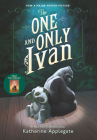
The One and Only Ivan
, by Katherine Applegate, is the 2013 Newbery Medal winner.  If the author sounds vaguely familiar, it's because over the course of five years in the late '90s she wrote the 54 books in the
Animorphs series.  One assumes she took a bit more time with this one.  It's the story of several animals -- including a gorilla named Ivan -- who live in neglect in a shopping mall zoo.  Ivan is depressed.  An older elephant dies from an out of control foot infection -- but first she elicits a promise from Ivan to look after the newest arrival: a baby elephant.  Working with the young daughter of the mall custodian, Ivan paints pictures which eventually gain enough attention for the plight of the animals that they end up in a zoo in much better circumstances.

I have to go back and re-read this one.  It's got lots of lovable animals in it -- a plus for many young readers.  But I remember feeling that it fell into a genre of kids' books which presents suffering as a necessary preliminary to enlightenment/happiness. The Miraculous Journey of Edward Tulane by Kate DiCamillo is similar.  These are definitely love-it-or-hate-it books.  I come out on the negative side: they feel heavy-handed in their morality and depressing in their action.  But there exist people I respect who are moved by them.  (See a thoughtful Heavy Medal Blog entry here.) My heart sinks to think of the significant number of very good books that came out this year -- not just Wonder.  And this is the best the ALA can offer kids?

Those great books from 2012 -- and of course many more from years past -- are still there, of course, waiting to connect with readers who will love them. 

And as for awards -- there's always next year...

Love,

Deborah