In which Annie (high school teacher, mother of two young girls and a younger boy) and her aunt Deborah (children's bookseller, mother of two young women in their 20s) discuss children's books and come up with annotated lists.

Saturday, March 10, 2012

Learning to read: word families

Dear Aunt Debbie,

I'm finding Eleanor's first forays into reading fascinating, and also the first time in reading to my children that I've felt like I don't fully know what I'm doing.  I have no memory of learning to read, and aside from knowing that it involves memorizing some sight words and learning to sound things out phonetically, am not sure how to best teach and encourage Eleanor.

I've asked my mom (a reading specialist, and the person whose teaching is getting Eleanor to read at the moment) and a friend who teaches kindergarten and first grade (and therefore, reading) to guest blog in the next couple of weeks, so we can get some expert voices in here.

In the meantime, I hit the library shelves yesterday on my way home.  As you mentioned in your last post, the reading levels governing each series seem wildly different.  I picked up a few books which seemed feasible in the near future, and two which I knew immediately upon looking at them would work with Eleanor right now.
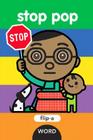
These are from the Flip-a-Word series, written by Harriet Ziefert and illustrated by Yukiko Kido.  The idea behind each book is to introduce kids to "word families": words which end with two or more of the same letters.  The words are short, and within each family, they rhyme.  Once you get the end sound -- "op," "un," "an," "ig," etc. -- it's easy to change the first letter and be able to read a number of related words: "stop," "pop," "top," "cop" (Flip-a-Word:Stop Pop).
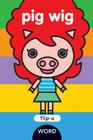
The illustrations are blocky and bold, and in each word family section, there's a page in the middle with a hole in it, so that the face on the bun is the same as the face on the sun, and the face on the boy in "run" is the same as the girl having "fun."  Each word is presented solo, then as part of a short phrase ("cop on top of pop") with an accompanying drawing.  The pigs with wigs in Flip-a-Word: Pig Wig are particularly funny.  At the end, there's a page with all the words in each family laid out together, and in each section one slightly more complex word joins them ("twig," "plan").  Finally, there's a page containing all the words used throughout the book, mixed up and in different colors and fonts.

Immediate buy-in from Eleanor.  The books are clear and simple enough for her to read aloud immediately, so there's a sense of mastery, and they're funny, so there's joy in the decoding.

I look forward to more ideas from you, too!

Love, Annie

Thursday, March 8, 2012

Learning to read 2

Dear Annie,

First of all, those reading levels on the $3.99 I Can Read, or Step Into Reading, or Green Light Readers, or whatever, are not absolute.  Every publisher makes up its own series title, then sets standards for each of its levels, which vary widely.  An example from two wonderful books:

Harcourt's Green Light Readers define  Level 1 as "simple words - fun rhymes and rhythms - familiar situations."  Here are the first two pages of
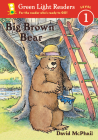
Big Brown Bear
by David McPhail, a starting reader I'm particularly fond of:
Page 1:
Bear is big.
Page 2:
Bear is brown.
About 80% of each page is a picture of Bear, his paint can, and his ladder. He goes on to climb the ladder with his blue paint, get bumped into by a little bear, fall and get covered with blue, wash up, obtain some green paint, and go back up the ladder, just as another little bear on a tricycle careens toward him.  "It's not over yet!" is the last line.

I Can Read, an imprint of Harper Collins, defines its Level 1 as "geared toward beginning readers who are just starting to sound out words and sentences on their own."  Here are the first two pages of
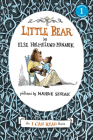
Little Bear
by Else Holmelund Minarik (longer discussion of this great book here), another Level 1:
Page 1:
WHAT WILL LITTLE BEAR WEAR?
It is cold.
See the snow.
See the snow come down.
Little Bear said, "Mother Bear,
I am cold.
See the snow.
I want something to put on."
Page 2:
So Mother Bear made something 
for Little Bear.
"See, Little Bear," she said,
"I have something for my little bear.
Here it is.
The wonderful Sendak illustrations fill less than half the pages.
As with so much of parenting, you're stuck with having to figure out which books are best for your kid's particular stage.  I encourage parents to browse all brands and levels of readers until they find one that feels like it fits with where their child is.  Then you have a way to judge that publisher's offerings.  Virtually all publishers start with Level 1 as the simplest (although a few cheat with Level 0 or My First I Can Read), then add more difficult words and longer stories up through Level 3, 4, or 5. 


You're less likely to get a word that will completely stump an emerging reader in these books -- but you'll still run into a few thoughs or strengths.  HSW, commenting on your last post, talks about those old baby books kicking around the house as good starter books.  Both my girls felt like they'd cracked the reading code with different board books.  Anything that's simple and liked by your child is worth a try.

I spend a lot of time talking with parents whose children are learning to read.  I've never been trained in how to teach reading, like your mother, my sister.  Judy -- feel free to chime in here anytime.  But themes come up, and different books work well with different kids.  I intend to talk more about specific books, and also different approaches to learning to read, in future posts.


I want to end this one with some thoughts about how learning to read can look from the point of view of a child whose parents have been reading her really wonderful long books.  Going from The Secret Garden to "Bear is big/Bear is brown" can be a shock.  There are points when learning to read takes off and a child can make great strides in a few weeks, but for a while the books a child can read on her own are mostly going  to be a lot shorter and less complex.  One needs reassurance that progress will continue.  I've been aware of some kids who resist reading on their own because they fear losing all the specialness of being read to.  I strongly doubt that your girls will fall into this category.  But one of my little pieces of advice to parents is to say to your child, I will always read to you, no matter how many books you can read on your own.  Most grown-ups fully intend to keep reading aloud, but it doesn't hurt to dispel any little worries for your child.

Love,

Deborah

Monday, March 5, 2012

Learning to read!

Dear Aunt Debbie,

Thank you for those science series suggestions -- I'm looking forward to checking some of them out.  I have to admit, nonfiction isn't my strong suit as a reader myself or as something I seek out for my kids.  But it's something I'd like to explore more.

As I mentioned last week, Eleanor is really starting to learn to read!  She's been practicing with a few amazing short books my mom wrote and illustrated years ago (which I'd love to get published in some form), and last night read two of them to Isabel by herself to distract Isabel while I was cutting her fingernails.  Tonight, Eleanor received a letter from a friend of my mom's -- written to be aimed at her level -- and was able to read almost all of it herself. 
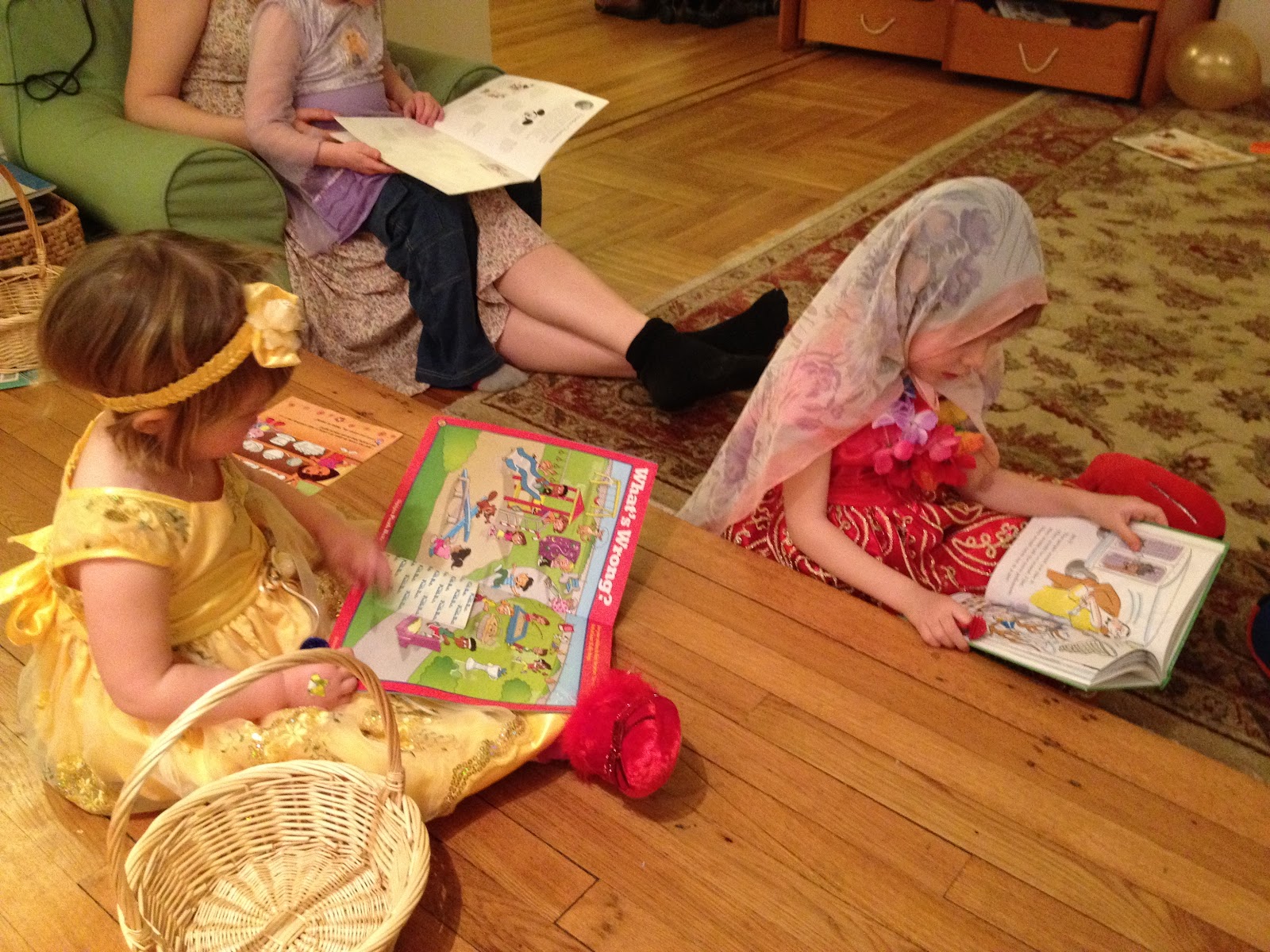
Taking a break from dress-up.  These girls are so ready to read.
So my question is, what should I be steering her towards next?  We have a bunch of Learning to Read series books, some Level 1, most Level 2 or 3.  But what comes even before that?  Are there any particularly good, very early readers that Eleanor can pick up right away?  Anything dreadful I should be steering the family away from?

Love, Annie

P.S. On the subject of repetitive books that can drive you crazy, I came across this blog post: If You Give A Mouse A Cookie, You're Fucked: 10 Tips for Avoiding Terrible Children's Books.  It made me laugh so hard I cried.

Sunday, March 4, 2012

Science series

 Dear Annie,

Oh my.  Being a parent calls up such reserves of imagination, patience and love.  And a well-stocked bookshelf.  A wonderful way to get your point across.  One of Lizzie and Mona's wonderful pre-school teachers always referred to things like kids' tantrums and meltdowns as opportunities.  I would say you grabbed the opportunity on that one.

We've received a question about science books for the four-to-six (or so) crowd.  A number of  good series exist, so I thought I'd toss out a list:

The Magic School Bus, by Joanna Cole.  I'm a purist about these: I only carry the original books, which combine the wonderfully eccentric Ms. Frizzle, her students, the ever-morphing bus, and very brief papers written by students.  There was a TV show, and then chapter book "novelizations" of the show, but I'm talking about the so-called Classics here.  The bus turns into a different object (spaceship, submarine, beehive, etc) and puts the members of a field trip literally into whatever they're studying:
There's lots of wisecracking, lots of facts, and very busy pages.  I got into the habit of reading only the main story (that's the typeset part at the top center of above page) the first time through, then gradually adding the comments from students and the kids' papers on the lined pages on later readings.  My respect for the science of the Magic School Bus books went way up when Mona's seventh grade class used The Magic School Bus at the Waterworks as the basic text for their unit on water purification.

I've met a handful of families who have worked their way through most of the Let's-Read-and-Find-Out Science series -- they come in both Level 1 and Level 2.  Both levels are readable in one sitting, and quite clear on whatever their topic.  They cover a huge range: Bugs are Insects, How a Seed Grows, From Egg to Chick, What Happens to Our Trash?, Volcanoes, Floating in Space, Why Do Leaves Change Color?, Oil Spill! The Moon Seems to Change, and on and on.  The inside covers of all of them list all the titles, sorted by topic.

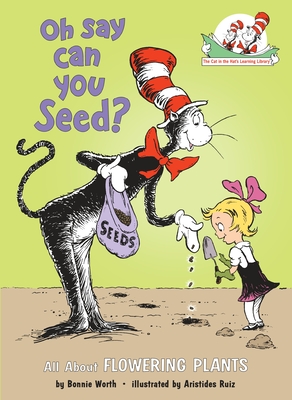
The folks who own the rights to Dr. Seuss are putting out a series called The Cat in the Hat's Learning Library, aimed at kids starting around 3 or 4.  The titles play off Seuss's real ones: Inside Your Outside, There's No Place Like Space, Is a Camel a Mammal?, If I Ran the Rainforest.  It's all written in Dr. Seuss meter, which could eventually drive a parent nuts.
 Let's start at the top with 
your brain.  It is key.
It controls all you do --
helps you laugh, learn, and see.

It makes your legs move
when you run, jump, or walk.
It makes your face move
when you blink, smile and talk.
(the book goes on to explain muscles later.)


Then there's a biography series by Mike Venezia called Getting to Know The World's Greatest Inventors and Scientists. (He also does series on musicians, on artists, and on all the U.S. Presidents, should you be looking for a biography of Chester A. Arthur.)  They're a little cartoony, but explain the basics about the scientists' work as well as their personalities.  The series also includes both women and people of color.  Marie Curie, Jane Goodall, Charles Drew (blood transfusions), Stephen Hawking, Albert Einstein, Rachel Carson are among those there.


Love,

Deborah


Friday, March 2, 2012

Behavior modification through literature

Dear Aunt Debbie,

I'm glad to hear from you about the ways in which independent booksellers are resisting and working around Amazon.  It always cheers me to know that you are physically selling books to real people, and thinking actively about what your customers want and need.  Let's hope the resistance continues!

And speaking of resistance....

Eleanor has been very 5-year-old tantrumy lately, pitching fits when she doesn't get her way about small things.  This morning I found myself drawing on literature as a way to engage her with what she's doing, and convince her that she wants to stop.  This isn't a new tactic on my part: Violet Beauregard in Charlie and the Chocolate Factory and Lulu in Lulu and the Brontosaurus have long been characters we invoke in the face of spoiled behavior: Do you really want to be like Lulu?

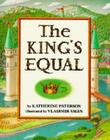
This morning, I struck on Katherine Paterson's The King's Equal, which I wrote about here almost two years ago.  We've been reading it again lately, more deeply.  Prince Raphael and the goatherd's daughter, Rosamund, make excellent foils for each other.  Raphael is spoiled and ungrateful in outsized ways.  After his father, the king, dies, Raphael collects insane taxes from all of his subjects, has lots of pictures painted of himself, and closes all the schools, putting children to work, because he feels only he needs to be smart. (Eleanor finds this part especially shocking.)

On his deathbed, the good king decreed that Raphael could only officially inherit the crown when he found and married a woman as intelligent, beautiful, and wealthy as himself.  Raphael believes there is no such woman, and threatens his advisers with imprisonment and death if they can't find him a bride by the end of the year.

Meanwhile, Rosamund is hiding in a shack in the hills with three goats and a magical talking wolf.  She is smart, kind, and grateful for the little she has (including a magically refilling small jar of grain), but Paterson manages to make her seem interesting as well.  After a time, the wolf tells her to go down to the castle and present herself as Raphael's bride.

Raphael declares her to be the most beautiful creature he's ever seen.  She proves her wisdom by telling him something about himself that even he doesn't know: that he's lonely.  And she proves her wealth by asking him whether there is anything he wants that he doesn't have.  Of course, there is -- lots.  Well then, she says, "perhaps you are poorer than I, for there is nothing I desire that I do not already possess." Ultimately, she proves herself to be more than Raphael's equal, and takes over the running of the kingdom while he goes off to spend a year with the goats, learning humility and how to bake bread.  When he returns, they are truly equals, and get to rule together.

I invoked Raphael and Rosamund this morning at the breakfast table, when Eleanor began to whine about walking to school instead of driving.  Which one do you like better? "Rosamund, of course!" Eleanor said, laughing.  And which would you rather be like?  "Rosamund!"  And what's Rosamund like?  We talked about kindness, and generosity, and more deeply about being grateful for what you have.  Eleanor seemed able to work through, in a way she hadn't before with this book, why Rosamund not wanting more than she has makes her wealthy.

And then we talked about what we have: enough food, enough clothing, loving family and friends.  "I have these Barbies, and I don't really even need them," Eleanor said.  Exactly.  And then we practiced: what do you think Rosamund would say if she didn't get her way about something little?  "Oh, well."  We ran through a couple of scenarios.  And the tantrum that had started ten minutes before dissipated.

I'm not saying Katherine Paterson is a magic bullet -- five minutes after this, Eleanor ignored all requests to put on her sneakers so we could go to school -- but it felt like a real working through of real issues, better than threats or pleading any day.

Love, Annie

Wednesday, February 29, 2012

Amazon wars

Dear Annie,

Wow -- both your girls are moving right along on the reading front.  And having a good time doing it.

We also loved the Golly Sisters and their distinctly juvenile form of sibling bickering.  There are three Golly Sisters books, two of them now sadly out of print.  In Hooray for the Golly Sisters,  May-May and Rose encounter a river separating them from a town where they're scheduled to perform that evening.  The opening lines provided us with another of those family literary references:
"Big river," said May-May.
"Very big river," said Rose.
It comes in handy when faced with any large body of water.

Some interesting developments are afoot this week in the world of bookselling.  You eloquently discussed some of Amazon's predatory practices back before Christmas.  Now they're putting the squeeze on some book publishers to cut the prices at which they sell to Amazon.  Last week, Amazon stopped selling e-books from Independent Publishers Group because it refused to cave to Amazon's demands.  "It wasn't reasonable.   There's only so far we can go," said the head of IPG, a distributor which sells books for hundreds of small publishers.  Our store gets many titles, including the wonderful Alfie books and Dogger by Shirley Hughes, from IPG.

Amazon-free
On Monday, Education Development Corporation, which publishes Usborne and Kane-Miller books in the U.S., announced it will no longer sell its 1,500 titles through Amazon.  They're an all-kids' book publisher -- we've talked about the Usborne activity books here and their First Experience series here.  Their publications which are nearest to my heart, though, are Atinuke's amazing Anna Hibiscus books.  Those come through Kane-Miller, which specializes in kids' books from around the world.  EDC started experimenting with going Amazon-less back in 2009 when it pulled its Kane-Miller titles -- at last I know why Anna Hibiscus was only intermittently showing up on Amazon.  They satisfied themselves that they could stay profitable -- Kane-Miller's sales are way up since then -- so they pulled the plug on the larger Usborne list this week.  The EDC president said Amazon is trying to "gain control of publishing and other industries by making it impossible for other retailers to compete effectively." And he concluded the announcement with a statement which has cheered many independent booksellers:
 From my point of view as an editor and publisher, this is also about supporting the connection between booksellers and book buyers. Hand selling has always been a necessary, integral part of the business, particularly with children's books. And it's still the hand selling, the independent booksellers and word of mouth that can create a best seller. Amazon might sell them, but independent booksellers are the ones who create them.
This is all cheering because from my point of view Amazon has seemed so unstoppable in its efforts to monopolize book sales in all forms.  Smart people are figuring out how to keep bookselling a varied and open marketplace.

Love,

Deborah

Tuesday, February 28, 2012

My sister, my sister

Dear Aunt Debbie,

Yes,  Isabel is getting into longer books.  Not full-on chapter books yet, though that will come in the next year, I think.  At close to 2 1/2, she mostly wants long picture books: both last night and tonight, the lineup included Make Way for Ducklings and Monsieur Saguette and his Baguette.

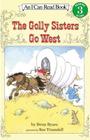
She has a good attention span for beginning reader books, too -- the kind with five or six short, connected chapters.  The first of these to capture Isabel's attention, several months ago, was a gift from you: The Golly Sisters Go West, by Betsy Byars.

The Golly sisters, Rose and May-May, are a pair of sibling performers in the Old West.  They set off at the beginning of the book in a wagon stocked with costumes, drawn by a patient horse, planning to perform in towns in the west along their way.  They are a little hapless (the first story is about figuring out how to get the horse to move, and to stop), but for the most part confident and competent: there's a reference to pursuing their dreams of singing and dancing even though people told them they wouldn't make it, and their shows appear to be well-attended.

One of the great pleasures of this book is the sibling bickering.  There's a lot of talk about who gets to go first on stage (I'm guessing this rang true to you and your girls), and some mild insulting of each other:

"I want to go first," said Rose.
"You got to wear the blue dress, so I get to go first," said May-May.
"I got to wear the blue dress because you look funny in blue," said Rose.
"Who says I look funny in blue?" asked May-May.
"Everybody!" said Rose.
"Give me the name of one person who says I look funny in blue."
"Everybody!" said Rose.
"I knew it," said May-May.  "You cannot think of one person."
"I can."
"Cannot."
"Can!"
"Then who?"
"Hmmmm, let me think," said Rose.

By the time they resolve the argument and open the curtain, their audience has gotten bored and left.  Rose and May-May, undaunted, perform for the dogs who are still hanging around.  Taking the kind of petty back and forth that siblings so often get into and making it funny, as Byars does, with the help of Sue Truesdell's illustrations, is a nice way to poke fun at it.

Our most exciting news of the week is that Eleanor is truly starting to learn to read.  I'm looking forward to the day -- not so far off -- when she can read the Golly Sisters to Isabel herself.

Love, Annie