In which Annie (high school teacher, mother of two young girls and a younger boy) and her aunt Deborah (children's bookseller, mother of two young women in their 20s) discuss children's books and come up with annotated lists.

Wednesday, July 28, 2010

Quiet

Dear Annie,

What a magical time you're having these days.  Ahhh.

The Wind in  the Willows was one of those Stuart Little moments for me.  I think I tried engaging my kids in the book at too young an age -- and I didn't have the amazing help of Inga Moore's illustrations.  It was a book that I had loved, but that never took with my next generation.

Inga Moore is great.  She's also done a heavily-illustrated, unabridged
The Secret Garden
which is gorgeous.

Sticking with good illustration and three or four year-olds, I wanted to talk about a new and lovely book by Deborah Underwood, illustrated by Renata Liwska: 
The Quiet Book
.
There are many kinds of quiet:/ First one awake quiet/jelly side down quiet/Don't scare the robin quiet/Others telling secrets quiet....


The whole book is a list.  The pictures are good (bordering on cute, maybe, but still very expressive), and the situations cover a huge range.  What I love about this book is that it's such a good one to talk about with a child.  It gives you the opportunity to delve into how one feels in response to a whole gamut of stimuli.  It's so much more natural than sitting down with a clunky this-is-how-we-feel book (I am a deep disliker of the dreaded Berenstain bears -- but that can hold for another day).  And there's so much to imagine.  An excellent conversation starter.

Love,

Deborah

Monday, July 26, 2010

Vacation reading

Dear Aunt Debbie,

It is such a gift to be on vacation in a quiet place, a place removed from the hustle and bustle of everyday life.  Or at least, as removed as you can be with a 3 1/2 year old and a 10 month old in tow.

We brought a small selection of books with us for the plane and the week away: a few board books, a few longer picture books, and one chapter book to see if it would work for Eleanor.  I'm happy to report that it did, and that the reason it did has everything to do with the extraordinary illustrations of Inga Moore.

The book is a somewhat abridged version of The Wind in the Willows, by Kenneth Grahame.  I'm not sure exactly how abridged it is -- clearly, it's had a few chapters cut out, but the chapters which remain don't feel heavily edited.  I don't know the original text well enough to tell how much has been taken out; I think I read it as a kid, but it didn't leave a huge impression.  That is clearly because I didn't have Inga Moore's illustrations to look at while I was reading.  

What stuck from my childhood was a vague memory of Mr. Toad running around the countryside madly, which he does.  I may have remembered his obsession with motor-cars.  What I didn't remember at all are the shadings of fond and close friendship between the Mole and the Water Rat.  After reading aloud all week, I feel terribly fond of Mole, who is so thrilled by the life of the riverbank and the feel of the sun and being aboveground that he gives up his tunnel home and moves in with Ratty for the duration of the book.  Mole is appreciative of the world around him, and reading Grahame's words and looking at Moore's drawings, the English countryside and riverbank come to life.  

I am without my scanner, so the best I could do was to take a picture of one illustration and upload that; I'll scan in a few choice pages when we get home (done!).

You can see how expressive everybody is: Mole's sweet little face, Mr. Badger's instructional tone, the Water Rat's alertness.

The text alone would not have held Eleanor: this is absolutely a book for older kids.  But the drawings pulled her in -- there is a drawing on almost every single page, some threaded through the text: 
 
some a double-page spread:


some small:

 
Especially when we got to Mr. Toad's adventures, she was rapt, and able later in the day to recount all the major plot points to her grandparents (who gave her this beautiful book).  

It's interesting to read this as an adult and recognize Toad as the portrait of an addict.  His friends, led by Mr. Badger, have a major intervention to cure him of his self-destructive motor-car buying and crashing behavior, and when they lock him in his room, he goes through withdrawal symptoms (see text of small picture, above).  Toad's exploits are funny, but also kind of disturbing: he lies, steals, is thrown in jail, escapes to lie and steal again.  He's never exactly repentant.  But there's something Mark Twainish about him, more than just the riverbank setting, a kind of craftiness that you have to enjoy even as you deplore it.  Mole and Ratty and Mr. Badger clearly feel the same way, and stay with him through it all.  I'm looking forward to reading it again.

Love, Annie

Saturday, July 24, 2010

Back to the beat

Dear Annie,

Doonesbury: what a great idea.

I know I did an about-face in my last post: from jazz and rhythm for toddlers to war for pre-teens.  Sorry about that (to use a Vietnam War-coined phrase).  So now that I've scanned a few pictures from music books into my computer, I'll lurch back to little ones and music.

You hit the two of the best books on rhythm, so I want to move on to more classical fare.  Starting with the delightfully illustrated
Zin! Zin! a Violin
by Lloyd Moss. It introduces ten instruments, one page at a time, starting with the trombone:
With mournful moan and silken tone,
Itself along comes ONE TROMBONE.
Gliding, sliding, high notes go low;
ONE TROMBONE is playing SOLO.
I can imagine your household, with your talent for accents and singing.  Next, the trumpet, giving the enthusiastic feel of Marjorie Priceman's pictures:

It goes on through cello, harp, clarinet and more.  Then they file onto a stage, and play:

The STRINGS all soar, the REEDS implore,
The BRASSES roar with notes galore.
It's music that we all adore.
It's what we go to concerts for.
A happy line of hand-holding cats, dog, and a mouse boogie across the bottom of the page.

And speaking of concerts, I'm ending with my favorite book for young concert-goers:
 
The Philharmonic Gets Dressed

by Karla Kuskin.  It fits into the tradition of Ramona wondering about Mike Mulligan going to the bathroom.  In this one, we follow the getting-ready rituals of many of the 105 members of an orchestra:
First they get washed.  There are ninety-two men and thirteen women.  Many take showers.  A few take baths.  Two men and three women run bubblebaths, and one man reads in the tub while the cat watches. One woman sits in the bubbles and sings.
They dry off, put on underwear (boxers and briefs for the men, and an array of early '80s underwear for the women), each step with Marc Simont's  illustrations of six or more people, each doing things slightly differently:


There are ties and overcoats and saying goodbye and getting transportation to the concert hall.  The book ends with "the man with the black and white wavy hair" (we've been following him too) stepping onto the podium, raising his baton, and starting the music.

What I love about this book is that it takes seriously all those little steps which can dominate parts of the day for small children, and which adults tend not to mention much (see Miss Binney, in Ramona quote referenced above).  And it turns a somewhat confusing crowd of grown-ups into people who put on their pants (mostly) one leg at a time.

Love,
Deborah

Wednesday, July 21, 2010

Graphic depictions of war

Dear Aunt Debbie,

Ten years old -- yeesh.  I don't know what I'd recommend.  I'll be interested to hear your thoughts on the Walter Dean Myers, though; he's so good at so many other subjects.  I'm very much of your opinion, that the best thing a parent can do when a kid has a strong interest is to study it along with him or her, exploring what's out there and talking about it together.  Of course, I haven't had too much of that experience yet with Eleanor, except for requests for stories about princesses.

I'm wondering if something like Garry Trudeau's Doonesbury cartoons about the current wars in Iraq and Afghanistan would be appropriate.  They're accessible, though not aimed at kids, and when I've read comments on his work it seems like servicemen and women think they're really accurate.  Because every comic was published in daily papers, they're also guaranteed not to be too harrowing or inappropriate. 

The trilogy of Iraq War stand-alone books Trudeau has put out focus on life-changing injuries suffered in the war: BD's loss of his leg (and helmet); a young soldier nicknamed Toggle and his injuries, including TBI (traumatic brain injury), which leaves him unable to speak clearly.  Most of the comics in these books are focused on rehabilitation and recovery, but they provide a searing and honest picture of the war and its effect on soldiers.  The books: The Long Road Home, The War Within, and Signature Wound. You can find a complete archive of all his comic strips, as well as a ton of information, at doonesbury.com.

I started reading Doonesbury books at Grandma and Grandpa's house when I was little, finding them on the cartoon shelf with all the Pogo books and New Yorker cartoon compilations.  While I didn't fully understand them at first, they made an impression, and as I returned to them again and again while the grownups were talking in the living room, they gave me a real sense of American political history over the past 40 years.  Maybe this is a good way in?

In 2006, Trudeau also started a blog for current forces deployed in Afghanistan and Iraq.  The Sandbox contains posts directly from soldiers.  I haven't read much of it, and don't have a sense of whether it's kid-appropriate, but this might be something for a parent to read with a kid.  There's also a Sandbox book, which again I haven't read, but might be worth reading with or before an interested kid does.


You mentioned Tim O'Brien's The Things They Carried. This is perhaps my favorite book to teach of all time.  It's a collection of linked stories about the Vietnam War, but more than that, it's a book about storytelling.  I teach it to high school juniors and seniors in a Writers' Workshop course, where students have signed up to explore creative writing.  I wouldn't recommend it for kids younger than 15 or 16, for two reasons.  First, some of the scenes contain images of disturbing violence and of death.  Second (and perhaps more importantly, as most teenagers these days have seen a lot of violent images by the time they hit high school), O'Brien plays with truth-telling in complex ways, and in my experience, most ninth-graders and younger won't fully get what he's writing about.

By telling and re-telling certain stories in the book, and calling it "a work of fiction" but narrating in the voice of a character named "Tim O'Brien," O'Brien confronts readers over and over with the question of what in his book is true, and what truth even means.  He offers his own definition of "story-truth" -- something that can be true without having happened -- and "happening-truth," something which occurred.  Story-truth, he says, can be truer than happening-truth.  (You discuss that with a roomful of 16 and 17 year olds, and you blow their minds.)  It's an extraordinary book, and a potent model to get students to write about difficult experiences in their own lives.  And O'Brien's writing is both gorgeous and straightforward.  In ten years of teaching, I have not had a single student who didn't like this book.

On that note, I'm off to pack.  We're heading out on vacation for a week and a half, so while I should be able to keep posting, I won't have my whole library to draw from.  But we'll make do.

Love, Annie

Monday, July 19, 2010

Combat and kids

Dear Annie,

I love Charlie Parker Played Be Bop.  I also love Hand Hand Fingers Thumb, but feel extremely guilty that I knew you were reading the abridged board book version, but I still haven't sent you the
unabridged one
. Unlike many of those Bright & Early abridged board books, I think the one you've got hasn't changed the words, which is what makes it so good.  I've always thought of the book as having some historical content: those monkeys are such beatniks, as is their beat.  Published in 1969, oddly enough, in the post-beat era.

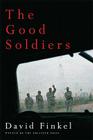
I'm doing an about-face on topic here, because I had an interesting question today at the store. A ten year-old boy and his mom were looking for books for him about the Iraq war.  He had seen and wanted an adult book,
The Good Soldiers
, by David Finkel. I carry it because the American Library Association listed it on their Ten Best Adult Books for Teenagers list, and because it's a good, (although searing) book.  I completely do not see it as a book for a ten year-old, no matter how precocious.  He really wanted something about the Iraq war -- was basically tired of the many books that exist for his age group about World War II and earlier.  He wanted to read about something that takes place during his lifetime.  His mother worried that he was caught up in the romance of war and combat, although she was willing to pursue the question.  I find it hard to imagine anything depicting romance of war in a combat zone in which roadside bombs and suicide bombs are two of the main methods of killing.

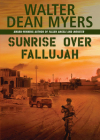
I found two possibilities, both rated as Young Adult, and neither of which I've read.  I carry
Sunrise Over Fallujah
by Walter Dean Myers, a writer whom I usually like a lot.  The novel focuses on the men and women in one company, during 2003.  The reviews give the impression that Myers communicates the terror and frustration of the war, but aims it at a school-age audience.

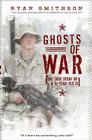
The other book I found (good old Google) and have ordered to look at is called
Ghosts of War: The True Story of a 19-Year-Old GI
by Ryan Smithson. It's one young man's memoir of fighting in Iraq. The book was published in 2009, but appears to be based on events a few years earlier.  I have the impression it doesn't have the literary strength of the other two books.

There are also books about the non-combatants: children whose parents go off to war, child refugees displaced by war.  They held no interest for my young customer.

I've ended up full of questions I don't know the answers to.  What to do for this very likable smart ten year-old boy?  Does one help one's child pursue interests wherever they lead?  My immediate reaction is yes, and the parent goes along for the ride.  This mother was definitely planning to read whatever her son ended up getting.  At what age does one start exploring the horrifying-but-true? 

I know you teach The Things They Carried, by Tim O'Brien, to your high school students.  Freshmen?  Seniors? Is there a difference? What are your reactions to this ten year-old?

This all feels a long way from last week's festival of love.  But one of the things I really like about my job  is the constant surprise of where books can lead kids -- and adults.

Love,

Deborah

Saturday, July 17, 2010

Books with a good beat

Dear Aunt Debbie,

What a wedding! It's taking us more than a day to recuperate.  As we return to normal life here, images from the past week of family celebration keep floating through my mind.  One of my favorites has got to be Eleanor dancing behind the New Orleans-style second line band leading the guests to the ceremony (a brilliant idea for a wedding, by the way).  From infancy, Eleanor has loved a good beat -- we used to calm her colicky crying with Jimi Hendrix -- and Isabel is now the same way.

I've been thinking about books that mimic the rhythm and feel of a good song.  Two of our favorites are board books about music, one with some historical content, and one that's just good and silly.

Chris Raschka's Charlie Parker Played Be Bop reads like a jazz riff.  It provides the absolute basic facts about the jazz great Charlie Parker: "Charlie Parker played be bop.  Charlie Parker played saxophone."  and then goes into what the music sounds like, with rhyming rhythmic words: "Be bop.  Fisk, fisk. Lollipop.  Boomba, boomba.  Bus stop.  Zznnzznn.  Boppity, bibbity, bop...."  Raschka's illustrations include dancing boots and chickadees, and a sour-looking black cat ("Never leave your cat alone.").  It's impossible to read this book without bopping and tapping your foot yourself.

Hand, Hand, Fingers, Thumb
is nonsense rhyme about monkeys drumming on drums.  It, too, asks for a reading with steady rhythm: "Hand, hand, fingers, thumb.  One thumb, one thumb, drumming on a drum.  One hand, two hands, drumming on a drum.  Dum ditty dum ditty dum dum dum."  I think I have the whole thing memorized.  The monkeys in Eric Gurney's drawings are so pleased with themselves and their drumming, and the book is so joyful and silly, that it's been one of our favorites for ages.

I'm sure there are more music-related books out there that mimic the feel of the songs they write about -- do you have some favorites in this category?

Love, Annie

Thursday, July 15, 2010

True love: the ceremony

Dear Annie,

I'm writing this the morning of your brother's wedding.  I love the tribute to true love you just posted, and thought I'd continue in that vein.  Here are excerpts from two truly wonderful pieces of children's literature.

First, as you know, I'm a very big Beverly Cleary fan.  This is from
Ramona Forever
, set in the summer after her third grade year.  Ramona's aunt is marrying her friend Howie's uncle.  The ever-frugal Quimbys have new dresses for their daughters to wear in the wedding party, but figure they can make do with their old party shoes:

“Beezus, my feet are killing me,” whispered Ramona with tears in her eyes.  “My shoes are way too short.”
“So are mine,” agreed Beezus. “I'll never make it down the aisle”
Grandmother Kemp was lining up the wedding party in the order in which they were to enter the church.  “Once you reach your place at the front of the church, don't move,” she ordered.
“Quick,” whispered Beezus to Ramona.  “Give me your shoes.”  Astonished, Ramona obeyed.  As the wedding party proceeded through the reception room to the vestibule of the church, Beezus dropped the two pairs of slippers into a large bouquet of rhododendron blossoms.  When the organ burst forth with the processional, the girls stifled their giggles.  Uncle Hobart's friends, the bearded ushers splendid in their rented clothes, grinned at the girls and, after escorting Howie's mother and grandmother and Mrs. Quimby to the front pew, returned to walk slowly down the aisle together.
Ramona and Beezus counted to four.  With the carpet tickling the bottoms of their feet and their nosegays quivering from nervousness, they followed, slowly and with dignity.
The scene continues to where Ramona saves the day by finding the missing ring, but I'll leave our readers to anticipate that, as we are anticipating Michael and Grace's walk down the aisle.

The next is from
Walk Two Moons
, a marvelous and emotionally rich book by Sharon Creech.  (I'd call it fourth grade and up).  Salamanca is traveling cross-country with her grandparents, who reminisce about their lives.  Here is the story of their marriage, narrated by Sal:
They were married in an aspen grove on a clear July day, and afterward they and all their friends and relatives had a wedding supper on the banks of the river. ...
At the end of the supper, Gramps picked up Gram in his arms and carried her across the meadow.  Behind them, everyone was singing, “Oh meet me, in the tulips, when the tulips do blooom--”  This is what they always sing at weddings when the married couple leaves.  It is supposed to be a joke, as if Gram and Gramps were going away by themselves and might not reappear until the following spring when the tulips were in bloom.
Gramps carried Gram all the way across the meadow and through the trees and into the clearing where their little house stood.  He carried her in through the door, and took one look around and started to cry.
The reason Gramps cried when he carried Gram into the house was that there, in the center of the bedroom, stood his own parents' bed – the bed that Gramps and each of his brothers had been born in, the bed his parents had always slept in.  This is where his father and brothers had disappeared to during the wedding supper.  They had been moving the bed into Gram and Gramps's new house.  At the foot of the bed, wiggling and slurping, was Sadie, Gramps's old beagle dog.
Gramps always ends this story by saying, “That bed has been around my whole entire life, and I'm going to die in that bed, and then that bed will know everything there is to know about me.”
So each night on our trip out  to Idaho, Gramps patted the bed in the motel and said, “Well, this ain't our marriage bed, but it will do,” while I lay in the next bed wondering if I would ever have a marriage bed like theirs.

Here's wishing Michael and Grace a wonderful marriage.

Love,

Aunt Debbie