
I love that video. Your life sounds extremely intense right now, too! Any chance there are some less-traumatic books in those boxes as well?
As I finish my portfolios, here's our final guest blogger (for the moment -- I hope we'll have more in the future). Denise is the mom of one of Eleanor's good friends, and she's also an amazing middle school English teacher. Here's her post:
Picture Books that Raise Social Awareness
I just finished teaching a unit to my eighth-grade English classes called: Picture Books on Social Issues. In this unit, I read a few mentor texts and guided the students in writing their own books on issues of personal importance. Just last weekend, I read and graded all 85 of their picture books (ahhh… what a relief… now I can pay more attention to my two biological children) which they wrote and illustrated themselves. Some wrote Seussish, rhyming stories with invented creatures, others historical fiction about the Great Depression and the Armenian Genocide, and others wrote passionate allegories about bullying, peer pressure, and animal abuse. As a culminating activity, my students will be reading their books to students at a nearby elementary school.
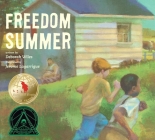 One of my favorite texts to teach is Freedom Summer, written by Deborah Wiles, illustrated by Jerome Lagarrigue. This story takes place in the American South in the 1960’s, right at the beginning of desegregation, and is about two young boys who are best friends: Joe who is “the color of the pale moths that dance around the porch light at night”, and John Henry who is “the color of browned butter.” They love to swim in the creek, shell butter beans, and eat ice pops together. One day, Joe’s Daddy says, “The town pool opens tomorrow to everybody under the sun, no matter what color.” That day, the boys run and race each other to the pool, but have to stop abruptly. Instead of gleaming, cool water in the pool, there is steaming asphalt. One of the most poignant illustrations is of the two boys sitting on the diving board facing the dark mass, their slumped backs facing the readers; they seem to be hovering over and surrounded by this dreary reality that as John Henry says, “White folks don’t want colored folks in their pool.” This moment, of course, changes them, and as the story progresses, they figure out a way to show their town that everyone under the sun really can unite and be harmonious.
 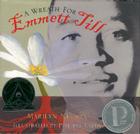 Another book about this time period that I find hauntingly beautiful is
 A Wreath for Emmett Till which is a heroic crown of sonnets written by Marilyn Nelson and illustrated by Philippe Lardy. In it, the sonnets bring together pieces of Till’s life and weave them into a wreath of symbolism, imagery, and heavy emotion. One of the sonnets that makes me gasp is written to Mamie Till Mobley, Emmett’s mother: “Your only child, a body thrown to bloat, / mother of sorrows, of justice denied. / Surely you must have thought of suicide, / seeing his gray flesh, chains around his throat. / Surely you didn’t know you would devote / the rest of your changed life to dignified / public remembrance of how Emmett died…” This book really makes it impossible to forget the brutal injustice of his death.
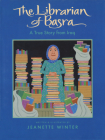 Moving to a different part of the world: a somewhat more uplifting book is The Librarian of Basra by Jeanette Winter which takes place during the invasion of Iraq in 2003. This is a true story about Alia Muhammad Baker who, with the help of some of her neighbors, rescued seventy percent of Basra’s library collection before the library was burned down due to bombs. Because she feared that harm would come to the library, she moved thousands of books to what seemed like safer places, her own home, other neighbor’s homes, her friend Anis’s restaurant.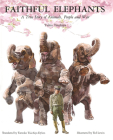
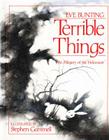 There are two other books on different wars that I read to my students: Terrible Things: An Allegory of the Holocaust by Eve Bunting, and Faithful Elephants: A True Story of Animals, People and War by Yukio Tsuchiya. Bunting’s book deals with how many people look the other way when terrible things happen. In this book, ominous shadows called the Terrible Things represent the Nazis and they come to the woods and take away different animals, first the birds, then the squirrels, and later the rabbits. Each time an animal is taken away, the other animals are glad and continue on with their lives; in the end, one small rabbit survives to tell others about what happened. The Tsuchiya book, like Winter’s book, is a non-fiction story; it tells of what happens to animals in a zoo in Tokyo during the attack of Japan at the end of World War II.
These books lead to important discussions in my classes and sometimes bring about tears, especially Faithful Elephants. I think they show significant lessons about the world, but I wonder at what age I could read these books to my own children. I do think reading picture books can help us raise more compassionate, aware, and tolerant individuals, though at what point do I teach my own children about lynching and the Holocaust?
I have some thoughts about this, which I'll get to on Friday. You?
Love, Annie


