In which Annie (high school teacher, mother of two young girls and a younger boy) and her aunt Deborah (children's bookseller, mother of two young women in their 20s) discuss children's books and come up with annotated lists.

Friday, July 27, 2012

Searching for great gay-friendly picture books

Dear Aunt Debbie,

Over the last few months, quite a number of my friends have welcomed new babies into their lives -- they seem to come in waves, like weddings did in my mid-twenties.  I found myself heading to my favorite independent bookstore multiple weekends in a row to buy a few first board books for each family.  As I did so, I found myself wondering, as I have in the past, about whether there are any really great children's books out there involving gay characters, especially families with gay or lesbian parents, that aren't purely Message Books.  You know the kind I mean: well-meaning, but didactic, more about Showing Gay People are Normal than about telling a story.

For pretty much any new baby, I gravitate towards the books I highlighted in my "brand-new babies" section of the Top 25 (well, 33) picture books list I wrote up a couple of months ago.  Several of these books depict animal characters rather than human ones, and a couple of them (Baby! Baby! and I Love Colors) have terrific photos of babies, but no adults at all.  But it's nice for kids to have books which reflect the families they have, and do so in natural, easy ways.

For white friends of mine who have just adopted an African-American baby, I included Vera B. Williams's fabulous "More, More, More," Said the Baby, in which the illustrations to the three brief stories show racial diversity unobtrusively, in the context of a beautifully-written celebration of chasing after and playing with your small child.
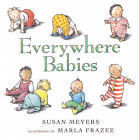
For my college roommate and her partner, welcoming their first child, one of my choices was Everywhere Babies, by Susan Meyers, illustrated by Marla Frazee.  Frazee's illustrations are the reason I like this book, and the reason you first recommended it to me.  In the packed pictures of babies being hugged, fed, rocked, and played with in various ways, there are depictions of a number of different kinds of families, including what appears to be an interracial lesbian couple passed out on a bed next to a sleeping baby in a cradle, and a few pairs of dads who might be couples themselves.  The text accompanying these pictures is general and rhythmic:

Every day, everywhere, babies are born --
fat babies, thin babies, small babies, tall babies, 
winter and spring babies, summer and fall babies.
...
Every day, everywhere, babies are fed --
by bottle, by breast, with cups and with spoons,
with milk, and then cereal, carrots, and prunes.

You get the idea.  It's fine, and scans well, but it doesn't cry out for multiple rereadings.  The pictures are inclusive, but the last whole family shown on the page celebrating the baby's first birthday is still white and hetero.  I'd like to find a book I love as much as the others on my list that depicts families which look more like the families my gay friends are now creating.

I've written before about Patricia Polacco's In Our Mothers' House, which tells the story of a lesbian couple and their three adopted kids, each of a different race (the eldest daughter narrates).  There are a lot of things to like about the book, as with pretty much anything Polacco writes, but it's not the book I'm looking for.
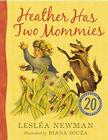
At the library today, I picked up the infamous Heather Has Two Mommies, Leslea Newman's oft-banned book which made so many headlines 15 and 20 years ago.  I'd never actually read it, but it's -- okay.  It's clearly an Issue Book, and while it shows a sweet, loving family made up of two moms and a daughter, it's also a little odd in the way it opens up the issue.  Heather goes to a playgroup for the first time, and realizes for the first time that all the other kids have daddies, and she doesn't.  She feels bad, and cries, and the teacher consoles her, and has all the kids draw pictures of their different families, so everyone can appreciate that all kinds of families provide love and support.  It is, of course, the most diverse preschool group EVER, so there's another girl with two daddies, and an adopted kid, and a kid with divorced parents, and multiple races represented.  Maybe still useful for getting across the Message, but odd in its implication that Heather would never have run across other families different from her own before going to playgroup, and that her moms would never have talked to her about their own family.
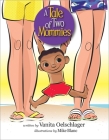
On the same shelf, I found the more recent A Tale of Two Mommies, by Vanita Oelschlager (spoiler alert: it has nothing to do with Dickens).  In this one, a little dark-skinned boy answers the questions of two other kids on the beach about which of his moms (here, "Momma" and "Mommy") takes on which responsibilities of parenting:

Which mom coaches your T-ball team?
Which mom's there when you've had a bad dream?


Mommy is the coach of my T-ball team. 
Both mommies are there when I've had a bad dream.

The mommies appear largely from the waist down, as two pairs of long white legs -- I think the facelessness is supposed to represent a child's-eye view, but I find it a little disconcerting.  Again, it's -- okay.
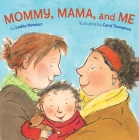
In doing a quick online search, I came across some good reviews for Leslea Newman's newer Mommy, Mama, and Me -- have you read it?  I'd love your suggestions on some of the newer stuff out there.  Our foray into gay YA generated a nice long list of options (which you can find here under "Gay and Gay-Friendly YA"); I'd love to do the same for picture books.


Love, Annie

Wednesday, July 25, 2012

Running away

Dear Annie,

I'll confess that in addition to liking John Green's books, I occasionally go through flurries of watching the Nerdfighters video blog.  The combination of smart, occasionally outraged and often absurdist speed-talking can keep you coming back.

Here's the story of a community from a pre-digital era:
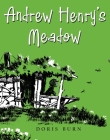
Andrew Henry's Meadow
, by Doris Burn.  Published in 1965, it was brought back from out-of-print status this summer.  The illustrations feel very Robert McCloskey-ish.  It's a book about a group of young people who, like the Nerdfighters, feel apart from the mainstream.  Andrew Henry, middle child of five, "liked to build things."  He makes a series of Rube Goldberg-ish contraptions, all of which irritate different members of his family:


Mrs. Thatcher was unhappy when Andrew Henry built a helicopter in the kitchen.
The helicopter had many fine features.  Nevertheless, she said to him firmly, "Andrew Henry, I have work to do.  You must take that thing out of the kitchen."

His father is annoyed at an eagle's cage in the living room, his sisters are upset when he hooks up a merry-go-round to their sewing machine, and on it goes.  So one day he packs up his tools and leaves home, walking through woods and swamps until he finds a meadow, where he builds himself a house and is content.

Alice Burdock, carrying birdhouses and cages and sporting a dress arrives.  She loves birds, but her father hates them, so she asks Andrew Henry to build her a house, which he does:
It was a nice house, especially for a person who liked birds.
Next is a boy with fishing rods and boats: Andrew Henry builds a bridge, then builds a house on the bridge.  A boy with mostly rodent-y pets gets an underground house, and a tuba-playing girl gets a teepee with an igloo-style tunnel entrance because "she needed privacy for her music."  Soon there are nine children, each with a house in Andrew Henry's meadow.


Parents finally notice, there are four frantic days of searching, followed by discovery and rejoicing:
The fathers and mothers were too happy to scold or ask any questions.  Their children were safe.
The runaways are ready to go home, and all is happy.  Andrew Henry's family -- like Spinky's -- appears to have learned its lesson and he is given a basement workroom and much encouragement for his projects.

Love,

Deborah

Monday, July 23, 2012

John Green's intelligent name-dropping

Dear Aunt Debbie,

In my ongoing reveling in the extra reading time afforded by summer, I read two John Green books last week in three days.  They made me want to go right out and find everything else he's written -- I'm a convert.  That's not to say that I'm diving into the Nerdfighter world myself, but Green's appeal to smart YA readers is crystal clear.

I'd previously read Will Grayson, Will Grayson; last week, I finally read The Fault in Our Stars, after being exhorted to check it out by a few of my students, and followed it up with
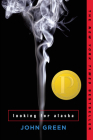
Looking for Alaska
, which won Green a Printz Award in 2005.

What strikes me about all three of these books is their intelligence, their smooth incorporation of complex intellectual ideas into readable, compelling narratives.  In Will Grayson, Will Grayson, the Will Grayson written by John Green uses the Schrodinger's cat thought experiment: a cat is put inside a steel box with a small amount of radioactive material, which may or may not decay over the course of an hour, causing the release of acid which would kill the cat.  Before opening the box, the idea is that the cat has an equal chance of being alive or being dead -- that it is both alive and dead at the same time.  Green applies this idea to the growing relationship (or is it not a relationship?) between Will and a girl named Jane, who spend much of the book dancing around each other.  In The Fault in Our Stars, we get Zeno's Paradox (the one about Achilles and the tortoise) and Maslow's Hierarchy of Needs.  In Looking for Alaska, there are extended meditations on the reputed last words of Francois Rabelais: "I go to seek the Great Perhaps," and about Buddhist philosophy. There are also literary quotes and references up one side and down the other: Shakespeare, W.H. Auden, Edna St. Vincent Millay, Gabriel Garcia Marquez, T.S. Eliot, the list goes on. 

Green doesn't make this name-dropping feel obnoxious.  It's sometimes the narrator who introduces the complex concept or quote, sometimes another character who gets the narrator thinking about the idea for the first time.  There's a spirit of inquiry and pleasure in ideas throughout.  There's also that excellent YA sense of sticking with a narrator who's a bit of an outsider, an observer, as he or she works to find a place in a community.

Both Looking for Alaska and The Fault in Our Stars deal quite directly with teenage death, and more specifically with the deaths of characters you really care about.  They aren't light reads, but they leave you thinking.  I can imagine each of them encouraging teenage readers to pick up the other materials referenced, and go further on their own.

Love, Annie

Friday, July 20, 2012

Ramona the younger

Dear Annie,

I'd never thought of the Ramona books in terms of birth order, but you may be onto something here.  The three members of our household who loved the Ramona books are all youngest children.  Lizzie, our firstborn, enjoyed them, but it was Mona and her parents (all youngest children) who reveled in repeated readings.  I've never bought into the firstborns-are-X, youngest-are-Y theories of personality.  But maybe there's more resonance between Ramona and the younger crowd.

I've been re-visiting Ramona the Pest since your last post.  Can't resist offering an excerpt.  Ramona has grudgingly agreed to loan an object to classmate Howie to bring to show-and-tell: "a stuffed rabbit that had already been given hard wear before the cat adopted it as a sort of practice gopher."  Howie has little interest in displaying it once in school, but is coaxed to the front of the class by Miss Binney.
   "Is there something you would like to tell us about your bunny?" asked Miss Binney.
   "No," said Howie.  "I just brought it because my mother made me."
   "I can tell you something about your bunny," said Miss Binney.  "It has had lots of love.  That's  why it's so worn."
   Ramona was fascinated.  In her imagination she could see the cat lying on the carpet with the rabbit gripped in his teeth while he battered it with his hind feet.
Miss Binney eventually gives the bunny a red ribbon.  On the walk home, Howie and Ramona have a huge disagreement over ownership of the ribbon.  Howie feels the teacher gave the ribbon to him; Ramona's interpretation is that it was given to her bunny, so possession is hers. 

So many scenes in this book have to do with misunderstandings and different interpretations of words and actions.  Ramona sees things from her very personal perspective: others' frequently different views are baffling and frustrating.  When she wants something -- the ribbon, or Susan's curls -- it's because she wants it, not because she wants to flout the rules.  Ramona is someone who's not going gently into the socialization process.  As the books progress, she matures but holds onto her outsider perspective.  The world around her expands, including more neighborhood, family, real life.

Love,

Deborah

Tuesday, July 17, 2012

Rule-breakers and their siblings

Dear Aunt Debbie,

While I understand the desire to write about a book in a way that doesn't give away major plot elements, that is one very strange review.  We read the first Clementine book several months ago, and enjoyed it -- shades of Ramona or Junie B. Jones, with uncontrollable but generally well-meaning acting out, and a quirky heroine with a pleasant, also quirky family.  Knowing that this is the series Pennypacker is most famous for, I'd think a reviewer would want to drop a hint about unexpected darker content. 

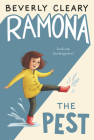
Eleanor and I just finished Ramona the Pest.  As you've written before, Beverly Cleary does a terrific job of communicating kid-logic.  Ramona's thought processes and obsessions feel age-appropriate, though there's also a clear adult sensibility in the narration, providing details which allow you to see what's going on beyond Ramona's understanding.  Ramona is exactly Eleanor's age in the book -- five years old, and starting kindergarten.  So there's some room for identification with a character there, but at the same time, Eleanor is not anywhere near the kind of rule-breaker Ramona is.  As we read about Ramona's inability to keep herself from pulling her classmate Susan's curls, even when she wants to please her teacher, Miss Binney, Eleanor seemed a little confused: why can't Ramona control herself better?

As foil to Ramona, there is of course her older sister Beezus, who follows rules, is concerned about reputation, and finds Ramona's uncontrollable behavior incredibly hard to deal with.  There's something to identify with there, too, in the older sister.  But of course Beezus isn't as interesting a character as Ramona.  We get one book from her perspective (Beezus and Ramona), as opposed to Ramona's seven.

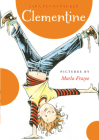
Clementine's
foil isn't a sibling (she has a younger brother, who she refers to with a changing variety of vegetable names: "Spinach," "Lima Bean"; at least in the first book, he's not much of a character), but her friend Margaret, who is neat, clean, organized, and rule-following. And, you know, less interesting than Clementine.

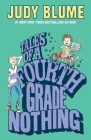
One of the few series I can think of in which the perspective stays with the better-behaved sibling is Judy Blume's Tales of a Fourth Grade Nothing.  Peter Hatcher narrates this and the following three books, recounting his tribulations as older brother to the rambunctious, rule-breaking Fudge.  Of course, the series is referred to as the Fudge Books.  I've always liked Peter as a narrator -- exasperated, but ultimately fond, taking responsibility for his little brother even as he feels like he's being driven crazy.  He's a nice guy, and the books are very funny.  And perhaps my own older-sibling status as I was growing up made me gravitate toward him, rather than Ramona.

On a final note, sad news: I read last night that this week we lost both Donald J. Sobel, author of the Encyclopedia Brown mysteries, and Else Holmelund Minarik, author of the Little Bear books, which are some of our most beloved here.  Both had long lives, but it's a loss just the same.

Love, Annie

Sunday, July 15, 2012

What's this book about?

Dear Annie,

It's cheering that Eleanor is so physically involved in reading: feelings fizzing out through her muscles.  And I also appreciate your pointing out Nancy Drew's no-nonsense competence -- not just at buying dresses, but also at repairing motors and driving and solving crimes.

I've recently had an odd experience with a book about girls who are trying to be competent in their lives, but who in some ways are in way over their heads.   I read
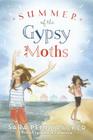
Summer of the Gypsy Moths
by Sara Pennypacker as a sample book and wrestled for a while with the question of whether I would order it for our stores (I did).  The author wrote a wildly popular early chapter book series about a character named Clementine -- one of those high-energy engaging girls whose realistic exploits keep expanding into more and more sequels.

Summer of the Gypsy Moths is aimed at older kids -- although the publicity for it says it's for 8 to 12 year-olds.  Last week the Washington Post kids' page ran a lyrical description of the book -- here are a few excerpts:
   Do you have a summer tradition? A place you go on vacation every year? A special spot for ice cream after dinner? A friend whom you get to see only when the days are warm, extra long and marked by endless hours of little to do?
   Sara Pennypacker’s book about two girls spending the summer with a relative on Massachusetts’s Cape Cod is about those types of traditions. . . .
   That’s just what author Pennypacker was going for in writing her novel. She said that she had a special summer friendship with a girl named Sonja on which she could model the relationship of Angel and Stella. “In the summers we’d hang out every single day, then on Labor Day we’d each go back to our real homes. The next summer, there we’d be, every single day as if the school year had never happened.”
The description creates expectations of warm friendships and magical days at the beach.  But it doesn't correlate at all with the book.  

To talk about the book, and to explain my uneasiness with the description, it's necessary to give away a major plot element in the next paragraph.  So be warned.

I would change the review's second paragraph to read, "about two girls spending the summer with the decomposing body of a relative...."  Kinda changes the lyrical summer vacation, huh?  Both girls have been sent to live with Stella's great-aunt because their families have become scarily dysfunctional.  Fairly early in the book, the woman dies, apparently of natural causes.  Rather than open themselves to the unknowns of the social services system, they instead bury her in the back yard, and take on her responsibilities as caretaker for a group of cottages.  As the body decomposes and starts to smell, they come up with increasingly unbelievable stories to cover for the situation.  Pennypacker explores the relationship between the girls well, but it's all based on a grisly and slightly preposterous plot element.

I don't know why the Post writer wrote what she did -- one of my co-workers is convinced she couldn't have read the book.  I spoke with three adults that week who came to the store to buy the lovely book described in the paper.  What should a bookseller do in that situation?  I basically said what's written above, but it turns a more complex book into its One Awful Thing.  Kind of like saying that The Hunger Games is about teenagers killing each other.  Well, yes, but there's a lot more to it.   The wonderful Gary Schmidt wrote a publicity blurb for Summer of the Gypsy Moths which for me captures what the author was trying to do:
 For Stella and for Angel, a terrible secret lies hidden beneath the pumpkin patch. But a more terrible secret lies hidden in the deeper depths of their hearts—the secret that must not be uttered: They may be absolutely and completely alone. Their journey in this grace-filled novel is a journey toward making that deeper secret a lie. Beneath the comedy and the suspense and the horror and the wit of this remarkable read lies the deepest secret of all: that we can learn to love each other.
He's created realistic expectations for the reader -- you know this book is different from Pennypacker's lighter fare.  He's a bit more enthusiastic than I am, but his reasons for liking it are wonderfully engaging.  And he doesn't give anything away.

Love,

Deborah

Saturday, July 14, 2012

Reflections on Nancy Drew

Dear Aunt Debbie,

We're back home from a lovely lakeside vacation, during which we finished reading The Secret of the Old Clock.  Eleanor's excitement and complete inability to sit still as we read to her continued through the last chapter of the book, which I found to be an interesting mix of empowering, old-school, and just a little odd.

You mentioned logical reasoning and working things through as one of Nancy's best attributes.  I was struck perhaps even more by her cool competence in a variety of difficult situations.  When she sees a girl fall from a bridge into shallow water, she runs to the rescue and carries her home.  She drives a car (her own) extremely well, including driving her father around to a few appointments.  She knows how to drive a boat, and when the motor stalls (through no fault of her own), she works on it for more than an hour before giving up.  When help doesn't arrive after a few hours of waiting, she tries again:

To occupy her mind, Nancy concentrated once more on the motor.  Determinedly she bent over the engine.  It was not until the sun sank low in the sky that she sat up and drew a long breath.

"There!" she declared.  "I've done everything.  If it doesn't start now, it never will."

To her relief and astonishment, it responded with a steady roar as if nothing had ever gone wrong!

When confronted with rude girls of her own age or with possibly violent thieves, Nancy is internally morally outraged, but keeps her cool.  When locked in a closet, she tries to pick the lock from inside with a bobby pin, then tears down a wooden rod and uses it as a lever to break open the door at the hinges, citing Archimedes as she does so.  She knows how to bandage an elderly woman's leg properly, cook her a nourishing lunch, and move straight on to following thieves at close range and breaking into their truck.  When describing all of these episodes later, she's humble and undramatic.  Some nice role modeling here.

There are of course the requisite descriptions of every outfit she puts on throughout the book (lots of "smart little suits"), which made me think each time of the initial descriptions of the twins at the beginning of each Sweet Valley High book.  And Nancy is quite purely good in so many ways that one wishes at moments for a little more shading of character.  Still, there's a toughness to appreciate.  Eleanor has already asked me to find her book two.

Love, Annie