In which Annie (high school teacher, mother of two young girls and a younger boy) and her aunt Deborah (children's bookseller, mother of two young women in their 20s) discuss children's books and come up with annotated lists.

Showing posts with label Shakespeare. Show all posts

Thursday, April 19, 2012

Marcia Williams: on beyond comic books

Dear Annie,

There are multiple industries these days of Shakespeare graphic novels.  I'll stop myself from recounting all the riotously funny "updated" versions in mangashakespeare
(King Lear
in a Last of the Mohicans setting; Hamlet in a 2017 environmentally devastated word; a steampunk Twelfth Night -- and there's more!).  But unlike some Shakespeare comics, it uses some of the original language.

Every now and then I think, wow, two years into this blog and we haven't yet written about X.   Today, X = Marcia Williams, wonderfully kid-friendly translator of classics and folktales into her unique style of graphic novels.  Here's some of her Midsummer Night's Dream:


Her
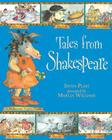
Tales from Shakespeare
retells seven plays, including A Winter's Tale. And a second volume does seven more. They all have a lovely whimsical quality, even while doing tragedy.  The text under the pictures narrates the story, and the pictures use actual Shakespeare quotes.  They work well as a read-aloud, pointing as you go.

We first discovered Williams with her graphic novel version of Robin Hood, followed soon after by Tales of King Arthur.  She's done Greek Myths and  The Odyssey; her latest is on Egyptian mythology.  Her Charles Dickens and Friends retells Oliver Twist, David Copperfield, Great Expectations, A Tale of Two Cities and A Christmas Carol -- and in 48 (large, kinda dense) pages!  I've never seen her Canterbury Tales or Don Quixote (both not published in the U.S., alas) -- but I'm curious.

Love,

Deborah

Tuesday, April 17, 2012

Illustrated Shakespeare for older kids

Dear Aunt Debbie,

We'll have to check out those other intro-to-Shakespeare picture books -- they look terrific.  The other form of illustrated Shakespeare books I have on my shelves are a couple of graphic novel versions I bought during my first year of teaching, at a Massachusetts boarding school where the English Department used them to get high school kids interested in Shakespeare.


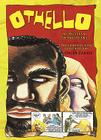
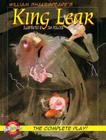
Ian Pollock's Illustrated King Lear
and Othello, illustrated by Oscar Zarate, each contain the complete, unabridged text of Shakespeare's plays, filled with wild, animated drawings.  Pollock's King Lear leans toward the surreal, with characters of wildly different sizes, and moments when the word is made flesh.  Here, Lear excoriates his daughter Goneril, and appears to pull a bloody lump from himself to illustrate that she is "a disease that's in my flesh, which I must needs call mine":


It's engaging and creepy and a little mad, which fits with the plot of the play: Lear's own descent into madness and powerlessness.

Oscar Zarate's illustrations for Othello are more straightforward, though similarly creepy at times.  Lots of play with light and shadow, and the pages become darker as Othello succumbs to Iago's poisonous lies (here, depicted as a physical sword skewering him):

and begins to believe that Desdemona is unfaithful:

I'll confess here that these are not illustrations which give me pleasure when I return to them.  There's violence here, harshness, ugliness.  All of it is drawn from the text, but it's almost too intense for me at times.  That being said, I can see them hooking YA readers accustomed to graphic novels and manga.  They bring the plays to violent life.

Love, Annie

Sunday, April 15, 2012

Shakespeare storytelling

Dear Annie,

A Winter's Tale -- one of the odder Shakespeare plays.  Interesting place to start.  Bruce Coville has also done five other long picture book retellings of the bard.  People tend to buy them when they're taking a child to a Shakespeare play for the first time.  I like the idea of separating a book telling the story from an actual performance, as you did with Eleanor.  There are two collections of stories that might work for her.

The first, from Barefoot Books (which brought us a great collection of poetry) is
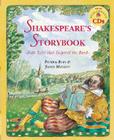
Shakespeare's Storybook
. It first came out as the picture book-size volume we see here, but they've recently put out a smaller edition the size of a chapter book.  The subtitle is "Folk Tales that Inspired the Bard."  Author Patrick Ryan retells seven folktales and stories in circulation in the 16th century that, according to his introduction, Shakespeare used for his plays.  (John, father of Annie, and Shakespeare scholar -- is this accurate?)  The plays that resulted are The Taming of the Shrew, Romeo and Juliet, The Merchant of Venice, As You Like It, Hamlet, King Lear and A Winter's Tale.  In contrast to the lines you quoted, I offer the opening paragraphs of "The Flower Princess," precursor to A Winter's Tale:
   There once was a young king of Sicilia who was selfish, restless and hard-hearted.  His people wished he would fall in love and settle down.  But the king said this would never happen.
   Yet one day the king met a young country girl.  "You're so beautiful!" he exclaimed. 
   That she was, and as kind and generous as the king was mean-spirited.  His heart softened and he fell in love with her.  Before long, the king asked her to be his wife.
There's a baby daughter, and then of course bad things happen, followed by good things in the neighboring kingdom of Bohemia.  The stories are the inspirations for Shakespeare: he took off from them and went in other directions.  Every page is beautifully illustrated by James Mayhew, and they're a good starting point to talk about the plays.

Then there's the lovely
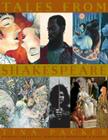
Tales from Shakespeare
by Tina Packer.  It's a more traditional re-telling of the plays, with occasional real quotes thrown in.  It includes A Midsummer Night's Dream, Hamlet, Much Ado About Nothing, King Lear, As you Like It, The Tempest, Othello, Twelfth Night, and Romeo and Juliet.  Each 15-or-so page story has one full-page picture by a different major children's illustrator (Mark Teague, Mary Grandpre, and Kadir Nelson, to name three).  Here's a bit of As You Like It, when Rosalind (in drag) confronts Orlando:
..."I am he that is so love-shaked, Orlando admitted.  "I pray you tell me your remedy.  Did you ever cure any so?"
  "Yes, one, and in this manner," Rosalind said.  "He was to imagine me his love.  I would now like him, then loathe him; now entertain him, then forswear him; now weep for him, then spit at him.  Thus would I cure you, too, if you would but call me Rosalind and come every day to woo me."
   Orlando considered this strange proposal.  He did not wish to be cured of his love for Rosalind, but this would give him a chance to practice wooing her.  Besides, this boy seemed like jolly company, and everyone else in the dukes' court was tired of hearing about his beloved.  And in some strange way, the boy even looked like fair Rosalind.  "Now, by the faith of my love, I will, good youth."
The quotes are chopped down from the real speeches, but close.  They give a feel for the language.

Now I must get back to store work: my orders for advent calendars (which will go on sale in November) are due in tomorrow.  We plan ahead in this business...

Love,

Deborah

Friday, April 13, 2012

Shakespeare for kids

Dear Aunt Debbie,

I'm looking forward to the entry you promise on puberty and periods, perhaps more than the advent of those things themselves.  Happily, we still have a number of years to go.

This afternoon, I found myself talking to the girls about Shakespeare.  Jeff and I are headed tomorrow to a matinee of The Taming of the Shrew while my parents babysit, and when Eleanor asked why they couldn't come with us, I had to explain that we were going to "a grown-up play."

This is a funny way to refer to Shrew, a play I teach regularly to my 9th graders because of its mix of high and low-brow humor, its slapstick comedy and dirty wordplay, and elements of romance, fighting, and disguise which wouldn't be out of place in a children's theater.  What is the right age to introduce kids to Shakespeare?
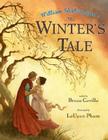
Eleanor was recently given a children's book retelling of, of all things, The Winter's Tale, retold by Bruce Coville and sumptuously illustrated by LeUyen Pham.  It's Shakespeare's story adapted into prose, accessible to younger readers -- Eleanor likes and can follow it with some parsing of the text -- but aimed at a higher-than-picture-book reading level.  Here are the opening paragraphs:

There is a disease that can twist men's hearts and make them mad, and the name of that disease is jealousy.  

This was the sickness that came upon Leontes, King of Sicilia, in what should have been the time of his greatest happiness.  He had a lovely and loving wife.  He had a fine young son.  And his greatest friend, King Polixenes of Bohemia, had been in court for an extended visit.


The jealousy started on the day Polixenes wished to return home.  Though Leontes bid him stay, as he had several times before, Polixenes was firm.  "I must return to my own kingdom, my own wife and child," he protested.


"You speak to him," said Leontes to his queen, Hermione.

Of course, Leontes interprets Polixenes' reaction to Hermione as proof that they are having an affair, and banishes her to prison, where she has her baby.  Leontes says the child isn't his, and sends her off to be abandoned in the wild to die.  Their son dies of grief, and word comes that Hermione is dead, too.  Leontes feels terrible!  I wonder why I am reading this book to my 5-year-old!  Then 16 years pass.  The abandoned baby, rescued by shepherds, grows into the lovely Perdita, and falls in love with Prince Florizel, the son of King Polixenes.  Festivals, disguises, and revelations follow, culminating in everyone coming back to Leontes' court and the lovers getting to be together when it's revealed they're both royal.  Everyone is happy, and even Hermione comes back to life (or is revealed to have been alive the whole time).

I've always found The Winter's Tale to be both painfully beautiful in its language and deeply, deeply weird: a problem play, not quite tragedy or comedy.  Reading it as a picture book makes me think of it in a new way -- it possesses the harsh logic of a fairy tale, as we've discussed here and here.  There are terrible losses early on, large gaps in time, magical resurrections.  In some ways, it makes more sense as a kids' book than it does as a book for adults; Eleanor has far less of a problem with the emotional logic involved than I do.

While Isabel isn't able to sit through the lengthy story, she too loves Pham's illustrations, painted in glowing colors and soft draperies.  Lots of expressive hands and faces.  I appreciate the racial diversity in the casting as well: both Paulina, (the awesome servant who's the only one willing to fully stand up to Leontes, and who hides Hermione for 16 years) and her first husband Antigonus are black; no mention of this in the text, just a fact in the pictures.

Maybe I should be scouting New York for upcoming productions of The Winter's Tale for Eleanor's next theatrical outing....

Love, Annie