In which Annie (high school teacher, mother of two young girls and a younger boy) and her aunt Deborah (children's bookseller, mother of two young women in their 20s) discuss children's books and come up with annotated lists.

Showing posts with label Fleischman. Show all posts

Thursday, April 4, 2013

Pleasure in meanness

Dear Aunt Debbie.

The Birchbark House books sound excellent -- we'll check them out in the near future. We're just starting to get into the parts of Little House on the Prairie where Indians make an appearance, and Ma's negative reaction to them will clearly be leading us toward some interesting conversations about prejudice. I'd like Eleanor to have a different narrative about Indians as counterpoint.

As Eleanor takes off in her independent reading, Jeff and I wondered whether Isabel would be inspired to start sounding things out herself. It sometimes happens: an older sibling's new skill inspiring the younger sibling. Isabel certainly walked earlier because of Eleanor's example, and is happy engaging in 6-year-old level imaginative games, though she's only 3 1/2. On the reading front, however, Isabel seems to have mixed feelings about Eleanor's new ability and her own possible reading future.  Sometimes she likes having Eleanor read to her; sometimes she rejects Eleanor as a reader and just wants a parent, perhaps because Eleanor's reading is slower than she's used to; and sometimes she wants to "read" on her own.

By "read," I mean that proto-reading stage of memorizing books and reciting the words accurately as the pages are turned. My mom, your sister Judy, remembers "reading" Madeline in this way, pretending effusively that she was truly reading the book.  Isabel has a terrific memory for text, and regularly corrects an adult reading to her who makes a slip of the tongue (or nods off just a smidgen, as we have been known to do after a spate of newborn baby nights).  In the last several weeks, Isabel has been asking to reread the same few books over and over, even more than usual. Once she knows them, she'll stop us: "No, I'll read that page!" and then recite it totally accurately, without looking at the words.

Her current favorites include Henry in Love, which I've written about here, a sweet short narrative about the growing infatuation between two elementary school kids (a cat and a bunny, in McCarty's drawings):

Henry did his best forward roll.
"Show him what you can do, Chloe," said Abby.
Chloe turned a perfect cartwheel.
Henry was impressed. 

On a different note, she's enamored by a pair of books by Paul Fleischman, who we've written about extensively in the past as an author of poetry, wordless books, and early chapter books, among other things.
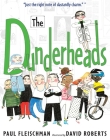
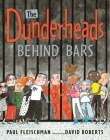
The Dunderheads
and its sequel, The Dunderheads Behind Bars, prove once again that Fleischman can do anything, in any genre. They're Kids Against Adults books, stories about a small gang of elementary-school-age misfits who go up against their horror of a teacher, Miss Breakbone, and prove themselves successful against the odds. The narrator is a boy nicknamed Einstein, because he comes up with such smart plans. He's joined by a vivid cast of characters, each with a strange and specific talent: Pencil can see anything once and draw it perfectly from memory; Clips can make anything out of paper clips; Nails uses his long nails to pick locks; Google-Eyes can hypnotize people and animals; etc.

The stories are part mystery (where did Miss Breakbone hide the china cat she confiscated from Junkyard, and can the Dunderheads get it back? When Spider, who can climb anything, is arrested for being a cat burglar, can the Dunderheads save him by finding the real thief?), part adventure story, part humor. There's a level of meanness coming from Miss Breakbone which I imagine wouldn't appeal to all readers -- she keeps an antique electric chair on display in her classroom, and gives herself a star on her chart every time she makes a kid cry -- but I think it's this very aspect that keeps Isabel so interested.  In her imaginative play, Isabel often casts herself as a Bad Fairy or a Mean Girl or a giant who captures small people, working through the fun of breaking rules even as she's asked to be increasingly responsible and gentle with her new baby brother.

Is it psychologically connected in that direct a way? Maybe. Or maybe there's just a joy in screaming out "Mannerless monkeys!" in the voice of Miss Breakbone, no matter what your age.

Love, Annie

Monday, January 16, 2012

Guest Blogger: Train books

Dear Aunt Debbie,

As you bite your nails over the Newberys, I'm plugging away at reading and commenting on huge amounts of fiction by my high school writers, some of whom, I swear, are good enough to wind up on your lists someday....

Here's our next guest blogger, my friend and colleague Mark, father of twin 3-year-old boys:

One odd thing about having children is that I find myself looking for echoes of my own personality and taste in my kids. When I was a kid, I read all the time. So I watch to see how much my kids like reading (or being read to – Sam and Ezra are three years old). Recently, I’ve noticed that my boys approach subject in the same way that I did when I first started reading – that is to say, obsessively.

I loved books about war, particularly World War Two. The first book I remember buying at one of those school-based book fairs was about the Battle of Midway. By the time I was eight years old, I’d read every vaguely age-appropriate book on World War Two that I could find, and moved on to some very age-inappropriate ones. Historical fiction about the Battle of the Bulge? Yes, please! Super-dry tomes devoted to cataloguing every single kind of airplane that flew in the war? Sounds great!

I’m sure my parents were a bit put off by my reading obsession with war. They probably looked on their budding Rambo with horror.

I’ve been thinking about this recently because of Sam and Ezra’s obsession with trains and train books. Somehow, they’ve become those boys. The ones with every single wooden replica New York City subway train. The ones who know the names of every Thomas train (most especially the ones they don’t have). And we’ve read all of the books about trains available in the borough of Queens.

Because of this, I feel well-positioned to write about a couple of train books we like, as well as making some general comments on the overall state of children’s books about trains. 

I’ve noticed a few different genres of picture books about trains. One follows the standards of most kids’ picture books: whimsical illustrations, a cute storyline, maybe a lightweight moral at the end. Think The Little Engine That Could, or The Little Red Caboose, a Golden Book with intensely overpacked illustrations by Tibor Gergely (there is basically no blank space on any page) [the Gergely version seems to be out of print -- here's the version sold now]. A somewhat more modern example of this is The Polar Express, in which a boy travels on a mysterious train to the North Pole to meet Santa Claus. The moral: just keep believing, kids!

There are whimsical storybooks without the tacked-on didactic morals, of course. One I like because it manages to hit most of the sweet spots of three-year-old boy reading habits is Time Train by Paul Fleischman and Claire Ewart. In this book, a group of kids on school field trip somehow find themselves on a train that takes them back in time to frolic with dinosaurs. Trains and dinosaurs both! Who could ask for more?

My boys love their train storybooks, but the ones that they come back to over and over are much more literal. Sam and Ezra prefer books that are more concrete, factual, and in some ways, odd. Let me tell you about two.

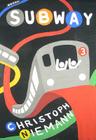
The first is Subway by Christoph Niemann. The book is based on this wonderful piece Niemann did for the Times a few years ago in which he takes his boys on “endless subway joy rides…” to satisfy their love of trains. Subway is great both because it is about loving the subway system obsessively – the kids end up crying as they’re dragged off the train after an entire day of riding back and forth – and because it is a mostly accurate guide to the subway system. It looks like a typical storybook, but it is really a hard-core introduction to every subway line in the city. In fact, I think that Sam and Ezra’s favorite page is one on which the F and G trains separate at Bergen street in Brooklyn, only to reunite at Roosevelt Avenue in Queens. My boys love this page because they get to fact-check it. The G no longer runs to Roosevelt Avenue, and they know it, and they love to show off their knowledge by telling the book that it is wrong.

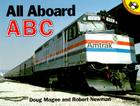
Subway is an easy book to love. It looks great and it tells a story that feels completely familiar to train-obsessed kids. Not all factual train picture books are quite so easy to love. I have a long-suffering affection for a book called All Aboard ABC by Doug Magee and Robert Newman. This book was published in 1990, and it is the kind of weird book that makes me wonder how it actually came to be. Who decided to make this book? Who decided to print it? What were they thinking?

All Aboard ABC uses photographs of trains (many of them Amtrak) and parts of trains to teach the letters of the alphabet. For instance, “H” is accompanied by a picture of a train’s horn and the caption “The engineer sounds the horn as the train nears a grade crossing.” What’s a grade crossing? Well, that’s what’s weird about this book – it is oddly specific. “G” is for “grade crossing,” which appears to be the technical term for “where railroad tracks cross a road.” “Q” might be for quiet, but “R” is for roadbed. “B” isn’t just for bridge, but for “trestle bridge.”

The photography of the book is pretty entertaining, too, in that I often find myself wondering about the circumstances of the photography. Many of the pictures seem to be taken in the same place on the same day (if I had to guess, I’d say that place was Bakersfield, California and that the day was an overcast one). “J” is for “junction,” but it might as well also be for all of the “junk” that weirdly appears in the background of the picture. My favorite photographic detail: there’s a red rental car that in many of the shots, giving the impression that the photographer has rented the car (in, say, Bakersfield), driven around looking for trains to photograph, and jumped out whenever something looked vaguely train-ish. At least, that’s the impression I get when I see that red Corolla, driverless, parked at G’s grade crossing.

The book is ridiculous, but my boys love it. They don’t look at it and see a rush job, in the way I do. They look at it and see a trove of interesting, detailed, never-before-imagined information that they love. Where I think they want a story, they really want to know the difference between a hopper car and a boxcar. In a way, I think the book respects them enough to give them the details, to tell them things that most of us would think are too complicated for children, and Sam and Ezra respond to that. Maybe that’s what I was responding to in all of those books about World War Two: they were about real, concrete things, unlike most books that were available to me. 

Thank you, Mark!

Love, Annie

Friday, April 8, 2011

The best teacher training I've ever known

Dear Aunt Debbie,

My attention is torn tonight as I'm putting the finishing touches on a workshop I'll be teaching tomorrow at the New York City Writing Project's annual Teacher-to-Teacher conference.  The NYCWP (a branch of the National Writing Project) is hands-down the best teacher training program I've ever come in contact with: the most respectful of teachers; the smartest about using writing in all kinds of classrooms, from kindergarten up through college; the most creative and innovative.  Of course, in this political climate, it's also under fire: the stopgap spending bill Congress passed and Obama signed last month to keep the government running cut all funding for the NWP, as well as a host of other education programs, and it's unclear whether any of that funding will be restored.

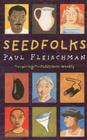
I first became involved with the Writing Project in 2005, when I took part in their Summer Invitational.  I was one of 16 NYC teachers who met every day for a month at Lehman College in the Bronx to read and write together, teach each other about the best practices we'd each developed in our classrooms, and learn from each other, other texts, and our facilitators.  (During the school year, the NYCWP continues this kind of work by sending Teacher Consultants to work in local schools, helping teachers in all subjects bring writing into their classrooms in organic and effective ways.)  It was during that month that I first encountered Paul Fleischman's Seedfolks, a collection of linked short stories, each told in the voice of a different member of the diverse community which comes together to turn a vacant lot into a thriving community garden.

It's hard for me not to link this symbolically to the work that the Writing Project does, both locally and nationally: they are all about cultivating best practices, bringing careful and intelligent care to schools and communities, working within schools and getting to know them and what they need rather than prescribing a curriculum across the board with a one-size-fits-all mentality.  When I take part in a Writing Project workshop or event, I know that I am going to be meeting colleagues who pour enormous amounts of energy into teaching kids to write well, and to write with passion.  I come away from every Writing Project event with tools I can take into my classroom, but more than that, with a renewed sense of urgency and community.

Those of us who care about our children becoming lifelong readers and writers should unequivocally support continued funding for the National Writing Project.  So should our government.

Love, Annie

Sunday, September 5, 2010

Emerging Readers

Dear Annie,

I love the idea of trading favorite book recommendations with friends.And Paul Fleischman's lovely apprehensions about a friend's taste ("This actually made them laugh, you think (or cry, keep turning the page, etc.)  Can I still regard this person as a friend?  As human?") was perfect. Thank you so much, Paul, for joining our discussion.

Before leaving Narnia, I'd like to mention a book that sounds great, although I have yet to read it (no time, no time...). 
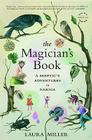
The Magician's Book: A Skeptic's Adventures in Narnia
by Laura Miller. She's someone who loved the Narnia books as a child, felt betrayed when she understood later that they were full of Christianity, then went back and wrote about them in intelligent adult ways later in life. Full of contradictions, those books.

I thought today that I'd recount a conversation I was in a week ago at cousin Ellen's wedding.  It was with the mother of the delightful Dancing Boy -- an eight- or nine-year old who spent most of the night by himself on the dance floor.  She was lamenting that he seemed not to be interested in reading, and how does one get boys interested in reading these days.  The conversation had two parts.

First, it turned out that he reads, but not the books his parents expected him to.  He likes non-fiction, books that give him information.  And he was reading Asterix and Tintin comic books.  But he wasn't reading novels, including books that we might consider classics.  One of the issues parents get to face as their children grow up is that their taste may differ from the older generation's.  Also, as one is emerging into being an independent reader, novels are harder than a lot of other types of reading.  First and foremost, you have to read the whole thing.  If you read two-thirds of a novel and give up on it, you've failed. But if you read one page of The Guinness Book of World Records, or one story in a comic book, you've gotten something.  Reading a page or two here or there is all good practice, keeping one in shape for whatever one wants to read in the future.

Then your father joined the conversation, bringing your brother up as an example.  Michael is remembered as reading nothing but Archie comic books until the summer before he went to high school.  (True?  Michael - are you reading this?)  At that point he switched over to reading Dostoevsky, and never looked back.  Paul Fleischman's sentence in the last post reminded me of Michael:
The book was on the shelves in my childhood home, but I didn't discover reading for pleasure until high school.
 (Although, of course, one assumes Michael was reading Archie for pleasure.)

I started out thinking I was going to write a post on boys and reading, because I've received a number of questions lately about how-can-I-get-this-boy-to-read.  And what's being written in general these days about boy books and girl books drives me slightly crazy.  And I'm sure I'll come back to this topic lots.  But we all need to remember that children engage in reading in different ways, at different ages.  Feeding individual interests is helpful.  And being a household that loves books, where parents read for pleasure themselves (I know, no time, no time...) -- it all contributes to kids loving books.

Love,

Deborah


Friday, September 3, 2010

Other people's favorite books

Dear Aunt Debbie,

Chaos Walking now goes on my list, absolutely.  I'm drooling to get my hands on Mockingjay.

One of the things I'm enjoying about blogging is the increased number of book recommendations I've gotten in the last few months, both from you, from our readers (hi readers -- please keep posting comments and recommendations!), and from friends in conversation.  When we wrote about Paul Fleischman's work a little while ago (here and here), I emailed him to let him know we were talking about his books.

I met Paul in 2002 at a teaching conference where I was promoting with their eyes, the book of interview-based monologues about the aftermath of September 11th that my students and I created that year.  (I'm planning to write more about the book next Friday, as the anniversary comes up.)  Paul was signing books at the HarperCollins stall too, and we got to talking; as well as being an excellent writer, he's a perfectly lovely guy.  In the years since then, we've kept up a correspondence.

After reading my post on The Lion, the Witch, and the Wardrobe, Paul mentioned that he'd never read it, and we made a deal: he'd read one of my favorite children's books, and I'd read one of his.  For me, he suggested one of the following:


The Night of the Comet by Leon Garfield: A hilarious comedy-of-errors by a British YA master, with prose that contains more pleasure per paragraph than almost any book I know.

Krippendorf's Tribe
by Frank Parkin.  For adults, perfect for parents.  If by chance you saw the movie, erase it from your mind.  Comic writing at its best.

Flashman by George Macdonald Fraser.  The first in a series, a terrific account of a ne'er-do-well's rise to the top during the time when Britain, not we, were mired in Afghanistan.  Withering and wry, a savory literary kebab.

I haven't kept my end of the bargain yet, but he has, and here's his reaction:

In Breakout there's a line about people's disinterest in walking a mile in each others' shoes, not to mention their families, diets, politics, favorite colors, and definitions of fun.  A book from someone's All-Time Favorite list can be similarly hard to love.  This actually made them laugh, you think (or cry, keep turning the page, etc.)  Can I still regard this person as a friend?  As human?  Despite which, I'm a believer in serendipity and therefore constantly writing down suggested titles and bringing them home from the library.  Recently I took the plunge and read one of Annie's favorites, one I should have read decades ago--The Lion, the Witch, and the Wardrobe.  The book was on the shelves in my childhood home, but I didn't discover reading for pleasure until high school and had already put away childish things.  Its reputation as a Christian allegory didn't help.  Plus, I've never been a reader of fantasy, in the same way other people can't eat dairy.  The wacky names and top-heavy morality have always put me off.   This actually gave the present project added impetus: I'd walk a mile, or at least around the block--the book was brief--in some footwear most definitely not my own.

My report?  I can certainly see kids being attracted to it.  To pass through a wardrobe into a hidden forest is a hook with immense appeal.  I was going to say that having the four siblings come from our world would help children identify, but today's young readers might regard names like Edmund and Lucy and phrases like "by Jove" and "hang it all" as coming from a realm light-years away.  Entering into a world of danger without parents at hand, but with each other and a cast of beneficent animals holds great appeal as well.  Alas, I see books through a writer's eyes as well and found much to squint at here.  The narrator--an intrusive old-fashioned sort--subverts suspense by giving away actions and cushioning readers from too much anxiety.  The deck feels too strongly stacked for the forces of good, with Aslan as the deus ex machina that writers are always urged to avoid.  The children do a bit to earn the ending, but far less than we're accustomed to.   They're also amazingly undeveloped, as is the world they've been evacuated from (covered in one sentence) and the house they're occupying, headed by its mysterious professor.  I found gaps at every quarter, from the children's never even remarking on the animals happening to speak English to the one mention of their mother, far offstage.  I might have been pulled into the fantasy more fully if the avuncular narration contained more original description--but that's a quibble I feel about most books I read.  Full disclosure: I'm hard to please.  I deal with issues like the above all day, month, and year, and expect other writers to solve them before setting their books in type.  Many of my complaints are the result of the changes wrought by the last sixty years.  Can't blame C.S. Lewis for those.  Most of them will be as unnoticed by young readers as the book's Christian element.  And I must admit that I feel more likely to try more fantasy in the future, having now passed through the wardrobe into that world.  Overall, a positive experience.  Thanks, Annie...


~Paul

I'll be sure to post my thoughts on one of Paul's favorites sometime soon.  And what a great project to take up with a friend!

Love, Annie

Wednesday, June 16, 2010

Poetry 3

Dear Annie,

Excellent Mother Goose entry. It’s funny, I never warmed to the Rosemary Wells Mother Goose illustrations – they felt too cute. I may have been reacting more to the covers than the individual illustrations.

So much to say about poetry. Today I want to look at just two, for kids who are already reading. I’d call these both second grade and up (and up and up).

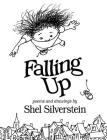
First, there’s Shel Silverstein. It was only when I became a parent that I discovered Silverstein wasn’t just a cartoonist for very adult magazines. The kids’ poetry book that took hold in our house is
Falling Up
, but his other two big collections, Where the Sidewalk Ends and A Light in the Attic are very much along the same lines. Short poems, some of which are tied to drawings which add crucial information. Very funny, many of them sort of smart-ass, in a ten year-old kind of way, and often with a punch line.
SORRY I SPILLED IT

The ham’s on your pillow,
The egg’s in your sheet,
The bran muffin’s rollin’
Down under your feet,
There’s milk in the mattress,
And juice on the spread –
Well, you said that you wanted
Your breakfast in bed.

BLOOD-CURDLING STORY

That story is creepy,
It’s waily, it’s weepy,
It’s screechy and screamy
Right up to the end.
It’s spooky, it’s crawly,
It’s grizzly, it’s gory,
It’s the awfulest story
(Please tell it again).


An old friend gave Lizzie Falling Up when she was six. We may have read it a bit out loud, but Lizzie wasn’t quite ready for it, and it went on the shelf. Then, when she was in third grade, she started getting up in the morning and reading a poem or two before starting the day. An entertaining easy bite of words, with a sense of humor that really tickles that age. I found Falling Up on her bookshelf today with seven yellowing pieces of newsprint marking favorite poems. The date on one was her fifth grade year.

And then there’s my absolute favorite book of poems for children:
Joyful Noise: Poems for Two Voices
, by Paul Fleischman. Fleischman is a wonderful writer, always experimenting with form and audience. He won a Newbery for this one. They’re all poems about bugs, and the thing that makes them amazing is that they’re written to be read aloud by two people, sometimes alternating, sometimes together. When I show this book to customers, I often get them to read a few lines out loud with me – it’s the only way you can tell how special they are.

Both my girls each memorized a poem from this book with a friend – I think they were both in third grade at the time. Here’s the start of "Honeybees," which Mona and her friend Margot could recite. There are two columns, one for each voice. Lines next to each other are read together:
Being a bee                                  Being a bee
                                                     is a joy.
is a pain.
                                                     I’m a queen
I’m a worker.
I’ll gladly explain.                        I’ll gladly explain.
                                                     Upon rising, I’m fed
                                                     by my royal attendants,
I’m up at dawn, guarding
the hive’s narrow entrance
                                                     I’m bathed
then I take out
the hive’s morning trash
                                                     then I’m groomed.
then I put in an hour
making wax,
without two minutes’ time
to sit still and relax.      . . .

The whole poem is in a pdf here.
But as I said, it’s really best to hear the poems out loud. I found a number of youtube videos of high school kids and even grownups reading from Joyful Noise. But my prize goes to these guys, reading "Water Striders":


Love,

Deborah

Monday, May 24, 2010

More wordless (and almost-wordless) books

Dear Aunt Debbie,

Oddly, we don't have a lot of wordless books in this household. (Or perhaps, it being this household, it's not odd at all.) We adore Good Night, Gorilla, which I think you gave us when Eleanor was quite small, and which is so rewarding to read and re-read and examine. It's funny; it's not technically wordless, as the zookeeper does say good night to each animal, and towards the end, the animals all say good night as well, but the words don't cover the bulk of the story. We've read it in various different ways. For a while, we had the standard things we'd say on each page ("And now the gorilla is using the blue key to open the blue cage...."), and then once Eleanor was old enough, we'd ask her questions about what was going on in each picture. I don't think she focused on reading this one alone more often than books with words. Of course, with so many of our picture books, she knows much of the text by heart anyway.

Mulling over wordless or almost-wordless books made me think of one of our favorite good night books, which is extremely quiet and simple and includes three page spreads with no text at all.


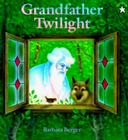
Grandfather Twilight


We received Barbara Berger's Grandfather Twilight as a gift from a colleague of mine shortly after Eleanor was born. This was lucky, because it's not a book I would have bought for myself had I run across it in a bookstore. Flipping through it for the first time, I found the illustrations cloying, rendered in soft-focus, and the story nothing gripping. But I was wrong. Eleanor loved the book immediately. In it, Grandfather Twilight takes a pearl from his trunk each night, then walks through the woods, into open ground, and out to the sea (these are the wordless pages). The pearl grows larger in his hand as he goes, and he lifts it up at the water's edge to become the full moon, then walks back home. It's a slow, gentle story, and the paintings grow on you quickly. We read it often.

A wordless book we discovered this year is by the multi-talented Paul Fleischman (author of a wide variety of children's books, including the terrific Joyful Noise: Poems for Two Voices and Seedfolks -- is there anything he can't do?).


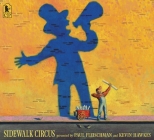
Sidewalk Circus


Sidewalk Circus depicts a girl waiting at a bus stop and looking at the street around her. There are signs and posters advertising the coming circus (they provide the only text), and as she looks around, the everyday activities of the people on the street are transformed into circus acts: a cook in a restaurant window flips pancakes, while her shadow is that of a juggler, etc. It's a fun one to explore with a kid, especially someone who has been to a circus.

It seems to me, thinking about it like this, that often wordless books are good for slightly older kids, so they can talk through them and discover the stories for themselves.

Love, Annie