In which Annie (high school teacher, mother of two young girls and a younger boy) and her aunt Deborah (children's bookseller, mother of two young women in their 20s) discuss children's books and come up with annotated lists.

Showing posts with label trains. Show all posts

Friday, February 3, 2012

Lullaby for trains

Dear Aunt Debbie,

Happily, our stomach bug was not nearly as bad as Ramona's.  I have no new ideas on the stomach flu book front, but in conversation with a colleague today was reminded of two lovely Poppleton stories that have to do with being sick.  In Poppleton, there's "The Pill," in which Fillmore is sick and convinces Poppleton he has to have his pill inside a piece of cake, which results in a tremendous amount of cake being eaten.  In Poppleton Forever, it's "The Cold," in which Poppleton has a bad cold, and his friend, a llama named Cherry Sue, tries to cure him by bringing him a bowl full of oranges.  Each time he peels an orange, he sneezes, and the orange ends up across the room, in some different strange spot.

But moving away from stomachs and colds, and back to trains....
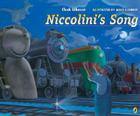
One of your gifts for Isabel in Eleanor's birthday package was the lovely Niccolini's Song,by Chuck Wilcoxen.  We've been reading it three times a day.  It's about a mild-mannered train yard night watchman, Niccolini, who is surprised one night when, after an earlier scare, a steam engine begins to talk to him.  It's worried about the next day, and having trouble falling asleep.  Niccolini sings the engine a lullaby: "a song about gentle hills, steady tailwinds, and feathers for freight."

After this first night, the other engines want Niccolini to sing to them, too.  In Wilcoxen's text, the trains come across very much like children, and Niccolini a tender father:

Niccolini knew that some of the trains were perfectly capable of falling asleep without a lullaby.  In fact, there were nights when certain engines (who felt unloved) would wake themselves up just to have Niccolini sing them back to sleep.  Niccolini didn't mind.  The words came to him easily, the tune was always the same, and it cost him nothing to bring them comfort.

One night, a harried mother walks her sleepless baby down by the train yard; the baby, too, is soothed by Niccolini's song.  The story expands: other mothers come, with other babies, in a quieting parade.  Then one night, there's a terrible wind, and so many sleepless parents and children come to be soothed by Niccolini that no one can hear them.  And so he enlists the engines to whistle his song, while he conducts.

This is a deeply gentle book.  Mark Buehner's illustrations all have the feel of dusky night, every page both detailed and dim, so you have to peer at them closely.  I love the roundedness of his forms: both the trains and Niccolini himself have depth and heft.  Here's Niccolini, early in the book, leaning to listen to the engines:


 Isabel's favorite illustrations are the ones with mothers and babies, which she likes to identify and comment on: "There's the mother.  There's her baby.  Where's the daddy?  He's home asleep."  For me, though, this is the image that sticks: Niccolini, listening for danger and ready to blow his whistle (look at the tension in his turning form), on the cusp of discovering something miraculous. 

Love, Annie

Wednesday, January 18, 2012

Guest blogger smiling down on us

Dear Annie,

I took Mark's train post to heart and ordered All Aboard ABC for the store. Thanks, Mark!  It sure is an odd mix of grainy stock photos and those hurried train detail shots, some with the little red car that Mark talked about.  Sometimes finding those little oddities and wondering about the photographer with the rented car can give a parent a little something extra when s/he's on the thirtieth reading of "Grade Crossing."

Right around three years old is when a lot of kids get into focused (sometimes obsessive) interests -- and there are lots of books that cater to the big ones.  You Can Name 100 Trucks is one of my favorite titles in that category. Forget about plot, let's just get to the lists.  A lovely combination of 100 train cars, beautiful art, and good writing is Crossing,  this poem by Philip Booth illustrated by Bagram Ibatoulline.  It's many pages of paintings of a 100-car freight train winding through the countryside.  And yes, you can count them with your kids and sure enough, there are 100.  The link is to Alibris -- the book is out of print, alas.

All this thinking about train writing turned my thoughts to my father, your grandpa, who was of course  a writer.  His professional writing was direct mail: letters that sold mostly books.  In 1974, shortly before he left American Heritage, where he had worked for many years, he wrote a letter selling a history of trains.  I thought I'd invite grandpa's ghost to be a guest blogger, because he sure could conjure up a train:
Dear Reader: 

If you're old enough and lucky enough, you can remember lying in bed as a child and hearing, far off, the whistle of a steam locomotive as it pounded through the night. The wail was hoarse, mournful, inimitable. And once upon a time it was a siren song for any youngster. 

You could imagine the engineer, red bandana round his neck, eyes riveted on the gleaming rails ahead, wind-blown and ruddy in the glow from the open fire door. You envied oh, how you envied the impossibly glamorous travelers in the spruce train behind, eating five-course feasts in the spotless dining car, ice tinkling in their wine buckets. Or snug in their berths behind swaying green curtains in the long Pullmans, each car lettered with its name. "Someday," you told yourself, "Someday..." It was magic. 

Someday, lackaday. Such high-style overland travel is almost gone, as someone has said, with the wind. But as all of us who remember can tell all of us who were a bit too young, railroads were once magic carpets for Americans. The miraculous iron horse changed our modes of life more radically than any mechanical device before or since, from steel plows to airplanes.
The rest of the letter is here.  Dad would get a kick out of knowing two 21st century three year-old boys who care a lot about trains.

Love,

Deborah

Monday, January 16, 2012

Guest Blogger: Train books

Dear Aunt Debbie,

As you bite your nails over the Newberys, I'm plugging away at reading and commenting on huge amounts of fiction by my high school writers, some of whom, I swear, are good enough to wind up on your lists someday....

Here's our next guest blogger, my friend and colleague Mark, father of twin 3-year-old boys:

One odd thing about having children is that I find myself looking for echoes of my own personality and taste in my kids. When I was a kid, I read all the time. So I watch to see how much my kids like reading (or being read to – Sam and Ezra are three years old). Recently, I’ve noticed that my boys approach subject in the same way that I did when I first started reading – that is to say, obsessively.

I loved books about war, particularly World War Two. The first book I remember buying at one of those school-based book fairs was about the Battle of Midway. By the time I was eight years old, I’d read every vaguely age-appropriate book on World War Two that I could find, and moved on to some very age-inappropriate ones. Historical fiction about the Battle of the Bulge? Yes, please! Super-dry tomes devoted to cataloguing every single kind of airplane that flew in the war? Sounds great!

I’m sure my parents were a bit put off by my reading obsession with war. They probably looked on their budding Rambo with horror.

I’ve been thinking about this recently because of Sam and Ezra’s obsession with trains and train books. Somehow, they’ve become those boys. The ones with every single wooden replica New York City subway train. The ones who know the names of every Thomas train (most especially the ones they don’t have). And we’ve read all of the books about trains available in the borough of Queens.

Because of this, I feel well-positioned to write about a couple of train books we like, as well as making some general comments on the overall state of children’s books about trains. 

I’ve noticed a few different genres of picture books about trains. One follows the standards of most kids’ picture books: whimsical illustrations, a cute storyline, maybe a lightweight moral at the end. Think The Little Engine That Could, or The Little Red Caboose, a Golden Book with intensely overpacked illustrations by Tibor Gergely (there is basically no blank space on any page) [the Gergely version seems to be out of print -- here's the version sold now]. A somewhat more modern example of this is The Polar Express, in which a boy travels on a mysterious train to the North Pole to meet Santa Claus. The moral: just keep believing, kids!

There are whimsical storybooks without the tacked-on didactic morals, of course. One I like because it manages to hit most of the sweet spots of three-year-old boy reading habits is Time Train by Paul Fleischman and Claire Ewart. In this book, a group of kids on school field trip somehow find themselves on a train that takes them back in time to frolic with dinosaurs. Trains and dinosaurs both! Who could ask for more?

My boys love their train storybooks, but the ones that they come back to over and over are much more literal. Sam and Ezra prefer books that are more concrete, factual, and in some ways, odd. Let me tell you about two.

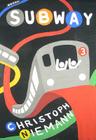
The first is Subway by Christoph Niemann. The book is based on this wonderful piece Niemann did for the Times a few years ago in which he takes his boys on “endless subway joy rides…” to satisfy their love of trains. Subway is great both because it is about loving the subway system obsessively – the kids end up crying as they’re dragged off the train after an entire day of riding back and forth – and because it is a mostly accurate guide to the subway system. It looks like a typical storybook, but it is really a hard-core introduction to every subway line in the city. In fact, I think that Sam and Ezra’s favorite page is one on which the F and G trains separate at Bergen street in Brooklyn, only to reunite at Roosevelt Avenue in Queens. My boys love this page because they get to fact-check it. The G no longer runs to Roosevelt Avenue, and they know it, and they love to show off their knowledge by telling the book that it is wrong.

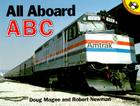
Subway is an easy book to love. It looks great and it tells a story that feels completely familiar to train-obsessed kids. Not all factual train picture books are quite so easy to love. I have a long-suffering affection for a book called All Aboard ABC by Doug Magee and Robert Newman. This book was published in 1990, and it is the kind of weird book that makes me wonder how it actually came to be. Who decided to make this book? Who decided to print it? What were they thinking?

All Aboard ABC uses photographs of trains (many of them Amtrak) and parts of trains to teach the letters of the alphabet. For instance, “H” is accompanied by a picture of a train’s horn and the caption “The engineer sounds the horn as the train nears a grade crossing.” What’s a grade crossing? Well, that’s what’s weird about this book – it is oddly specific. “G” is for “grade crossing,” which appears to be the technical term for “where railroad tracks cross a road.” “Q” might be for quiet, but “R” is for roadbed. “B” isn’t just for bridge, but for “trestle bridge.”

The photography of the book is pretty entertaining, too, in that I often find myself wondering about the circumstances of the photography. Many of the pictures seem to be taken in the same place on the same day (if I had to guess, I’d say that place was Bakersfield, California and that the day was an overcast one). “J” is for “junction,” but it might as well also be for all of the “junk” that weirdly appears in the background of the picture. My favorite photographic detail: there’s a red rental car that in many of the shots, giving the impression that the photographer has rented the car (in, say, Bakersfield), driven around looking for trains to photograph, and jumped out whenever something looked vaguely train-ish. At least, that’s the impression I get when I see that red Corolla, driverless, parked at G’s grade crossing.

The book is ridiculous, but my boys love it. They don’t look at it and see a rush job, in the way I do. They look at it and see a trove of interesting, detailed, never-before-imagined information that they love. Where I think they want a story, they really want to know the difference between a hopper car and a boxcar. In a way, I think the book respects them enough to give them the details, to tell them things that most of us would think are too complicated for children, and Sam and Ezra respond to that. Maybe that’s what I was responding to in all of those books about World War Two: they were about real, concrete things, unlike most books that were available to me. 

Thank you, Mark!

Love, Annie

Saturday, May 1, 2010

Books for grumpy, tired toddlers

Dear Aunt Debbie,

We got Pirate Girl from the library a while ago, and Eleanor adored it. Maybe it's time to buy a copy and get it into the regular rotation. I'm so sorry to hear Helga's Dowry is out of print! What is wrong with publishers?

I love the Williams column. My favorite exploration of the Disney princess phenomenon is a New York Times article from a few years ago by Peggy Orenstein called "What's Wrong with Cinderella?" I teach it in my Women's Voices class as we talk about gender expectations and how much of what little kids read and play with is nature, how much nurture. When should we as parents be looking for ever more princess (or train, or dinosaur) books, and when should we be trying to expand our kids' horizons?

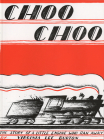
We're going to Eleanor's good friend Ian's 3rd birthday party tomorrow, and tonight I'll be wrapping up three books. We went with one of your train recommendations, Choo Choo, by Virginia Lee Burton, as Ian is very into trains.


Choo Choo


The black and white charcoal illustrations are evocative; I must remember the style from another Burton book I read as a kid, Mike Mulligan and His Steam Shovel. It seems like a fun one to read aloud; I'll let you know how it goes over.

The other two are books you gave Eleanor over the past couple of years, both of which have spawned catchphrases in our daily life.


Grumpy Bird


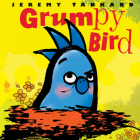
Grumpy Bird, by Jeremy Tankard, has got to be one of my all-time favorites. Bird wakes up grumpy, too grumpy to eat, play, or fly, and so goes walking through the woods. He meets a series of annoyingly happy animal friends, all of whom end up following him ("Walking? I love walking!"). When he realizes that they'll do whatever he does (jump, stand on one leg), he snaps out of his mood and they all fly back to his place for a snack. What I love most about this book is the way it quietly makes fun of the sappy happy characters in so many lesser children's books. Every animal he passes asks him what he's doing, until finally Bird explodes: "WHY DOES EVERYONE WANT TO KNOW WHAT I'M DOING?" Cracks me up every time. This is also a great book to read with different accents for each of the characters. We usually read Fox's voice in a British accent, and Beaver's in a slow, kind of dumb one. Eleanor loves the book, and it gives us a handy shorthand for days when she's in a bad mood -- Oh, are you a Grumpy Bird today?


Will You Carry Me?


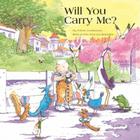
The last is Will You Carry Me?, by Heleen van Rossum, illustrated by Peter van Harmelen. The title is, of course, a familiar refrain to any parent of a toddler, and the book is completely charming. Thomas and Mommy are headed home from the playground, and Thomas is too tired to walk. Mommy (who has an awesome Dutch sense of style) comes up with several other things they can do: "Well, if you're too tired to walk or jump, maybe we should try...Swimming!" Mommy's good-natured channeling of Thomas's whining has popped into my head on more than one occasion when we're out and Eleanor is fussing in the same way. The pictures here are filled with strange little creatures who also walk, run, jump, swim, etc. -- it bears close reading.

Love, Annie