In which Annie (high school teacher, mother of two young girls and a younger boy) and her aunt Deborah (children's bookseller, mother of two young women in their 20s) discuss children's books and come up with annotated lists.

Sunday, September 23, 2012

Three book guys

Dear Annie,

This weekend was the National Book Festival on the National Mall here in D.C.  I went down for a few hours to hang out in the Teens & Children tent.  The audiences really make the event: it's always fascinating to see who attends, and how they react.

The day started with John Green, about whom we've written here, here and here.  And he definitely attracted a crowd: I couldn't even make it into the tent:
there he is in front of that green screen in the middle
The crowd was mostly female, mostly between the ages of 14 and 30, with more probably at the upper end, and wildly enthusiastic.  Green spoke mostly about The Fault in Our Stars, calling it "in some ways...my first novel -- the one I always wanted to write."  He spoke about wanting to "make it okay to look at death.  You have to be brought to a place that it's okay and not scary to look at it: a place of love and respect."  "I wanted to argue that a short life can be a good life, a rich life."

Green says he writes a book every three or four years -- Fault went through some massive revisions.  He so clearly cares about every aspect of his writing.  And as you've pointed out so well, imbues it with many layers of meaning.

Lupica - a little closer
Next up was Mike Lupica, sports writer and author of a slew of middle grade novels about sports -- most of them centered on boys.  There's a whole sub-group of parents who believe that their child (usually a son) won't read anything other than books about sports.*  So an accessible, action-packed series of sports books comes in handy.  He says he writes two books a year -- and they have that feel.

But Lupica, too, is a man who cares about what he writes.  "My books are about friendship, teamwork and loyalty."  His first kids' book was based on his own family's experience when his seventh grade son was cut from his basketball team because he was too short.  He pulled a group of rejected kids together into an independent team which went on to prove the redemptive power of trying hard and not giving up.  "I'm gonna have characters who get knocked down.  How they get back up is what my stories are about." His fans weren't the packed-together screaming crowd that Green attracted.  But the lines at the microphones for questions were heavily populated with boys grasping their copies of his books and asking about different characters in the stories.

Walter Dean Myers
Walter Dean Myers, who is currently national ambassador for young people’s literature, spoke of the transformative power of reading.  One felt all three of these guys hadn't prepared a speech for the event: they were giving their well-used stump speeches -- but they were still interesting.  Myers told the story of his life, which includes warm memories of sitting on his foster mother's lap as she read true romance magazines out loud, following the words with her finger.  He eventually learned to read and would read them out loud to her as she did housework. 

Myers is 75, and had a tough childhood, but spoke fondly of a number of teachers who steered him to classic books, and later to writing.  "I loved the Little House books  -- I loved them for taking me out of Harlem (which I loved) and putting me in the big woods."  One of Myers' predecessors as national children's lit ambassador was Jon Scieszka, a very funny and entertaining writer whose big focus is to get more boys involved in reading.    Part of Scieszka's schtick is that adults give boys too many old-fashioned "girl books" that they can't engage with.  The Little House books are the ones he tends to cite as not-for-boys.  It was a lovely contrast to hear Myers, whose books often focus on the difficult experiences of young men, appreciating how imagination can be fed.

Love,

Deborah


*I think they just haven't found the right books yet -- but that's a discussion for another day.

Friday, September 21, 2012

Owl as villain

Dear Aunt Debbie,

From Athena's owl to the Mother Owl and her babies, we are generally big owl fans in this house.  Isabel even has a hooded towel shaped like an owl, with head and claws, so after baths she often pretends to be an owl.  Sometimes, like the baby owl in The Mother Owl, she is threatened by a dangerous raccoon, and needs us to come swoop in as her parent owls and save her.  I'm sure that, when the time comes, she'll love Archimedes.

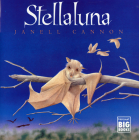
But in tonight's requested book, the owl is the bad guy, and it's bats who take center stage.  I'm writing, of course, about Stellaluna, Janell Cannon's lovely and scientifically accurate account of a baby fruit bat who is separated from her mother and goes to live for some time with a family of birds.  It's an owl who causes the separation:

One night, as Mother Bat followed the heavy scent of ripe fruit, an owl spied her.  On silent wings the powerful bird swooped down upon the bats.

Dodging and shrieking, Mother Bat tried to escape, but the owl struck again and again, knocking Stellaluna into the air.  Her baby wings were as limp and useless as wet paper.

Down, down she went, faster and faster, into the forest below.

Stellaluna came to us as a gift from cousins Ona and Jessie when Eleanor was not quite two years old, and it took a little while for her to warm to the book.  It's a fairly long picture book (48 pages), and is a little scary at the start.  Isabel was interested earlier than Eleanor, partly I think because of the gorgeous illustrations of the bats and Stellaluna's foster bird family.  Many of the pages are taken up largely with a saturated blue sky as backdrop to the pale beige of the bats, birds, and trees.  Each feather and bat wing is lovingly articulated -- looking at the pictures, you really get a sense of how a bat might move, hang, or fly.

The story moves quickly past the traumatizing beginning: Stellaluna lands in a birds' nest, and becomes a foster sister to Pip, Flitter, and Flap.  In return for feeding and housing Stellaluna, Mama Bird insists that she behave like a bird rather than a bat: she eats insects, flies during the day rather than at night, and by no means is allowed to hang upside down from the nest -- her foster siblings try it too, and almost fall.  Late in the book, Stellaluna strays away from the others and is caught away from the nest at night.  Happily, she's discovered by a group of bats, and even more happily, one of the bats is her mother, long feared to be owl prey.  There's a reunion ending, cross-species friendship, and two detailed pages of "Bat Notes," explaining in more detail to kids Eleanor's age or above interesting facts about bats ("The scientific name for bats is Chiroptera, 'hand-wing,' because the skeleton that supports the wing is composed of the animal's elongated finger bones.")

So far, Isabel has shown no disconnect between the image of owl life here and in her rich fictional world.  When you come down to it, the girl really just loves animals, in all their combinations.

Love, Annie

Wednesday, September 19, 2012

Wisdom and an owl

Dear Annie,

Athena -- a far cry from princess-in-pink.

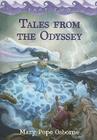
You and Eleanor might like to check out Mary Pope Osborne's
Tales from the Odyssey
. It was originally written as six little books (one of them called The Gray-Eyed Goddess), but the publisher has sensibly pulled them into two volumes -- still pretty short.  Yes, she's the author of the Magic Tree House books, which are not my favorites, but this is better.  I confess I've only browsed through these tales, but they consistently get surprised and pleased reviews from customers.  I'm curious what you'd think of them.

One of the joys of domestic life in our household is the high quality literary references.  Bob and I were discussing your latest post at dinner, and he reached a book off the shelf and read me a few pages.  It was The Sword in the Stone by T. H. White, and the scene is one in which the young Arthur -- known as the Wart -- first meets Merlyn, and his owl Archimedes.  At first the owl tries hard to ignore him, then perches skeptically on his shoulder as the humans converse.
   . . . he felt a curious sensation at his ear.  "Don't jump," said Merlyn, just as he was going to do so, and the Wart sat still.  Archimedes, who had been standing forgotten on his shoulder all this time, was gently touching himself against him.  His beak was right against the lobe of the ear, which its bristles made to tickle, and suddenly a soft hoarse little voice whispered, "How d'you do," so that it sounded right inside his head.
   "Oh, owl!" cried the Wart, forgetting about Merlyn's troubles instantly.  "Look, he has decided to talk to me!"
   The Wart gently leaned his head against the soft feathers, and the brown owl, taking the rim of his ear in its beak, quickly nibbled right round it with the smallest nibbles.
   "I shall call him Archie!" exclaimed the Wart.
   "I trust you will do nothing of the sort," cried Merlyn instantly, in a stern and angry voice, and the owl withdrew to the farthest corner of his shoulder.
   "Is it wrong?"
   "You might as  well call me Wol, or Olly," said the owl sourly, "and have done with it."
   "Or Bubbles," added the owl in a bitter voice.
   Merlyn took the Wart's hand and said kindly, "You are only young, and do not understand these things.  But you will learn that owls are the politest and most courteous, single-hearted and faithful creatures living.  You must never be familiar, rude or vulgar with them, or make them to look ridiculous.  There mother is Athene, the goddess of wisdom, and though they are often ready to play the buffoon for your amusement, such conduct is the prerogative of the truly wise.  No owl can possibly be called Archie."
   "I am sorry, owl," said the Wart.
   "And I am sorry, boy," said the owl.  "I can see that you spoke in ignorance, and I bitterly regret that I should have been so petty as to take offense where none was intended."
I hope Eleanor's Athena is both truly wise and equipped with an exceptional owl.

Love,

Deborah

Monday, September 17, 2012

The lure of Greek mythology

Dear Aunt Debbie,

I have a feeling that Nicholas Flamel is in Eleanor's future.  We're back to Greek mythology here in our house, poring over the pages of D'Aulaires' Book of Greek Myths with obsessive interest.  I wrote almost two years ago about our first dip into the book, and wondered what would spark Eleanor's interest in it when she got a little older.  The answer?  Halloween.

For a month or more, Eleanor had been pushing to dress up as Daenerys Targaryen, the teenage Mother of Dragons from George R.R. Martin's Game of Thrones series.  Jeff and I have both been reading the books, and Eleanor asks about the stories in them, so Jeff had told her a few highly edited bits, and she thought Daenerys sounded awesome.  Baby dragons!  Being familiar with more of the (sexy, violent) plot, I wasn't a fan of the idea.  Eleanor's best friend, Ian, decided to dress up as a dragon, then as a dragon with multiple heads, and started calling himself a hydra.  Mythology!  I thought, and brought out the D'Aulaires'.

We started by looking at the pantheon (image in my earlier post), and then reading all the stories about the major goddesses: Artemis, Athena, Aphrodite, Hera, Persephone.  Artemis was interesting to Eleanor for a moment, but she comes off as fairly cruel in the whole turning Actaeon into a deer and letting his hounds kill him just because he sees her bathing episode.  Hera doesn't have much going for her in the role of jealous wife.  Aphrodite was of course the goddess I cast myself as when I was a little older than Eleanor, but not a particularly empathetic character, and a little hard to make a costume for.  Frankly, I was plugging for Athena the whole time, and am very happy that's where we've ended up.  We bought supplies today to make her breastplate (with Medusa's head on it, no less), spear, helmet, and owl.  We're ready to go.

And Eleanor doesn't want to put the book down.  We went back and started at the beginning, with Gaia and Uranus coming together to produce their Titan children and then their hideous monsters.  Now we're reading straight through: tale after tale filled with...well...sex and violence.  When you place them side by side, the Greek myths don't actually come off much cleaner or more kid-appropriate than Game of Thrones.  The D'Aulaires wrote them in kid-friendly language (Zeus has many "wives"), but there's no getting around the intensity of death and kidnapping, even when you elide all the rape.  Along with killing Actaeon, Artemis and her twin, Apollo, kill all 14 of Niobe's children because Niobe has a big ego and a bigger mouth.  It's heavy stuff.

On the other hand, Isabel is going as Minnie Mouse.  It's nice to have two.

Love, Annie

Sunday, September 16, 2012

9th grade revisited, and a little more Wolf

Dear Annie,

I always love hearing about books that made an impression on your students.

The Astonishing Life of Octavian Nothing and its sequel are amazingly written books.  Hard to believe that the person who invented a futuristic slang for Feed could immerse so thoroughly in 18th century language.   The books also show the confusion many colonists felt about which side of the Revolution to support, especially when the British were actively anti-slavery.

In the days when Bob was covering the publishing industry for the Washington Post, he managed a trip to Boston to interview M. T. Anderson, and of course to visit Lizzie on the side.  The resulting article is quite lovely.

Secrets of the Immortal Nicholas Flamel

And then there's the Nicholas Flamel series, by the Irish author Michael Scott.  It's one of our biggest-selling series.  When older kids have blasted through all of Rick Riordan's Greek, Roman and Egyptian books, this is what we offer next.  It's a six-book series about fictional present-day teenage twins caught in a struggle over control of the earth and beyond. They become both allies and puppets of magical and mythical forces who want to take it over.  All the other characters in the books -- and there are many -- are either real people from history (Machiavelli, Billy the Kid, Shakespeare, Joan of Arc, and on and on...) or characters from many different mythological traditions (Gilgamesh, Mars, Prometheus, Odin, the Aztec goddess  Coatlicue and many more...).  Part of me likes books which toss in many real names, because some information is bound to be retained.  But most of the historical figures aren't very much in character -- they all are extremely skilled at hand-to-hand combat, which they indulge in frequently -- and the constant battling can get tiring.  The racing plot and the constant suspense keep folks reading, though.

And a postscript on Wolf Story, which I wrote about in my last post.  It turns out that Michael, the character in the book who's creating the story with his dad, is the actual son of the author -- a sort of American Christopher Robin Milne.  NPR tracked down the now-72 year-old, and Scott Simon did an engaging little interview. 

There's a poignant note in the back-story.  The book has a few cheery references to Michael's mother, who doesn't participate in the storytelling, but is liberated from having to make lunches at one point (and makes them at another) and generally seems grateful for getting some mom-alone weekend time.  Michael explained that his father wrote the story during the six weeks that he and his mother were in Reno where she was getting a divorce -- which his father did not want.  "This is the father pricking the son's memory with the sweetest stories that he can tell, or that he can remember," said the younger McCleery.  "I don't think you would discern that just from reading it, but once you know it's there, I think you'll know what I mean." 

Love,

Deborah


Friday, September 14, 2012

Current 9th grade favorites

Dear Aunt Debbie,

I love the idea of mutual storytelling, the ways in which kids and parents end up telling a story together -- so true to life, and so lovely.  We're excited, as always, for the arrival of the Birthday Box.

I've made it to the end of the first full week back at school, always both invigorating and exhausting.  Last year, I wrote about some of my ninth-graders' favorite books, as described in the introductory letters they write to me.  I asked the same question of them again this year, and thought I'd mention a few of the results tonight.  Many familiar titles, of course -- Harry Potter, The Hunger Games -- but a few I haven't read that sound interesting.  Such as...

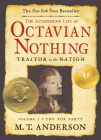
The Astonishing Life of Octavian Nothing, Traitor to the Nation, by M.T. Anderson.  On your recommendation, I read Anderson's Feed a while ago, and found it totally compelling.  While Feed is set in a dystopian future (ah, how YA authors love dystopian futures), Octavian Nothing is historical fiction, set in Revolutionary War-era Boston.  Octavian is a young black man being raised by a group of rational philosophers who realizes belatedly that he's part of an experiment testing whether Africans are "a separate and distinct species."  It sounds like an interesting exploration of the issues surrounding slavery and utopian idealism at the time.


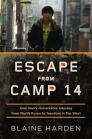
Escape from Camp 14: One Man's Remarkable Odyssey from North Korea to Freedom in the West
, by journalist Blaine Harden, is nonfiction, and not technically YA, though more than one of my Korean students mentioned it.  It's the true story of a man born and raised in a North Korean prison camp, and sounds intense and brutal in its details --  Shin Dong-hyuk saw his family killed, and was subjected to all kinds of overwork and abuse.  As a chronicle of recent history and ongoing abuses, it sounds fascinating.

But where, you may ask, is the nice long series with magic, supernatural powers, intrigue, and multiple sequels?  Some of my students recommend The Alchemyst: The Secrets of the Immortal Nicholas Flamel, by Michael Scott.  The premise: twins Sophie and Josh are interrupted in their summer jobs in San Francisco by the realization that Josh's boss is actually Nicholas Flamel, historical alchemist who was supposed to have died close to 700 years earlier, but has been making and taking an immortality potion for all that time.  There is theft and a host of evildoers, and a Codex of ancient prophecies, which apparently name the twins as actors in the battle between good and evil.  Scott draws on mythology and history -- Flamel was a real person -- and develops six books from the premise.  Maybe I should start making up my summer reading list for next year right now.

Love, Annie

Wednesday, September 12, 2012

Wolf Story

Dear Annie,

This week, a delightful book which first appeared in 1947, then disappeared about ten years ago, came back into print, thanks to the folks at the New York Review Children's Collection, who appreciate a good yarn and a good laugh.

Wolf Story
, by William McCleery celebrates the art of making up stories in a most entertaining fashion.  Over the course of a few evenings at home and several excursions around New York, a father tells two boys a story -- but it's one in which many details are negotiable.  On the first page, five year-old Michael asks his dad for a story:
   "A new story?" said the man.  "What about?"
   "About a hen," said the boy.
   "Good!" said the man.  "I was afraid you might want another wolf story.  Well, once upon a time there was a hen."  The man stopped.
   "Go on," said the boy.  "What are you waiting for?"
   "What is a good name for a hen?"     Michael looked very thoughtful.  "Make it that the hen's name is . . . Rainbow," he said.
Despite the man's protests ("Anything but a wolf.  A weasel, a ferret, a lion, an elephant . . . "), Rainbow's antagonist is a wolf named Waldo ("but Waldo was in our last story !  He's been in every story since Christmas.").  Sleep interrupts the action before Waldo can grab the chicken, but it continues the next night.

After that, the man takes Michael and his friend Stefan on outings to Fort Tryon Park and Jones Beach.  The carburetor floods and needs the attention of a mechanic, ice cream and popcorn are consumed, a kite is built and flown.  The story of Waldo and Rainbow weaves through the car rides, nap time at the beach, waiting for repairs.

At the climactic point of the story, the hen (who was doing a pretty good job of outsmarting the wolf) is rescued when five year-old Jimmy Tractorwheel knocks him out with a baseball bat.  The question then becomes:
". . . What shall we do with the wolf?"
   "Make it that he gets up and runs away," said Michael.
   His father could hardly believe his ears.
   "Let the wolf run away?"
   "Yes," said Michael.  "As fast as his legs will carry him."
   "You don't want him killed?  Or even captured?"
   Michael shook his head, no.
   "This is the first time you've ever wanted a wolf to get away.  What is this, be-kind-to-wolves week?"
   Michael's eyes were shining and he spoke in a loud whisper.  "If the wolf gets away he will come back and steal Rainbow again!"
So the tale goes on.  Michael eventually figures out a relatively non-violent denouement, with lots of plot twists on the way.

It's a lovely story about a boy and his dad -- at one point there's an aside about how damn "is more a word for grown-ups" -- and what happens when you give free reign to imagination.

I recommend, dear Annie, that you avoid going out and getting this book, and instead hold out until later this month, when a birthday box will be finding its way from our house to your house.  This is one I'd love to add to your collection.

Love,

Deborah