In which Annie (high school teacher, mother of two young girls and a younger boy) and her aunt Deborah (children's bookseller, mother of two young women in their 20s) discuss children's books and come up with annotated lists.

Showing posts with label race. Show all posts

Monday, July 11, 2016

How children's books help me talk to my kids about race and gender

Dear Aunt Debbie,

Here we are a month later, with three more horrific shootings to process, with more grief and more anger and more unanswerable questions. Along with a number of my friends and acquaintances, I'm searching for ways to talk with my children about current events, ways to be honest about the complexities of race and politics in America on a kid-appropriate level.

On my local neighborhood listserve, someone suggested the websites Raising Race Conscious Children and  ParentsTogether, both of which have some excellent essays about how to talk to children of all races about race, racism, and violence.

For me, as with so many other major issues in life, I come at this conversation with my children through the books we read. Many of these are books I've brought into the house: I know their content, and when a complex issue comes up as we're reading together -- racist descriptions in Dr. Dolittle, for example -- I'm prepared to talk about it.

But increasingly, as we visit the library two or three times a week, all three of my kids are picking up and bringing home books that they read first -- sometimes entirely -- on their own. I try to pay attention without leaping in to censor their reading, even when I'm not crazy about the material they choose, and engage them in conversation about aspects of books that trouble me. As the library books pile up, however, some things slip through the cracks.

Isabel has recently been reading the Asterix comics, which I remember my brother Michael reading when we were kids, but which I've never read myself. Eleanor reads them too, because she reads every book that anyone brings into the house.

Two nights ago, Jeff picked up one of the books lying on our coffee table and came over to me, disturbed. "Have you looked at the depiction of black people in these books?" I hadn't. I did. It's horrendous.

The black characters in Asterix (almost all of them slaves seen serving white Romans) are old-school stereotypically racist, with dark skin, round white eyes, and swollen red lips. Here's an enlargement of an image on the first page of Asterix the Gladiator:


Oy.

So yesterday morning, over breakfast, we had a conversation. 

I started by telling the girls that Jeff and I had been looking at the Asterix book the night before, and that something we saw in it was really disturbing to us. We pulled it out to take a look together, and do a little kid-friendly image analysis. 

I asked them, "What do you notice about how the black people in this book are drawn?" Then I let them talk and observe the skin, the lips, the expressions, trying to allow them the space to notice things themselves rather than jumping in to tell them what I wanted them to think. (It took me several years of teaching high school to learn how well this works.)

After they had identified a number of physical features, I asked, "Do these people look like real black people?" 
"No." 
"How does this kind of drawing make them look?"
"They look like they're stupid."

Then I brought up the idea of stereotypes, which Jeff and I have talked about with the kids before: stereotypes are assumptions that you make about a whole group of people, which can damage people in that group by limiting what they are allowed to do and sometimes even hurting them in physical ways. A favorite entry point example in our house: many people used to believe that girls couldn't play sports as well as boys -- in fact, some people still think this. Because of that stereotype, girls who wanted to play sports were denied the opportunity. Bring this up, and both of my girls become immediately indignant. 

I explained that the way the black characters in Asterix are drawn is an example of an old, racist stereotype that some white people have had about black people. (You and I touched on this particular stereotype a few years ago in two posts about Little Black Sambo and its many contemporary retellings.)

Sometimes, I said, stereotypes like this can get into your head without you realizing it, because of what you read or see or hear around you. Subconsciously, those stereotypes start to change the way you think about a group of people.

We pulled out Will's 5-Minute Batman Stories to look for more stereotypes we might not have noticed. Here's a page of villains from the story "Harley Quinn's Perfect Prank": 


I asked, "What do you notice about the way Poison Ivy, Harley Quinn, and Catwoman are drawn?"
"They're all wearing lipstick and eyeshadow."
"That's true. Think about the way their whole bodies look, too. I'm a woman -- does my body look like this?" I held the book up next to me. My daughters cracked up. (Answer: No.)
Eleanor said, "It looks like they're wearing corsets. They have tiny waists and really big..." She dissolved into giggles.
"You're absolutely right, they all have really big breasts. So when you read this book and look at the pictures, what do you think you might start to think about what a beautiful woman looks like?"
More giggling. "They have really big breasts!"

[Side note: The graphic novel series Princeless, which stars a strong, independent, black princess, does a terrific job of pointing out and poking fun at both racial and gender stereotypes in comic books. The scene where Princess Adrienne examines and comments on the outfits worn by Wonder Woman, Xena, and Red Sonja, is spot-on and extremely funny.]

Next, we looked at the page at the beginning of the book that lists the cast of characters, heroes and villains alike: 


"What do you notice about who's in this book?"
"It's mostly men. The bad guys and the good guys."
"What else?"
"There's almost no black people at all. It's mostly white men."
Will pointed out: "And Killer Croc. Because he's green."

Later, when the kids told Jeff about our conversation (which they remembered in great detail several hours later), he added the question: "Who do you think is probably writing and illustrating these stories?" It didn't take the kids long to figure that one out, either.

Finally, I made the connection to current events. We talked about the shootings over the last week, and the fact that a lot of people are angry and upset over the shootings of black people by police officers, in situations where it wasn't necessary. Eleanor (very upset and indignant about racism of any kind) asked why police officers would do that. I said that part of it comes from fear, and that I think part of that fear comes from the stereotypes and assumptions that white people have about black people as a group. And part of that fear comes from the images we see -- or don't see -- of black people in the books we read and the TV and movies we watch. That's why it's so important for us to look closely at and think about what we're reading, instead of just taking it in.

Then we closed the books and went to the playground. I pushed Will on the little kid swings, and Eleanor and Isabel got themselves some big kid swings and pumped really high all by themselves, and I thought about that as a metaphor because I'm an English teacher at heart, and everyone got a little wet in the sprinkler before it was time to go home for lunch. One more conversation to fold into our understanding of the world.

Love, Annie

Monday, March 26, 2012

Grown-up reading: Margaret Atwood

Dear Aunt Debbie,

I have yet to see the Hunger Games movie, but was struck today by a Jezebel post summarizing some of the racist reactions to the casting of Rue as a black girl which were captured on Twitter.  It's a disturbing piece, and also points out how often people who declare themselves to be rabid fans aren't actually reading all that closely.  The Jezebel post quotes the first description of Rue in Suzanne Collins's novel: "She has dark brown skin and eyes, but other than that's she's very like Prim in size and demeanor...." A second post provides a run-down of the probable or certain skin color of every other major character in The Hunger Games.

Both pieces of commentary posit that Collins includes people of different races in the Hunger Games universe as part of her social criticism: the upper-class people in the Capitol are white and blond; the people in the Districts have a variety of darker skin tones.  It's not an issue I paid a lot of attention to while reading the books, but looking back now, it's clearly there.  (Nice to see, by the way, that the Ender's Game cast is similarly diverse.)

You asked last week about suggestions for contemporary adult authors whose books would make sense on your store's expanded YA shelves.  The first author who leaped to my mind would keep excellent company with the dystopian visions of Suzanne Collins and Orson Scott Card, though her body of work encompasses far more than that one genre.

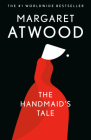
I'm speaking, of course, of Margaret Atwood: novelist, essayist, poet, short story writer.  I started reading Atwood in high school, and teach her disturbingly prescient novel The Handmaid's Tale every semester in my Women's Voices course.  The Handmaid's Tale takes place in Gilead, a near-future version of the United States in which birth rates have plummeted, and the government has been taken over by religious fundamentalists who relegate all people to specific, rigid social roles.  Women are not allowed to work, read, or have their own money, and are divided up by function: Marthas cook and clean, Wives are the upper-class partners of Commanders, and Handmaids are fertile women who are assigned to Commanders in the hope that they'll produce more babies via what is essentially state-sanctioned rape.  The narrator, Offred, isn't a heroine in the traditional sense.  She's a fairly normal woman who dreams of escape but is kept in her place by fear; she's who most of us might be in the same situation. 

This isn't science fiction, but what Atwood calls "speculative fiction": everything that happens in her books is possible, if you take to a farther extent things people have already done in the world, and done to each other.  Atwood wrote The Handmaid's Tale in 1986; when I teach it, we read a packet of accounts of women under fundamental Islamic regimes in Afghanistan and Iran, and the parallels are frightening. 

Atwood is a terrific storyteller.  Her prose is gripping and easy to read, and she often structures her novels as a series of small revelations.  You begin in a world where you don't understand the rules; with every chapter, she gives you more information about what happened in the past to bring you there as well as what's about to happen in the future.  This is an author who knows cliffhangers.  Her books feel like pleasure reading, but scratch the surface and there are all kinds of deeper questions at play: about gender relations, about power, about genetic modification and the environment.

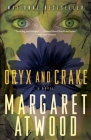
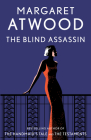
I'd happily hand The Handmaid's Tale (or Cat's Eye, or The Robber Bride, or The Blind Assassin, or Oryx and Crake) to a high school student to explore solo; each of them also rewards deep study.  I'd love to see them on your shelves.

Love, Annie

Thursday, June 3, 2010

Aack! New Baby!

Dear Annie,

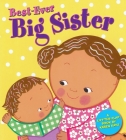
Before I go on to new sibling books, I have one last discovery to add to the Best-Ever cover change. Remember the cover for
Best-Ever Big Sister
, which I thought had been unchanged? Well, guess what arrived at the store today?:

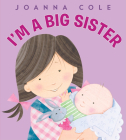
The change isn't as drastic as going from an African-American kid to blond hair and blue eyes, as they did with the brother (see 6/1 post) . But she still isn't who she used to be.

You ask about new sibling books. The Best-Evers are fine, and good for toddlers, complete with lift-the-flaps. They fall into the see-what-I-can-do category of big sibling books: reassure older sibling by celebrating his/her accomplishments, plant the idea that older child will be able to teach younger. My favorite of this type currently in print is Babies Can't Eat Kimchee, addressed quite nicely by you on 5/28.

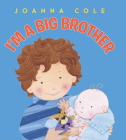
Then there are the informational books. New baby will come. Mom and Dad will go to hospital and come back. Small baby won't be able to do anything. etc. Joanna Cole (yes, the Magic School Bus person) is an author who can do those books very straightforwardly, and they can be useful to introduce the subject:
These books have also gone through a redesign: these are the re-illustrated versions of what were books with bright red or blue covers.

Then there are the I-don't-want-this-baby-here books. They're often the best literature of the lot, because they tell good stories. See especially A Baby Sister for Frances in your 5/22 post. And the favorite in our house was always
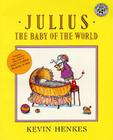
Julius the Baby of the World
by Kevin Henkes (two syllables) with the flamboyant Lilly (of the Purple Plastic Purse) in the role of obnoxious older sibling. Much of the book is her very funny but intense comments on how much she dislikes new baby Julius. In the end, she's offended by a cousin making similar criticisms, and she rises to Julius' defense. Illustrations show that the siblings become fast friends. Because Lilly's feelings are so raw, this is not the first book you want to read with your soon-to-be older sibling. But for an older child, or some months into the new baby's life, it's very funny.

One other, new last year, which doesn't quite fit any of my categories above:
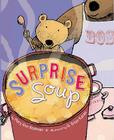
Surprise Soup
, by Mary Ann Rodman tells the story of two brothers and a father making soup for their mother as they await her arrival home with the new baby. Younger brother Kevie is constantly being put down or ignored by the older, and even Dad doesn't hear what he says -- Kevie's the only one who knows Mom's secret ingredient. All turns out well in the end, and it's a very cozy family story. Also a good reminder that life doesn't always revolve around the baby.

Wednesday, June 2, 2010

Race in children's books

Dear Aunt Debbie,

What a depressing, jerky move from the folks at Penguin! I do think about race as one factor when I buy children's books, in pretty much the way you describe: I think it's a good idea for Eleanor and Isabel to have a variety of images of people in the books that surround them. (This is one of the reasons I've also been on the hunt for good books with same-sex couples in them. More on my favorites in that category in an upcoming post.)

Eleanor has, to date, never commented on the question of race, in terms of the people we know (and she has a somewhat mixed group of friends), illustrations in books, or depictions in movies. We recently watched the live-action Disney Cinderella starring Brandy, and I wondered if she would comment on the race-blind casting: Cinderella is black, the evil stepmother (Bernadette Peters) is white; one of the stepsisters is black, the other white; the king is white, the queen (Whoopi Goldberg) is black, and the prince is Filipino. Not a word, even when we discussed some of the differences between this version and the cartoon.

I'm always happy to open a book Eleanor has picked out at the library and find that the characters in it aren't all white. On Eleanor's friend Ian's recommendation, we checked out one such book yesterday, by Jane Ray:


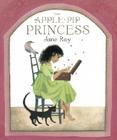
The Apple-Pip Princess


It's a sweet fairy tale: a widowed king says he's going to retire and choose one of his three daughters to rule his kingdom. Each princess has to do something to prove her worth. Predictably, the two elder princesses are too selfish, and mess it up, while the third uses magical gifts of the land left to her by her mother to plant a lot of magic trees and win in spite of not being grand. It's a little bit treacly in places (the good princess is named Serenity), but the illustrations are wonderful, and Eleanor adores it. Everyone in the book is dark-skinned, and there's no mention of race.

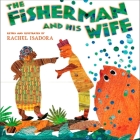
On the fairy tale front, another library discovery of ours are the gorgeous retellings of classic tales illustrated in African-inspired collage by Rachel Isadora. The first of these we read was The Fisherman and His Wife.


The Fisherman and His Wife


Isadora's collages are vibrantly colored and energetic -- if we had a working scanner at the moment, I'd show you the ocean getting darker and more furious as the fisherman's wife continues to ask for ridiculous things from the flounder. We also like Isadora's versions of Hansel and Gretel and The Princess and the Pea, though be forewarned: Hansel and Gretel is a dark story, and the illustrations of the witch are quite frightening; and The Princess and the Pea is, at bottom, not an interesting story at all, though Isadora's illustrations of different African princesses are beautiful, and she teaches you how to say hello in three different African languages.

Then there are some of the gifts we've gotten from you. Three that pop immediately to mind:


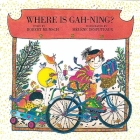
Where Is Gah-Ning?


As we've said before, Bob Munsch is hysterical. This was the first of his books we'd ever read, and it has some of his trademark style: lots of pleasing repetition in the dialogue, as Gah-Ning tells her father she wants to go to Kapuskasing, and he says no to every way she could get there, followed by a totally ridiculous plot twist and a happy ending. Gah-Ning and her family are Chinese, and some of the other characters are white, but again, there's no mention of race.


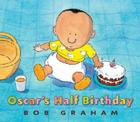
Oscar's Half Birthday


Bob Graham includes a nice variety of characters in his books: in Oscar's Half Birthday, mom is black, dad is white, and the kids are mixed-race (as well as being supernaturally well-behaved, especially at bedtime). It's a very sweet depiction of an older sister and baby brother. We also liked Jethro Byrd, Fairy Child, in which Annabelle (the girl who sees the fairies) and her family are white, and all the fairies are darker-skinned -- possibly Latino?

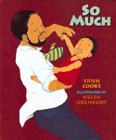
Finally, there is the joyful, perfect poem of a book by Trisha Cooke, illustrated by Helen Oxenbury:


So Much


It's a story about waiting and having people arrive: a new family member comes in on every other page, with a catch-phrase ("Hello hello!" "Yooo-hooo!") and something they want to do to the baby ("I want to kiss the baby! I want to kiss him so much!"). On the alternating pages, all the people in the house sit and wait together, and the drawings become sepia-toned. The family is black, British, and incredibly warm. Helen Oxenbury's drawings of babies are pitch-perfect.

All of which is a long way of saying that, given books with the two covers you referenced in your last post, I'd be more likely to buy the one with the black kids. However, there are a number of other books I like better for addressing new sibling issues. What are your favorites in that category?

Love, Annie

Tuesday, June 1, 2010

From My Scanner...

Dear Annie,

Ah, Hippos Go Berserk. A big favorite in our house -- one of the first books we gave Eleanor, I think. One of the many wonderful things about that book is the center spread, which I can't resist posting here:


It took me many readings before I realized that all is a bit of an exaggeration.

Hippos got a second life when Lizzie picked it up as she was learning to read. This was the first book she ever read on her own. Mona also went back to the board books when she wanted to learn. For her, it was a now out-of-print series of tiny books by Helen Oxenbury called Baby Beginner Books, with one word per page. There were four of them, but the one I remember best was
I Touch
. It makes sense that many board books can become early readers: very few words per page, simple, big type, cozily familiar.

I'm going to do a bit of a leap here, to something I discovered on the store shelves today. I was straightening up the new sibling shelf, and found myself sorting through several copies of
Best-Ever Big Brother
. It's a nice little lift-the-flap, nothing outstandingly imaginative, but utilitarian: "I'm a big brother. My baby brother has to wear a diaper/But I can wear big-kid underpants," etc. It's more-or-less the usual mix of multi-cultural: one spread with black siblings, two with Asians, three with whites. The exception, of course, is the cover: one is much less likely to find a book containing a variety of races with an African-American cover.

Best-Ever Big Sister
has a child on the cover who could be interpreted as non-white. I've always liked these books, and they sell at about the same rate as other sibling books for the same age.

So imagine my surprise when I discovered myself holding two copies of the Big Brother pictured above, and two copies of this:


The bar code number is the same. It's just that this is what turned up when I re-ordered. No one at the publisher, Penguin Books, told me this was happening -- it just happened. My cynical self suspects that the publisher thinks it will sell more with the blue-eyed blond. Sometimes -- not often, but on occasion -- white customers will say that they're rejecting a book for a young child because the children pictured aren't white. They phrase it as "I want to give the child images that look like him/her." I find this a disturbing thing, and different from buyers who are looking for books with characters who resemble non-white children they are buying the books for. There's a much wider variety of races in books than in previous decades, but there are still a lot more books with white kids in them, or with white kids as the majority of kids. It seems reasonable to want to get more non-white images in the hands of non-white kids because there are already so many white images around. And it seems like a good idea to give everyone pictures of the world that reflect the variety of people in it.

So am I sounding like someone from a previous generation? Do you think about race when looking for books for your kids? Or is there enough variety around that you don't feel a need to be conscious of looking for it? This is a question for you, Annie, but also for any of those other parents of little ones out there.

Love,

Deborah