There's been a question about poetry for two-to-five year olds, so for the moment I’ll stick with pre-readers. The big question for me is, what is poetry for someone that young? Bob reminds me that somewhere in our house we have a five-pound book with bible-thin pages called something like “Poems for Children,” the majority of which were written in the 19th century. I bought it at some point when the girls were quite young, but we can’t remember ever opening it. One had the impression there would be a lot of sorting through to find the gems within.
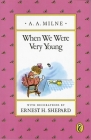
 There are wonderful books of poetry, like A.A. Milne’s When We Were Very Young, eloquently praised by you on 5/5/10, and Now We Are Six. And everyone needs Mother Goose – in any edition – even if some of the poems are weirdly incomprehensible. For a very beginner book of poems, Jane Yolen’s
 Here's A Little Poem: A Very First Book of Poetry, collects a lot of later 20th century poets (Mary Ann Hoberman, Jack Prelutsky, Rosemary Wells, Nikki Grimes, and more) in simple, sweet and funny works.
Does poetry mean rhyming? Lots of fun, and a necessary concept to grasp before one moves on to learning how to read. But look at the books you’re already reading:
I would not like them here or there.
I would not like them anywhere.
I do not like green eggs and ham.
I do not like them Sam I Am.
(Green Eggs and Ham)
I meant what I said,
and I said what I meant
An elephant's faithful,
One hundred percent.
(Horton Hatches the Egg)
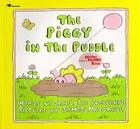
Just about all of Dr. Seuss is rhyme, as are many many others. Do I recall an Eleanor anecdote about her speaking in Dr. Seuss meter? A book I committed to memory early in parenthood was
The Piggy in the Puddle, by Charlotte Pomerantz :
See the piggy,
 See the puddle,
See the muddy little puddle.
See the piggy in the middle
Of the muddy little puddle.
See her dawdle, see her diddle
In the muddy, muddy middle.
See her waddle, plump and little,
In the very merry middle.
Ah…
The Seven Silly Eaters by Mary Ann Hoberman, with great Marla Frazee illustrations, seems to have a life of its own at the store – flies off the shelf.
 Not so long ago, they say,
A mother lived -- just like today.
Mrs. Peters was her name,
Her little boy was named the same.
Now Peter was a perfect son
In every way – except for one.
He was a picky eater, as were his six younger siblings. The action centers on all seven of them trying to agree on what to make their mother for her birthday. Hilarity all around.
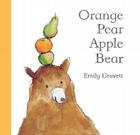 Or by poetry, do we mean economy of language and vividness of imagery? Writing a picture book is not unlike writing a poem. Even though the imagery is helped along by the pictures, every word counts, and text is sparing. I offer one recent spare-text book by Emily Gravett,
 Orange Pear Apple Bear which is a combination of just those four words and great illustration. Is this not poetry?
I don’t want to sound too hokey, but when you’re reading with pre-schoolers, poetry is all around you. This is of course the beginning of a conversation which we'll come back to quite a lot.
Love,
Deborah