In which Annie (high school teacher, mother of two young girls and a younger boy) and her aunt Deborah (children's bookseller, mother of two young women in their 20s) discuss children's books and come up with annotated lists.

Showing posts with label Poetry. Show all posts

Monday, June 11, 2012

Guest blogger: Grownup poetry for YA readers


Dear Aunt Debbie,

I am so jealous of your dinner with Lois Lowry!  I've been meaning to write about her for a long time, and will do so on Friday, when (I hope) I'll be done with portfolio grading, and facing only a large stack of final papers from my other classes.  Until then, here is my most excellent friend and colleague Emily, who teaches the Poetry Workshop class at Stuyvesant and is an accomplished poet in her own right.

Dear Annie,

As someone who has spent the past ten years teaching poetry to teenagers, I want to recommend a handful of writers that young, word-loving people respond strongly to.

Teenagers and poetry are, of course, a fabulous match. When I was in high school, I spent long hours on the front lawn reading Adrienne Rich’s poems out loud with my friend Eve, the grass tickling our legs. My school-issued Norton Anthology of Poetry was permanently cracked open to the short “Women Writers” section, ten pages that eventually led to my career as an English teacher and poet.

Since then, the internet has democratized poetry in wonderful ways. Type “Sarah Kay,” “Alvin Lau,” or “Andrea Gibson” into Youtube and you’ll be instantly thrilled by the spoken word videos you discover. (I’m totally serious: try it!) Page poems, too, are easier than ever to find and connect to. The web site Poets.org has a marvelous search mechanism - “Poems for Every Occasion” - that allows my high school students to search by topics such as “Grief,” “Summer,” “Poems that Teenagers Like,” and even “Sharks” or “Shoes.” That said, there’s something beautiful, almost secretive, about the experience of holding a book of poems, and the right book in the right young hands can be a very big deal.
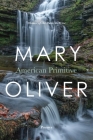
Mary Oliver is a perennial favorite, one who writes lovely, accessible nature poems. She’s written reams of books, and New and Selected Poems, Volume One and
American Primitive
are both favorites of mine. Here’s the entirety of “Wild Geese,” a poem it is easy to imagine a high school writer falling in love with:


You do not have to be good.
You do not have to walk on your knees
For a hundred miles through the desert, repenting.
You only have to let the soft animal of your body
love what it loves.
Tell me about despair, yours, and I will tell you mine.
Meanwhile the world goes on.
Meanwhile the sun and the clear pebbles of the rain
are moving across the landscapes,
over the prairies and the deep trees,
the mountains and the rivers.
Meanwhile the wild geese, high in the clean blue air,
are heading home again.
Whoever you are, no matter how lonely,
the world offers itself to your imagination,
calls to you like the wild geese, harsh and exciting --
over and over announcing your place
in the family of things.
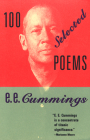
           
100 Selected Poems
is a wonderful little edition of poems by e.e.cummings, a writer whose explosive calligrams and expressively-punctuated poems are universally adored by my students.
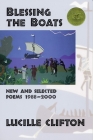
            A more contemporary writer I love is Lucille Clifton. Her book Blessing the Boats is a great place to start, and her short, evocative, lower-case poems go down easy but linger in the mind. Here’s an excerpt from Four Notes to Clark Kent, titled “note passed to superman,” that is sure to delight young readers:

sweet jesus superman,
if i had seen you
dressed in your blue suit
i would have known you.
maybe that choir boy clark
can stand around
listening to stories
but not you, not with
metropolis to save
and every crook in town
filthy with kryptonite.
lord, man of steel
i understand the cape,
the leggings, the whole
ball of wax.
you can trust me,
there is no planet stranger
than the one i'm from.

The lyrical humor of Billy Collins is easy for writers of all ages to adore, and his web site and fantastic anthology series, Poetry 180, is designed to integrate poetry reading into daily student life. I know both teachers and students will appreciate this representative excerpt from the poem “Did I Miss Anything?” by Tom Wayman:

Nothing. When we realized you weren’t here
we sat with our hands folded on our desks
in silence, for the full two hours

     Everything. I gave an exam worth
     40 percent of the grade for this term
     and assigned some reading due today
     on which I’m about to hand out a quiz
     worth 50 percent

Nothing. None of the content of this course
has value or meaning
Take as many days off as you like:
any activities we undertake as a class
I assure you will not matter either to you or me
and are without purpose

Check out the website to read the rest; it only gets better.

On a totally different note, Sara Teasdale wrote gorgeously sad love poems, many involving Union Square, Coney Island, and other New York landmarks that delight my city students. Like Edna St. Vincent Millay, a poet whose love sonnets I could not get enough of in high school, Teasdale’s work is filled with rhythm and rhyme, so that she feels at once contemporary and deeply classical. Many of Teasdale’s poems are deliciously sad, perfect for a heart-broken high-schooler, but here’s the beginning of a more joyful piece, “Barter”:

LIFE has loveliness to sell,
     All beautiful and splendid things,
Blue waves whitened on a cliff,
     Soaring fire that sways and sings,
And children's faces looking up
Holding wonder like a cup.

 There are, of course, roughly a zillion other poets I could recommend: Nick
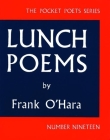
Flynn’s Some Ether is raw and potent; Frank O’Hara’s
Lunch Poems
radiate casual joy; Yusef Komunyakaa writes gorgeously visceral poems about growing up in the American South; Kimiko Hahn’s intimate, conspiratorial poems in Mosquito & Ant feel like secrets that the coolest girl in school is whispering into your ear. As Billy Collins once wrote,


the trouble with poetry is
that it encourages the writing of more poetry,
more guppies crowding the fish tank,
more baby rabbits
hopping out of their mothers into the dewy grass.

Poetry does, indeed, lead to more poetry, both the reading and the writing of it. These writers are a good place to begin. 

Emily

And love from me, Annie

Friday, December 2, 2011

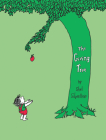
I'm glad The Giving Tree wasn't my mother

Dear Aunt Debbie,

With your last post, I realized we hadn't seen our complete Nutshell Library in a while (the tiny books tend to lose their covers and become separated, if you're not careful), and also that we had a BRAND NEW one, still unopened, as a recent gift.  So we cracked it open, and pretty much have read nothing else for the last 24 hours.  Plus, Isabel got to take all the new covers off and then ask for my help putting them back on again.  Jeff's aunt told me once that she kept the Nutshell Library in her purse for several years while raising her three kids -- they're the perfect size for pulling out in waiting rooms or on public transportation.  Pierre is our favorite, too, though "One Was Johnny" comes in a close second: all about a boy who lives by himself, and is bothered by a series of animals and a robber who come in to disturb his reading (counting up to 9), then threatens to eat them all if they don't go away, so they do, one by one (counting back down).

I've been thinking about Shel Silverstein again too, courtesy of one of my high school seniors.  At the beginning of each of my classes, a student stands up and delivers Minutes from the previous day's class, then gives the class a "gift": a poem, or an interesting article, or a thought-provoking riddle, or a demonstration of some kind of skill -- sort of a grown-up version of show and tell.  In my Women's Voices class this week, a boy brought in and read aloud The Giving Tree.  It was a sweet moment: the beginning of the seniors looking back at their childhoods through rose-tinted glasses as they focus on the college and adult lives looming ahead of them.  He paused on each page to show the pictures to the class, and you could feel the wave of  nostalgia. 

I tried to feel it too.  Problem is, I hate that book.  Periodically, I'll forget why I hate it so much, and think, Oh, so many people adore The Giving Tree, and adore Shel Silverstein because of it, and I'll read it again, and then I'll remember how much I hate it.

I understand that it's supposed to be a story about being willing to give everything to those you love, specifically, your children.  The tree gives the boy apples, and he swings in her branches, and they have fun.  And then he grows older, and when he wants money, and a house, and a boat, she gives him her apples, and her branches, and her trunk, and she's lonely all the time.  Finally, she's just a stump, and he's old, and he wants a place to rest, and she can still give him that, so they're both happy.

Except she's a freaking stump. 

I said something fairly mild to my class about the fact that I didn't like the book, and connected it to some of what we've discussed in there about female characters in literature: here's the female tree, who sacrifices every part of her being to the ungrateful male character, and it's that total self-sacrifice that makes her happy.  Some of my students looked at me like I was crazy; some nodded.  The boy who brought the book in said that he thought it was beautiful because the tree was like a mother, giving all of herself to her child.  And I said yes, I'm a mother, and that's why I don't like this book.

The boy is ungrateful; the tree-mother is sad and lonely.  Her sacrifices don't lead to any lasting happiness for either of them, and their only relationship is based on her giving him things as she wastes away.  It's not a model I particularly want to emulate.

I think that my gut reaction to The Giving Tree soured me on Silverstein in general, which is too bad.  Maybe when Eleanor's old enough, I'll give his poetry another chance.  For now, though, despite my students' fond memories, I'll be keeping that book out of my house.

Love, Annie

Tuesday, December 28, 2010

A gorgeous treasury of poems

Dear Aunt Debbie,

We are well-fed, well-loved, and well-gifted here in the midwest.  Not so bad to be here while a blizzard rages back home, too.

Christmas brought us some excellent books.  I took the opportunity to buy Eleanor several library favorites: In Our Mothers' House and The Keeping Quilt; Tell Me a Mitzi and Tell Me A Trudy; and Flotsam.  On your recommendation, I also tracked down a copy of Young Guinevere, which is an immediate hit with Eleanor.  I love the depiction of Guinevere in the crazy enchanted forest near her father's castle fighting and then teaming up with a wolf who turns out to be a shape-shifting child, and then doing battle with a giant beast with the head of a serpent, the body of a leopard, and the tail of a lion.  Quite unlike other Arthurian legends I've seen.  Eleanor is, of course, impressed by Guinevere's long auburn hair and silk dresses.  I was nice to talk to Lizzie on Christmas day and hear that those were major details she retained as well....

As for me, I'm two-thirds of the way through The Knife of Never Letting Go, and devouring it in great gulps.  What a book!

One of the surprise gifts of the season came for Eleanor from a family friend.  The Barefoot Book of Classic Poems is a gorgeous anthology of poetry, beautifully chosen and illustrated by Jackie Morris (do you know her?  I'd never heard of her, and now I want to find out more).  It is a rich and varied collection, combining poets and poems you might expect in a children's collection (A.A. Milne, Ogden Nash, Lewis Carroll, Robert Louis Stevenson) and poets who come as a surprise in this setting (Marianne Moore, William Carlos Williams, Sylvia Plath, Rainer Maria Rilke).  The book is organized roughly by the idea of a journey from birth to death, with childhood, nature, animals, love, and war along the way.  Each poem is sumptuously illustrated with landscapes and figures.  Morris's choices are excellent, as is her ordering.  The poems talk to each other: Elizabeth Barrett Browning's "How Do I Love Thee?" faces Shakespeare's "Sonnet 18" ("Shall I compare thee to a summer's day?"), as lovers clasp hands across the page break.  She's a gifted editor, and artist.  I want to read a poem every night, and give this book to all kinds of people now.  How often do you get to watch your father-in-law read your almost-4-year old "Jabberwocky" on one night and "The Tyger" on the next?

Love, Annie

Saturday, June 12, 2010

Poetry 1

Dear Annie,

There's been a question about poetry for two-to-five year olds, so for the moment I’ll stick with pre-readers. The big question for me is, what is poetry for someone that young? Bob reminds me that somewhere in our house we have a five-pound book with bible-thin pages called something like “Poems for Children,” the majority of which were written in the 19th century. I bought it at some point when the girls were quite young, but we can’t remember ever opening it. One had the impression there would be a lot of sorting through to find the gems within.

There are wonderful books of poetry, like A.A. Milne’s When We Were Very Young, eloquently praised by you on 5/5/10, and  Now We Are Six. And everyone needs Mother Goose – in any edition – even if some of the poems are weirdly incomprehensible. For a very beginner book of poems, Jane Yolen’s
Here's A Little Poem: A Very First Book of Poetry
, collects a lot of later 20th century poets (Mary Ann Hoberman, Jack Prelutsky, Rosemary Wells, Nikki Grimes, and more) in simple, sweet and funny works.

Does poetry mean rhyming? Lots of fun, and a necessary concept to grasp before one moves on to learning how to read. But look at the books you’re already reading:

I would not like them here or there.
I would not like them anywhere.
I do not like green eggs and ham.
I do not like them Sam I Am.
(Green Eggs and Ham)

I meant what I said,
and I said what I meant
An elephant's faithful,
One hundred percent.
(Horton Hatches the Egg)

Just about all of Dr. Seuss is rhyme, as are many many others. Do I recall an Eleanor anecdote about her speaking in Dr. Seuss meter? A book I committed to memory early in parenthood was
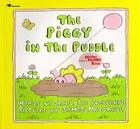
The Piggy in the Puddle
, by Charlotte Pomerantz :

See the piggy,
See the puddle,
See the muddy little puddle.
See the piggy in the middle
Of the muddy little puddle.
See her dawdle, see her diddle
In the muddy, muddy middle.
See her waddle, plump and little,
In the very merry middle.

Ah…


The Seven Silly Eaters
by Mary Ann Hoberman, with great Marla Frazee illustrations, seems to have a life of its own at the store – flies off the shelf.

Not so long ago, they say,
A mother lived -- just like today.
Mrs. Peters was her name,
Her little boy was named the same.
Now Peter was a perfect son
In every way – except for one.

He was a picky eater, as were his six younger siblings. The action centers on all seven of them trying to agree on what to make their mother for her birthday. Hilarity all around.

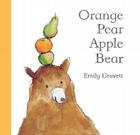
Or by poetry, do we mean economy of language and vividness of imagery? Writing a picture book is not unlike writing a poem. Even though the imagery is helped along by the pictures, every word counts, and text is sparing. I offer one recent spare-text book by Emily Gravett,
Orange Pear Apple Bear
which is a combination of just those four words and great illustration. Is this not poetry?

I don’t want to sound too hokey, but when you’re reading with pre-schoolers, poetry is all around you.  This is of course the beginning of a conversation which we'll come back to quite a lot. 

Love,

Deborah