In which Annie (high school teacher, mother of two young girls and a younger boy) and her aunt Deborah (children's bookseller, mother of two young women in their 20s) discuss children's books and come up with annotated lists.

Friday, March 2, 2012

Behavior modification through literature

Dear Aunt Debbie,

I'm glad to hear from you about the ways in which independent booksellers are resisting and working around Amazon.  It always cheers me to know that you are physically selling books to real people, and thinking actively about what your customers want and need.  Let's hope the resistance continues!

And speaking of resistance....

Eleanor has been very 5-year-old tantrumy lately, pitching fits when she doesn't get her way about small things.  This morning I found myself drawing on literature as a way to engage her with what she's doing, and convince her that she wants to stop.  This isn't a new tactic on my part: Violet Beauregard in Charlie and the Chocolate Factory and Lulu in Lulu and the Brontosaurus have long been characters we invoke in the face of spoiled behavior: Do you really want to be like Lulu?
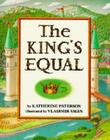
This morning, I struck on Katherine Paterson's The King's Equal, which I wrote about here almost two years ago.  We've been reading it again lately, more deeply.  Prince Raphael and the goatherd's daughter, Rosamund, make excellent foils for each other.  Raphael is spoiled and ungrateful in outsized ways.  After his father, the king, dies, Raphael collects insane taxes from all of his subjects, has lots of pictures painted of himself, and closes all the schools, putting children to work, because he feels only he needs to be smart. (Eleanor finds this part especially shocking.)

On his deathbed, the good king decreed that Raphael could only officially inherit the crown when he found and married a woman as intelligent, beautiful, and wealthy as himself.  Raphael believes there is no such woman, and threatens his advisers with imprisonment and death if they can't find him a bride by the end of the year.

Meanwhile, Rosamund is hiding in a shack in the hills with three goats and a magical talking wolf.  She is smart, kind, and grateful for the little she has (including a magically refilling small jar of grain), but Paterson manages to make her seem interesting as well.  After a time, the wolf tells her to go down to the castle and present herself as Raphael's bride.

Raphael declares her to be the most beautiful creature he's ever seen.  She proves her wisdom by telling him something about himself that even he doesn't know: that he's lonely.  And she proves her wealth by asking him whether there is anything he wants that he doesn't have.  Of course, there is -- lots.  Well then, she says, "perhaps you are poorer than I, for there is nothing I desire that I do not already possess." Ultimately, she proves herself to be more than Raphael's equal, and takes over the running of the kingdom while he goes off to spend a year with the goats, learning humility and how to bake bread.  When he returns, they are truly equals, and get to rule together.

I invoked Raphael and Rosamund this morning at the breakfast table, when Eleanor began to whine about walking to school instead of driving.  Which one do you like better? "Rosamund, of course!" Eleanor said, laughing.  And which would you rather be like?  "Rosamund!"  And what's Rosamund like?  We talked about kindness, and generosity, and more deeply about being grateful for what you have.  Eleanor seemed able to work through, in a way she hadn't before with this book, why Rosamund not wanting more than she has makes her wealthy.

And then we talked about what we have: enough food, enough clothing, loving family and friends.  "I have these Barbies, and I don't really even need them," Eleanor said.  Exactly.  And then we practiced: what do you think Rosamund would say if she didn't get her way about something little?  "Oh, well."  We ran through a couple of scenarios.  And the tantrum that had started ten minutes before dissipated.

I'm not saying Katherine Paterson is a magic bullet -- five minutes after this, Eleanor ignored all requests to put on her sneakers so we could go to school -- but it felt like a real working through of real issues, better than threats or pleading any day.

Love, Annie

Wednesday, February 29, 2012

Amazon wars

Dear Annie,

Wow -- both your girls are moving right along on the reading front.  And having a good time doing it.

We also loved the Golly Sisters and their distinctly juvenile form of sibling bickering.  There are three Golly Sisters books, two of them now sadly out of print.  In Hooray for the Golly Sisters,  May-May and Rose encounter a river separating them from a town where they're scheduled to perform that evening.  The opening lines provided us with another of those family literary references:
"Big river," said May-May.
"Very big river," said Rose.
It comes in handy when faced with any large body of water.

Some interesting developments are afoot this week in the world of bookselling.  You eloquently discussed some of Amazon's predatory practices back before Christmas.  Now they're putting the squeeze on some book publishers to cut the prices at which they sell to Amazon.  Last week, Amazon stopped selling e-books from Independent Publishers Group because it refused to cave to Amazon's demands.  "It wasn't reasonable.   There's only so far we can go," said the head of IPG, a distributor which sells books for hundreds of small publishers.  Our store gets many titles, including the wonderful Alfie books and Dogger by Shirley Hughes, from IPG.

Amazon-free
On Monday, Education Development Corporation, which publishes Usborne and Kane-Miller books in the U.S., announced it will no longer sell its 1,500 titles through Amazon.  They're an all-kids' book publisher -- we've talked about the Usborne activity books here and their First Experience series here.  Their publications which are nearest to my heart, though, are Atinuke's amazing Anna Hibiscus books.  Those come through Kane-Miller, which specializes in kids' books from around the world.  EDC started experimenting with going Amazon-less back in 2009 when it pulled its Kane-Miller titles -- at last I know why Anna Hibiscus was only intermittently showing up on Amazon.  They satisfied themselves that they could stay profitable -- Kane-Miller's sales are way up since then -- so they pulled the plug on the larger Usborne list this week.  The EDC president said Amazon is trying to "gain control of publishing and other industries by making it impossible for other retailers to compete effectively." And he concluded the announcement with a statement which has cheered many independent booksellers:
 From my point of view as an editor and publisher, this is also about supporting the connection between booksellers and book buyers. Hand selling has always been a necessary, integral part of the business, particularly with children's books. And it's still the hand selling, the independent booksellers and word of mouth that can create a best seller. Amazon might sell them, but independent booksellers are the ones who create them.
This is all cheering because from my point of view Amazon has seemed so unstoppable in its efforts to monopolize book sales in all forms.  Smart people are figuring out how to keep bookselling a varied and open marketplace.

Love,

Deborah

Tuesday, February 28, 2012

My sister, my sister

Dear Aunt Debbie,

Yes,  Isabel is getting into longer books.  Not full-on chapter books yet, though that will come in the next year, I think.  At close to 2 1/2, she mostly wants long picture books: both last night and tonight, the lineup included Make Way for Ducklings and Monsieur Saguette and his Baguette.

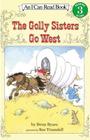
She has a good attention span for beginning reader books, too -- the kind with five or six short, connected chapters.  The first of these to capture Isabel's attention, several months ago, was a gift from you: The Golly Sisters Go West, by Betsy Byars.

The Golly sisters, Rose and May-May, are a pair of sibling performers in the Old West.  They set off at the beginning of the book in a wagon stocked with costumes, drawn by a patient horse, planning to perform in towns in the west along their way.  They are a little hapless (the first story is about figuring out how to get the horse to move, and to stop), but for the most part confident and competent: there's a reference to pursuing their dreams of singing and dancing even though people told them they wouldn't make it, and their shows appear to be well-attended.

One of the great pleasures of this book is the sibling bickering.  There's a lot of talk about who gets to go first on stage (I'm guessing this rang true to you and your girls), and some mild insulting of each other:

"I want to go first," said Rose.
"You got to wear the blue dress, so I get to go first," said May-May.
"I got to wear the blue dress because you look funny in blue," said Rose.
"Who says I look funny in blue?" asked May-May.
"Everybody!" said Rose.
"Give me the name of one person who says I look funny in blue."
"Everybody!" said Rose.
"I knew it," said May-May.  "You cannot think of one person."
"I can."
"Cannot."
"Can!"
"Then who?"
"Hmmmm, let me think," said Rose.

By the time they resolve the argument and open the curtain, their audience has gotten bored and left.  Rose and May-May, undaunted, perform for the dogs who are still hanging around.  Taking the kind of petty back and forth that siblings so often get into and making it funny, as Byars does, with the help of Sue Truesdell's illustrations, is a nice way to poke fun at it.

Our most exciting news of the week is that Eleanor is truly starting to learn to read.  I'm looking forward to the day -- not so far off -- when she can read the Golly Sisters to Isabel herself.

Love, Annie

Sunday, February 26, 2012

The sequel that ate the author

Dear Annie,

Sometimes one or two books that turn out to be commercial successes take on a life of their own and swallow their authors, forcing them into sequel after sequel.  I'm thinking here first of Mercer Mayer, whose Little Critter books you gently criticize.  I am very un-fond of them -- feel they're barely a step up from the dreaded Berenstain Bears.  The driving force behind the series is to give lessons in behavior, rather than to tell a story or engage a kid in other ways.  But Mayer has done some good books, too. 
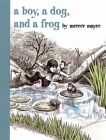
A boy, a dog and a frog
, his first book, is a wordless delight showing a boy and his dog trying to catch a frog, who eventually follows them home.  He did several boy/frog books.
evicting the kangaroo
 And then there's
What do you do with a kangaroo?
  Wasn't that one of the books that lived on the kids' bookshelf at my parents' (your grandparents') apartment?  A series of animals attempts to move into a girl's home, making many imperious demands.  What do you do?  You throw them out!  Except that they keep reappearing....  Mayer wrote that one in 1973, a dozen years before Laura Numeroff launched her series with If You Give a Mouse a Cookie, but there are some parallels in the feel of both books: kid at home intimidated by demanding but ultimately lovable animal interloper.  Repetitive structure, giggles of anticipation.  And Numeroff, like Mayer, got taken over by the form and still can't stop cranking them out.

I completely sympathize with your antsiness at reading and re-reading average stuff.  I have misty memories of evenings when Bob and I would get a choice in the picture book rotation too.  Small relief.  It sounds like you might be moving to a broader range of books that both girls will be happy with these days, even if they keep coming back to a few.  Is this true?  Is Isabel getting into longer stuff?

Love,

Deborah

Friday, February 24, 2012

Enduring the unobjectionable

Dear Aunt Debbie,

I agree with you: it is full-on weird to return a book just because you didn't like it.  Your post got me thinking about my own responses to books I don't particularly like.  As I've mentioned before, I try to keep our shelves free of badly-written, overly commercial, or otherwise obnoxious books.  In keeping with Grandma Helen's advice, I have been known to throw a few clunkers out in the dead of night (or at least, after bedtime).

But what of the perfectly okay?  I'm talking here about books that my kids love, and that I think are...fine.  Totally decent.  Not bad or harmful in any way.  Enjoyable to read in small doses.  Just, well, not all that interesting.

Two series pop to mind: Little Critter, by Mercer Mayer, and the If You Give... books, starting with If You Give a Mouse A Cookie, by Laura Numeroff and Felicia Bond.  Part of the problem with each is the sheer volume of the series.

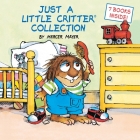
There are more than 70 Little Critter books, and counting.  In each, Little Critter (an appealingly prickly little hedgehog-like person) focuses on one idea, and repeats it with variations: "When I get bigger, I'll...."; "I wanted to do X, but Mom wouldn't let me.  I was just so mad!"; "I can do X all by myself"; etc.  Each page repeats the same basic formula, and there's always a very slight twist at the end ("I'm not bigger yet!").  The Little Critter book we own is a collection of seven stories, and reading the same formula over and over (which is a requirement -- I have never successfully read only one story from the book and been allowed to put it down) can feel mind-numbing.

Mind-numbing, and depressingly literal.  One of my pet peeves about Little Critter is that Mercer Mayer doesn't do anything interesting with the text he includes in his drawings.  There are often labels on food or toys, or single pages of books Little Critter is reading.  Without fail, they are boring: a shopping bag reads "Best Food"; a toy duck is labeled "Duck"; a book is titled "Read This Book."  Compare this to the fantastic, old-school brand names on kitchen products in In the Night Kitchen ("Kneitel's Fandango," "Phoenix Baking Soda," "Hosmer's Free Running Sugar: It Pours"), or the psychology-related book titles Kevin Henkes sneaks into Chrysanthemum.  Is it too much to ask a kids' author to sneak in a little tidbit for the parents to enjoy?

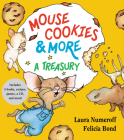
In comparison to the Little Critter juggernaut, the 8 If You Give... books don't seem like so many.  Except that we own them all.  Again, here, we started with an anthology:  Mouse Cookies and More: A Treasury.  It includes four books (...Mouse a Cookie, ...Moose a Muffin, ...Pig a Pancake, and If You Take a Mouse to School), as well as song lyrics, recipes, activities, and a CD.  Again, individually, I like these books.

In each, a demanding animal asks for increasingly elaborate things from the boy (or girl, but mostly boy) he (or she, but mostly he) is visiting.  Many of the requests are domestic: they want a cookie, to draw a picture, to make puppets or a kite.  In the later books (...Dog a Donut, ...Cat a Cupcake, ...Pig a Party), they go farther afield, to the beach, and museums.  The child caring for the animal invariably winds up looking exhausted by the end of the story.  There's a nice wink at parents here -- the animal exhausts the child just as my own child exhausts me!  And Felicia Bond's illustrations are bright and bold, with lots of action.

But it's the same construction, every time: "If you give..., he'll want....  Then he'll ask for..." etc., all the way back to the original item given.

I know that kids love repetition, and that it's developmentally appropriate -- it gives both Eleanor and Isabel great pleasure to be able to predict what's going to happen on the next page, to essentially be able to recite these books.  There is good nature here, and well-aimed humor.  But oh, some nights, I would really rather be reading something else.

Love, Annie

Wednesday, February 22, 2012

Unhappy return

Dear Annie,

Well, it was fun to get an unsolicited author response -- Nick Bruel on our Bad Kitty post. He's both a former bookseller, and the father of an Isabel, so he fits right in here.

Speaking of bookselling, someone came into the store today to return a book she bought several months ago.  The reason she returned it was that she was shocked at what a bad book she found it to be.  The nine year-old for whom she bought it didn't like it, and it had cruelty to animals in it, she said.

The book was one I had recommended: The 13 Clocks by James Thurber, which Neil Gaiman called "probably the best book in the world," and whose praises I sang here.  I'd been thinking of it this week in the context of the lovely discussion going on in the comments about your post on Charlotte's Web, another book whose writing leaves many in awe.

So this customer didn't agree about Thurber's fable-like 20th century fairy tale, which is her right, completely.  There are many readers in the world, each with their own opinions.  I re-read The 13 Clocks today, looking for cruelty to animals: I found 11 princes run through by the evil duke's sword, reference to "slaying the thorny Boar of Borythorn," (who turns out to be fictitious), a description of the castle looking "as if the gaunt Duke stalked from room to room, stabbing bats and spiders, killing mice" -- and  the murder of time by the clock-destroying duke.

Neil Gaiman, in his introduction to the book,  elaborates on his superlative: "And if it's not the best book, then it's still very much like nothing anyone has ever seen before, and, to the best of my knowledge, no one's ever really seen anything like it since."  Which also serves as an explanation of why a child might be put off by it, especially if reading it alone: too different, too weird, too wordy. 

I remain stunned by people who feel they can return a book they've read some or all of because it didn't please them.  The store has a fairly liberal return policy, which we see as part of maintaining good relations with our customers.  The book came back in good condition, but it still feels wrong to me.  If one buys a book, one is taking the risk of not liking it.  One doesn't demand money back from a bad movie -- is the situation with a book different? 

Love,

Deborah

Monday, February 20, 2012

Cynical politics and awesome first ladies

Dear Aunt Debbie,

And Happy Presidents' Day to you!  Bad Kitty sounds like a funny way to get into the topic of politics, though perhaps, as you say, a tad cynical for a first time through.  Then again, it's hard not to feel cynical these days when trying to explain the democratic process to one's children.  We've had a few conversations about the presidential election with Eleanor -- nothing about the Electoral College, so I'm afraid I'm no help on that front, but a few of those Major Conversations that pop up when you're not expecting them as a parent, often just before bedtime: What color is God's skin?  What happens when we die?  What's the difference between Democrats and Republicans?

We read Duck for President a while back, and while I adore Doreen Cronin and Betsy Lewin's Dooby Dooby Moo, I remember not loving this one as much.  It's wacky, as their books about the animals on Farmer Brown's farm tend to be, but at least when we last picked it up, also struck me as aimed at slightly older, more savvy readers.  Maybe worth picking up again.

The most presidential book we own at the moment is Eleanor's new book of  Obama paper dolls, which my father bought for her birthday.  They're Tom Tierney dolls -- the best paper doll artist ever, and worthy of a complete post someday soon.  It's laudatory, and the text inside is mostly about the clothes.  I love Tom Tierney.  (If you're feeling quite cynical and a little more adult, but still want an activity book, I'd recommend the Idiots' Books mix and match book Build Your Own President, created by my former college classmates, Matthew Swanson and Robbi Behr.)

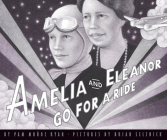
Rachel at Even in Australia posted recently about historical president books.  Her post made me realize that I've never written here about the first book you gave Eleanor, sent to us mere weeks after she was born: Amelia and Eleanor Go for a Ride, by Pam Munoz Ryan, illustrated by Brian Selznick.

The Eleanor of the title is, of course, Eleanor Roosevelt; Amelia is Amelia Earhart, and apparently the two women were friends in real life.  Ryan draws inspiration from an actual historical episode: an evening when Amelia joined Eleanor for dinner at the White House, and later in the evening the two went flying in an airplane together.  In the fictionalized version, the flight is a spur of the moment decision, and Amelia and Eleanor are the only ones in the plane, swooping over Washington DC at night.  They return to the White House only to go out again, so that Eleanor can take Amelia for a spin in her new car.  The back of the book provides accurate historical information: there were other pilots on the plane, it was arranged ahead of time, Earhart didn't fly it the whole way, etc.  I like having the facts laid out at the end, but allowing for a little bit of fantasy in the plot.

Our Eleanor is a big Eleanor Roosevelt fan, and the depiction of Roosevelt and Earhart is compelling.  They're both presented as strong-willed, charismatic women who aren't shy about pursuing their interests.  And of course, Selznick's drawings are fantastic -- I didn't make the connection until picking the book up again last week that of course these portraits and DC landscapes were penned by the artist and writer who created Hugo Cabret and Wonderstruck.  What an awesome man.  And what awesome women.

Love, Annie