In which Annie (high school teacher, mother of two young girls and a younger boy) and her aunt Deborah (children's bookseller, mother of two young women in their 20s) discuss children's books and come up with annotated lists.

Monday, September 10, 2012

Assumptions of gender

Dear Aunt Debbie,

Every Day sounds like an awesome YA version of Quantum Leap.  I'll have to check it out.

Your comment about thinking of the narrator of Every Day as male because he/she falls in love with a straight girl, though it sounds like the book is aiming for no assignment of gender, made me think of two things:

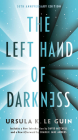
On the YA and older front, Ursula K. LeGuin's The Left Hand of Darkness is an interesting exploration of how deeply gender assumptions and biases are ingrained in human perception.  It follows a human ambassador, Genly Ai, who is sent on a peacekeeping mission to a planet on which there is no gender.  Every person on the planet Gethen is both male and female, with the ability to shift between genders at will.  Because of this, there is no gender bias -- who would you be biased towards, who against?  Genly tries to work within this new frame of understanding, but keeps making assumptions about his hosts based on the gender they are currently presenting, and is thrown for a loop when they change.  An interesting LeGuin note: in an essay written a number of years later, LeGuin comments on how many of her early science fiction books feature male protagonists.  Even as a female author, even when writing about gender directly, she defaulted to the male point of view because that was what she was used to reading in science fiction by other authors.

On the board book front, there's the wonderful 10 Minutes Till Bedtime, which has become one of our go-to books when I'm home alone with the girls and need to cut their fingernails.  Eleanor can read the whole thing aloud, and the pictures contain enough detail on each page (finding all those numbered hamsters) to keep both girls occupied until I'm done and can read them something longer.  The kid in 10 Minutes Till Bedtime could be either a boy or a girl: fuzzy-haired, bright-eyed, in overalls and pajamas with pants, but in no other way gendered.  Still, and although I often read her aloud as a girl, Eleanor and Isabel default to the male pronoun (actually, so do you, in your post about the book).  We've written about this tendency at length before (here, here, here, and here); still, I find it striking.  And I wonder, in my girl-heavy house, why it persists.

Love, Annie

Sunday, September 9, 2012

Body surfing

Dear Annie,

Yes, Maine was wonderful.  Kind of quiet this year -- but that means we all did lots of reading.  I'm happy to say I even read a few grown-up books, although as promised I blasted through a bunch of YA and younger ones.

The last one I picked up was
Every Day
, by David Levithan, one of the authors of Will Grayson, Will Grayson (the other author being John Green).  The main character is a self without a body.  S/he wakes up every morning inhabiting someone's body for a day: being able to see that person's memories and knowing the context of the life.  This person -- who refers to him/herself as A ("I needed something pure") -- has been doing this for 16 years.  S/he has grown from inhabiting babies to moving into the bodies of teenagers.
... as a little kid, I thought it was some kind of a game, and my mind learned how to access -- you know, look at the body's memories -- naturally.  So I always knew what my name was, and where I was....
   I wanted friends, a mom, a dad, a dog -- but I couldn't hold on to any of them more than a single day.  It was brutal.  There are nights I remember screaming and crying, begging my parents not to make me go to bed.  They could never figure out what I was afraid of.  They thought it was a monster under the bed, or a way to get a few more bedtime stories.  I could never really explain, not in a way that made sense to them.  I'd tell them I didn't want to say goodbye, and they'd assure me it wasn't goodbye.  It was just goodnight.  I'd tell them it was the same thing, but they thought I was being silly.
By the time of the book, A is accustomed to the body-hopping.  Each of the 41 chapters is a new day, and a new host to adjust to -- A has no control over the destinations.  We get a tour of mostly middle class teenagers in the mid-Atlantic states -- a remarkable number of them have access to a car on school days.  It's a lovely variety of kids with different families, personalities, expectations.  There are two sweet same-sex relationships.  A few of the days are searing: one day s/he is a drug addict, trying to keep the body from getting another fix.  Another is a deeply depressed suicidal girl.  A's aim is not to disrupt the lives he inhabits, but in this case he finds a way to ask for help.

The plot centers around A falling in love with Rhiannon, the girlfriend of an unlikable boy he's inhabiting.  Because he's fallen for a straight girl, I ended up thinking of him as male, even when he was female-for-a-day.  Violating his own rules, he starts to take his hosts back to the girl's town and he eventually explains to her what's happening with him.  Each time they meet, he's in a different body, feeling desperately in love.  She's a great character, trying to understand A's life, still in love with the selfish boyfriend, nobody's pushover.  A leaves behind very little memory of his occupancy -- people will have vague memories of how a day went.  But he follows Rhiannon to a party and can't get his host back home before it's time to move on to the next body (midnight, of course) and the young man wakes up by the side of the road, convinced he's been possessed by the devil.

The plot thickens but avoids many pitfalls it could lurch into.  One cares deeply about the main characters.  There's a wonderful interlude when he wakes up in Rhiannon's body and spends the day trying to avoid doing anything she'll consider a violation of her privacy.  I was mildly disappointed in the ending -- endings are so hard to do well -- but no spoilers here.

It's good to be back to the blog.

Love,

Deborah


Friday, September 7, 2012

Back from vacation, and back to school!

Dear Aunt Debbie,

I hope you had a wonderful vacation in Maine!  We're back from our vacation as well, and this past week have leapt back into school: Isabel started preschool on Tuesday, I was back in the classroom with my high school students on Thursday, and in the biggest news, Eleanor started kindergarten on the same day.

While we've written about school books before (here, here, and here), the first day of kindergarten felt like a big deal to us -- and, apparently, to the many authors of children's books on that more specific subject.  In my experience, these books range from the banal and weirdly encouraging of school fear to the happily enthusiastic.

We own two first-day-of-kindergarten books, one of each type.

On the banal side, there's The Night Before Kindergarten, by Natasha Wing.  Every kid in Eleanor's pre-K class last year was given a copy of this slim little book, which uses the basic rhyme scheme of The Night Before Christmas to explore the feelings of kids and parents on the night before and the morning of the first day of kindergarten.  It's...okay.  There's an odd emphasis on the idea that all kids expect that kindergarten will include naptime, and are surprised when it doesn't, and at several points the rhymes seem a little forced.  The major surprise ending is that, while the kids are perfectly happy saying goodbye to their parents when it's time for school to start, it's the parents who are upset to let their kids go!  Ha ha ha.

A far better book came to us from my cousin (your niece), Ona, who is a fabulous kindergarten teacher herself.


Miss Bindergarten Gets Ready for Kindergarten
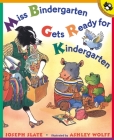
, by Joseph Slate, is an alphabet book and an animal book as well as a first-day book, and the vivid illustrations by Ashley Wolff provide a lot to dig into.  The pages alternate between images of Miss Bindergarten (a large, enthusiastic dog) preparing her classroom for the arrival of her students, and the students getting themselves ready:

Adam Krupp wakes up.
Brenda Heath brushes her teeth.
Christopher Beaker finds his sneaker.

Miss Bindergarten gets ready for kindergarten.

The first names of the students go in alphabetical order, all the way to "Zach Blair finds his chair."  Each student is an animal whose species begins with the same letter as the kid's name: Adam is an alligator, Brenda a beaver, Christopher a cat, etc.  (There's a class picture with the names of all the animals on the last page, which is helpful for the more arcane letters: Ursula the Uakari monkey, Xavier the Xenosaurus.)

Miss Bindergarten transforms her room over the course of the book, with some help from her cockatoo, and it ultimately looks like a fun place to be.  I'm not sure what to make of the few details which imply that Miss Bindergarten is also a little absent-minded -- the tag sticking out from the back of her dress, the note taped to her bottom -- as she seems otherwise very on her game.

In the last ten years, Slate and Wolff have written a number of other Miss Bindergarten books, which we haven't read -- do they hold up to the charm of the original?  Do you have any other favorites?

Love, Annie

Sunday, August 19, 2012

God in the details

Dear Annie,

I need to pay more attention to Bea and Mr. Jones.  Lovely.  My favorite switching places story is in Things That Sometimes Happen, by Avi, which you wrote about almost two years ago. You quote a fantastic description of working in an office.

I've been poking around our bookshelves here in Maine and have been reminded of one of my favorite author/illustrators, Peter Spier.  He does wonderfully intricate drawings with lots to look for and always sneaks in some humor.

Bored -- Nothing to Do!, now sadly out of print, got a lot of readings in our house.  The first picture is of two boys surrounded by toys and sports equipment looking very bored.  Then their mother kicks them out of the house: "Go do something.  I was never bored at your age!"  While hanging out in the barn, they spot a large propeller on the wall, which leads them to books and plans about flight and before you know it --
they've built an airplane.  They've scavenged materials from linen closets, baby carriages, fences and a VW bug.  Text consists of two or three word captions on all the illustrations.  The boys take a triumphal flight while their parents discover all the objects that are missing from the house, and then are buzzed by the aviators.  Scoldings ensue.  The last two panels are the parents saying to each other:
"Some boys." "Clever, too!"
and the boys, back in a toy-filled room:
Bored - nothing to do!
Spier's most spectacular book is probably
Noah's Ark
, for which he won the 1978 Caldecott Medal.  The almost-wordless book tells the Bible story starting with the building of the ark.  Supplies for people and animals are piled outside, crowds of animals mill around while Noah and family admit pairs and shoo away the rest -- everyone from elephants to flies:

Pages of the lone ark in the rain alternate with pictures of the humans laboring: feeding many species, separating natural enemies, shoveling manure, catching fish, and (as the journey lengthens) admiring kittens, puppies, baby giraffes, chicks, many rabbits, and more. 


Every page has lots to linger over:
It ends with most of the animals eagerly scattering across the slopes of Mt. Ararat -- the cats stick around, and the snails are quite slow.

This one can sustain many readings -- more lovely details to find every time.

It's late August -- time for Annie and Aunt to take a little time off, read a few more books, lie around in hammocks or see new places.

You have a lovely vacation, dear Annie.  We'll be back and blogging in September.

Love,

Deborah

Friday, August 17, 2012

Trading places

Dear Aunt Debbie,

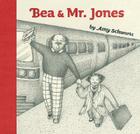
Our good friends Brian and Rachel are moving to London shortly, and have been divesting themselves of a number of things in preparation, sending some of the kids' stuff our way.  This is how we got our copy of Bea and Mr. Jones, written and illustrated by Amy Schwartz.  It has quickly become a family favorite.
It's a book that starts with extreme dissatisfaction:

"I've had it with kindergarten!" Bea Jones said to her father as he was sitting down to breakfast.
"I've had it with beanbag games!
"I've had it with clothespin games!
"I've had it with sitting on that dumb green rug and playing that dumb colored lollipop game!
"I'm ready for a change."

Mr. Jones put down his muffin and coffee.
"Beatrice," he said, "do you think I like my job?  I'm tired of running for the 7:45!  I'm tired of sitting at that desk and working so hard!  I'm tired of laughing at the boss' jokes all day!"
"Doesn't sound so bad to me," said Bea.

You can guess what happens next: father and daughter trade places for the day.  Mr. Jones is a total whiz at kindergarten, and becomes the teacher's pet (and a milk and cookie monitor who doesn't spill anything).  Bea laughs at the boss's jokes, comes up with a terrific new advertising slogan ("Munchy Crunchy my dear snackers, You will love our Crumbly Crackers"), and ends the day tired but satisfied.

And you can guess what might happen after that: they each learn something about themselves, and go back to their own lives.  Except that's not what happens in this book.  Instead, both Bea and Mr. Jones decide they've found their niche.  Bea is promoted, and Mr. Jones keeps right on going to kindergarten every day.  The book ends with sightings of both of them, Mr. Jones getting into a movie theater at a kid's price, Bea at a restaurant lunch meeting.  There's something fabulously loopy and unapologetic about the whole thing.

Going through the box of YA books from my parents' storage room, I came across two books which I realized were my template for parent-child switching stories, and part of the reason I expect them to be stories in which everybody Learns a Lesson.
Freaky Friday
 is, I'm sure, the best-known: it's been made into two movies, neither of which sticks very close to the plot of the original book, but both of which exploit the basic premise: 13-year-old Annabel Andrews and her mother Ellen magically switch bodies for a day.

In the book, Ellen is the architect of the switch, and it's Annabel who narrates and who ultimately learns all of the lessons.  Such as: being an adult comes with a number of responsibilities, and it's important to do some work at school and pass English, and your younger brother who you hate secretly adores you.  Ellen is a stay-at-home mom, so many of the responsibilities involve household chores at which Annabel is incompetent.  There are the beginnings of a feminist consciousness: Annabel refers to Gloria Steinem and Women's Lib, and Ellen is fierce about defending staying at home as real work.  Still, Mary Rodgers wrote the book in 1972, and aspects of it feel a little dated.  How often do/did husbands call up during the day and instruct their wives to make dinner for the business clients they were suddenly bringing home?  I loved the punchiness of the narration when I was younger, and enjoyed it as a reread as well, but there's a lot here to explain.  In her daughter's body, Ellen essentially gives Annabel a makeover, so that by the end of the book (and both movies), the ugly duckling has metamorphosed into a swan.  Which, okay.

Mary Rodgers fun fact: she's one of the daughters of composer Richard Rodgers, of Rodgers and Hammerstein fame, and is a composer in her own right; her best known score is for Once Upon a Mattress.  She wrote a couple of sequels to Freaky Friday, including Summer Switch, in which Annabel's younger brother Ben, known to all as Ape Face, switches bodies with his father, Bill.  Ape Face is just about to go to sleepaway camp, and Bill is on his way to L.A. on a business trip; they spend a couple of weeks in each others' bodies, and the narration toggles back and forth between them.  It's a more developed (and therefore more ridiculous) plot, but still a fun read.

Still, it's the ending of Bea and Mr. Jones that leaves me on a high note, every time.

Love, Annie

Thursday, August 16, 2012

Summer reading, fallen angels and woodpeckers

Dear Annie,

Here I am in Maine, with the usual several days of getting systems functional.  We have internet now -- and it has survived the first crashing thunderstorm.

I'm glad you've managed to revisit some more YA books of your youth.  Like you, I've started reading some books I'd set aside for this part of the summer.

Today's treat is 
Where Things Come Back
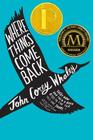
, a first novel by John Corey Whaley.  It provoked some cheerful speculation about the state of young people's literature when it won the Printz Award (best YA literature) in January.  It's a fascinating melange of philosophical musings, small town claustrophobia, family trauma, mystery and media spectacle.  Reminds me a bit of John Green books in the ways the characters are trying to make sense of their lives in trying circumstances.  Not as consciously intellectual, but wonderfully written.  I'm going to try to avoid spoilers in what follows, but am offering enough to let you know it's not just a nice book about a woodpecker.

We start with 17 year-old Cullen and his younger brother Gabriel, their good friend Lucas, their dead-from-an-overdose cousin and the hazing tensions of high school in a small Arkansas town.  Then a birdwatcher comes to town and claims to have spotted a rare bird which was believed to be extinct.  As the town slowly realizes the business potential involved, the boys resist the mounting enthusiasm.
It's hard to say what bothered me so much about John Barling and the whole bird thing without painting myself as an angry-for-no-real-reason teenager dressed in black and moping around like Charlie Brown all the time.  But it was the same for Gabriel, and Lucas, too.  It was as if we got the joke that everyone in town had been told.  We knew the punch line.  And it would've been much easier to sit back while all of Lily fell under the awe-inspiring spell of the possibility of second chances, or rebirth, but we just couldn't do it.  I may not have liked the people in Lily that much, but I felt sorry for anyone being massively scammed.
A new, apparently unrelated character pops up in a Georgia fundamentalist community: Benton Sage, who in alternating chapters goes on a mission to Ethiopia, becomes disillusioned, and is introduced to The Book of Enoch, a strange and ancient text about the fall of angels and God's reasons for sending the flood.  So we have an elusive bird redeeming a town called Lily, and searching-for-meaning Benton, when -- wham! -- Cullen's brother disappears.  Things become more confusing and scary.  Most of the book is from Cullen's perspective, muddling through an awful situation.  More characters appear.  The moment at which they all cross paths is a stunner.  But the point of the book isn't the solution to the mystery.

Near the end, Cullen speculates about the meaning of life.
I'll tell you now that I still don't know the meaning of mine.  And Lucas Cader, with all his brains and talent, doesn't know the meaning of his, either.  But I'll tell you the meaning of all this.  The meaning of some bird showing up and some boy disappearing and you knowing all about it.  The meaning of this was not to save you, but to warn you instead.  To warn you of confusion and delusion and assumption.... To warn you of two-foot-tall birds that say they can help, but never do.
Definitely worth putting on your next-summer list.

Love,

Deborah

Monday, August 13, 2012

Serious Issues from the 1980s

Dear Aunt Debbie,

Among my summer projects was the task of going through a pile of boxes formerly housed in my parents' storage room, which my parents returned to me almost a year ago.  I spent a number of hours digging through them last week, sorting letters and papers, discarding college notebooks, wallowing in memories.  One of the best boxes to open was marked "YA books," and stuffed to the brim with all my old favorites: Madeleine L'Engle, Cynthia Voight, Paula Danziger, Lois Lowry, Judy Blume.  And then there were the smattering of books I'd forgotten, which came rushing back as I picked up the dog-eared paperbacks with their airbrushed 80s covers.


Such shiny hair!  Such serious faces!  These two Norma Fox Mazer paperbacks were in heavy rotation in my junior high school years.  They're both gripping, realistic YA fiction which take their plots from 1980s Serious Issues.  While there are aspects of both that feel a little dated, rereading them again in the last couple of days has reassured me that they hold up well.


Taking Terri Mueller
(that's the current cover, to the left) is the story of a 13-year-old girl who has lived alone with her father for as long as she can remember.  Terri and Phil move around a lot -- often more than twice in a year --and Terri knows no other family except for an aunt she sees once a year.  Phil tells her that her mother died in a car accident when she was four, and has no pictures.  As the spoiler tag line on the 80s cover above reveals, Terri figures out more than halfway through the book that her father kidnapped her after losing custody when her parents divorced.  Her mother is alive, and has been desperate to find her since she was taken.

Mazer does a beautiful job of presenting all the nuances of this family situation: Phil is a caring, loving father who it's hard to demonize; you can see his side of things.  At the same time, the pain his kidnapping of Terri has caused for the rest of her family, and for her, is front and center.  Phil gets involved early in the novel with a single mom, Nancy, who is warm and loving, the first woman he's considered settling down with.  After the revelation of the kidnapping, Nancy can't reconcile herself with what Phil has done, or with his lack of remorse about it.  She's a kind of moral center as Terri is so emotionally embroiled that she finds it hard to know what she's feeling.  The book is written in close third-person, mostly Terri's perspective, but at a few moments it shifts to Nancy's, Phil's, and Terri's mother's.  It's even-handed, and at the same time completely emotionally gripping.  Not to mention still, unfortunately, quite timely.

Downtown is narrated by Pete Greenwood, a 16-year-old boy who lives with his uncle Gene, and tells people his parents were killed in an accident.  Unlike Terri, Pete has always known the truth: his parents, Laura and Hal, were members of a radical group that bombed a government research lab eight years earlier.  The bomb unexpectedly killed two people, and Laura and Hal, wanted for murder, went into hiding.  Until age eight, Pete was Pax Connors; since the bombing, he has taken on the burden of a new identity in order to keep his parents safe.  He's seen them three times since then, and keeps a notebook of license plate numbers of cars he thinks might be following him.

The jacket copy, at least on my book, focuses largely on Pete's relationship with Cary, a beautiful girl he meets downtown and begins to date.  She has complications in her life as well: she's been in the foster care system since she was four, and is hoping to be adopted by her latest foster family.  Pete is pleasingly imperfect -- he has an uncontrollable temper at times, and is less than secure about himself.  But again, the characters in this book feel warm and real, even when they're prickly. 

I may have trouble tearing myself away from this box to get any school-prep reading done....

Love, Annie